
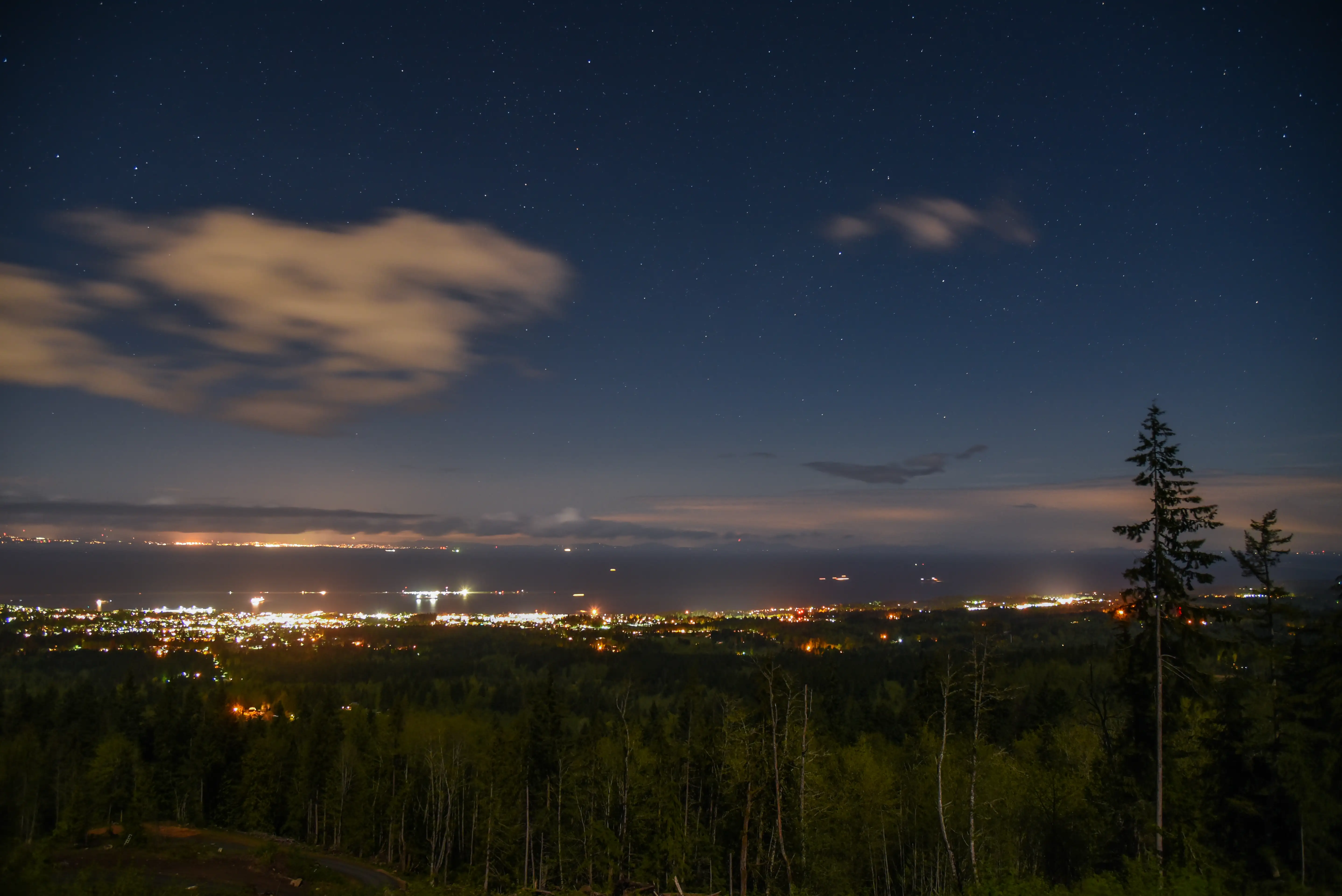
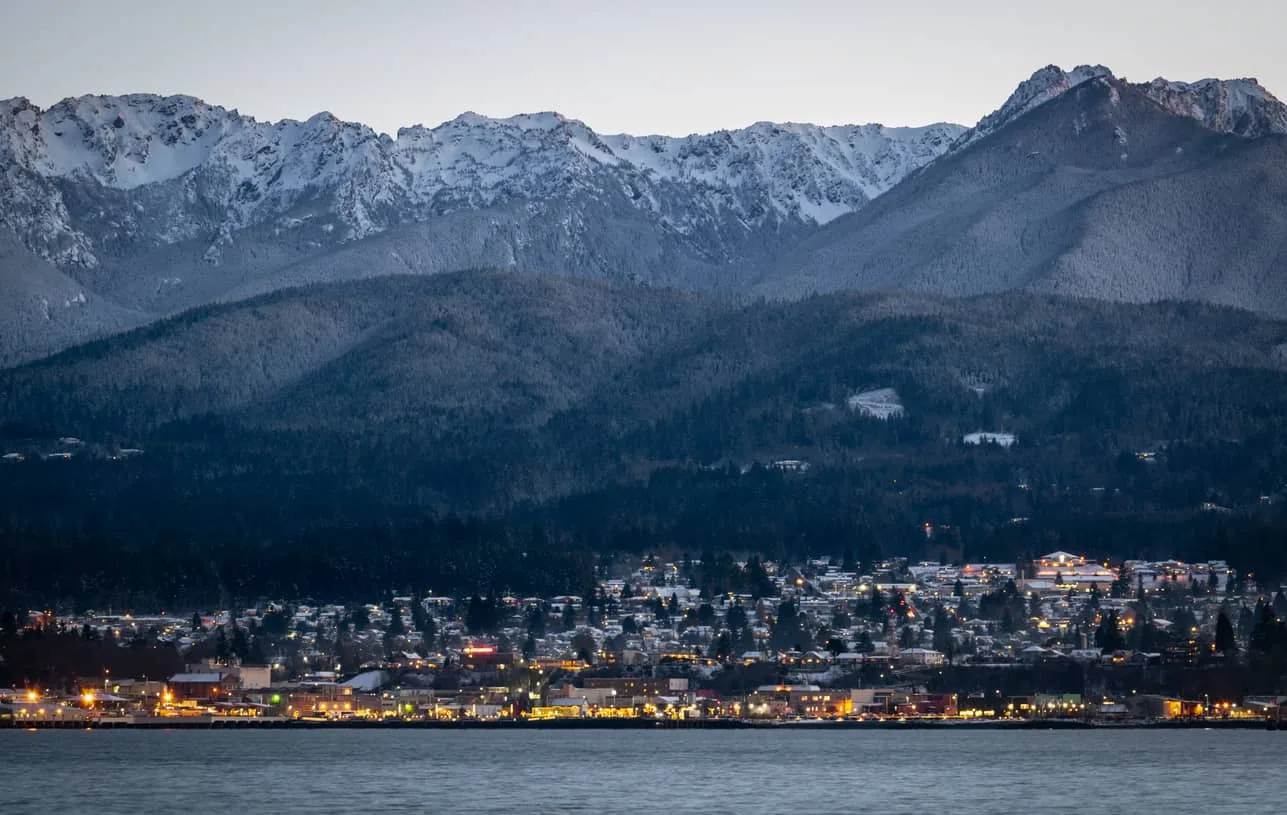
You'll hear Port Angeles described as a gateway city — the last stop before Olympic National Park, the ferry launch for Victoria, BC. That framing undersells what it actually means to live here. Port Angeles is a working harbor town of about 20,000 people pressed between the northern strait and the Olympic Mountains to the south, and those two geographic walls shape everything about how its neighborhoods feel, how they're priced, and what your daily life will look like depending on which side of the hill you land on.
The city's economic foundation rests on a cluster of large public and industrial employers — the Port Angeles School District, Clallam County government, Peninsula College, and Nippon Paper Industries USA. This is not a city of remote workers who happened to find cheap land; it's a place with a genuine local economy, which means its housing market is grounded in local wages rather than imported Bay Area equity. The Port Angeles School District holds a C+ rating, according to Niche, and that context matters when you're weighing which neighborhood boundary puts your kids in which building.
The Zillow Home Value Index for Port Angeles sits at $432,551 (2026), down modestly from the prior year — noticeably below what comparable waterfront access costs in Port Townsend or on the Kitsap Peninsula. Entry-level options exist well below that figure, and the upper end of the market, particularly in Port Angeles East and the Mount Angeles area, pushes substantially above it. For a fuller breakdown of what your dollar buys across the city, see the cost of living page.
Whether you're weighing a move from the Seattle metro, considering a quieter pace on the Olympic Peninsula, or simply trying to figure out which end of town actually suits your life, the sections below break down Port Angeles's eight neighborhoods, price bands, buyer types, common mistakes, and the rental landscape across the city.
The Port Angeles Reality
The single most important thing to understand about Port Angeles geography is the elevation divide. Downtown and the waterfront neighborhoods sit at sea level along the harbor. The neighborhoods that climb south — Mount Angeles, parts of the Westside above Lauridsen Boulevard, and the upper Eastside — sit on bluffs and hillsides with views that look straight across the water toward the Canadian coast. That distinction is not cosmetic; it affects price, lot character, how much sun you get in winter, and how far you are from the noise and foot traffic of the ferry terminal on Front Street.
The second divide is east versus west of downtown. The Eastside and Port Angeles East corridor runs along US-101 toward Sequim, while the Westside and Lincoln Park areas extend in the opposite direction along the waterfront and bluff toward the city's western edge. Buyers who treat Port Angeles as a uniform grid and simply shop for square footage often end up in a neighborhood whose character doesn't match their expectations — a buyer who wanted quiet proximity to the park system winds up on a busy 101 frontage road, or someone who wanted walkability buys a hillside lot where nothing is flat enough to walk to.
School boundaries within the Port Angeles School District are less of a sorting mechanism than in larger cities — the district is small enough that assignment patterns shift. What matters more neighborhood-to-neighborhood is proximity to Peninsula College on the eastern edge of downtown, access to the Olympic Discovery Trail, and which side of the elevation line you're buying on. Get those two things right first, then optimize for price.
Neighborhoods at a Glance
| Neighborhood | Best For | Price Range | Vibe |
|---|---|---|---|
| Downtown Port Angeles | Walkable Renter | $380K–$500K | Harbor-front energy, ferry traffic, independent restaurants and brewpubs on Front Street |
| Eastside | First-Time Value | $340K–$450K | Established grid, working-class roots, close to Peninsula College and 101 access |
| Westside | Families Quiet | $380K–$520K | Residential streets along W Lauridsen Blvd, quieter than downtown, near Lincoln Park |
| Mount Angeles | Views Luxury | $480K–$700K+ | Elevated bluff lots, water and mountain panoramas, larger parcels |
| Peninsula Golf Course area | Quiet Families | $440K–$600K | Manicured setting, low-traffic streets, suburban feel at Port Angeles's western edge |
| Lincoln Park | Nature Value | $330K–$460K | Wooded, near the park itself, mix of older ranches and modest newer construction |
| Port Angeles East | Commuter Families | $430K–$560,000 | Newer builds, close to 101 east toward Sequim, fastest-appreciating sub-market |
| Racetrack area | First-Time Privacy | $300K–$420K | Fringe residential, larger lots for the price, some rural character within city limits |
Best Neighborhood by Buyer Type
| Buyer Type | Best Neighborhood | Why |
|---|---|---|
| First-Time Buyer | Eastside | Entry-level price bands in the $340K–$450K range give first-timers the most room to buy without stretching, while the 101 corridor keeps commutes predictable. |
| Luxury Buyer | Mount Angeles | Bluff-top lots with unobstructed water and mountain views are the closest thing Port Angeles has to a prestige address, and prices reflect it. |
| Walkability Seeker | Downtown Port Angeles | Front Street, the City Pier, the Coho Ferry terminal, and a cluster of independent eateries and brewpubs are all within a ten-minute walk. |
| Families with Kids | Westside | Quieter streets along the western residential corridors, proximity to Lincoln Park, and a residential character that keeps cut-through traffic low make it the most family-settled part of town. |
| Commuters | Port Angeles East | Direct access to US-101 east toward Sequim, the strongest sub-market appreciation, and newer construction make this the logical base for anyone regularly heading out of the city. |
| Large-Lot Buyers | Racetrack area | The fringe location translates to more land per dollar than any other part of Port Angeles proper. |
| Renters | Downtown Port Angeles | The highest density of multi-family stock, the most walkable streets, and the most turnover in rental units concentrate here. |
Looking to buy in Port Angeles? Estimate your payment.
Enter your numbers to see an estimated monthly mortgage payment.
Estimate only. Excludes HOA fees and mortgage insurance. The interest rate above is a starting point, not a quoted rate — replace it with your own to see real numbers. Insurance is a flat placeholder, not a Port Angeles quote.
Most Popular Neighborhoods in Port Angeles
1. Downtown Port Angeles
Living on or near Front Street means ferry horns at 8 a.m. and tourist foot traffic from May through September — that's the honest trade-off for having the City Pier, independent brewpubs, and multiple dining options all reachable on foot. The residential stock is a mix of older converted homes, small apartment buildings, and the occasional condo, which keeps prices in the $380K–$500K range without delivering much lot size. If waterfront energy and walkable streets matter more than quiet evenings and private yards, this is your neighborhood.
Best for: Renters, walkability seekers, anyone working downtown or at the ferry terminal.
2. Eastside
The Eastside is Port Angeles at its most unpretentious — a grid of mid-century homes close to Peninsula College, with US-101 access that makes heading east toward Sequim straightforward. Prices in the $340K–$450K range make it the most accessible entry point in the city, but buyers should know that proximity to 101 means traffic noise on the blocks closest to the highway. The neighborhood's everyday-practicality character won't generate Instagram posts, but it will keep your mortgage manageable.
Best for: First-time buyers, Peninsula College employees, value-focused shoppers.
3. Westside
The Westside runs along W Lauridsen Blvd and the western residential street corridors, and it's the neighborhood that most Port Angeles families with school-age children end up gravitating toward once they spend enough time here. Streets are low-traffic, lots are reasonable in size, and Lincoln Park is close enough to be a genuinely usable amenity rather than a drive-to destination. The catch is that the Westside's pricing — $380K–$520K — is no longer the bargain it once was relative to the Eastside, because families have figured out the same thing you're figuring out right now.
Best for: Families with kids, buyers wanting quieter streets, proximity to Lincoln Park.
4. Mount Angeles
Elevation is the product here. Homes in the Mount Angeles area sit above the marine layer on clear days and offer unobstructed sightlines across the water toward the Canadian coast — the kind of view that costs far more in other Washington markets. Prices ranging from $480K to $700K+ reflect both the views and the larger lot sizes, but buyers need to factor in the reality of hillside living: steeper driveways, more demanding landscaping, and a longer drive to anything at sea level. This is also where the gap between the August 2026 listings median of $549K and the city-wide Zillow Home Value Index of $432,551 becomes most visible.
Best for: View-oriented buyers, those prioritizing lot privacy, premium buyers.
5. Peninsula Golf Course Area
The golf course neighborhood sits at Port Angeles's western residential edge, built around low-traffic streets and the manicured setting of the course itself. It reads as the most suburban part of the city — quieter, more homogeneous in housing stock, and priced in the $440K–$600K range that reflects both the setting and the relative scarcity of inventory. The honest downside: you are at the far end of town, which means every errand involves a drive, and the neighborhood has less character variety than the Westside or Mount Angeles.
Best for: Quiet-seekers, golfers, buyers wanting a settled suburban feel.
6. Lincoln Park
Lincoln Park the neighborhood takes its name from the city park and forest that borders it, and the wooded character carries into the residential streets — lots are treed, setbacks feel generous, and the overall atmosphere is more Pacific Northwest cabin-country than city grid. Prices in the $330K–$460K range make it one of the better value plays for buyers who want nature access without relocating outside city limits. The trade-off is that Lincoln Park is not close to anything commercial; you will drive for groceries, coffee, and every other errand.
Best for: Nature-oriented buyers, value seekers, those willing to trade convenience for quiet.
7. Port Angeles East
Port Angeles East is the city's fastest-moving sub-market: the Redfin median sale price hit $510K over the three months ending May 2026, up 19.9% year-over-year. Newer construction, direct 101 access toward Sequim, and a more suburban layout have made it the default choice for buyers who want updated homes without the maintenance burden of older downtown stock. The downside is that it feels the least distinctly Port Angeles of any neighborhood — it could be any Pacific Northwest suburb — and that 19.9% appreciation has priced some buyers out quickly.
Best for: Commuters toward Sequim, newer-construction buyers, families wanting updated schools proximity.
8. Racetrack Area
Named for the old racetrack site at Port Angeles's southern fringe, this area offers something almost nowhere else in the city does: genuine lot size at prices in the $300K–$420K range that land below the city-wide Zillow Home Value Index. Homes here have rural character without actually being rural — you're still within city limits — but the trade-off is real: this is the furthest you can be from downtown, the ferry, the park system, and the Olympic Discovery Trail while technically still living in Port Angeles. Buyers who move here expecting a short hop to Front Street tend to be surprised after month one.
Best for: Large-lot buyers, privacy seekers, budget-conscious buyers willing to drive.
Common Mistakes Buyers Make in Port Angeles
Treating the Harbor Side and the Hill Side as Interchangeable
The elevation difference between Front Street and the Mount Angeles bluff is not just topographic — it determines your views, your commute angles, your lot drainage, and your morning light. Buyers who tour both without registering the divide often anchor on price and end up on the wrong side of the hill for their lifestyle. Decide which matters more — walkable harbor access or elevated privacy — before you start comparing square footage.
Underestimating the US-101 Noise Band on the Eastside
The blocks of the Eastside immediately adjacent to US-101 carry meaningfully more road noise than listing photos suggest. A home priced attractively at $360K on a street that backs up to the 101 corridor will feel very different at 6 a.m. than the same house three blocks south. Walk the street at commute hours, not midday, before you make an offer.
Chasing Square Footage in Port Angeles East Without Running the Appreciation Math
Port Angeles East's sub-market median jumped nearly 20% in a single year. Buyers who arrive comparing raw list prices across the city often find Port Angeles East looking like value relative to Mount Angeles — but the appreciation trajectory has already compressed that gap substantially. The newer construction is real, but so is the premium you're now paying for it. Factor the trajectory into your thinking, not just the current ask.
Buying in the Racetrack Area Without Testing the Daily Drive
The Racetrack area's entry-level prices are genuinely attractive, and that attraction is what leads buyers to skip the step that matters most: driving to work, to the grocery store, and to the Olympic Discovery Trail trailhead from that specific address on a weekday morning. Buyers who skip that test routinely report that the commute into the city center is longer and more mentally taxing than the mileage implies, particularly on wet winter mornings when the road conditions change the calculus entirely.
Best Areas to Rent in Port Angeles
| Area | Ideal For | Typical Rent Range | Trade-off |
|---|---|---|---|
| Downtown Port Angeles | Singles, young professionals, ferry workers | $1,100–$1,700/mo (studio–1BR) | Best walkability in the city; tourist traffic and ferry noise are constants May–September |
| Eastside | Peninsula College students, value renters | $1,200–$1,650/mo (1–2BR) | Most accessible rents; 101 noise on frontage blocks, older housing stock |
| Westside | Families, longer-term renters | $1,400–$1,950/mo (2–3BR) | Quieter streets and better lot character; fewer rental units available, so turnover is low |
| Port Angeles East | Commuters, newer-construction renters | $1,500–$2,100/mo (2–3BR) | Newest stock in the city; tightest inventory and fastest-rising rents in the market |
| Lincoln Park / Racetrack area | Budget renters, those needing outdoor access | $1,050–$1,500/mo (2BR) | Lowest rents in the city; very limited inventory, drive-everywhere location |
Port Angeles's rental market is small by any measure — this is a city of 20,000, not a metro — which means available units move quickly and the gap between asking rent and actual availability can be significant at any given moment. Renters who plan to land here and search after arrival typically spend longer in short-term housing than they expect; starting your search remotely, at least six to eight weeks out, is the standard advice from people who've done it the other way.

Local Expert Takeaway: Port Angeles's neighborhood map is smaller than buyers expect, which means the differences between areas are sharper and more consequential than in a larger city. The elevation divide — harbor-level Front Street versus the bluff neighborhoods above — and the east-west split along US-101 are the two cuts that matter most. A buyer who anchors on the Zillow Home Value Index of $432,551 and then wonders why Port Angeles East is quoting $510K medians hasn't yet accounted for how fast that sub-market has moved. Meanwhile, the Racetrack area offers the city's lowest entry prices precisely because it trades every other convenience for them. Spend a weekday morning driving between neighborhoods during your visit — not as a tourist, but as a test of what your actual daily routine would feel like.
Quick Takeaways & FAQs
✅ Port Angeles East is the city's fastest-appreciating sub-market, with a Redfin median sale price of $510K (May 2026) — well above the city-wide Zillow Home Value Index of $432,551.
⚠️ The Racetrack area offers the lowest entry prices in Port Angeles proper, but buyers who don't test the daily drive before closing routinely underestimate how far 'within city limits' can feel from downtown.
📍 The elevation divide between harbor-level neighborhoods (Downtown, Eastside) and bluff neighborhoods (Mount Angeles) is Port Angeles's most consequential geographic line — it affects views, lot character, and price more than any other factor.
What is the most affordable neighborhood in Port Angeles?
Which Port Angeles neighborhood has the best views?
Is Port Angeles East a good place to buy in 2026?
What is the most walkable neighborhood in Port Angeles?
How do Port Angeles's east and west sides differ?
Moving to Washington?
Tell us what you need help with and we'll connect you with local resources.
