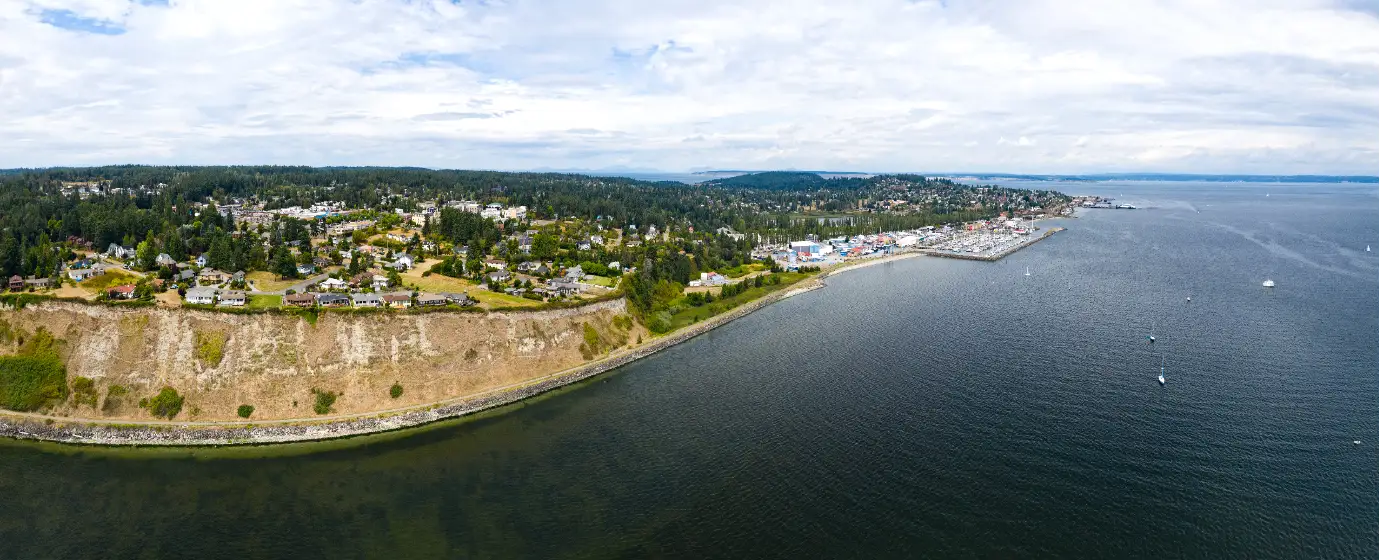
Port Townsend sits at the northeastern tip of the Olympic Peninsula, accessible from Seattle by a 90-minute ferry-and-drive combination — and that geography shapes every neighborhood decision you'll make here. This is not a suburb. It's a small Victorian seaport of roughly 10,500 people where the historic district is genuinely walkable, the outlying areas are genuinely rural, and the gap between those two realities is wider than most relocating buyers expect. The Zillow Home Value Index stood at $642,884 in May 2026 — for a city this size on a peninsula with one road in and one road out, that figure tells you something real about demand. For a full cost-of-living breakdown, see the cost of living in Port Townsend page.
What drives people here isn't a job offer in the traditional sense. Jefferson Healthcare, Port Townsend Paper Corporation, Jefferson County government, the school district, and the local hospitality and retail trades are the anchors, but a striking share of residents work remotely, commute by ferry to the Kitsap or King County job market, or are semi-retired. The Port Townsend School District holds a B rating, according to Niche, and serves the whole city from a compact set of schools. The buyer pool skews toward artists, remote workers, retirees, and people who made a deliberate decision to trade proximity for place.
Prices here are noticeably above state-average for a city this small, driven by the combination of limited buildable land, a nationally recognized historic district, and consistent demand from buyers leaving higher-cost Puget Sound markets. Single-family detached homes make up approximately 74% of the roughly 5,481 housing units in town, and inventory is thin — roughly 3.1 months on the market as of mid-2026, with homes closing at a 99.2% sale-to-list ratio in a median of 19 days. The trade-off for lower density and Victorian character is that you will not find the price relief that comparable inland cities offer.
Whether you're considering a move or deep in the research phase, the sections below break down Port Townsend's eight neighborhoods by character, price range, buyer type, and honest trade-offs — plus the most common mistakes buyers make and where to rent while you figure it all out.
The Port Townsend Reality
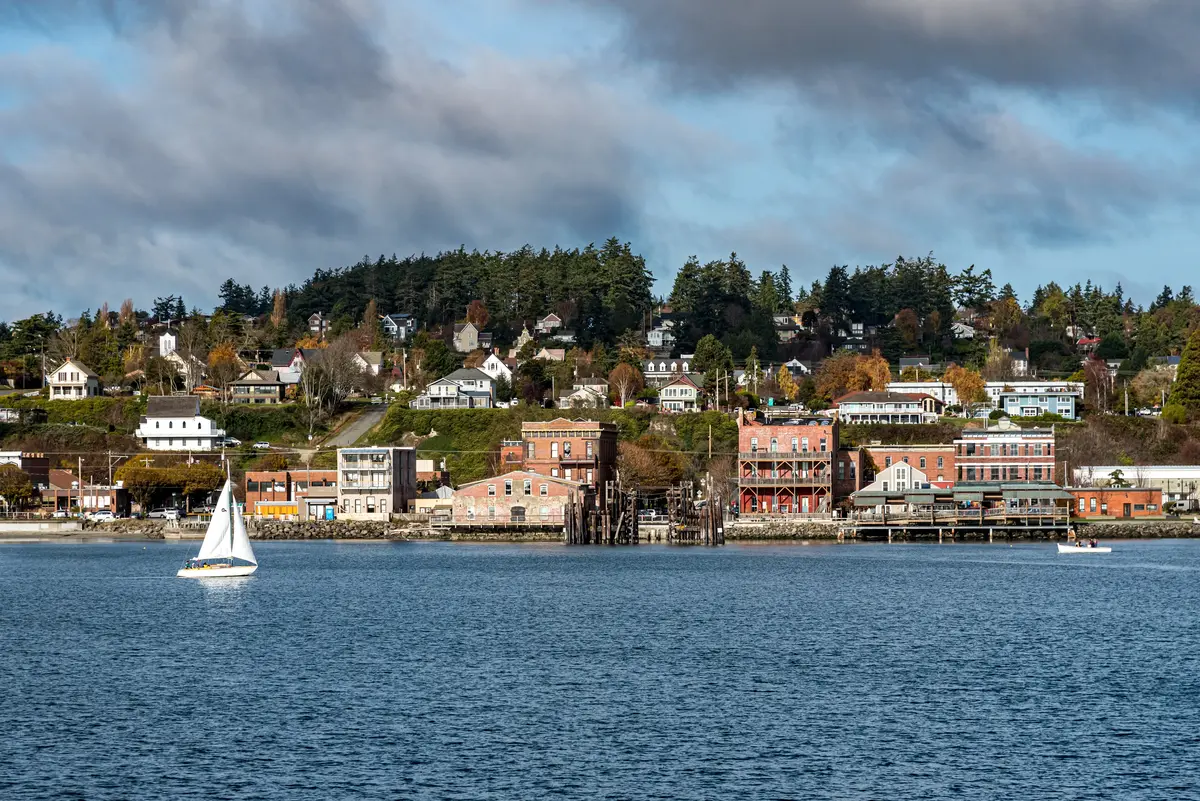
The bluff is the divide. Port Townsend splits cleanly into two elevations — the waterfront commercial district along Water Street and the residential bluff above it, historically called Uptown — and buying without understanding this topographic and social distinction is the single most common error relocating buyers make here.
Water Street and the downtown blocks immediately behind it offer genuine on-foot access to restaurants, the Northwest Maritime Center, the movie theatre, and Sirens Pub. The bluff neighborhoods — Uptown, Castle Hill, Morgan Hill, Happy Valley — are quieter, more residential, and separated from the waterfront by a steep climb. That climb is not metaphorical: there are days in winter when icy bluff streets make driving down to Water Street a deliberate decision rather than a casual errand.
The second reality is distance from the peninsula's single arterial corridor, SR-20. Everything south of downtown — Castle Hill, Morgan Hill, Happy Valley, and especially Kala Point six miles out — adds real commute time if you're catching the ferry at Kingston or running errands in Port Hadlock. North Beach and Fort Worden are the quietest and most park-adjacent options, but they sit at the far north end of the peninsula with no shortcut out. Port Townsend's school district serves the whole city uniformly, so school boundaries don't create the same neighborhood sorting pressure you'd find in a larger city — but proximity to the middle and high school campus on Blaine Street does matter for families who want their teenagers to walk or bike.
Neighborhoods at a Glance
| Neighborhood | Best For | Price Range | Vibe |
|---|---|---|---|
| Uptown | Walkable Families | $575K–$850K | Victorian bluff village; farmers market, bakeries, civic calm |
| Downtown / Water Street | Walkable Renters | $550,000–$950K | Historic waterfront core; galleries, restaurants, tourist energy |
| North Beach | Nature Quiet | $580K–$900K | Tucked beachside enclave; Glass Beach, zero commercial noise |
| Fort Worden | Nature Views | $620K–$1.1M | Park-edge living; historic officers' quarters, lighthouse walks |
| Castle Hill | Families Value | $480,000–$720K | Inland residential; larger lots, modest homes, practical location |
| Morgan Hill | Families Quiet | $490K–$740K | Established mid-city residential; low-key, owner-occupied |
| Happy Valley | First-Time Value | $440K–$680K | Affordable inland pocket; working-class roots, genuine neighbors |
| Kala Point | Luxury Privacy | $650K–$1.3M | Gated planned community; private beach, pool, trails, HOA life |
Best Neighborhood by Buyer Type
| Buyer Type | Best Neighborhood | Why |
|---|---|---|
| First-Time Buyer | Happy Valley | Entry-level price points give you a foothold in a market where most neighborhoods start well above the city median. |
| Luxury Buyer | Kala Point | Gated amenities — private beach, pool, pickleball courts, and trails through Fort Townsend State Park — at the upper end of the local price spectrum. |
| Walkability Seeker | Downtown / Water Street | Water Street puts galleries, the Waterstreet Cafe, and the Northwest Maritime Center within a genuine ten-minute walk of your front door. |
| Families with Kids | Uptown | The Saturday Farmers Market on Lawrence Street, Pane d'Amore Artisan Bakery on Tyler Street, and a short flat walk to the bluff schools make Uptown the most livable day-to-day option for parents. |
| Commuters | Castle Hill | The most direct SR-20 access of any in-city neighborhood shaves minutes off the drive to the Kingston ferry every single morning. |
| Large-Lot Buyers | Morgan Hill | Established lots tend to run larger here than in the bluff neighborhoods, with less tourist foot traffic and more room between houses. |
| Renters | Downtown / Water Street | The highest concentration of rental units in town sits here, giving renters the most options while they decide whether and where to buy. |
Looking to buy in Port Townsend? Estimate your payment.
Enter your numbers to see an estimated monthly mortgage payment.
Estimate only. Excludes HOA fees and mortgage insurance. The interest rate above is a starting point, not a quoted rate — replace it with your own to see real numbers. Insurance is a flat placeholder, not a Port Townsend quote.
Most Popular Neighborhoods in Port Townsend
Uptown
Perched on the bluff above Water Street, Uptown is where Port Townsend residents actually live their daily lives — Saturday Farmers Market on Lawrence Street from April through December, Pane d'Amore Artisan Bakery on Tyler Street for a weekday morning, and some of Washington's best-preserved Victorian residential architecture within walking distance of the Rothschild House Museum (built 1868). The catch is the hill itself: icy winter mornings on the bluff streets are a real operational consideration, and parking during summer weekends when tourists flood the Victorian district gets legitimately frustrating. Prices run $575K–$850K, reflecting the neighborhood's combination of walkable character and limited inventory.
Best for: Remote workers who want walkable daily errands without living above a bar; families who value the farmers market and school proximity over a waterfront view.
Downtown / Water Street
Water Street is the postcard — brick storefronts from the 1880s, locally owned boutiques, a movie theatre, the Northwest Maritime Center, Sirens Pub at 823 Water Street, and the Waterstreet Cafe at 929 Water Street anchoring the restaurant scene. Buying here puts you at the center of Port Townsend's tourist activity, which means summer weekends feel very different from November Tuesdays — and that seasonal swing is real enough that some owners rent short-term during peak season rather than live here full-time. Prices range from $550,000–$950K depending on whether you're looking at a renovated Victorian commercial-residential conversion or a newer infill unit behind the main corridor.
Best for: Buyers who genuinely want to walk to everything and aren't bothered by the summer tourist surge; renters who want the highest concentration of unit options in the city.
North Beach
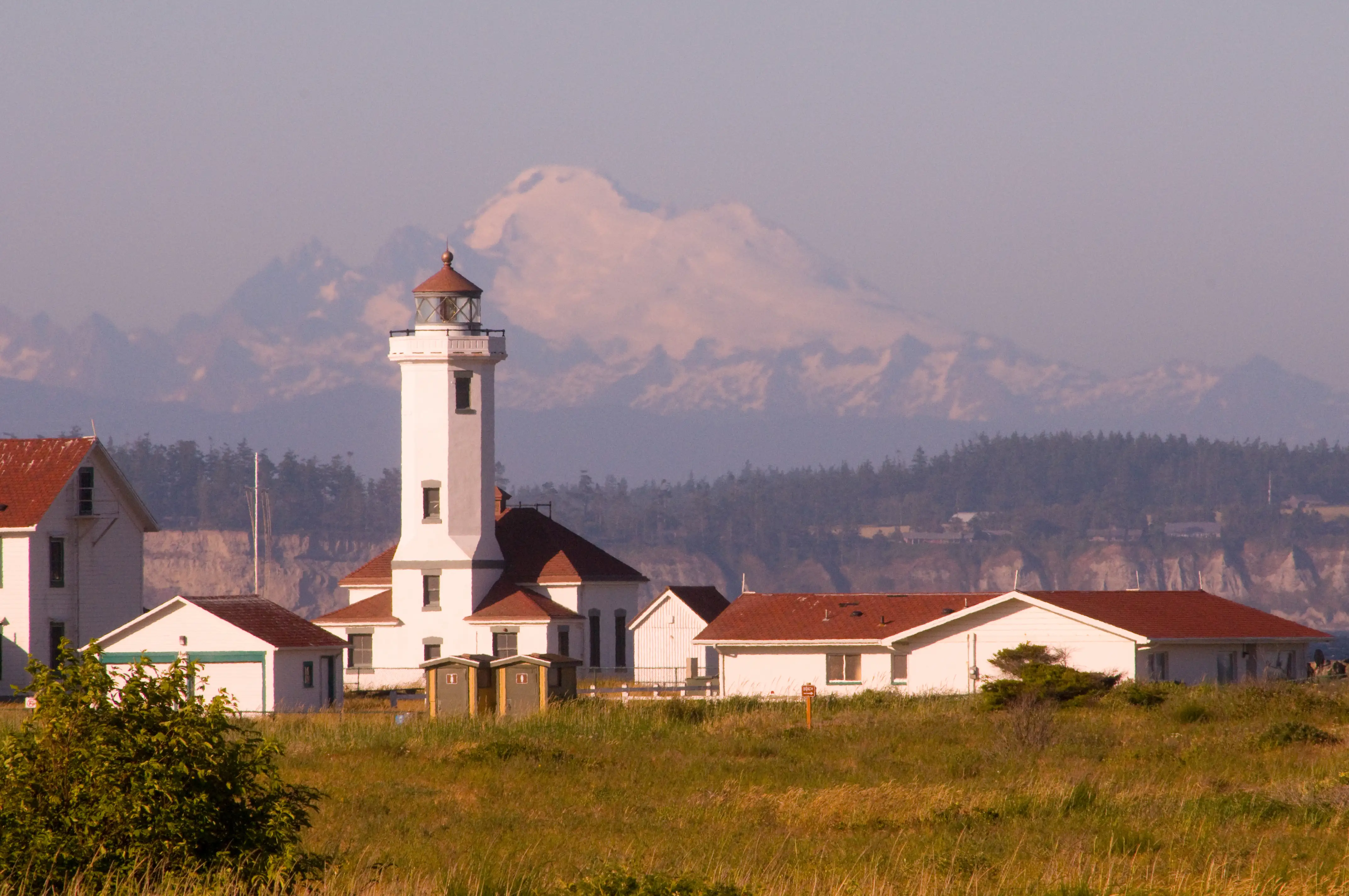
North Beach sits at the northwest edge of the city, immediately adjacent to Fort Worden State Park and just west of the park boundary where North Beach County Park — known locally as Glass Beach — draws beachcombers searching for sea glass worn smooth by Puget Sound currents. It's among the quietest corners of Port Townsend: no commercial strip, no through traffic, and the kind of neighborhood where your closest amenity is a two-mile walk along the water to Point Wilson Lighthouse. The downside is that same isolation — groceries, the post office, and everything else require a car, and the narrow roads in and out of the area back up on peak summer weekends when Fort Worden draws day visitors. Prices run $580K–$900K.
Best for: Buyers who want park-edge quiet and direct beach access and are genuinely comfortable being car-dependent for every errand.
Fort Worden
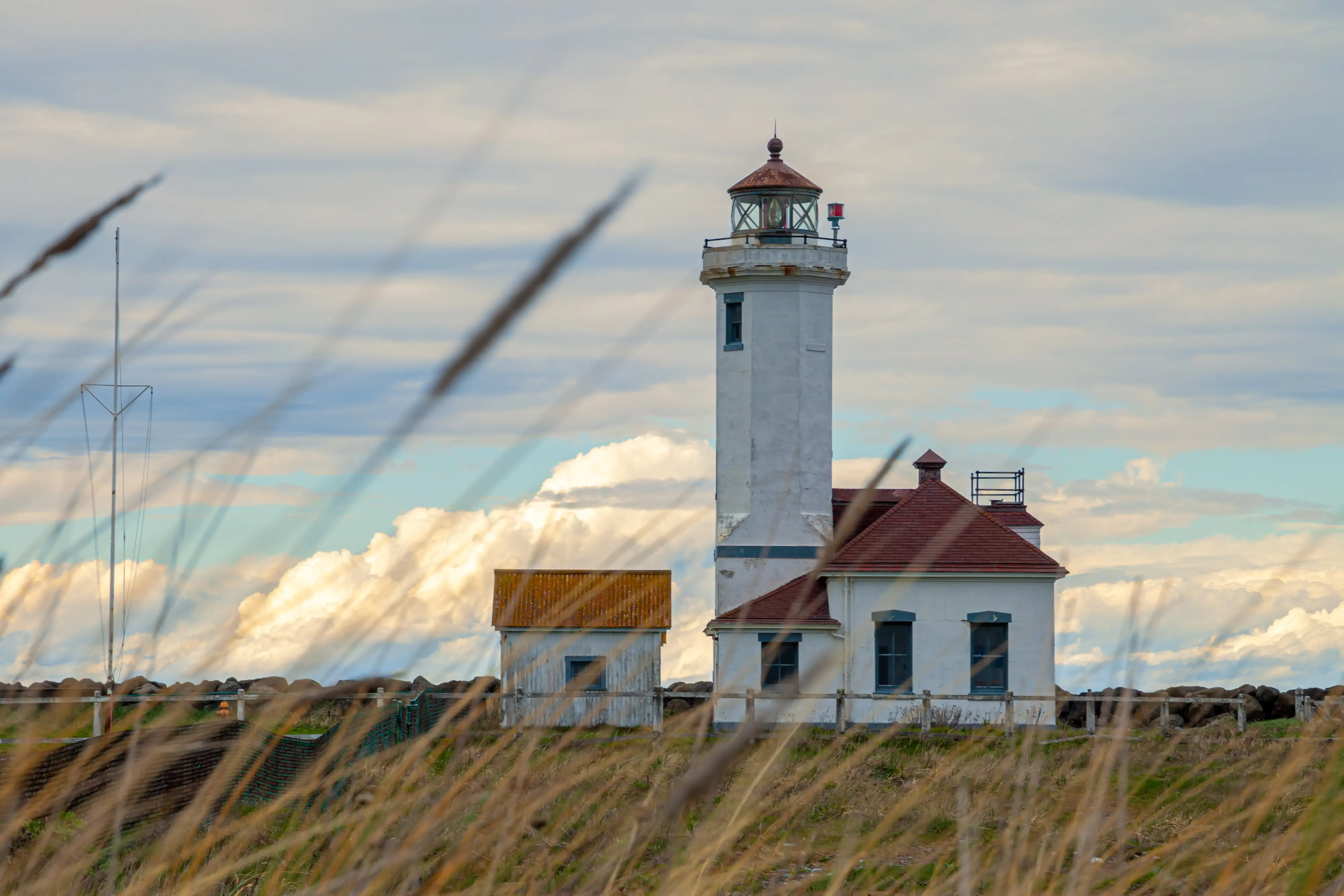
Living adjacent to a 434-acre National Historic Landmark — with two miles of beach, 12 miles of hiking trails, and a free year-round walk to Point Wilson Lighthouse across Admiralty Inlet toward Whidbey Island — is Fort Worden's entire value proposition. The neighborhood around the park includes some of the most architecturally significant homes in the city, including former officers' quarters on the historic upper campus. The operational change worth knowing: Fort Worden Hospitality closed in January 2025, and Washington State Parks now manages upper-campus overnight accommodations seasonally (April 1 through October 31, 2026), which has shifted the neighborhood's commercial energy noticeably. Prices in the Fort Worden area run $620K–$1.1M, and anything with a direct park view trades at the top of that band quickly.
Best for: Buyers who prioritize outdoor access above all else and want to walk out their door onto a trail system most cities couldn't build from scratch.
Castle Hill
Castle Hill is Port Townsend's most practical inland neighborhood — the kind of place where the homes are honest rather than decorative, the lots run generous by local standards, and SR-20 access makes the daily commute to the Kingston ferry measurably less painful than from the north end of the peninsula. You give up the Victorian character and the water views, but you get more house for less money: the $480,000–$720K range puts Castle Hill at the accessible end of the Port Townsend market without pushing you six miles south to Kala Point. Families who need to run kids to after-school activities and still catch an afternoon ferry find this location makes those logistics genuinely manageable.
Best for: Ferry commuters and families with kids who need practical daily logistics more than they need a waterfront address.
Morgan Hill
Morgan Hill sits in the mid-city interior, an established residential neighborhood that doesn't appear on most tourism maps and isn't trying to. Lots tend to run larger than in Uptown or the downtown core, owner-occupancy rates are high, and the neighborhood has the settled, low-key character of a place where people have lived for decades rather than moved to recently. There's no defining commercial strip or landmark — which is either the appeal or the drawback depending on what you're looking for — and prices in the $490K–$740K range reflect that mid-market position. The honest gap is that Morgan Hill lacks both the walkable amenities of Uptown and the amenity package of Kala Point, so you're buying neighborhood quiet and lot size rather than a lifestyle feature.
Best for: Buyers who want a stable, owner-occupied residential neighborhood with larger yards and no tourist foot traffic.
Happy Valley
Happy Valley is where Port Townsend's working-class roots are most visible — smaller homes on modest lots, a genuine mix of long-time residents and newer arrivals, and the most accessible entry-level price band in the city at $440K–$680K. It doesn't have the Victorian grandeur of Uptown or the park proximity of North Beach, but it offers something increasingly rare in Port Townsend: a real foothold for buyers who don't have $700K to spend on a starter home. After six months here, most newcomers report the same surprise — the neighborhood is quieter and more neighborly than they expected, and what looked like a compromise on the way in starts to feel like a sensible decision. The catch is that it's the most inland of the city's residential neighborhoods, requiring a car for essentially everything.
Best for: First-time buyers and anyone who needs to stay below the city median to make the purchase math work.
Kala Point
Kala Point is its own world — a planned, gated residential community approximately six miles south of downtown Port Townsend, with a clubhouse, pool, tennis and pickleball courts, a private beach, a boat launch, and trail access through adjacent Fort Townsend State Park. It looks and functions more like a Pacific Northwest resort community than a city neighborhood, with prices running $650K–$1.3M for single-family homes and condominiums inside the gates. The HOA structure and the six-mile drive to Water Street are the two things you need to be honest with yourself about before buying here: residents who assumed they'd pop downtown regularly often find the distance means they stay on-site more than expected, and HOA fees and rules are part of daily life in a way they aren't anywhere else in Port Townsend.
Best for: Retirees, remote workers, and buyers who want resort-style amenities and privacy and are genuinely comfortable trading proximity to downtown for the lifestyle package inside the gates.
Common Mistakes Buyers Make in Port Townsend
Treating the Whole City as One Market
The $642,884 Zillow Home Value Index (May 2026) is a city-wide average that obscures a roughly $200K spread between Happy Valley entry points and Fort Worden or Kala Point premium listings. Buyers who anchor on the headline number and then tour a waterfront-adjacent Victorian in the Fort Worden area routinely walk away confused about why everything feels overpriced. The city-wide figure is a starting point, not a neighborhood price.
Underestimating the Bluff in Winter
The steep streets connecting Uptown and the bluff neighborhoods to Water Street are charming in July and genuinely treacherous after a hard frost. Port Townsend does get freezing weather, and the bluff grades on streets like Polk and Tyler are steep enough that all-wheel drive is not optional — it's a practical requirement for anyone living above the waterfront and commuting or running errands regularly through December through February.
Buying on the North End Without Running the Ferry Math
North Beach and Fort Worden are beautiful, and buyers regularly fall in love with the park access and the lighthouse walk. But those neighborhoods sit at the opposite end of the peninsula from SR-20 and the Kingston ferry corridor. If you're commuting to the Kitsap or King County job market even two or three days a week, add the drive time from the north end realistically — and then add it again for the return trip. Buyers who didn't run those numbers honestly are among the most likely to list again within two years.
Assuming Kala Point Is Truly "In" Port Townsend
Kala Point appears in Port Townsend MLS listings and shares the 98368 zip code, but it's six miles south of Water Street. Buyers who buy there expecting to pop downtown for a farmers market morning or a quick dinner on Water Street discover quickly that six miles on a two-lane peninsula road — especially in summer tourist traffic — feels longer than six miles on an urban arterial. It's a different lifestyle than living in the city proper, and confusing the two is the most reliable source of Kala Point buyer regret.
Best Areas to Rent in Port Townsend
| Area | Ideal For | Typical Rent Range | Trade-off |
|---|---|---|---|
| Downtown / Water Street | Renters who want walkable access and are exploring the city before buying | $1,400–$2,200/mo | Tourist-season noise; limited parking; smaller units in older buildings |
| Uptown | Remote workers and couples who want neighborhood quiet with errands on foot | $1,500–$2,100/mo | Icy bluff streets in winter; fewer available units than downtown |
| Castle Hill | Ferry commuters and families who need SR-20 access and more space | $1,300–$1,900/mo | Car-dependent; less character than the Victorian core |
| Happy Valley | Budget-conscious renters and anyone new to the market who needs time to save | $1,100–$1,700/mo | Most inland location; no walkable amenities; limited rental inventory |
| Kala Point | Renters who want HOA amenities and privacy without committing to a purchase | $1,800–$2,800/mo | Six miles from downtown; HOA rules apply to renters; limited unit turnover |
Port Townsend's rental market is thin by design — with approximately 74% of housing stock in single-family detached homes and a homeownership culture that runs deep, available rentals turn over quickly and rarely sit on the market long enough for a deliberate search from out of state. If you're relocating and want to rent first, treat the rental phase as a six- to twelve-month window to understand which neighborhood actually fits your daily life before committing — and start your search before you arrive, not after.
Local Expert Takeaway: The buyers who land well in Port Townsend are the ones who drove both the bluff streets and the south peninsula road on a wet February morning before making an offer. The Victorian architecture and the ferry commute math interact in ways that are hard to appreciate from a summer visit: Uptown's Lawrence Street Farmers Market and Pane d'Amore Artisan Bakery on Tyler Street are genuinely wonderful, and Water Street with Sirens Pub and the Waterstreet Cafe is one of the most walkable small-city corridors in Washington — but none of that cancels the isolation of the peninsula in winter or the real distance between Kala Point's gates and a weeknight dinner downtown. Match the neighborhood to how you actually live, not how you imagine you might.
Quick Takeaways & FAQs
✅ Port Townsend's Victorian historic district along Water Street and the Uptown bluff is one of the most authentically walkable small-city neighborhoods in Washington state.
⚠️ The peninsula's single-road geography means neighborhood choice has real daily consequences — North Beach and Fort Worden buyers who ferry-commute add meaningful drive time compared to Castle Hill or Happy Valley.
📍 Kala Point appears in Port Townsend MLS listings but sits six miles south of downtown — a lifestyle difference that surprises buyers who didn't visit on a grey winter weekday before signing.
What is the most walkable neighborhood in Port Townsend?
Which Port Townsend neighborhood has the lowest home prices?
Is Kala Point actually part of Port Townsend?
What happened to Fort Worden's lodging and how does it affect the neighborhood?
Which Port Townsend neighborhood is best for ferry commuters?
Moving to Washington?
Tell us what you need help with and we'll connect you with local resources.
