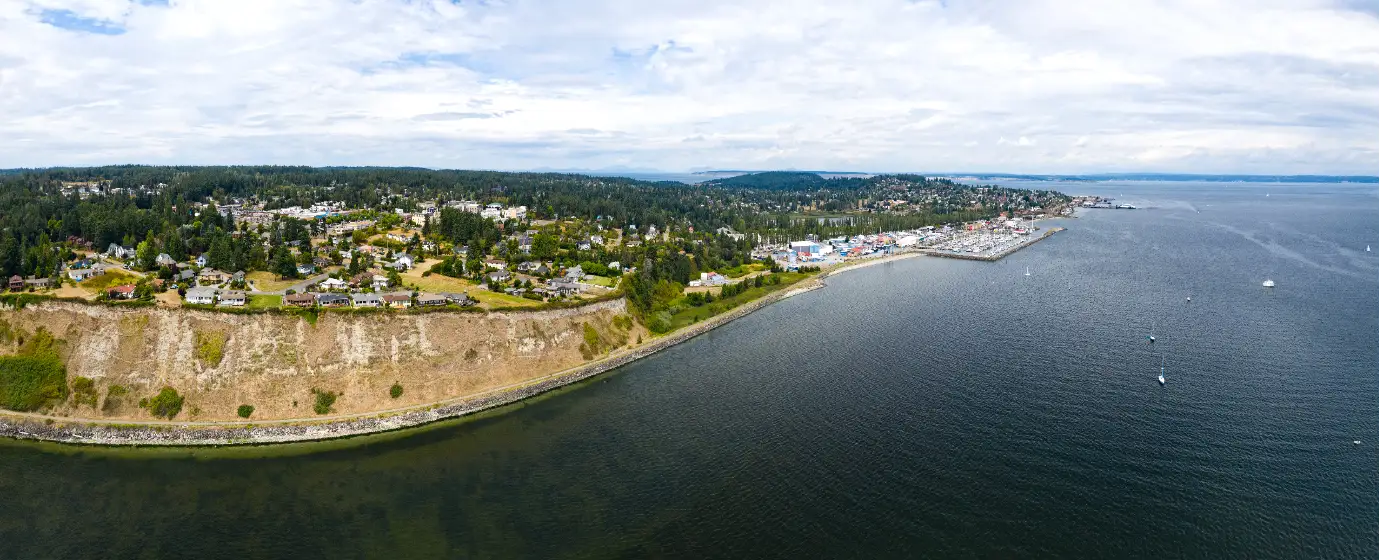
People relocating to the Olympic Peninsula often assume that a small waterfront city of around 10,500 people must be either perfectly safe or dangerously overlooked. The reality is more specific and more interesting than either assumption. Port Townsend sits at the end of a peninsula, separated from Puget Sound's suburban sprawl by water and a 90-minute ferry ride to Seattle — and that geographic remove shapes its safety profile in ways that aren't obvious until you look at the actual numbers.
The headline figure: Port Townsend's violent crime rate is 1.8 per 1,000 residents, based on FBI-reported data. That's roughly half the 2024 U.S. national rate of approximately 3.71 per 1,000. Property crime sits at 13.9 per 1,000 — well below Washington state's 2024 average of approximately 24.98 per 1,000 and below the national figure of approximately 18.35 per 1,000. For a city that draws artists, retirees, maritime workers, and remote employees from Seattle and beyond, those numbers carry real weight.
Context matters, though. Washington state ranks last in the nation for police officers per capita — 1.38 officers per 1,000 residents versus a national average of 2.31, according to the Washington Association of Sheriffs and Police Chiefs. Port Townsend is not immune to that statewide staffing reality. The Port Townsend Police Department has leaned into community policing and volunteer programs to compensate, and proactive enforcement was up 18% in 2024. But a small department covering a peninsula city with a significant tourist and seasonal population is a different operational reality than a comparably sized inland suburb.
Whether you're considering a move to Uptown, Fort Worden, or one of the quieter residential areas near Kala Point, the sections below walk through Port Townsend's crime data in full — how it compares to state and national benchmarks, what the numbers look like neighborhood by neighborhood, what the local police department is actually doing, and what longtime residents notice that the statistics don't capture.
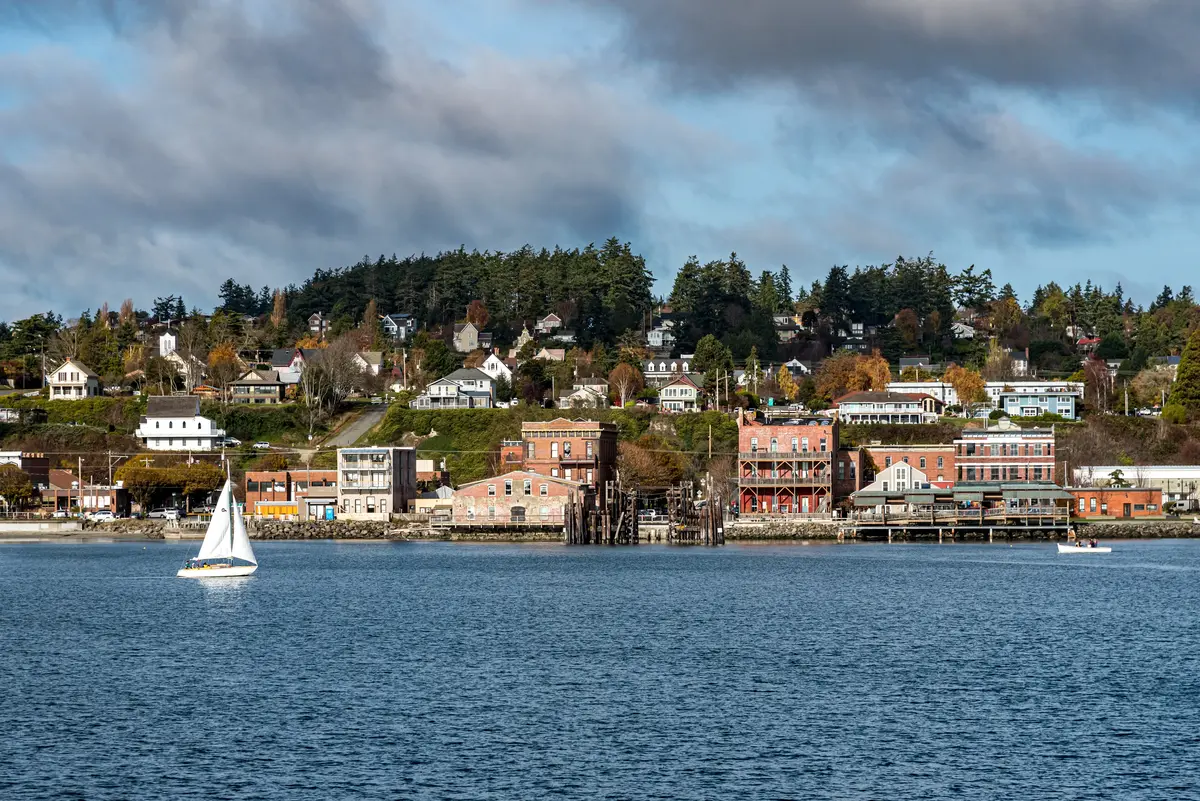
Port Townsend Crime Rates vs. State and National Averages
The Numbers in Plain Terms
Port Townsend's violent crime rate of 1.8 per 1,000 residents isn't just below average — it's well below average by almost any benchmark you choose. The 2024 U.S. national violent crime rate, reported by the Bureau of Justice Statistics and FBI, was approximately 3.71 per 1,000. Washington state came in at roughly 3.29 per 1,000 for 2024. Port Townsend's figure is lower than both.
Property crime tells an even stronger story. At 13.9 per 1,000, Port Townsend's rate is nearly half of Washington state's 2024 figure and noticeably below the national average as well. AreaVibes, citing 2024 FBI data, calculated that Port Townsend's property crime rate is 1.75 times lower than the state average — making this the category where the city most clearly outperforms its Washington peers.
| Metric | Port Townsend | Washington State (2024) | U.S. National (2024) |
|---|---|---|---|
| Violent crime per 1,000 | 1.8 | ~3.29 | ~3.71 |
| Property crime per 1,000 | 13.9 | ~24.98 | ~18.35 |
| vs. state violent average | 45% lower | — | — |
| vs. national violent average | ~51% lower | — | — |
| vs. state property average | ~44% lower | — | — |
| vs. national property average | ~24% lower | — | — |
Both Washington state and the nation saw meaningful crime reductions in 2024 — statewide, violent crime fell 7.6% and property crime fell 13.4%, according to the Washington Association of Sheriffs and Police Chiefs annual report. Nationally, the FBI reported violent crime down 4.5% and property crime down 8.1%, reaching the lowest recorded rates since at least 1969. Port Townsend's figures sit inside a broader improving trend, not as an outlier against a worsening backdrop.
What the Numbers Don't Capture
Small-city crime rates can swing meaningfully from one year to the next with just a handful of incidents — a reality that matters more in a city of 10,500 than it would in a city of 100,000. A rate of 1.8 violent crimes per 1,000 residents translates to roughly 19 incidents across the whole city in a given year. One unusual month can move the annual figure noticeably. Treat the rate as a trend indicator, not a guarantee.
Neighborhood Safety: What Varies Across Port Townsend
Port Townsend doesn't have the kind of stark geographic crime divide you see in larger cities — no highway splitting a safe west side from a higher-risk east side, no single corridor that draws concentrated property crime. But the city's neighborhoods do have distinct characters, and understanding them matters before settling on where to look. For a fuller picture of what each area is actually like to live in day-to-day, see the best neighborhoods in Port Townsend.
Downtown / Water Street
The Water Street Historic District is Port Townsend's commercial and tourism core. It draws the highest foot traffic of any area in the city, concentrated especially on summer weekends during events at the Northwest Maritime Center or the Jefferson County Courthouse area. Higher foot traffic generally correlates with a higher share of opportunistic property incidents — a parked car left visibly unlocked, an unattended bag on a café table. This is where most visitors spend their time, and where most minor property incidents occur by simple density.
Best for: Walkable buyers comfortable with tourist-season rhythm and willing to be aware of their surroundings near the waterfront.
Uptown
Uptown sits on the bluff above downtown, separated from the tourist activity below by Lawrence Street's climb. Residents here are predominantly long-term locals — older Victorian homes, quieter streets, and a pace that feels genuinely residential even in peak summer. The Uptown neighborhood consistently reads as among the calmer areas in town.
Best for: Quiet Families
Fort Worden
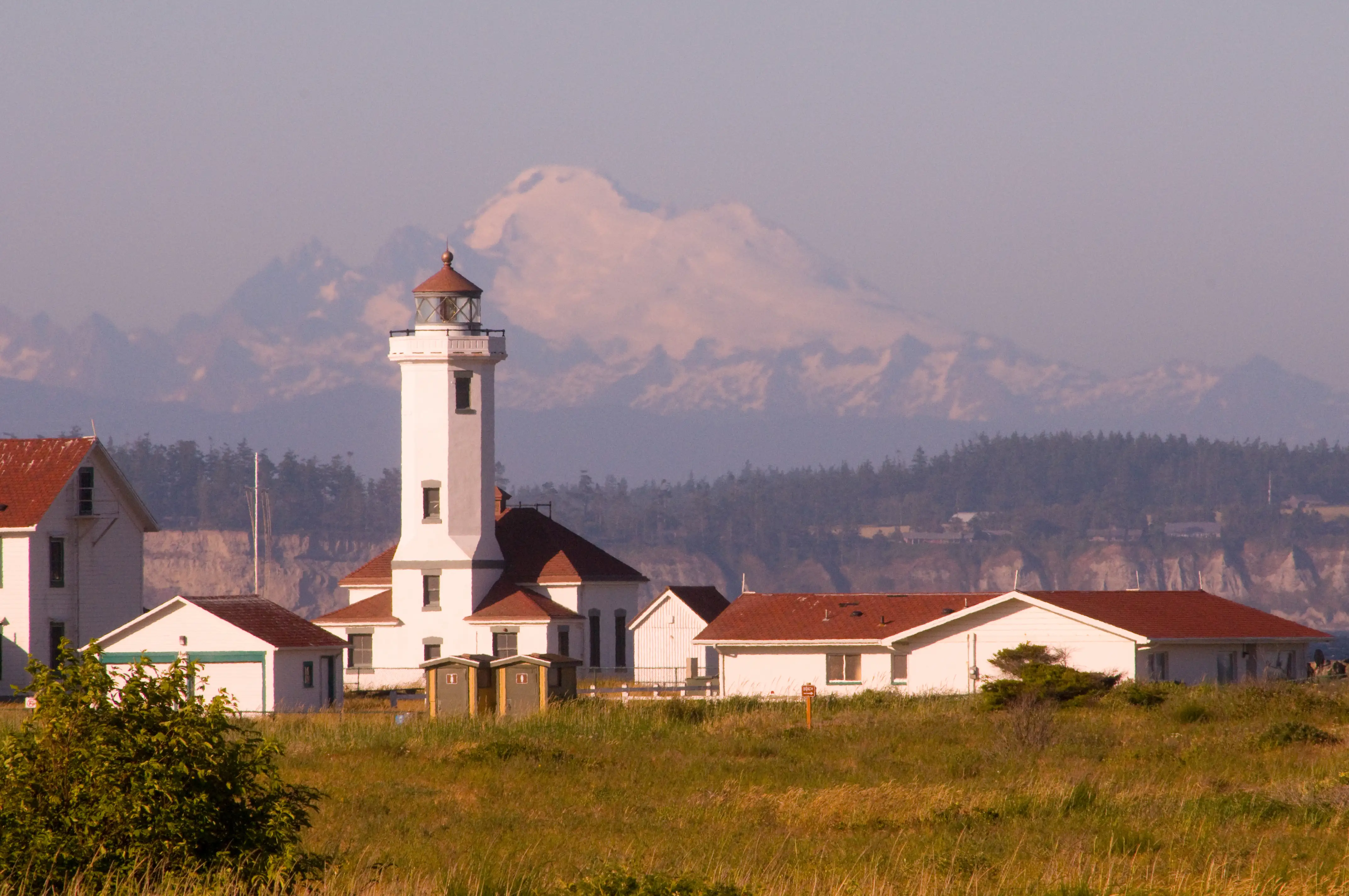
The Fort Worden State Park area occupies the northern tip of the peninsula. It's a mix of park infrastructure, conference facilities, and a small number of residences nearby. The park's size and its role as an event venue (Centrum arts programs draw visitors year-round) mean the area is active but not in a way that generates significant crime concern. Residents nearby tend to be among the most satisfied with their day-to-day sense of safety.
Best for: Nature Quiet
North Beach, Castle Hill, and Morgan Hill
These three residential areas stretch north and northwest of downtown, becoming progressively quieter and more removed from tourist activity. North Beach has water views and is popular with established residents. Castle Hill and Morgan Hill are among the most genuinely suburban-feeling parts of Port Townsend — single-family homes, low through-traffic, and limited commercial activity that might attract opportunistic property crime.
Best for: Families Privacy
Happy Valley and Kala Point
Happy Valley is a modest, workaday residential neighborhood that tends to attract working families and longer-term residents over new arrivals. Kala Point is a private community south of the city limits proper — gated, with its own roads and amenities, and effectively insulated from most of the dynamics affecting Port Townsend's downtown-adjacent areas. If low property crime exposure is your primary concern, Kala Point is the area that most consistently delivers it, at the cost of being more removed from everything.
Best for: Privacy Value
What the Port Townsend Police Department Is Actually Doing
A Small Department with a Community-Forward Strategy
The Port Townsend Police Department is a small agency by any measure — which is both a local reality and part of a statewide pattern. Washington ranks 51st in the nation (last among all 50 states and D.C.) for police officers per capita, at 1.38 officers per 1,000 residents against a national average of 2.31. Port Townsend operates within that constraint, not outside it.
What the department has invested in instead is visibility and community integration. Proactive enforcement — traffic stops, DUI checks, direct community engagement — was up 18% from 2023 to 2024, according to the Port Townsend Leader's reporting on Chief Olson's annual report presentation. Officers logged over 912 hours of training in 2024 alone. For a department of this size, those are meaningful commitments.
BlueBridge Alliance and the Community Policing Model
In January 2026, the PTPD announced a partnership with BlueBridge Alliance, giving officers the ability to provide immediate, short-term direct assistance — food, clothing, fuel, shelter, transportation — to community members in crisis situations. The practical goal is to address situations before they escalate into criminal incidents, particularly those involving homelessness or acute need.
This isn't a substitute for enforcement — it's a complement to it. The department also runs a civilian volunteer program: residents who complete the PTPD Citizen Academy can assist with patrols and community engagement. It's the kind of approach that works well in a small, tight-knit city where the police chief can present the annual report to the community directly and field questions in a public forum at Velocity, the café on Water Street that the department itself has used as a meeting venue.
The Honest Caveat
A small department covering a seasonal tourist destination means that response capacity is stretched differently in July and August than in February. If you're used to urban police coverage and expect rapid response as a baseline, Port Townsend will feel different. That's not a criticism — it's the operational reality of a small peninsula city, and the crime numbers suggest the community manages it well. But it's worth understanding before you decide on a neighborhood far from the town center.
Looking to buy in Port Townsend? Estimate your payment.
Enter your numbers to see an estimated monthly mortgage payment.
Estimate only. Excludes HOA fees and mortgage insurance. The interest rate above is a starting point, not a quoted rate — replace it with your own to see real numbers. Insurance is a flat placeholder, not a Port Townsend quote.
What Residents Notice That the Statistics Miss
The Tourist Season Shift
Port Townsend's population roughly doubles in July and August, between Centrum events at Fort Worden, the wooden boat festival, and general Olympic Peninsula tourism. Long-term residents notice a corresponding uptick in minor property incidents during this window — not dramatic, but real. Cars parked along the waterfront or near the ferry terminal are the most common targets; leaving anything visible in a parked vehicle is the one habit locals uniformly recommend dropping.
By October, the city quiets so completely that newcomers are sometimes caught off guard by the shift. The streets near Water Street that felt energetic in summer feel almost empty by November. For some people that's the whole point. For others — particularly those who moved expecting year-round vibrancy — it's a genuine adjustment.
What People Don't Expect After Six Months
The thing that surprises new residents most isn't crime — it's how much the sense of safety here is social rather than structural. In a city this small, you know your neighbors, you recognize the regulars at Port Townsend Brewing Company on 10th Street, and you develop an instinctive read on what's normal and what isn't. That social awareness functions as a kind of informal community watch that doesn't show up in any crime index.
The flip side: visible homelessness and associated behavioral health challenges have increased in recent years on the Olympic Peninsula broadly, and Port Townsend is not exempt. This manifests less as crime and more as concentrated social need in certain downtown-adjacent spots. The PTPD's BlueBridge Alliance partnership is a direct response to this dynamic. It's worth walking the downtown area on a weekday, not just a summer weekend, to get an accurate read on the current conditions before committing to a block near Water Street.
Why Some People Leave
The residents who leave Port Townsend for safety reasons are rare — the numbers simply don't support that as a common driver. More often, the people who leave cite isolation (the ferry adds friction to any Puget Sound connection), limited services, and the small-city social dynamics that come with a population of 10,500. Safety is almost never the complaint.
How to Research Safety Before Choosing a Neighborhood
Start with the Source Data
The Port Townsend Police Department publishes an annual report directly at cityofpt.us, with the 2024 report released in February 2025 and the 2025 report in March 2026. These are the most locally specific documents available — not aggregated estimates or modeled projections, but actual incident and call-for-service data from the city's own records. Reading the most recent one takes about twenty minutes and gives you a more grounded picture than any third-party crime ranking.
Third-party sites like NeighborhoodScout and AreaVibes are useful for quick comparisons — NeighborhoodScout's analysis of 2024 FBI data, for instance, pegs Port Townsend's property crime rate at 14 per 1,000, consistent with the city fact sheet's 13.9 figure. But different aggregators use different methodologies, year ranges, and counting conventions, so the specific grades or scores they assign can vary substantially from one platform to another for the same city. Use them for directional context, not as definitive rankings.
Spend Time in the Neighborhood at Different Times
The single most useful thing you can do before deciding on a neighborhood is visit twice: once on a summer weekend afternoon, and once on a weekday morning in the shoulder season. The gap between those two experiences is wider in Port Townsend than in almost any comparably sized city in Washington. What feels lively in August can feel genuinely remote in March — and that shift affects not just ambiance but also practical things like how quickly you'd notice something unusual on your street.
Talk to the Department Directly
The PTPD runs a Citizen Academy for residents who want a more substantive look at how the department operates. Even if you're not yet a resident, attending a city council meeting or a community engagement session is an accessible way to hear directly from officers about where they're focused and what trends they're tracking. For a department of this size in a city this connected, that level of access is genuinely available — and worth using.
| Research Step | Where to Find It | What It Tells You |
|---|---|---|
| PTPD Annual Report | cityofpt.us/police | Actual local incident and call data |
| FBI UCR state comparison | plaincrime.com/states/washington | How PT compares to WA and U.S. benchmarks |
| NeighborhoodScout | neighborhoodscout.com | Third-party FBI-data aggregation; good for quick scan |
| AreaVibes crime page | areavibes.com | City-vs-state index; useful for property crime context |
| Neighborhood walk (weekday, off-season) | In person | Ground-truth that no dataset captures |
| PTPD Citizen Academy | cityofpt.us/police | Direct department access; patrol priorities |
Cross-referencing two or three of these sources will give you a far more reliable picture than any single ranking — and the PTPD's own published data should anchor the comparison.

Local Expert Takeaway: Port Townsend's crime numbers are genuinely good — a violent crime rate nearly half the national average and a property crime rate that outperforms almost every Washington city of comparable size. The practical safety concerns here are ordinary small-city ones: don't leave valuables visible in a parked car near the Water Street waterfront during festival season, and understand that a small department serving a seasonal tourist population operates differently from an urban force. The social fabric in a city this size — where regulars know each other at spots like Port Townsend Brewing Company on 10th Street — provides an informal layer of community awareness that doesn't show up in any index. Read the PTPD's annual report at cityofpt.us before committing to a specific block; it's the most locally specific document available and takes less than half an hour to absorb.
Quick Takeaways & FAQs
✅ Port Townsend's violent crime rate of 1.8 per 1,000 is roughly half the 2024 U.S. national rate — a meaningful margin, not a rounding difference.
⚠️ Washington state ranks last in the nation for police officers per capita, and Port Townsend's small department feels that constraint most during summer tourist season when the city's effective population nearly doubles.
📍 The PTPD publishes a full annual report at cityofpt.us — reading it is the single most useful research step before settling on a specific neighborhood.
Is Port Townsend, WA a safe place to live?
What is Port Townsend's crime rate compared to the rest of Washington?
Which neighborhoods in Port Townsend are the safest?
Does Port Townsend have a significant homelessness or property crime problem?
How does the Port Townsend Police Department handle public safety for such a small city?
Moving to Washington?
Tell us what you need help with and we'll connect you with local resources.
