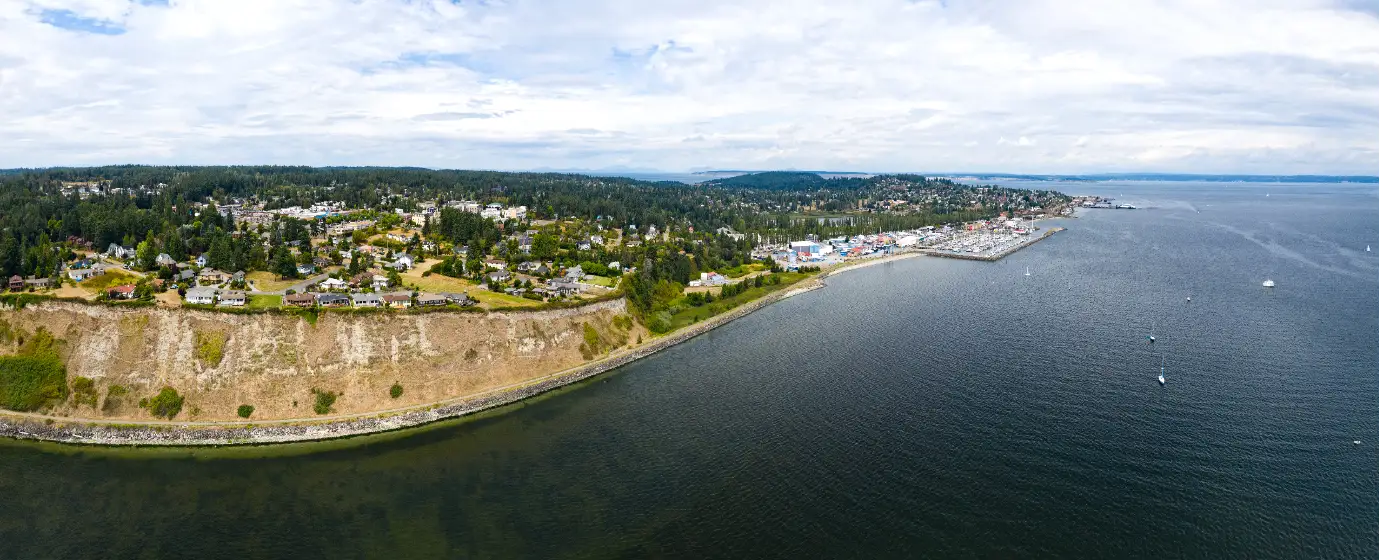
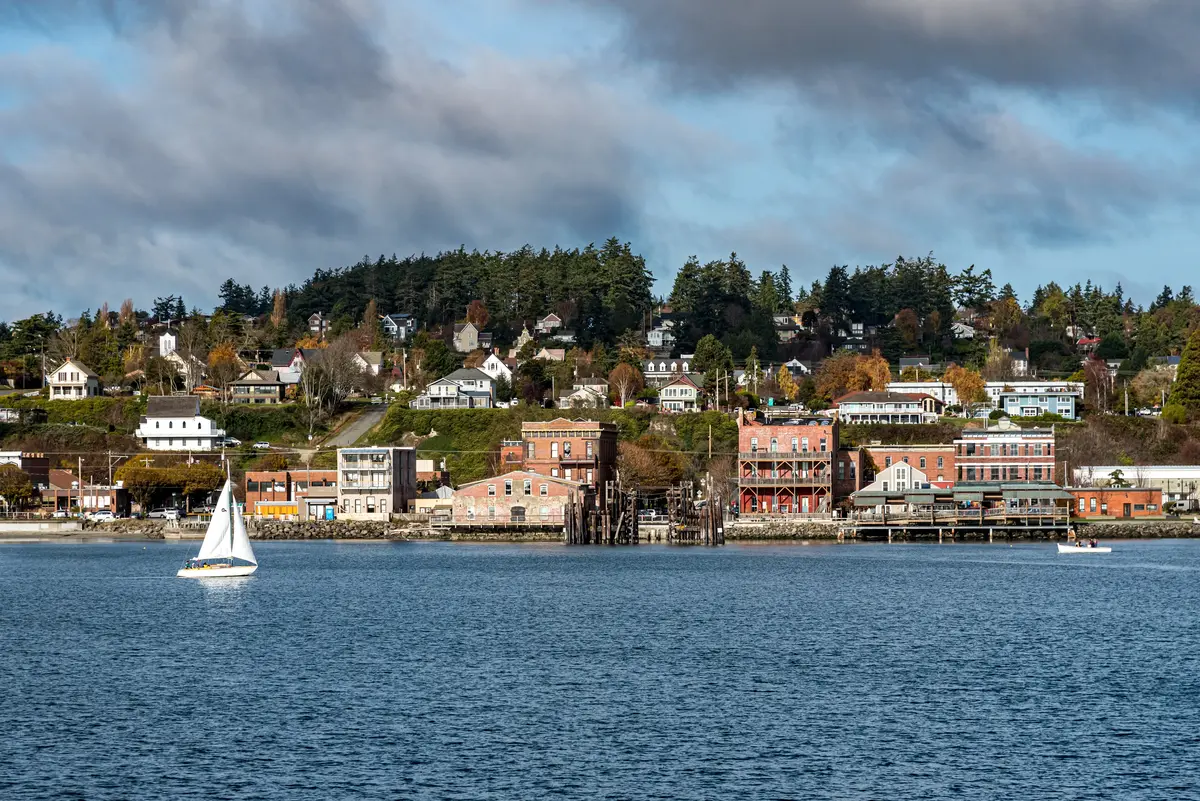
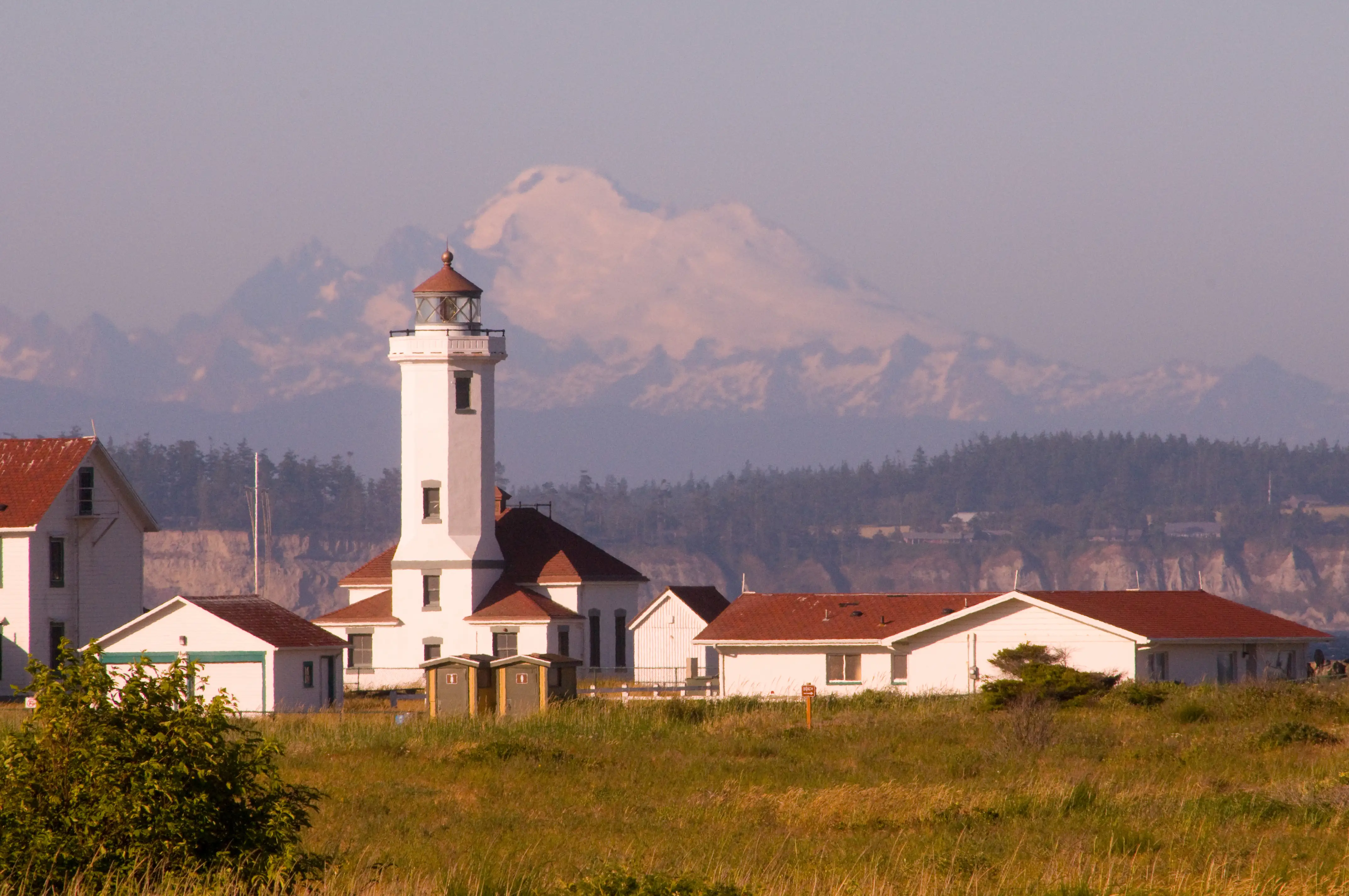
Maybe you've been priced out of the Bay Area and someone mentioned a small Victorian seaport on the Olympic Peninsula. Maybe you drove through Port Townsend on a weekend trip and couldn't shake the feeling. Either way, the first thing most Californians say when they land here is that it feels nothing like what they expected a Pacific Northwest town to look like — the ornate 19th-century brick storefronts along Water Street, the view across Admiralty Inlet toward the Cascade Range, the lighthouse at Point Wilson framing the whole scene. What surprises them six months later is how different the daily rhythm is from anything they left behind. Port Townsend sits at the northeastern tip of the Olympic Peninsula, reached by ferry from the west side of Puget Sound or by road through Jefferson County. It is not a suburb of Seattle. It is a small city of roughly 10,500 people that has stayed small by geography and intention, and that fact shapes everything from the job market to the social scene.
The economic backbone here is a mix of public sector and legacy industry. Jefferson Healthcare, the Port Townsend Paper Corporation — a paper mill that has anchored the local economy for generations — Jefferson County government, and the Port Townsend School District are the largest employers. Tourism and maritime trades layer on top of that, concentrated around the Northwest Maritime Center and the historic Water Street district. This is not a tech-corridor suburb, and it is not trying to be. Californians who move here are largely drawn by the arts community, the sailing culture, the proximity to Fort Worden State Park, and a housing market that looks radically different from anything on the California coast. The Port Townsend School District holds a B rating, according to Niche, and the community tends to attract buyers who are done optimizing for proximity to a major employer and ready to trade that for something harder to quantify.
On the numbers: Port Townsend's overall cost of living runs noticeably below California's coastal metros — estimated at roughly 46% below San Francisco on a total-cost basis — though it is still above the national average, driven primarily by housing. Groceries and utilities run closer to the national average than anything you experienced in Los Angeles or the Bay Area. The ferry to Seattle takes approximately 90 minutes each way, which is not a daily commute most people sustain indefinitely. The full cost-of-living breakdown covers utilities, groceries, and transportation in detail. Health insurance premiums run noticeably below what you were likely paying in California, though you will travel farther for specialist and advanced care than you would from a major metro.
Whether you're under contract already or just starting to look, the sections below break down what Californians specifically need to know about Port Townsend's home prices and tax picture, the lifestyle shift, the real trade-offs, and how to think about the financial case for making this move.
The Home Price Reality: What Your California Dollars Buy Here
Port Townsend's typical home value sits at $642,884 (Zillow Home Value Index, May 2026). If you're arriving from San Francisco, Oakland, or Los Angeles, that number reads as almost disorienting — not cheap, but a fraction of what comparable coastal living costs in California.
The honest framing is this: Port Townsend is not inexpensive by national standards. Its housing cost index runs around 163 (national average = 100). What it is, relative to California's coastal markets, is dramatically more accessible.
What Buyers Are Actually Seeing
Entry-level inventory — older construction, smaller lots, some deferred maintenance — typically starts below the city-wide median. Homes in walkable areas like Downtown/Water Street or Uptown command premiums; newer construction near the quieter residential streets around the edges of town can offer more space for similar money. For the full neighborhood-by-neighborhood breakdown, the Port Townsend neighborhoods guide covers character and geography in detail.
| Market | Typical Home Value | What $642K Buys |
|---|---|---|
| San Francisco | ~$1.3M+ | A small condo or studio in many neighborhoods |
| Los Angeles | ~$900K–$1.1M (westside) | A modest 2BR in less central areas |
| San Diego | ~$900K+ | A 2BR condo in most neighborhoods |
| Sacramento | ~$430K–$480,000 | A solid 3BR in most suburban areas |
| Fresno | ~$330K–$360K | A larger 3–4BR with yard |
| Port Townsend, WA | $642,884 | A 3BR Victorian, craftsman, or newer home with Olympic Peninsula views in range |
The comparison that matters most is against wherever you're actually moving from — but in nearly every California coastal market, Port Townsend's median represents a significant step down in purchase price. That gap is what tends to make the financial case compelling even before you account for the tax picture.
One thing Californians with Proposition 13-protected properties should model carefully: you may be leaving a very low assessed-value tax bill behind. Port Townsend's effective property tax rate is approximately 0.90% — slightly above California's statewide effective average of approximately 0.76% on paper, but the absolute dollar amount on a $642,884 home is a fraction of what you'd pay on a million-dollar-plus California property without Prop 13 protection. The math usually still works in Port Townsend's favor. See the full cost-of-living page for more on property taxes and how Washington's structure compares.
The Tax Shift: Why California Earners Pay Attention
Washington has no state income tax on wages or salaries. California's progressive income tax tops out at 13.3% — 12.3% plus a 1% Mental Health Services Tax on income above $1 million — applied to wages, capital gains, and investment income alike. For most people moving from California, this is the single largest financial change they will experience.
What the Income Tax Savings Look Like
A California wage-earner making $100,000 per year saves an estimated $5,762 annually in state income tax by relocating to Washington. That figure climbs sharply at higher income levels, which is one reason the relocation math appeals so strongly to remote workers and self-employed buyers who aren't anchored to a California employer.
| Income Level | California State Tax (est.) | Washington State Tax | Annual Difference |
|---|---|---|---|
| $60,000 | ~$2,700 | $0 | ~$2,700 saved |
| $100,000 | ~$5,762 | $0 | ~$5,762 saved |
| $150,000 | ~$11,000+ | $0 | ~$11,000+ saved |
| $250,000 | ~$22,000+ | $0 | ~$22,000+ saved |
| $500,000 | ~$52,000+ | $0 | ~$52,000+ saved |
| $1,000,000+ | ~$133,000+ | $0 until 2028* | ~$133,000+ saved (near-term) |
*Washington enacted ESSB 6346 (signed March 30, 2026): starting January 1, 2028, a flat 9.9% income tax will apply to household income above $1 million. Income below $1 million remains untaxed. This does not affect typical wage earners, but high-income buyers moving from California should factor the 2028 timeline into their planning.
Sales Tax: The Offset
Washington makes up some of that income tax gap through sales tax. Port Townsend has a combined state and local sales tax rate of 9.5%, per the Washington Department of Revenue's Q3 2026 official rate table. That is higher than California's 7.25% statewide base — but lower than what most Californians in major metros actually pay. Los Angeles and San Francisco combined rates reach 10.25–10.75%, meaning Port Townsend's rate is likely a modest improvement on what you're used to.
Washington exempts most groceries and prescription drugs from sales tax, which matters for day-to-day budgeting. California exempts groceries too, so that particular benefit is roughly a wash — but the overall picture on consumable spending tends to favor Washington for most household budgets.
Capital Gains: A Critical Nuance
Washington currently taxes no capital gains on ordinary income. California taxes capital gains as ordinary income at your full marginal rate — up to 13.3%. If you are selling a California property with significant appreciation and plan to reinvest the proceeds in Port Townsend, establishing Washington residency before the sale (not after) is the move most tax advisors will walk you through. This is one area where the order of operations matters enormously and where getting advice from a tax professional before signing anything is worth the cost.
The Lifestyle Shift: What California Doesn't Prepare You For
Port Townsend is genuinely unlike any California city — not in a romanticized way, but in ways that affect how you spend a Tuesday evening. There are no chain restaurants on Water Street. Independent cafés and long-running local spots draw a consistent crowd for straightforward, well-executed food in rooms that haven't tried to rebrand themselves into something they aren't. The brewery scene on the north end of town is where you end up after a walk along the waterfront when the weather cooperates, which it does more than newcomers expect from a Pacific Northwest September.
The Seasonal Surprise
The Olympic Peninsula's rain shadow effect is real: Port Townsend sits in a notably drier microclimate than Seattle or the western Olympics, receiving far less annual rainfall than the reputation of the Pacific Northwest suggests. Californians expecting nine months of Seattle-gray tend to be pleasantly surprised. What they don't anticipate is the January wind off Admiralty Inlet — not cold the way Denver is cold, but persistent in a way that takes adjustment.
Summer brings a different surprise: the population expands noticeably as tourists arrive for sailing events, the Jefferson County International Faire, and Fort Worden's ongoing arts programming. Water Street slows down. Parking near the Northwest Maritime Center gets competitive. People who moved here for the quiet learn quickly that the quiet is a fall-through-spring phenomenon.
What Leaves People After Two Years
The honest attrition reason among California transplants is usually one of two things: the job market or the distance. Port Townsend's local economy doesn't support the income levels that sustained a Bay Area lifestyle, and remote work arrangements don't always survive corporate policy changes. The 90-minute ferry commute to Seattle is manageable a few days a week; daily, it compounds into something most people won't sustain past the eighteen-month mark. Buyers who thrive here long-term tend to either work locally, work fully remote with a durable arrangement, or have already decoupled income from location entirely.
Social life is tighter-knit than any California city, by a factor that surprises most newcomers. The living in Port Townsend overview covers who tends to put down roots here and why.
Looking to buy in Port Townsend? Estimate your payment.
Enter your numbers to see an estimated monthly mortgage payment.
Estimate only. Excludes HOA fees and mortgage insurance. The interest rate above is a starting point, not a quoted rate — replace it with your own to see real numbers. Insurance is a flat placeholder, not a Port Townsend quote.
The Financial Case, Built Honestly
The argument for moving from California to Port Townsend is strongest when three things align: you can bring your income with you, you're selling a California property with equity, and you're genuinely ready to trade metropolitan amenities for something smaller and slower. When all three are true, the financial case is hard to argue with.
Running the Numbers
Port Townsend's overall cost of living index sits approximately 125–128 against a national average of 100. That sounds elevated — and it is — but the comparison that matters for a California mover isn't the national average. It's what you're leaving. On a total-cost basis, Port Townsend's cost of living runs noticeably below Los Angeles and dramatically below San Francisco.
| Cost Category | Port Townsend vs. National Avg | vs. California Coastal Metros |
|---|---|---|
| Housing | ~63% above national avg | Substantially lower than Bay Area / SoCal coast |
| Groceries | ~11% above national avg | Roughly comparable to CA, slightly lower |
| Utilities | ~10% below national avg | Noticeably lower than CA coastal metros |
| State income tax | $0 (WA has none) | Saves ~$5,762+/year vs. CA at $100K income |
| Sales tax | 9.5% combined | Lower than LA/SF combined rates (10.25–10.75%) |
| Property tax rate | ~0.90% effective | Slightly above CA's ~0.76% average effective rate |
Utilities deserve a specific mention: Washington's grid runs cleaner and cheaper than California's, and Port Townsend's utility index of approximately 90 (below national average) is something Bay Area residents — where utility bills routinely shock people — notice immediately after the first month.
The Prop 13 Exit Calculation
If you've owned a California home for more than a decade, Proposition 13 has likely kept your assessed value — and therefore your tax bill — well below what a new buyer on the same block would pay. Moving to Port Townsend resets that. At 0.90% on a $642,884 purchase, your Washington property tax burden is straightforward to calculate and won't drift far from that baseline. For long-term California homeowners, this reset can feel like a tax increase even when the dollar amount is lower — because the comparison is against a Prop 13-suppressed bill, not against what a California buyer without that protection would owe. Run your actual California tax bill against the Washington rate on the Port Townsend purchase price; don't compare rates in the abstract.
What to Know Before You Make an Offer
Californians sometimes arrive at Port Townsend's housing market with Bay Area negotiating instincts that don't quite fit. The market here is tighter than the inventory suggests — well-priced homes in the historic core and properties near Fort Worden move, and competitive situations do happen. But the pace is not San Jose's pace, and the playbook is different.
Things That Catch California Buyers Off Guard
Washington has no mandatory seller disclosure of geological or environmental hazards in the same form California's TDS requires — the disclosures exist but the framing is different, and buyers accustomed to California's thick disclosure packages sometimes underestimate what independent inspections need to cover here. Many Port Townsend homes are genuinely old. A Victorian-era home in the Water Street historic area may have charm and a solid structure and also need a full electrical update, a new roof, and a conversation about the foundation. Budgeting for deferred maintenance on older stock is not optional.
The Port Townsend homebuyer guide covers the buying process, Washington-specific disclosure requirements, and what to expect from inspections in a market with this much historic inventory.
Residency and the Tax Clock
Establishing Washington residency is straightforward — register your vehicle, update your license, register to vote — but the California Franchise Tax Board will scrutinize high-income moves, particularly when a California property sale with significant capital gains follows shortly after the move. The FTB looks at domicile, not just mailing address. If you plan to sell a California property with major appreciation in the months after moving, get clear guidance from a tax professional on the timeline and documentation before you act. This is one of the most common expensive mistakes California transplants make, and it's entirely avoidable.
The Ferry Dependency
Port Townsend is accessible by road — Highway 20 connects through the peninsula — but the practical link to Seattle and the broader metro runs through Washington State Ferries. If your income, your specialist care appointments, or your family ties depend on regular Seattle access, you will be scheduling your life around ferry departure times. Missing a sailing on a rainy November evening when the next one is 90 minutes away is the kind of friction that doesn't appear in the lifestyle brochure. It is manageable. It requires adjustment. Most people who've been here three years stop thinking about it; it's the first six months where newcomers from California, used to driving wherever whenever, feel it most acutely.
For questions about Port Townsend's safety profile or the outdoor recreation available on the Olympic Peninsula, those pages go deeper than this guide can in a single section.

Local Expert Takeaway: The financial case for moving from California to Port Townsend is real — no state income tax on wages, a home price that looks dramatically different from anything on the California coast, and utilities that actually run below the national average. But the people who thrive here long-term aren't the ones who moved for the tax savings alone. They're the ones who found a quiet café on a rainy March afternoon when it was half-full of locals, walked down to the Northwest Maritime Center afterward, and decided this pace was the point — not a consolation prize.
Quick Takeaways & FAQs
✅ Washington levies no state income tax on wages — a California earner at $100K saves an estimated $5,762 per year from the moment they establish residency.
⚠️ Port Townsend's 90-minute ferry commute to Seattle works well a few days a week but becomes a genuine friction point for anyone who needs to be in the city daily.
📍 The tourism surge from late June through August turns Water Street into a different place — locals learn quickly that fall and spring are the seasons Port Townsend actually belongs to them.
Is Port Townsend actually cheaper than California?
Do I really stop paying California income tax when I move to Washington?
What is the sales tax rate in Port Townsend, and how does it compare to California?
How does the property tax compare between Port Townsend and California?
Is the ferry commute to Seattle realistic if I work there occasionally?
Moving to Washington?
Tell us what you need help with and we'll connect you with local resources.
