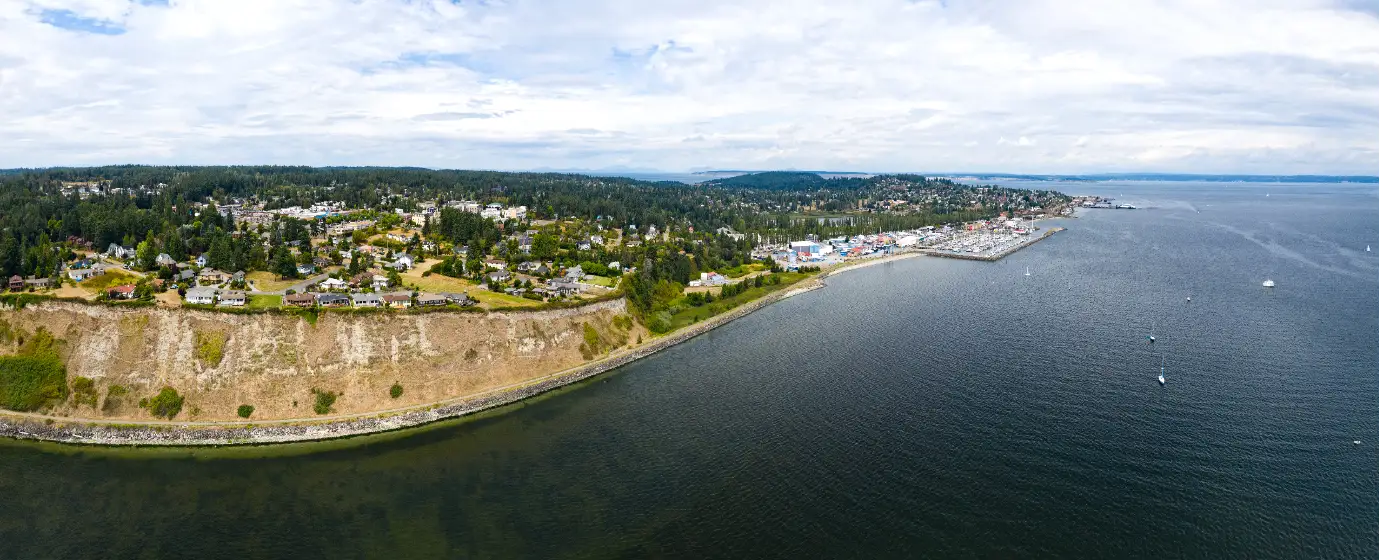
Port Townsend sits at the tip of the Quimper Peninsula, connected to the rest of the world by a single two-lane highway and the Washington State Ferries system. That geographic reality — beautiful, deliberate, genuinely remote — is also the economic reality. You are not paying Port Townsend prices because the city is next to a major employment hub. You are paying them because people actively choose to be here, and supply has never caught up with that desire. The Zillow Home Value Index put the typical home at $642,884 in May 2026, making Port Townsend one of the most expensive small towns on the Olympic Peninsula and well above both the state and national medians for a city its size.
The median household income here is $62,271 — a figure that reflects the local economy's reliance on Jefferson Healthcare, Port Townsend Paper Corporation, Jefferson County government, the Port Townsend School District, and a robust hospitality and retail sector tied to tourism. Many residents work remotely, which is increasingly practical as Jefferson PUD pushes a $65 million fiber broadband buildout across the county. The people who move here are not chasing a career ladder. They are chasing a particular quality of life: Victorian architecture, Puget Sound views, the Northwest Maritime Center, Fort Worden State Park within city limits, and a cultural calendar that punches well above a 10,000-person town's weight class.
Outside of housing, Port Townsend's cost of living runs roughly 24–28% above the national average overall — but the gap is lopsided. Grocery prices are only modestly elevated, electricity rates from Jefferson PUD run about 20% below the national average thanks to Bonneville hydropower, and Washington's lack of a personal income tax on wages gives every paycheck a quiet boost. The real strain is the home-price-to-income ratio, which sits around 10x — far beyond the conventional affordability threshold — meaning this market works best for buyers arriving with equity, remote income, or retirement savings rather than those relying solely on local wages.
Whether you're considering buying a Victorian on the bluff or renting a cottage while you feel out the peninsula, the sections below break down Port Townsend's housing market, everyday costs, utility bills, how prices compare to nearby cities like Sequim and Port Angeles, and the full tax picture so you can build an honest budget before you make a move.
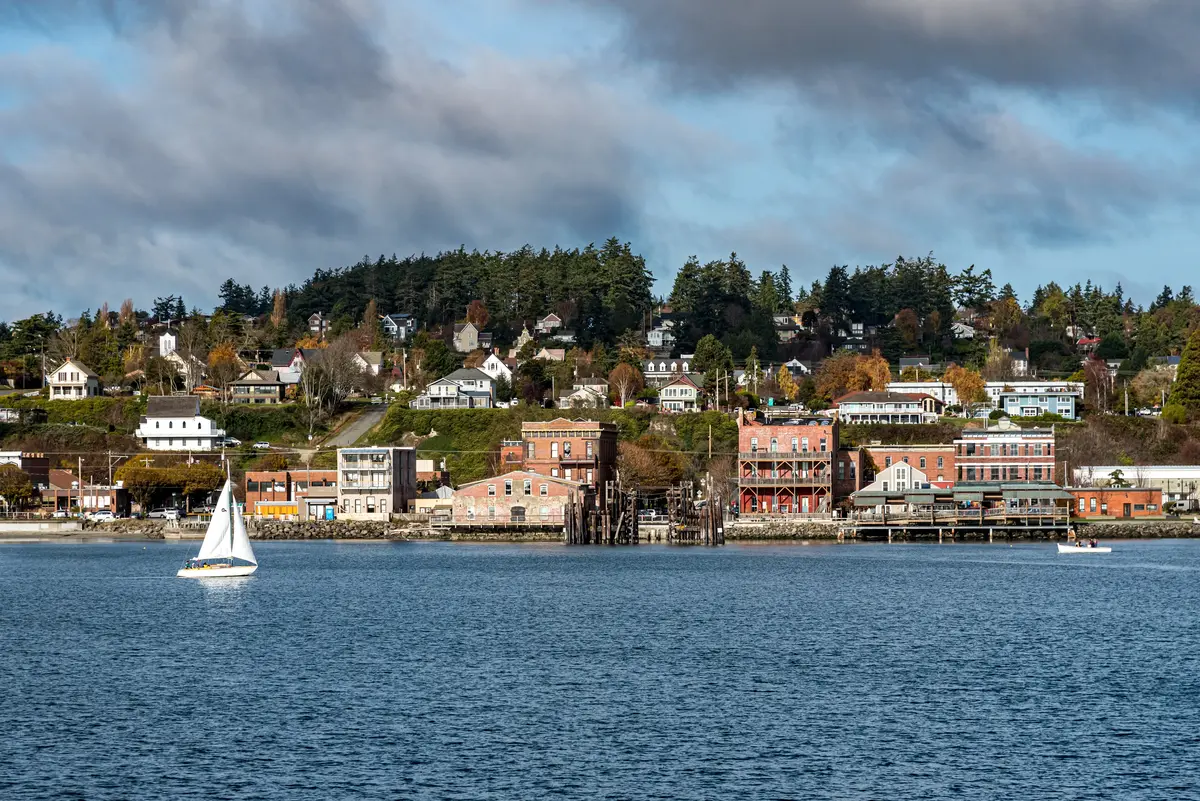
What It Really Costs to Live in Port Townsend
Port Townsend is not expensive the way Seattle is expensive — driven by tech salaries and density. It is expensive the way scarcity and desirability intersect in a small, geographically constrained town with a fixed Victorian housing stock and no room to sprawl. The Zillow Home Value Index put the typical home at $642,884 as of May 2026, a figure that lands noticeably above the statewide median and well above what you would pay in most Olympic Peninsula communities outside of this city's immediate orbit.
The overall cost of living index sits approximately 24–28% above the national average, but housing is doing most of the heavy lifting — the housing sub-index runs 63–75% above the U.S. baseline. Groceries are only about 11% above the national norm, and electricity is actually cheaper than the national average. This matters when you are building a budget: if you can solve the housing problem (through remote income, equity from a prior home sale, or a dual income), the rest of Port Townsend's cost structure is manageable. If housing is a stretch, everything else will feel like a grind on top of it.
Compared to Sequim, Port Angeles, and the smaller communities of Port Hadlock and Chimacum, Port Townsend carries a meaningful premium — driven partly by its walkable historic core and partly by the sheer demand from buyers who want exactly this town and no other. That premium has proven durable even as interest rates moved. See how the local economy and employer landscape shape who can realistically afford to live here.
Housing: Rent vs Buy in Port Townsend
The Buying Reality
The typical home price of $642,884 (Zillow Home Value Index, May 2026) is both the anchor number and the central tension of Port Townsend real estate. Entry-level homes — older construction, smaller lots, properties needing updates — generally start in the low-to-mid $400,000s, though inventory at that price point is thin and competes hard. The median sold price across all property types runs closer to that $642,884 figure, and move-in-ready homes with water views or in the historic core push comfortably past $900,000 to $1.2 million and beyond.
Homes at every price range are scattered across the city's distinct areas; if you want to understand which parts of town cluster toward the entry-level end and which skew toward the premium end, the best neighborhoods guide breaks that down without attaching price bands to specific streets here.
The effective property tax rate is approximately 0.90% — low by national standards and notably below the Washington state average. That rate is one of the few cost advantages Port Townsend buyers have over buyers in higher-tax counties. Use the mortgage calculator below to model your actual monthly carrying cost at your target price and down payment.
The Renting Reality
The median asking rent in Port Townsend runs approximately $1,151 per month for all unit types, which sounds reasonable until you factor in how few rentals come to market at any given time. The rental supply is genuinely tight — vacation-rental conversions and the small overall housing stock keep vacancy low. Renters at the city's median renter household income spend close to 25% of gross income on rent, which is near the conventional affordability ceiling and leaves little buffer for the rest of the cost structure.
Renting makes the most sense here if you are new to the area and want time to understand the market before committing to a purchase, or if you are working with a single local-wage income and the buying math simply does not pencil. For buyers arriving with equity from a higher-cost market — particularly those coming from the Bay Area or greater Seattle — the purchase side can look more compelling relative to where they came from, even at these price points. For the buying process mechanics and loan program guidance, see the first-time homebuyer page.
Everyday Costs Beyond Housing in Port Townsend
Once you get past housing, Port Townsend's day-to-day costs are elevated but not alarming. Groceries run roughly 11% above the national average — you will notice it on your receipt, but it is not the kind of premium that reshapes a budget. Electricity from Jefferson PUD averages about 14.11 cents per kilowatt-hour (February 2026 data), which is around 20% below the national average — a real and recurring saving, especially if your home is all-electric. The catch is natural gas, which runs about 25% above national norms; if you are looking at a home with gas heat or a gas range, factor that in. An all-electric home in Port Townsend benefits most from the PUD's hydropower rates.
City water starts at a base rate of $63.51 per month for a standard residential meter (effective January 2026), plus $4.76 per 1,000 gallons of consumption. Car ownership is not optional for most residents — the transportation cost index runs 16% above the national average, reflecting the peninsula's isolation, the ferry fares you will pay regularly, and gas prices that tend to run higher than in urban Puget Sound areas. Jefferson PUD's fiber broadband buildout is still rolling out; connectivity options vary by location, and remote workers should verify availability at a specific address before committing.
| Category | Typical Monthly Cost | Notes |
|---|---|---|
| Housing (2BR rent) | $1,100–$1,400/mo | Reflects current Port Townsend rental market; owners should use the mortgage calculator above for a purchase estimate |
| Electricity | $80–$130/mo | Jefferson PUD hydropower; ~20% below national average; all-electric homes benefit most |
| Water & Sewer | $85–$120/mo | City base rate $63.51/mo plus consumption; sewer adds to total |
| Groceries | $450–$650/mo | ~11% above U.S. average; no sales tax on groceries in Washington |
| Transportation & Gas | $300–$500/mo | Car essential; includes gas, ferry fares, and insurance; 16% above national transport index |
| Phone & Internet | $100–$180/mo | Fiber expanding via Jefferson PUD countywide buildout; verify availability at your address |
| Misc / Discretionary | $200–$400/mo | Dining at spots along Water Street, events at Fort Worden, seasonal ferry trips; highly variable |
These are estimates for a two-person household and will vary by lifestyle. The table is intentionally renter-oriented; it does not reflect a mortgage payment.
Looking to buy in Port Townsend? Estimate your payment.
Enter your numbers to see an estimated monthly mortgage payment.
Estimate only. Excludes HOA fees and mortgage insurance. The interest rate above is a starting point, not a quoted rate — replace it with your own to see real numbers. Insurance is a flat placeholder, not a Port Townsend quote.
Port Townsend vs Nearby Cities: Cost Comparison
| City | Median Home Price | Typical 2BR Rent | Cost vs Port Townsend |
|---|---|---|---|
| Port Townsend | $642,884 | ~$1,151/mo | Baseline |
| Sequim | ~$530,000–$570,000 | ~$1,400–$1,700/mo | Noticeably cheaper to buy; rents comparable to higher |
| Port Angeles | ~$380,000–$430,000 | ~$1,200–$1,500/mo | Meaningfully cheaper across the board |
| Port Ludlow | ~$550,000–$640,000 | Very limited rental supply | Roughly comparable; more resort-community pricing |
| Port Hadlock | ~$350,000–$450,000 | ~$1,100–$1,400/mo | Noticeably cheaper; 15 minutes south |
| Chimacum | ~$400,000–$500,000 | Sparse rental market | Cheaper on the purchase side; rural tradeoffs |
Port Hadlock and Chimacum are where buyers priced out of Port Townsend most often land — both are within Jefferson County and a short drive from Port Townsend's amenities. Sequim draws retirees with its famously dry microclimate, but its rental market has tightened considerably as that population has grown.
Taxes & the Bottom Line for Port Townsend
What Washington's Tax Structure Means for You
Washington levies no personal income tax on wages or salaries — full stop. For someone moving from California, Oregon, or any state with a meaningful income tax, that difference shows up in every paycheck and is worth calculating concretely before you assume Port Townsend is unaffordable.
Washington does impose a capital gains excise tax: 7% on long-term investment gains above a $278,000 annual deduction (2025 threshold, adjusted for inflation annually), and 9.9% on the portion above $1 million. Critically, real estate sales and retirement-account distributions are fully exempt. If you are selling a primary residence to fund a Port Townsend purchase, that gain does not touch the capital gains tax — a meaningful distinction for buyers arriving with substantial home equity.
Sales Tax and Property Tax
Port Townsend has a combined state and local sales tax rate of 9.5%, which applies to most goods and services. That is a real number and one you will feel on larger purchases. Groceries, however, are fully exempt — both state and local sales taxes — which takes some sting out of daily spending.
The effective property tax rate of approximately 0.90% is modest relative to many western states and well below what buyers in New Jersey, Illinois, or Texas pay. At the typical home price discussed earlier in this guide, that rate translates to an annual tax bill that surprises most out-of-state buyers on the low side.
Who This Budget Fits — and Who Finds It a Stretch
Port Townsend's cost structure works best for remote workers with salaries anchored to higher-wage markets, retirees arriving with equity and savings, and dual-income households with at least one income above the local median. For anyone earning a purely local wage in hospitality, retail, or even local government, the home-price-to-income gap is genuinely difficult — the math requires either a substantial down payment, a long rental period while saving, or accepting that ownership may not be the near-term path here.
People who move out of Port Townsend after a few years often cite one specific friction: the cost of everything that requires leaving the peninsula. A specialist appointment, a major purchase, a concert or sporting event — each trip to greater Seattle or even Bremerton eats a half day and ferry fare on top of the cost of the thing itself. That compounding isolation tax is real and worth stress-testing in your budget before you commit. For a fuller picture of what retirees specifically should budget, see the retiring in Port Townsend guide.

Local Expert Takeaway: Port Townsend's cost of living is carried almost entirely by housing — if you can solve that line item through equity from a prior home sale or a remote income pegged to a bigger market, the rest of the budget (Jefferson PUD electricity at 14 cents per kilowatt-hour, no income tax on wages, no sales tax on groceries) is more manageable than the headline numbers suggest. The buyers who struggle are those counting on local wages: a home-price-to-income ratio above 10x is not a rounding error, it is a structural constraint. Renters paying around $1,151 a month for a typical unit are spending close to the affordability ceiling at the local median income, with almost no cushion for the ferry fares, higher gas prices, and occasional $200 mainland day-trips that peninsula life requires.
Quick Takeaways & FAQs
✅ Washington's zero personal income tax on wages is a genuine and recurring financial advantage for every Port Townsend resident, regardless of what the housing market looks like.
⚠️ The home-price-to-income ratio sits around 10x — well above any standard affordability threshold — making Port Townsend a difficult first purchase for buyers relying solely on local employment.
📍 Jefferson PUD supplies electricity at roughly 14 cents per kilowatt-hour from 95% carbon-free hydropower, about 20% below the national average — all-electric homes benefit most from this rate structure.
What is the typical home price in Port Townsend, WA right now?
Is it cheaper to live in Port Angeles or Sequim than in Port Townsend?
Does Washington state have an income tax that would affect my Port Townsend paycheck?
What are typical utility costs in Port Townsend?
How much is the sales tax in Port Townsend, and do I pay it on groceries?
Moving to Washington?
Tell us what you need help with and we'll connect you with local resources.
