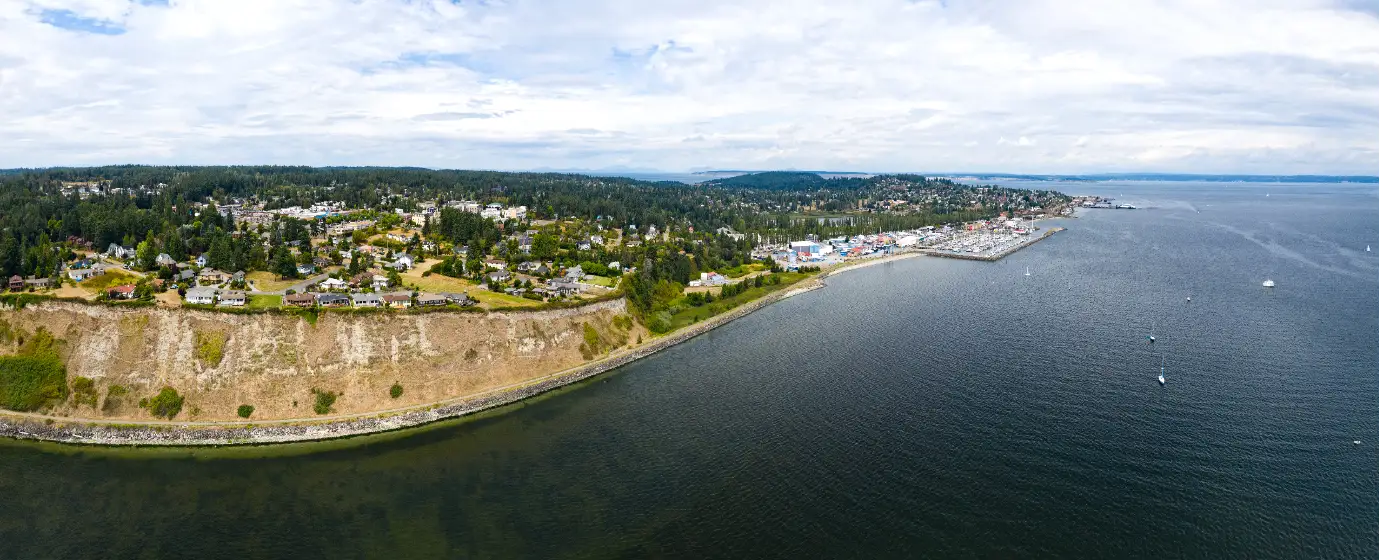
Most people who move to Port Townsend expect a pretty waterfront town. What surprises them after six months is realizing how much of daily life happens outdoors — not as a weekend hobby, but as infrastructure. The city sits at the northeastern tip of the Olympic Peninsula, where Admiralty Inlet collides with the Strait of Juan de Fuca, and that geography means you are never more than a short walk from saltwater, forest, or a trail that connects to something much bigger. The Olympic and Cascade ranges frame almost every view. On clear days, snow-capped peaks hang over the water to the northeast like a postcard that refuses to feel real.
The park system here is disproportionately large for a city of roughly 10,500 people. Port Townsend manages 180 acres across 27 city-owned parks, plus five county-owned and two state-owned parks sitting entirely within city limits — all connected by over 31 miles of urban and rural trails. Fort Worden State Park alone adds 434 acres and two miles of saltwater shoreline to the north end of town. The result is an outdoor footprint that most Pacific Northwest cities three times this size would envy. Families, retirees, birders, paddlers, mountain bikers, and long-distance hikers all find something that fits — sometimes in the same afternoon.
The catch is that this is still a small, remote city on the Olympic Peninsula. The shoulder seasons — November through February — bring grey skies, short days, and persistent drizzle that some newcomers genuinely underestimate. Summer weekends at Fort Worden fill up fast, and the park's boat launch is currently closed indefinitely as of mid-2026, which matters if you're planning to trailer a vessel. But the flip side of that remoteness is that the trails are rarely crowded, the birding is genuinely world-class, and the September Wooden Boat Festival pulls over 300 vessels to the waterfront in a way that feels completely of this place and nowhere else.
The sections below cover Port Townsend's signature parks, the trail network and how it connects to the wider Olympic Peninsula, water recreation and wildlife, and the seasonal events and activities that shape life here across all four seasons.
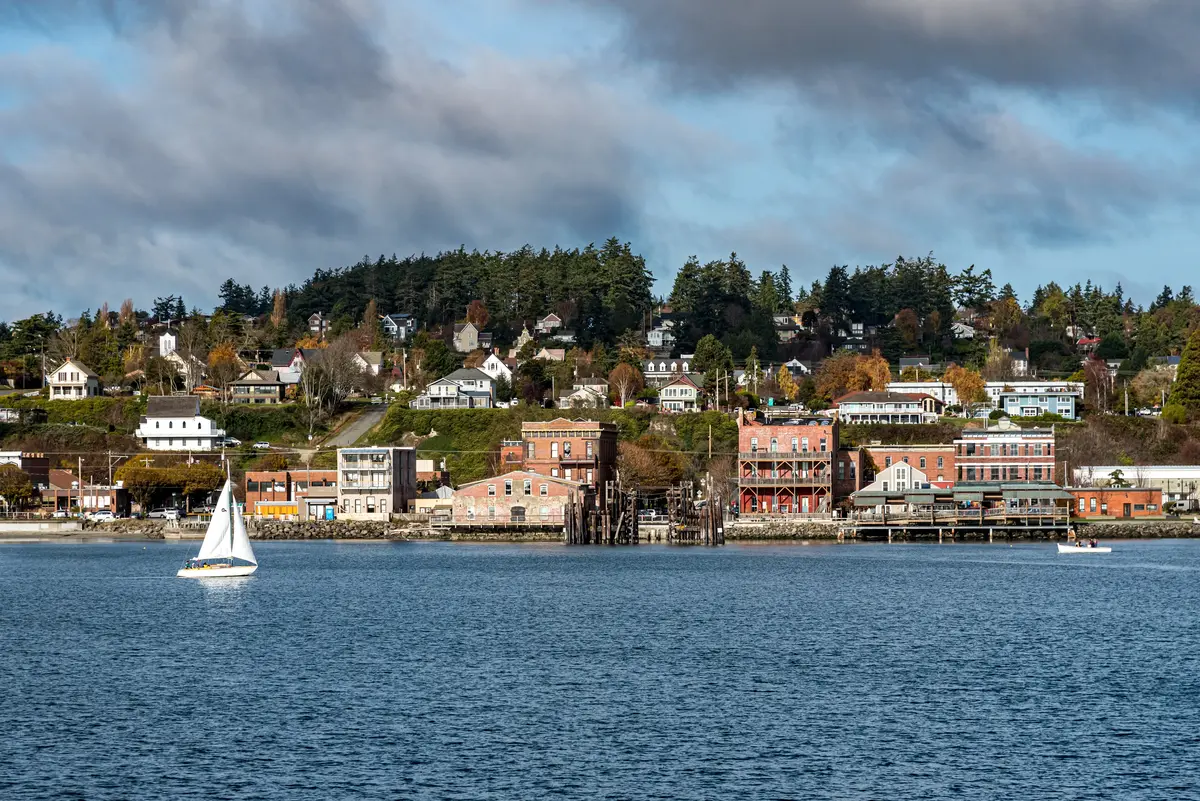
Fort Worden State Park: The Anchor of It All
Fort Worden is not a park you visit on a Saturday afternoon and check off a list. It is a 434-acre National Historic Landmark that takes up the entire northern tip of Port Townsend and rewards repeat visits for years. Two miles of saltwater shoreline, over 11 miles of hiking and biking trails, 12 open gun batteries, four museums, and panoramic sightlines across to the Olympic and Cascade ranges — this is the kind of public land that makes people reconsider what a small city can offer.
The history is layered in ways that make the trails more interesting than typical forest walks. The Commanding Officer's parade grounds sit at the park's center, flanked by restored Victorian officers' quarters. Underground battery tunnels wind beneath the bluffs. At the end of the pier, the Port Townsend Marine Science Center runs a natural history museum, aquarium, and touch pools — a genuinely worthwhile stop with kids, open year-round.
Point Wilson: Where the Water Gets Serious
The park's northeast corner at Point Wilson is where Admiralty Inlet meets the Strait of Juan de Fuca, and the marine traffic here is relentless: container ships, ferries, sailboats, and — with binoculars and patience — orcas, seals, sea lions, and sea otters moving through the channel. Bald eagles and great blue herons work the bluffs and beach routinely. This is not incidental wildlife; it is one of the most reliable marine mammal corridors on Puget Sound.
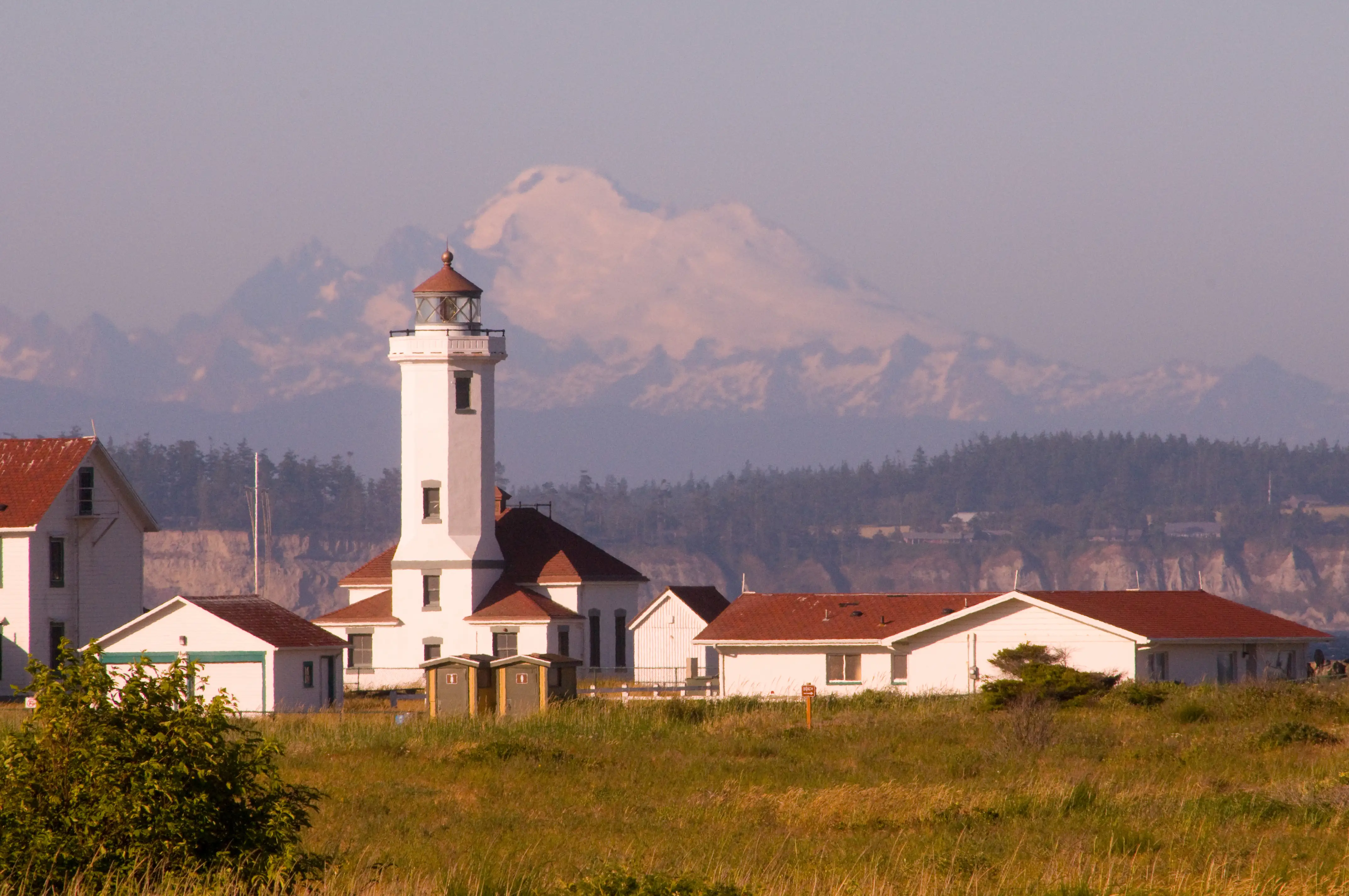
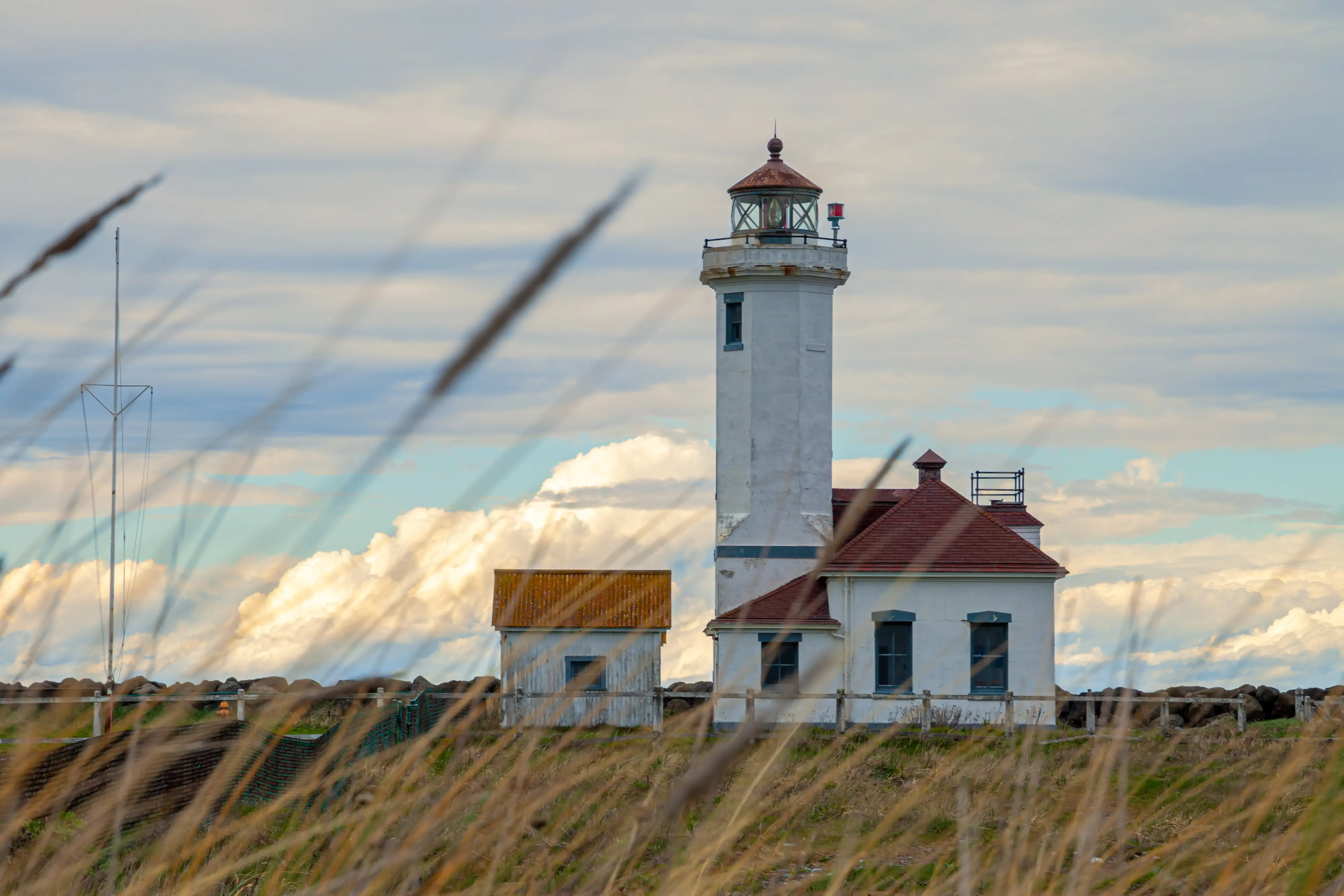
Point Wilson Lighthouse, built in 1914, stands at 51 feet — the tallest lighthouse beacon on Puget Sound — and is listed on both the National Register of Historic Places and the Washington State Heritage Register. Weekend public tours are available from May through September; confirm current tour availability and hours directly with Washington State Parks before making it the centerpiece of a visit, as operational details can shift.
Camping and Water Access
Fort Worden's beach campground is part of the Cascadia Marine Trail and offers roughly 80 campsites with full services including hot showers. The park is open year-round, which matters: an October night here, with the Strait visible through the tent door and almost no other campers, is a genuinely different experience from the busy July version.
One practical note for boaters: the Fort Worden boat launch remains closed indefinitely as of mid-2026. Washington State Parks has also temporarily relocated the park office to Building 202 through December 10, 2026. If you need a launch ramp, the nearest alternatives are Fort Flagler State Park, Mystery Bay State Park, or the Port of Port Townsend facilities. Plan accordingly before you haul a trailer out here.
Kayak rentals are available seasonally on the beach. Saltwater fishing and recreational crabbing (license required; check Washington Department of Fish and Wildlife for current season status) draw regulars from around Jefferson County. Scuba divers work the rocky shoreline, though currents near Point Wilson run strong — check current tables before you enter the water.
Trails: 31 Miles of Connected Paths and Where They Lead
Port Townsend's trail network is one of those things that doesn't show up on a city comparison spreadsheet but fundamentally changes daily life here. Over 31 miles of urban and rural trails lace through the city's 180-acre park system, covering everything from paved waterfront paths to forested single-track used by mountain bikers and informal commuters who never bother with a car for local trips.
The Larry Scott Trail
The most significant local trail starts in Port Townsend and runs 7.3 miles south and west to the Milo Curry Trailhead. The Larry Scott Trail is open to walkers, cyclists, equestrians, and anyone using a wheelchair or wheeled mobility device — no motorized vehicles. What elevates it beyond a pleasant local path is its connection to two long-distance routes: the Olympic Discovery Trail and the Pacific Northwest Trail. Port Townsend's waterfront marks the eastern terminus of the Olympic Discovery Trail, which will eventually span more than 130 miles across the Olympic Peninsula from Puget Sound to the Pacific Ocean. Starting a ride or a run on Water Street and knowing you could, in theory, follow it all the way to the ocean is the kind of thing that shapes how residents think about this place.
Fort Worden's Trail Network
The park's internal network adds over 11 miles of hiking and biking trails to the city's total — a mix of bluff-top paths with water views, forest loops, and beach access routes that connect the campground to Point Wilson and back through the historic fort grounds. The trails range from well-maintained gravel paths to rougher forest routes that reward a mountain bike more than road shoes.
Getting Around Without a Car
What locals know but rarely mention to newcomers: a meaningful portion of those 31 miles functions as daily commute infrastructure. Segments connect residential areas like the Fort Worden neighborhood and North Beach to downtown without touching a major road. If you work downtown or near the waterfront, the trail network is genuinely practical — not just recreational.
| Trail / Route | Length | Surface | Uses | Key Connection |
|---|---|---|---|---|
| Larry Scott Trail | 7.3 miles | Packed gravel / mixed | Walk, bike, horse, wheelchair | Olympic Discovery Trail, Pacific Northwest Trail |
| Fort Worden Trail Network | 11+ miles | Gravel, dirt, forest | Walk, mountain bike | Point Wilson, beach campground |
| Waterfront / Olympic Discovery Trail (PT section) | Variable | Paved / gravel | Walk, bike | Eastern terminus of 130-mile route |
| City Park Trail Network | 31+ miles total | Mixed | Walk, run, bike, commute | Downtown, North Beach, Fort Worden neighborhood |
The trail system is genuinely usable year-round, though the forest sections get muddy through winter. Good waterproof trail shoes are a Port Townsend staple, not an optional upgrade.
Kah Tai Lagoon and the City's Quieter Green Spaces
Not everything in Port Townsend's park system is about big views and long miles. Kah Tai Lagoon Nature Park sits near the center of town and operates under a different set of rules than every other park in the city: it is a federally designated Land and Water Conservation Fund site, owned entirely by the City of Port Townsend, and managed strictly for passive recreation and wildlife habitat. No dogs off-leash, no active sports, no amplified anything. What you get instead is one of the most productive birding sites in Jefferson County.
The Birding Reality
More than 200 bird species have been recorded at Kah Tai since 1978, and the lagoon sits on the Olympic Loop of the Great Washington State Birding Trail — a designation that brings serious birders from across the Pacific Northwest. Great blue herons, buffleheads, wigeons, and a rotating cast of shorebirds and raptors move through depending on the season. The surprise for newcomers who aren't birders: even casual walkers find themselves stopping to watch something they can't immediately identify, which is how more than a few Port Townsend residents have picked up birding as a habit.
Chetzemoka Park and Everyday Green Space
Chetzemoka Park, closer to the waterfront, fills a different role — it's where the city actually gathers. Picnics, informal community events, and the kind of unstructured weekend afternoon that doesn't require a plan. The Seamus Sims Skate Park offers drop-in skateboarding within the broader city network, drawing a consistent crowd of local riders who don't have to drive anywhere to use it.
Across the 27 city-owned parks, the character ranges from developed neighborhood playgrounds to undeveloped forest parcels with informal trails that most visitors never find. The density of green space relative to the population is one of those things that registers slowly — you start to notice that almost any errand takes you past something worth pausing at.
What You Give Up
Passive-use restrictions at Kah Tai mean no frisbee, no picnic tables, no gathering in the way you might at Chetzemoka. The lagoon is a preserve first and a park second. Newcomers who show up expecting a typical city park occasionally feel turned away by the rules, but those same rules are exactly why the bird count is what it is. If you move here and want active outdoor space in the center of town, Chetzemoka and the waterfront trail do that work. Kah Tai is for slowing down.
Looking to buy in Port Townsend? Estimate your payment.
Enter your numbers to see an estimated monthly mortgage payment.
Estimate only. Excludes HOA fees and mortgage insurance. The interest rate above is a starting point, not a quoted rate — replace it with your own to see real numbers. Insurance is a flat placeholder, not a Port Townsend quote.
Water Recreation, Wildlife, and the Seasonal Calendar
Living on a saltwater peninsula means the water is never purely decorative. Port Townsend residents kayak, crab, fish, dive, sail, and watch marine mammals as part of a normal outdoor rotation — not as bucket-list activities. The access is genuinely democratic: most of it starts from publicly accessible beaches at Fort Worden, the waterfront, or Point Hudson, without a boat ramp or a club membership.
On the Water
Kayaking off Fort Worden's beach is the most accessible entry point — seasonal rentals are available on-site, and the two miles of shoreline offer enough variety to keep intermediate paddlers interested. Experienced sea kayakers extend into the Strait of Juan de Fuca and toward the islands of the broader inland sea, though the currents at Point Wilson require current-table planning rather than casual improvisation. Saltwater fishing and recreational crabbing draw steady participation; Washington Department of Fish and Wildlife licenses and season rules apply, and WDFW should be checked directly for current status before you load the crab pots.
Scuba diving along Fort Worden's rocky shoreline is a niche but active pursuit. The visibility can be remarkable in the right conditions, and the rocky substrate holds a more interesting mix of marine life than the sandy bottom sections. The current caveat applies here too: Point Wilson is not a place to treat lightly.
Marine Wildlife
Point Wilson's position at the junction of Admiralty Inlet and the Strait of Juan de Fuca makes it a consistent marine mammal corridor. Orca sightings are irregular but real enough that longtime residents keep binoculars close during summer and fall. Seals and sea lions are effectively year-round. Harbor porpoises show up with less fanfare. Bald eagles work the bluffs routinely, and cormorant colonies on the rocky outcroppings are visible from the beach without any optics at all.
The Wooden Boat Festival and the September Shift
Every September, the Northwest Maritime Center and Point Hudson Marina host what the festival's own organizers call North America's largest wooden boat festival. The 49th annual Port Townsend Wooden Boat Festival runs September 11–13, 2026, and brings over 300 boats, more than 100 presentations, live music, and youth boatbuilding activities to the waterfront. The event is worth understanding before you move here: it is not a tourist add-on. It is central to the city's identity, and it changes the feel of the whole town for a weekend.
What newcomers don't expect is how quickly September becomes the calendar anchor for outdoor planning. Summer is beautiful but crowded at Fort Worden. September thins the crowds, the light changes in the way it only does on the Sound in early fall, and the Wooden Boat Festival gives the month a genuine civic energy. Most long-term residents consider it the best month of the year to be here.
| Activity | Primary Location | Season | Notes |
|---|---|---|---|
| Kayaking | Fort Worden beach | Year-round (rentals seasonal) | Rentals available on-site seasonally; strong currents near Point Wilson |
| Saltwater fishing | Fort Worden, waterfront | Varies by species/season | WDFW license required; check current season rules |
| Recreational crabbing | Fort Worden shoreline | Season-dependent | WDFW license required; check WDFW for current season status |
| Scuba diving | Fort Worden rocky shoreline | Year-round | Check current tables; currents can be strong |
| Marine wildlife watching | Point Wilson, Fort Worden bluffs | Year-round (peak summer/fall) | Binoculars recommended; orcas, seals, eagles regular |
| Birding (Kah Tai) | Kah Tai Lagoon Nature Park | Year-round (peak spring/fall migration) | 200+ species recorded; passive use only |
| Wooden Boat Festival | Northwest Maritime / Point Hudson | September annually | 49th edition: Sept 11–13, 2026; 300+ boats |
| Camping | Fort Worden beach campground | Year-round | ~80 sites, full services; part of Cascadia Marine Trail |
One practical note on the youth sports and kids' activity programming that connects to many of these parks: the Port Townsend schools page covers organized recreation and WIAA activities in more detail.
Local Expert Takeaway: Fort Worden is the obvious headline, but the Larry Scott Trail is what actually changes daily life here — it connects Port Townsend to the Olympic Discovery Trail network and makes car-free mornings genuinely practical for residents in the Fort Worden neighborhood and North Beach. Kah Tai Lagoon is the sleeper: walk it in October during shorebird migration and you'll understand why serious birders make special trips to a city of 10,500 people. One thing to flag before you visit Fort Worden with a boat: the launch ramp is closed indefinitely as of mid-2026. Use the Port of Port Townsend facilities instead, or plan a trip to Fort Flagler or Mystery Bay.
Quick Takeaways & FAQs
✅ Fort Worden State Park delivers 434 acres, two miles of saltwater shoreline, and 11-plus miles of trails — all within walking distance of Port Townsend's residential neighborhoods.
⚠️ The boat launch at Fort Worden is closed indefinitely as of mid-2026, which matters significantly if you're planning to trailer a vessel — the nearest alternatives are Fort Flagler State Park or Port of Port Townsend facilities.
📍 Port Townsend's waterfront is the eastern terminus of the Olympic Discovery Trail, a long-distance route that will eventually span more than 130 miles across the Olympic Peninsula to the Pacific Ocean.
Is Fort Worden State Park worth visiting year-round, or mainly in summer?
Is the Fort Worden boat launch open?
How good is the birding at Kah Tai Lagoon Nature Park?
Can I kayak from Fort Worden, and do I need to bring my own equipment?
When is the Port Townsend Wooden Boat Festival, and is it a big deal locally?
Moving to Washington?
Tell us what you need help with and we'll connect you with local resources.
