Oregon Coast · Cost of Living · 2026
Cost of Living on the Oregon Coast: Every City Ranked
Cities ranked by the real financial cost of living there — home prices, estimated rent, and the income each market realistically demands.
Cities ranked by the real financial cost of living there — home prices, estimated rent, and the income each market realistically demands.
If you're choosing between Oregon Coast towns, the first thing to understand is that 'the coast' is not one market — it's a long stretch of communities that share a highway and a climate but differ sharply in what daily life costs and what you get for it. Some are working-class port towns where local wages and home prices have stayed in step. Others have been reshaped by vacation-home demand, retirement migration, or a proximity to Portland that has driven prices well above what most full-time residents earn. The gap between the two kinds of town is wider than most buyers expect before they start shopping.
The towns with accessible home prices on this list are anchored by real local economies — fishing, timber, healthcare, a county seat — where prices reflect what people who actually live and work there can afford. The towns carrying a steeper premium do so because of scenery, limited land, and buyers who don't depend on a local paycheck. Remote workers, retirees, and second-home buyers have all reshaped individual markets in ways that make a single headline figure misleading. The sections below break down each town's home price, rental market, and what kind of buyer each one genuinely suits.
All prices reflect 2026 market data sourced from Zillow and cross-referenced with our individual city guides. County tax rates are verified effective rates.
Ranked by overall affordability. Click any city to jump to the full breakdown.
| # | City | Home Price | Monthly PITI | Income to Buy | Est. Rent |
|---|---|---|---|---|---|
| 1 | Coos Bay Coos County | $330,015 | $2,005/mo | $86,372/yr | $1,300/mo |
| 2 | Reedsport Douglas County | $330,394 | $2,099/mo | $92,054/yr | $1,350/mo |
| 3 | North Bend Coos County | $362,945 | $2,209/mo | $97,952/yr | $1,600/mo |
| 4 | Gold Beach Curry County | $439,479 | $2,630/mo | $115,348/yr | $1,400/mo |
| 5 | Bandon Coos County | $488,995 | $2,976/mo | $117,252/yr | $1,450/mo |
| 6 | Gearhart Clatsop County | $619,942 | $3,772/mo | $119,147/yr | $1,613/mo |
| 7 | Tillamook Tillamook County | $468,182 | $2,794/mo | $119,532/yr | $1,650/mo |
| 8 | Florence Lane County | $452,369 | $2,809/mo | $120,716/yr | $1,350/mo |
| 9 | Brookings Curry County | $486,371 | $2,842/mo | $121,023/yr | $1,270/mo |
| 10 | Astoria Clatsop County | $486,426 | $2,960/mo | $127,007/yr | $1,550/mo |
| 11 | Lincoln City Lincoln County | $503,488 | $3,102/mo | $128,770/yr | $1,600/mo |
| 12 | Seaside Clatsop County | $473,271 | $2,848/mo | $129,308/yr | $1,650/mo |
| 13 | Newport Lincoln County | $454,809 | $2,794/mo | $130,739/yr | $1,750/mo |
| 14 | Warrenton Clatsop County | $505,967 | $3,070/mo | $132,347/yr | $1,480/mo |
| 15 | Yachats Lincoln County | $547,650 | $3,351/mo | $141,446/yr | $1,724/mo |
| 16 | Cannon Beach Clatsop County | $926,140 | $5,620/mo | $236,730/yr | $1,800/mo |

#1 Most Affordable · Coos County
Best for buyers who want a full-service coast town at working-class prices.
Coos Bay is the commercial center of the south coast — a working port town with a real grocery infrastructure, a regional hospital, and county-seat services that keep daily expenses grounded. Its typical home price of $330,015 reflects a local economy built around the Port of Coos Bay, timber, and healthcare rather than vacation-home demand. That means buyers get genuine square footage and established neighborhoods without competing against second-home buyers writing checks from Portland or California.
This is a practical choice for buyers who want the Oregon Coast without the resort premium — and who are comfortable in a town that prioritizes function over scenery. It suits working households, early retirees on a fixed income, and remote workers who want low overhead. Compared to the smaller towns further south, Coos Bay offers meaningfully more services within city limits.
#2 Dunes & River Town · Douglas County
Best for buyers who want dunes and river access on a rural budget.
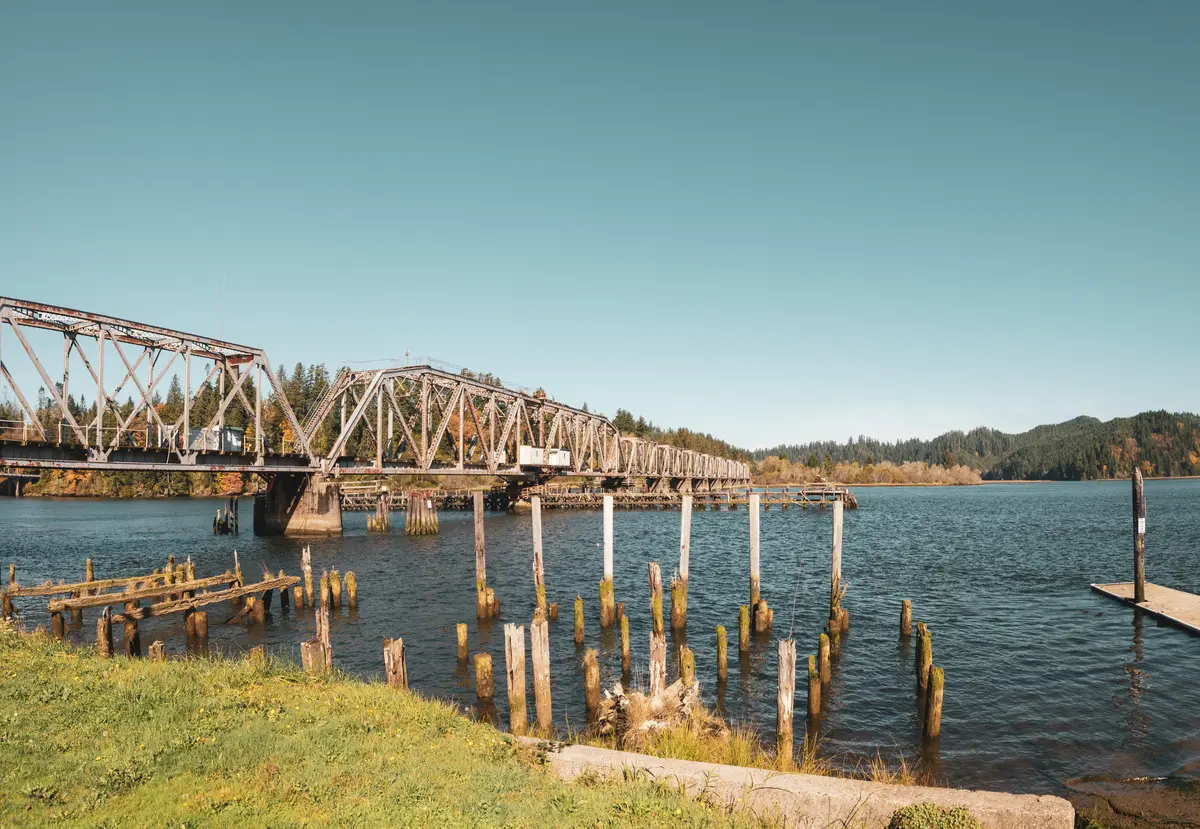
Reedsport sits at the mouth of the Umpqua River where US-101 meets OR-38, which makes it the inland access point for the central coast as much as a coastal town in its own right. Its typical home price of $330,394 is close to Coos Bay's figure, but the town is considerably smaller and the service base is thinner — fewer employers, a shorter list of local amenities, and a job market that leans heavily on outdoor recreation, fishing, and the Oregon Dunes National Recreation Area.
Reedsport tends to suit buyers for whom the dunes and river access are the point, and for whom driving to Coos Bay or Eugene for major shopping is not a dealbreaker. It's a genuinely rural life on a genuinely rural budget, and the buyers who thrive here usually arrive knowing exactly what that means.
#3 Bay Area Bedroom Town · Coos County
Best for buyers who want the Coos Bay metro with a quieter residential feel.
North Bend shares Coos Bay's airport, its bay, and its commercial corridor, but carries a slightly higher typical home price of $362,945 — a reflection of its somewhat quieter residential character and the Oregon Dunes access along OR-540 toward the Cape Arago area. The two cities are functionally one metro on opposite banks, so buyers choosing North Bend still get the full range of services that make this the south coast's urban anchor.
The practical case for North Bend over Coos Bay often comes down to neighborhood feel and specific listings rather than a dramatic lifestyle difference. Buyers who want the Coos Bay metro's price range but prefer a slightly less commercial immediate surroundings tend to land here. It suits families, retirees, and remote workers in roughly equal measure.

#4 Rogue River Gateway · Curry County
Best for anglers and retirees who want the Rogue River at their doorstep.
Gold Beach is Curry County's seat and sits at the mouth of the Rogue River, one of the most storied salmon and steelhead rivers on the West Coast. Its typical home price of $439,479 reflects a small-town economy built around fishing, outdoor recreation, and a modest retirement community, without the second-home speculation that has hit more accessible coastal towns. Services are limited by the town's size — Gold Beach is one of the more isolated communities on this list — but the Rogue River access is genuine and irreplaceable.
Buyers drawn to Gold Beach are usually drawn to the river specifically. It suits anglers, outdoors-focused retirees, and remote workers who are genuinely comfortable with a drive for anything beyond basics. It has a more rural, self-sufficient feel than Bandon to the north or Brookings to the south.
#5 Golf & Cranberry Town · Coos County
Best for buyers who understand its dual market and know which side they're on.
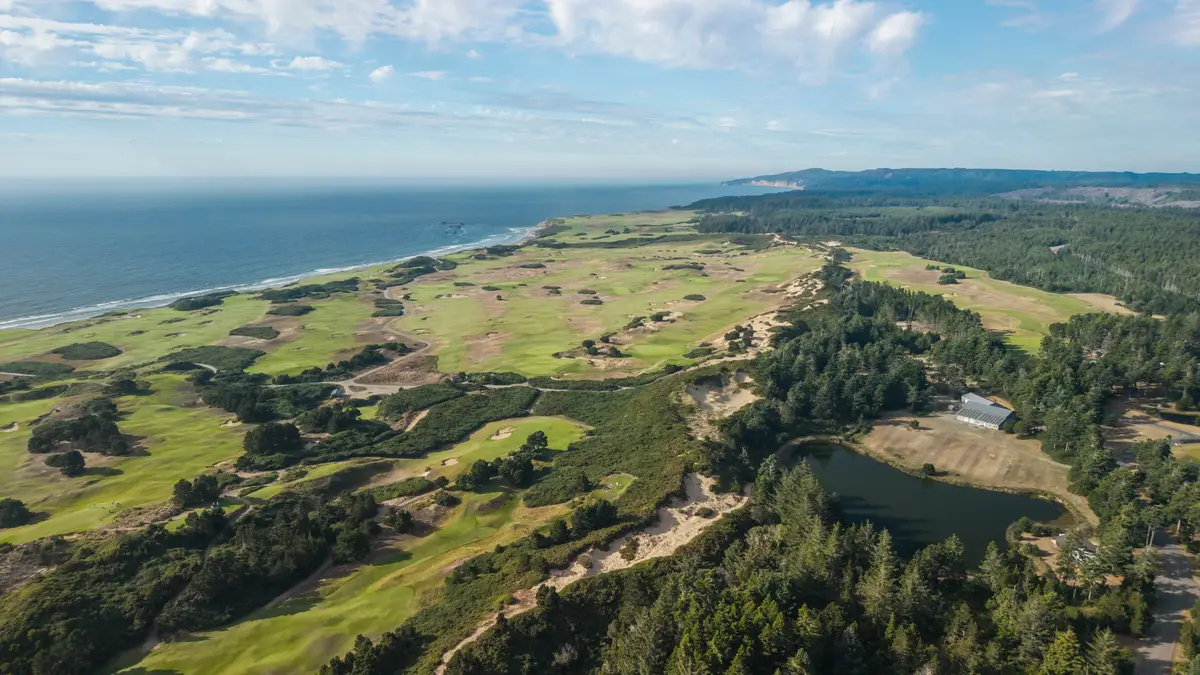
Bandon's typical home price of $488,995 is driven by two forces working in opposite directions: a small, slow-growing town with limited services, and a world-famous golf resort that has put the name on maps it would never otherwise appear on. That resort draws an international ownership market for high-end properties, which pulls the overall median above what a working-coast town of its size would otherwise support. The old town core, the cranberry farms, and the cheese factory give it a genuine local character that the golf crowd mostly bypasses.
Buyers who want the authentic small-town Bandon — the old town, the beach, the working agricultural feel — can still find it, but they're shopping in a market that is also serving an entirely different buyer. That dual market is the central tension of living here. It suits buyers who have done their research and know which Bandon they're buying into.
#6 Quiet Beach Enclave · Clatsop County
Best for buyers who want northern coast quiet and need nothing nearby.
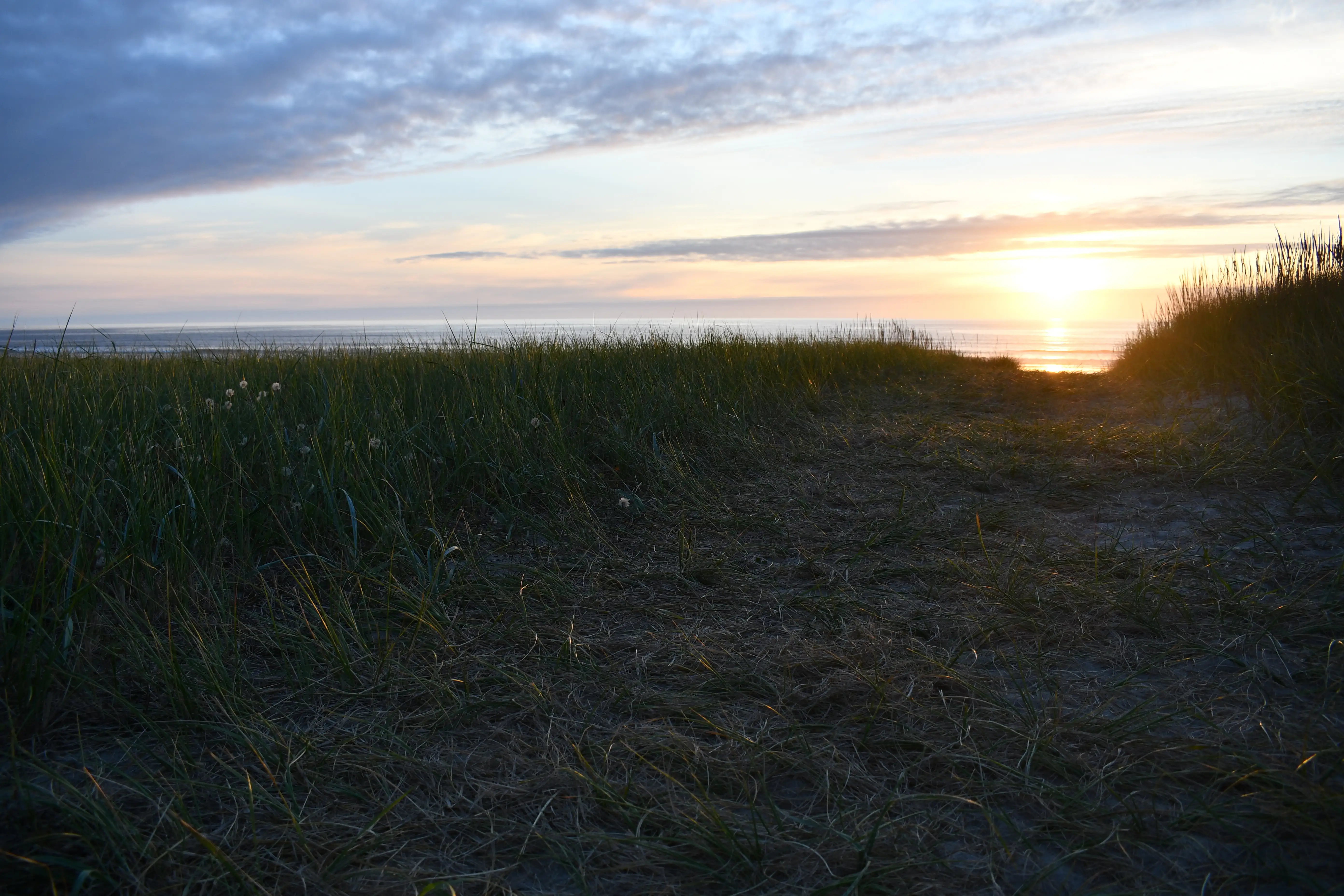
Gearhart is one of the smallest and quietest incorporated towns on the northern coast, and its typical home price of $619,942 is driven almost entirely by proximity to Cannon Beach, Seaside, and the Portland market. It has a golf course, a handful of beach-access streets, and a genuinely low-key residential character — no downtown commercial strip, no tourist economy of its own. Buyers pay for the location and the quiet, not for services.
This is a town for buyers who want northern coast access and are willing to drive to Seaside for coffee. It suits second-home buyers and retirees who specifically value low density and who don't need local amenities within walking distance. Anyone who needs regular services nearby will find Gearhart's self-contained character more limiting than peaceful.
#7 Dairy Valley Coast Town · Tillamook County
Best for remote workers who want coast proximity with valley-town practicality.
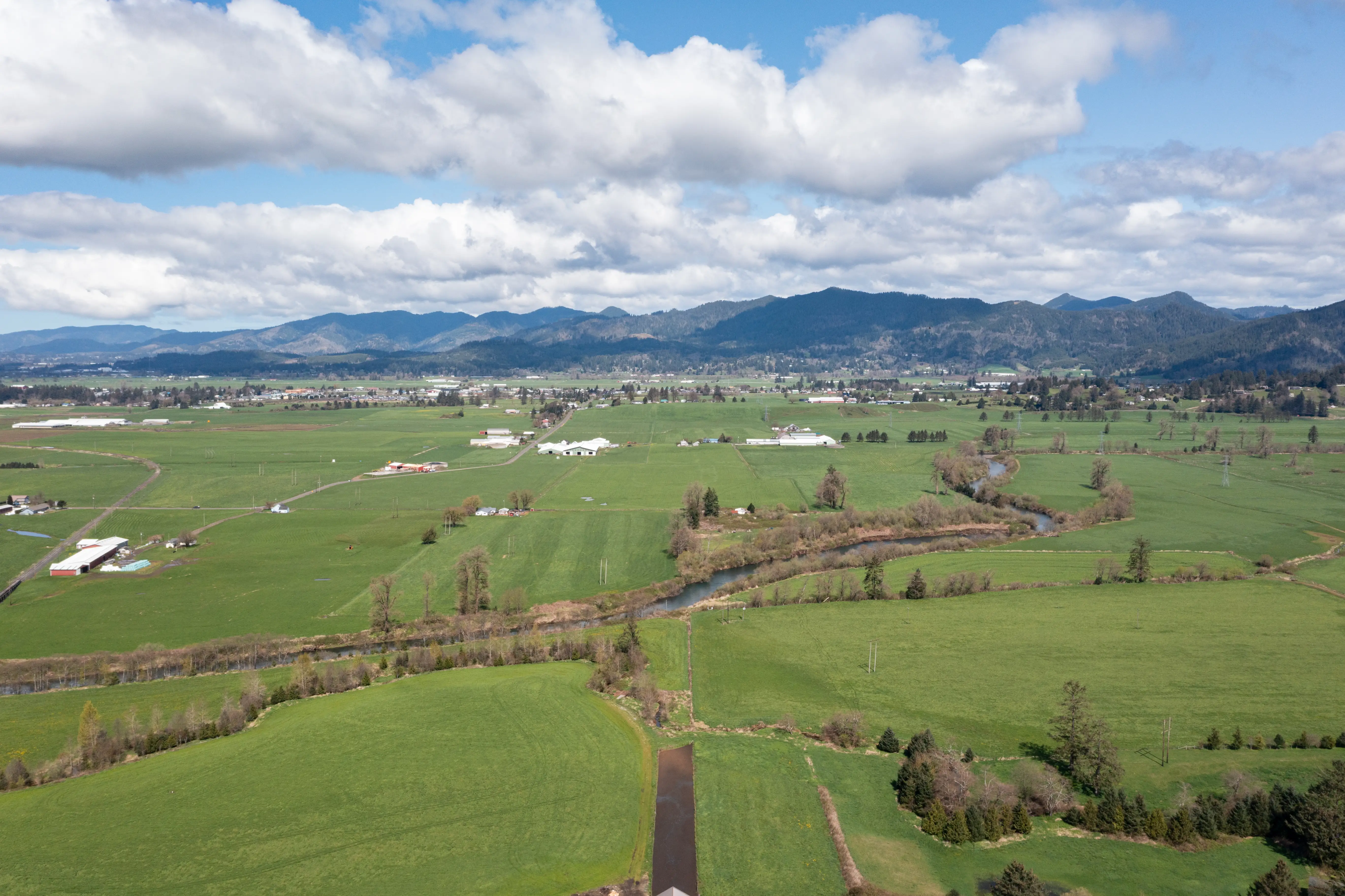
Tillamook is an agricultural county seat with a real local economy — dairy farming, the cheese industry, timber, and county government — and its typical home price of $468,182 reflects a market shaped by working residents more than by vacation-home demand. OR-6 gives it a practical connection to the Portland metro, which has drawn remote workers who want coast proximity without the full coast premium. The town has grocery stores, a hospital, and basic services that many smaller coast towns lack.
The trade-off is that Tillamook reads more like a working inland valley town that happens to sit near the coast than a beach community. Buyers who want to walk to the beach from their yard will need to look elsewhere; buyers who want a functional small city with agricultural character and real amenity access will find Tillamook makes strong practical sense.

#8 Retirement Coast Town · Lane County
Best for retirees who want a real town with an easy inland connection.
Florence has become one of the central coast's most active retirement destinations, and its typical home price of $452,369 reflects both that demand and OR-126's direct connection to Eugene — which gives it the strongest inland-city link of any Lane County coast town. Florentine Estates and Greentrees Village are the two established 55+ communities in the area, which signals how deliberately this town has positioned itself for retirees. The Old Town waterfront, the Siuslaw River, and the Oregon Dunes to the north give it scenery without requiring the prices that come with the more iconic northern towns.
Florence suits retirees and remote workers better than it suits young families, simply because the service base skews older and the cultural programming reflects that. Buyers who want a real town with restaurants, medical care, and a genuine community — and who are willing to drive to Eugene for the metro experience — will find Florence one of the more complete small-town packages on the coast.

#9 Lowest Rent · Curry County
Best for California-adjacent retirees drawn by the climate and proximity.
Brookings sits in Oregon's banana belt, where a warmer, sunnier microclimate than most of the coast has made it a magnet for California retirees and buyers escaping both the Oregon winters and the California cost of living. Its typical home price of $486,371 reflects that California-border effect: demand from buyers who can compare it to Del Norte County prices just south and feel they've found a deal, while buyers coming from further north in Oregon may feel the reverse. US-101 is the only route in or out, which is the town's chief practical limitation.
Brookings tends to suit retirement buyers and remote workers who are drawn specifically to the climate and the California proximity. The isolation is real, and anyone who needs regular city access will feel it. It's a genuinely pleasant town for the right buyer and a genuinely inconvenient one for anyone who travels frequently.

#10 Historic Columbia River City · Clatsop County
Best for buyers who want real city character and a Columbia River connection.
Astoria is the Oregon Coast's most historically layered city, and its typical home price of $486,426 reflects a market shaped by Victorian housing stock, a growing creative economy, and proximity to the Columbia River crossing into Washington. US-30 connects it to Portland in a way no other Oregon coast city is connected to a major metro, which has made it attractive to remote workers and buyers priced out of the Portland market. The downtown is genuine — a real working port city, not a tourist replica.
The case for Astoria is strongest for buyers who want the Pacific Northwest coast with a real city's bones: a walkable downtown, genuine history, arts and cultural infrastructure, and a harbor that still functions. The case against it is the commute to Portland, which is real even with US-30, and a housing stock that often comes with Victorian-era maintenance demands. It suits buyers who value character and connectivity in roughly equal measure.
#11 Casino Coast Hub · Lincoln County
Best for buyers who want full coast services and don't mind tourist energy.
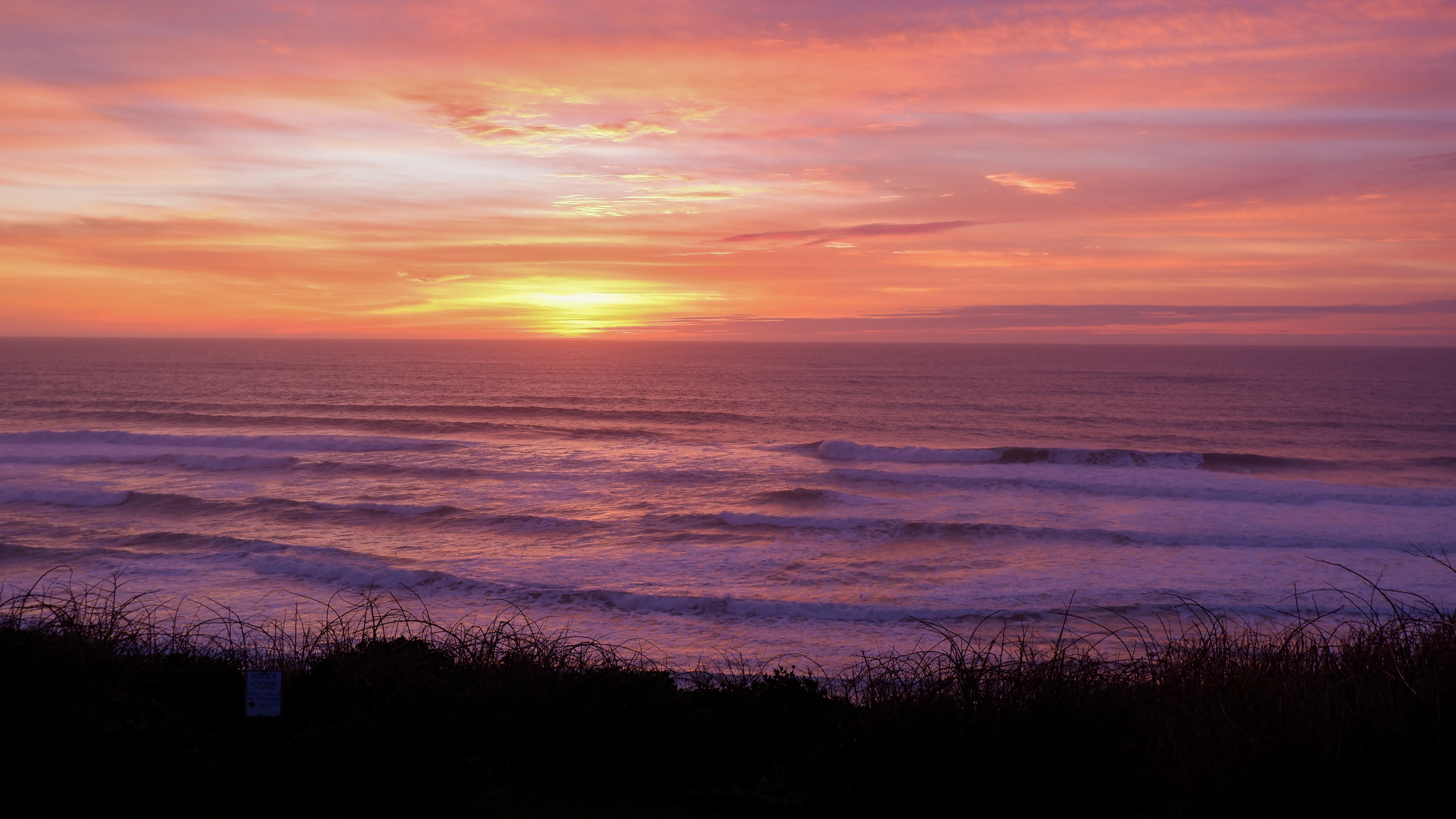
Lincoln City is the central coast's most commercially developed town — a casino, an outlet mall, a long strip of tourist retail along US-101, and a steady flow of weekend visitors from the Willamette Valley. Its typical home price of $503,488 reflects a market that serves both full-time residents and vacation-home buyers, which means inventory turns over more quickly and more chaotically than in quieter towns. The local economy is genuinely mixed: tourism dominates, but there's a real year-round resident base with healthcare, schools, and services to match.
Lincoln City tends to suit buyers who want coast living with a full range of services and don't mind the tourist-economy energy that comes with it. Retirees and remote workers who want a real grocery store, medical care, and restaurant options without driving an hour find it practical. Buyers seeking quiet and seclusion usually keep looking up or down the highway.
#12 Boardwalk Beach Town · Clatsop County
Best for families who want a complete town with easy beach access.
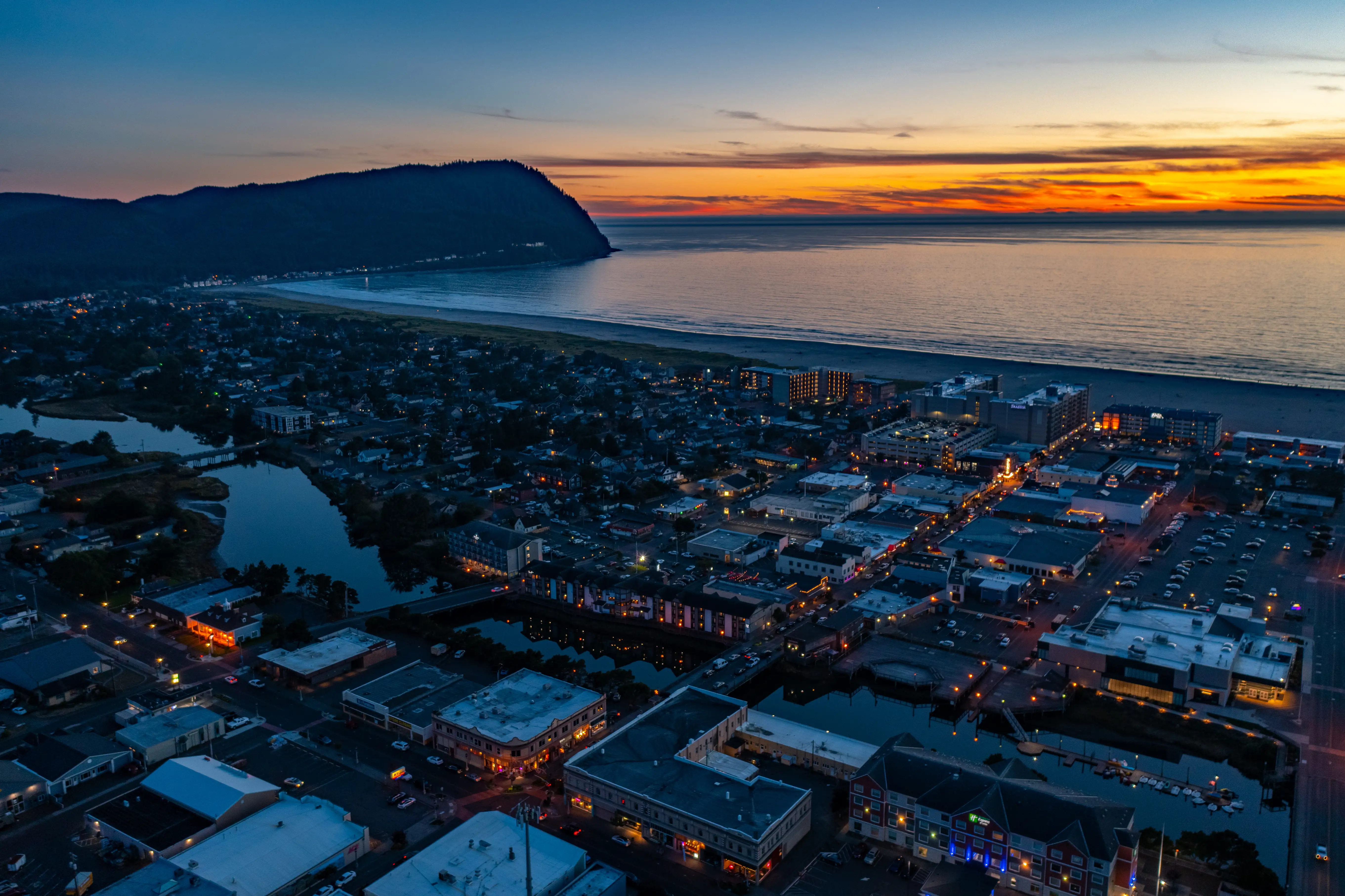
Seaside is the north coast's most visitor-oriented town, with a boardwalk, an aquarium, and a convention center that fills the streets on most weekends from March through October. Its typical home price of $473,271 sits in a range shaped by both the second-home market and a genuine working-class resident base, which creates an unusual mix of older affordable housing and premium beachfront demand. The town is functional — schools, groceries, medical care — in a way that some neighboring towns are not.
Buyers who choose Seaside are making a particular bet: that the energy and accessibility of a tourist-economy town is an asset rather than a distraction. It suits families who want coast living with a full-service town, and buyers who don't mind being neighbors with vacation rentals. Those who need a quiet residential street should weight that carefully against the town's fundamental character.
#13 Working Harbor City · Lincoln County
Best for buyers who want institutional employers and full-service city life.
Newport is the Oregon Coast's most complete mid-coast city — a working fishing harbor, the Oregon Coast Aquarium, a federal marine research presence, and a regional hospital, all within a town of genuine scale. Its typical home price of $454,809 reflects a market where institutional employers create year-round housing demand independent of tourism. US-20 gives it the most direct inland connection of any Lincoln County town.
Newport tends to suit buyers who want the full-service coast experience — real employers, real healthcare, real cultural infrastructure — without the resort-town premium. Scientists, healthcare workers, and remote workers with periodic Corvallis or Eugene ties find it particularly well-positioned. The Bayfront tourist zone is lively but contained; the residential neighborhoods away from it are genuinely quiet.
#14 North Coast Service Town · Clatsop County
Best for working households who want north coast access without Astoria's Victorian premium.
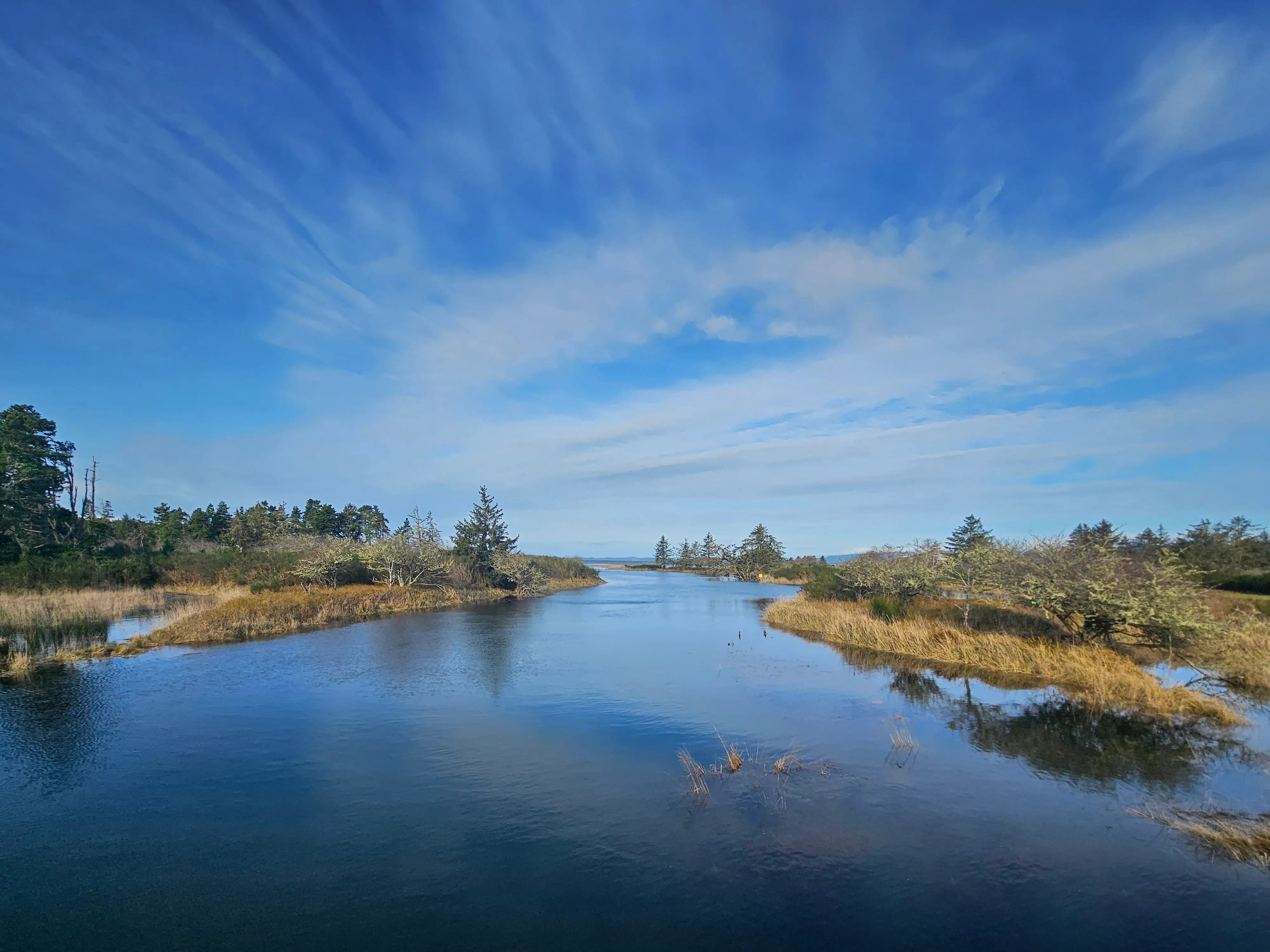
Warrenton is the most functionally suburban town on the northern coast — a grid of retail corridors, a fishing marina, and a residential base that serves workers throughout Clatsop County. Its typical home price of $505,967 reflects proximity to Astoria and Fort Stevens State Park without the premium of Astoria's Victorian character or Cannon Beach's scenery. OR-104 connects it to the Fort Stevens peninsula; US-101 ties it to the broader coast corridor.
Warrenton tends to attract buyers who want northern coast access and practical services without the Victorian character and corresponding prices of Astoria, and who don't need a walkable downtown to feel at home. It suits working households, families with kids in the Clatsop County school system, and buyers for whom a reasonable commute to Astoria is more important than being inside it.

#15 Remote Clifftop Village · Lincoln County
Best for retirees who have already decided that quiet is the whole point.
Yachats is one of the smallest incorporated towns on the coast and one of the most deliberately low-key — no stoplight, a handful of streets, and a population that skews toward retirees who chose specifically this degree of quietude. Its typical home price of $547,650 is driven by scarcity and desirability in roughly equal parts: there is very little land, the scenery is dramatic, and the buyers drawn here are not shopping for services. US-101 is the only through route.
The honest assessment of Yachats is that it suits a narrow but very specific buyer: someone who has already downsized their service expectations and is paying for peace, ocean access, and a community small enough to know everyone at the post office. It tends to disappoint buyers who discover after the fact how far a serious grocery run or a medical appointment actually is.
#16 Iconic Resort Village · Clatsop County
Best for buyers who can afford the scenery and don't need local services.
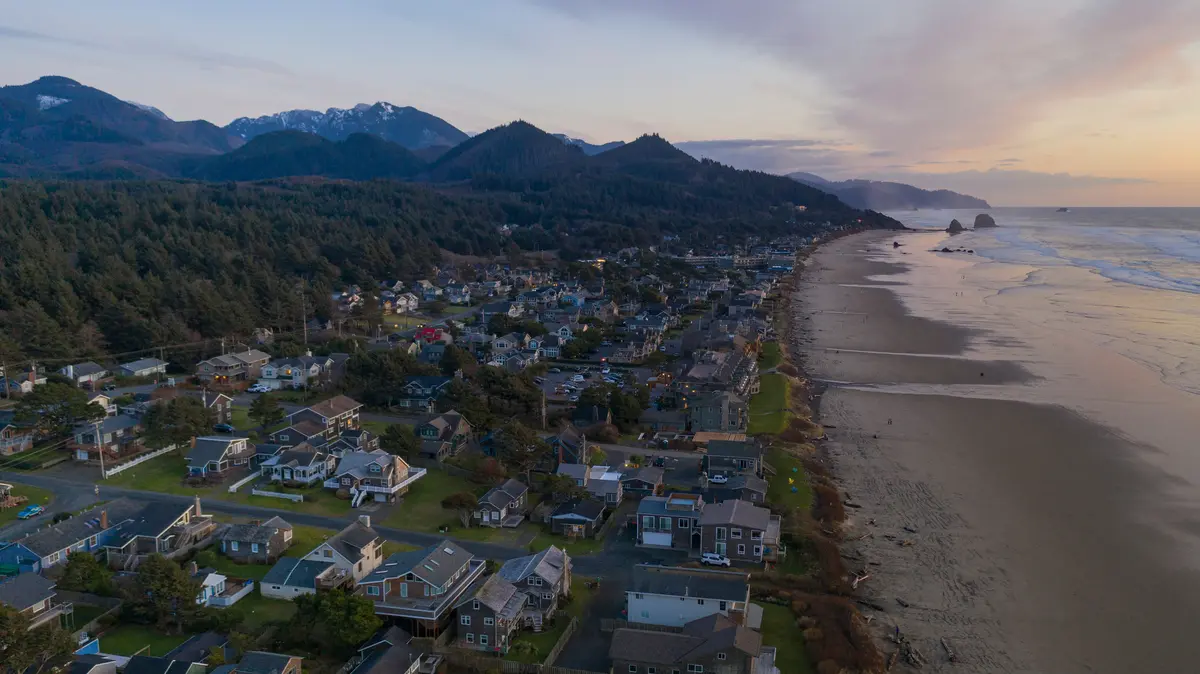
Cannon Beach carries the Oregon Coast's most recognizable image — Haystack Rock, galleries along the main street, boutique hotels — and a typical home price of $926,140 that reflects decades of concentrated second-home and vacation-rental demand on a narrow strip of land with almost no room to grow. The local economy serves the visitor economy; full-time residents are a minority in a town where many homes sit empty most of the year. US-101 is the only through route, and the stretch through town narrows considerably.
Cannon Beach is genuinely one of the most beautiful places on the Oregon Coast, and that beauty has a price that full-time buyers feel acutely. It suits buyers for whom a vacation home or a retirement residence of exceptional scenic quality is the goal, and for whom the price is within reach. Remote workers and year-round residents who need services, schools, or practical daily infrastructure generally find the market works against them.
On the Oregon Coast, the gap between a working-port town and a resort community can mean six figures in home price on the same highway. The towns with real year-round economies tend to offer the most durable cost of living; the scenic set-pieces cost what the scenery commands.
Tell us what you need help with and we'll connect you with local resources.
