
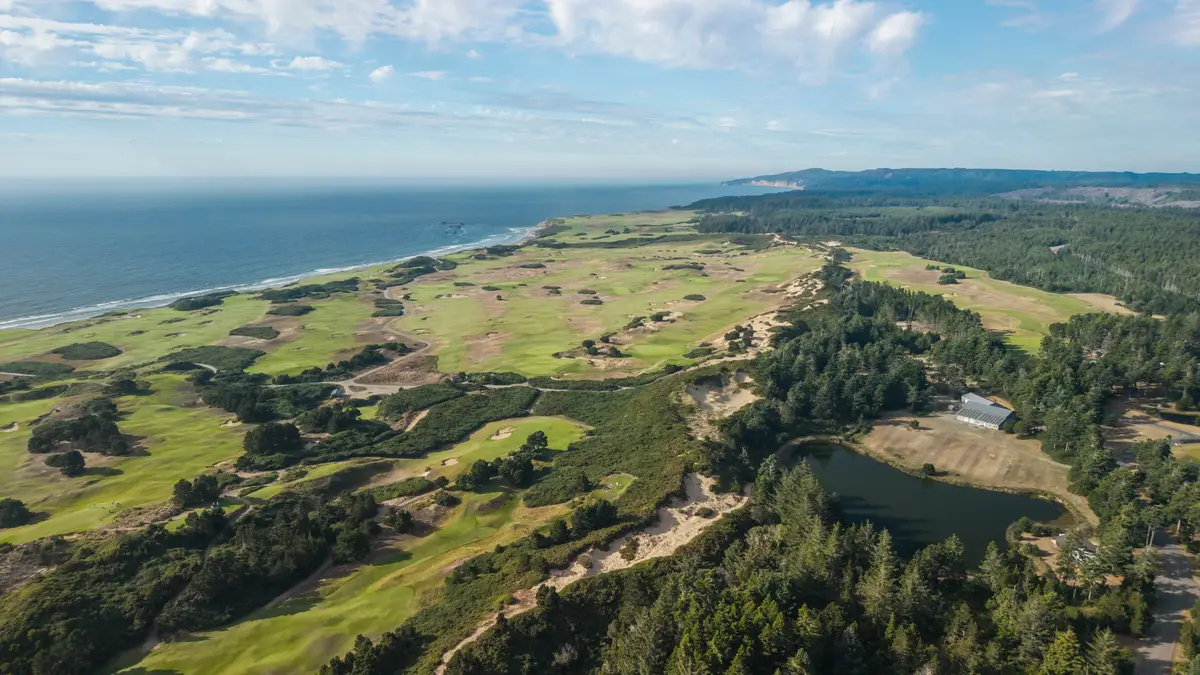
Maybe you've been priced out of Portland or the Willamette Valley, and someone mentioned the Oregon Coast. Or maybe you've already driven through Bandon and noticed that it doesn't feel like a budget beach town — the golf resort, the oceanfront scenery, the well-kept Old Town waterfront. Both instincts are partly right. Bandon sits on the southern Oregon Coast where US-101 meets the mouth of the Coquille River, and its cost of living runs roughly 10% above the national average and about 5% above the Oregon state average. That number is real, but it needs context: housing is the primary driver, and everything else — groceries, transportation, taxes — is more manageable than the headline suggests.
The economic picture here is compact. Bandon has a population of 3,311, and the major employers are the school district, a regional health system, the city government, and Bandon Dunes Golf Resort. The median household income sits at $49,469 — which puts a lot of working residents in a genuinely tight spot relative to home prices. That gap between what people earn and what homes cost is the central financial reality of living here, and it shapes everything from the rental market to who can realistically buy without outside equity or remote income.
On the lifestyle side, the Oregon Coast's costs show up in ways newcomers sometimes miss. There is no sales tax in Oregon, which takes a real edge off daily spending. But the coast's wet winters and limited sunshine — 189 sunny days a year, well below what most people imagine when they picture the Pacific — mean higher heating loads and utility bills that can surprise transplants from drier climates. Getting anywhere beyond Coos Bay means a real drive on US-101, and car ownership is essentially non-negotiable. The tradeoffs are the same ones every small coastal town presents, just priced at Oregon Coast levels.
Whether you're seriously considering a move or trying to understand whether your budget fits, the sections below break down Bandon's housing market, everyday costs, how it compares to nearby cities, and the tax picture that shapes what residents actually take home.

What It Really Costs to Live in Bandon
Bandon is not the cheapest place to land on the Oregon Coast, and it is not pretending to be. The typical home price of $488,995 (Zillow Home Value Index, July 2026) places it noticeably above the nearby inland and coastal cities most buyers compare it against. What drives that number is a combination of genuine scarcity — the city is physically constrained by the ocean, the Coquille River, and state-protected natural areas — and consistent demand from out-of-area buyers attracted by Bandon Dunes Golf Resort's national profile and the broader appeal of small-town coastal Oregon.
Against the Oregon state average, Bandon runs about 5% higher on overall cost of living. Against the national average, the gap is closer to 10%. Housing accounts for most of that spread; once you move to everyday line items like food, fuel and utilities, Bandon is closer to Oregon norms than its oceanfront address might suggest.
The income picture is the honest complication. With a median household income of $49,469, many full-time residents here are not buying at that home-price level — they are renting, bringing equity from a prior home sale, or supplementing local wages with remote income. That is not unique to Bandon, but it is more pronounced here than in larger coastal markets, and it is worth naming plainly before you run the numbers on your own situation. For a fuller look at neighborhood character and which parts of the city are more or less attainable, see the best neighborhoods guide.
Housing: Rent vs Buy in Bandon
The typical home price of $488,995 (July 2026) is the anchor, but the market actually spans a meaningful range. Entry-level single-family homes — older construction, smaller footprints, no ocean views — can be found starting in the low-to-mid $300,000s. At the other end, oceanfront and golf-adjacent properties push well into the $700,000s and above. The middle of the market, where most transaction volume sits, clusters around that $488,995 figure: three-bedroom homes with standard finishes and no particular view premium.
Bandon's effective property tax rate is approximately 0.71%, which is below Oregon's statewide average of around 0.81%. On a home at the typical price, that rate is modest by Oregon standards — one of the quieter financial advantages of owning here. The engine's mortgage calculator below can help you model the full monthly picture at current rates.
The rent-vs-buy calculus in a market this small is genuinely complicated. Rental inventory is thin — this is a town of 3,311 people, and purpose-built rental stock is limited. That scarcity keeps rents elevated relative to what local wages would predict. Renting makes sense if you're testing the coast before committing, or if your down payment isn't ready. Buying makes more sense if you have equity coming in from another sale, plan to stay five or more years, and can get to a payment that works — because appreciation here has historically been driven more by demand surges than by steady local-income growth. The first-time homebuyer guide covers down-payment programs and loan options in more detail.
What Buyers Don't Always Price In
The gap between the median household income and the income needed to carry the typical home here is about $68,000. That is not a rounding error — it means the majority of Bandon households are not, on income alone, positioned to buy at the median without other resources. Remote workers, retirees with equity, and second-home buyers have shaped this market more than local wage growth has, and that dynamic affects both what's available and how quickly well-priced listings move.

Everyday Costs Beyond Housing in Bandon
| Category | Typical Monthly Cost | Notes |
|---|---|---|
| Utilities | $160–$240/mo | Electricity, gas, water, sewer, trash |
| Groceries | $530–$720/mo | Food at home, household of 2–3 |
| Transportation & Gas | $220–$360/mo | Fuel, and transit where it is a real option |
| Phone & Internet | $110–$185/mo | Mobile plan plus home broadband |
| Misc / Discretionary | $200–$420/mo | Dining out, entertainment, subscriptions |
Non-housing figures are estimates for a household of two to three, not a sourced index; housing is the city-wide typical rent. Refreshed with the rest of the city data.
The coast extracts its costs through utilities more than most people expect. Pacific Power serves the Bandon area, and the Oregon Public Utility Commission approved a residential rate increase of roughly 9.8% effective January 1, 2025 — on top of an already-rising baseline. Pacific Power filed another rate case with the PUC in May 2026, so further adjustments are possible. The Oregon Coast's damp, mild winters mean heating loads are real but not extreme; the bigger driver is simply that rates have risen faster here than in many inland Oregon markets, and a leaky older home on the coast will show it.
Transportation is straightforward: you need a car. About 80% of Bandon residents commute by car alone, and the average commute runs roughly 17 minutes locally — but that figure reflects short in-town trips. Anyone working in Coos Bay faces about 25 minutes each way, and doing that five days a week on US-101 adds real fuel cost. Oregon's fuel taxes and clean-fuel requirements push pump prices noticeably higher than neighboring states, so budget the transportation line generously. Coos County Area Transit's on-demand CoosGo service connects Bandon to the county network, but under 1% of residents use transit, and it is not a realistic substitute for a car in daily life. On groceries, Bandon tracks at or slightly below the Oregon state average, which itself runs about 7% above the national baseline. The tradeoff is selection: a serious shopping run often means a drive, and you'll feel the limited local retail competition in your options more than in your prices. The sample monthly budget the engine renders below reflects these realities at current figures.
Looking to buy in Bandon? Estimate your payment.
Enter your numbers to see an estimated monthly mortgage payment.
Estimate only. Excludes HOA fees and mortgage insurance. The interest rate above is a starting point, not a quoted rate — replace it with your own to see real numbers. Insurance is a flat placeholder, not a Bandon quote.
Bandon vs Nearby Cities: Cost Comparison
| City | Typical Home Price | Typical Rent | Cost vs Bandon |
|---|---|---|---|
| Bandon (this city) | $488,995 | — | — |
| Coquille | $326,135 | $1,700/mo | 33% lower |
| Coos Bay | $330,015 | $1,603/mo | 33% lower |
| North Bend | $362,945 | $1,533/mo | 26% lower |
Source — home prices: Zillow ZHVI, July 2026. Nearby-city figures are the same series, refreshed together.
Bandon sits at a noticeable premium compared to the inland and coastal cities most buyers weigh it against — the table below shows how home prices and rents stack up across the region so you can see the full picture in one place.
Taxes & the Bottom Line for Bandon
Oregon's Tax Structure
Oregon's most buyer-friendly tax fact is one that surprises almost everyone moving from out of state: there is no sales tax, statewide or local. Groceries, clothing, building materials, vehicles — none of it is taxed at the point of sale. For a household making frequent large purchases or home-improvement investments, that is a genuine and recurring savings compared to most U.S. states.
The income tax is the other side of that equation. Oregon runs a progressive income tax with four brackets from 4.75% to 9.9%, with the top rate applying above $125,000 for single filers and $250,000 for married couples filing jointly. That top marginal rate is among the highest in the country, and it is the main reason Oregon's tax environment is a net positive for lower and moderate earners but a real consideration for higher-income households. For retirees, Social Security income is not taxed by Oregon, and some residents 62 and older may qualify for a retirement income credit — though most other retirement income, including pensions, IRAs, and 401(k) distributions, is fully subject to Oregon income tax. The retiring in Bandon guide covers the retiree tax picture in more detail.
The Property Tax Advantage
As noted in the housing section, Bandon's effective property tax rate of approximately 0.71% sits below the Oregon statewide average. For buyers who purchase near the typical price described above, this is a meaningful long-term advantage — property taxes here are unlikely to be the line item that strains a budget.
Who the Budget Actually Fits
Bandon's cost profile makes the most sense for buyers bringing equity from a prior home sale, remote workers earning Pacific Northwest or out-of-state wages, and retirees whose income is structured to take advantage of Oregon's Social Security exemption. For someone entering the market on local wages alone, the income-to-price gap described earlier is the honest obstacle — and it doesn't disappear through optimistic math. Those who find it a stretch tend to be single-income households relying entirely on what Bandon's local economy pays, or first-time buyers without a prior home to leverage. The city's small size keeps some everyday costs lower than metro Oregon, but it also limits income upside for those working locally. The numbers reward patience and planning more than they reward urgency.
Local Expert Takeaway: Bandon's cost of living is real but not irrational — the premium is driven almost entirely by housing, and once you're past that line item, daily expenses track close to Oregon norms. The no-sales-tax environment, the below-average property tax rate, and manageable commute times (for those working locally or about 25 minutes to Coos Bay) all soften the edges. The honest challenge is the income gap: the typical home price sits well above what the median local wage supports, which means buyers who succeed here usually come in with equity, remote income, or both. If your income is anchored to what Coos County pays, rent carefully and build equity slowly rather than stretching for a purchase that leaves no margin.
Quick Takeaways & FAQs
✅ Bandon's effective property tax rate of approximately 0.71% runs below the Oregon statewide average — one of the quieter financial advantages of owning here.
⚠️ The median household income falls about $68,000 short of what's needed to carry the typical home, meaning most buyers need equity, remote income, or both to make ownership work.
📍 Oregon has no sales tax — groceries, clothing, and big-ticket purchases cost exactly what the sticker says, which adds up meaningfully over a year.
Is Bandon, Oregon expensive to live in?
What is the typical home price in Bandon, OR?
What is the property tax rate in Bandon, Oregon?
Does Oregon have a sales tax that affects cost of living in Bandon?
How do Bandon's costs compare to nearby Coos Bay or North Bend?
Moving to Oregon?
Tell us what you need help with and we'll connect you with local resources.
