What Is Living in Bend, Oregon Like?
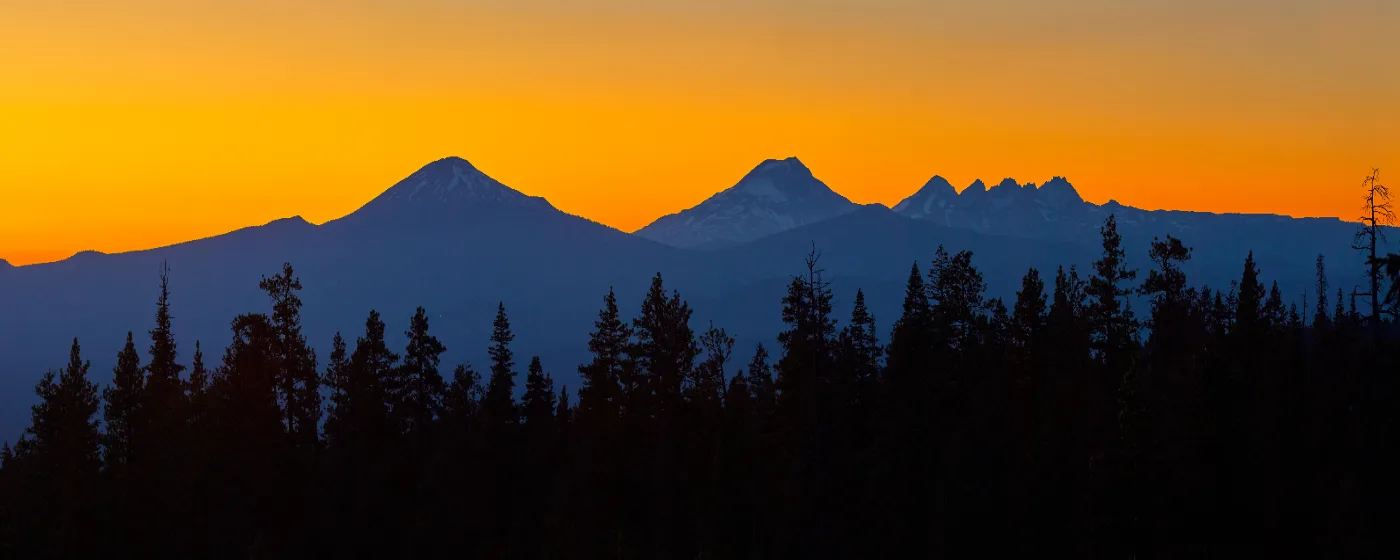
Everyone who moves to Bend from the west side of the Cascades says the same thing in month three: the sun is real, and it changes everything. This is a high-desert city sitting at roughly 3,600 feet elevation on the eastern slope of the Cascades, where 162 sunny days a year is not a marketing slogan but a meteorological fact. Bend sits where US-97 runs through the heart of Central Oregon, connecting it to Portland roughly three hours north and Redmond just 17 miles up the road. What drives daily life here is not a single industry or a downtown office park — it is the combination of genuine outdoor access and a job market that has become surprisingly self-sufficient for a city of 106,926.
The economic backbone is broader than most people expect. A major regional health system anchors one end; the Bend-La Pine School District, Deschutes County, and Central Oregon Community College anchor another. But the fastest-growing category is remote workers — roughly 27 to 28 percent of Bend's workforce works remotely, which explains both the explosive population growth and the income profile that sustains it. Families with school-age children come specifically for the Bend-La Pine School District, which holds a B rating, according to Niche, and 16,530 students enrolled in 2025-26. The brewery count across the Central Oregon area, the trail system, and the proximity to Mount Bachelor bring the rest.
The cost of that lifestyle is the part that surprises people who do their research from out of state. Oregon has no state sales tax, which softens the blow somewhat, and the effective property tax rate runs at approximately 0.60% — well below what buyers coming from California or Washington typically carry. But the typical home price of $732,894 (Zillow Home Value Index, July 2026) sits noticeably above what the median household income of $96,394 can comfortably support, meaning a significant share of buyers are bringing equity from somewhere else, working dual incomes, or relying on remote salaries priced for higher-cost markets. The typical two-bedroom rent of $2,120–$2,580 per month reflects the same dynamic. For the full cost picture, see the Bend cost of living page.
Whether you are seriously considering a move or just trying to understand what this city actually is, the sections below cover Bend's neighborhoods, housing market, daily commute realities, local employers, weekend scene, and what life here looks like once the novelty of the views wears off.
Bend at a Glance
Looking to buy in Bend? Estimate your payment.
Enter your numbers to see an estimated monthly mortgage payment.
Estimate only. Excludes HOA fees and mortgage insurance. The interest rate above is a starting point, not a quoted rate — replace it with your own to see real numbers. Insurance is a flat placeholder, not a Bend quote.
Why Are People Moving to Bend?
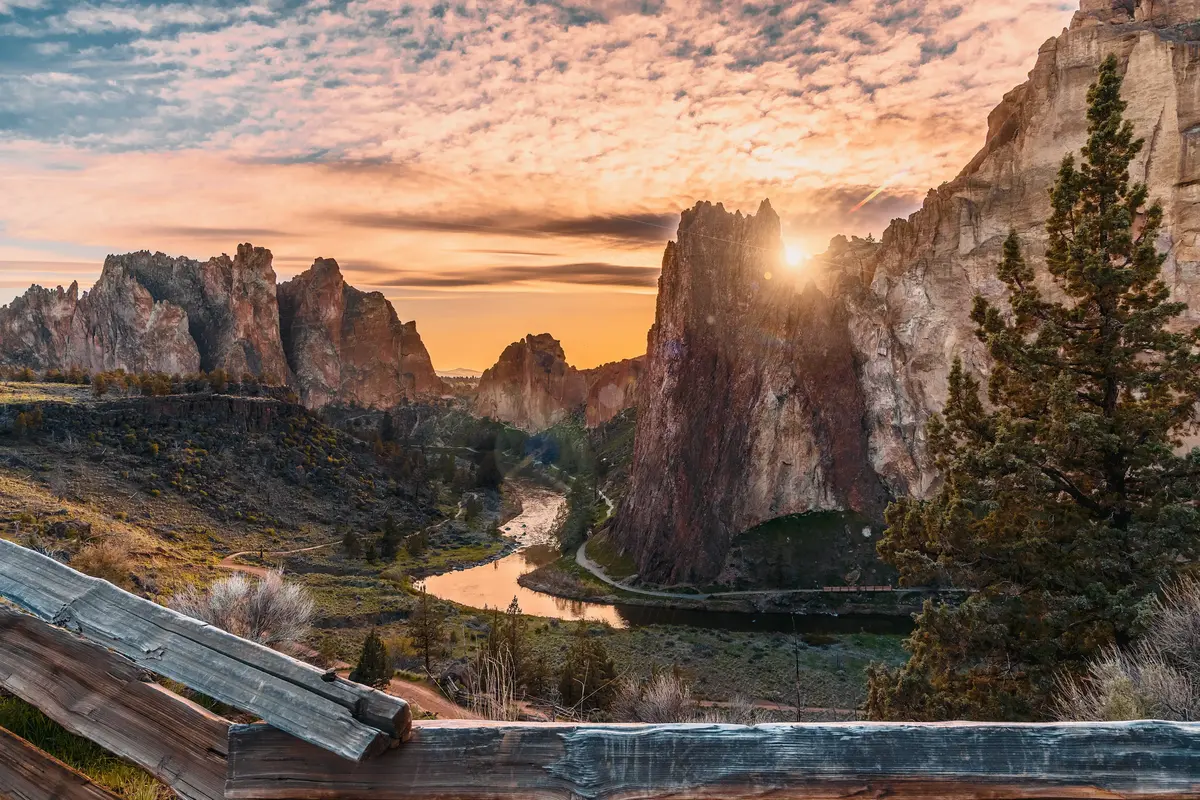
Bend grew faster than almost any mid-sized city in the Pacific Northwest over the past two decades — and the reasons are specific, not vague. People move here because the outdoor recreation is not a weekend hobby but a daily infrastructure. Trails like the Deschutes River Trail and Phil's Trail Complex are accessible before work. Mount Bachelor is close enough for a powder day that does not require an overnight. Smith Rock State Park is a short drive for climbing that draws athletes from across the country.
The remote-work economy supercharged that draw. Once location stopped being tied to a cubicle, a meaningful share of high earners chose Bend over Portland, Denver, or Seattle — getting more square footage, more light, and less traffic in exchange for being farther from a major airport. That shift is what turned a tourist town into a self-sustaining regional hub.
The employment base that formed around it is real. St. Charles Health System serves as the regional medical anchor for all of Central Oregon and is among the city's largest employers. The school district, county government, and Central Oregon Community College fill out the public-sector side. Construction and trades have remained strong through the city's growth cycle, and bioscience is an emerging presence. For buyers weighing career risk alongside lifestyle, that diversity matters.
Who Actually Moves Here
The mix skews toward outdoor-oriented professionals, families with school-age children relocating from Portland or the Bay Area, and remote workers who have cashed out equity from a higher-cost market. Retirees come too, drawn by the sunshine and the activity level, though the housing prices are steeper than many retirement budgets expect — and no dedicated 55+ communities were found in Bend. The city draws a younger demographic than most Central Oregon towns, which shows in the restaurant and brewery scene as much as in the school enrollment numbers.
| Buyer Type | What Draws Them | What to Know First |
|---|---|---|
| Nature Outdoor-first households | Trail access, Mount Bachelor, Smith Rock, river recreation | Even weekend trailheads see real crowds; pick your neighborhood by proximity to the trails you'll actually use |
| Tech Remote workers | Sunshine, space, no sales tax, livable pace | Remote salary needs to clear the income gap on a $732,894 median; run the numbers before you fall in love with a listing |
| Families Parents with school-age children | Bend-La Pine School District, parks, community feel | School boundary quirks matter here; check specific school assignments before choosing a neighborhood |
| Commuter Regional workers | Self-contained job market; no Portland commute required | US-97 through downtown is the daily chokepoint — where you live relative to work matters a lot |
| First-time buyers | Below-state-average crime, established community, no sales tax | The income-to-price gap is real; see the first-time homebuyer page for financing options |
| Renters | Lifestyle access without the purchase commitment | Two-bedroom rents of $2,120–$2,580/mo mean renting is not cheap here either |
The safety picture adds to the appeal: Bend carries a violent crime rate of 2 per 1,000 residents and a property crime rate of 14 per 1,000 residents — both well below state and national averages. For the full breakdown, see the Bend safety page.
What Daily Life Feels Like in Bend
The honest answer is that Bend lives small for a city of its size. Most people know their neighborhood, shop the same handful of spots, and structure their days around whichever trail or river access point is closest to home. The Deschutes River Trail runs through the heart of the city, and it is not unusual to see people running or cycling it on a Tuesday morning before 8 a.m. — this is a place where the outdoors genuinely integrates into the workweek, not just the weekend.
The Morning Routine
The coffee culture here is legitimate. A handful of independent roasters have built real followings, and the conversation in any of them will tell you more about who lives here than any demographic report. These are neighborhood anchors as much as they are caffeine stops.
Groceries and everyday errands are fully covered — this is not a small town where a serious shopping run means driving out of the valley. The absence of a state sales tax means what you see on the price tag is what you pay, which residents from California notice almost immediately.
Seasons Shape the City
Summer is the season newcomers fall in love with: long evenings, dry warmth, and a social calendar built around outdoor concerts at Hayden Homes Amphitheater, the Bend Farmers Market, and the Northwest Crossing Saturday Farmers Market. What they do not expect is the smoke. Wildfire smoke from August into September can close trails, cancel outdoor events, and turn the famous blue sky gray for weeks at a stretch. It is the seasonal reality nobody mentions in the relocation brochure, and it is the thing longtime residents cite most often when explaining why some people eventually leave.
Winter is gentler than people expect from a mountain-adjacent city. Snow falls but rarely paralyzes. The bigger adjustment is wind — Central Oregon's high desert produces sustained gusts that feel nothing like Portland's damp cold and catch newcomers off guard in their first January.
The Social Geography
Bend's social life clusters around Drake Park along the Deschutes River, the Old Mill District's riverfront, and the brewery scene that has made this one of the most brewery-dense cities per capita in the country. Deschutes Brewery founded the category here in 1988 and remains one of the largest craft operations in the nation. The density of breweries across the area means the brewery is a genuine social institution here, not just a weekend destination. For parks and trail details, the parks and recreation page goes deeper.
The Bend Housing Market Right Now
Bend's housing market is priced like the lifestyle amenity it is. The typical home price sits at $732,894 (Zillow Home Value Index, July 2026) — a figure that reflects both the strong demand from relocating buyers and the fundamental constraint of the Cascades to the west and high desert to the east. There is not much room for sprawl, and the city's urban growth boundary has been expanded carefully, with a 100-acre extension approved under state legislation in 2024. That geometry keeps supply limited.
The income-to-price gap is the central housing reality here. The median household income of $96,394 falls noticeably short of what the typical home price requires, which means the buyer pool skews toward people arriving with equity from higher-cost markets, dual-income households, or remote workers earning salaries priced elsewhere. That is not a flaw in the market so much as a description of who it is built for — and who it excludes.
Buyers have some geographic options. Neighborhoods like Mountain View, Old Farm District, Boyd Acres, and Larkspur sit below the city-wide typical price. River West and Awbrey Butte run above it. Southwest Bend tracks close to the median. The full neighborhood breakdown — character, housing stock, and who each area suits — lives on the Bend neighborhoods page. None of those neighborhood tiers come with specific dollar figures attached; the city-wide median is the authoritative anchor.
For buyers who need more room on the price side, Redmond to the north runs noticeably lower than Bend, and La Pine to the south runs noticeably lower as well. Sisters, by contrast, runs somewhat higher. The rental market is not a budget escape: the city-wide typical rent sits at $2,302 per month (Zillow, July 2026), with two-bedroom units typically running $2,120–$2,580. If you are deciding between buying and renting while you get oriented, the cost difference is real but not dramatic — and well-priced homes attract attention quickly.
Bend Neighborhoods
Bend has several distinct areas — each with its own character and appeal. Here’s a breakdown to help you narrow down where to focus your home search.
🏡 Mountain View
Mountain View sits on the northeast side of the city with a mix of older ranch homes and newer infill, offering some of the more accessible price points in Bend. It is a practical, unpretentious neighborhood that suits parents with school-age children and buyers prioritizing square footage over walkability.
🏠 Old Farm District
The Old Farm District has a quietly established character — modest homes on generous lots, close enough to the eastside commercial corridor to feel connected without being in the thick of it. It is a neighborhood that attracts buyers looking for space and a lower price point relative to the city median.
🌳 Boyd Acres
Boyd Acres is an eastside neighborhood with a long-established feel and a mix of housing built across several decades, making it one of the more affordable entry points into Bend. Families with school-age children and buyers who want a quieter pace without being far from services tend to land here.
🏘 River West
River West sits on the west side of the Deschutes River with easy access to Drake Park and the downtown core, drawing buyers who want to walk to the water and the restaurant scene. Prices run above the city-wide typical home price, reflecting both the location and the quality of the housing stock.
🏔 Larkspur
Larkspur is a southwest Bend neighborhood with newer construction and a suburban feel, popular with families who want modern floor plans at prices that come in below the city median. The neighborhood has a planned, walkable character with parks integrated into its layout.
🌆 Southwest Bend
Southwest Bend is a broad, established area that tracks close to the city-wide median in price and encompasses a range of housing types from older ranch homes to newer construction. It suits buyers who want proximity to the mountain highway corridor and the quieter west side of town.
Pros & Cons of Living in Bend
The Pros
- Year-round outdoor recreation with rivers, mountains, and high-desert trails minutes from downtown
- Strong, diversified regional economy anchored by healthcare and manufacturing
- Abundant sunshine (~300 days/year) with low humidity
- Vibrant craft beer and dining scene in a walkable downtown
The Cons
- High and rising home prices relative to local wages
- Property crime rate is elevated compared to similarly sized U.S. cities
- Growing traffic congestion and housing supply constraints as population booms
Getting Around & Commuting in Bend
Bend is a car city — not because transit does not exist, but because the geography and density make driving the practical default for most residents. The two primary routes that shape daily movement are US-97, which runs through the city as the Bend Parkway, and US-20, which carries east-west traffic. Where you live relative to work is the most important commute variable here, because US-97 through downtown becomes a genuine chokepoint during peak hours.
The US-97 Reality
The Bend Parkway handles an enormous share of the city's north-south volume, and the interchanges around the downtown core slow noticeably during morning and afternoon rush. This is not a Los Angeles-style gridlock — but it is real, and buyers who assume Bend is immune to traffic because it is not Portland tend to be surprised. Living on the same side of US-97 as your workplace makes a meaningful difference to your daily quality of life.
Public Transit in Bend
Cascades East Transit (CET) operates multiple routes across the city and region, with Hawthorne Station as its central hub. In July 2025, CET launched Route 8, a pilot connecting northeast Bend neighborhoods — including areas with affordable housing — to schools, parks, and shopping. Transit is useful for some commuters and students but is not yet frequent enough to replace a car for most residents' full range of errands.
Cycling is genuinely viable for a portion of the population, particularly along the Deschutes River Trail corridor and in neighborhoods close to the downtown core. Bend has invested in bike infrastructure, and on a dry summer morning, car-free commuting to downtown is realistic. From November through March, fewer people manage it.
Getting Out of Bend
Redmond Municipal Airport (RDM), approximately 17 miles north, serves the region with direct commercial flights. For the full range of nonstop routes, Portland International is the typical choice — roughly a three-hour drive via US-97. That drive is straightforward in summer and occasionally complicated by weather and chain requirements on mountain passes in winter. Residents who travel frequently for work factor this into their calculus before committing to Bend over a city with a larger airport.
| Commute Scenario | Mode | Notes |
|---|---|---|
| Within downtown Bend | Walk / bike / drive | Cycling viable in dry months; parking downtown is limited but manageable |
| Cross-town via US-97 | Drive | Rush-hour slowdowns at downtown interchanges; route choice matters |
| Bend to Redmond | Drive | About 17 minutes; Redmond is a self-contained regional employment hub |
| Northeast Bend neighborhoods | CET Route 8 or drive | New 2025 bus pilot connects to schools, parks, and shopping |
| Bend to Portland | Drive | Approximately 3 hours via US-97; mountain pass conditions apply in winter |
| Regional air travel | Fly from RDM | Redmond Municipal Airport (~17 mi); Portland International for broader nonstop options |
The remote-work contingent — roughly 27 to 28 percent of the workforce — sidesteps the commute question almost entirely, which is one reason Bend's traffic has not scaled as badly as the population growth would suggest. If you are commuting to a traditional office, though, spend a week driving the route at rush hour before you sign anything.
Schools in Bend
Families relocating to Bend have public, private, and higher-education options nearby. Here’s a quick overview.
🎓 School District
Bend-La Pine School District serves K–12 students across Bend and the surrounding area. Rated B (source: Niche.com district and school ratings).
🏆 Graduation Rate
The 4-year high-school graduation rate here is approximately 85.8%.
📚 Higher Education
Oregon’s public universities — the University of Oregon, Oregon State University, and Portland State University — offer four-year degrees statewide, with a network of 17 community colleges providing two-year and workforce programs.
🌐 Online Learning
Oregon State University Ecampus and Portland State University Online offer fully accredited online degrees for remote learners across the state.
Safety in Bend
A quick look at how Bend compares on the numbers that matter most when weighing a neighborhood or a move.
🛡 Violent Crime
Approximately 2 per 1,000 residents.
🔒 Property Crime
Approximately 14 per 1,000 residents.
Compared to the most recent national figures from the Bureau of Justice Statistics (2024), Bend’s violent crime is below the national average (about 3.7 per 1,000), and property crime is below the national average (about 18.4 per 1,000).
Against Oregon as a whole, Bend’s violent crime is roughly two-thirds of the state average, and property crime is roughly half the state average (Bureau of Justice Statistics, Crime Known to Law Enforcement, 2024 (tables 2 and 3)).
Crime rates can vary a lot within a single city, so the citywide numbers above are only a starting point. Some neighborhoods in Bend run well below these averages, while others run higher — the kind of block-by-block detail that matters most when you’re actually choosing where to live. The full guide below breaks it down neighborhood by neighborhood.
Working in Bend
Bend’s largest employers span several industries — here are some of the anchors of the local job market.
🏥 St. Charles Health System
Healthcare
🎓 Bend-La Pine Schools
Education
🏛 Deschutes County
Municipal government
🏛 City of Bend
Municipal government
🎓 Central Oregon Community College
Education
Parks & Recreation in Bend
Some of the outdoor spaces that shape everyday life in Bend.
🌱 Pilot Butte State Park
🌱 Drake Park
🌱 Deschutes River Trail
Bend residents don’t have to go far for green space — spots like Pilot Butte State Park and Drake Park are part of everyday life here, whether that’s a morning walk, a weekend hike, or just somewhere to unwind outside. The full guide below covers more of what Bend has to offer for parks and outdoor recreation.
Retiring in Bend
Bend draws retirees for its balance of amenities, outdoor access, and cost. Here’s what to weigh.
🌤 Climate
Bend's high-desert climate delivers 162 sunny days a year with low humidity and mild summers, making outdoor activity comfortable through most of the year. Winters are cold but typically manageable — snow falls but rarely accumulates heavily in the city itself — and spring arrives early at this elevation. Late summer wildfire smoke is the one climate factor retirees should research carefully before committing.
🍴 Lifestyle
The lifestyle is built around outdoor activity and a restaurant and brewery scene that sustains year-round socializing. Drake Park, the Deschutes River Trail, and more than 80 city parks give retirees daily access to green space and water. The dining scene ranges from long-established riverside dining at Pine Tavern to a craft beer culture that draws residents of all ages, and the farmers markets through the warm months are genuine community events.
🏚 55+ Communities
No 55+ communities were found in Bend. Retirees looking for age-restricted or active-adult communities will need to look at neighboring areas. The broader retiring in Bend page covers what housing options exist for downsizers and older buyers in the Bend area.
✈ Getting Around
A car is the practical requirement for most daily life in Bend. The Deschutes River Trail and downtown core are walkable and bikeable in good weather, but grocery runs and medical appointments will almost always involve driving. Redmond Municipal Airport, approximately 17 miles north, provides commercial air service — a meaningful convenience for retirees who travel to see family.
🏛 Oregon Taxes for Retirees — What to Know
- Social Security is not taxed — Oregon does not tax Social Security or Railroad Retirement benefits. Any amount included in your federal adjusted gross income is subtracted back out on the Oregon return.
- But other retirement income IS taxed — This is the trade-off that surprises people moving from Washington or Texas. Pension distributions and 401(k)/IRA withdrawals are taxed as ordinary income at Oregon’s regular rates — there is no blanket retirement-income exclusion.
- Graduated income tax — Oregon has four brackets — 4.75%, 6.75%, 8.75% and 9.9%. The 4.75% rate covers the first $10,000 of taxable income for a single filer ($20,000 filing jointly); the 8.75% rate starts at $125,000 ($250,000 jointly); and the top 9.9% rate applies above $250,000 ($500,000 jointly).
- No sales tax — Oregon levies no general sales tax.
- Property taxes, with senior deferral — Oregon’s Senior and Disabled Property Tax Deferral lets qualifying homeowners have the state pay their county property taxes, with a lien recorded against the home. The 2026 household income limit is $70,000, and deferred balances accrue 6% simple interest — it defers the bill rather than forgiving it.
- Estate tax — the one to plan for — Oregon has its own estate tax with a $1 million filing threshold — far below the federal exemption, and NOT indexed for inflation, so it reaches more estates every year in real terms. Retirement accounts and a long-held home count toward the taxable estate, so estates that feel modest can cross the line without the owner expecting it.
- No inheritance tax — Oregon has no separate inheritance tax and no gift tax.
Tax laws change frequently and individual situations vary. This is general information, not tax advice — always consult a qualified Oregon tax professional or CPA for personalized retirement tax planning.
Weekends & Local Favorites in Bend
A Bend weekend organizes itself around whatever is outside. In summer that means early starts on the trail before the temperature climbs — Phil's Trail Complex draws mountain bikers who plan their Saturdays around it, and the Deschutes River Trail fills with runners and cyclists before 9 a.m. Pilot Butte, the cinder cone that rises 500 feet above the city, offers views of nine Cascade peaks from its summit and is the go-to spot for watching the sunrise over the high desert. These are not tourist activities — they are what residents actually do.
Food, Coffee, and the Brewery Scene
The dining and drinking scene punches well above what a city of 106,926 would typically sustain, and the reason is the high concentration of people who moved here specifically for quality of life. Spork brings globally influenced street food that has built a loyal following. Jackson's Corner in Old Bend anchors the neighborhood-café tradition. Pine Tavern Restaurant has been a Bend institution along the river for decades. Monkless Belgian Ales Brasserie and Bangers & Brews Westside round out a brewery and pub scene that complements the larger craft beer ecosystem built around Deschutes Brewery.
On the coffee side, Watershed Coffee Roasters, Thump Coffee, Lone Pine Coffee Roasters, and PALATE a coffee bar each have their own character and regulars. In a city this coffee-serious, the place you pick tells people something about which neighborhood you live in.
Markets, Events, and the Farmer Circuit
The Bend Farmers Market and the Northwest Crossing Saturday Farmers Market run through the warm months and serve as genuine community gathering points — not just produce runs. Drake Park along the Deschutes hosts concerts and events that function as the city's informal living room in summer. The Hayden Homes Amphitheater brings larger touring acts to an outdoor venue that feels genuinely suited to the setting.
Day Trips That Define the Region
The day-trip radius from Bend is one of the strongest arguments for living here. Smith Rock State Park, a short drive from the city, is a world-class climbing destination with hikes accessible to non-climbers. Shevlin Park sits at the western edge of the city and offers a forested canyon that feels remote despite being minutes from downtown. Mount Bachelor provides skiing and snowboarding through a long season that often extends into spring. These are not long drives — they are the reasons many residents structure their weekends before they book anything else.
Local favorites in Bend
Restaurants
- Spork
- Jackson's Corner - Old Bend
- Monkless Belgian Ales Brasserie
- Bangers & Brews Westside Bend Oregon
- Pine Tavern Restaurant
Outdoors
- Deschutes River Trail
- Pilot Butte
- Smith Rock State Park (nearby)
- Shevlin Park
- Phil's Trail Complex
Coffee
- Watershed Coffee Roasters (formerly Looney Bean Bend)
- Thump Coffee - Downtown
- Lone Pine Coffee Roasters
- Backporch Coffee Roasters - Greenwood
- PALATE a coffee bar
Farmers Markets
- Northwest Crossing Saturday Farmers Market
- Bend Farmers Market
Top Things Locals Say About Bend
The best intel about a city comes from the people who actually live there. Here’s what Bend residents say when newcomers ask the questions everyone’s thinking.
“I knew the outdoor access would be great, but I underestimated how much US-97 would shape my day — I live on the west side and work near the eastside, and the difference between leaving at 7:15 and 8:00 in the morning is genuinely 20 minutes. Nobody told me to think about that when I was picking a neighborhood.”
— Recent Bend home buyer
“What's the most surprising thing about living in Bend?”
The smoke in August is the thing nobody puts in the brochure. You move here for 162 sunny days a year and the trails outside your door, and then late August rolls around and the sky turns orange and the air quality index goes into unhealthy territory and suddenly you understand why longtime residents own air purifiers. It is not every year, and it is not all summer — but it is a real part of living here, and it reshapes how you plan the last weeks of summer.
“What do locals love most about Bend?”
The proximity of it all. Pilot Butte is inside city limits. The Deschutes River Trail connects neighborhoods you actually live in. Phil's Trail Complex is a short drive from most of the city. You do not have to plan a trip to get outside — you just go. That daily access is what keeps people here once they have been here a few years, even when the housing costs make them reconsider everything else.
“What should newcomers to Bend know?”
Pick your neighborhood based on which side of US-97 you need to be on. The parkway is not a barrier in the urban-planning sense — you can cross it fine — but the commute pattern you build around it will define a lot of your daily experience. Also: buy an air purifier before your first August, learn which trails allow dogs and which do not before you assume, and do not count on the Redmond airport having direct flights to wherever you want to go.
“How much do you need a car in Bend?”
For most of daily life, you need a car. The transit system has expanded in recent years with new routes added to underserved neighborhoods, but the frequency and coverage are not yet at the level where most residents go car-free. Cycling works well for downtown errands and trail access in dry weather, and some neighborhoods closer to the core are genuinely manageable without a car for basics. But grocery runs, airport trips, and anything involving the kids' schedules will almost certainly involve driving.
Cities Near Bend
Other communities near Bend worth a look — each with its own character and price point.
| City | Distance | Best For | Vibe | Median Rent | Median Buy |
|---|---|---|---|---|---|
| Redmond | 16 mi | Value seekers, growing families | Faster-growing, more affordable, practical | $2,098 | $517,100 |
| Sisters | 22 mi | Small-town feel, outdoor lifestyle | Quiet, artsy, mountain-adjacent | $2,059 | $790,765 |
| La Pine | 30 mi | Budget buyers, rural living | Remote, forested, very quiet | $1,400 | $406,496 |
More Helpful Guides for Bend
Going deeper on Bend? Our blog series covers everything from first-time buying to retiring here — explore the guides below.
Local Expert Takeaway: Bend rewards people who do their homework on the US-97 corridor before they choose a neighborhood. The trail access is real, the brewery scene is real, and the 162 sunny days a year are real — but so is the income-to-price gap on a $732,894 typical home, the August wildfire smoke that closes trails for weeks, and the airport drive when you need to travel for work. The buyers who thrive here are the ones who moved with a plan, not just a feeling.
Quick Takeaways & FAQs
✅ Bend averages 162 sunny days a year and sits within easy reach of Mount Bachelor, Smith Rock State Park, and the Deschutes River Trail — outdoor access here is genuinely built into daily life, not just marketed.
⚠️ The typical home price of $732,894 (July 2026) sits well above what the median household income supports, meaning most buyers arrive with equity from elsewhere or remote incomes priced for higher-cost markets.
📍 Wildfire smoke in late summer is the seasonal reality locals mention most — it can shut down trails and turn the famous blue sky gray for weeks, and it surprises nearly every newcomer in their first August.
Is Bend, Oregon expensive to live in?
What are the best neighborhoods in Bend for families?
How are the schools in Bend, Oregon?
Is traffic bad in Bend?
What do people not like about living in Bend?
Helpful Links for Moving to Bend
Moving to Oregon?
Tell us what you need help with and we'll connect you with local resources.
