What Is Living in Sisters, Oregon Like?
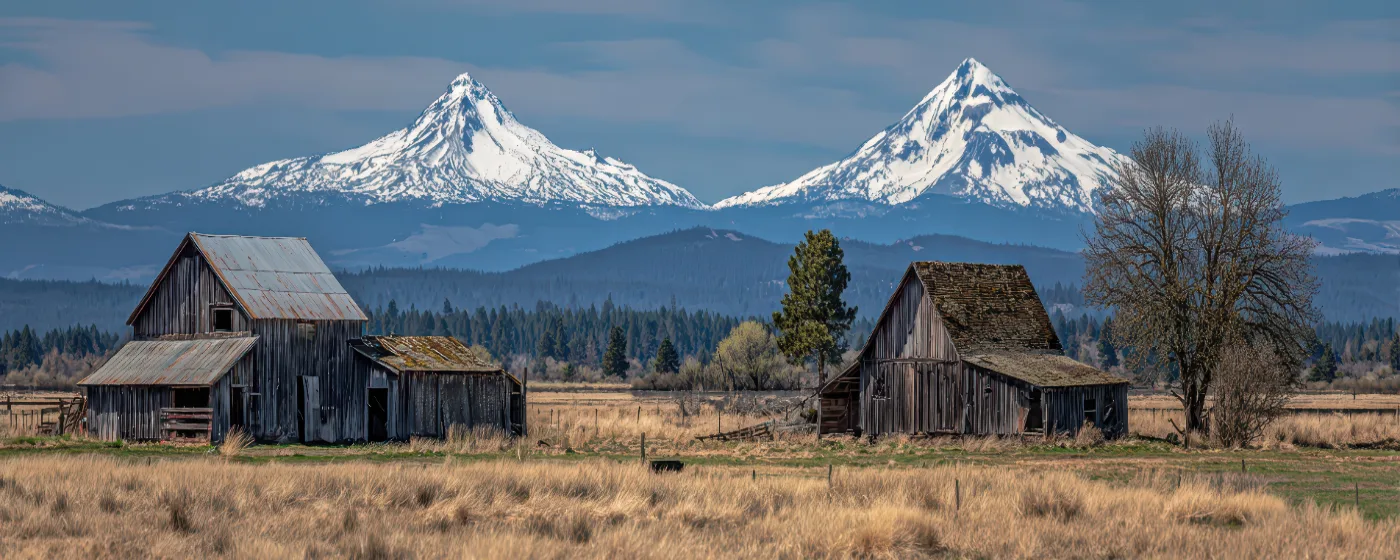
You've probably seen the photos — the Three Sisters volcanoes rising above a Western-facade downtown, a mountain town that looks like a film set but is actually someone's Tuesday morning. What the photos don't show is the central tension of buying here: Sisters is simultaneously one of the most desirable small towns in the Pacific Northwest and one of the smallest cities in Deschutes County, with a population of 3,022. That combination means the lifestyle is genuine, the community tight-knit, and the inventory of homes almost perpetually thin. US-20 (Santiam Highway) runs straight through town as the main artery east toward Redmond and west toward the Cascade passes, and that single road shapes nearly everything about how residents experience daily life here.
The economic backbone of Sisters is leaner than it looks. Sisters School District and the City of Sisters are the steadiest employers in town. Black Butte Ranch, the resort community just west along US-20, anchors the hospitality side of the local economy. Sisters Coffee Company, which started as a local café and grew into a regional roaster, is one of the few private-sector employers with meaningful local roots. For most working-age residents, though, the real answer to the employment question is either a commute — it's about 25 minutes to Bend, OR, where the Central Oregon economy is far larger — or remote work, which has increasingly made Sisters viable for people who no longer need to be near an office at all. The median household income sits at $94,524, which reflects that mix of professional remote workers, retirees, and hospitality and service workers.
Sisters School District 6 holds a B+ rating, according to Niche, with 1,171 students enrolled in 2025-26 — a district small enough that a high schooler's coach probably knows their name. The cost of living runs notably above what you'd pay in Redmond or Prineville, and the typical home price of $790,765 (Zillow Home Value Index, July 2026) puts Sisters well into premium Deschutes County territory. What you get for that premium is 162 sunny days a year, access to the Peterson Ridge Trail System half a mile from downtown, and a genuinely walkable historic core where you can cover most of your morning errands on foot. The outdoors here aren't an amenity bolted onto the town — they're the reason the town exists in the form it does. For a fuller look at what the numbers actually mean for your budget, the cost of living in Sisters page breaks it down.
Whether you're seriously considering a move or just running the numbers, this guide covers Sisters' neighborhoods, housing market, daily commute realities, schools, local anchors, and the things newcomers tend to learn only after they've signed the papers.
Sisters at a Glance
Looking to buy in Sisters? Estimate your payment.
Enter your numbers to see an estimated monthly mortgage payment.
Estimate only. Excludes HOA fees and mortgage insurance. The interest rate above is a starting point, not a quoted rate — replace it with your own to see real numbers. Insurance is a flat placeholder, not a Sisters quote.
Why Are People Moving to Sisters?
Most people who move to Sisters aren't relocating here for a job — they're relocating here for a life. That distinction matters, because it shapes who your neighbors will be and what the community actually values.
The Draw Is Real and Specific
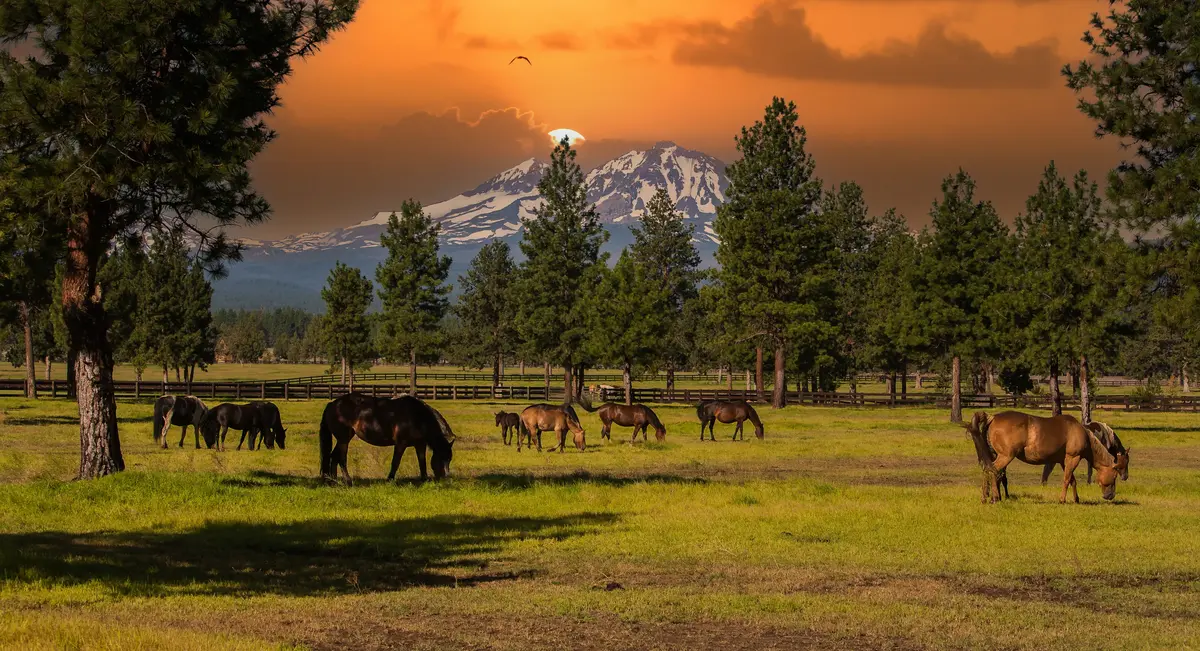
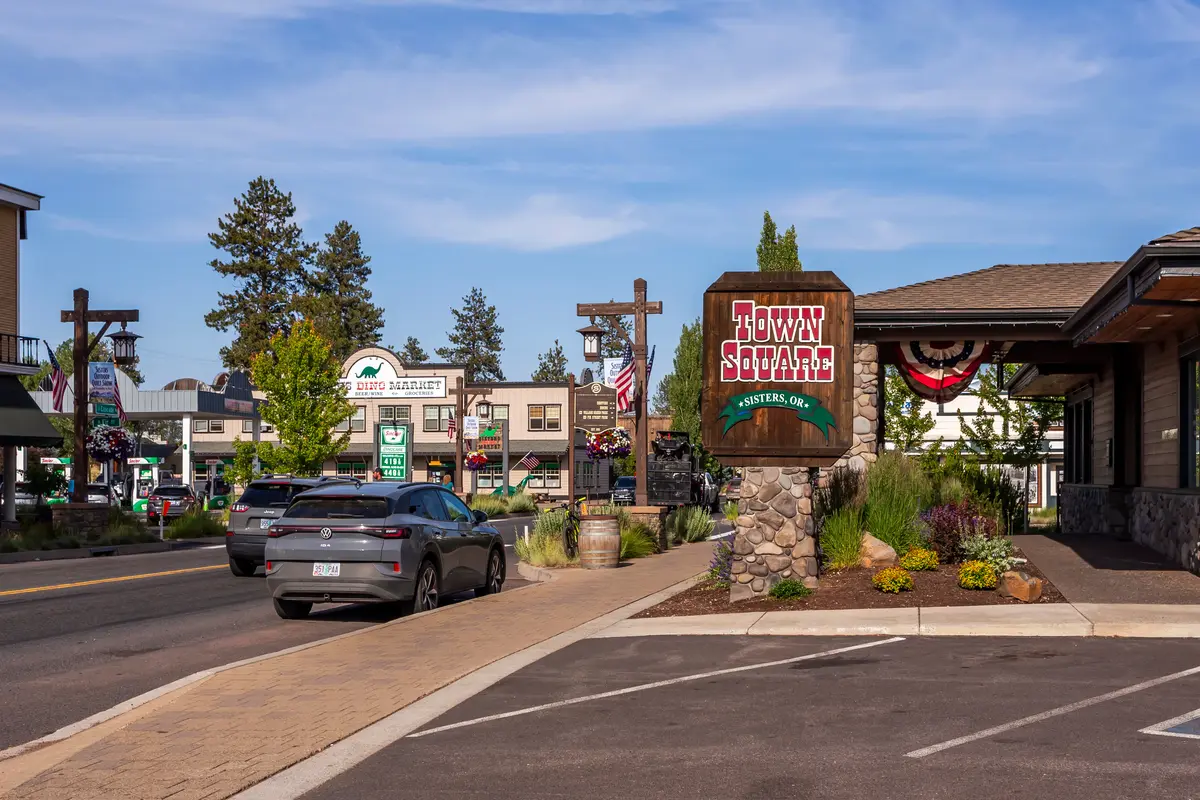
Sisters sits at the eastern edge of the Cascades, where the high desert meets old-growth ponderosa forest, and the view down the main street toward the Three Sisters on a clear morning is not something you stop noticing. The town's Western building facades are a design code maintained since the 1970s that gives downtown a consistent frontier character, now layered over with a genuine arts scene, boutique retail, and some of the best independent coffee in Central Oregon.
Remote workers discovered Sisters in earnest in the early 2020s and haven't fully left. For someone who can work from anywhere, the combination of fast internet, 162 sunny days a year, world-class trail access, and a community of 3,022 people who actually know each other is genuinely hard to beat. The town is small enough that people wave; it's large enough to have real infrastructure.
Who Actually Moves Here
The buyer pool in Sisters skews toward several distinct groups. Retirees and pre-retirees from the Willamette Valley and California who have been watching the town for years and finally pull the trigger when circumstances allow. Remote workers — often in tech, design, or professional services — who traded a Portland or Seattle commute for a Cascade view. And a smaller cohort of outdoor-focused families who want their kids growing up with the Peterson Ridge Trail System in their backyard rather than a subdivision cul-de-sac. For retirees specifically, there are no purpose-built 55+ communities in Sisters — buyers enter the general residential market, typically prioritizing single-level homes. The retiring in Sisters page covers what that looks like in practice.
The Honest Counterweight
Sisters is not a city in the full-service sense. A specialist appointment, a serious shopping run, or a trip to a big-box retailer means driving — usually toward Bend. Winters on the east side of the Cascades bring genuine cold and occasional snow, and OR-242 (McKenzie Highway), the scenic western route through the lava fields, closes entirely in winter. If you're coming from a larger metro, the transition to small-town services is the adjustment that surprises people most in their first year.
A consistent pattern among people who leave Sisters: they didn't underestimate the beauty — they underestimated how much driving a life here actually involves. That's not a reason not to move here; it's just the thing worth knowing before you do.
What Daily Life Feels Like in Sisters
Sisters has about six blocks of genuinely walkable downtown, and within those six blocks you can cover an impressive amount of ground. The farmers market, a handful of independent cafés, gallery shopping, the post office, and the Village Green City Park are all reachable on foot from most of the central neighborhoods. That compact core is one of the things people love most about living here.
The Morning Routine
A typical morning in Sisters tends to start early. The trail community is up before the tourists arrive, and on weekdays the downtown coffee shops have a decidedly local feel before mid-morning. The Sisters Farmers Market brings out the whole town when it runs, and the energy is the kind you associate with places where people actually know the vendors by name. This is not a city where you blend into the crowd — and for most residents, that's the whole point.
Seasonal Life
The event calendar is outsized for a town of this size. The Sisters Rodeo at the Sisters Rodeo Grounds is a genuine Western event — not a tourist pastiche — with roping, bronco riding, and bull riding drawing crowds from across the region. The Sisters Outdoor Quilt Show, held annually in July, is internationally recognized as the world's largest outdoor quilt show, displaying quilts across storefronts and park posts and drawing visitors from across the country and beyond. It began in 1975 when Jean Wells hung a dozen quilts outside her shop to brighten the street, which says something about the town's character. The Sisters Folk Festival follows in September, filling the community with live music and regional artists.
What newcomers don't fully anticipate is how dramatically the tourist season changes the feel of downtown. July in Sisters is a different experience from November in Sisters — the streets, the parking, the pace of the coffee shops. Longtime residents learn to do their downtown errands early or late during peak season, and most of them stop resenting the crowds once they realize the same tourism economy is what keeps the local businesses alive year-round.
Schools and Kids
Sisters School District 6 holds a B+ rating, according to Niche, with 1,171 students enrolled in 2025-26. The district is small enough that kids participate in multiple sports and activities — there simply aren't enough students for rigid specialization. On 2024-25 state assessments, 40.5% of students reached math proficiency and 50.5% reached reading proficiency. For a full look at programs, boundaries, and how the district fits into the OSAA competitive landscape, see the Sisters schools page.
The Sisters Housing Market Right Now
The typical home price in Sisters is $790,765 (Zillow Home Value Index, July 2026). For context, that puts Sisters noticeably above even the Bend median — and Bend is already among the priciest markets in Oregon. Sisters is a premium market by any measure, and the inventory dynamics amplify that.
What the Market Actually Looks Like
Sisters' housing stock is inventory-constrained in a structural way. The city has a defined urban growth boundary, which limits how much new development can occur. Single-level homes are consistently the most sought-after property type — they suit the retirees and older remote workers who make up a significant share of buyers, and they're not built as often as demand would suggest. When a well-priced single-level home in a central neighborhood hits the market, it rarely sits.
The typical two-bedroom rent runs $1,890–$2,310 per month, with a city-wide typical rent of $2,059 per month (Zillow ZORI, July 2026). The rental market is correspondingly tight — Sisters has relatively few purpose-built rental units, and much of what's available are owner-managed properties rather than professionally managed apartment complexes. For a full breakdown of what the numbers mean across different household budgets, see the cost of living in Sisters page.
What the Price Reflects
The effective property tax rate of 0.62% is meaningfully below the Oregon state average — one of the genuine financial advantages of owning here, given the home prices involved. Oregon has no sales tax, which matters for ongoing household spending. The combination of low property tax and no sales tax softens the monthly cost of ownership relative to what the purchase price alone would suggest.
Some areas of Sisters run well above the city-wide figure — especially properties on larger parcels, homes with direct Three Sisters views, or newer construction in the planned neighborhoods west of town. Entry-level inventory, when it appears, tends to be older construction in the established central neighborhoods. For neighborhood-by-neighborhood character and what each area offers buyers, the best neighborhoods in Sisters page covers the full picture.
Sisters Neighborhoods
Sisters has several distinct areas — each with its own character and appeal. Here’s a breakdown to help you narrow down where to focus your home search.
🏡 Tollgate
One of Sisters' more established residential areas, Tollgate suits buyers who want a settled neighborhood feel close to the downtown core. The housing stock skews toward single-level homes on standard lots, and the proximity to the main street makes it one of the more walkable addresses in town.
🏠 Village at Cold Springs
A planned community with a cohesive design character, Village at Cold Springs appeals to buyers who want a sense of neighborhood structure — common spaces, consistent architecture, and a community feel that makes it easy to meet neighbors. It draws a mix of remote workers and retirees.
🌳 Pine Meadow Village
Pine Meadow Village sits in the western part of the Sisters urban area and offers newer construction with mountain views from many lots. It suits families and buyers who want more recently built homes and a quieter residential setting away from the tourist flow on the main street.
🏘 Sisters Woodlands (The Woodlands)
The Woodlands earns its name — ponderosa pines shade much of the neighborhood, giving it a distinctly forested feel that separates it from the more open high desert character of the eastern neighborhoods. It suits buyers who prioritize privacy, natural setting, and proximity to trail access.
🏔 Timber Creek
Timber Creek is a smaller, quieter residential area that suits buyers looking for a lower-key entry into Sisters without sacrificing easy access to downtown and the trail system. The neighborhood has a relaxed character and tends to attract buyers who want to be in Sisters without being in the thick of peak-season foot traffic.
🌆 ClearPine
ClearPine is a newer development that reflects the growing demand for purpose-designed communities in Sisters, with homes built around outdoor living and Cascade views. It appeals to buyers who want newer construction with a cohesive aesthetic and a neighborhood that feels intentionally designed rather than incrementally assembled.
Pros & Cons of Living in Sisters
The Pros
- Top-rated, tight-knit school district with small class sizes
- Direct access to Three Sisters Wilderness and hundreds of miles of trails
- Charming, walkable Old-West downtown with shops, galleries, and dining
- Lower crime rates than most Oregon towns
The Cons
- Home prices well above state and national medians relative to local wages
- Narrow local job market outside tourism, trades, and the school district
- No hospital in town (nearest is St. Charles in Bend, about 20-25 minutes away)
Getting Around & Commuting in Sisters
The honest summary of commuting in Sisters: most errands and most jobs mean a drive. The distances involved make cycling to work practical only for the few residents who both live and work in the downtown core, and the daily rhythm of life here is built around the car.
The Routes That Matter
US-20 (Santiam Highway) is the spine of daily life in Sisters. It runs east-west through the center of town, carrying traffic toward Redmond and Bend in one direction and toward the Santiam Pass in the other. OR-126 also serves the corridor. For most working residents, the daily commute is east on US-20: it's about 25 minutes to Bend, OR, which is where the employment base, the regional health system, the big-box retail, and most of the services that Sisters itself doesn't have are concentrated.
That commute is one of the better ones in Central Oregon — the drive is scenic, traffic is nothing like a metro freeway at rush hour, and the Santiam Highway is generally well-maintained. The catch is winter: when snow and ice hit the passes, conditions on US-20 west of town can deteriorate quickly, and drivers heading toward the Willamette Valley should always check road conditions before committing to that route in winter months.
OR-242 and Seasonal Access
OR-242 (McKenzie Highway) branches southwest from Sisters and is genuinely one of Oregon's most spectacular drives — through volcanic lava fields and old-growth forest toward the Willamette Valley. It closes in winter and doesn't reopen until snowpack allows, typically late spring. Residents who use it as a Willamette Valley route need to plan around that seasonal reality.
Remote Work Changes the Calculus
A growing share of Sisters residents have restructured the commute question entirely. Remote workers who chose Sisters specifically for the lifestyle — the trails, the tight community, the views — may drive to Bend once or twice a week rather than daily, which makes the distance feel very different. Black Butte Ranch, the major hospitality employer just west of town, employs a portion of the local workforce in roles that don't require a Bend commute at all. The Sisters School District and City of Sisters are fully local employers for residents in those fields.
Redmond Municipal Airport (RDM) is approximately 22 miles away and provides the main commercial air access for the region — a reasonable drive for a town of Sisters' size, and far easier than driving to Portland for most Central Oregon travelers.
Schools in Sisters
Families relocating to Sisters have public, private, and higher-education options nearby. Here’s a quick overview.
🎓 School District
Sisters School District 6 serves K–12 students across Sisters and the surrounding area. Rated B+ (source: Niche.com).
🏆 Graduation Rate
The 4-year high-school graduation rate here is approximately 94.5%.
📚 Higher Education
Oregon’s public universities — the University of Oregon, Oregon State University, and Portland State University — offer four-year degrees statewide, with a network of 17 community colleges providing two-year and workforce programs.
🌐 Online Learning
Oregon State University Ecampus and Portland State University Online offer fully accredited online degrees for remote learners across the state.
Safety in Sisters
A quick look at how Sisters compares on the numbers that matter most when weighing a neighborhood or a move.
🛡 Violent Crime
Approximately 0.34 per 1,000 residents.
🔒 Property Crime
Approximately 3.72 per 1,000 residents.
Compared to the most recent national figures from the Bureau of Justice Statistics (2024), Sisters’s violent crime is below the national average (about 3.7 per 1,000), and property crime is below the national average (about 18.4 per 1,000).
Against Oregon as a whole, Sisters’s violent crime is a small fraction of the state average, and property crime is a small fraction of the state average (Bureau of Justice Statistics, Crime Known to Law Enforcement, 2024 (tables 2 and 3)).
Crime rates can vary a lot within a single city, so the citywide numbers above are only a starting point. Some neighborhoods in Sisters run well below these averages, while others run higher — the kind of block-by-block detail that matters most when you’re actually choosing where to live. The full guide below breaks it down neighborhood by neighborhood.
Working in Sisters
Sisters’s largest employers span several industries — here are some of the anchors of the local job market.
🎓 Sisters School District
Education
🏛 City of Sisters
Municipal government
🏛 Deschutes County
Municipal government
🏥 Black Butte Ranch
Hospitality
🛒 Sisters Coffee Company
Food processing
Parks & Recreation in Sisters
Some of the outdoor spaces that shape everyday life in Sisters.
🌱 Village Green City Park
🌱 Peterson Ridge Trail System
🌱 Whychus Creek Restoration Trail
Sisters residents don’t have to go far for green space — spots like Village Green City Park and Peterson Ridge Trail System are part of everyday life here, whether that’s a morning walk, a weekend hike, or just somewhere to unwind outside. The full guide below covers more of what Sisters has to offer for parks and outdoor recreation.
Retiring in Sisters
Sisters draws retirees for its balance of amenities, outdoor access, and cost. Here’s what to weigh.
🌤 Climate
Sisters sits on the dry, eastern side of the Cascades, which means 162 sunny days a year and far less rain than western Oregon. Summers are warm and clear; winters bring cold temperatures and occasional snow on the ground, but the sunny stretches between storms make them more livable than the grey Pacific coast winters many retirees are fleeing.
🍴 Lifestyle
The lifestyle here is outdoors-first — hiking the Peterson Ridge trails, fly fishing the Metolius River, attending the Sisters Rodeo or the Folk Festival, and walking to a downtown café on a weekday morning. The dining scene is genuine for a town this size, and the arts and boutique retail along the Western-facade downtown give daily life a texture that larger retirement markets rarely match.
🏚 55+ Communities
There are no purpose-built active-adult or 55+ communities in Sisters. Retirees here buy into the general residential market, most often prioritizing single-level homes in established neighborhoods. That means competing with the same buyer pool as everyone else, but it also means living in genuinely mixed-age neighborhoods rather than gated communities — which suits the character of the town.
✈ Getting Around
A car is essential for daily life beyond the walkable downtown core. Most medical care beyond primary is accessed in Bend, about 25 minutes east on US-20. Redmond Municipal Airport (RDM), approximately 22 miles away, provides commercial air access for travel. The drives are manageable, and the roads east toward Bend are generally well-maintained year-round.
🏛 Oregon Taxes for Retirees — What to Know
- Social Security is not taxed — Oregon does not tax Social Security or Railroad Retirement benefits. Any amount included in your federal adjusted gross income is subtracted back out on the Oregon return.
- But other retirement income IS taxed — This is the trade-off that surprises people moving from Washington or Texas. Pension distributions and 401(k)/IRA withdrawals are taxed as ordinary income at Oregon’s regular rates — there is no blanket retirement-income exclusion.
- Graduated income tax — Oregon has four brackets — 4.75%, 6.75%, 8.75% and 9.9%. The 4.75% rate covers the first $10,000 of taxable income for a single filer ($20,000 filing jointly); the 8.75% rate starts at $125,000 ($250,000 jointly); and the top 9.9% rate applies above $250,000 ($500,000 jointly).
- No sales tax — Oregon levies no general sales tax.
- Property taxes, with senior deferral — Oregon’s Senior and Disabled Property Tax Deferral lets qualifying homeowners have the state pay their county property taxes, with a lien recorded against the home. The 2026 household income limit is $70,000, and deferred balances accrue 6% simple interest — it defers the bill rather than forgiving it.
- Estate tax — the one to plan for — Oregon has its own estate tax with a $1 million filing threshold — far below the federal exemption, and NOT indexed for inflation, so it reaches more estates every year in real terms. Retirement accounts and a long-held home count toward the taxable estate, so estates that feel modest can cross the line without the owner expecting it.
- No inheritance tax — Oregon has no separate inheritance tax and no gift tax.
Tax laws change frequently and individual situations vary. This is general information, not tax advice — always consult a qualified Oregon tax professional or CPA for personalized retirement tax planning.
Weekends & Local Favorites in Sisters
The outdoor access from Sisters is the kind that tends to restructure how people spend their weekends within about three months of moving here. The Peterson Ridge Trail System starts half a mile south of downtown — roughly 25 miles of singletrack organized as a stacked loop network, open to mountain bikers, hikers, trail runners, and equestrians, maintained by the Sisters Trail Alliance. It is the primary reason many residents specifically chose Sisters over Bend or Redmond, and it's genuinely at their back door.
Beyond the Trails
The Three Sisters Wilderness, the Whychus Creek Restoration Trail, and the summit trail up Black Butte give hikers and runners multiple distinct experiences within a short drive. Hoodoo Ski Area, at the top of Santiam Pass about 25 minutes from town, serves as the primary winter recreation anchor — more than 800 acres of terrain, Nordic skiing, and a tubing park. Suttle Lake, the Metolius River (a fly-fishing-only stretch of exceptional quality), and Smith Rock State Park round out what amounts to one of the most concentrated outdoor recreation menus in the state.
The Food and Coffee Scene
For a town of 3,022, the dining and coffee options are genuinely impressive. Sisters Bakery and Sisters Coffee Company are the morning anchors with deep local roots — Sisters Coffee Company grew from a downtown café into a regional roaster. Angeline's Bakery & Cafe, Cottonwood Cafe, and Fika Sisters Coffeehouse round out the independent coffee scene, each with its own character. For meals, Three Creeks Brewing Co brings a local brewing identity to the table, while Sisters Saloon & Ranch Grill leans into the Western heritage in a way that feels earned rather than performed. Gallery Restaurant & Bar and Takoda's Restaurant & Lounge add range to the dinner rotation. The Suttle Lodge & Boathouse, west of town at Suttle Lake, offers one of the most distinctive dining settings in Central Oregon — lakeside, in a thoughtfully restored lodge environment.
Community Gathering Points
Village Green City Park is the town's central gathering space — lawn concerts, community events, and the kind of afternoon where half the town seems to end up in the same place by accident. The Sisters Farmers Market is where residents catch up with each other as much as they shop. And the annual calendar — the Rodeo, the Outdoor Quilt Show in July, the Folk Festival in September — gives the community a rhythm of shared events that most towns ten times this size don't manage to sustain.
Local favorites in Sisters
Restaurants
- Sisters Saloon & Ranch Grill
- Gallery Restaurant & Bar
- Takoda's Restaurant & Lounge
- The Suttle Lodge & Boathouse
- Three Creeks Brewing Co
Outdoors
- Peterson Ridge Trail System
- Whychus Creek Restoration Trail
- Black Butte summit trail
- Three Sisters Wilderness
- Village Green City Park
Coffee
- Sisters Bakery
- Sisters Coffee Company
- Cottonwood Cafe
- Angeline's Bakery & Cafe
- Fika Sisters Coffeehouse
Farmers Markets
- Sisters Farmers Market
Top Things Locals Say About Sisters
The best intel about a city comes from the people who actually live there. Here’s what Sisters residents say when newcomers ask the questions everyone’s thinking.
“I knew I'd love the trails and the view — what I didn't expect was how much the tourist season would reshape my downtown routine. By my second summer I'd figured out that early mornings were mine, and midday on a July weekend basically belonged to the visitors. Once I adjusted to that rhythm, the town felt exactly like I'd hoped.”
— Recent Sisters home buyer
“What's the most surprising thing about living in Sisters?”
How genuinely connected the community feels. In a town of 3,022, you run into the same people at the farmers market, on the Peterson Ridge trails, and at the Village Green on a summer evening. It stops feeling coincidental and starts feeling like the whole structure of the place. The flip side is that there's no anonymity — if something happens in town, everyone knows within a day or two.
“What do locals love most about Sisters?”
The trails and the light. The Peterson Ridge system is genuinely at our back door, and the Cascade view down the main street never gets old. Most of us also really value the festival culture — the Quilt Show in July and the Folk Festival in September aren't just tourist events, they're things the community actually participates in and looks forward to. Sisters punches well above its weight on that front.
“What should newcomers to Sisters know?”
Plan your driving around peak season. The main street through town is US-20, and in July it can back up in ways that surprise people who moved here for small-town quiet. Also: OR-242 west closes in winter, which means your Willamette Valley route changes depending on the season. And get a Redmond or Bend Costco run into your routine early — you'll be making that trip anyway, and batching errands saves a lot of windshield time.
“How much do you need a car in Sisters?”
A car is essential for anything beyond the downtown core. The central blocks around the main street are genuinely walkable — coffee, the post office, the farmers market, the Village Green — but groceries, medical appointments, hardware, and most big-ticket errands require a drive. Most residents head to Bend or Redmond at least weekly. If you're a remote worker or retiree who structures life around the local core and the trails, the driving feels manageable; if you're commuting to Bend daily, you're putting real miles on your vehicle.
Cities Near Sisters
Other communities near Sisters worth a look — each with its own character and price point.
| City | Distance | Best For | Vibe | Median Rent | Median Buy |
|---|---|---|---|---|---|
| Bend | 20 mi | Jobs, amenities & urban energy | Larger, busier, full-service | $2,302 | $732,894 |
| Redmond | 15 mi | Value buyers & airport access | Practical, growing, affordable | $2,098 | $517,100 |
| Black Butte Ranch | 8 mi | Resort lifestyle & second homes | Quiet, resort, wooded retreat | $2,000 | $650,000 |
More Helpful Guides for Sisters
Going deeper on Sisters? Our blog series covers everything from first-time buying to retiring here — explore the guides below.
Local Expert Takeaway: Sisters delivers on its promise, but only for people who genuinely want small-town life and can tolerate the trade-offs that come with it. The Peterson Ridge Trail System half a mile from downtown, Sisters Coffee Company's roasting culture, and a community calendar that punches far above the city's 3,022-person weight class are the real draws. The housing market is tight and priced at a premium — $790,765 typical as of July 2026 — and the commute to Bend is a 25-minute daily reality for most working residents. The buyers who thrive here are the ones who made a deliberate choice, not the ones who stumbled into it.
Quick Takeaways & FAQs
✅ The Peterson Ridge Trail System puts roughly 25 miles of singletrack within half a mile of downtown — that kind of trail access at your literal back door is what separates Sisters from every other small town in Central Oregon.
⚠️ The typical home price of $790,765 (July 2026) sits well above even Bend's median, and with an inventory-constrained market and strict urban growth boundaries, that premium is unlikely to soften significantly.
📍 OR-242 (McKenzie Highway), Sisters' scenic western route through volcanic lava fields, closes entirely in winter — a detail that catches newcomers off guard the first time they plan a Willamette Valley trip in January.
What is the typical home price in Sisters, Oregon?
How far is Sisters from Bend, and is the commute manageable?
Are there good schools in Sisters, Oregon?
What is it like to live in Sisters in the winter?
Is Sisters too small — what do people actually do there on weekdays?
Helpful Links for Moving to Sisters
Moving to Oregon?
Tell us what you need help with and we'll connect you with local resources.
