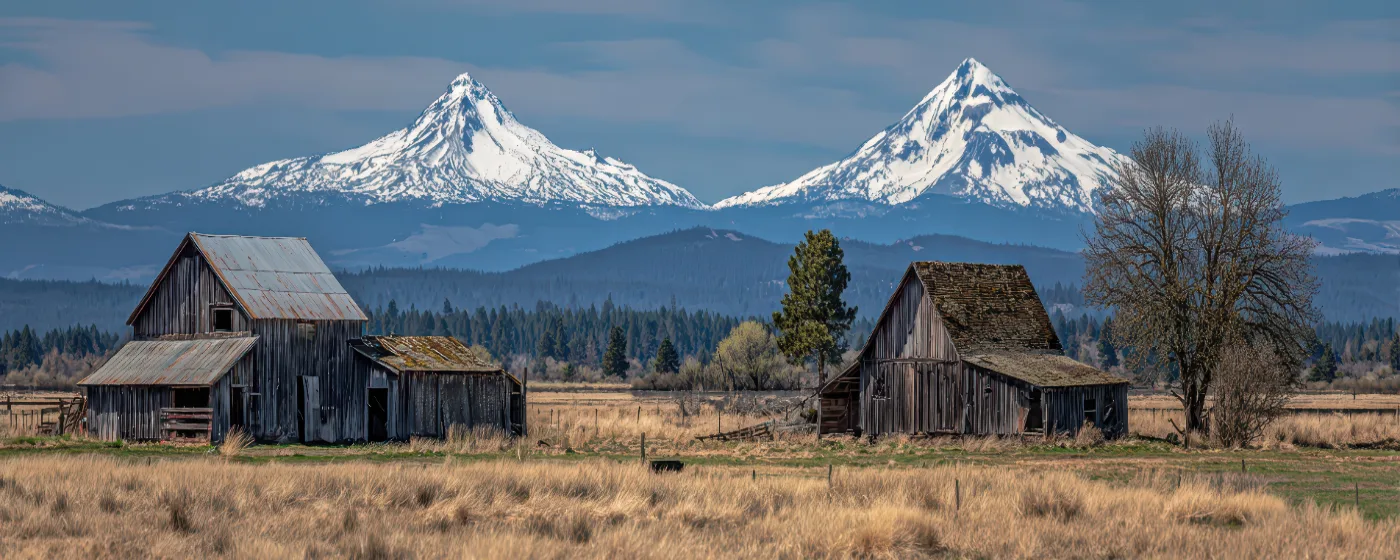
Maybe you've been priced out of the Bay Area, or maybe you finally pulled the trigger after a weekend in Central Oregon and couldn't stop thinking about the sky. Either way, Sisters is not the kind of place most Californians picture when they imagine leaving. It's a town of 3,022 people tucked between the Cascade Range and the high desert, anchored by a Western-themed downtown with wooden boardwalks, surrounded by trail systems and wilderness, and sitting about 25 minutes from Bend. It is small in a way that takes some adjusting to — but for people who are done with urban density, that smallness is exactly the point.
The economic backbone here is modest by California standards. Sisters School District, the City of Sisters, Deschutes County, Black Butte Ranch, and Sisters Coffee Company are the primary employers in town. Many residents commute to Bend for work, or work remotely — a fact that has reshaped this market over the past several years as location-flexible professionals discovered they could trade a Sacramento suburb or a Southern California tract home for something closer to a trailhead. The Sisters School District 6 holds a B+ rating, according to Niche, and with 1,171 students enrolled in 2025-26, it is the kind of district where your kids' teachers know their names.
Sisters's cost of living runs about 12% above the national average and about 22% above Oregon's state average, driven primarily by housing. The typical home price stands at $790,765 (Zillow Home Value Index, July 2026) — a figure that will feel familiar if you're coming from a coastal California market, but that buys you something meaningfully different here: acreage, mountain views, and a town that quiets down at night. Oregon has no sales tax, which delivers immediate, tangible savings on every purchase. The fuller cost-of-living picture, including utilities and groceries, lives on the cost of living page.
Whether you're seriously evaluating a move or just building your mental model of the place, the sections below break down the California-to-Sisters comparison on home prices, taxes, lifestyle, and the honest tradeoffs — the things nobody mentions until you're already here.
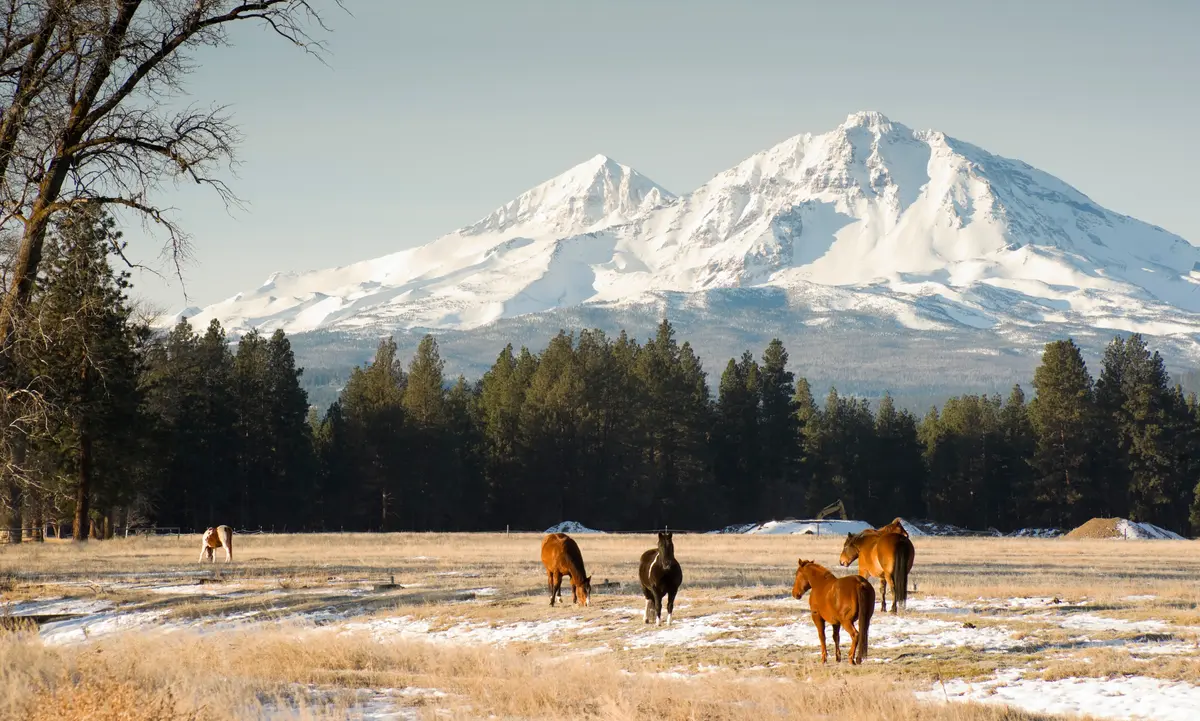
How Sisters Home Prices Compare to California
The headline number surprises most California buyers — not because Sisters is cheap, but because it isn't cheap in the way people expect a town of 3,022 to be. The typical home price of $790,765 (Zillow Home Value Index, July 2026) sits noticeably above California's statewide typical home value. You are not moving somewhere cheaper. You are moving somewhere different.
What that figure buys you changes considerably. The same price that lands you a modest condo in a coastal California city gets you a three-bedroom house with a mountain view, a two-car garage, and the Peterson Ridge Trail System practically at your back door. The lot sizes, the elbow room, and the absence of urban traffic are things the price tag alone doesn't convey.
The Affordability Reality
Sisters is genuinely expensive for a small Oregon town — one of the pricier ones in the state. The median household income here is $94,524, and that figure falls meaningfully short of what's needed to carry the typical home at current rates. Many buyers arriving from California are doing so with significant equity from a prior sale, which changes the math entirely.
If you're comparing Sisters to nearby markets, Bend comes in somewhat lower on typical home price, and Redmond runs noticeably lower still. For the full neighborhood-by-neighborhood picture of what different parts of Sisters cost, see the best neighborhoods page.
What Californians Actually Do With Their Equity
The move that makes financial sense most often looks like this: sell a California home with substantial appreciation baked in, arrive in Sisters with a large down payment, and either eliminate a mortgage or carry a much smaller one. That pattern — California equity funding a Central Oregon lifestyle — is now common enough in Sisters that it has reshaped the housing market and priced out some longtime locals.
Oregon's property tax rate adds another layer to the comparison. Sisters carries an effective property tax rate of 0.62%, compared to California's effective property tax rate of 0.71%. The rates are close, but the mechanics differ significantly — which matters more than the percentages suggest.
The Property Tax Difference Nobody Tells You About
California's Proposition 13 resets a property's assessed value to its purchase price when it sells. Oregon's Measure 50 works differently — and the difference is the thing most California transplants don't discover until after they close.
Oregon's Measure 50 vs. California's Proposition 13
| Feature | California (Prop 13) | Oregon (Measure 50) |
|---|---|---|
| Annual assessed value increase cap | 2% per year | 3% per year |
| Resets to market value on sale? | Yes — the new buyer's purchase price becomes the assessed value | No — assessed value carries over, set independently of sale price |
| Implication for buyers | Your tax bill is predictable from day one | Two identical homes can carry very different tax bills depending on original assessment date |
| Implication for long-term owners | Tax bill grows slowly if you stay | Same — 3% annual cap keeps bills from spiking |
| Effective rate (Sisters / CA statewide) | California's effective property tax rate of 0.71% | 0.62% in Sisters |
| Volatility protection | Strong — reset on sale is a known baseline | Strong — but your starting assessed value may not match purchase price |
In practical terms: when you buy in Sisters, your tax bill is not automatically calculated from your purchase price. The county assessor's current assessed value on that parcel may be lower — sometimes significantly lower — than what you paid, if the prior owner held it for years under the 3% cap. Ask for the current assessed value, not just the sale price, before you estimate your annual tax obligation.
Oregon also allows residents to subtract a portion of federal income taxes paid from their Oregon taxable income — a deduction that phases out for joint filers with federal AGI above $290,000 but meaningfully reduces the effective burden for mid-income earners.

Income Tax and Sales Tax: The Numbers That Actually Shift
Oregon's top income tax rate is 9.9% — California's top state income tax rate of 13.3% applies only to the highest earners, but California's brackets are designed to protect most residents from rates that high. Oregon's brackets compress in the opposite direction: the state collects near its maximum rate from anyone earning solidly into six figures, while California reserves its upper rates for seven-figure earners.
If you earned $200,000 in California, you were paying a meaningful rate but not 13.3%. If you earn $200,000 in Oregon, you're close to 9.9%. For most relocating professionals — the remote worker, the executive, the small business owner — the income tax picture is less dramatic than the headline comparison suggests. Run your actual numbers against Oregon's brackets before assuming a windfall.
Where Oregon Wins Clearly: Sales Tax
Oregon has no state or local sales tax. None. California's statewide base sales tax rate of 7.25% (California Department of Tax and Fee Administration) is already the highest in the country, and local additions push the combined rate to roughly 8.99% in many California cities. A household spending $40,000 a year on taxable goods saves approximately $3,600 annually by moving to Oregon — a figure that compounds quietly but consistently.
At the grocery store, the hardware store, the outdoor gear shop — what the price tag says is what you pay. For Californians who have spent years mentally adding a percentage to every purchase, this takes some getting used to.
The Honest Tax Summary
| Tax Type | California | Oregon / Sisters |
|---|---|---|
| Top state income tax rate | California's top state income tax rate of 13.3% | 9.9% (Tax Foundation) |
| Income tax — mid-six-figure earners | High bracket, but not at top rate | Near top rate — brackets compress quickly |
| Sales tax | California's statewide base sales tax rate of 7.25% (plus local) | None |
| Effective property tax rate | California's effective property tax rate of 0.71% | 0.62% in Sisters |
| Property value reset on sale | Yes (Prop 13 resets on purchase) | No (Measure 50 — assessed value is independent) |
| Federal tax deduction on state return | Not available | Partial deduction available; phases out above $290K AGI |
For the full income and sales tax breakdown as it applies to daily life in Sisters, the cost of living page has the complete picture.
Looking to buy in Sisters? Estimate your payment.
Enter your numbers to see an estimated monthly mortgage payment.
Estimate only. Excludes HOA fees and mortgage insurance. The interest rate above is a starting point, not a quoted rate — replace it with your own to see real numbers. Insurance is a flat placeholder, not a Sisters quote.
Daily Life in Sisters: What Changes, What Doesn't
Six months after moving from California, most people say the same thing: they didn't expect how much time they'd spend outside. Sisters records 162 sunny days a year — a real figure, not the inflated regional marketing number — and the high desert air means that even winter days often feel usable. The Peterson Ridge Trail System runs just outside the residential fringe of town, open to hikers, mountain bikers, and equestrians, with horses holding the right-of-way. The Three Sisters Wilderness begins where the trails end.
What You Give Up
Sisters is 3,022 people. There is no Trader Joe's, no big-box retail to speak of, and a serious shopping run means driving out of town. The dining scene runs to a handful of reliable spots rather than the sprawling restaurant culture of a California metro. If you are the kind of person who needs urban amenity density to feel comfortable, Sisters will eventually frustrate you.
The specialist care situation is the honest tradeoff that few California transplants fully reckon with before moving. Routine care costs run noticeably below what you were paying in California, but you will drive farther for specialist appointments and farther still for advanced care. For many people this is a reasonable exchange; for others it changes the calculation entirely, particularly for families managing ongoing medical needs.
The Events Calendar That Anchors Community Life
What Sisters lacks in retail density it offsets with a remarkably active community calendar. The Sisters Outdoor Quilt Show fills the streets and draws visitors from across the region — a genuinely improbable event for a town this size. The Sisters Rodeo at the Sisters Rodeo Grounds is a long-running PRCA-sanctioned event that fills the town every summer. These aren't tourist abstractions; they're the weeks when longtime residents host out-of-town family and the social fabric of the town is visibly on display.
The Sisters Farmers Market runs through the warmer months and is where people actually run into their neighbors. The downtown boardwalks, the art galleries, and the independent coffee shops create the kind of main street feel that California communities spend millions trying to manufacture and rarely achieve.
The Seasonal Reality
One thing most California transplants don't anticipate: winter in Sisters at roughly 3,200 feet elevation is real. Snow falls, roads ice, and the main pass over the Cascades closes periodically. Hoodoo Ski Area sits up at that pass with more than 800 acres of terrain, 34 runs, and five lifts, including the only night skiing in Central Oregon. Whether you ski or not, a closed mountain pass is a logistical fact of life for anyone whose social or professional ties still reach to the Willamette Valley side of the mountains.
Is Sisters Right for You? Honest Trade-offs for California Buyers
Most people making the California-to-Oregon move head to Portland or Bend, but Sisters draws a specific kind of buyer — one who wants serious outdoor access without urban scale. That influx of location-flexible buyers has consequences worth understanding before you join it.
Who Thrives Here
Nature Quiet Remote Workers
The move works best for people who are genuinely done with density — not bored with it, done with it. Remote workers who have cut ties with a physical office, retirees arriving with California equity, and families who want their kids to grow up knowing every teacher and coach by name are the people who tend to stay and build roots.
The schools are small enough that every kid has a shot at making a team, a lead in the play, or a spot in the ensemble. Sisters School District 6 holds a B+ rating, according to Niche. On 2024-25 state assessments, 40.5% of students reached math proficiency and 50.5% reached reading proficiency — scores that are honest rather than exceptional, in a district where the community engagement around schools runs high. For more on what the school experience is actually like, see the schools page.
Who Tends to Leave
The people who move back — or move to Bend instead — are usually those who underestimated the isolation. Not physical isolation exactly: Bend is about 25 minutes away and Redmond Municipal Airport (RDM) is roughly 22 miles out. But the social isolation of a small town is real. If you don't connect with the existing community — if you're not a hiker, or a rodeo crowd, or a quilt show person — it can feel like everyone already knows everyone and the entry points are narrow.
The other common departure story is the household that arrives with remote work income and then loses it. Sisters's job market is thin: the school district, the city, county government, hospitality, and a handful of small businesses. Without remote income or a pension or substantial assets, the math stops working quickly, because the typical home price at $790,765 (Zillow Home Value Index, July 2026) is not supported by local wages alone.
The Bottom Line for California Buyers
Sisters is not a discount on California living. It is a different kind of living at a similar price point — one that trades urban amenity for outdoor access, commute time for quiet mornings, and restaurant density for a community where you know the person behind the counter. Whether that trade is worth making depends entirely on what you were running toward, not just what you were running from.
For a closer look at neighborhood character and geographic differences within Sisters, the best neighborhoods page breaks down what each part of town actually feels like.

Local Expert Takeaway: Sisters is one of the few places in Oregon where a California transplant can arrive with coastal equity and genuinely land somewhere that feels like a trade-up in lifestyle even if not in price. The Peterson Ridge trails, the Sisters Outdoor Quilt Show, the weekly farmers market, and the community texture of a 3,022-person town are real — but so is the drive to specialist care, the pass closures in winter, and the thin local job market. Come with remote income, a plan for the isolation, and eyes open about property tax mechanics under Oregon's Measure 50, and Sisters rewards you. Come expecting a cheaper California with better views, and you'll be back in Bend within two years.
Quick Takeaways & FAQs
✅ Oregon has no sales tax, which delivers immediate savings on every purchase compared to California's statewide base rate of 7.25% — one of the most tangible daily-life differences for transplants.
⚠️ Sisters's typical home price of $790,765 (July 2026) actually sits above California's statewide typical home value, so this is not a cheaper market — it's a different one with different tradeoffs.
📍 Oregon's Measure 50 caps annual assessed value increases at 3% but does NOT reset a property's assessed value to your purchase price when you buy, unlike California's Prop 13 — ask the county assessor for the current assessed value before estimating your tax bill.
Is it cheaper to live in Sisters, Oregon than in California?
How does Oregon's income tax compare to California's for someone moving from the Bay Area?
How does Oregon's property tax work differently from California's Prop 13?
What is the commute like from Sisters to Bend?
What surprises California transplants most after six months in Sisters?
Moving to Oregon?
Tell us what you need help with and we'll connect you with local resources.
