
What Is Living in Redmond, Oregon Like?
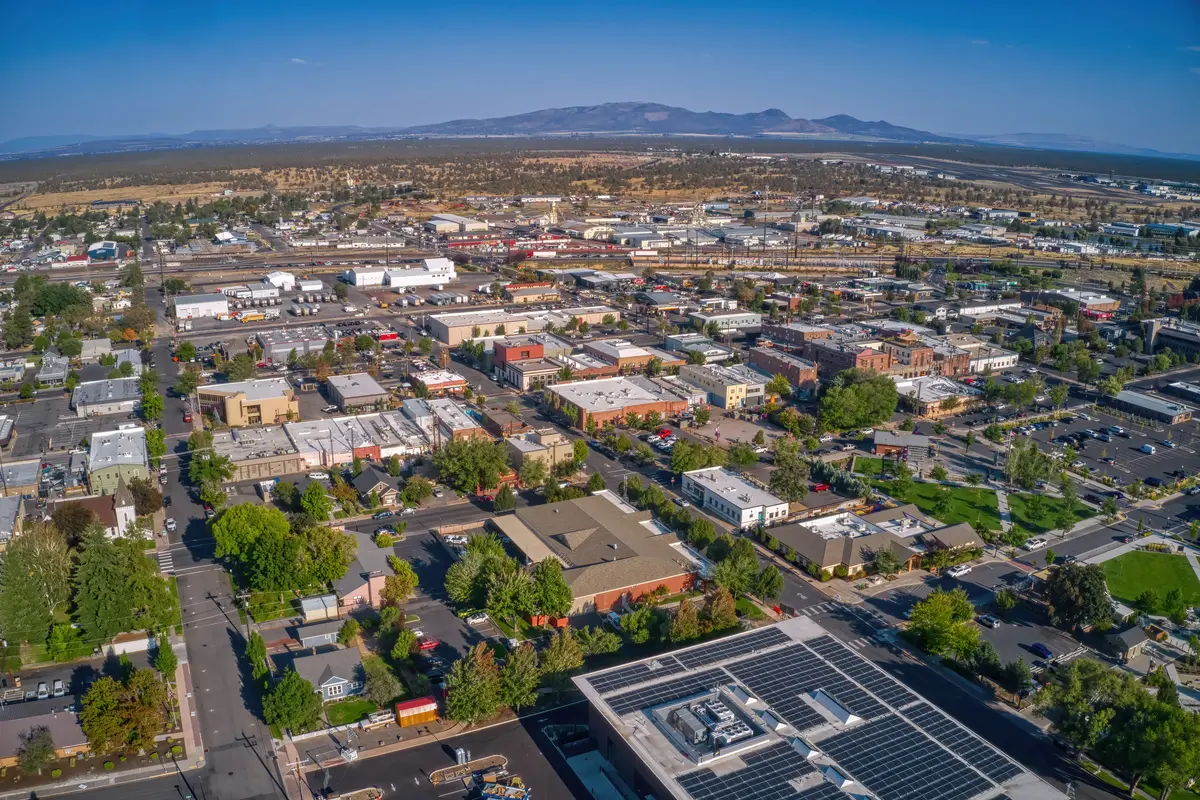
People moving to Redmond from the coast, the valley, or out of state almost always say the same thing in month three: it feels like what Bend was fifteen years ago. That comparison gets made a lot here, and it is not just nostalgia — it is a practical observation about a city that still has room to grow, where downtown storefronts are filling rather than thinning, and where the High Desert landscape hits you every single morning. Redmond sits in Deschutes County on the east side of the Cascades, connected to Bend via US-97 and to the rest of Central Oregon through OR-126. It is the 16th-largest incorporated city in Oregon, with a population of 38,199 — and it is growing steadily enough that managing that growth is now a formal City Council priority.
The economic backbone here is more varied than the outdoor-recreation image suggests. A major regional health system anchors the healthcare sector and is one of the city's most significant employers. The Redmond School District, Deschutes County, and the City of Redmond itself together form the institutional core. What is newer and generating real momentum: Redmond Economic Development Inc. declared in April 2025 that the city is on the cusp of a manufacturing expansion, with industrial growth concentrated on the east side. Roberts Field–Redmond Municipal Airport is the third-largest commercial-service airport in Oregon, with a major expansion that broke ground to add significant new terminal capacity. That airport is about two miles from downtown. For a city of 38,199, that is an unusually large piece of regional infrastructure, and it shapes both the economy and the commuter calculus for people flying in and out frequently for work.
On the cost side, Redmond sits noticeably below Bend in home prices — and noticeably above Prineville. The typical home price here is $517,100 (Zillow Home Value Index, July 2026), which is meaningful in a Central Oregon market where Bend has priced out a significant share of buyers. The trade-off is real, though: the median household income in Redmond is below what's needed to carry the typical home here, so affordability is relative rather than absolute. Day-to-day life runs on 162 sunny days a year, close proximity to Smith Rock State Park, and a downtown that recorded 91% storefront occupancy through late 2025 — the third straight year above 90%. For the full breakdown on taxes, rent, and cost comparisons, see the cost of living page.
Whether you are being drawn by the price gap with Bend, the airport access, or the sense that this city is mid-stride rather than fully settled, the sections below cover Redmond's neighborhoods, housing market, commute patterns, local employers, and what a typical week actually looks like here.
Redmond at a Glance
Looking to buy in Redmond? Estimate your payment.
Enter your numbers to see an estimated monthly mortgage payment.
Estimate only. Excludes HOA fees and mortgage insurance. The interest rate above is a starting point, not a quoted rate — replace it with your own to see real numbers. Insurance is a flat placeholder, not a Redmond quote.
Why Are People Moving to Redmond?
The simplest answer: Bend became unaffordable for a lot of people, and Redmond is about 20 minutes to Bend. That proximity made Redmond a logical landing spot — and then something shifted. People who came for the price are staying because the city itself is worth staying in.
The Affordability Angle
Redmond's typical home price sits noticeably below Bend's, which has made it the first realistic option for buyers priced out of the larger city next door. That gap has been consistent enough that local real estate observers have compared the feel of Redmond today to early-era Bend — growing, approachable, and not yet fully discovered. The catch is that Redmond is not cheap in absolute terms: the median household income here falls short of what is needed to carry the typical home, which means first-time buyers and moderate-income households still face real stretching. See the cost of living page for the full picture on income and housing costs.
A Downtown That's Actually Coming Back
Downtown Redmond recorded 91% storefront occupancy in late 2025 — the third consecutive year above 90%, following a record 95% in 2024. Nine new retail, restaurant, and service businesses opened downtown in 2025 alone. The Urban Renewal Agency invested over $110,000 in 2025, leveraging nearly $1 million in private projects at roughly $9 of private investment for every $1 of public funding. The New Redmond Hotel, which underwent a $7 million renovation with $3.53 million in Urban Renewal support, is widely credited with catalyzing the private investment that followed. A new Deschutes Public Library branch downtown was under construction as of late 2025, set to double the existing footprint and add maker spaces and meeting rooms.
Industrial and Economic Growth
The east side of Redmond has been attracting manufacturing and industrial interest, and Redmond Economic Development Inc. publicly named April 2025 as a turning point — calling the city on the cusp of a manufacturing expansion. That kind of language from an economic development body is not always predictive, but the infrastructure investment is real: the city's Capital Improvement Program includes a new wastewater treatment plant scaled for continued population growth and a road project improving alternate access to south US-97 and OR-126.
Who Is Actually Moving Here
The profile is broad. Families with school-age children come for the outdoor lifestyle and the relative price point compared to Bend. Remote workers come for the airport and the landscape. Tradespeople and industrial workers are increasingly following the manufacturing buildout. Retirees drawn to Central Oregon's climate often find Redmond a more financially manageable entry point than Bend or Sisters, both of which run noticeably higher. For retirees specifically, see the retiring page for community options and healthcare access.
What Daily Life Feels Like in Redmond
Redmond is a working city that happens to sit inside one of the most scenic landscapes in the Pacific Northwest. The High Desert light is something you stop noticing after a few months — and then notice again when someone visits from out of town and keeps asking you to pull over.
The Morning Routine
Most residents drive to daily errands. The downtown core is walkable once you are in it, but the residential neighborhoods spread outward in a way that makes a car the default. A serious grocery run or a big-box errand means getting in the car regardless of where you live — a shopping trip for anything the local stores do not carry often means driving to Bend. That is the honest trade for the price difference.
The Outdoor Rhythm
Smith Rock State Park is one of the most visited climbing and hiking destinations in the Pacific Northwest and is essentially in Redmond's backyard. The Dry Canyon Trail cuts through the center of the city and connects neighborhoods to the downtown. Cline Falls State Scenic Viewpoint sits along the Deschutes River a short drive west. Eagle Crest Resort trails offer a different terrain entirely. People who move here for the landscape are not disappointed — and people who do not move here for the landscape tend to discover it quickly anyway.
The Community Calendar
The Deschutes County Fair & Rodeo is the largest county fair in Oregon and the largest annual event east of the Cascades, drawing crowds from across the region every summer. The Deschutes County Fair & Expo Center hosts a packed year-round schedule of concerts, rodeos, trade shows, and community gatherings that give Redmond more event infrastructure than cities twice its size. The Redmond Farmers Market adds a seasonal rhythm to the downtown weeks. These are not incidental — they are genuinely why residents show up and stay engaged.
What Surprises People After Six Months
The wind. Central Oregon's High Desert is not a gentle climate — it is sunny and clear, but the wind is persistent in ways that catch newcomers off guard, particularly in spring. The other surprise is how quickly the city feels like a real community rather than a suburb. Redmond has its own identity, its own events, and its own economic engine. People who expected to feel like they were living in Bend's cheaper shadow often find they stop thinking about Bend within a year.
The Redmond School District serves 7,281 students enrolled in 2025-26 and holds a C+ rating, according to Niche. For parents prioritizing school performance above other factors, that rating warrants a careful look; the full picture on individual schools and boundaries is on the schools page.
The Redmond Housing Market Right Now
The typical home price in Redmond is $517,100 (Zillow Home Value Index, July 2026). That figure is the central reference point for the market here — and it sits in meaningful tension with the local income picture, since the median household income falls short of what is needed to carry that price comfortably.
What That Number Gets You
At the city-wide typical price, buyers are generally looking at single-family homes on standard lots — not the dramatic canyon-view properties or the golf-course-adjacent homes that carry a premium, but solid Central Oregon construction with the infrastructure and access that come with a growing city. Newer construction on the west side tends to run toward the upper end of the market, with energy-efficient builds from active builders. The neighborhoods page breaks down the character of each area without neighborhood-level price speculation.
Renting vs. Buying
The typical 2-bedroom rent runs $1,930–$2,350 per month, with the city-wide typical rent at $2,098 per month (Zillow ZORI, July 2026). That rent level, combined with the home price, means neither path is dramatically easier than the other for moderate-income households — both require financial planning that goes beyond what the headline figures suggest.
The Effective Tax Rate
Oregon's effective property tax rate in Redmond is approximately 0.72%, which is on the lower end compared to many Western states. Oregon also has no sales tax, which affects the real cost of living calculation in ways buyers often underestimate when comparing to states they are leaving. The full tax picture — including income tax and how it compares to California specifically — is on the cost of living page.
The Market's Character
Well-priced homes in Redmond do not sit. The combination of sustained population growth, a meaningful price gap with Bend, and limited new inventory in established neighborhoods means that buyers who are organized and decisive tend to do better than those who take a casual approach. Some areas of the market move more deliberately than others, but the overall directional pull is toward activity rather than stagnation.
Redmond Neighborhoods
Redmond has several distinct areas — each with its own character and appeal. Here’s a breakdown to help you narrow down where to focus your home search.
🏡 Old Town / Downtown Redmond
The city's most walkable core, anchored by the Downtown Redmond Historic District and a revitalized stretch of independent businesses that hit 91% storefront occupancy in 2025. It suits buyers who want to be in the middle of Redmond's emerging energy rather than on the edges of it.
🏠 Northwest Redmond
An established residential area on the city's northwest side with a mix of housing styles and easy access to the broader city grid. It draws households looking for proximity to the commercial corridor without the density of the downtown core.
🌳 Greens at Redmond
A residential neighborhood with a settled, suburban character that appeals to families with school-age children and buyers looking for a quieter setting within the city limits. The area has a cohesive feel shaped by its planned layout.
🏘 Canyon Rim Village
Situated with access to the canyon geography that defines much of Redmond's visual character, Canyon Rim Village draws buyers who want proximity to trail access in a residential setting. It tends to attract outdoor-oriented households.
🏔 Dry Canyon
Named for the trail corridor that cuts through the city, this area puts residents within genuine walking distance of one of Redmond's best civic assets. It suits active households who want the trail as a daily amenity rather than a weekend destination.
🌆 Fieldstone Crossing
A newer residential development with a neighborhood character still taking shape, Fieldstone Crossing attracts buyers looking for newer construction in a community that is growing alongside the city's broader expansion. It suits families and first-time buyers who prioritize newer housing stock.
Pros & Cons of Living in Redmond
The Pros
- Home prices roughly 20-30% below neighboring Bend
- Central Oregon's only commercial airport is right in town
- Sunny, dry high-desert climate with easy access to Smith Rock, the Deschutes River, and Mt. Bachelor
- One of the fastest-growing, most business-friendly economies in the state
The Cons
- Rapid growth is straining Highway 97 and local infrastructure
- School district graduation rates are strong but statewide test-score proficiency lags
- Limited walkability outside the revitalized downtown core
Getting Around & Commuting in Redmond
Redmond is a car city. The streets are wide, parking is easy, and the distances between neighborhoods and commercial areas are real. That said, the commute story here is one of Redmond's genuine strengths — particularly for people working in Bend.
The Bend Commute
The defining commute is about 20 minutes to Bend via US-97. That is the figure most buyers use when calculating whether Redmond works for their household. In practice, US-97 is the spine of daily life in Central Oregon — it carries everything from morning work traffic to freight, and it can back up meaningfully during peak hours and on ski season weekends when traffic from the Cascades pushes through. The city's Capital Improvement Program includes a road project specifically designed to improve alternate access to south US-97 and OR-126, which signals that the city itself recognizes the bottleneck.
OR-126 and East-West Movement
OR-126 connects Redmond westward toward Sisters and the Cascades, and eastward toward Prineville. For residents whose work or recreation pulls them in either of those directions, this is the route. Sisters is a short drive west; Prineville is a short drive east. The practical effect is that Redmond sits at a functional crossroads for Central Oregon, which is part of what makes it useful as a base city.
Roberts Field and the Air Option
Roberts Field–Redmond Municipal Airport sits about 2 miles from downtown. Multiple carriers operate regular daily service to major West Coast and hub cities, and the airport serves a regional passenger base that extends well beyond Redmond itself. A major terminal expansion was underway as of late 2025, adding significant new gate and concourse capacity. For remote workers who travel regularly for client meetings, or households with family in other states, having a commercial airport of this scale inside city limits is a significant quality-of-life factor. It is the main reason Redmond attracts a different remote-work profile than comparably sized Oregon cities without airport access.
Getting Around Without a Car
Most errands require a drive. The downtown core works reasonably well on foot once you are in it, and the Dry Canyon Trail creates a car-free connection between neighborhoods. Beyond that, the layout of Redmond means a car is the practical default for daily life — grocery stores, schools, and the commercial corridors along the main highway are oriented around driving. People who move here from walkable urban neighborhoods find the adjustment real, though the trade-off is generally free parking and short drive times within the city itself.
A Note on Traffic Timing
The stretch of US-97 through Redmond and into Bend gets measurably heavier in winter and early spring when ski traffic adds to the regular commuter flow. Residents who work in Bend learn quickly that leaving twenty minutes earlier on a powder day makes the drive significantly more predictable. The planned alternate-route infrastructure improvement will eventually provide more options, but that is a multi-year horizon.
Schools in Redmond
Families relocating to Redmond have public, private, and higher-education options nearby. Here’s a quick overview.
🎓 School District
Redmond School District 2J serves K–12 students across Redmond and the surrounding area. Rated C+ (source: Niche.com).
🏆 Graduation Rate
The 4-year high-school graduation rate here is approximately 91.2%.
📚 Higher Education
Oregon’s public universities — the University of Oregon, Oregon State University, and Portland State University — offer four-year degrees statewide, with a network of 17 community colleges providing two-year and workforce programs.
🌐 Online Learning
Oregon State University Ecampus and Portland State University Online offer fully accredited online degrees for remote learners across the state.
Safety in Redmond
A quick look at how Redmond compares on the numbers that matter most when weighing a neighborhood or a move.
🛡 Violent Crime
Approximately 2.94 per 1,000 residents.
🔒 Property Crime
Approximately 14.77 per 1,000 residents.
Compared to the most recent national figures from the Bureau of Justice Statistics (2024), Redmond’s violent crime is below the national average (about 3.7 per 1,000), and property crime is below the national average (about 18.4 per 1,000).
Against Oregon as a whole, Redmond’s violent crime is about the same as the state average, and property crime is roughly two-thirds of the state average (Bureau of Justice Statistics, Crime Known to Law Enforcement, 2024 (tables 2 and 3)).
Crime rates can vary a lot within a single city, so the citywide numbers above are only a starting point. Some neighborhoods in Redmond run well below these averages, while others run higher — the kind of block-by-block detail that matters most when you’re actually choosing where to live. The full guide below breaks it down neighborhood by neighborhood.
Working in Redmond
Redmond’s largest employers span several industries — here are some of the anchors of the local job market.
🏥 St. Charles Redmond
Healthcare
🎓 Redmond School District
Education
🏛 Deschutes County
Municipal government
🏛 City of Redmond
Municipal government
Parks & Recreation in Redmond
Some of the outdoor spaces that shape everyday life in Redmond.
🌱 Dry Canyon Trail
Redmond residents don’t have to go far for green space — spots like Dry Canyon Trail are part of everyday life here, whether that’s a morning walk, a weekend hike, or just somewhere to unwind outside. The full guide below covers more of what Redmond has to offer for parks and outdoor recreation.
Retiring in Redmond
Redmond draws retirees for its balance of amenities, outdoor access, and cost. Here’s what to weigh.
🌤 Climate
Redmond sits in the High Desert east of the Cascades, delivering 162 sunny days a year with low humidity and four distinct seasons. Summers are warm and dry; winters bring cold nights and occasional snow that rarely lingers long in the city itself. The wind — particularly in spring — is the one climate factor that catches retirees off guard.
🍴 Lifestyle
The city offers a walkable downtown with independent coffee shops and restaurants, Smith Rock State Park a short drive away, and the Deschutes County Fair & Expo Center as a year-round events anchor. The Redmond Farmers Market provides a seasonal community gathering point, and the overall pace of life is unhurried without feeling isolated.
🏚 55+ Communities
Dry Canyon Village is the established 55+ community in Redmond, offering an age-restricted setting with the outdoor access and Central Oregon lifestyle that attract retirees to the area. For a fuller look at healthcare access and retirement living options, the retiring page covers what is available in and around the city.
✈ Getting Around
A car is the practical default for daily life in Redmond, though the downtown core and the Dry Canyon Trail corridor work reasonably well on foot. Roberts Field–Redmond Municipal Airport, about 2 miles from downtown, makes travel to visit family or for medical appointments in other cities significantly easier than in most Central Oregon communities of comparable size.
🏛 Oregon Taxes for Retirees — What to Know
- Social Security is not taxed — Oregon does not tax Social Security or Railroad Retirement benefits. Any amount included in your federal adjusted gross income is subtracted back out on the Oregon return.
- But other retirement income IS taxed — This is the trade-off that surprises people moving from Washington or Texas. Pension distributions and 401(k)/IRA withdrawals are taxed as ordinary income at Oregon’s regular rates — there is no blanket retirement-income exclusion.
- Graduated income tax — Oregon has four brackets — 4.75%, 6.75%, 8.75% and 9.9%. The 4.75% rate covers the first $10,000 of taxable income for a single filer ($20,000 filing jointly); the 8.75% rate starts at $125,000 ($250,000 jointly); and the top 9.9% rate applies above $250,000 ($500,000 jointly).
- No sales tax — Oregon levies no general sales tax.
- Property taxes, with senior deferral — Oregon’s Senior and Disabled Property Tax Deferral lets qualifying homeowners have the state pay their county property taxes, with a lien recorded against the home. The 2026 household income limit is $70,000, and deferred balances accrue 6% simple interest — it defers the bill rather than forgiving it.
- Estate tax — the one to plan for — Oregon has its own estate tax with a $1 million filing threshold — far below the federal exemption, and NOT indexed for inflation, so it reaches more estates every year in real terms. Retirement accounts and a long-held home count toward the taxable estate, so estates that feel modest can cross the line without the owner expecting it.
- No inheritance tax — Oregon has no separate inheritance tax and no gift tax.
Tax laws change frequently and individual situations vary. This is general information, not tax advice — always consult a qualified Oregon tax professional or CPA for personalized retirement tax planning.
Weekends & Local Favorites in Redmond
Redmond's weekend rhythm runs between the outdoor and the local. Smith Rock is the obvious anchor — one of the most visited climbing and hiking destinations in the Pacific Northwest — and a meaningful share of those visitors are coming from Redmond itself. But the city's own scene has enough depth that you do not need to leave to have a full weekend.
Eating and Drinking
The local restaurant lineup is more varied than a city this size typically supports. Madaline's Mexican Steakhouse has the kind of following that fills a room on a Friday night. Diego's Spirited Kitchen brings a more upscale Central Oregon sensibility. E BarGrill and Hideaway Redmond cover the casual end well, and General Duffy's Waterhole has been a Redmond institution long enough that it shows up in nearly every conversation about where locals actually drink. None of these are chains, and none of them feel like they belong in a different city.
Coffee
The coffee scene punches well above its weight. One Street Down Cafe has a loyal following in the downtown core. Tite Knot Craft Coffee is the kind of place that takes its sourcing seriously. Honey & Pine Coffee Company and Coffee Depot each have their own regulars and their own character — enough variety that you will find your spot within the first month and stick with it.
The Outdoors
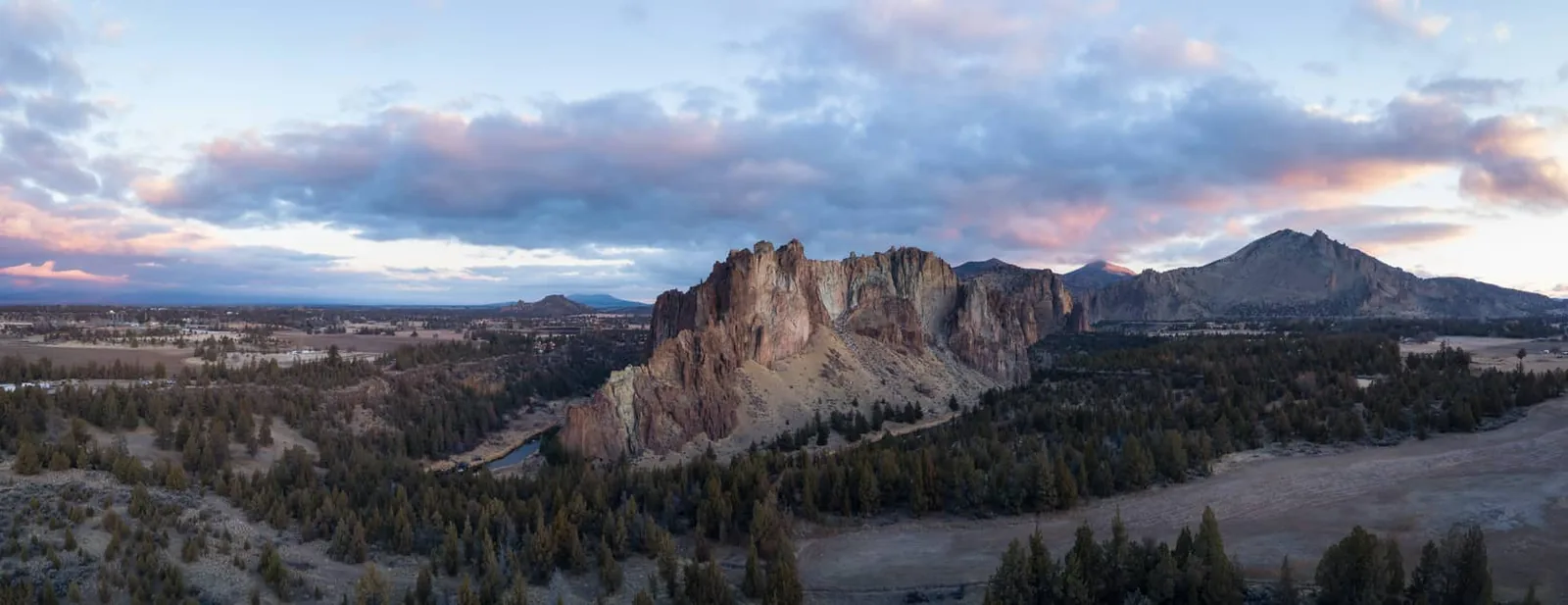
Smith Rock State Park is the headline — more than 1,000 bolted climbing routes, miles of trail-running and hiking terrain along the Crooked River canyon, and wildlife that includes golden eagles and river otters. Cline Falls State Scenic Viewpoint along the Deschutes River is the low-key counterpart: less dramatic, easier to visit on a weekday afternoon. Eagle Crest Resort trails offer a different topography on the west side. The Dry Canyon Trail through the city itself is the everyday option — a genuine greenway that connects neighborhoods to the downtown without requiring a car or a full commitment.
The Fair and the Expo Center
The Deschutes County Fair & Rodeo is not just a county fair — it is the largest county fair in Oregon, drawing crowds from across the state and beyond every summer. It has run for well over a century, and it fills the Deschutes County Fair & Expo Center with a scale of energy that surprises people who did not grow up around it. Beyond the annual fair, the Expo Center runs a packed year-round calendar. If you move to Redmond without knowing that the Expo Center is a year-round civic institution, you will figure it out quickly.
The Farmers Market
The Redmond Farmers Market is a genuine weekly gathering point for the downtown — local produce, prepared food, and the kind of social infrastructure that makes a neighborhood feel like a neighborhood. It is where you start to recognize faces after a few weeks.
Local favorites in Redmond
Restaurants
- Madaline's Mexican Steakhouse
- Diego's Spirited Kitchen
- E BarGrill
- Hideaway Redmond
- General Duffy's Waterhole
Outdoors
- Dry Canyon Trail
- Smith Rock State Park
- Cline Falls State Scenic Viewpoint
- Eagle Crest Resort trails
- Deschutes River access
Coffee
- One Street Down Cafe
- Tite Knot Craft Coffee
- Junction Roastery • Social Club
- Honey & Pine Coffee Company
- Coffee Depot
Farmers Markets
- Redmond Farmers Market
Top Things Locals Say About Redmond
The best intel about a city comes from the people who actually live there. Here’s what Redmond residents say when newcomers ask the questions everyone’s thinking.
“I assumed I'd spend half my time driving to Bend for everything. What I didn't expect was how quickly Redmond itself became enough — the coffee shops, the Expo Center events, Smith Rock on a Tuesday morning. I go to Bend less than I thought I would.”
— Recent Redmond home buyer
“What's the most surprising thing about living in Redmond?”
The wind catches most people off guard — it is persistent in spring in a way that the sunny-day count does not prepare you for. The other surprise is how quickly the downtown feels like a real place. When you see the storefront occupancy numbers and hear that nine businesses opened in a single year, it stops feeling abstract. You actually notice it when you walk around.
“What do locals love most about Redmond?”
The airport and Smith Rock in the same breath. Having a commercial airport about two miles from your house — with regular service to major cities — is something residents genuinely appreciate, especially those who travel for work or have family in other states. And Smith Rock being reachable on a weeknight after dinner is the kind of thing that sounds like marketing until you actually live here and realize you do it.
“What should newcomers to Redmond know?”
US-97 is the main artery and it gets real on ski weekends and during the Deschutes County Fair — plan around it. The Dry Canyon Trail is worth incorporating into your weekly routine as soon as you arrive; it connects more of the city than it looks like on a map. And the Deschutes County Fair & Expo Center is not just a summer fair — it runs events year-round, and it is how a lot of people find their social footing in the first year.
“How much do you need a car in Redmond?”
Quite a bit. The downtown core is walkable once you are there, and the Dry Canyon Trail gives you a car-free corridor between neighborhoods. But most grocery runs, school drop-offs, and errands along the main commercial corridor require driving. Parking is easy and drive times within the city are short, so it rarely feels burdensome — but anyone arriving from a transit-oriented city should reset expectations before they arrive.
Cities Near Redmond
Other communities near Redmond worth a look — each with its own character and price point.
| City | Distance | Best For | Vibe | Median Rent | Median Buy |
|---|---|---|---|---|---|
| Bend | 16 mi | Amenities, dining, higher-rated schools | Polished, active, noticeably pricier | $2,302 | $732,894 |
| Prineville | 18 mi | Value buyers, rural lifestyle | Small-town, quieter, more affordable | $1,641 | $433,014 |
| Sisters | 24 mi | Retirees, quiet setting, scenery | Boutique, scenic, noticeably pricier | $2,059 | $790,765 |
More Helpful Guides for Redmond
Going deeper on Redmond? Our blog series covers everything from first-time buying to retiring here — explore the guides below.
Local Expert Takeaway: Redmond is not Bend's suburb — it is its own city with its own event calendar, its own economic momentum, and a downtown that has genuinely turned a corner. The Deschutes County Fair & Expo Center fills the calendar year-round, Smith Rock is in your backyard, the airport runs regular service to major cities just two miles from downtown, and the independent coffee shops and restaurants in the city core are legitimately good. What you give up relative to Bend is some dining density and the higher school district rating. What you gain is a real community at a price that still makes sense for Central Oregon.
Quick Takeaways & FAQs
✅ Roberts Field–Redmond Municipal Airport, about 2 miles from downtown, is the third-largest commercial airport in Oregon — a genuine asset for remote workers and frequent travelers that most comparably sized cities simply do not have.
⚠️ The Redmond School District holds a C+ rating, according to Niche, and on 2024-25 state assessments 32.2% of students reached math proficiency and 43.6% reached reading proficiency — numbers that families weighting school performance should take seriously before committing.
📍 Downtown Redmond hit 91% storefront occupancy in late 2025 — the third straight year above 90% — and the Deschutes County Fair & Expo Center draws a packed year-round calendar of events, which means there is more civic activity in this city than its population of 38,199 would lead most people to expect.
Is Redmond, Oregon a good place to live?
How far is Redmond from Bend, Oregon?
What is the cost of living like in Redmond, Oregon?
What are the best neighborhoods in Redmond, Oregon?
Does Redmond, Oregon have a good airport?
Helpful Links for Moving to Redmond
Moving to Oregon?
Tell us what you need help with and we'll connect you with local resources.
