
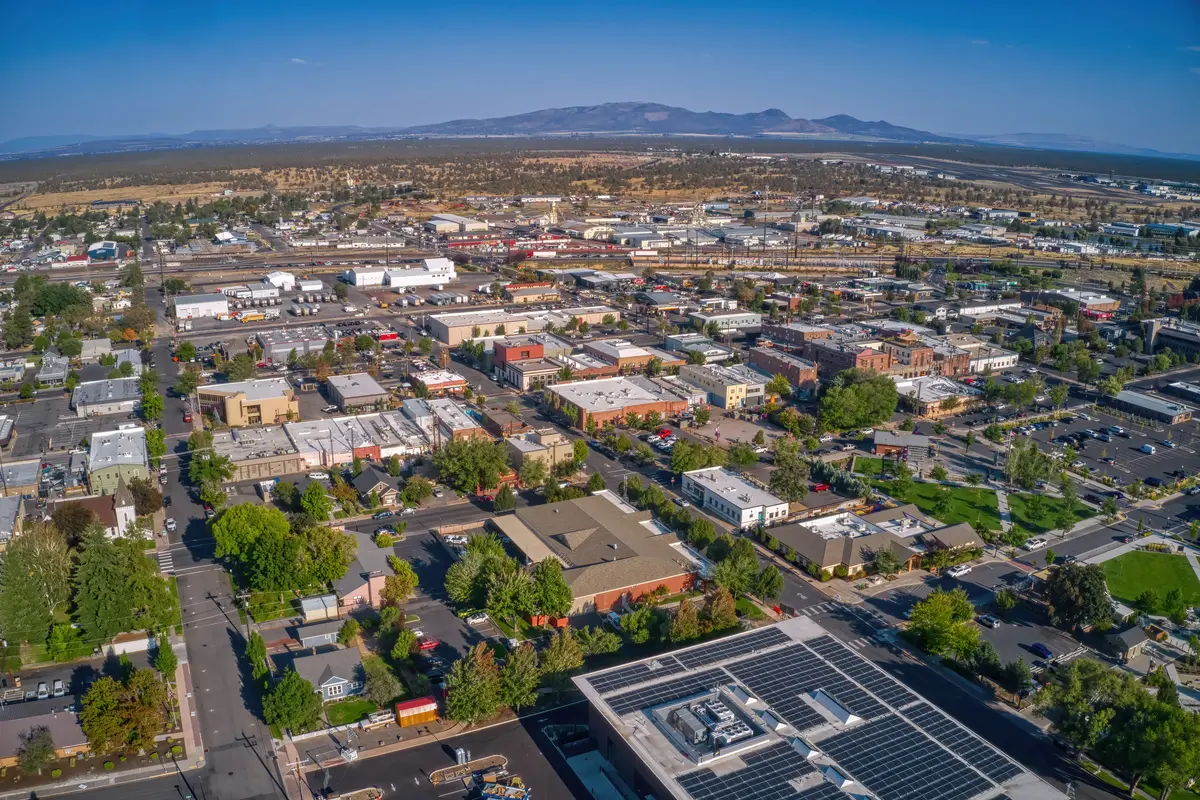
Maybe you've been priced out of Bend and someone told you Redmond is where smart buyers are landing right now. Maybe your company transferred you to Central Oregon and you're staring at a map wondering what separates one side of this city from the other. The honest answer is that Redmond isn't a suburb of Bend — it's a working city of 38,199 people with its own employers, its own downtown, its own canyon running through the middle of it, and its own real estate logic that doesn't follow Bend's at all. The Deschutes River, US-97, and the rimrock geography physically shape which neighborhoods feel connected and which feel isolated, and getting that wrong is the most common mistake relocating buyers make here.
St. Charles Redmond anchors healthcare on the city's north end, while Redmond School District 2J — with 7,281 students enrolled in 2025-26 — serves families across every neighborhood. The district holds a C+ rating, according to Niche, which is a meaningful data point for families weighing Redmond against Bend or Sisters. The city itself is the 16th-largest incorporated city in Oregon, and its major employers — the school district, Deschutes County, and the city government — are all locally rooted, which gives the economy a stability that doesn't whipsaw with any single industry. Roberts Field–Redmond Municipal Airport, about 2 miles from downtown, is the largest airport east of the Cascades in Oregon, a real advantage for frequent travelers that most people don't factor into their neighborhood search until they're already here.
The typical home price in Redmond is $517,100 (Zillow Home Value Index, July 2026) — noticeably below Bend and Sisters, and noticeably above Prineville. That figure puts Redmond within reach of more buyers than its neighbors, though it's worth knowing that the median household income here sits below what's needed to carry the typical purchase at current rates. For renters, a typical two-bedroom runs $1,930–$2,350 per month, and the effective property tax rate holds at approximately 0.72%. Day-to-day life here runs at a different pace than Bend — fewer boutique amenities, more genuine small-city feel — and the cost of living page breaks down those tradeoffs in detail. The commute to Bend is about 20 minutes, which is short enough to matter and long enough to feel every morning.
Whether you're buying your first home, upsizing into a lot with canyon views, or looking for resort-style living without a resort price tag, the sections below break down Redmond's neighborhoods, buyer-type matches, common mistakes, and the rental zones worth knowing before you sign anything.
The Redmond Reality
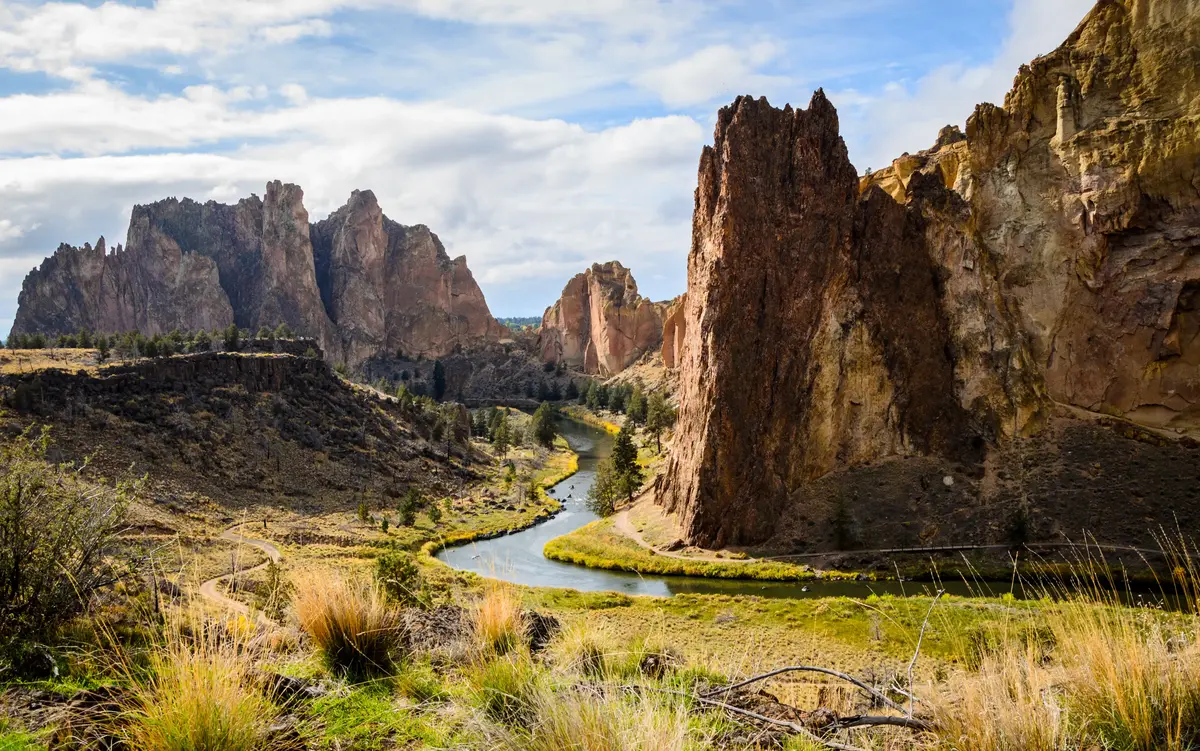
The Dry Canyon is not just a park — it's the city's organizing spine. This 3.7-mile rimrock canyon runs through the heart of Redmond, and which side of it you land on shapes your daily experience more than any other single factor. Neighborhoods that sit adjacent to the canyon corridor — Canyon Rim Village, Dry Canyon, and Old Town — feel genuinely connected to Redmond's civic core. Neighborhoods on the outer suburban ring, like Fieldstone Crossing and Obsidian Trails, are quieter and newer but require a car for nearly everything.
The second divide that catches buyers off guard is US-97. The highway carries the bulk of north-south traffic through Redmond and creates a practical east-west split. Buyers who plan to commute regularly toward Bend should think carefully about which side of the highway puts them on the right side of the morning traffic pattern — a detail the living in Redmond page covers in full.
Eagle Crest sits in its own category entirely. It's a resort community about six miles from the city center, and buyers who choose it are essentially making a lifestyle trade — resort-grade amenities and views in exchange for being genuinely removed from Redmond's walkable core and services. That's a real trade-off, not a marketing softening, and it should drive the decision before the floor plan does.
Neighborhoods at a Glance
| Neighborhood | Best For | Vibe |
|---|---|---|
| Old Town / Downtown Redmond | Walkable First-Time | Historic commercial core; coffee shops, independent dining, and self-guided architecture walks within a few blocks |
| Northwest Redmond | First-Time Families | Active growth zone with new townhouses and multi-family builds; more affordable entry points and newer infrastructure |
| Greens at Redmond | Luxury Quiet | Golf-course community wrapped around an 18-hole executive course with Cascade views and man-made lakes |
| Canyon Rim Village | Families Views | Craftsman and colonial homes on pedestrian-friendly streets with a canyon-overlook park steps away |
| Dry Canyon | Nature Families | Residential neighborhood abutting the city's crown-jewel trail system; skatepark, dog park, and sports fields nearby |
| Fieldstone Crossing | Families Commuter | Post-2000 suburban development; predictable, quiet, car-dependent — what you'd expect from the city's growth era |
| Obsidian Trails | Families Value | Established suburban ring neighborhood; similar vintage to Fieldstone, slightly more affordable entry into ownership |
| Eagle Crest | Luxury Views Nature | Resort community on 1,700+ acres with three golf courses, paved trail networks, and Deschutes River access |
Redmond typical home price: $517,100 (Zillow ZHVI, July 2026). Typical rent: $2,098/mo (Zillow ZORI, July 2026). Neighborhood tiers on this page are relative to these figures.
Best Neighborhood by Buyer Type
| Buyer Type | Best Neighborhood | Why |
|---|---|---|
| First-Time Buyer | Northwest Redmond | New construction townhouses and multi-family units approved in 2025 have created the city's most accessible entry points for buyers stretching toward ownership. |
| Luxury Buyer | Eagle Crest | Three golf courses, resort amenities on more than 1,700 acres, and paved trails to the Deschutes River deliver a lifestyle that no other Redmond neighborhood matches. |
| Walkability Seeker | Old Town / Downtown Redmond | The historic district puts independent cafés, dining, and the Redmond Farmers Market within walking distance — a rarity in a city this size. |
| Families with Kids | Canyon Rim Village | Pedestrian-friendly streets, a canyon-overlook park, and quick access to the Dry Canyon trail system make after-school hours genuinely easy here. |
| Commuters | Fieldstone Crossing | Its position on the south side of the city puts the highway close at hand for the about-20-minutes-to-Bend drive that commuters are optimizing around. |
| Large-Lot Buyers | Greens at Redmond | Golf-course lots give buyers more separation and open views than the denser suburban ring neighborhoods can offer. |
| Renters | Northwest Redmond | The wave of new multi-family approvals is adding rental inventory to a zone where choices have historically been thin. |
Looking to buy in Redmond? Estimate your payment.
Enter your numbers to see an estimated monthly mortgage payment.
Estimate only. Excludes HOA fees and mortgage insurance. The interest rate above is a starting point, not a quoted rate — replace it with your own to see real numbers. Insurance is a flat placeholder, not a Redmond quote.
Most Popular Neighborhoods
1. Old Town / Downtown Redmond
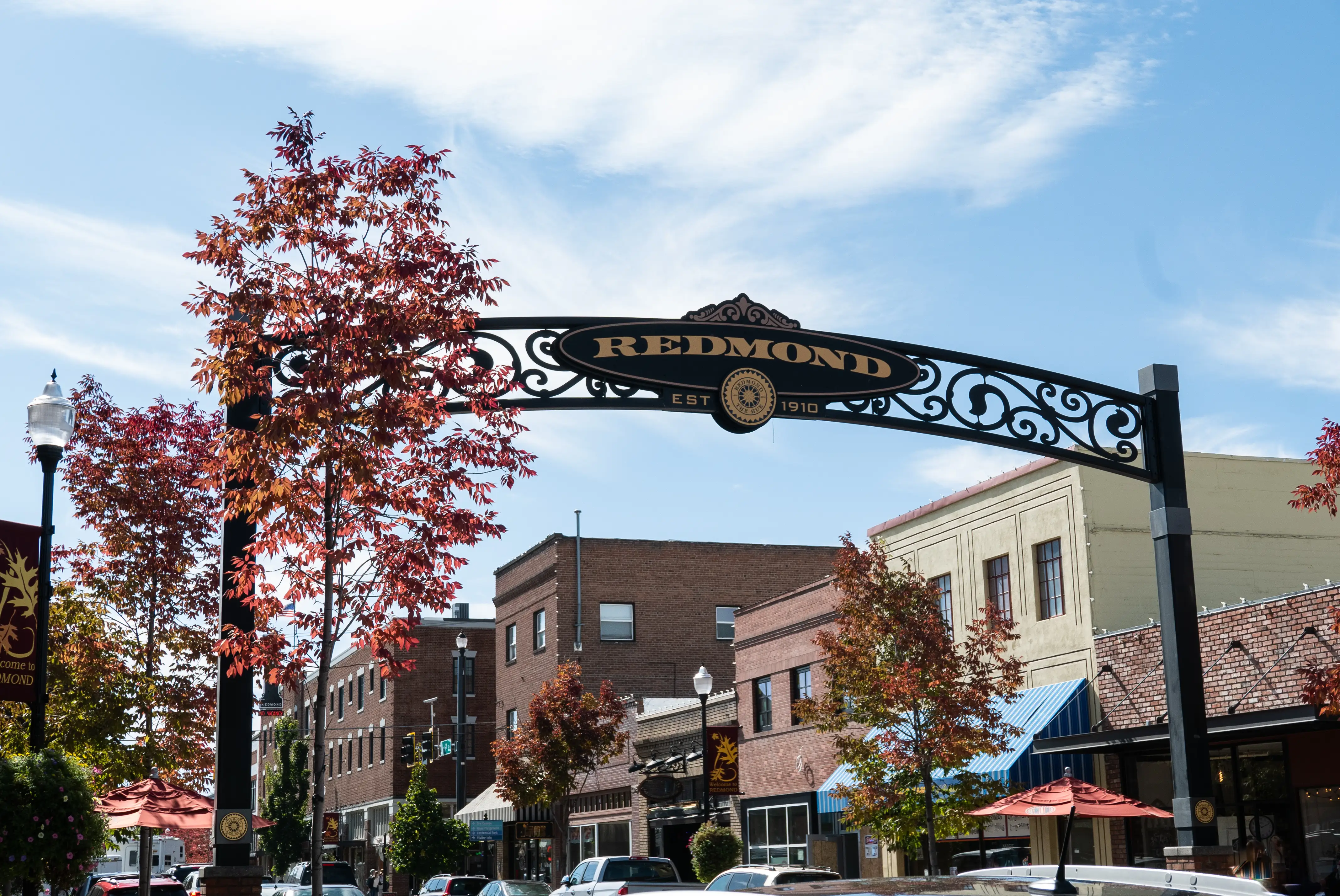
The National Register of Historic Places designated Redmond's downtown a historic district in 2017, recognizing 43 properties built from circa 1910 through circa 1987 — and that architectural range is exactly what you feel walking the blocks. The self-guided Heritage Walk and Modern Architectural Movement tours make this the most layered neighborhood in the city; the catch is that it's also the noisiest, with highway traffic running through the commercial core and Roberts Field–Redmond Municipal Airport about 2 miles away. For buyers who want genuine on-foot access to the Redmond Farmers Market, the café scene, and the Downtown Redmond Historic District without getting in a car, this is the only neighborhood that delivers it.
Best for: Walkability seekers, first-time buyers, and anyone who values being close to the city's civic and social center.
2. Northwest Redmond
This is Redmond's fastest-changing quadrant — in August 2025, the City Council approved a development of 92 townhouses plus additional multi-family units, annexed into the city and designed with arterial access adjustments to manage traffic concerns. Buyers getting in early on new construction here tend to find more flexibility on lot size and finishes than they would in the established neighborhoods. The honest trade-off is that the infrastructure is catching up to the development, which means some streets and services still feel incomplete.
Best for: First-time buyers, families open to newer construction, and renters looking for more modern multi-family inventory.
3. Greens at Redmond
Built around an 18-hole executive golf course designed by Robert Muir Graves and opened in 1995, this neighborhood is one of the quieter residential pockets in the city — man-made lakes, sand bunkers, and Cascade Mountain views give it a visual identity that's impossible to replicate elsewhere in Redmond. The trade-off is that you're buying into a community where the golf course is the amenity, and residents who don't play find fewer reasons to stay local. Homes here carry a character premium that reflects both the setting and the lot quality.
Best for: Golf enthusiasts, buyers seeking quiet and views, and those who want a more private residential feel without leaving the city limits.
4. Canyon Rim Village
Craftsman- and colonial-style homes line pedestrian-friendly streets, and several lots look directly out toward the Cascade Mountains — but the neighborhood's real draw is the three-acre public park that overlooks the Dry Canyon, complete with a paved walking trail down toward the trail system. That trail connection means Canyon Rim residents are a short walk from the canyon's disc golf course, dog park, and sports fields without being in the middle of them. The trade-off is that the newer construction aesthetic means less architectural variety than Old Town, and the neighborhood skews noticeably quieter on weekday mornings.
Best for: Families with school-age children, buyers who want views without the resort premium, and anyone who wants trail access without living directly on the canyon floor.
5. Dry Canyon
The neighborhood takes its name from the 3.7-mile rimrock canyon that the City of Redmond calls the crown jewel of its parks system — and living adjacent to it means the skatepark, tennis courts, pickleball courts, soccer and baseball fields, disc golf course, dog park, and community garden are genuinely part of your daily life rather than a weekend destination. The catch is that canyon-adjacent lots can feel exposed to wind and temperature swings that interior neighborhoods don't, and the trail corridor draws enough foot and bike traffic that privacy on the canyon edge is limited. Buyers looking for a quieter backyard will find more of it in Fieldstone or Obsidian.
Best for: Active buyers, families who want outdoor amenities within walking distance, and anyone who will actually use a trail system daily.
6. Fieldstone Crossing
Fieldstone Crossing represents Redmond's post-2000 growth era — the period when the city's population expanded more than 74 percent in just six years and conventional suburban development filled in the outer ring fast. The streets are newer, the lots are consistent, and the neighborhood is car-dependent in the way most of Redmond's suburban additions are. The trade-off is that buyers who want walkability or a strong neighborhood-identity feel won't find it here; what they will find is reliable, well-maintained homes at a price point that tracks near the city median.
Best for: Commuters who optimize for highway access, families who want predictable suburban infrastructure, and buyers who prioritize lot condition over location character.
7. Obsidian Trails
Similar in vintage and feel to Fieldstone Crossing, Obsidian Trails sits in Redmond's established suburban ring and offers one of the city's more accessible entry points into single-family ownership. The neighborhood is quiet and residential in the way the outer growth areas tend to be — functional rather than distinctive. Buyers who are choosing between Obsidian Trails and Fieldstone Crossing are usually making a micro-location decision rather than a lifestyle one; the two neighborhoods share a similar character and draw a similar buyer.
Best for: Value-conscious buyers, families looking for a quiet suburban setting, and first-time buyers who want established infrastructure over new construction risk.
8. Eagle Crest
About six miles from the city center, Eagle Crest is a resort community spread across more than 1,700 acres with three golf courses — the Ridge Course, the Resort Course, and the par-63 Challenge Course — plus sports centers, pools, a spa, and paved trails that connect neighborhoods to the Deschutes River. Buyers who move here are choosing a lifestyle, and that lifestyle is genuinely excellent if it matches yours; the trade-off is that errands, school runs, and anything involving the city's services mean a real drive rather than a quick trip. HOA structures at Eagle Crest add a layer of cost and governance that buyers from conventional subdivisions sometimes underestimate, and the full disclosure package — including any special assessments — should be reviewed before the inspection period ends.
Best for: Luxury buyers, resort-lifestyle seekers, outdoor recreation enthusiasts, and buyers who work remotely or travel frequently and want resort-grade amenities at home.
Common Mistakes Buyers Make in Redmond
Treating the City as Uniform
Buyers who drive into Redmond and assume everything within city limits feels the same are setting themselves up for a surprise at closing. The difference between a canyon-edge lot in Dry Canyon and a conventional suburban lot in Obsidian Trails is not just price — it's daily life, walkability, noise, and what your yard actually looks like. Compare neighborhoods in person, on a weekday, before making an offer.
Underestimating Eagle Crest's Distance
Six miles sounds short until it's every school pickup, every grocery run, and every early-morning commute toward Bend. Buyers who fall in love with Eagle Crest's resort setting sometimes don't stress-test that drive until they've already moved in. If you work in Redmond proper or have kids in Redmond School District 2J, price out the time cost before pricing the HOA.
Ignoring the School Boundary Before Choosing a Neighborhood
The Redmond School District 2J serves the entire city, but individual school assignments follow geographic boundaries — and those boundaries don't always line up with neighborhood names. A home in the far reaches of Northwest Redmond and a home in Canyon Rim Village are both in the district, but may not feed the same elementary school. Verify the specific school assignment for any property before you decide the neighborhood fits your family's needs. The schools page covers the district in full.
Overlooking HOA Costs at Eagle Crest and the Greens
Both Eagle Crest and Greens at Redmond carry homeowner association structures that go beyond the standard subdivision covenants. Resort maintenance, shared amenity upkeep, and golf-course infrastructure costs flow through those HOAs, and buyers focused on the list price sometimes don't account for the monthly obligation until after their offer is accepted. Get the full HOA disclosure package — including any special assessments — before your inspection period ends.
Best Areas to Rent in Redmond
| Area | Ideal For | Trade-off |
|---|---|---|
| Old Town / Downtown Redmond | Young professionals, remote workers who want on-foot access to cafés and the Redmond Farmers Market | Older building stock means units vary widely in condition; street noise from the commercial corridor is a real factor |
| Northwest Redmond | Renters who want newer construction, more modern layouts, and growing inventory from recent multi-family approvals | Infrastructure is still catching up to development; some streets and surrounding services feel unfinished |
| Dry Canyon / Canyon Rim Area | Active renters who want trail access, parks, and a residential feel without committing to a purchase | Rental inventory in this zone is thinner than the outer ring; competition for available units tends to be higher |
| Fieldstone Crossing / Obsidian Trails | Families and commuters who want quiet suburban streets, predictable layouts, and proximity to the highway | Car-dependent for nearly everything; limited walkability and no distinct neighborhood identity |
| Eagle Crest | Remote workers and lifestyle renters who want resort amenities, golf, and Deschutes River trail access | Distance from city services is a real daily cost; resort-area rental pricing typically runs above the city norm |
Redmond's rental market is tighter than its size suggests. The city-wide typical rent is $2,098 per month (Zillow, July 2026), and the pipeline of new multi-family units approved in Northwest Redmond in 2025 has not yet fully reached the market — meaning renters who move here today are working with limited options outside the suburban ring.
Local Expert Takeaway: The buyers who do best in Redmond are the ones who treat the Dry Canyon as a compass rather than just an amenity. Neighborhoods on or near the canyon — Old Town, Canyon Rim Village, and Dry Canyon itself — give you genuine connection to the city's civic and outdoor life. The outer ring neighborhoods are fine if you know what you're getting: quiet, car-dependent, and affordable relative to the canyon-adjacent options. Eagle Crest is its own world six miles out, and it rewards buyers who want resort living without driving to Bend — but it penalizes buyers who assumed the commute distance was theoretical. Walk through Old Town, drive out to Eagle Crest on a weekday morning, and then see Canyon Rim at dusk before you decide. Redmond reveals itself in sequence, not on a map.
Quick Takeaways & FAQs
✅ Redmond's typical home price of $517,100 (July 2026) sits noticeably below Bend and Sisters, making it one of Central Oregon's more accessible ownership markets.
⚠️ The Redmond School District 2J holds a C+ rating according to Niche — a real consideration for families weighing the city against nearby Sisters or Bend's higher-rated districts.
📍 The Dry Canyon trail system — 3.7 miles of rimrock canyon running through the city center, with a skatepark, dog park, pickleball courts, and disc golf — is the neighborhood amenity that most surprises buyers moving from outside Central Oregon.
What is the most walkable neighborhood in Redmond, Oregon?
Is Eagle Crest actually part of Redmond, or is it a separate community?
Which Redmond neighborhood is best for families with kids?
How does Northwest Redmond compare to the established neighborhoods?
What are the typical rents in Redmond, Oregon?
Moving to Oregon?
Tell us what you need help with and we'll connect you with local resources.
