
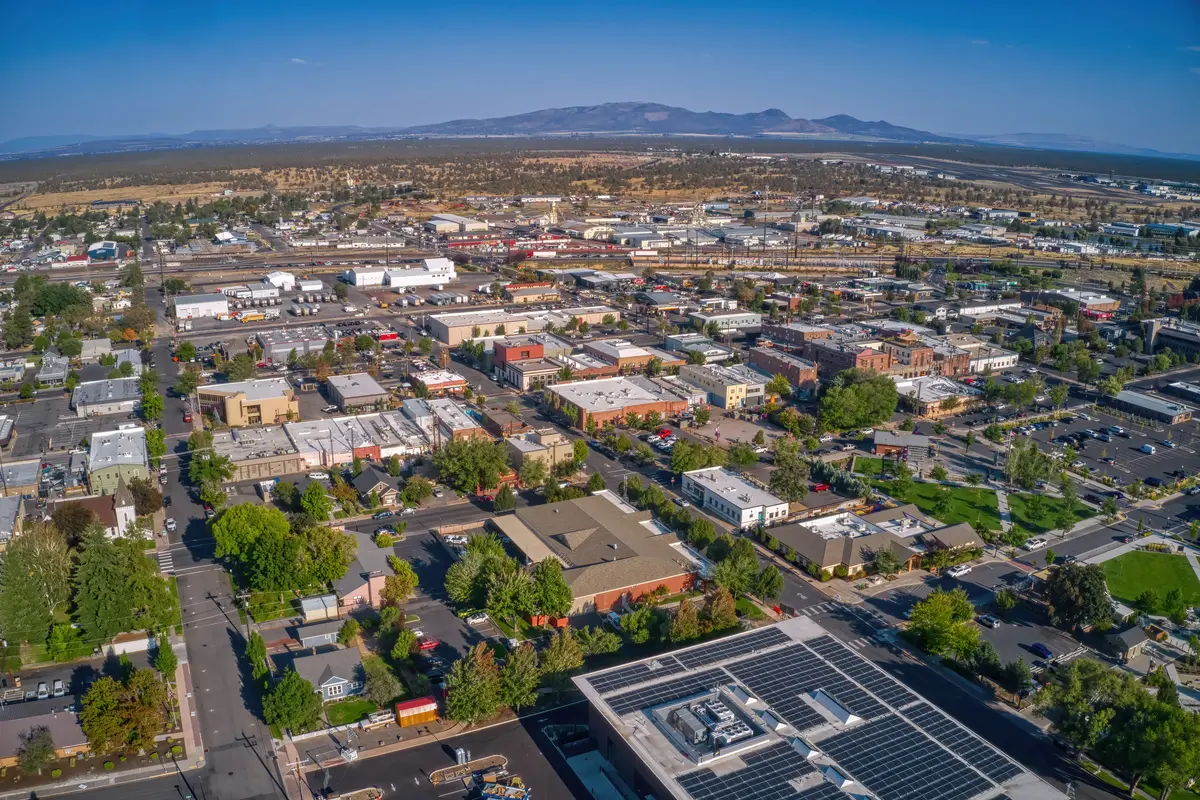
You've probably done the math already. Maybe you were priced out of the Bay Area years ago and watched your equity grow while the next rung kept moving up. Maybe you live somewhere more moderate — Sacramento, the Central Valley, the Inland Empire — and you're still looking at California's statewide typical home value of $773,735 and wondering why the numbers never quite work. Redmond, Oregon sits at the center of one of the fastest-growing regions in the Pacific Northwest, connected to the rest of Oregon by US-97 and OR-126, and anchored by Redmond Municipal Airport (RDM) about two miles from downtown. It is not a suburb of Bend — it has its own economy, its own historic district, and its own identity — but the 20-minute drive to Bend means you can access a larger city's amenities without paying a larger city's prices.
The city's population stands at 38,199 and is growing fast enough that the employment base is actively diversifying alongside it. Amazon's regional delivery center brought more than 170 local jobs. Nosler, the ammunition manufacturer, relocated production here. The Redmond Economic Development Inc. closed deals with eight companies in 2024, generating roughly $33.6 million in capital investment. The Bend-Redmond metropolitan area has placed consistently among the nation's top-performing small cities in national economic rankings — a streak rooted in real employment diversification, not just population growth. This is not a retirement town quietly fading out; it is a city actively adding employers and residents simultaneously.
The typical home price in Redmond is $517,100 (Zillow Home Value Index, July 2026) — a figure that reads very differently depending on where in California you are coming from. The broader cost picture is also more favorable: everyday spending on groceries, utilities, and services runs noticeably below what most California residents are used to, and the gap compounds over a year. The outdoor life is immediate and real: Smith Rock State Park is on the edge of town, the Dry Canyon Trail runs through the city itself, and more than 162 sunny days a year mean that access actually gets used. For the full breakdown on what housing and daily expenses look like here, the cost of living page runs the numbers in detail.
Whether you are weighing a move seriously or still at the research stage, the sections below cover the home price reality for California buyers, the honest tax comparison, what daily life looks like on the ground, and the questions most Californians are still asking after they arrive.
The Home Price Reality for California Buyers
The headline number is $517,100 — that's Redmond's typical home value as of July 2026 (Zillow Home Value Index). Set that beside California's statewide typical home value of $773,735, and the gap is substantial. For a California buyer who sells into that market and carries equity to Redmond, the price difference often translates into a meaningfully smaller mortgage, a lower down payment percentage requirement, or the ability to buy outright in some cases.
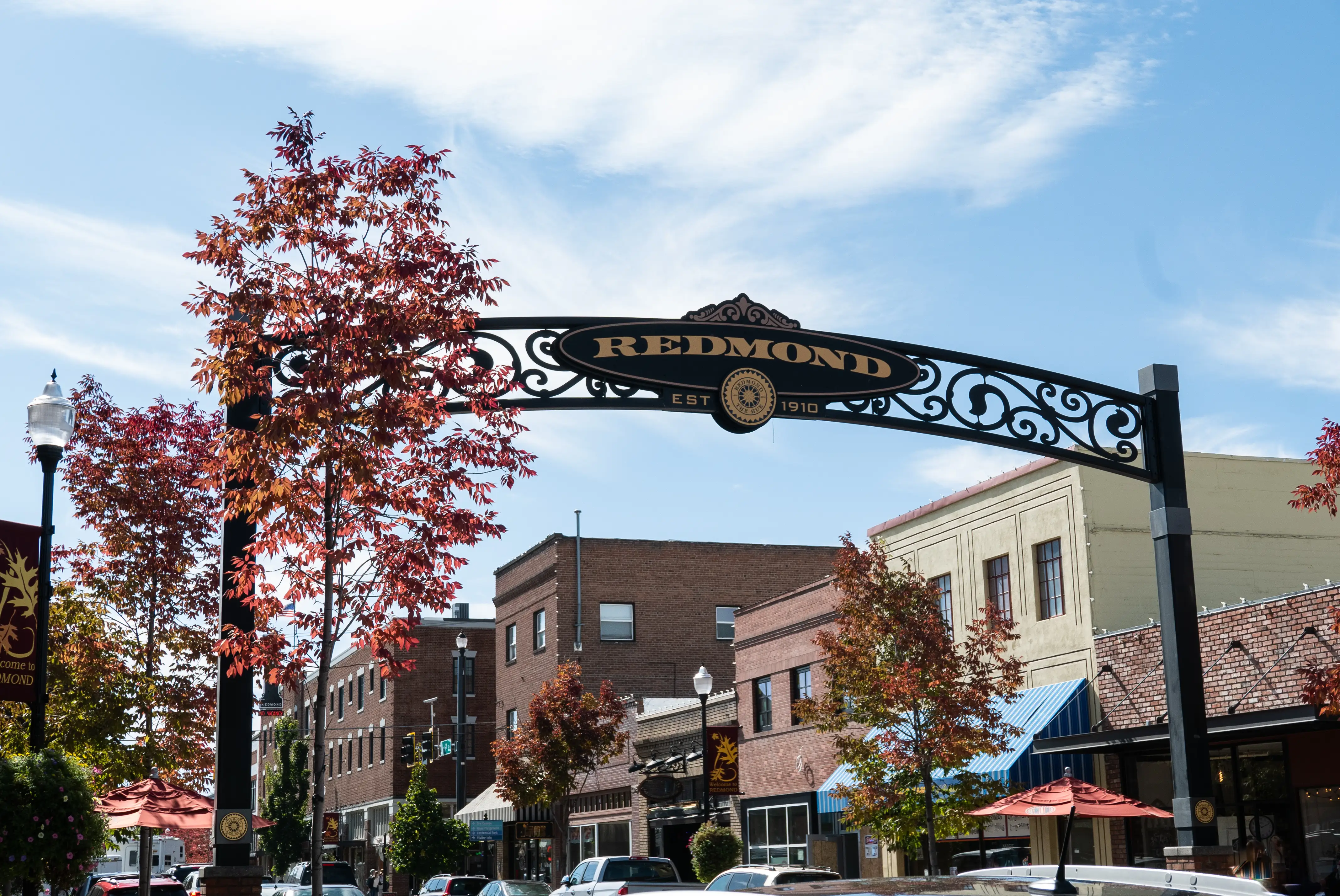
What that $517,100 buys matters too. In Redmond, that price range includes newer construction neighborhoods like Fieldstone Crossing and Obsidian Trails, established areas like Canyon Rim Village with views over the high desert, and properties within walking distance of the Downtown Redmond Historic District. The entry point into the market is lower still for older construction in areas like Northwest Redmond. For context on how specific neighborhoods compare in character and price tiers, the neighborhoods page covers that in depth.
One honest note: affordability is relative to your starting point. Redmond's median household income of $84,164 sits below the income needed to comfortably carry the typical home here — the gap is roughly $51,000 annually. That means Redmond is not cheap by local-income standards. It is meaningfully more accessible than most of California, but buyers relying on local employment rather than remote work or California equity will still feel the stretch.
Nearby, Bend runs noticeably higher than Redmond's typical price, while Prineville — about 20 miles east — comes in noticeably lower. Sisters, to the west, also runs noticeably higher. Redmond sits at the practical entry point into Central Oregon's ownership market for buyers who want proximity to the region's outdoor and economic assets without Bend's premium. See the full cost of living comparison for how these figures interact with ongoing expenses.
The Prop 13 Trap
If you have owned your California home for more than a few years, you may be paying well below California's effective property tax rate of 0.71% on your current assessed value, thanks to Proposition 13's 2% annual cap on reassessment. When you sell and buy in Redmond, that cap disappears entirely. Redmond's effective property tax rate is 0.72% — essentially the same as what a first-year California buyer pays. But if your California tax bill was calculated against an assessed value far below market, your dollar amount may actually increase in Redmond even though the rates are almost identical. Run that math before you assume property taxes are a win.
The Tax Comparison: Where Oregon Wins and Where It Doesn't
The single biggest tax surprise for Californians moving to Oregon is the income tax — and it does not move in the direction most people expect. Oregon's rates run 4.75%–9.9%, and the brackets compress quickly. The income tax disadvantage tends to fall hardest on middle-income earners; high earners who also spend heavily on goods often find the overall tax picture more balanced once the sales tax savings are factored in.
That is the part nobody puts on the recruiting poster. The honest picture requires the other side of it.
Where Oregon Clearly Wins: Sales Tax
Oregon has no sales tax — zero at every level of government. No city or county is permitted to levy one. California's statewide base sales tax rate of 7.25% is the highest in the nation, and local add-ons push it higher in many jurisdictions. When you buy groceries, furniture, a vehicle, building materials, or anything else in Redmond, you pay the sticker price. A $50,000 vehicle purchase alone saves $3,000–$5,000 in sales tax compared with buying in California. For moderate-to-heavy spenders, the sales tax savings meaningfully offset the higher income tax burden.
The Federal Tax Deduction
Oregon allows taxpayers to subtract a portion of their federal income taxes paid from their Oregon taxable income, directly reducing the state-taxable base. This deduction phases out for higher earners and disappears entirely for joint filers with federal AGI of $290,000 or more. It does not offset the income-tax gap completely for middle-income earners, but it makes the net tax picture considerably more balanced than the top-line bracket comparison suggests. A tax professional who works with Oregon-California relocations is worth the conversation before you finalize the move.
| Tax Category | California | Oregon (Redmond) |
|---|---|---|
| State income tax (top rate) | 13.3% | 9.9% |
| State income tax (range) | 1%–13.3% | 4.75%–9.9% |
| Sales tax (statewide base) | 7.25% | 0% (none at any level) |
| Effective property tax rate | 0.71% | 0.72% |
| Federal tax deduction on state return | Not available | Partial deduction (phases out above $290K AGI) |
The net takeaway: high earners who spend heavily on goods tend to come out ahead in Oregon once the sales tax savings and the federal deduction are counted. Middle-income earners who spend modestly may find the income tax hit outweighs the sales tax savings — run the math for your specific income and spending profile before assuming the move saves money overall.

Daily Life: What the Cost of Living Actually Feels Like
Everyday costs in Oregon run noticeably below what most California residents are used to. The gap shows up in groceries, utilities, and services in ways that compound over a year — not just in the home price headline.
The practical experience of Redmond is that it is a small city that requires a car for most errands. Downtown Redmond has the bones of a walkable core — the historic district, the Redmond Farmers Market during the growing season, independent coffee along the main corridor — but the residential neighborhoods spread outward in ways that make driving the default. A serious shopping run or a specialty errand will send you toward Bend, about 20 minutes away on US-97.
What Californians Notice After Six Months
The thing that surprises most California transplants after a few months is not the cold — it is the dryness. Central Oregon sits in a high desert rain shadow, and the low humidity is genuinely disorienting after years of coastal or valley California. Skin, sinuses, and wood furniture all adjust over time, but the first winter catches people off guard. The flip side: 162 sunny days a year with low humidity and brilliant light makes outdoor access feel usable year-round in a way that rainy Pacific Northwest cities do not.
Health coverage costs run noticeably below what California residents typically pay, though the honest trade-off is that specialist care and advanced treatment require more planning and sometimes a drive. Routine care is accessible locally.
The outdoor life is not a marketing abstraction. Smith Rock State Park — a world-class climbing and hiking destination — is at the edge of town. The Dry Canyon Trail runs directly through the city, connecting neighborhoods on foot. The Deschutes River offers access points throughout the region. These are not amenities you earn after a long commute; they are legitimately close in a way that California's equivalent destinations rarely are.
What you give up: the density of dining and entertainment options you may have taken for granted in a California metro. Redmond has independent restaurants worth caring about — Diego's Spirited Kitchen, Madaline's Mexican Steakhouse, General Duffy's Waterhole, E BarGrill, and Hideaway Redmond all draw local regulars. Coffee culture is real and local, with One Street Down Cafe, Tite Knot Craft Coffee, Junction Roastery • Social Club, Honey & Pine Coffee Company, and Coffee Depot each offering something distinct. But the full range of a large-city food scene is not here. For that, Bend is the answer — and most Redmond residents make the drive a few times a month as a matter of course.
Looking to buy in Redmond? Estimate your payment.
Enter your numbers to see an estimated monthly mortgage payment.
Estimate only. Excludes HOA fees and mortgage insurance. The interest rate above is a starting point, not a quoted rate — replace it with your own to see real numbers. Insurance is a flat placeholder, not a Redmond quote.
Schools, Safety, and the Community Texture
Redmond School District 2J serves the city with 7,281 students enrolled in 2025-26. The district holds a C+ rating, according to Niche — an honest middle-of-the-road assessment that reflects genuine room for growth. On 2024-25 state assessments, 32.2% of students reached math proficiency and 43.6% reached reading proficiency, figures that sit below state averages and worth factoring into a family's decision.
Student athletes compete across a full range of interscholastic sports, and the community turns out for local high school events in the way that small-city sports tend to draw. For families with school-age children who are weighing the district carefully, the schools page covers boundary details, individual school profiles, and how the district compares within Oregon.
On safety, Redmond compares favorably against state and national benchmarks — the full statistical picture is on the safety page. The community texture is what most California transplants comment on: people acknowledge each other at the Dry Canyon Trail, at the Redmond Farmers Market, in the parking lots. Coming from a metro area where anonymity is the default, the social scale of 38,199 people takes some adjustment — and most people who stay describe it as an adjustment they're glad they made.
Who Moves Here and Who Moves Back Out
The California transplants who thrive in Redmond tend to share a few things: they either work remotely or have secured employment before arriving, they have a genuine interest in outdoor access rather than just proximity to it, and they went in clear-eyed about the school district and the entertainment trade-offs. The ones who leave tend to underestimate the isolation from specialist services, underestimate how much they relied on urban density for social life, or arrive expecting Bend prices and Bend amenities at Redmond's distance from both. Neither outcome is a surprise if you come in honest about your own priorities.
Making the Move: Practical Considerations for California Buyers
If you are buying in Redmond with California equity, the transaction sequence matters. Redmond's market is not the frenzied environment of 2021, but well-priced homes do not sit indefinitely either. Coming in with a clear pre-approval and a realistic sense of the price range — $517,100 as the July 2026 typical value — puts you in a stronger position than arriving with a California-shaped sense of what negotiation looks like here.
The buying process in Oregon is handled through licensed real estate attorneys and title companies rather than escrow companies, which is the primary mechanical difference California buyers notice. The buying process page covers the Oregon-specific steps in detail, including down payment programs available to qualifying buyers.
Remote Work and the Employment Landscape
Many California transplants arrive as remote workers, and Redmond's geography supports that well. The airport — Redmond Municipal Airport (RDM), about two miles from downtown — offers commercial service that makes the occasional trip back to a California office manageable without requiring a multi-hour drive to Portland.
For those seeking local employment, the picture is genuinely improving. The largest employing industries locally are healthcare and social assistance, retail, and construction. The highest-paying local sector is professional, scientific, and technical services, with average earnings above $86,000. Amazon's regional delivery center and Nosler's manufacturing operation represent recent additions to the base. Redmond Economic Development Inc.'s deal-making track record suggests more will follow. That said, a city of 38,199 has a real ceiling on local employment density — remote work remains the most common answer for California-income-level earners who relocate here. The broader employer picture for the region is on the living in Redmond page.
The Decision Most People Get Wrong
The most common mistake California buyers make in Redmond is treating the move as a pure financial arbitrage — sell high, buy low, pocket the difference, and assume the rest follows. The financial case is real. But Redmond's daily texture — its scale, its outdoor orientation, its limited density, its school district, its distance from specialist services — is a lifestyle choice as much as a financial one. The buyers who make it work treat those as features they are choosing, not inconveniences they are tolerating. Come for the numbers, stay for the high desert light, the canyon trail out the back of the neighborhood, and the fact that Smith Rock is never more than 15 minutes away.
Local Expert Takeaway: Redmond is a genuine value relative to California — but 'value' means something specific here. The typical home at $517,100 (July 2026) is substantially below what most California markets offer, Oregon's zero sales tax saves real money on every significant purchase, and 162 sunny days a year with Smith Rock State Park on the edge of town is a quality-of-life argument that spreadsheets understate. The catch is layered: Oregon's income tax runs higher than California's for most middle-income earners, the school district holds a C+ rating according to Niche, and specialist care requires planning and sometimes a drive. The buyers who get it right are the ones who came knowing all of that, not the ones who found out after closing.
Quick Takeaways & FAQs
✅ Redmond's typical home price of $517,100 (July 2026) sits substantially below California's statewide typical home value, and Oregon's zero sales tax adds immediate savings on every major purchase.
⚠️ Oregon's income tax tends to run higher than California's for most middle-income earners — the bracket math is counterintuitive and worth running for your specific income before you assume the move saves money overall.
📍 Redmond Municipal Airport (RDM) is about two miles from downtown and offers commercial service, making it practical for remote workers who still need occasional travel without driving to Portland.
Is Redmond, Oregon cheaper than California overall?
How does Oregon's property tax compare with California's Proposition 13?
What is the job market like in Redmond for California transplants?
How are Redmond's schools compared with what Californians are used to?
What do most California transplants wish they had known before moving to Redmond?
Moving to Oregon?
Tell us what you need help with and we'll connect you with local resources.
