
What Is Living in Coos Bay, Oregon Like?
Maybe you've been priced out of a Willamette Valley city and someone mentioned Coos Bay. Maybe you searched "affordable Oregon coast" and kept landing here. Here's what that search doesn't tell you: Coos Bay is not a sleepy beach town — it's the largest city on the Oregon Coast, a working port city of 15,801 people that serves as the medical, retail, education, and professional hub for the entire south coast region. US-101 runs straight through it. The bay that gives the city its name is an active commercial waterway, not a postcard backdrop. Understanding that distinction — port city, not resort town — shapes everything from where you'd live to where you'd work.
The economic backbone here is healthcare and public services: a major regional health system, Coos Bay School District 9 (with 2,923 students enrolled in 2025-26), Coos County, and Southwestern Oregon Community College together form the largest cluster of stable local employment. But the bigger economic story is what's coming. The Port of Coos Bay — already the largest deep-draft port between San Francisco and Puget Sound — secured $100 million in Oregon state legislative funding in June 2025 and $58 million in federal grants for a first-of-its-kind ship-to-rail container terminal on the North Spit. That project is the single largest economic development commitment on the south coast in decades, and people who've been watching Coos Bay for years are starting to act on it.
The typical home price sits at $330,015 (July 2026), well below the Oregon state average and noticeably below most coastal Oregon markets — making this one of the genuinely affordable options left on the coast. For the full cost-of-living picture, including rent and tax figures, that page goes deeper. Day-to-day life centers on the outdoors: three state parks within 13 miles along OR-540, the South Slough National Estuarine Research Reserve, and a waterfront boardwalk that doubles as the city's social center. The coastal climate means 186 sunny days a year and mild temperatures — rain is the trade, and most locals consider it fair.
Whether you're seriously considering a move or just researching the area, the sections below break down Coos Bay's neighborhoods, housing market, employers, commute realities, daily life, and the local spots worth knowing about.

Coos Bay at a Glance
Looking to buy in Coos Bay? Estimate your payment.
Enter your numbers to see an estimated monthly mortgage payment.
Estimate only. Excludes HOA fees and mortgage insurance. The interest rate above is a starting point, not a quoted rate — replace it with your own to see real numbers. Insurance is a flat placeholder, not a Coos Bay quote.
Why Are People Moving to Coos Bay?
The case for Coos Bay is straightforward: coastal access, genuine affordability, and a city large enough to have real infrastructure — a hospital inside city limits, a community college, an arts museum, a historic downtown theater — without the prices that come with coastal resort towns to the north.
Buyers from California and the Willamette Valley keep showing up here for the same reason: they want to live near the ocean and still be able to afford a house. North Bend runs somewhat higher in price; Bandon runs noticeably higher. Coos Bay tends to be the entry point into south coast ownership for people making that move, though it's worth noting that the median household income of $56,524 still falls short of what's needed to comfortably carry the typical home here — so the affordability story has limits. See the first-time homebuyer page for financing options specific to this market.
The Port Economy — and What's Changing
For generations, the city's identity was built on timber and shipping. The Port of Coos Bay is still a working commercial port, and the Oregon Legislature approved $100 million in bonding support in June 2025, on top of $58 million in federal grants, for a ship-to-rail container terminal on the North Spit — the single largest economic development commitment on the south coast in decades. People who follow Oregon's port economy are moving here early, specifically in anticipation of that project's impact.
The Empire District's Opportunity Zone designation has drawn investment interest from outside the region. This is not a city coasting on past identity — it's one actively repositioning itself.
Who Actually Lives Here
Most residents own their homes. The population skews toward young professionals employed in healthcare and education, retirees drawn by the mild climate and accessible outdoor recreation, and longtime families with deep roots in the timber and fishing industries. Southwestern Oregon Community College brings a smaller student presence. What you get is a mix that doesn't feel like a tourist town or a bedroom suburb — it feels like a place where people actually live and work.
Coos Bay is also the birthplace of Steve Prefontaine, the distance runner who put this city on the national map. That pride is still visible here, and it says something about the town's character: it produces people who run hard and stay connected to where they came from. For a closer look at crime and safety data, the dedicated page covers the full picture — the city carries a violent crime rate of 6.3 per 1,000 residents and a property crime rate of 44.6 per 1,000 residents, both above state and national comparisons, which is something newcomers should factor in honestly.
What Daily Life Feels Like in Coos Bay
Six months in, most newcomers say the same thing: the fog burns off slower than they expected, and they stopped caring. The rhythm of coastal life recalibrates you. Mornings here often start with a drive along OR-540 — the Cape Arago Highway — past the estuary and out toward the state parks. That's not a weekend thing; it's a Tuesday-morning errand route for people who live here.
The Downtown Core
Downtown Coos Bay has more cultural texture than a city this size usually manages. The Egyptian Theatre — a restored 1925 movie palace — anchors the main commercial strip. The Coos Art Museum draws rotating exhibitions and hosts community events. The Coos Bay Boardwalk runs along the waterfront and is where locals actually gather, not just visitors. A stretch of independent restaurants, galleries, and coffeehouses fills in the gaps.
It's not a polished tourist downtown. Some storefronts cycle through tenants. But the bones are real, and the investment is visible — especially as the port project draws more economic attention to the area.
The Seasonal Surprise
What newcomers consistently underestimate is Shore Acres State Park in December. The annual Holiday Lights display draws crowds from across the region every night from Thanksgiving through New Year's Eve — and this isn't a small local event. Parking fills well before showtime on peak evenings, and the corridor along OR-540 backs up in ways that catch new residents off guard. If you live on that route, six weeks of evening traffic is your reality. Local residents learn quickly which evenings to avoid the corridor.
Schools and Families
Coos Bay School District 9 holds a B- rating, according to Niche. On 2024-25 state assessments, 23.6% of students reached math proficiency and 35.1% reached reading proficiency — numbers that are honest rather than exceptional, and worth knowing before you move a family here. The district maintains active OSAA athletics programs, and the local high school draws strong Friday night turnout. For full school details, see the schools page.
Families with kids tend to cluster in the Mingus Park and Blossom Gulch areas, drawn by the park itself and the quieter residential streets. The parks and recreation scene — including the South Slough and the trio of state parks to the southwest — is covered fully on the parks page.
The Coos Bay Housing Market Right Now
The typical home price in Coos Bay sits at $330,015 (July 2026), which puts this firmly in the affordable tier for Oregon coastal markets. That figure reflects a mix of older craftsman bungalows, mid-century ranches, and newer construction that comes up occasionally on the edges of the city.
The city-wide typical rent runs at $1,603 per month. For the complete breakdown of what those numbers mean for your budget — including property taxes at an effective rate of approximately 0.70% — the cost-of-living page goes deeper.
What the Market Feels Like
Well-priced homes here don't sit long. Coos Bay draws buyers from outside the region who've done their homework on price, and local demand from healthcare and education workers creates a consistent baseline. The catch: the median household income in the city means many buyers who grew up here are stretching to buy. That dynamic shapes the market — there's real competition at the entry end of the price range.
Some areas of the city run above the typical home price; others come in below it. That range, and what drives it by neighborhood, is covered on the best neighborhoods page. At the city level, what you're getting for around $330,000 is more square footage and more lot than you'd find at that price point in virtually any other coastal Oregon market.
The Affordability Reality
Affordability here is genuine but not unlimited. The median household income falls short of what's needed to comfortably carry the typical home — which means buyers moving from higher-income markets or bringing remote-work salaries have a meaningful advantage. Locals trading up or buying for the first time are often working with down payment assistance programs; the first-time homebuyer page covers what's available in Oregon for this market.
Coos Bay Neighborhoods
Coos Bay has several distinct areas — each with its own character and appeal. Here’s a breakdown to help you narrow down where to focus your home search.
🏡 Empire
Empire is Coos Bay's westernmost district, situated along the bay's edge with a mix of working-class history and active Opportunity Zone investment. It suits buyers looking for elbow room and a quieter, less trafficked corner of the city.
🏠 Mingus Park
The Mingus Park neighborhood wraps around the city's most beloved green space — a park with a Japanese garden and a central pond — making it a natural draw for families with school-age children and anyone who wants to walk out the door and into something calming.
🌳 Marshfield Hill
Marshfield Hill sits on elevated ground above the bay with a mix of established homes and quieter residential streets; it's a solid choice for buyers who want proximity to downtown without being in the thick of commercial traffic.
🏘 Downtown Coos Bay
Downtown is where the Egyptian Theatre, the Coos Art Museum, the Boardwalk, and the city's restaurant and coffee scene are most concentrated — suited to buyers who want to walk to most of what makes the city worth living in.
🏔 Eastside
The Eastside sits across the bay from the port activity, offering a somewhat quieter residential character with views toward the water; it tends to attract buyers who want a sense of separation from the commercial core while staying close to city services.
🌆 Airport Heights
Airport Heights is a practical, no-frills residential area near Southwest Oregon Regional Airport — a straightforward option for buyers prioritizing access to the airport and a quick commute to North Bend over walkability or waterfront proximity.
Pros & Cons of Living in Coos Bay
The Pros
- Dramatic Pacific coastline with beaches, dunes, and state parks minutes from downtown
- Home prices well below the Oregon state average
- Working port town with a real, non-touristy character
- Mild year-round temperatures with no real winter freeze
The Cons
- Higher-than-average violent and property crime rates for a city its size
- Long, isolated commute to any larger metro area
- Persistently overcast, rainy winters and below-average sunny days
- Local economy still recovering from decades of timber-industry decline
Getting Around & Commuting in Coos Bay
Coos Bay is a car city. That's the honest answer. US-101 is the primary north-south spine, connecting Coos Bay to North Bend immediately to the north and running the full length of the Oregon Coast. OR-540, the Cape Arago Highway, takes you southwest toward the state parks and Charleston Marina. OR-241, the Coos River Highway, runs inland toward Coquille.
The Eugene Drive
Getting off the coast is the commute reality that catches newcomers off guard. Reaching Interstate 5 means a mountain crossing, and the drive is about 110 minutes to Eugene — which is the nearest significant Willamette Valley hub. There is no shortcut. This is not a place where you casually pop over to a bigger city for the afternoon; you plan those trips. People who move here from Portland or Sacramento and expect to make regular inland trips need to factor this into their decision honestly.
Southwest Oregon Regional Airport (OTH) is about 5 miles from the city, which softens the isolation somewhat. For longer distances, the airport reduces dependence on the mountain drive — though flight options are limited compared to a major hub.
Local Getting Around
Within Coos Bay and between Coos Bay and North Bend, Coos Transit provides local bus service. For daily errands, the practical reality is that most things require a car. The downtown core is walkable once you're in it — the Boardwalk, the Egyptian Theatre, several coffee shops, and the restaurant stretch along the main commercial corridor are all accessible on foot from central neighborhoods. Getting from a residential neighborhood to that core almost always involves driving.
The commute between Coos Bay and North Bend is short — the two cities are effectively one continuous urban area divided by the bay. Many residents work in one and live in the other without much thought. Charleston, to the southwest, is a quick drive on OR-540 and hosts the marina that draws a significant local workforce.
Who This Commute Pattern Suits
| Situation | How Coos Bay Works for You | Best For |
|---|---|---|
| Works locally in healthcare or education | Short in-city commute; most major employers within the city limits or North Bend | Commuter |
| Remote worker | Coastal lifestyle with no inland commute required; reliable broadband improving | Tech Nature |
| Needs to reach Eugene regularly | About 110 minutes each way; workable occasionally, challenging weekly | Commuter |
| Works at the port or in trades | North Spit and port facilities are close; major funding committed for future growth | Value |
| Retiree with no daily commute | Excellent fit — proximity to hospital, parks, and coast without commute pressure | Quiet Nature |
The isolation that makes Coos Bay feel like an escape is the same thing that makes regular inland travel a serious logistical commitment. That trade-off is the central question for anyone considering a move here.
Schools in Coos Bay
Families relocating to Coos Bay have public, private, and higher-education options nearby. Here’s a quick overview.
🎓 School District
Coos Bay School District 9 serves K–12 students across Coos Bay and the surrounding area. Rated B- (source: Niche.com).
🏆 Graduation Rate
The 4-year high-school graduation rate here is approximately 75.7%.
📚 Higher Education
Oregon’s public universities — the University of Oregon, Oregon State University, and Portland State University — offer four-year degrees statewide, with a network of 17 community colleges providing two-year and workforce programs.
🌐 Online Learning
Oregon State University Ecampus and Portland State University Online offer fully accredited online degrees for remote learners across the state.
Safety in Coos Bay
A quick look at how Coos Bay compares on the numbers that matter most when weighing a neighborhood or a move.
🛡 Violent Crime
Approximately 6.3 per 1,000 residents.
🔒 Property Crime
Approximately 44.6 per 1,000 residents.
Compared to the most recent national figures from the Bureau of Justice Statistics (2024), Coos Bay’s violent crime is above the national average (about 3.7 per 1,000), and property crime is above the national average (about 18.4 per 1,000).
Against Oregon as a whole, Coos Bay’s violent crime is about double the state average, and property crime is about double the state average (Bureau of Justice Statistics, Crime Known to Law Enforcement, 2024 (tables 2 and 3)).
Crime rates can vary a lot within a single city, so the citywide numbers above are only a starting point. Some neighborhoods in Coos Bay run well below these averages, while others run higher — the kind of block-by-block detail that matters most when you’re actually choosing where to live. The full guide below breaks it down neighborhood by neighborhood.
Working in Coos Bay
Coos Bay’s largest employers span several industries — here are some of the anchors of the local job market.
🏥 Bay Area Hospital
Healthcare
🎓 Coos Bay School District
Education
🏛 Coos County
Municipal government
🎓 Southwest Oregon Community College
Education
🏛 City of Coos Bay
Municipal government
Parks & Recreation in Coos Bay
Some of the outdoor spaces that shape everyday life in Coos Bay.
🌱 Mingus Park
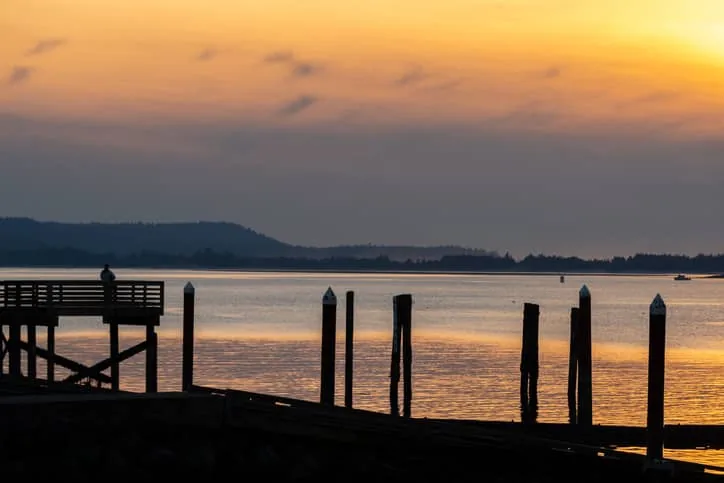
Coos Bay residents don’t have to go far for green space — spots like Mingus Park are part of everyday life here, whether that’s a morning walk, a weekend hike, or just somewhere to unwind outside. The full guide below covers more of what Coos Bay has to offer for parks and outdoor recreation.
Retiring in Coos Bay
Coos Bay draws retirees for its balance of amenities, outdoor access, and cost. Here’s what to weigh.
🌤 Climate
Coos Bay's coastal climate is mild year-round — summers rarely get hot, winters rarely freeze. The city sees 186 sunny days a year, with the trade-off being consistent coastal fog and rain through winter and spring. For retirees sensitive to heat, this is one of the more comfortable climates on the West Coast.
🍴 Lifestyle
Three state parks within 13 miles, the South Slough estuarine reserve, a functioning arts museum, and a historic downtown theater give retirees a fuller cultural and outdoor calendar than most small coastal cities manage. The pace is unhurried, the community is close-knit, and the waterfront boardwalk is a daily gathering point.
🏚 55+ Communities
No 55+ communities were found in Coos Bay. Retirees here typically purchase single-family homes in quieter residential areas like Mingus Park or Marshfield Hill, or rent within the city. The full retiring picture, including healthcare access, is on the retiring page.
✈ Getting Around
Most errands require a car, though the downtown core is walkable for those who live near it. Southwest Oregon Regional Airport (OTH) is about 5 miles from the city, which reduces dependence on the mountain drive for longer travel. A major regional health system is located inside the city limits.
🏛 Oregon Taxes for Retirees — What to Know
- Social Security is not taxed — Oregon does not tax Social Security or Railroad Retirement benefits. Any amount included in your federal adjusted gross income is subtracted back out on the Oregon return.
- But other retirement income IS taxed — This is the trade-off that surprises people moving from Washington or Texas. Pension distributions and 401(k)/IRA withdrawals are taxed as ordinary income at Oregon’s regular rates — there is no blanket retirement-income exclusion.
- Graduated income tax — Oregon has four brackets — 4.75%, 6.75%, 8.75% and 9.9%. The 4.75% rate covers the first $10,000 of taxable income for a single filer ($20,000 filing jointly); the 8.75% rate starts at $125,000 ($250,000 jointly); and the top 9.9% rate applies above $250,000 ($500,000 jointly).
- No sales tax — Oregon levies no general sales tax.
- Property taxes, with senior deferral — Oregon’s Senior and Disabled Property Tax Deferral lets qualifying homeowners have the state pay their county property taxes, with a lien recorded against the home. The 2026 household income limit is $70,000, and deferred balances accrue 6% simple interest — it defers the bill rather than forgiving it.
- Estate tax — the one to plan for — Oregon has its own estate tax with a $1 million filing threshold — far below the federal exemption, and NOT indexed for inflation, so it reaches more estates every year in real terms. Retirement accounts and a long-held home count toward the taxable estate, so estates that feel modest can cross the line without the owner expecting it.
- No inheritance tax — Oregon has no separate inheritance tax and no gift tax.
Tax laws change frequently and individual situations vary. This is general information, not tax advice — always consult a qualified Oregon tax professional or CPA for personalized retirement tax planning.
Weekends & Local Favorites in Coos Bay
Weekends in Coos Bay orbit the coast. The trio of state parks along OR-540 — Sunset Bay, Shore Acres, and Cape Arago — is within 13 miles of downtown, connected by a segment of the Oregon Coast Trail. Cape Arago puts you above tidepools and within view of the seal and sea lion colonies on Shell Island. Shore Acres offers 745 acres of sandstone cliffs, formal botanical gardens in bloom year-round, and whale-watching from December through June. These are not day-trip destinations; they're where residents go on a slow Sunday morning before lunch.
The South Slough National Estuarine Research Reserve, at the south end of the bay, draws kayakers, birders, and hikers into one of the few intact estuarine ecosystems on the Oregon Coast. Mingus Park, within the city, has a Japanese garden and a pond that serves as the neighborhood's quiet anchor.
Food, Coffee, and the Local Scene
The waterfront and downtown corridor hold most of the dining scene. The Boat Fish & Chips is the kind of place that has a line because the locals won't let it empty out. SharkBite's Seafood Cafe leans into the coastal identity with straightforward execution. Blue Heron Bistro Bavarian is the outlier — a German kitchen that has been a consistent local anchor for years. Coach House Restaurant & Lounge handles the sit-down dinner crowd. Shake N Burger Coos Bay covers the casual end reliably.
For coffee, So It Goes Coffeehouse doubles as a community gathering spot, the kind of place where the same faces show up most mornings. Espresso Mill & Bakery is a breakfast regular for a reason. Kaffe 101 runs a loyal local crowd. Cape Arago Cafe & Espresso covers the breakfast-and-brunch window, and Foggy's Cafe rounds out the independent coffee scene.
The Coos Art Museum hosts rotating exhibitions and is one of the cultural anchors that gives downtown more weight than you'd expect from a city of 15,801. The Egyptian Theatre — a 1925 movie palace that still screens films and hosts live events — is the kind of place that makes newcomers say they didn't expect this. The Coos Bay Boardwalk along the waterfront is where the city gathers on any decent evening, and where the Steve Prefontaine legacy shows up in murals and markers along the route.
Charleston Marina, just down OR-540, is the working fishing harbor that supplies much of what ends up on local plates. Watching the boats come in is a genuinely local activity — and one that's free, ongoing, and deeply specific to this corner of the coast.
Local favorites in Coos Bay
Restaurants
- The Boat Fish & Chips
- SharkBite's Seafood Cafe
- Shake N Burger Coos Bay
- Coach House Restaurant & Lounge
- Blue Heron Bistro Bavarian • German
Outdoors
- Shore Acres State Park
- Sunset Bay State Park
- Cape Arago State Park
- South Slough National Estuarine Research Reserve
- Mingus Park
Coffee
- So It Goes Coffeehouse
- Espresso Mill & Bakery
- Kaffe 101
- Cape Arago Cafe & Espresso Breakfast • Brunch
- Foggy's Cafe
Top Things Locals Say About Coos Bay
The best intel about a city comes from the people who actually live there. Here’s what Coos Bay residents say when newcomers ask the questions everyone’s thinking.
“I knew the commute to Eugene would be long, but I didn't really understand what 'a couple of hours over the mountains' means until the first time I needed to make it on a rainy February night. You adapt your whole relationship to the inland part of the state. But then I drove out to Shore Acres on a Tuesday and had the cliffs almost to myself, and I stopped second-guessing it.”
— Recent Coos Bay home buyer
“What's the most surprising thing about living in Coos Bay?”
How much is actually here. People expect a small, kind of faded coastal town. Then they find the Egyptian Theatre screening actual films, the Coos Art Museum with rotating shows, the Boardwalk with real foot traffic on a summer evening. It's not Portland, but it punches above its size in a way that takes a few months to fully register.
“What do locals love most about Coos Bay?”
The access. Shore Acres, Cape Arago, Sunset Bay — you're 13 miles from three world-class state parks on any given morning. The South Slough is practically in the backyard. The coast isn't a weekend drive from here; it's Tuesday. That's the thing people mean when they say they could never go back to living inland.
“What should newcomers to Coos Bay know?”
US-101 through downtown backs up during summer tourist season and during the Shore Acres Holiday Lights run — six weeks of evening traffic on OR-540 that catches people off guard every year. Learn the secondary routes around the bay early. And don't underestimate the fog: it doesn't always clear before noon, especially in June and July, which locals call 'Juneuary' for a reason.
“How much do you need a car in Coos Bay?”
You need one for almost everything outside the downtown core. The area around the Boardwalk and the main commercial strip is genuinely walkable if you live nearby, and Coos Transit connects Coos Bay to North Bend. But getting to groceries, the state parks, Charleston, or any employer outside of central downtown means driving. Remote workers and retirees who can time their errands have it easiest; anyone commuting to a specific shift is going to be driving.
Cities Near Coos Bay
Other communities near Coos Bay worth a look — each with its own character and price point.
| City | Distance | Best For | Vibe | Median Rent | Median Buy |
|---|---|---|---|---|---|
| North Bend | 3 mi | Families, new construction, airport access | Connected, slightly newer, bay-adjacent | $1,533 | $362,945 |
| Charleston | 8 mi | Fishing community, outdoor lovers | Working harbor, relaxed, coastal | $1,300 | $340,000 |
| Bandon | 25 mi | Golf, quieter coastal living | Slower pace, scenic, higher prices | $1,400 | $488,995 |
More Helpful Guides for Coos Bay
Going deeper on Coos Bay? Our blog series covers everything from first-time buying to retiring here — explore the guides below.
Local Expert Takeaway: Coos Bay is the south Oregon Coast's real city — with a hospital, a community college, a functioning port, and a downtown that has actual cultural institutions. The affordability is genuine: $330,015 typical home price in a coastal state where most waterfront markets run well above that. The downside is real too: getting off the coast takes about 110 minutes to Eugene, and the property crime rate runs above state averages. The buyers who thrive here are the ones who came for the coast and mean it — remote workers, retirees, healthcare and education professionals who want a real town without resort-town pricing. The Oregon Legislature approved $158 million in combined state and federal funding in 2025 for a ship-to-rail container terminal at the Port of Coos Bay — the reason people who've been watching this market for years are starting to act now.
Quick Takeaways & FAQs
✅ Coos Bay is the most affordable entry point into coastal Oregon homeownership, with a typical home price of $330,015 (July 2026) — noticeably below comparable coastal markets.
⚠️ Getting off the coast means a mountain drive of about 110 minutes to Eugene; regular inland trips require real planning, not spontaneous detours.
📍 The Oregon Legislature approved $100 million in bonding support in June 2025, alongside $58 million in federal grants, for a ship-to-rail container terminal at the Port of Coos Bay — the largest economic development commitment on the south Oregon Coast in a generation.
Is Coos Bay affordable compared to other Oregon coastal towns?
What is the Coos Bay School District like?
How far is Coos Bay from Eugene and Portland?
What is driving economic growth in Coos Bay right now?
Is Coos Bay safe to live in?
Helpful Links for Moving to Coos Bay
Moving to Oregon?
Tell us what you need help with and we'll connect you with local resources.
