
About Gary
What the Market Looks Like From the Inside
Coos Bay is the largest city on the Oregon Coast and home to the largest deep-water port between San Francisco and Seattle. That identity — working port, timber legacy, commercial fishing — is baked into the housing stock, the neighborhoods, and the price points. The typical home here was $330,015 as of July 2026 (Zillow Home Value Index), which is a number that genuinely surprises buyers coming from the Willamette Valley or the coast north of Florence.
What surprises them even more is that the median household income in Coos Bay, at $56,524, sits below what's needed to comfortably carry that typical purchase. This is not a city where the local wage base and the home price are in easy alignment. A lot of the buyers I work with here are remote workers, retirees on fixed income who are downsizing from a more expensive market, or people with a specific connection to the area — a family tie, a healthcare job offer — who have planned around the income picture before they called me.
The effective property tax rate here is approximately 0.70%, which is among the lower rates you'll find in Oregon. That helps on the carrying-cost side, but it doesn't fully offset the flood insurance reality in lower-lying parts of the city — more on that below.
Crime is worth addressing plainly. Coos Bay carries a violent crime rate of 6.3 per 1,000 residents and a property crime rate of 44.6 per 1,000 residents. The state averages are a violent crime rate of 3.3 per 1,000 and a property crime rate of 24.5 per 1,000. The property crime figure in particular is meaningfully above both state and national averages, and it varies by neighborhood. I tell buyers to weight this based on where in the city they're looking, not just the citywide headline.
Neighborhoods: What Each Area Actually Delivers
Empire
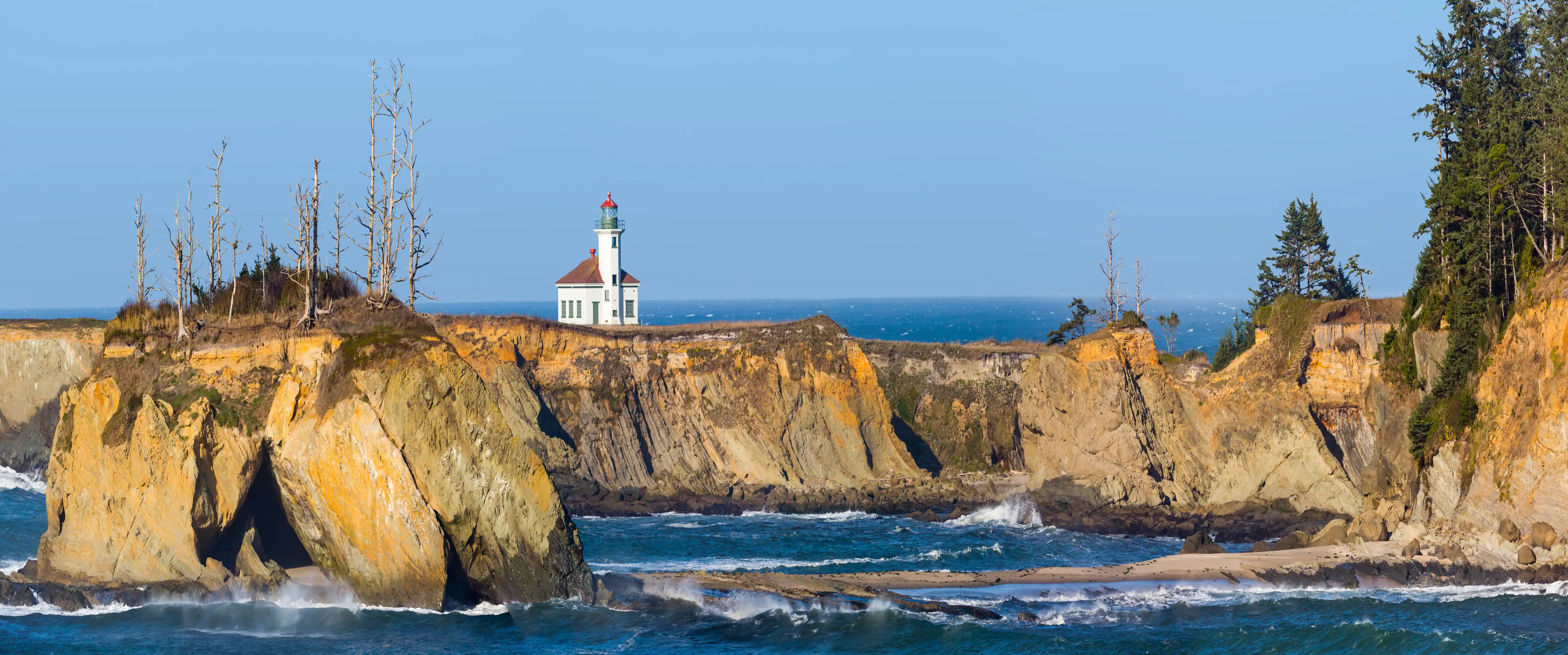
Empire sits along the Cape Arago corridor and carries a genuine fishing-village texture that other parts of the city have lost. The housing mix runs from modest bungalows to bay-view properties, and access to Shore Acres, Sunset Bay, and Cape Arago State Parks is as easy as it gets from any residential address in Coos Bay. Buyers who want to feel close to the water and the working-coast character — without paying North Bend prices — often land here.
Best for: Nature Value
Mingus Park
The neighborhood surrounding Mingus Park anchors the quieter residential middle of the city. The park itself — with its Japanese garden, pond, and walking paths — gives this area a calm that's harder to find in the denser commercial zones. Families with school-age children make up a good share of buyers here.
Best for: Families Quiet
Marshfield Hill
Marshfield Hill sits above the bay and delivers the kind of views that photos don't quite capture until you're standing in the yard. It draws a mix of families and people closer to retirement who want a close-knit, quieter block within a short drive of downtown services. The elevation also keeps it out of the flood zones that affect lower-lying addresses.
Best for: Views Quiet
Downtown Coos Bay / Marshfield District
Downtown is where the Egyptian Theatre, the Coos Bay Boardwalk, and the Coos Art Museum sit within a walkable commercial core. The housing stock here is largely pre-1960, which means historic character is real — and so is deferred maintenance. Outdated electrical panels, aging rooflines, and older plumbing are common findings on inspections in this part of the city. Budget accordingly, and do not skip a thorough inspection because the price looks modest.
Best for: Walkable
Eastside
Eastside is where the flood zone conversation becomes most important. Lower-lying areas near the bay and port corridor can carry FEMA flood-zone designations that require flood insurance, adding meaningfully to annual carrying costs. The addresses can look attractive on price, and some buyers move quickly without checking. I always pull the FEMA map before we get serious about anything in this part of the city.
Best for: Value — with careful due diligence on flood exposure
Blossom Gulch
Blossom Gulch is family-friendly and green, with a mix of older homes and newer construction tucked into the hillside topography southeast of downtown. It has a neighborhood feel that's harder to name precisely — quieter blocks, more mature trees, a pace that works well for people who want residential life without the waterfront exposure risk.
Best for: Families Privacy
Airport Heights and Green Acres
These two neighborhoods serve buyers who want functional residential life at accessible price points without strong neighborhood identity pulling them one direction. Green Acres in particular tends to attract first-time buyers who are working within a budget and want to get into the market without the complications of the older downtown inventory.
Best for: First-Time Value

Jobs, Economy, and the Remote Work Reality
Bay Area Hospital is the economic anchor of this city — the largest employer on Oregon's south coast, located inside city limits. The 2025 economic impact study commissioned by the Hospital Association of Oregon put south-coast hospitals at $555 million in regional economic activity across Coos, Curry, and Douglas counties. For buyers in healthcare, the local job picture is genuinely solid.
The hospital also reported its first month of positive operating income in December 2025, after nearly two years of losses, and has remained in positive operating territory since. That matters for the long-term stability of the city's largest employer, and it's something I'm watching closely.
Beyond healthcare, the employer list is shorter than buyers sometimes expect. Coos Bay School District, Coos County, Southwestern Oregon Community College, and the City of Coos Bay round out the major anchors. Port and service industries add employment, but job-hunting outside those sectors can be genuinely challenging.
Remote work has become many residents' practical answer to the limited local job base. A meaningful share of the buyers I work with here have a location-independent income before they arrive, or are planning on it. If that's not your situation, I'll be direct: figure out your income strategy before you start touring homes, not after. The lifestyle is real and the price points are real, but the local labor market is narrower than most Oregon cities of comparable size.
The commute reality for anyone needing to reach Eugene is significant. The drive runs about 110 minutes to Eugene. This is not a commuter suburb of anywhere. Buyers who are planning on occasional trips for medical specialists, professional services, or a major shopping run should build that time into their mental model of daily life here.
Looking to buy in Coos Bay? Estimate your payment.
Enter your numbers to see an estimated monthly mortgage payment.
Estimate only. Excludes HOA fees and mortgage insurance. The interest rate above is a starting point, not a quoted rate — replace it with your own to see real numbers. Insurance is a flat placeholder, not a Coos Bay quote.
Schools in Coos Bay: What the State Data Shows
Coos Bay School District 9 serves this city, with 2,923 students enrolled in 2025-26. That's a smaller district than what buyers moving from the Willamette Valley or Portland Metro are typically used to, and the scale has real implications for program breadth at the secondary level.
On 2024-25 state assessments, 23.6% of students reached math proficiency and 35.1% reached reading proficiency. According to figures the Oregon Department of Education publishes, these scores reflect challenges common to many rural coastal districts. I share them not to discourage, but because buyers with school-age children deserve the actual numbers rather than a soft version of them.
The district offers active OSAA athletics programs with a community following that fills the stands on Friday nights. That texture matters to a lot of families, and it's real.
My standard advice to anyone moving to Coos Bay with children in school: do your own due diligence. Confirm the assigned school for whatever specific address you're considering directly with the district, and review the data the Oregon Department of Education publishes yourself. School boundaries can produce different assignments than buyers assume from a neighborhood's name, and individual schools within the district can vary considerably.
Coos Bay vs Nearby Cities
| City | Typical Home Price | Typical Rent | Cost vs Coos Bay |
|---|---|---|---|
| Coos Bay (this city) | $330,015 | $1,603/mo | — |
| North Bend | $362,945 | $1,533/mo | 10% higher |
| Charleston | $340,000 | $1,300/mo | 3% higher |
| Bandon | $488,995 | $1,400/mo | 48% higher |
Source — home prices: Zillow ZHVI, July 2026; rent: Zillow ZORI, July 2026. Nearby-city figures are the same series, refreshed together.
North Bend is the city that shares a border and a bay with Coos Bay, and buyers genuinely ask me which one they should be shopping in. The honest answer is that North Bend runs somewhat higher on price, and for that premium you get a slightly tighter residential feel in some corridors and proximity to the North Bend municipal airport. The lifestyle difference is narrower than the municipal boundary suggests — these two cities function as one metro, and I work both sides of that line regularly.
Charleston is the fishing village south of Coos Bay proper, anchored by Charleston Marina. Prices there run about the same as Coos Bay. What you're buying in Charleston is proximity to Cape Arago State Park, Sunset Bay, and Shore Acres — and a more intentionally slow pace. The trade is convenience: Charleston is further from anything resembling a commercial strip, and errands that feel quick from Coos Bay become a longer loop from Charleston.
Bandon is a different conversation entirely. It sits noticeably higher in price, partly because of Bandon Dunes and the buyer pool it attracts, partly because it has developed a more polished commercial identity than Coos Bay. Buyers who ask me about Bandon versus Coos Bay are usually weighing lifestyle and budget simultaneously — Coos Bay is the more affordable entry, Bandon is the more curated experience.
Coquille and Reedsport are smaller communities that serve buyers who want an even quieter pace and are comfortable with the service and employment trade-offs that come with a smaller city. Both sit below Coos Bay on price and below it on services. I work with buyers in both, but the buyer who ends up happiest there has already made peace with the remote-work or retirement income picture and isn't expecting a city's amenity base.
Weekends, Local Character, and What Life Actually Looks Like
Coos Bay is the birthplace of Steve Prefontaine, and the city takes that seriously. The annual Prefontaine Memorial Run, part of the Bay Area Fun Festival, draws runners and visitors from across the country. If you move here, that race becomes part of the civic calendar in a way that feels organic rather than manufactured.
The Egyptian Theatre — built in 1925, on the National Register of Historic Places, still housing one of the only remaining operable Wurlitzer Organs in Oregon — celebrated its 100th anniversary in November 2025. It's the kind of institution that gives a city of 15,801 people a cultural anchor you wouldn't expect. It was also upgraded with a 4K projection system, so it functions as a real cinema and not just a historic curiosity.
Outdoor life here is the genuine selling point that no spreadsheet captures. Shore Acres State Park, Sunset Bay State Park, and Cape Arago State Park along OR-540 are world-class on a quiet weekday. The Oregon Dunes National Recreation Area — the largest coastal dune system in North America — is the gateway for hiking, kayaking, crabbing, and dune buggy riding. South Slough National Estuarine Research Reserve adds a quieter natural counterpart to the more dramatic headlands.
For food and coffee, the verified local spots I point buyers toward are gathered here: The Boat Fish & Chips, SharkBite's Seafood Cafe, Shake N Burger Coos Bay, Coach House Restaurant & Lounge, and Blue Heron Bistro for German-Bavarian cuisine represent the sit-down and casual dining side. For coffee, So It Goes Coffeehouse, Espresso Mill & Bakery, Kaffe 101, Cape Arago Cafe & Espresso, and Foggy's Cafe are the spots locals actually use. This is not a city with a dense restaurant row, but what's here is real and local.
The Coos Bay Boardwalk and Coos Art Museum give downtown its civic backbone. Southwestern Oregon Community College adds an educational and cultural layer that's worth naming — it's not just a job-training center but a genuine community resource. The whole package adds up to a city that earns loyalty from people who give it time, even if it doesn't dazzle on first drive-through.

Final Advice From Gary
Quick Takeaways & FAQs
✅ Coos Bay is the largest city on the Oregon Coast and offers the most accessible price point of any community of its size along the Oregon coast.
⚠️ Property crime runs meaningfully above state and national averages, and flood zone exposure in lower-lying neighborhoods adds a carrying-cost risk that buyers must check before making an offer.
📍 The Egyptian Theatre — built in 1925 and still housing one of Oregon's only operable Wurlitzer Organs — celebrated its 100th anniversary in 2025 and remains the cultural anchor of downtown.
What is the commute like from Coos Bay to Eugene or other Oregon cities?
What do the schools look like in Coos Bay?
Which neighborhood in Coos Bay is the right fit for my family?
What does $330,000 actually buy in Coos Bay?
What surprises buyers most after they've been in Coos Bay for six months?
How fast do homes sell in Coos Bay, and how competitive is the market?
What's the main thing I should sort out before deciding between Coos Bay and somewhere like North Bend or Bandon?
What are the most important things to check before making an offer on a Coos Bay home?
Moving to Oregon?
Tell us what you need help with and we'll connect you with local resources.
