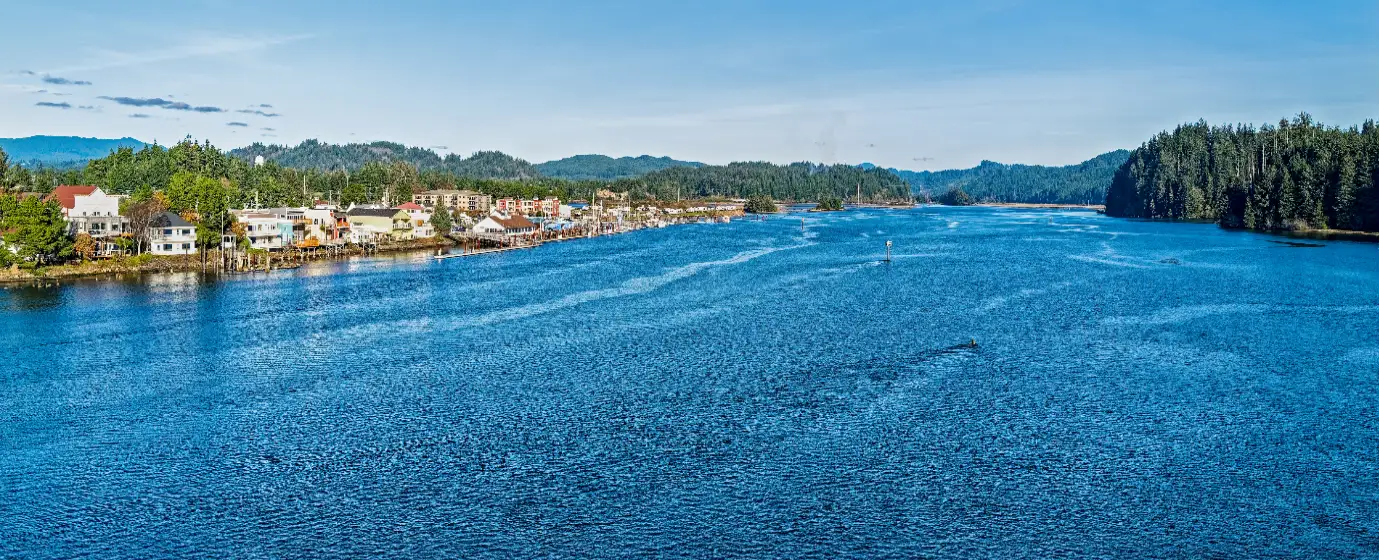
What Is Living in Florence, Oregon Like?
Everyone who moves to Florence from inland Oregon says the same thing around month three: they underestimated how much the fog is just part of the deal. With 160 sunny days a year and roughly 75 inches of annual rainfall, this is a genuinely coastal climate — dramatic, green, and frequently overcast. Florence sits at the mouth of the Siuslaw River where it meets the Pacific, roughly equidistant between Newport to the north and Coos Bay to the south on US-101. The 1936 Art Deco Siuslaw River Bridge is the city's unofficial welcome sign, and what it welcomes you into is a small city — 9,480 people — built around the ocean, the dunes, and an increasingly notable retirement scene.
The economy here tells an interesting story. Tourism-related industries account for 26% of local employment, making it the single largest employment sector in the city. The Siuslaw School District, a major regional health system, the city government, and Three Rivers Casino Resort round out the anchor employers. Retail trade and accommodation and food services are the sectors where most residents actually work, which means that income levels — median household income runs at $53,333 — reflect a service-oriented local economy. Roughly 43% of Florence residents are 65 or older, nearly double Lane County's share, and that demographic reality shapes everything from what gets built to what restaurants survive.
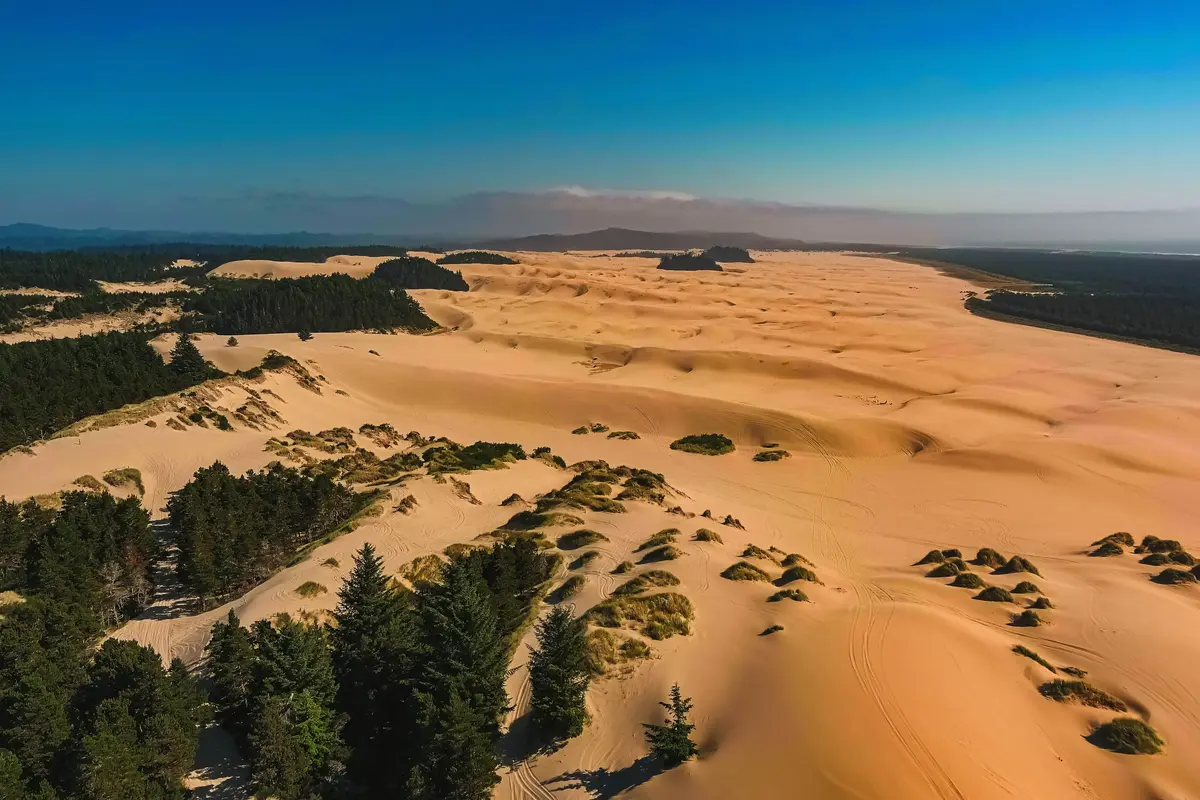
On cost of living, Florence sits at a price point that reads as genuinely attainable compared to most of the Willamette Valley and the inner coast. The Siuslaw School District holds a B- rating, according to Niche, which makes it a reasonable choice for families with school-age children who prioritize outdoor lifestyle and affordability over competitive academic rankings. More than 200 acres of parkland spread across 24 sites, the Oregon Dunes National Recreation Area runs approximately 40 miles south from the city, and Cleawox Lake at Jessie M. Honeyman Memorial State Park sits just minutes away — all of which means that daily life here has a texture that no inland city at this price point can match.
Whether you are weighing a retirement move, considering remote work from the coast, or simply trying to understand what it costs to live somewhere with lighthouses and sea lions visible on a Tuesday afternoon, the sections below break down Florence's neighborhoods, housing market, commute realities, schools, local favorites, and what life here actually looks like once the novelty of the dunes wears off.
Florence at a Glance
Looking to buy in Florence? Estimate your payment.
Enter your numbers to see an estimated monthly mortgage payment.
Estimate only. Excludes HOA fees and mortgage insurance. The interest rate above is a starting point, not a quoted rate — replace it with your own to see real numbers. Insurance is a flat placeholder, not a Florence quote.
Why Are People Moving to Florence?
The short version: people move to Florence for the same reason they always have — the coast — but the reasons they stay are more practical than that. Retirement is the dominant force. With approximately 43% of residents aged 65 or older, Florence has built a retirement infrastructure that most coastal towns its size simply cannot match. A regional hospital sits within city limits, there is a senior center and an endowed public library, and a fitness center with pool serves an active older population. For someone leaving the Bay Area or the Portland suburbs, that combination of medical access and coastal scenery at a price well below either of those markets is a compelling case.
The Remote-Work Cohort
Remote workers from Eugene, the Bay Area, and the Willamette Valley increasingly show up in this market. OR-126 connects Florence to Eugene, and the drive is real — about 60 minutes to Eugene in normal conditions — but for someone who commutes twice a week rather than five, that math changes. The ability to own a home near the ocean, with ocean air and dune access, at a price point noticeably below Eugene, is what draws this group.
The Tourism Economy's Double Edge
Tourism employs a quarter of the city, which means the local job market skews toward service work, hospitality, and retail. The highest-paying local sector is Professional, Scientific and Technical Services — but there are far fewer of those positions. If you are moving here expecting to find work locally, be honest about what that means: many people who settle in Florence either work remotely, commute to Eugene, or take positions in healthcare, education, or the casino. The Siuslaw School District, city government, and Three Rivers Casino Resort are the most stable local anchors alongside the health system.
The Rhododendron Festival has run every May since 1908 — the 2026 edition was the 119th — drawing thousands of visitors to Historic Old Town and reminding full-time residents that their city is also someone else's weekend destination. That seasonal pulse matters when you are deciding where to live: summer weekends on US-101 are a different animal than a quiet February morning.
What Daily Life Feels Like in Florence
The morning in Florence usually starts with the question of whether there is fog on the bridge. The Siuslaw River Bridge frames the downtown approach, and on most mornings the whole scene — water, bridge, Old Town — is wrapped in low coastal overcast that burns off by midday in summer and sometimes doesn't in winter. People who thrive here make peace with that rhythm. People who don't, tend to be back in Eugene within a year.
A Town Built Around Slower Rhythms
Daily errands are car-dependent. The average local commute within the city is about 15 minutes, and most households own two vehicles, which reflects a town where everything is spread along the US-101 corridor rather than concentrated in a walkable core. Old Town Florence is genuinely walkable once you are in it — the boardwalk, the river, the cluster of shops and restaurants all sit within easy strolling distance of each other — but reaching Old Town from most residential neighborhoods means a short drive.
The Florence Farmers Market runs through the warm months and is genuinely community-oriented rather than a tourist attraction. The Florence Events Center anchors the indoor cultural calendar, hosting art shows, craft fairs, and the Winter Music Festival, which draws bluegrass, Americana, and folk musicians and is recognized well beyond the coast. These are the recurring reasons residents show up for their city.
What Surprises People After Six Months
What catches newcomers off guard is how much Florence functions as a regional service hub for a very large, very rural stretch of coast. People come from outlying rural communities and points between for groceries, medical appointments, and a night out. That gives the city a community weight that its population of 9,480 would not otherwise suggest, but it also means that the traffic on US-101 during summer tourist season is genuinely disruptive — not just inconvenient, but the kind of gridlock that makes longtime residents plan their errands around it.
The Siuslaw School District serves 1,178 students enrolled in 2025-26 across a small, tight-knit set of schools. Families with school-age children are a minority here — the median age skews old — but the district's OSAA athletics programs and small class environments are things parents consistently mention. For a full look at school performance, see the Florence schools page.
The Florence Housing Market Right Now
Florence's typical home price stood at $452,369 as of July 2026, based on the Zillow Home Value Index. That figure puts it at a level that feels attainable compared to Eugene and dramatically below Portland or the Bay Area — but it is not the bargain-coast town that some buyers imagine before they start searching in earnest.
What the Market Looks Like Now
Mid-2026 brought a shift in market conditions. Active listings increased and well-priced homes still sell, but buyers have more time to make decisions and less pressure from competing offers than the market offered two or three years ago. Florence is not the frenzied market of the early pandemic years, and it is not a market where every offer triggers a bidding war. For buyers, that means the ability to be deliberate — a meaningful change from the recent past.
Some areas and property types command a premium above the city-wide figure — oceanfront and river-view properties in particular sit in a different category — while older manufactured homes and inland neighborhoods represent the accessible entry point. For a full breakdown of what different neighborhoods cost and who they suit, see the Florence neighborhoods guide.
What the Market Is Not
Florence is not a speculative investment market. The retirement-heavy demographic means turnover is driven by life stages rather than appreciation chasing, and the limited employment base puts a ceiling on how far prices can move independent of broader coastal demand. Oregon also has no sales tax, and the effective property tax rate of 0.86% is on the lower end for an Oregon coastal city. For full context on taxes and living costs, the cost of living page has the complete breakdown.
Florence Neighborhoods
Florence has several distinct areas — each with its own character and appeal. Here’s a breakdown to help you narrow down where to focus your home search.
🏡 Old Town Florence
The historic core of the city, where the 1936 Siuslaw River Bridge frames a walkable boardwalk lined with independent shops and restaurants; it suits buyers who want the most walkable daily life Florence offers, with the river and Old Town amenities genuinely within reach on foot.
🏠 Florentine Estates
A gated 55+ resident-owned community that draws active retirees looking for ownership stability and a like-minded community; the housing stock is modest and the social culture is oriented around neighbors who chose this place deliberately.
🌳 Three Mile Prairie
A residential area east of the commercial corridor with a quiet, suburban character that suits families and buyers who want more space and a lower profile than Old Town without sacrificing proximity to US-101's services.
🏘 Munsel Lake / Munsel Creek Estates
A lake-adjacent community where the natural setting — water, trees, and distance from the highway — draws buyers who want a rural feel inside city limits; the tradeoff is that daily errands require a drive to the main commercial strip.
🏔 Florence West
Largely residential neighborhoods on the western side of the city closer to ocean access, drawing buyers who prioritize proximity to the coast and the dunes over walkability to Old Town.
🌆 Heceta Beach
A coastal residential area south of Old Town where the namesake lighthouse and state scenic viewpoint anchor the landscape; it suits buyers drawn by ocean views and access to the dunes corridor, with the understanding that services require a short drive north.
Pros & Cons of Living in Florence
The Pros
- Dramatic coastal scenery with dunes, lakes, and lighthouses right in town
- Walkable, historic Old Town waterfront district
- Relatively low violent crime
- Popular, welcoming retirement community
The Cons
- Long, damp, foggy winters typical of the central coast
- Below-average school test scores and graduation rate
- Limited local job market and higher cost of living than inland Oregon towns
Getting Around & Commuting in Florence
Florence is a car city. The two routes that matter are US-101, which runs north-south along the coast and is the commercial spine of the city, and OR-126, which heads east through the Coast Range to Eugene. Almost everything that happens in Florence happens along or just off US-101.
The Eugene Commute
The drive to Eugene via OR-126 takes about 60 minutes under normal conditions. That road is a winding, scenic mountain pass — beautiful on a clear day, demanding in winter fog or rain, and non-negotiable if you need to get east. Regional transit options do not make that trip practical for a 9-to-5 schedule. If you are considering Florence as a base for a hybrid arrangement that sends you to Eugene two or three days a week, that commute is real and adds up. People do it; just go in clear-eyed.
Getting Around Town
Within Florence, the average commute is roughly 15 minutes by car. Cycling works well for recreation and some short trips on dedicated bike-friendly routes, though the terrain and the highway character of US-101 mean most day-to-day movement is by car. A typical Florence household owns two vehicles, which is the practical baseline for a family here.
The Seasonal Reality
Summer tourist traffic on US-101 is the single most disruptive commute factor in Florence. The highway through Old Town and south toward the dunes can back up significantly during peak summer weekends, and residents learn to time errands accordingly. It is not a permanent condition — fall and winter return the road to something more manageable — but newcomers consistently underestimate how much the tourist season affects daily movement.
Eugene Airport (EUG) sits roughly 60 miles east via OR-126 and handles regional and national flights. For anything requiring air travel, that drive is your connection to the broader network.
Who the Commute Math Works For
| Buyer Type | Commute Reality | Best For |
|---|---|---|
| Fully remote worker | No regional commute; local errands by car, ~15 min average | Nature Quiet |
| Hybrid Eugene commuter (2–3 days/week) | about 60 minutes to Eugene each way via OR-126; workable but real | Commuter |
| Daily Eugene commuter (5 days/week) | about 60 minutes to Eugene each way; 2+ hours daily; most find this unsustainable long-term | Commuter |
| Local employment (hospitality, healthcare, retail) | Short in-city drives; 15-min average; tourist season traffic affects timing | Value Families |
| Retiree / no commute | Errands by car within Florence; Eugene for specialty needs | Quiet Nature |
| Seasonal/vacation homeowner | Drive-in from Eugene or Portland on weekends; US-101 congests in summer | Views |
The honest answer for daily Eugene commuters is that most do not sustain the full five-day-a-week drive indefinitely — something worth stress-testing before you make an offer.
Schools in Florence
Families relocating to Florence have public, private, and higher-education options nearby. Here’s a quick overview.
🎓 School District
Siuslaw School District 97J serves K–12 students across Florence and the surrounding area. Rated B- (source: Niche.com).
🏆 Graduation Rate
The 4-year high-school graduation rate here is approximately 76.2%.
📚 Higher Education
Oregon’s public universities — the University of Oregon, Oregon State University, and Portland State University — offer four-year degrees statewide, with a network of 17 community colleges providing two-year and workforce programs.
🌐 Online Learning
Oregon State University Ecampus and Portland State University Online offer fully accredited online degrees for remote learners across the state.
Safety in Florence
A quick look at how Florence compares on the numbers that matter most when weighing a neighborhood or a move.
🛡 Violent Crime
Approximately 1 per 1,000 residents.
🔒 Property Crime
Approximately 21.3 per 1,000 residents.
Compared to the most recent national figures from the Bureau of Justice Statistics (2024), Florence’s violent crime is below the national average (about 3.7 per 1,000), and property crime is above the national average (about 18.4 per 1,000).
Against Oregon as a whole, Florence’s violent crime is roughly a third of the state average, and property crime is somewhat below the state average (Bureau of Justice Statistics, Crime Known to Law Enforcement, 2024 (tables 2 and 3)).
Crime rates can vary a lot within a single city, so the citywide numbers above are only a starting point. Some neighborhoods in Florence run well below these averages, while others run higher — the kind of block-by-block detail that matters most when you’re actually choosing where to live. The full guide below breaks it down neighborhood by neighborhood.
Working in Florence
Florence’s largest employers span several industries — here are some of the anchors of the local job market.
🎓 Siuslaw School District
Education
🏥 PeaceHealth Peace Harbor Medical Center
Healthcare
🏛 City of Florence
Municipal government
🏥 Three Rivers Casino Resort
Hospitality
💼 Heceta Head Lighthouse
Tourism
Retiring in Florence
Florence draws retirees for its balance of amenities, outdoor access, and cost. Here’s what to weigh.
🌤 Climate
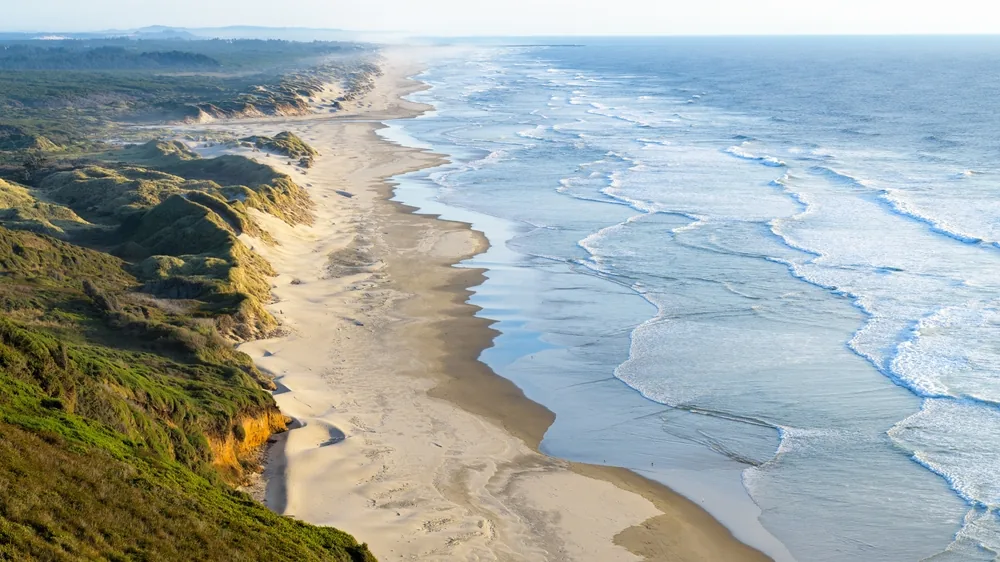
Florence's climate is mild year-round, with temperatures rarely dropping below freezing or rising above the low 70s. The trade-off is moisture: roughly 75 inches of annual rainfall and 160 sunny days a year means significant overcast, especially November through March. Retirees who embrace gray skies in exchange for mild temperatures and green scenery find it comfortable; those who need sun tend to struggle with winter.
🍴 Lifestyle
The outdoor options — the dunes, Cleawox Lake, the Siuslaw waterfront, Heceta Head — make for an active retirement at any pace. The Florence Events Center hosts a Winter Music Festival, art shows, and community events throughout the year. Old Town's independent dining and coffee scene is small but genuine, and the Florence Farmers Market runs through the warmer months.
🏚 55+ Communities
Florentine Estates is a gated 55+ resident-owned community that anchors the active-adult housing market in Florence. Smaller options including B & E Wayside Mobile and RV Park, Bucklake Mobile Home Park, Lakeshore Trailer Park, and Mercer Lake Resort serve the broader retiree population. These are modest, community-oriented properties — not large amenity-heavy resort developments — which suits the character of the city.
✈ Getting Around
Florence is a car-dependent city; a vehicle is necessary for daily life and medical appointments. Within Florence, errands are close — the average in-city drive is about 15 minutes. Eugene Airport (EUG) is approximately 60 miles east via OR-126, making it the practical gateway for air travel and for specialist medical care not available locally.
🏛 Oregon Taxes for Retirees — What to Know
- Social Security is not taxed — Oregon does not tax Social Security or Railroad Retirement benefits. Any amount included in your federal adjusted gross income is subtracted back out on the Oregon return.
- But other retirement income IS taxed — This is the trade-off that surprises people moving from Washington or Texas. Pension distributions and 401(k)/IRA withdrawals are taxed as ordinary income at Oregon’s regular rates — there is no blanket retirement-income exclusion.
- Graduated income tax — Oregon has four brackets — 4.75%, 6.75%, 8.75% and 9.9%. The 4.75% rate covers the first $10,000 of taxable income for a single filer ($20,000 filing jointly); the 8.75% rate starts at $125,000 ($250,000 jointly); and the top 9.9% rate applies above $250,000 ($500,000 jointly).
- No sales tax — Oregon levies no general sales tax.
- Property taxes, with senior deferral — Oregon’s Senior and Disabled Property Tax Deferral lets qualifying homeowners have the state pay their county property taxes, with a lien recorded against the home. The 2026 household income limit is $70,000, and deferred balances accrue 6% simple interest — it defers the bill rather than forgiving it.
- Estate tax — the one to plan for — Oregon has its own estate tax with a $1 million filing threshold — far below the federal exemption, and NOT indexed for inflation, so it reaches more estates every year in real terms. Retirement accounts and a long-held home count toward the taxable estate, so estates that feel modest can cross the line without the owner expecting it.
- No inheritance tax — Oregon has no separate inheritance tax and no gift tax.
Tax laws change frequently and individual situations vary. This is general information, not tax advice — always consult a qualified Oregon tax professional or CPA for personalized retirement tax planning.
Weekends & Local Favorites in Florence
The outdoor life here is legitimately extraordinary. The Oregon Dunes National Recreation Area begins at the city's doorstep and stretches roughly 40 miles south, offering hiking, OHV riding, birding, and paddling across a landscape that looks nothing like the rest of Oregon. Cleawox Lake at Jessie M. Honeyman Memorial State Park is the local swimming and kayaking anchor, ringed by old-growth dunes that make even a Saturday-afternoon visit feel like you have found somewhere unusual. Heceta Head Lighthouse State Scenic Viewpoint and Sea Lion Caves are technically tourist attractions, but residents visit them too — a habit that most people who have not lived near landmarks never quite adopt until they do.
Old Town and the Siuslaw Waterfront
The Siuslaw River waterfront boardwalk is where Florence gathers. It connects Old Town's shops, restaurants, and the bay front in a way that genuinely rewards walking, and in May — when the rhododendrons bloom and the Rhododendron Festival fills the streets — Old Town becomes the most alive the city gets all year. The festival has run since 1908 and carries a community depth that distinguishes it from a purely tourist event.
The Florence Farmers Market brings local produce, crafts, and community energy through the warmer months. The Florence Events Center handles the rest of the cultural calendar — art shows, craft fairs, and the Winter Music Festival, which draws a serious following for its bluegrass, Americana, and folk programming.
Where to Eat and Drink
The dining scene in Florence punches above its size. Mo's Seafood and Chowder is the Oregon Coast institution that needs no introduction — its chowder is the benchmark, and the Florence location sits on the waterfront where it belongs. Waterfront Depot Restaurant occupies a converted rail depot on the river and is the kind of place that earns regular status quickly. 1285 Restobar brings a more contemporary wine-bar sensibility to Old Town. Little Brown Hen Cafe handles the breakfast and brunch crowd with local loyalty. Three Rivers Casino Resort, one of the city's major employers, also operates one of the more complete entertainment and dining complexes in the region.
For coffee, River Roasters is the locally-owned anchor, roasting its own beans and drawing a genuine regulars crowd. Fresh Harvest Cafe and Old Town Coffee Company both serve as morning gathering points. The Dunes Cafe and Lovejoy's Restaurant and Tea Room round out the independent scene — Lovejoy's in particular suits the city's retiree-heavy demographic with a full tea service that feels genuinely at home here.
What you will not find in Florence: a broad selection of chain retail. A serious shopping run means heading east. That is the honest trade — world-class outdoor access and a close, walkable Old Town, in exchange for limited retail depth and the OR-126 drive whenever you need something the local shops do not carry.
Local favorites in Florence
Restaurants
- Three Rivers Casino Resort
- Mo's Seafood & Chowder - Florence
- Little Brown Hen Cafe
- Waterfront Depot Restaurant
- 1285 Restobar
Outdoors
- Oregon Dunes National Recreation Area
- Cleawox Lake at Jessie M. Honeyman Memorial State Park
- Heceta Head Lighthouse State Scenic Viewpoint
- Sea Lion Caves
- Siuslaw River waterfront boardwalk
Coffee
- Fresh Harvest Cafe
- River Roasters
- The Dunes Cafe
- Lovejoy's Restaurant & Tea Room
- Old Town Coffee Company
Farmers Markets
- Florence Farmers Market
Top Things Locals Say About Florence
The best intel about a city comes from the people who actually live there. Here’s what Florence residents say when newcomers ask the questions everyone’s thinking.
“I knew the commute to Eugene would be real, but I didn't fully appreciate how OR-126 through the Coast Range feels in November rain versus a July afternoon — those are genuinely different drives. What I didn't expect at all was how much the town closes ranks in winter: the tourist traffic disappears, Old Town feels like yours again, and you start to understand why people who've lived here for decades never consider leaving.”
— Recent Florence home buyer
“What's the most surprising thing about living in Florence?”
How much of the town's social life anchors around the waterfront boardwalk and Old Town even in the off-season. You assume a tourist town goes quiet when the tourists leave, but the Florence Events Center, the local restaurants, and the river walk keep drawing people. The summer tourist crush on US-101 is genuinely frustrating — but the reward is that October through April, this place feels like it actually belongs to the people who live here.
“What do locals love most about Florence?”
The access. Cleawox Lake is a short drive for a swim or a kayak. The dunes are right there. Heceta Head Lighthouse is something you stop appreciating for a while and then remember to visit again and are immediately glad you did. The Rhododendron Festival every May is the one weekend the whole community shows up in the same place — it has been running since 1908 and it still manages to feel genuinely local rather than just touristy.
“What should newcomers to Florence know?”
Plan your errands around tourist season on US-101 — the highway through Old Town and south toward the dunes backs up badly on summer weekends, and locals learn to run their errands early or wait it out. Also: the fog is not a quirk, it is the weather. If you are coming from somewhere sunny and expecting coast-adjacent Oregon to be similar, give yourself a full winter before deciding. Most people who stay have genuinely made peace with overcast skies in exchange for everything else the place offers.
“How much do you need a car in Florence?”
A car is essential for daily life here. Most errands require a drive, and even within the city the distances between residential neighborhoods and the commercial corridor mean walking is practical only if you live in or very close to Old Town. The average in-city commute is about 15 minutes by car. Cycling works well for recreation and some short trips, but a household without a car would find Florence genuinely difficult for grocery runs and appointments.
Cities Near Florence
Other communities near Florence worth a look — each with its own character and price point.
| City | Distance | Best For | Vibe | Median Rent | Median Buy |
|---|---|---|---|---|---|
| Reedsport | 20 mi | Budget buyers and fishing enthusiasts | Small, working coast town | $1,100 | $330,394 |
| Mapleton | 15 mi | Rural privacy on the river | Quiet, forested, very small | $1,300 | $350,000 |
| Waldport | 25 mi | Retirees seeking quieter coast | Low-key, bay-front, peaceful | $1,900 | $420,000 |
More Helpful Guides for Florence
Going deeper on Florence? Our blog series covers everything from first-time buying to retiring here — explore the guides below.
Local Expert Takeaway: Florence rewards people who move here knowing what they are trading. The outdoor access — Heceta Head, the dunes, Cleawox Lake, the Siuslaw boardwalk — is the real thing, not a marketing claim. But OR-126 to Eugene is genuinely about 60 minutes each way, the local job market skews heavily toward service work, and the fog is not a seasonal accent — it is a weather pattern. The city's strength is that it has built real infrastructure for the life it offers: a regional hospital, an established arts calendar at the Florence Events Center, and a Main Street in Old Town that actually functions as one. If that life fits your situation, Florence is hard to beat at its price point on the Oregon Coast.
Quick Takeaways & FAQs
✅ Florence's typical home price of $452,369 (July 2026) sits noticeably below Eugene and dramatically below most California coastal markets, making it one of the more attainable places to own property on the Oregon Coast.
⚠️ The drive to Eugene via OR-126 is about 60 minutes each way — a real commute over a mountain pass with regional transit that does not serve the corridor on a schedule useful for regular commuters, which is the single most common reason people eventually leave.
📍 With approximately 43% of residents aged 65 or older, Florence is one of the most retiree-concentrated small cities on the Oregon Coast — a fact that shapes the local economy, housing stock, dining scene, and community calendar in ways that younger families should understand before moving.
What is the cost of living like in Florence, Oregon?
How far is Florence, Oregon from Eugene?
Is Florence, Oregon a good place to retire?
What are the schools like in Florence, Oregon?
What is the housing market like in Florence right now?
Helpful Links for Moving to Florence
Moving to Oregon?
Tell us what you need help with and we'll connect you with local resources.
