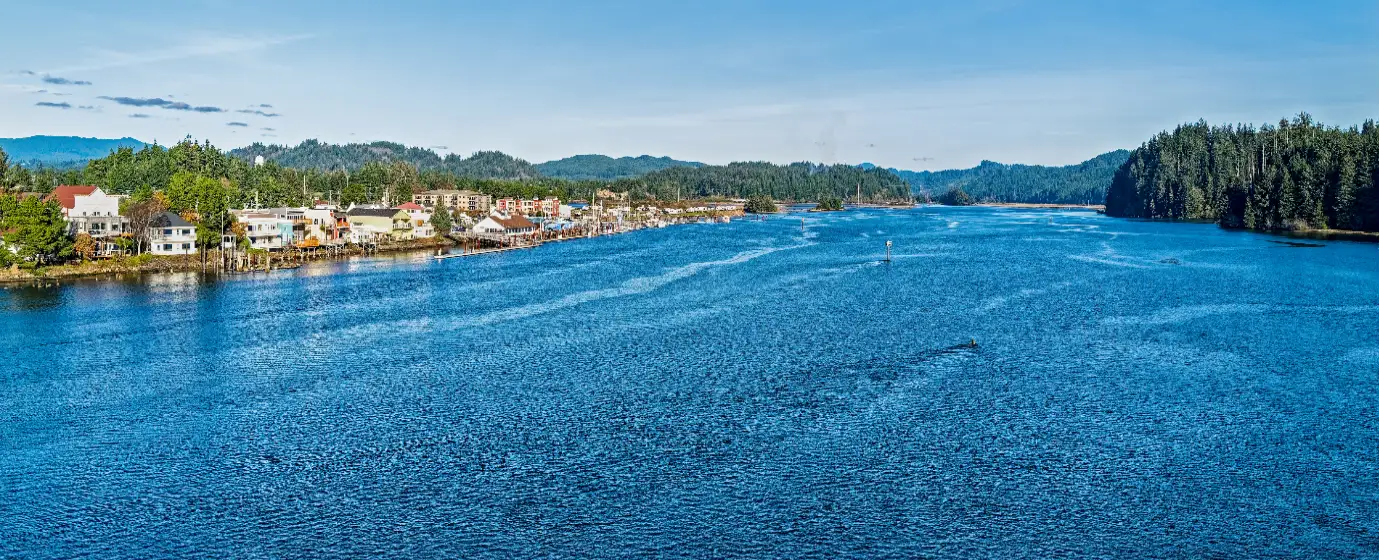
People who move to Florence expecting a quiet retirement town usually figure it out within the first week: this city of 9,480 is surrounded by one of the most extraordinary concentrations of outdoor recreation on the entire West Coast. North America's largest coastal dune system starts at the mouth of the Siuslaw River and runs south. Oregon's second-largest state park campground sits three miles from downtown. A lighthouse trail connects to the Oregon Coast Trail. None of this is incidental — it is the central fact of daily life here, and it is the reason most people moved here in the first place.
The outdoor infrastructure in Florence is not just about visiting destinations. Residents fish the Siuslaw River and Woahink Lake on a Tuesday morning. They sandboard the Oregon Dunes on a Saturday afternoon and walk the Darlingtonia Botanical Wayside — where a boardwalk winds through thousands of carnivorous cobra lily plants — on a Sunday without planning it. With 160 sunny days a year, the coast delivers less fog-bound misery than its reputation suggests, and the mild, wet winters keep the forests and fens impossibly green. The trade-off is that summer brings significant tourist traffic along US-101, and the parks that belong to Florence residents the rest of the year become crowded with visitors from June through August.
For anyone weighing the lifestyle calculus, the outdoor amenities here are genuinely hard to match at any price point. The typical home price is $452,369 (July 2026), which is noticeably lower than coastal markets farther north — see the full picture at cost of living in Florence. What that price buys you is proximity to a kind of recreation that, in most of the country, requires a plane ticket and a reservation months in advance. The Siuslaw River boardwalk is a ten-minute walk from Old Town. The Oregon Dunes are closer than most suburb-dwellers are to their nearest grocery store.
Whether you are researching a move or already under contract, the sections below break down Florence's signature parks, the Oregon Dunes, its waterways and fishing scene, and the beaches and wildlife experiences that make this stretch of coast genuinely different from anywhere else in the state.
Jessie M. Honeyman Memorial State Park and Cleawox Lake
Three miles south of downtown Florence, Jessie M. Honeyman Memorial State Park is the kind of place residents stop taking for granted only when a friend visits from out of town and loses their mind over it. Built by the Civilian Conservation Corps and listed on the National Register of Historic Places as a historic district, Honeyman is Oregon's second-largest state park campground, with more than 350 campsites covering tent, RV, yurt, and cabin configurations.
The park's two freshwater lakes — Cleawox Lake at Jessie M. Honeyman Memorial State Park and Woahink Lake — are its recreational core. Cleawox draws swimmers and paddlers to its clear, relatively warm water, sheltered from ocean wind by a ridge of forested dunes. Woahink has a public boat ramp and is large enough for motorized watercraft. The historic Honeyman Lodge by the Cleawox swim area rents pedal boats, paddle boards, and kayaks by the hour during the warmer months.
What makes Honeyman genuinely useful for residents — not just campers passing through — is that it borders the Oregon Dunes directly. You can swim in Cleawox, walk twenty minutes over a dune crest, and be standing on the Pacific Ocean. No shuttle, no second trailhead, no fee beyond the day-use parking cost. That loop is something Florence kids grow up doing, and it never gets old.
The Seasonal Reality
The honest friction: summer weekends at Honeyman are crowded. Campsites book out months ahead. The Cleawox swim area becomes genuinely packed in July and August, which is jarring if you moved here partly because of it. Residents learn quickly that weekday mornings — even in summer — return the park to something closer to what it feels like the rest of the year. By late September the campground quiets dramatically, and locals reclaim the lake almost entirely through the off-season.
| Feature | Details |
|---|---|
| Park type | Oregon State Park (CCC-built historic district) |
| Campsite count | More than 350 (tent, RV, yurt, cabin) |
| Freshwater lakes | Cleawox Lake (swimming, paddling), Woahink Lake (boating) |
| Dune access | Direct — trail from Cleawox to Pacific Ocean |
| Historic status | National Register of Historic Places |
| Distance from downtown Florence | ~3 miles south via US-101 |
Oregon Dunes National Recreation Area: 40 Miles of Managed Wildness
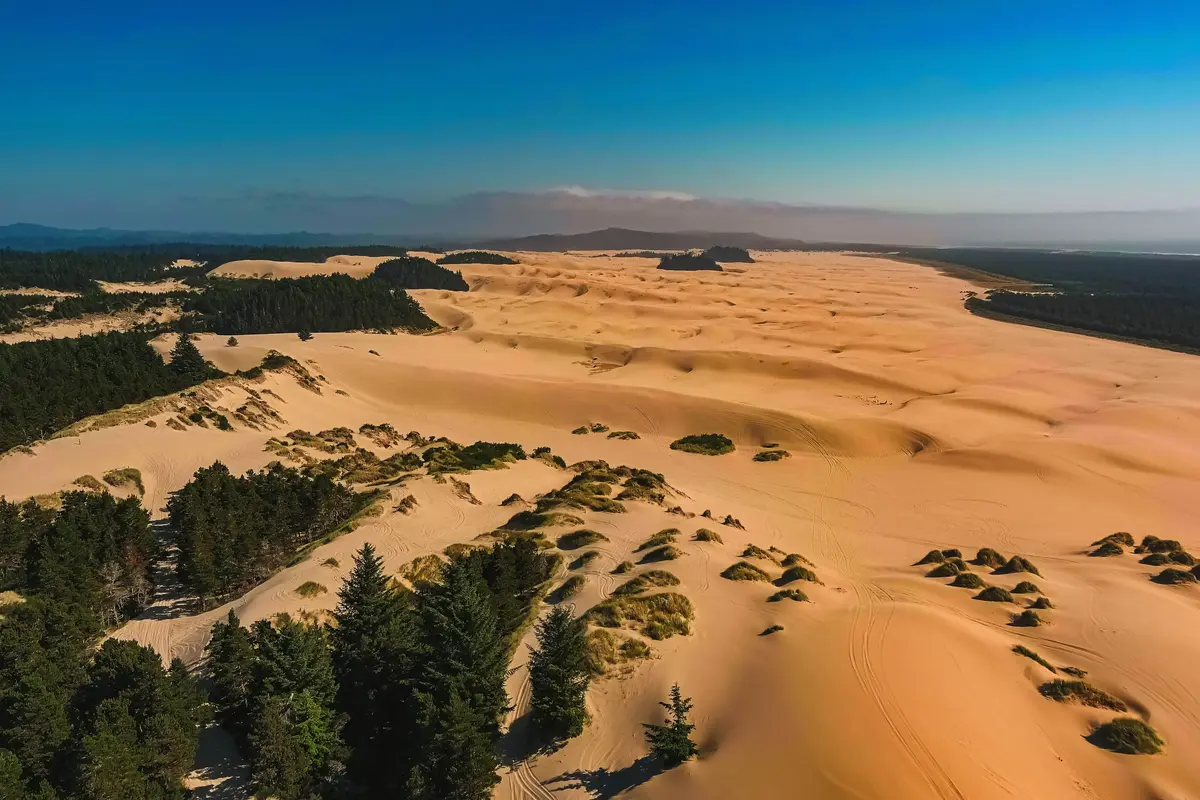
The Oregon Dunes National Recreation Area is not a park in the conventional sense. It is a 31,500-acre, 40-mile stretch of active coastal dunes — the largest dune system in North America — running from the mouth of the Siuslaw River south toward Coos Bay. Dunes reach heights of up to 500 feet. Living next to it as a Florence resident means having a world-class recreation landscape as a literal neighbor.
The range of what you can do inside the Oregon Dunes is unusually wide. Off-highway vehicle riding is permitted in designated OHV areas, drawing a loud, committed community of ATV and dirt-bike riders, particularly on summer weekends. Separate zones accommodate hikers, sandboarders, fat-tire cyclists, and horseback riders. The interior lakes and rivers — including the Siltcoos — are accessible by paddle. Fishing is productive on Siltcoos Lake and the connecting river system.
Who Uses the Dunes, and How
The OHV zones and the quiet-recreation zones sit close enough that the noise carries. If you moved to Florence imagining the dunes as a meditative hiking experience, the OHV activity will surprise you on your first visit to certain areas. The solution most residents land on is simple: know which trailheads lead to hike-only corridors, and go there. The landscape inside those zones — forested ridges alternating with open sand faces, with fog moving through — is as dramatic as anything the Oregon backcountry offers, without a long drive.
| Activity | Zone Type |
|---|---|
| OHV / ATV riding | Designated OHV areas only |
| Sandboarding | Multiple access points |
| Hiking (forest and dune terrain) | Non-motorized zones |
| Fat-tire biking | Non-motorized zones |
| Horseback riding | Designated trails |
| Paddling (Siltcoos River, inland lakes) | Water-access points within NRA |
| Fishing | Siltcoos Lake, river system |
South Jetty Beach, where the Siuslaw River meets the Pacific, gives residents a dual-access point: ocean on one side, dunes on the other, with both motorized and non-motorized zones clearly marked. It is also one of the more reliable kite-flying spots on the coast, where the consistent onshore breezes make kites almost self-sustaining.
The Siuslaw River, Coastal Lakes, and Waterfront Life
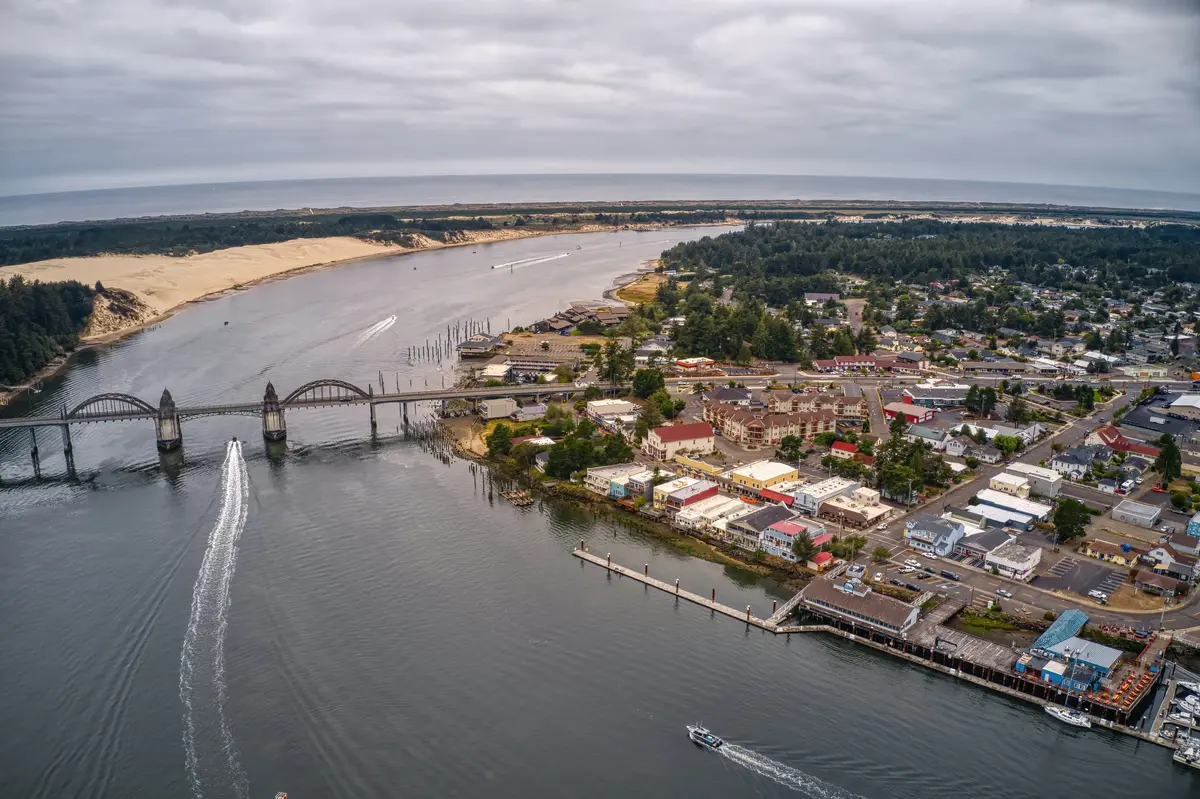
The Siuslaw River is not backdrop — it is infrastructure. The waterfront boardwalk in Historic Old Town Florence runs along its north bank, anchored by Gazebo Park and the Siuslaw Bridge Interpretive Park, where residents and visitors sit on benches watching fishing boats, harbor seals, and seabirds move through the channel. The Port of Siuslaw operates a marina and boat ramp in Old Town, giving residents direct water access for fishing trips, kayak launches, and canoe outings without leaving the city center.
Fishing on the Siuslaw and the central coast lakes is genuinely productive year-round. Salmon and trout draw anglers to the Siuslaw River and to Siltcoos and Woahink lakes. Dungeness crab is accessible in ocean waters offshore. Canoeing and kayaking on the Siltcoos River — which threads through the dune system — is one of the more quietly spectacular paddling routes on the Oregon Coast, combining forested river corridor with open dune flats.
What Locals Know About the Boardwalk
The Old Town boardwalk is where Florence's social life actually happens on a warm evening. The Florence Farmers Market runs there through the growing season. The Old Town neighborhood wraps around it, and the foot traffic from the boardwalk spills naturally into the restaurants and coffee shops along Bay Street. For new residents, it takes about a month to realize the boardwalk is not just a tourist draw — it is the town square.
Harbor seals are a constant presence in the channel, and spotting one from a boardwalk bench mid-week, with no one else around, is one of those Florence moments that residents mention when explaining why they stay. It sounds like promotional copy until it actually happens to you.
Looking to buy in Florence? Estimate your payment.
Enter your numbers to see an estimated monthly mortgage payment.
Estimate only. Excludes HOA fees and mortgage insurance. The interest rate above is a starting point, not a quoted rate — replace it with your own to see real numbers. Insurance is a flat placeholder, not a Florence quote.
Beaches, Lighthouses, and Wildlife You Cannot Find Anywhere Else
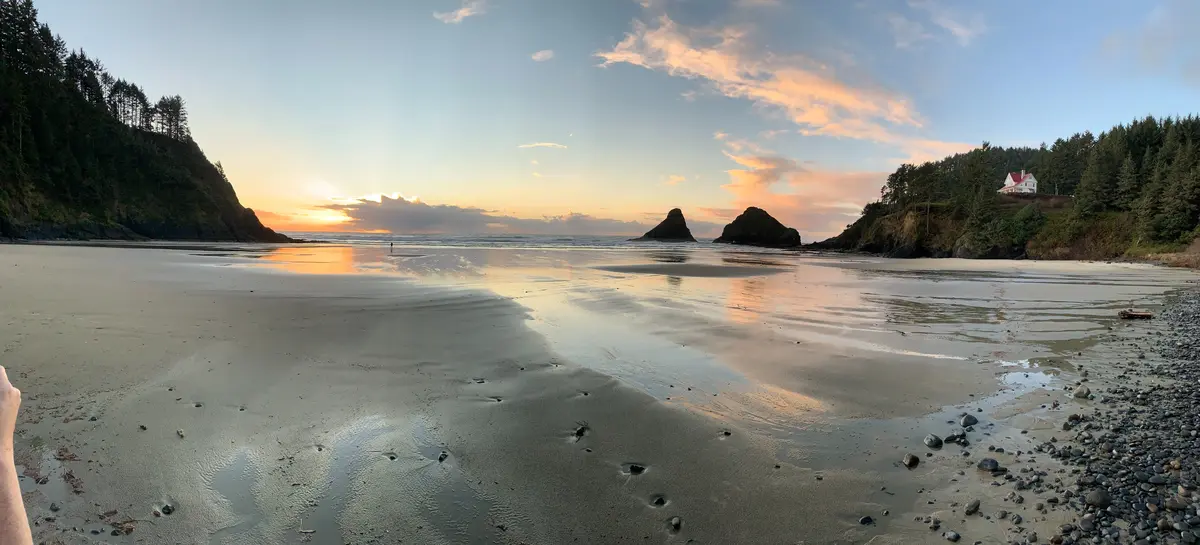
Heceta Head Lighthouse State Scenic Viewpoint sits about 13 miles north of Florence along US-101, and it earns its reputation. A half-mile trail climbs 150 feet through coastal forest to reach the 1894 lighthouse, which stands 206 feet above the Pacific and throws the strongest beacon on the Oregon Coast — visible 21 miles at sea. The trail connects to a 7-mile section of the Oregon Coast Trail, so it is genuinely hikeable as part of a longer route rather than just a quick viewpoint stop.
Heceta Head is also among the coast's best whale-watching vantage points. Gray whale migrations move southbound from December through February and northbound from March through May. Sea lions, common murres, and other seabirds are visible year-round from the viewpoint railing. The surrounding ocean is part of the Cape Perpetua Marine Reserve, Oregon's largest marine reserve.
Sea Lion Caves and the Darlingtonia Wayside
Just north of Florence along US-101, Sea Lion Caves is America's largest sea cave and a year-round habitat for wild Steller sea lions. An elevator descends to the cave level for close-range wildlife viewing — the kind of thing that is remarkable the first time and still impressive the twentieth.
The Darlingtonia Botanical Wayside is different from anything else in the Florence outdoor inventory. This 18-acre state natural site a few miles north of Florence is the only Oregon State Park dedicated to a single plant species: Darlingtonia californica, the cobra lily, a carnivorous pitcher plant. A 0.2-mile accessible boardwalk winds through a spruce and cedar grove into an open fen where thousands of the plants grow. The site charges no entrance fee. Most newcomers to Florence visit it once out of curiosity and become quietly evangelical about it.
Beaches for Residents, Not Just Tourists
Florence's beaches reward the patient visitor. Beachcombing for agates, sand dollars, and shells is genuinely productive along this stretch of coast — the exposed geology and wave patterns deliver material that more groomed beaches farther north do not. Tide pools along the rocky shorelines hold sea stars, anemones, and hermit crabs at low tide. And the kite flying, powered by consistent coastal breezes, is serious enough that Florence draws dedicated kite enthusiasts from across the region.
| Destination | Distance from Florence | Best For |
|---|---|---|
| Heceta Head Lighthouse Scenic Viewpoint | ~13 mi north via US-101 | Nature Views |
| Sea Lion Caves | Just north via US-101 | Nature Families |
| Darlingtonia Botanical Wayside | A few miles north via US-101 | Nature Quiet |
| South Jetty Beach | Within city limits | Nature Families |
| Oregon Coast Trail (Heceta section) | 13+ mi north via US-101 | Nature Views |
| Cleawox Lake at Honeyman State Park | ~3 mi south via US-101 | Families Nature |
Local Expert Takeaway: Florence's outdoor scene is not something residents discover gradually — it hits immediately, and most people spend their first six months realizing they are under-using what is right outside. The Oregon Dunes National Recreation Area starts at the Siuslaw River mouth. Honeyman State Park is three miles south. The Heceta Head trail connects to the Oregon Coast Trail. Darlingtonia Botanical Wayside costs nothing and takes twenty minutes. The boardwalk along the Siuslaw River in Old Town is where residents actually gather, watch harbor seals, and run into neighbors. Paddle the Siltcoos River on a fall weekday and you may have it entirely to yourself. The tourist crowds on US-101 in summer are real, but they are seasonal — learn which trailheads and lake access points locals use on weekday mornings, and the parks belong to you almost entirely from Labor Day through Memorial Day.
Quick Takeaways & FAQs
✅ Florence sits at the northern edge of the Oregon Dunes National Recreation Area — North America's largest coastal dune system — giving residents direct access to 31,500 acres of hiking, paddling, OHV terrain, and sandboarding.
⚠️ Summer tourist traffic along US-101 makes the most popular parks — Honeyman State Park, South Jetty Beach — genuinely crowded from June through August; residents who don't plan around this are often caught off guard.
📍 The Darlingtonia Botanical Wayside, a few miles north of Florence via US-101, is the only Oregon State Park dedicated to a single plant species — the carnivorous cobra lily — and it charges no entrance fee.
Is Jessie M. Honeyman Memorial State Park worth visiting year-round as a Florence resident?
Can you access the Oregon Dunes without an OHV or ATV?
What fishing is available near Florence?
When is the best time to see gray whales from Heceta Head?
What is the Darlingtonia Botanical Wayside, and is it worth a stop?
Moving to Oregon?
Tell us what you need help with and we'll connect you with local resources.
