What Is Living in Salmon, Idaho Like?
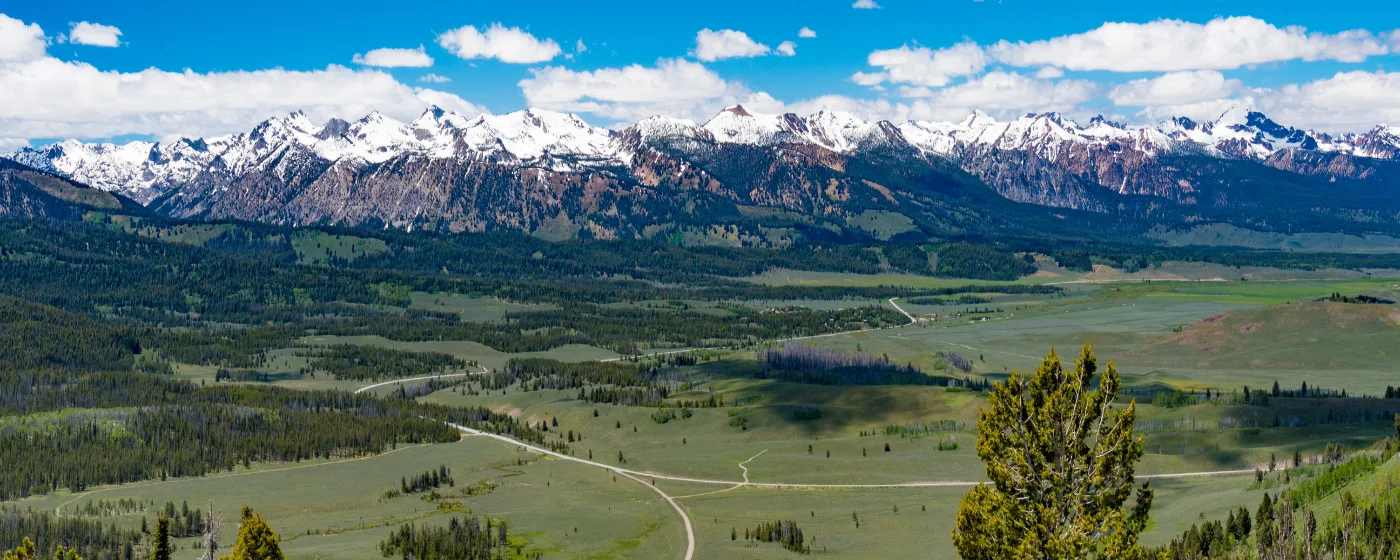
If you're choosing between Salmon and almost anywhere else in Idaho, the decision usually comes down to one honest trade-off: you get a genuinely affordable, remarkably uncrowded life right on the River of No Return, and in exchange, you accept that the nearest Costco is roughly two hours away and your career options inside city limits are narrow. Salmon sits in the Lemhi Valley at the confluence of the Salmon and Lemhi Rivers, flanked by the Salmon-Challis National Forest on nearly every side. U.S. Highway 93 is the spine of daily life here — running north-south through downtown, connecting the town to Challis to the south and to North Fork and eventually Missoula, Montana to the north. This is a place shaped entirely by its geography, and understanding that geography is step one for anyone seriously considering a move.
The economic backbone here is public sector and outdoor recreation. The Lemhi County School District is one of the largest employers in town, alongside Lemhi County Government and the U.S. Forest Service, which maintains a significant district presence here. A major regional health system anchors the healthcare side of the employment picture. Local outfitters and river guides fill out the private sector — Salmon is one of the premier access points for commercial rafting and steelhead fishing in the Pacific Northwest, and that draws visitors and seasonal workers year-round. The Salmon School District 291 holds a C+ rating, according to Niche — something to weigh carefully if schools are a top priority. People who move here tend to fall into one of two camps: remote workers who want land and mountains at a price that still makes sense, and people who already have a job lined up locally or who are deliberately stepping off the career treadmill.
The median household income sits at $42,844, which reflects both the public-sector wage structure and the town's rural reality — but it also exists alongside a cost of living that makes that income stretch further than it would almost anywhere else in the state. The Zillow Home Value Index for Salmon stands at $329,001 as of February 2026, well below Idaho's statewide figure, meaning buyers moving here from Boise, the Treasure Valley, or virtually anywhere in California arrive with real purchasing power. The effective property tax rate is just 0.45%, among the lowest in an already low-tax state. Parks, trails, and river access aren't amenities you drive to on weekends — they begin at the edge of downtown. For more on taxes, rents, and what things cost day to day, the cost of living page goes deep.
Whether you're seriously considering a move or just researching the area, the sections below break down Salmon's neighborhoods, the housing market, employers, daily commute reality, and what life here actually looks like once you're settled in.
Salmon at a Glance
Looking to buy in Salmon? Estimate your payment.
Enter your numbers to see an estimated monthly mortgage payment.
Estimate only. Excludes HOA fees and mortgage insurance. The interest rate above is a starting point, not a quoted rate — replace it with your own to see real numbers. Insurance is a flat placeholder, not a Salmon quote.
Why Are People Moving to Salmon?
Salmon is growing — slowly but steadily, up roughly 7% since the 2020 Census — and the people arriving aren't all the same type. Remote workers priced out of Sun Valley and the Treasure Valley discovered years ago that a reliable internet connection and a $329,001 median home price is a combination hard to argue with. Retirees looking for four-season outdoor access without ski-resort pricing have followed. And a consistent thread of people just tired of traffic, noise, and sprawl keep showing up and staying.
The Employment Reality
The public sector is the dominant employer, and that matters for anyone without a portable income. The Lemhi County School District — the largest school-based employer in the valley — along with Lemhi County Government and the U.S. Forest Service's Salmon-Challis district offices together account for a significant share of local jobs. A major regional health system employs nurses, support staff, and administrative workers. Beyond those anchors, the private economy runs on outfitters, guides, lodging, and seasonal tourism tied to the Salmon River corridor.
If you're moving here without a job in hand, remote work is the practical path. Local wages outside the public sector tend to be modest, and there is no regional employment hub within easy commuting range. Missoula is under three hours north, and Idaho Falls is a similar distance south — but nobody realistically commutes either direction for a daily job.
Who Actually Moves Here
| Buyer Type | Why Salmon Works | Best For |
|---|---|---|
| Remote workers | Low home prices, fast local internet expanding, 8-minute average local commute if in-person work exists | Value Nature |
| Outdoor-first households | Direct river access, Salmon-Challis National Forest trailheads minutes from town, steelhead and whitewater season runs long | Nature Privacy |
| Retirees and near-retirees | Low property taxes, manageable home prices, quiet community pace, year-round Sacajawea Center grounds and dog park | Quiet Value |
| Public-sector professionals | Forest Service, county government, and school district all hiring; housing affordable on government salaries | Commuter Value |
| First-time buyers from larger Idaho cities | Entry-level prices well below Boise or Twin Falls; single-family homes dominate inventory at roughly 68% of total units | First-Time Value |
| Families prioritizing land and space | Acreage properties within a short drive of town; low crime rates; tight community where kids tend to know everyone | Families Privacy |
The pattern after six months tends to surprise people in one specific way: Salmon is quieter than they expected even for a small town. There are no chain restaurants on the main street through downtown, no big-box retail, no Friday-night bar strip. That's not a complaint from people who wanted this life — but buyers who pictured a lively small-town downtown sometimes find the pace harder to adjust to than they anticipated.
The Case Against Moving Here
People leave Salmon for a handful of recurring reasons: teenagers aging out of the school system and parents following them to college towns; career ceilings that arrive faster than expected; and the cumulative weight of a two-hour drive for medical specialists, major retail runs, or a wider restaurant scene. If your career requires in-person work in a specific field, do the job math before you make an offer. For a fuller picture of buying here, including financing specifics, that page covers the process in detail.
What Daily Life Feels Like in Salmon
Downtown Salmon is genuinely the center of town in a way that downtown districts in larger Idaho cities stopped being decades ago. The Bear Statue — a bronze grizzly that regulars use as a meeting point — sits at the heart of a walkable stretch of independent shops, the Lemhi County Historical Museum, and a handful of independently owned restaurants and cafes. Bertram's Salmon Valley Brewery at 535 Main St doubles as the de facto community gathering spot most evenings, where Forest Service rangers, outfitter guides, and remote workers all end up at the same bar. Rise And Shine Espresso is the morning ritual for a good chunk of the working population — a drive-through that runs faster than any chain and knows its regulars by name.
The Seasonal Rhythm
Salmon has four genuine seasons, and each one restructures daily life in ways newcomers don't always anticipate. Summer is the busy season — river traffic, tourists arriving for guided rafting trips on the Salmon River, and the Sacajawea Interpretive Cultural and Educational Center running at full capacity with its seasonal interpretive programming. The 71-acre Sacajawea Center grounds, including Seaman's Dog Park and the community garden, stay open year-round, but Memorial Day to Labor Day is when the valley genuinely hums.
Winter is the part nobody fully prepares for. Highway 93 can close or become treacherous in serious snow events, and the valley sits deep enough in the mountains that cold snaps hit hard. Locals stock up before storms and treat the Salmon Hockey Rink as a serious community institution through the winter months — youth hockey is a bigger deal here than many outsiders expect. Spring runoff turns the Salmon River into a spectacle and the surrounding hills into something vivid, but mud season on rural roads is real and worth planning around.
Groceries, Services, and What You'll Drive For
Day-to-day essentials are covered in town — a grocery store, hardware, pharmacy, and basic services are all within reach. What you won't find locally: a Target, a Trader Joe's, a multiplex movie theater, or much in the way of ethnic cuisine. Most households make a planned run to Idaho Falls or Missoula every four to six weeks for the things Salmon doesn't stock. That's not unusual for rural Idaho, but it's worth building into your mental model of life here before you commit.
For kids and youth sports, Salmon punches above its weight — IHSAA 3A athletics at Salmon High School include competitive programs, and community-level youth activities fill the calendar. See the schools page for the full picture on district programs and youth activities. For safety context, the safety page covers crime statistics in detail — the short version is that this is one of the quieter communities in the state by the numbers.
The Salmon Housing Market Right Now
The Zillow Home Value Index for Salmon stood at $329,001 as of February 2026 — a figure that reads almost surreally low to anyone who has been watching Boise or the Treasure Valley. Single-family detached homes make up roughly 68% of the town's approximately 1,451 total housing units, which means this is fundamentally a market for buyers who want a house on a lot, not a condo or a townhome.
Inventory is tight for a market this small. When a well-maintained home in a sought-after spot near the river or with mountain views comes available, it tends not to sit long. That's not a booming-market phenomenon — it's simply a function of low supply in a town where most homeowners aren't moving anywhere. The market isn't frenzied, but patient buyers willing to act when the right property appears tend to do better than those waiting for a soft patch that may not arrive on any predictable schedule.
What the Numbers Mean for Buyers
The effective property tax rate of 0.45% is genuinely one of the more buyer-friendly ownership costs in Idaho — a state that already sits on the low end nationally for property taxes. Monthly carrying costs here are structured differently than what most people moving from California or the Boise metro are used to. See the full breakdown on the cost of living page for taxes, utilities, and rent comparisons.
Rental supply is limited. Most long-term rentals are privately owned single-family homes, and vacancy rates run thin. For anyone not ready to buy immediately, finding a rental on arrival can take longer than expected — this is worth planning around, not discovering after you've given notice at your current place.
The Honest Market Picture
Some parts of Salmon command noticeably more than others — riverfront access and unobstructed mountain views are priced accordingly, while older in-town lots farther from the river represent the most accessible entry points. For neighborhood-level character and what each area of town actually feels like to live in, the best neighborhoods page goes into detail without the price speculation.
Salmon Neighborhoods
Salmon has several distinct areas — each with its own character and appeal. Here’s a breakdown to help you narrow down where to focus your home search.
🏡 Downtown Salmon
The walkable core of town, anchored by independent businesses including Bertram's Salmon Valley Brewery and the Lemhi County Historical Museum — best for buyers who want to walk to daily errands and community events without getting in a car.
🏠 Williams Creek
A quieter residential area west of downtown that attracts buyers looking for established neighborhoods with a bit more separation from the commercial strip, with a mix of older ranch-style homes on generous lots.
🌳 Elk Bend
Named for the river bend that defines the landscape here, Elk Bend suits buyers who want proximity to river access and open space while staying within a short drive of downtown Salmon's services.
🏘 Gold Valley Estates
One of Salmon's more established residential subdivisions, with larger lots and mountain views that attract buyers wanting a sense of space and privacy without going fully rural — popular with families and public-sector professionals.
🏔 Carmen
A small community a few miles north of Salmon along US-93 and the Salmon River corridor, Carmen suits buyers who want acreage, privacy, and a genuine rural address while remaining close enough to Salmon's services for daily practicality.
🌆 North Fork
About 20 minutes north of Salmon on US-93 where the river canyon tightens dramatically, North Fork attracts buyers who want the most remote possible setting with spectacular river views and land at prices that reflect how far out you truly are.
Pros & Cons of Living in Salmon
The Pros
- Gateway to Frank Church-River of No Return Wilderness and world-class river recreation
- Low property taxes and affordable cost of living
- Tight-knit mountain community with authentic Western character
- Access to hunting
- fishing
- rafting
The Cons
- Limited job market and economic opportunities
- Extreme winter cold with significant snowfall
- Remote location 2+ hours from larger cities and services
Getting Around & Commuting in Salmon
The average local commute in Salmon is approximately 8 minutes. That number is not marketing copy — it's a genuine reflection of what life is like in a town of 3,327 people where the main employers are scattered across a compact geography. Most people who work locally drive from one end of Salmon to the other in less time than it takes to find parking in Boise.
A Car Is Not Optional — It's Infrastructure
There is no public transit, no rideshare network, no commuter rail. A car is as essential as your front door. Households without reliable four-wheel drive or all-season tires tend to discover their oversight the first time Highway 93 gets icy in November. The highway itself is the single arterial that connects Salmon to the rest of the world — north toward North Fork and eventually Missoula (under three hours), south toward Challis and then on to Idaho Falls (roughly two and a half hours).
Highway 93 through the Lemhi Valley is genuinely beautiful and genuinely unforgiving in winter. Salmon residents who make regular trips to Idaho Falls or Missoula — for medical specialists, larger shopping, or airport connections — build weather checks into their planning as a matter of habit. It's not a burden once you're used to it, but newcomers who haven't driven mountain highway in winter sometimes underestimate what the passes demand.
The Airport Equation
Salmon Airport (SMN) offers year-round scheduled service connecting to Boise, which then opens the full United network. For frequent fliers or anyone with family across the country, this is the most practical solution — a short regional hop avoids the four-plus-hour drive each way to the nearest large commercial airport. Service on small regional routes does change periodically, so confirming current carriers before planning travel is always worth doing.
Working Remotely: The Infrastructure Reality
Internet connectivity has improved substantially in Salmon over recent years, and reliable broadband is available in most of the established residential areas. This matters because remote work is the practical answer for anyone who wants to live here but whose career doesn't exist within the local job market. The Forest Service, school district, and county offices hire locally — but if your employer is based in Seattle or Austin, a solid connection and a home office in the Lemhi Valley is a genuinely workable setup.
| Destination | Drive Time (approx.) | Route | Key Consideration |
|---|---|---|---|
| North Fork, ID | ~20 min | US-93 N | River canyon road; scenic year-round |
| Challis, ID | ~50 min | US-93 S | Nearest large grocery options beyond Salmon |
| Missoula, MT | ~2.5 hrs | US-93 N | Mountain pass; plan for winter conditions |
| Idaho Falls, ID | ~2.5 hrs | US-93 S / US-20 | Regional hospital specialists, major retail |
| Boise, ID | ~4 hrs | US-93 / US-26 / I-84 | Nearest large commercial airport; fly from SMN instead |
| Twin Falls, ID | ~3.5 hrs | US-93 S | Regional shopping and medical corridor |
The drive times above assume clear, dry road conditions. In winter, add 20–40 minutes for the mountain segments and check road conditions on Idaho 511 before any pass crossing.
Schools in Salmon
Families relocating to Salmon have public, private, and higher-education options nearby. Here’s a quick overview.
🎓 School District
Salmon School District 291 serves K–12 students across Salmon and the surrounding area. Rated C+ (source: Niche.com).
🏆 Graduation Rate
The 4-year high-school graduation rate here is approximately 80.3%.
📚 Higher Education
Idaho’s public universities — Boise State, the University of Idaho, and Idaho State — offer four-year degrees statewide, with community colleges (CWI, CSI, NIC) providing two-year and workforce programs.
🌐 Online Learning
Boise State Online and University of Idaho Online offer fully accredited online degrees for remote learners across the state.
Safety in Salmon
A quick look at how Salmon compares on the numbers that matter most when weighing a neighborhood or a move.
🛡 Violent Crime
Approximately 1.52 per 1,000 residents.
🔒 Property Crime
Approximately 3.64 per 1,000 residents.
Compared to the FBI’s most recent national data (2024), Salmon’s violent crime is below the national average (about 3.6 per 1,000), and property crime is below the national average (about 17.6 per 1,000).
Against Idaho as a whole, Salmon’s violent crime is roughly two-thirds of the state average, and property crime is roughly half the state average (Bureau of Justice Statistics, Crime Known to Law Enforcement, 2024 (tables 2 and 3)).
Crime rates can vary a lot within a single city, so the citywide numbers above are only a starting point. Some neighborhoods in Salmon run well below these averages, while others run higher — the kind of block-by-block detail that matters most when you’re actually choosing where to live. The full guide below breaks it down neighborhood by neighborhood.
Working in Salmon
Salmon’s largest employers span several industries — here are some of the anchors of the local job market.
🎓 Lemhi County School District
Education
🏥 Salmon River Hospital
Healthcare
💼 U.S. Forest Service
Federal
🏛 Lemhi County Government
Government
💼 local outfitters and guides
Recreation
Parks & Recreation in Salmon
Some of the outdoor spaces that shape everyday life in Salmon.
🌱 Salmon River
Salmon residents don’t have to go far for green space — spots like Salmon River are part of everyday life here, whether that’s a morning walk, a weekend hike, or just somewhere to unwind outside. The full guide below covers more of what Salmon has to offer for parks and outdoor recreation.
Retiring in Salmon
Salmon draws retirees for its balance of amenities, outdoor access, and cost. Here’s what to weigh.
🌤 Climate
Salmon sits in a high mountain valley at roughly 3,900 feet elevation, which means four genuine seasons. Summers are warm and dry with long daylight hours — ideal for river days and hiking. Winters bring real cold and snow, and the valley can see temperatures well below freezing in January. Spring is muddy and beautiful; fall along the Salmon River corridor is among the more striking in Idaho.
🍴 Lifestyle
Daily life runs at a pace retirees who moved from larger metros tend to describe as the whole point. The Sacajawea Center grounds, the Lemhi County Historical Museum, the Lewis and Clark Back Country Byway, and the Salmon River fill weekdays without effort. Bertram's Salmon Valley Brewery and local independent cafes cover the social-dining side of things, though the restaurant selection is limited compared to a city.
🏚 55+ Communities
Salmon does not have dedicated age-restricted communities or large active-adult developments — the market is too small for that model. Retirees here typically buy existing single-family homes, with some opting for properties slightly outside town for acreage and privacy. The low property tax rate of 0.45% makes ownership costs manageable on a fixed income. For detailed retiring-in-Salmon information, the <a href="/idaho/salmon/retiring-in-salmon">retiring page</a> covers healthcare access and senior services.
✈ Getting Around
A car is essential — there is no local transit. Most retirees find the compact geography of Salmon itself easy to navigate, with everything from the grocery store to the river accessible in minutes. For longer trips, Salmon Airport (SMN) offers scheduled service to Boise year-round, avoiding the four-hour drive each direction to a major commercial hub. Winter road conditions on Highway 93 require genuine mountain driving confidence.
🏛 Idaho Taxes for Retirees — What to Know
- Social Security is not taxed — Idaho does not tax Social Security benefits at the state level, regardless of income.
- Flat state income tax — Idaho has a flat income tax (5.3% for 2026). Other retirement income — pension distributions and 401(k)/IRA withdrawals — is taxed as ordinary income at that rate.
- Narrow retirement deduction — Idaho’s Retirement Benefits Deduction is limited: it reaches only certain government pensions (federal CSRS, Idaho firefighter/police, and military retirement) for those 65+ (or 62+ if disabled), and is reduced by Social Security received.
- Sales tax is the tradeoff — The state sales tax is 6.0%, and Salmon adds no local sales tax on general retail, so the combined rate is 6.0% (Idaho State Tax Commission, 2026). Groceries are taxed, but a grocery tax credit offsets part of it; prescription drugs are exempt. A small number of resort cities add a local option tax, usually on lodging, alcohol, and prepared food rather than general retail.
- Low property taxes, with senior relief — Idaho property taxes are relatively low. Homeowners 65+ who own and occupy their home may qualify for the “circuit breaker” Property Tax Reduction based on income.
- No estate or inheritance tax — Idaho has no estate, inheritance, or gift tax.
- Capital gains — Capital gains are taxed as ordinary income, though Idaho allows a deduction of up to 60% of the net gain on qualifying Idaho property.
Tax laws change frequently and individual situations vary. This is general information, not tax advice — always consult a qualified Idaho tax professional or CPA for personalized retirement tax planning.
Weekends & Local Favorites in Salmon
Weekend life in Salmon runs on the river, the trails, and a handful of spots downtown that serve as the town's informal living room. This is not a place where you'll exhaust the entertainment options in a month and start looking for the exit — it's a place where the same river bend looks different every Saturday depending on the season, the light, and whether the steelhead are running.
The River as the Center of Everything
The Salmon River — the River of No Return — isn't a backdrop. It's the activity. Local outfitters launch commercial and private rafting trips from points near town, and steelhead fishing draws serious anglers from across the Pacific Northwest. Kayaking the river's calmer stretches is a genuine after-work option in summer, not a special occasion. The Lewis and Clark Back Country Byway connects several interpretive sites in the surrounding landscape — Tower Rock Recreation Area, Discovery Hill, and the Flag Unfurling site — and makes for a half-day drive that doubles as history and scenery.
The Sacajawea Center Grounds
The Sacajawea Interpretive Cultural and Educational Center sits on 71 acres roughly two miles east of downtown on Main Street (Hwy 28). The grounds — including walking trails, an outdoor amphitheater, a community garden, and Seaman's Dog Park — are open year-round. The interpretive center itself runs Memorial Day through Labor Day. For families with kids or for anyone wanting a morning walk with a sense of place, the Sacajawea Center is the kind of civic space that small towns rarely have at this quality and scale.
Where Locals Actually Spend Time
Bertram's Salmon Valley Brewery on Main Street is the anchor of Salmon's small but real food-and-drink scene — locally brewed beer, a kitchen, and a room that fills up with a genuine cross-section of the town on weekend evenings. Rise And Shine Espresso handles the morning crowd with specialty coffee, smoothies, and breakfast goods at a drive-through pace that works for people heading out to Forest Service offices or across town to the school district. A local independent bakery has developed a following for baked goods and coffee, giving the downtown stretch a morning-to-evening rhythm that works for both visitors and regulars.
The Lemhi County Historical Museum downtown is worth an afternoon for anyone serious about understanding what this valley was built on — mining, ranching, and the Shoshone-Bannock people who lived here long before either. The Salmon Hockey Rink becomes a community hub through winter in a way that surprises newcomers from warmer climates. For a fuller look at trails, parks, and outdoor recreation in and around Salmon, the parks and recreation page covers the specifics.
Top Things Locals Say About Salmon
The best intel about a city comes from the people who actually live there. Here’s what Salmon residents say when newcomers ask the questions everyone’s thinking.
“I knew it was rural, but I didn't know it would feel this quiet in the best possible way. The first winter, I drove past the hockey rink at nine on a Friday night and the parking lot was completely full — that's when I realized the whole social calendar here just works differently than anywhere I'd lived before.”
— Recent Salmon home buyer
“What's the most surprising thing about living in Salmon?”
The river being this close to everything. You drive five minutes from downtown and you're standing on the bank of the Salmon River — the actual River of No Return. People talk about outdoor access in a lot of towns, but here it's not hyperbole. The Sacajawea Center grounds are right there, Seaman's Dog Park is right there, the trailheads are right there. It's one of those things you can't fully appreciate until you're living it.
“What do locals love most about Salmon?”
Knowing people. You go to the Lemhi County Fair, to the hockey rink in January, to Bertram's on a Friday, and you run into someone you know at every single one. That doesn't happen in a lot of places anymore. And the pace — nobody is in a hurry in a bad way here. The eight-minute commute is real, and it changes how you feel every single workday.
“What should newcomers to Salmon know?”
Make a Missoula or Idaho Falls run before a big storm, not after. Highway 93 through the pass can close or get genuinely icy, and you don't want to be caught without supplies or without the prescription you needed to pick up. Also: download the Idaho 511 road conditions app before your first winter. And if you work remotely, confirm your internet provider and speed before you sign anything — coverage in the established neighborhoods is solid, but the edges of town vary.
“Can you live in Salmon without a car?”
Not realistically. There is no public transit of any kind, no rideshare service operating here, and the distances involved — even within town — aren't always walkable in winter. If you work downtown and your grocery store is downtown, you could manage short stretches on foot in good weather. But for anything beyond a daily errand loop, a reliable vehicle with proper tires is not a convenience here — it's a basic necessity.
Cities Near Salmon
Other communities near Salmon worth a look — each with its own character and price point.
| City | Distance | Best For | Vibe | Median Rent | Median Buy |
|---|---|---|---|---|---|
| Challis | 49 mi | Buyers wanting even more rural quiet | Small, remote, ranch-country feel | $1,350 | $294,000 |
| Leadore | 43 mi | Off-grid and agricultural lifestyle | Tiny, isolated, true frontier character | $1,200 | $383,000 |
| North Fork | 17 mi | River canyon acreage seekers | Sparse, scenic, deeply rural | $1,400 | $514,000 |
More Helpful Guides for Salmon
Going deeper on Salmon? Our blog series covers everything from first-time buying to retiring here — explore the guides below.
Local Expert Takeaway: Salmon is one of the few places left in Idaho where a working household can buy a real house with a yard, drive to work in under ten minutes, walk to Bertram's Brewery on a Friday night, and have their dog off-leash at the Sacajawea Center grounds on Saturday morning — all without carrying a six-figure income. The trade is real: you give up proximity to specialists, big retail, and career mobility. People who come here knowing that trade tend to stay for decades. People who underestimate it tend to leave within two years.
Quick Takeaways & FAQs
✅ The Salmon River flows through town, putting world-class steelhead fishing and whitewater rafting within a 10-minute drive of any address in the city.
⚠️ Career options within Salmon are narrow — most private-sector jobs pay modestly, and the nearest regional employment hub (Missoula or Idaho Falls) is roughly 2.5 hours away in either direction.
📍 The Sacajawea Interpretive Cultural and Educational Center's 71-acre park, including Seaman's Dog Park and walking trails, sits two miles east of downtown and is open to the public year-round at no charge.
What is the typical home price in Salmon, Idaho?
Is Salmon, Idaho a good place to raise a family?
What jobs are available in Salmon, Idaho?
How remote is Salmon, Idaho, really?
What surprises people most after moving to Salmon?
Helpful Links for Moving to Salmon
Moving to Idaho?
Tell us what you need help with and we'll connect you with local resources.
