What Is Living in Sun Valley, Idaho Like?
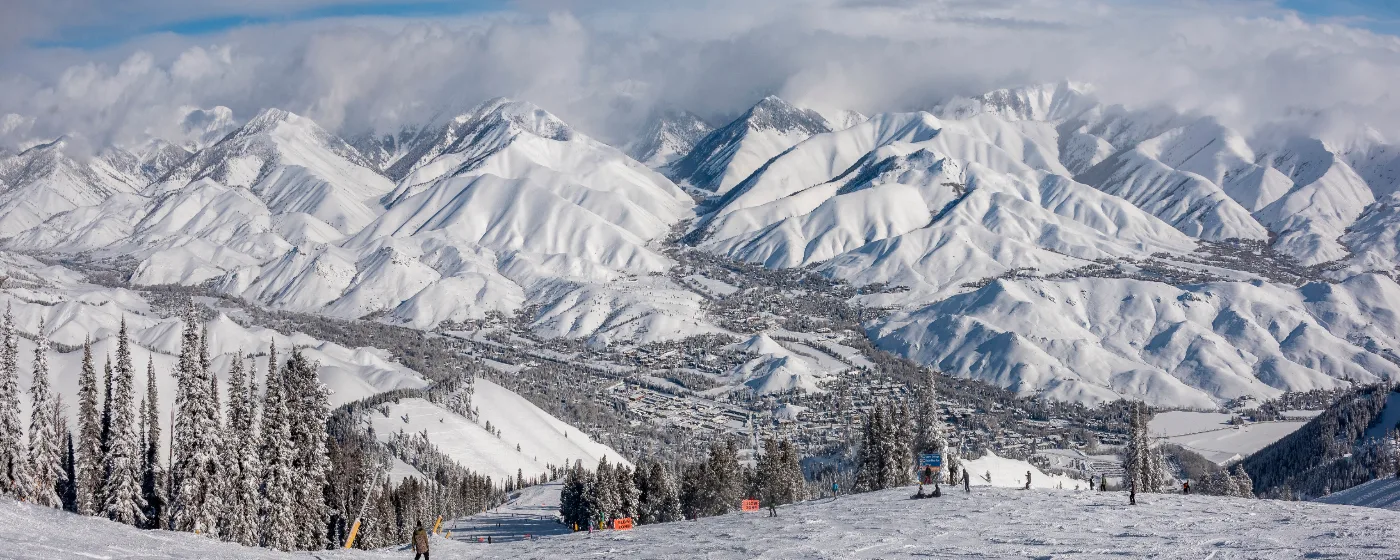
You've done the spreadsheet. Sun Valley checks the boxes on paper — world-class skiing, 330 days of sunshine, low crime, and a median household income of $125,987. But the spreadsheet doesn't tell you that only about 25% of the roughly 2,597 housing units here are occupied full-time. The rest are seasonal or occasional-use properties, which means the town you visit in peak ski season and the town you actually live in are two very different places. Sun Valley sits at 5,750 feet in the Wood River Valley of central Idaho, pressed between Bald Mountain to the north and Dollar Mountain to the south, with Ketchum — functionally its main street — about five minutes away. Understanding that geographic and demographic reality is the first thing to get right.
The local economy runs on a short list of anchors. Sun Valley Resort, which opened in 1936 as America's first destination ski resort, remains the city's single largest employer with approximately 500 year-round workers — and a much larger seasonal workforce. Power Engineers, a nationally recognized engineering consulting firm, adds a professional-class employment layer that surprises many newcomers. The Blaine County School District, which holds a B+ rating, according to Niche, rounds out the employer base alongside local government. Families with school-age children should know that The Community School, a private preparatory school within Sun Valley itself, enrolls around 325 students pre-K through 12; public school students attend Hemingway Elementary in Ketchum and Wood River Middle and High Schools in Hailey.
Housing here carries a real price of entry. The typical home value sits at $1,162,529 (Zillow Home Value Index, May 2026), making Sun Valley one of the priciest zip codes in Idaho by a wide margin. For a fuller picture of what ownership costs month to month, the cost of living page breaks down property taxes, rent ranges, and how prices compare to the broader Wood River Valley. The effective property tax rate is notably low at 0.39%, which softens the carrying cost somewhat. Day-to-day life at this altitude centers on outdoor access — trail networks, the Sun Valley Ice Rink, the Golf Course, and an events calendar anchored by the resort — rather than urban convenience.
Whether you're considering a full-time move or deciding between a primary home and a part-time base, the sections below break down Sun Valley's neighborhoods, the housing market, what daily commuting looks like, where locals spend their weekends, and who this city actually suits.
Sun Valley at a Glance
Looking to buy in Sun Valley? Estimate your payment.
Enter your numbers to see an estimated monthly mortgage payment.
Estimate only. Excludes HOA fees and mortgage insurance. The interest rate above is a starting point, not a quoted rate — replace it with your own to see real numbers. Insurance is a flat placeholder, not a Sun Valley quote.
Why Are People Moving to Sun Valley?
Sun Valley doesn't attract the typical relocation crowd. Remote-work flexibility changed who can afford to consider it — professionals from larger metros who used to come here for ski weeks are now coming for ski seasons, then staying permanently. That shift accelerated after 2020 and hasn't fully reversed.
The Resort as an Economic Engine
Sun Valley Resort is the reason the city exists, and it still shapes everything from employment to traffic to the social calendar. With 2,457 skiable acres, a 3,400-foot vertical drop on Bald Mountain, and an average of 172 inches of snowfall per year, the resort draws a guest list that includes world-class athletes — the FIS Alpine Ski World Cup Finals were held here for the first time in March 2025. Living here means living inside that energy year-round, not just visiting it.
The resort's Ikon Pass (destination tier) and Mountain Collective affiliation also matter practically for full-time residents: your ski pass has real cross-resort value, which factors into the lifestyle calculus that drives many relocation decisions.
Who Actually Moves Here
| Buyer Type | What Draws Them | Best Fit |
|---|---|---|
| Remote professionals | Year-round outdoor access, low crime, Sun Valley Resort | Luxury Views |
| Retirees & semi-retirees | Mild dry summers, no state income tax on retirement income, medical access nearby | Quiet Luxury |
| Resort & hospitality workers | On-mountain employment, Mountain Rides transit, proximity to Ketchum | Commuter Renter |
| Families prioritizing schools | Blaine County School District's B+ Niche rating, The Community School on-site | Families School |
| Second-home owners going full-time | Already know the valley; want ski-in access without managing a vacation property | Luxury Privacy |
| Engineering & consulting professionals | Power Engineers presence; remote-work-compatible infrastructure | Tech Commuter |
The median age here is 56.5, which tells you something real about the community's center of gravity. Young families moving in often feel the social scene skews older — something worth knowing before you arrive.
The Honest Case Against Moving Here
Sun Valley is a small city of 1,761 people at altitude in a remote valley. The nearest commercial airport is Friedman Memorial (SUN) in Hailey, about 14 miles away — convenient but limited in routes. If your work requires frequent travel to multiple cities, the connection through Boise (roughly 2.5 hours by road) adds friction that compounds over time.
The housing cost is real and largely non-negotiable at this end of the valley. Service-sector workers and younger households typically land in Hailey or Bellevue, where prices are noticeably more accessible, and commute in. If budget is a central concern, that's the more practical starting point — see the neighborhoods guide for how the Wood River Valley breaks down by area and character.
What Daily Life Feels Like in Sun Valley
Living in a resort town full-time is its own adjustment. The infrastructure bends toward tourism — the Sun Valley Lodge, the Golf Course, the Ice Rink — and that's genuinely part of what makes daily life here feel different from any other small Idaho city. But it also means the grocery run and the dinner reservation and the hardware errand all happen in Ketchum, five minutes down Sun Valley Road.
The Seasonal Rhythm
Winter is the obvious peak — Bald Mountain opens typically by Thanksgiving, and from mid-December through March the valley fills. But the surprise for many newcomers is summer. The Wood River Valley's mountain-desert climate keeps humidity around 30%, making July and August genuinely pleasant rather than oppressive. Trail running, cycling, fly fishing the Big Wood River, and summer concerts at the Sun Valley Pavilion collectively make summer feel as full as ski season.
What locals learn fast: late spring and early fall are the quiet windows. Shoulder-season Sun Valley, with empty trails and half the visitors gone, is when the town feels most like itself. If you're visiting to make a relocation decision, come in May or October — not January.
The Literary Layer
Sun Valley has a literary history that runs deeper than most visitors realize. A celebrated American author finished one of his most famous novels here and returned repeatedly until his death in the city. The memorial above Trail Creek is a short walk from the village and a real place locals actually visit — not just a tourist marker. It gives the town a literary self-image that shapes its culture in subtle ways, from the independent bookshop culture in Ketchum to the events calendar's literary programming.
What You Give Up
There's no Target, no big-box grocery anchor, no chain pharmacy inside Sun Valley proper. Ketchum handles most of those needs, and Hailey handles the rest. Newcomers from larger metros consistently underestimate how much the 14-mile drive to Friedman Memorial Airport — or the 2.5-hour stretch to Boise — shapes their sense of connection to the rest of the country. It's manageable, but it's a real adjustment, not a minor detail.
For parents with school-age children: The Blaine County School District holds a B+ rating, according to Niche, and The Community School within Sun Valley is a strong private option — but school boundary logistics across Ketchum and Hailey are worth mapping carefully before you choose where to live. The schools page has the full breakdown.
The Sun Valley Housing Market Right Now
The typical home value in Sun Valley is $1,162,529 (Zillow Home Value Index, May 2026). That figure reflects a market shaped almost entirely by resort adjacency, limited inventory, and the gravitational pull of full-time owners who could choose to live anywhere. Some areas of the city trade considerably above that midpoint; entry-level opportunities exist but move quickly when they appear.
What the Market Actually Looks Like
Inventory here is structurally constrained. With roughly 75% of housing units sitting empty or used only seasonally, the pool of homes available to full-time buyers at any given moment is small. When something comes to market in the right price range, it doesn't sit long.
The city-wide rent picture follows the same logic — options are limited and priced to match the market. For current rent figures and a detailed cost breakdown, see the cost of living page.
What to Understand Before You Search
Sun Valley's effective property tax rate of 0.39% is one of the lowest in Idaho, which meaningfully reduces annual carrying costs relative to what buyers coming from California or the Pacific Northwest might expect. That rate applies against assessed value, so on a home at the city's typical price point, it remains a genuine financial advantage of ownership here.
The market's pace rewards preparation. The first-time homebuyer page covers the mechanics of buying in this kind of market in detail — worth reading before you make contact with a listing agent.
Sun Valley Neighborhoods
Sun Valley has several distinct areas — each with its own character and appeal. Here’s a breakdown to help you narrow down where to focus your home search.
🏡 Sun Valley Village
The heart of the city, organized around the Sun Valley Lodge and the resort's central facilities — this is where the Ice Rink, the Golf Course, and the Pavilion define the street-level experience. It suits buyers who want to walk to the mountain and don't need a bustling commercial strip outside their door.
🏠 Elkhorn Village
A planned resort community on the eastern side of Sun Valley with its own golf course and a quieter residential feel than the main village. It draws buyers who want resort adjacency with slightly more separation from the tourist activity at the core of Sun Valley.
🌳 Trail Creek
Situated along the Trail Creek corridor with direct access to the trail that leads to the memorial above the valley floor, this area appeals to buyers who prioritize outdoor connectivity and a more private setting within walking distance of the village.
🏘 Dollar Meadows
Set near Dollar Mountain — Sun Valley's gentler learning hill — Dollar Meadows suits families and buyers who want a quieter residential feel with ski access that doesn't require the full Bald Mountain commitment. The area has a more settled, neighborhood character than the resort core.
🏔 Snow Creek
A residential pocket with a natural, creek-adjacent setting that attracts buyers looking for privacy and the feel of mountain living without the highest-traffic resort zones. Properties here tend to have larger lots and more distance from the main lodge activity.
🌆 Prospector
One of Sun Valley's more approachable residential areas in terms of feel, Prospector suits buyers who want to be in the city proper while maintaining a lower-key profile than Sun Valley Village's resort-centric environment. It's a practical choice for year-round residents who work locally.
Pros & Cons of Living in Sun Valley
The Pros
- World-class skiing at Bald Mountain with uncrowded slopes
- 205 sunny days annually with dry mountain climate
- Extremely low crime rates in one of Idaho's safest communities
- Strong school district with 85% graduation rate and high per-student spending
The Cons
- Exceptionally high cost of living with median home price exceeding $1.1M
- Limited year-round employment outside tourism and hospitality
- Geographic isolation two hours from Boise with seasonal airport access
Getting Around & Commuting in Sun Valley
Sun Valley is one of the few small Idaho cities where you can meaningfully reduce car dependency — not because of urban density, but because of Mountain Rides Transportation Authority. The regional transit system runs free, zero-emissions electric buses seven days a week, year-round, connecting Sun Valley, Ketchum, Hailey, and Bellevue. It also operates a fixed-route airport shuttle between Sun Valley and Friedman Memorial Airport (SUN) at no fare.
The Local Commute Reality
For full-time residents who work at Sun Valley Resort or in Ketchum, the commute is essentially nonexistent — five minutes by car, or a free bus ride. That proximity is a genuine quality-of-life advantage that distinguishes Sun Valley from bedroom communities where 45-minute drives define daily life.
The harder commute is to anywhere else. Hailey, where Wood River Middle and High Schools are located and where most regional services concentrate, is about 20 miles south on Highway 75. That drive is straightforward in summer and requires real winter-driving experience from November through March. The canyon section of Highway 75 south of Ketchum is where newcomers most often underestimate Idaho mountain road conditions.
Air Access
Friedman Memorial Airport (SUN) in Hailey sits roughly 14 miles from Sun Valley and serves direct flights from several major hubs — a meaningful convenience for a city this remote. Seasonal schedules vary, and connections through Salt Lake City and Seattle are the most consistent options. Boise Airport (BOI), with its full network of carriers, is the backup — roughly 2.5 hours by road through a straightforward but occasionally weather-affected route.
Driving Within the Valley
Sun Valley Road connects the village to Ketchum without complexity — it's a direct, low-stress drive year-round. The bigger traffic pattern to understand is seasonal: during peak ski weekends and summer event weeks, the Ketchum corridor sees genuine congestion that doesn't exist the rest of the year. Locals time errands and airport runs around the resort's event calendar as a matter of habit.
One adjustment that catches new residents off guard: the Mountain Rides bus doesn't run on a frequency that makes spontaneous trips easy. The system works best when you build your schedule around it, not when you treat it like urban on-demand transit. For households that do work the schedule, it's a real and free alternative to a second car — particularly for resort employees whose shift patterns align with the bus routes.
Schools in Sun Valley
Families relocating to Sun Valley have public, private, and higher-education options nearby. Here’s a quick overview.
🎓 School District
Blaine County School District serves K–12 students across Sun Valley and the surrounding area. Rated B+ (source: Niche.com).
🏆 Graduation Rate
The 4-year high-school graduation rate here is approximately 83.1%.
📚 Higher Education
Idaho’s public universities — Boise State, the University of Idaho, and Idaho State — offer four-year degrees statewide, with community colleges (CWI, CSI, NIC) providing two-year and workforce programs.
🌐 Online Learning
Boise State Online and University of Idaho Online offer fully accredited online degrees for remote learners across the state.
Safety in Sun Valley
A quick look at how Sun Valley compares on the numbers that matter most when weighing a neighborhood or a move.
🛡 Violent Crime
Approximately 1.1 per 1,000 residents.
🔒 Property Crime
Approximately 2.2 per 1,000 residents.
Compared to the FBI’s most recent national data (2024), Sun Valley’s violent crime is below the national average (about 3.6 per 1,000), and property crime is below the national average (about 17.6 per 1,000).
Against Idaho as a whole, Sun Valley’s violent crime is roughly half the state average, and property crime is roughly a quarter of the state average (Bureau of Justice Statistics, Crime Known to Law Enforcement, 2024 (tables 2 and 3)).
Crime rates can vary a lot within a single city, so the citywide numbers above are only a starting point. Some neighborhoods in Sun Valley run well below these averages, while others run higher — the kind of block-by-block detail that matters most when you’re actually choosing where to live. The full guide below breaks it down neighborhood by neighborhood.
Working in Sun Valley
Sun Valley’s largest employers span several industries — here are some of the anchors of the local job market.
🏥 Sun Valley Resort
Hospitality and tourism
🏥 St. Luke's Wood River Medical Center
Healthcare
🎓 Blaine County School District
Education
💼 Power Engineers
Engineering consulting
🏛 City of Sun Valley
Local government
Parks & Recreation in Sun Valley
Some of the outdoor spaces that shape everyday life in Sun Valley.
🌱 Bald Mountain
🌱 Dollar Mountain
Sun Valley residents don’t have to go far for green space — spots like Bald Mountain and Dollar Mountain are part of everyday life here, whether that’s a morning walk, a weekend hike, or just somewhere to unwind outside. The full guide below covers more of what Sun Valley has to offer for parks and outdoor recreation.
Retiring in Sun Valley
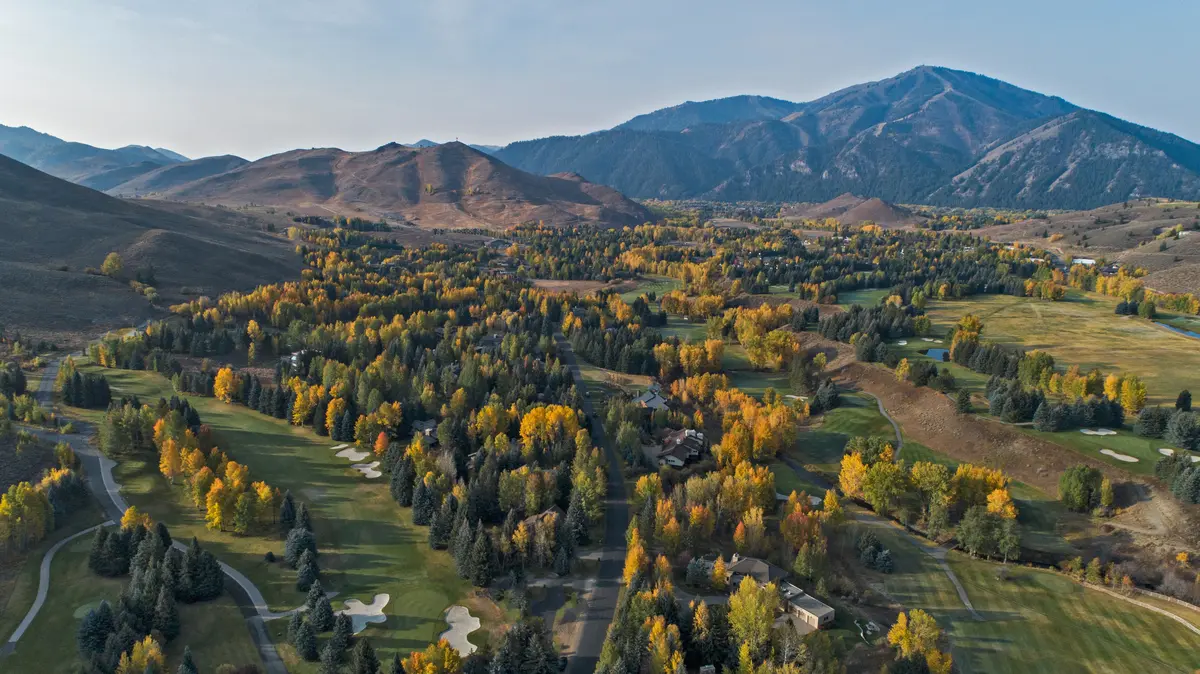
Sun Valley draws retirees for its balance of amenities, outdoor access, and cost. Here’s what to weigh.
🌤 Climate
Sun Valley sits at 5,750 feet with a mountain-desert climate that delivers roughly 330 sunny days per year and average humidity around 30%. Summers are mild and dry — ideal for outdoor activity without heat stress. Winters are cold with meaningful snowfall, so retirees should be comfortable with mountain driving or willing to lean on Mountain Rides transit.
🍴 Lifestyle
Retirement here centers on the outdoors — skiing Bald Mountain, walking the Trail Creek trail to the memorial above the village, golf at the Sun Valley Golf Course, and fly fishing the Big Wood River. The Sun Valley Pavilion's summer concert series and the resort's year-round cultural programming add a layer of arts and entertainment that most small Idaho cities can't match.
🏚 55+ Communities
Sun Valley doesn't have a dedicated age-restricted community, but with a median resident age of 56.5, the full-time population skews naturally toward retirees and semi-retirees. Ketchum, five minutes away, offers a more walkable daily environment. For details on healthcare access and senior living options in the broader Wood River Valley, see the <a href="/idaho/sun-valley/retiring">retiring in Sun Valley page</a>.
✈ Getting Around
Mountain Rides Transportation Authority's free electric bus network covers Sun Valley, Ketchum, Hailey, and Bellevue daily, with a no-fare shuttle to Friedman Memorial Airport (SUN) in Hailey — about 14 miles away. Most retirees keep a car for flexibility, particularly in winter. Boise Airport, with a fuller route network, is roughly 2.5 hours south on Highway 75 and I-84.
🏛 Idaho Taxes for Retirees — What to Know
- Social Security is not taxed — Idaho does not tax Social Security benefits at the state level, regardless of income.
- Flat state income tax — Idaho has a flat income tax (5.3% for 2026). Other retirement income — pension distributions and 401(k)/IRA withdrawals — is taxed as ordinary income at that rate.
- Narrow retirement deduction — Idaho’s Retirement Benefits Deduction is limited: it reaches only certain government pensions (federal CSRS, Idaho firefighter/police, and military retirement) for those 65+ (or 62+ if disabled), and is reduced by Social Security received.
- Sales tax is the tradeoff — The state sales tax is 6.0%, and Sun Valley adds no local sales tax on general retail, so the combined rate is 6.0% (Idaho State Tax Commission, 2026). Groceries are taxed, but a grocery tax credit offsets part of it; prescription drugs are exempt. A small number of resort cities add a local option tax, usually on lodging, alcohol, and prepared food rather than general retail.
- Low property taxes, with senior relief — Idaho property taxes are relatively low. Homeowners 65+ who own and occupy their home may qualify for the “circuit breaker” Property Tax Reduction based on income.
- No estate or inheritance tax — Idaho has no estate, inheritance, or gift tax.
- Capital gains — Capital gains are taxed as ordinary income, though Idaho allows a deduction of up to 60% of the net gain on qualifying Idaho property.
Tax laws change frequently and individual situations vary. This is general information, not tax advice — always consult a qualified Idaho tax professional or CPA for personalized retirement tax planning.
Weekends & Local Favorites in Sun Valley
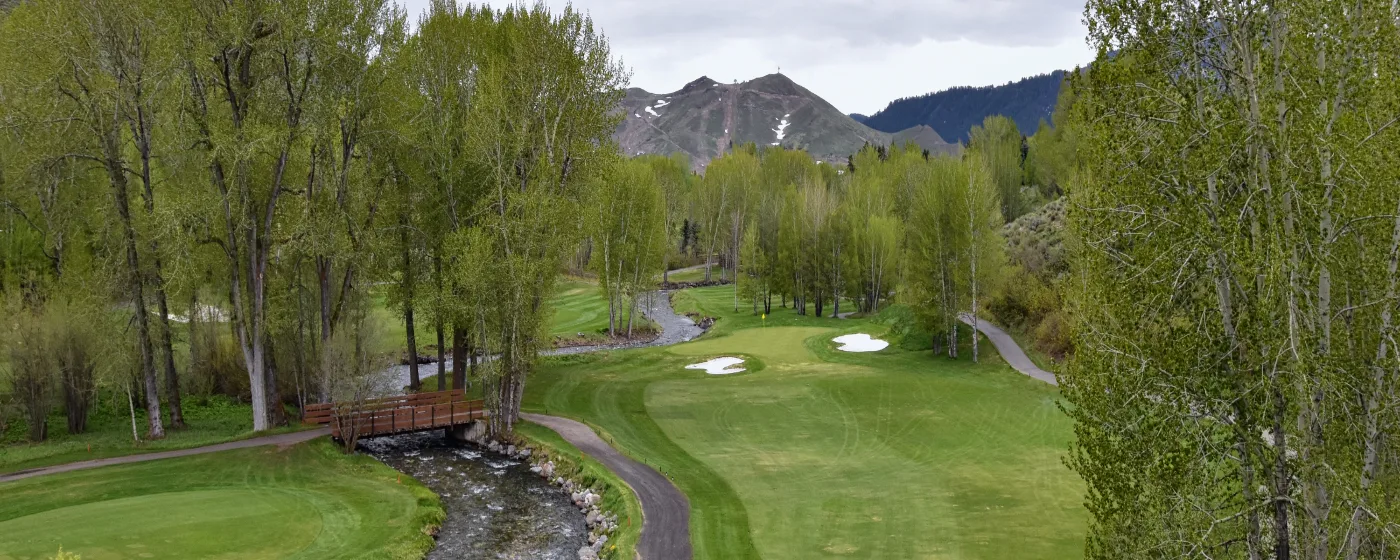
The weekend in Sun Valley organizes itself around Bald Mountain or Dollar Mountain in winter, and around the trail network and the Big Wood River in summer. The Sun Valley Golf Course, an 18-hole course set against the mountain backdrop, draws a consistent local crowd through the warm months. The Sun Valley Ice Rink — one of the oldest outdoor rinks in the country, central to the resort's original 1936 identity — is an active part of community life, not just a tourist photo stop.
On the Mountain
Baldy's 124 trails and 17 lifts across 2,457 skiable acres give full-time residents something that ski-trip visitors don't experience: familiarity with every pitch. Locals develop strong opinions about which runs ski best at which times of day, which lifts to avoid on powder mornings, and which aspects hold snow longest in spring. The March 2025 FIS Alpine Ski World Cup Finals — the first time the event came to Sun Valley — brought international racing to Baldy and raised the resort's global profile in ways longtime residents are still talking about.
Summer in the Valley
The Sun Valley Pavilion's summer concert series draws major performers to an outdoor venue against a mountain backdrop — it's the kind of cultural programming that residents of other small Idaho cities drive hours to attend. The trail system above Trail Creek and around Dollar Mountain offers mountain biking and hiking that rivals anything in the region. Fly fishing the Big Wood River is embedded in local culture, visible from the road in summer, practiced seriously by a significant share of the resident population.
The Trail Creek Walk
The short trail to the memorial above Trail Creek is the kind of local ritual that doesn't make it onto most resort visitor itineraries but that residents come back to repeatedly. It's a fifteen-minute walk from the village, quiet on most days, and genuinely worth the effort. Newcomers who find it early tend to feel more settled faster — it's a reminder that Sun Valley has a history that runs deeper than ski lifts.
The Social Scene's Honest Profile
With a median age of 56.5 and a large share of seasonal residents, the year-round social scene is tight-knit by necessity. Ketchum's restaurant row and independent cafés along Main Street are where most community gathering happens in the evenings. Sun Valley itself is quieter after hours — the resort's dining venues are excellent but carry resort pricing, and the walk-in-spontaneously energy of a busier downtown doesn't exist here. For outdoor recreation details across all seasons, the parks and recreation page covers the full trail and amenity picture.
Top Things Locals Say About Sun Valley
The best intel about a city comes from the people who actually live there. Here’s what Sun Valley residents say when newcomers ask the questions everyone’s thinking.
“I knew it would be expensive and remote — I thought I was prepared for that. What I didn't expect was how quiet it gets once the ski season ends. You really have to want the small-town part, not just the mountain part.”
— Recent Sun Valley home buyer
“What's the most surprising thing about living in Sun Valley?”
The shift between ski season and the shoulder months is more dramatic than outsiders expect. In January, Sun Valley Road is full and the village hums. By mid-April, it's almost contemplative. Longtime residents tend to love the quiet windows — late spring above Trail Creek with nobody on the trail is genuinely special — but newcomers from busier metros sometimes find the off-season harder to adjust to than they anticipated.
“What do locals love most about Sun Valley?”
Access is the word that comes up most. Being five minutes from Bald Mountain on a powder morning, walking to the Ice Rink, or running the Trail Creek trails after work — these aren't weekend treats, they're Tuesday. The Mountain Rides bus also earns real loyalty from residents who've figured out the schedule; getting to Ketchum or Hailey without driving costs nothing and runs year-round.
“What should newcomers to Sun Valley know?”
Learn the Mountain Rides schedule early — the free bus system genuinely works if you plan around it, and it goes all the way to Friedman Memorial Airport. Time your Ketchum errands around the resort's big event weekends; the traffic during World Cup season or major summer concerts is real. And don't underestimate the Highway 75 canyon section south toward Hailey in winter — it requires actual mountain driving experience, not just all-wheel drive.
“Can you live in Sun Valley without a car?”
Within the village and to Ketchum, it's genuinely possible with Mountain Rides — especially for resort employees whose shifts align with the bus routes. But getting to Hailey for school pickups, regional grocery shopping, or the hardware store reliably enough to skip a car entirely is a stretch for most households. The honest answer is: one car is workable; zero cars requires a lifestyle built very intentionally around the transit schedule.
Cities Near Sun Valley
Other communities near Sun Valley worth a look — each with its own character and price point.
| City | Distance | Best For | Vibe | Median Rent | Median Buy |
|---|---|---|---|---|---|
| Ketchum | 1 mi | Walkable daily life, dining access | Lively, arts-forward, mountain town | $2,200 | $1,386,000 |
| Hailey | 12 mi | Families, service workers, budget buyers | Practical, growing, community-rooted | $1,800 | $650,000 |
| Bellevue | 15 mi | Entry-level buyers, rural feel | Quiet, affordable, small-town Idaho | $1,600 | $550,000 |
More Helpful Guides for Sun Valley
Going deeper on Sun Valley? Our blog series covers everything from first-time buying to retiring here — explore the guides below.
Local Expert Takeaway: Sun Valley works best for buyers who already understand what a small, high-altitude resort town asks of you — and who see the Bald Mountain trail network, the Mountain Rides free bus system, the Sun Valley Ice Rink, and five-minute proximity to Ketchum as genuine daily assets rather than nice-to-haves. The city's low property tax rate and low crime rate are real financial and quality-of-life advantages. But the $1,162,529 typical home value (Zillow Home Value Index, May 2026) demands clear-eyed budgeting, and the 14 miles to Friedman Memorial Airport is a scheduling constraint you'll feel every time you travel. If those trade-offs work for your life, very few places in Idaho offer what Sun Valley does.
Quick Takeaways & FAQs
✅ Sun Valley Resort — America's first destination ski resort — gives full-time residents access to 2,457 skiable acres on Bald Mountain and a free Mountain Rides airport shuttle to Friedman Memorial, seven days a week.
⚠️ The typical home value of $1,162,529 (Zillow Home Value Index, May 2026) and a structurally small inventory of full-time listings make this one of Idaho's most competitive and expensive purchase markets.
📍 Only about 25% of housing units are occupied full-time, so the community you'll actually live in is much smaller and quieter than peak-season Sun Valley suggests — plan a shoulder-season visit before committing.
What is the typical home price in Sun Valley, Idaho?
What are the major employers in Sun Valley?
Is Sun Valley, Idaho a good place to raise a family?
How do people get around Sun Valley without a car?
What surprises people most about living in Sun Valley full-time?
Helpful Links for Moving to Sun Valley
Moving to Idaho?
Tell us what you need help with and we'll connect you with local resources.
