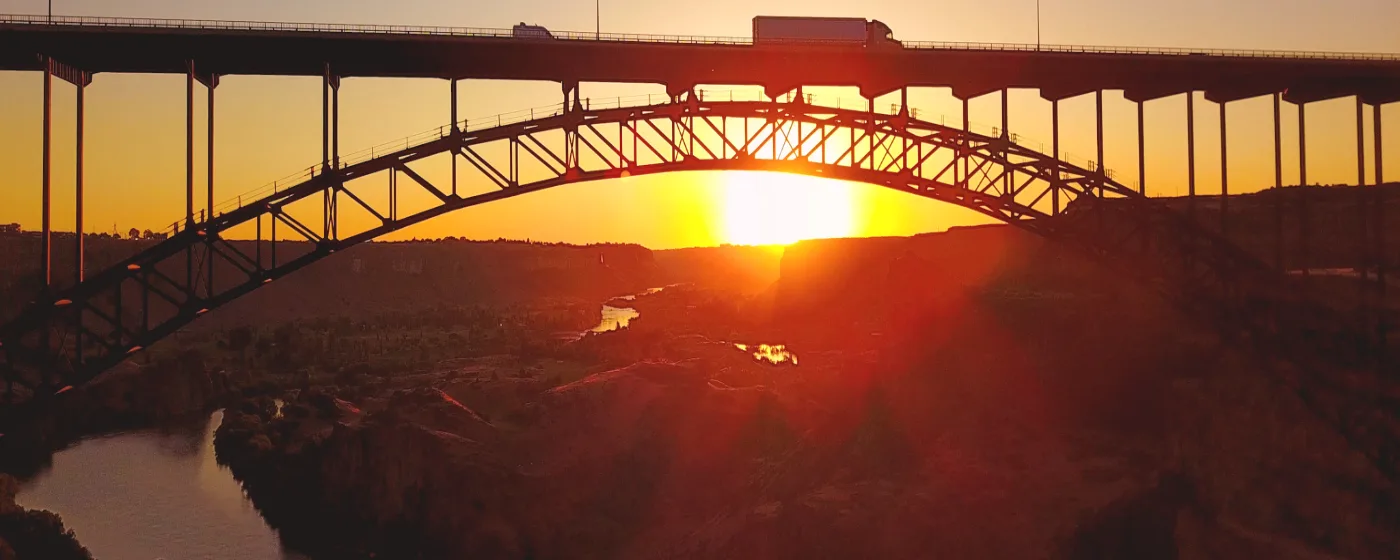
What Is Living in Twin Falls, Idaho Like?
Most people who move to Twin Falls expect a small agricultural town and find something else entirely: a fast-growing regional hub of nearly 56,000 people where a 212-foot waterfall sits inside city limits, BASE jumpers legally launch off a bridge on a Tuesday afternoon, and you can buy a home for a median of $380,000 — well below what comparable-quality homes cost in Boise. The city sits along US-84 in south-central Idaho's Snake River Canyon country, roughly halfway between Boise and Salt Lake City, which shapes both its economy and its appeal to people priced out of or burned out on larger metros.
The economic backbone here is food manufacturing at a scale that surprises newcomers. Chobani, Clif Bar, and Glanbia Nutritionals all operate major facilities in the area, making Twin Falls one of the most significant food-production corridors in the American West. The College of Southern Idaho anchors the education sector and draws a younger-than-average population — the median age is just 35.1. A major regional health system rounds out the top employers. Families with school-age children move here in part because the Twin Falls School District holds a B rating, according to Niche, and because the city is genuinely the commercial center for an eight-county region: if it isn't available in Twin Falls, you're probably driving to Boise.
The overall cost of living runs roughly 5% below the national average, with utilities noticeably cheaper than the U.S. norm — a real factor in everyday budgeting. Weekend life revolves around the canyon: kayaking and paddleboarding launch from Centennial Waterfront Park at the canyon floor, Dierkes Lake draws rock climbers to basalt walls that have no equivalent in southern Idaho, and Shoshone Falls thunders louder than Niagara in late spring. The city is adding retail and restaurants at a pace that surprises people who visited even a few years ago, with new hotel construction underway along the canyon rim and near Magic Valley Mall.
Whether you're considering a move or just researching the area, the sections below break down Twin Falls's neighborhoods, housing market, commute patterns, major employers, and what daily life here is genuinely like for people who've made the move.
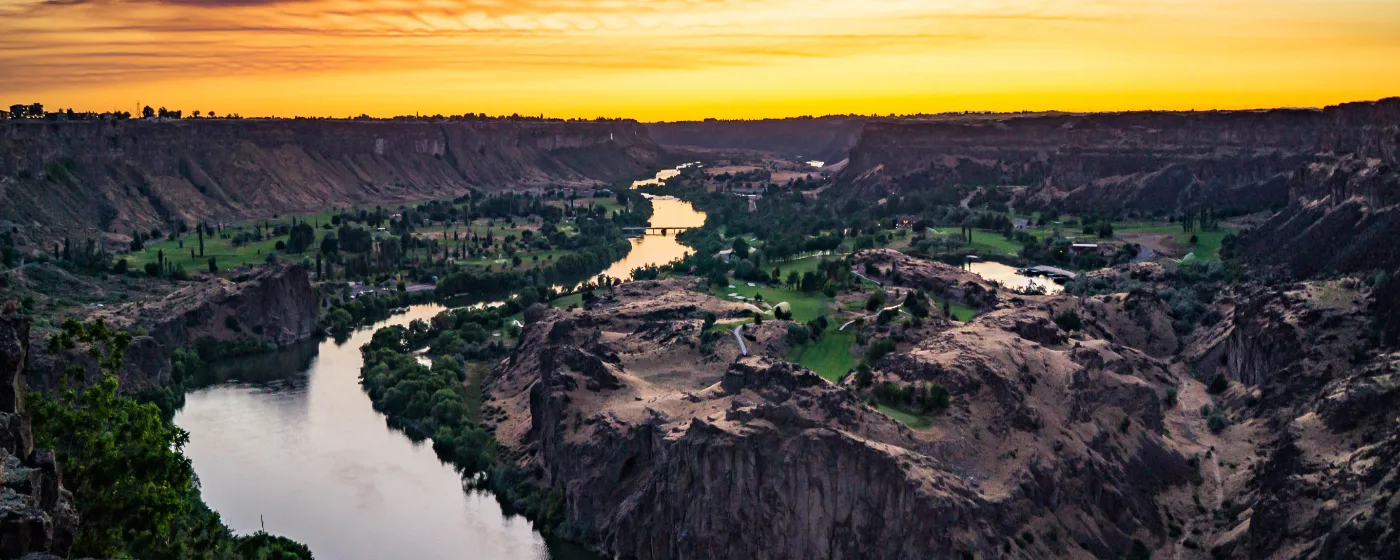
Twin Falls at a Glance
Looking to buy in Twin Falls? Estimate your payment.
Enter your numbers to see an estimated monthly mortgage payment.
Estimate only. Excludes HOA fees and mortgage insurance. The interest rate above is a starting point, not a quoted rate — replace it with your own to see real numbers. Insurance is a flat placeholder, not a Twin Falls quote.
Why Are People Moving to Twin Falls?
The people relocating to Twin Falls in 2025 and 2026 are not a monolithic group. They're Californians who did the math on housing costs, Boise transplants who wanted more space for less money, remote workers who realized they could live anywhere and picked a place with a canyon in the backyard, and young families drawn by a growing job market that doesn't require a four-hour round trip to participate in.
The Jobs Picture
Twin Falls has a genuinely diversified employment base for a city its size. Food manufacturing alone accounts for major facilities from Chobani, Clif Bar, and Glanbia Nutritionals — three companies that have put the city on the map well beyond Idaho's borders. The College of Southern Idaho employs hundreds and keeps the city's educational ecosystem anchored. A major regional health system serves the entire Magic Valley area and is consistently among the largest employers in the county.
That manufacturing-and-education combination creates something rare in smaller Idaho cities: stable employment that doesn't boom and bust with real estate cycles. The median household income of $61,205 reflects a workforce that skews toward working families rather than high-earning tech transplants.
Who Actually Thrives Here
| Buyer Type | Why Twin Falls Works | The Catch |
|---|---|---|
| Families | B-rated school district, affordable neighborhoods, strong community sports culture through IHSAA programs | Entertainment options thin compared to Boise; teens especially notice |
| First-Time Buyers | $380,000 median is achievable without an outsized income; inventory turns over in roughly 23 days | Moving quickly is essential — well-priced homes don't sit |
| Outdoor Enthusiasts | Shoshone Falls, Dierkes Lake climbing, Snake River Canyon hiking and paddling all inside city limits | No ski mountain within easy day-trip distance |
| Remote Workers | Cost of living 5% below national average; fast-growing broadband infrastructure | Limited co-working options; Boise meetings mean a 2-hour drive each way |
| Value Seekers from Boise | Substantially lower home prices without giving up full regional amenities | Boise's restaurant and arts scene doesn't have an equivalent here — yet |
| Renters Considering Ownership | Rent-to-buy gap smaller than most Idaho markets; entry-level ownership is realistic | Rental supply has tightened as the city has grown |
Six months after moving here, people from larger metros often say the same thing: they expected to miss the city more than they do. The surprise is how quickly the canyon becomes a daily part of life rather than a weekend novelty.
Growth Without the Growing Pains (Mostly)
Twin Falls is adding residents at roughly 1.5–2% per year. That's enough to drive new development — two hotels under construction, Raising Cane's open since January 2026, Panera Bread's first Twin Falls location launched in spring 2026 — without the infrastructure strain that hit Meridian and Nampa hard. Road widening along the city's main commercial spine is an ongoing source of frustration, but the city hasn't yet hit the gridlock that pushed people out of the Treasure Valley.
What you won't find here: a Trader Joe's. The nearest one is in Boise. That's a real detail that matters more than it sounds to people accustomed to specialty grocery shopping.
What Daily Life Feels Like in Twin Falls
Twin Falls is one of those places that photographs as a small town but operates as a regional city. It's the commercial center for eight surrounding counties, which means the grocery stores, the big-box retailers, and the medical offices are all here — and the rural communities around Twin Falls drive in to use them. That regional-hub dynamic shapes traffic, shapes retail, and shapes the pace of the place.
The Geographic Reality
The Snake River Canyon isn't just a scenic backdrop — it's a physical dividing line that affects daily routes, neighborhood character, and where people actually spend time. The Perrine Bridge on the city's north edge connects the canyon-rim neighborhoods to the farmland north of the gorge. Most of the city's commercial activity runs along the main commercial corridor and Addison Avenue, and those two corridors are where you'll spend a disproportionate amount of your time as a resident.
Downtown Twin Falls along Main Avenue West has the walkable coffee shop and independent restaurant energy that urban transplants look for. Koto Brewing Company on Main Ave W opened in April 2026 and is already one of the more reliably local gathering spots in the area. The downtown scene is real, if modest in scale.
What Locals Know
Spring is when Twin Falls earns its reputation. Shoshone Falls hits peak flow in May and early June — 212 feet of falls at full volume, within city limits, free to visit in the morning before crowds arrive. Newcomers who arrive in summer or fall and don't catch high-water season sometimes wait a full year to understand what the locals mean when they say it's spectacular. Don't make that mistake: visit in May.
The city's median age of 35.1 means there are a lot of young families with kids in the parks and youth leagues, and a genuinely community-oriented culture that surprised many people who expected a more transient population. Centennial Park on the canyon floor and Dierkes Lake are where locals actually go on weekends — not the mall.
What You Give Up
Live music venues are sparse. The arts scene is a fraction of what Boise offers. If live theater, a consistent concert calendar, or a diverse nightlife circuit matters to your quality of life, Twin Falls will feel limiting within a few months. That's not a criticism — it's the honest trade-off for a $380,000 median home price and a canyon in your backyard. Most people who stay decide the outdoor access outweighs what's missing.
For a deeper look at neighborhood character and which areas suit which lifestyles, the best neighborhoods guide covers the geographic divides in detail.
The Twin Falls Housing Market Right Now
The median sale price in Twin Falls was $380,000 as of May 2026, according to Redfin. That figure is striking not because it's low in absolute terms, but because of what it buys: a real house, often with a yard, in a city with full regional amenities and a canyon as your nearest state park.
The Zillow Home Value Index for Twin Falls stood at $374,978 as of July 2026, up 3.2% over the prior year — confirmation that this market is appreciating steadily without the volatility that rattled larger Idaho metros. Homes are moving to pending in roughly 23 days, which means this is not a slow market where buyers have unlimited time to deliberate.
New Construction vs. Existing Homes
New construction in Twin Falls County has commanded a median closer to the upper $380s versus around $360,000 for existing homes — a gap that's smaller here than in many comparable markets. If you're weighing a new build in the Morning Sun or Settlers Ridge areas against an older established home, the premium for new construction is real but not dramatic. Some areas command more than others, though full neighborhood-level pricing lives on the best neighborhoods page.
Market Pace and What It Means for Buyers
Twenty-three days to pending is fast enough that walking into a weekend open house, then taking a week to decide, frequently ends in disappointment. The buyers who succeed here are the ones who have already done their research and know which neighborhoods and price points align with their priorities before a specific listing goes live.
For the full breakdown on cost of living, property tax rates, and how Twin Falls compares on rent, see the cost of living page. If you're buying for the first time, the mechanics of making a competitive offer in this market are covered on the first-time homebuyer page.
Twin Falls Neighborhoods
Twin Falls has several distinct areas — each with its own character and appeal. Here’s a breakdown to help you narrow down where to focus your home search.
🏡 Morning Sun
A newer residential area on the south side of Twin Falls with tract-style and semi-custom homes appealing to families with school-age children. The neighborhood's relative newness means tighter streets and fewer mature trees, but also updated construction standards and proximity to south-side schools.
🏠 Settlers Ridge
Settlers Ridge draws families and move-up buyers looking for newer construction and neighborhood cohesion, with a mix of mid-size and larger homes on the city's growing edges. It's a car-dependent area by nature, but well-positioned for access to Twin Falls's south commercial corridor.
🌳 Sunterra
Sunterra is one of Twin Falls's more established suburban neighborhoods, with a mix of ranch-style and two-story homes that attract families and longtime residents who value a quieter residential feel. Parks and neighborhood greenspace give it a livable day-to-day character.
🏘 Canyon Rim
Canyon Rim sits along the northern edge of the city above the Snake River gorge, offering some of the most distinctive settings in Twin Falls — proximity to the Perrine Bridge and canyon overlooks sets it apart from every other neighborhood in the city. It draws buyers who prioritize views and outdoor access over square footage.
🏔 North Twin Falls
North Twin Falls covers the area north of the canyon and the Perrine Bridge, where the landscape opens into flatter terrain and properties tend toward larger lots and more rural character. It suits buyers who want breathing room and don't mind adding a few minutes to their daily commute.
🌆 McMillan
McMillan is one of Twin Falls's more established mid-city neighborhoods, with a mix of older ranch homes and updated properties within easy reach of downtown Main Avenue and the College of Southern Idaho campus. It appeals to buyers who want walkable access to the city's older commercial core.
Pros & Cons of Living in Twin Falls
The Pros
- Dramatic Snake River Canyon access and year-round BASE jumping at Perrine Bridge
- Strong food-production economy with major employers like Chobani and Clif Bar
- Low cost of living with 210 sunny days annually and moderate four-season climate
- Central Magic Valley location with easy access to Sun Valley ski resorts 90 minutes north
The Cons
- Limited air service from small regional airport
- Remote location 120+ miles from Boise
- Higher-than-state-average property crime rate
Getting Around & Commuting in Twin Falls
Twin Falls is a car city. Full stop. There is no meaningful public transit network, no rail, and the distances between where people live and where they work require a vehicle in nearly every circumstance. If you're evaluating Twin Falls as a car-free or car-light household, the honest answer is that the lifestyle you're imagining doesn't exist here yet.
Within the City
The city's main commercial spine is the primary traffic chokepoint. The intersection near Addison Avenue is where commuters from the north-side neighborhoods funnel toward the downtown and south commercial areas every morning. During school drop-off hours between 7:30 and 8:30 a.m., that corridor runs noticeably slower than the rest of the day. Most locals who've figured out the city route around it via alternate surface streets when possible.
Within the city itself, most work commutes run 10 to 20 minutes even in moderate traffic. Twin Falls is not a place where you'll spend an hour getting across town — it's not that big. The canyon rim geography actually constrains sprawl in useful ways, keeping residential neighborhoods relatively close to employment centers.
Regional Commuting Realities
Boise is approximately 120 miles northwest on US-84 — roughly a two-hour drive under normal conditions. A handful of Twin Falls residents do make that commute for hybrid or once-a-week Boise office requirements, but it's a grind that most people who try it eventually tire of within a year. This is not a Boise suburb. If your job requires regular Boise presence, rent in Twin Falls and keep a close eye on how often "a few times a week" actually stays a few times a week.
Jerome, directly across the Snake River to the north via US-93, is a 10-minute drive and a common option for workers in Twin Falls's food manufacturing corridor. Kimberly and Filer to the east and west are similarly close — under 20 minutes — and increasingly chosen by buyers who want a quieter setting with easy Twin Falls access.
Air Travel
Magic Valley Regional Airport (TWF) serves Twin Falls with regional connections, primarily to Salt Lake City. Boise Airport (BOI) is the realistic option for most direct flights, which means a two-hour drive when travel is involved. If you fly frequently for work, this is a material quality-of-life factor that doesn't show up on the spreadsheet until you've done the Boise airport run three times in a month.
A Commute Habit Worth Adopting
Locals heading to the manufacturing corridor along the north side of the river quickly learn that timing the Perrine Bridge approach before 7:15 a.m. saves meaningful time. After that, construction-related delays on US-93 near the Jerome interchange have been a recurring friction point in 2025–2026. It's not gridlock — but it's enough that seasoned commuters plan around it.
Schools in Twin Falls
Families relocating to Twin Falls have public, private, and higher-education options nearby. Here’s a quick overview.
🎓 School District
Twin Falls School District serves K–12 students across Twin Falls and the surrounding area. Rated B (source: Niche.com).
🏆 Graduation Rate
The 4-year high-school graduation rate here is approximately 81.7%.
📚 Higher Education
Idaho’s public universities — Boise State, the University of Idaho, and Idaho State — offer four-year degrees statewide, with community colleges (CWI, CSI, NIC) providing two-year and workforce programs.
🌐 Online Learning
Boise State Online and University of Idaho Online offer fully accredited online degrees for remote learners across the state.
Safety in Twin Falls
A quick look at how Twin Falls compares on the numbers that matter most when weighing a neighborhood or a move.
🛡 Violent Crime
Approximately 4 per 1,000 residents.
🔒 Property Crime
Approximately 11 per 1,000 residents.
Compared to the FBI’s most recent national data (2024), Twin Falls’s violent crime is above the national average (about 3.6 per 1,000), and property crime is below the national average (about 17.6 per 1,000).
Against Idaho as a whole, Twin Falls’s violent crime is about one and a half times the state average, and property crime is about one and a half times the state average (Bureau of Justice Statistics, Crime Known to Law Enforcement, 2024 (tables 2 and 3)).
Crime rates can vary a lot within a single city, so the citywide numbers above are only a starting point. Some neighborhoods in Twin Falls run well below these averages, while others run higher — the kind of block-by-block detail that matters most when you’re actually choosing where to live. The full guide below breaks it down neighborhood by neighborhood.
Working in Twin Falls
Twin Falls’s largest employers span several industries — here are some of the anchors of the local job market.
🛒 Chobani
Food manufacturing
🏥 St. Luke's Magic Valley Medical Center
Healthcare
🎓 College of Southern Idaho
Education
🛒 Clif Bar
Food manufacturing
🛒 Glanbia Nutritionals
Food manufacturing
Parks & Recreation in Twin Falls
Some of the outdoor spaces that shape everyday life in Twin Falls.
🌱 Shoshone Falls
🌱 Snake River Canyon
🌱 Centennial Waterfront Park
🌱 Dierkes Lake
Twin Falls residents don’t have to go far for green space — spots like Shoshone Falls and Snake River Canyon are part of everyday life here, whether that’s a morning walk, a weekend hike, or just somewhere to unwind outside. The full guide below covers more of what Twin Falls has to offer for parks and outdoor recreation.
Retiring in Twin Falls
Twin Falls draws retirees for its balance of amenities, outdoor access, and cost. Here’s what to weigh.
🌤 Climate
Twin Falls sits at roughly 3,700 feet elevation and has four distinct seasons. Summers are warm and dry — ideal for canyon and lake activity — while winters bring cold snaps and occasional snow that rarely lingers at valley level. Spring is the season most retirees point to as a revelation, particularly when Shoshone Falls runs at full volume in May.
🍴 Lifestyle
Daily life for retirees centers on outdoor access, community events at the College of Southern Idaho, and a growing downtown dining and brewery scene anchored by spots like Koto Brewing on Main Ave W. Magic Valley Mall and a full slate of national retailers handle everyday shopping, while the farmer's market and canyon trails provide the slow-weekend rhythm many retirees are seeking.
🏚 55+ Communities
Twin Falls has established active-adult communities and senior living options, with several facilities in the North Twin Falls and Canyon Rim areas serving residents across a range of independence levels. The region's growing population has driven investment in senior housing stock over the past several years. For detailed options and healthcare access, see the retiring in Twin Falls page.
✈ Getting Around
A car is essential — Twin Falls has no meaningful public transit. Within the city, most destinations are 10–20 minutes by car. Magic Valley Regional Airport offers regional connections to Salt Lake City, while Boise Airport, about two hours northwest, serves most direct-flight needs. Flat terrain and well-maintained roads make driving manageable well into later life.
🏛 Idaho Taxes for Retirees — What to Know
- Social Security is not taxed — Idaho does not tax Social Security benefits at the state level, regardless of income.
- Flat state income tax — Idaho has a flat income tax (5.3% for 2026). Other retirement income — pension distributions and 401(k)/IRA withdrawals — is taxed as ordinary income at that rate.
- Narrow retirement deduction — Idaho’s Retirement Benefits Deduction is limited: it reaches only certain government pensions (federal CSRS, Idaho firefighter/police, and military retirement) for those 65+ (or 62+ if disabled), and is reduced by Social Security received.
- Sales tax is the tradeoff — The state sales tax is 6.0%, and Twin Falls adds no local sales tax on general retail, so the combined rate is 6.0% (Idaho State Tax Commission, 2026). Groceries are taxed, but a grocery tax credit offsets part of it; prescription drugs are exempt. A small number of resort cities add a local option tax, usually on lodging, alcohol, and prepared food rather than general retail.
- Low property taxes, with senior relief — Idaho property taxes are relatively low. Homeowners 65+ who own and occupy their home may qualify for the “circuit breaker” Property Tax Reduction based on income.
- No estate or inheritance tax — Idaho has no estate, inheritance, or gift tax.
- Capital gains — Capital gains are taxed as ordinary income, though Idaho allows a deduction of up to 60% of the net gain on qualifying Idaho property.
Tax laws change frequently and individual situations vary. This is general information, not tax advice — always consult a qualified Idaho tax professional or CPA for personalized retirement tax planning.
Weekends & Local Favorites in Twin Falls
The version of Twin Falls that weekend visitors see — a quick stop at Shoshone Falls, a photo on the Perrine Bridge, lunch on Main Street — is real, but it's the surface layer. The version that residents live is anchored in the canyon, the lake, and a growing food and drink scene that didn't exist in its current form five years ago.
The Canyon Is the Backyard
Centennial Waterfront Park sits at the bottom of the Snake River Canyon and serves as the launch point for kayakers, paddleboarders, and recreational boaters who treat the Snake as their Saturday morning commute. Canyon-floor trails connect sections of the gorge that feel genuinely remote despite being minutes from downtown. Zip-line tours across the canyon run from March through September — the kind of experience that out-of-town guests can't believe is just a drive from your front door.
Dierkes Lake, city-owned and open to the public, draws a dedicated rock-climbing community to its basalt walls. Both roped routes and bouldering problems make it a destination for climbers from across the region, and on summer weekends the lake itself fills with swimmers. It's the kind of place where you'll run into your neighbors and their kids every single weekend from May through August.
Food, Drink, and Gathering
Downtown Main Avenue West is where the independent food and drink culture concentrates. Koto Brewing Company opened in spring 2026 and quickly became a community gathering point — the kind of neighborhood brewery that anchors a block rather than just serving pints. Independent cafés and locally owned restaurants are scattered along the corridor, though the scene is still developing relative to a city twice Twin Falls's size.
Shoshone Falls is worth the local's tip: arrive before 9 a.m. in May or June when flows are at their peak. The falls are 212 feet — taller than Niagara — and the experience of standing at the overlook when snowmelt is running full is legitimately stunning. Late summer visitors sometimes find a trickle and wonder what the fuss was about. Timing is everything.
What's Still Missing
A performing arts center of any scale. A consistent live music venue. A farmers market that operates year-round rather than seasonally. These are the gaps that residents who came from Portland or Denver notice most, and they're honest gaps worth naming. The College of Southern Idaho brings cultural programming that partially fills the void, but it doesn't close it. Most people who stay have made peace with a two-hour Boise trip for those experiences, treating Twin Falls as their home and Boise as their occasional city fix.
For a full rundown on parks, trails, and outdoor recreation options, the parks and recreation page covers what's available across the canyon and the surrounding Magic Valley.
Top Things Locals Say About Twin Falls
The best intel about a city comes from the people who actually live there. Here’s what Twin Falls residents say when newcomers ask the questions everyone’s thinking.
“I thought the canyon thing was a tourism pitch. Six months in, I realized it's just where we go on Saturday mornings — paddleboards in the truck, down to Centennial Park before the wind picks up. Nobody told me the outdoors would replace the restaurants I thought I'd miss.”
— Recent Twin Falls home buyer
“What's the most surprising thing about living in Twin Falls?”
The canyon genuinely becomes part of your daily life in a way that's hard to explain until you live here. You drive over the Perrine Bridge every day and watch BASE jumpers launch on a Wednesday morning like it's nothing. The Shoshone Falls overlook is a 10-minute drive from most neighborhoods, and locals treat it the way people in other cities treat a neighborhood park — something you visit casually, not as a destination.
“What do locals love most about Twin Falls?”
The pace and the access. You're not waiting in a 45-minute line at a restaurant, you're not stuck on a freeway. Dierkes Lake for climbing or swimming, the canyon trails off Centennial Park, the growing stretch of independent spots along Main Ave — the quality of life relative to cost here doesn't have many rivals in the region. And Shoshone Falls in May makes people stop talking mid-sentence.
“What should newcomers to Twin Falls know?”
Learn the rhythm of the main commercial corridor early — it clogs between 7:30 and 8:30 a.m. on school days, and again around 5 p.m. Locals route through alternate surface streets when they can. Also: visit Shoshone Falls in May or early June, not August. And don't assume you can make a Boise meeting regularly — two hours each way changes how you think about 'just a quick trip.'
“Can you live in Twin Falls without a car?”
Realistically, no. There is no functional public transit network, and distances between residential neighborhoods, employment centers, and shopping corridors require a vehicle. Even the canyon access points that feel close on a map involve a drive. This is one of the most car-dependent cities in Idaho, and newcomers who underestimate that adjustment tend to struggle with it in the first few months.
Cities Near Twin Falls
Other communities near Twin Falls worth a look — each with its own character and price point.
| City | Distance | Best For | Vibe | Median Rent | Median Buy |
|---|---|---|---|---|---|
| Jerome | 9 mi | Families and value-minded buyers | Agricultural roots, quieter streets | $1,300 | $350,000 |
| Filer | 7 mi | Buyers wanting rural space near Twin Falls | Small-town, uncrowded, community-oriented | $1,250 | $340,000 |
| Kimberly | 8 mi | Families seeking smaller-town schools | Tight-knit, slow-paced, close commute | $1,400 | $370,000 |
More Helpful Guides for Twin Falls
Going deeper on Twin Falls? Our blog series covers everything from first-time buying to retiring here — explore the guides below.
Local Expert Takeaway: Twin Falls surprises people in the same direction almost every time: they expected a farm town and found a regional hub with a world-class waterfall, a growing craft-beer scene on Main Ave W, and a housing market that's appreciating steadily without the panic-buying atmosphere that defined Boise in the early 2020s. The canyon is not a marketing angle — it's genuinely where locals spend their weekends, from kayaking off Centennial Waterfront Park to climbing the basalt at Dierkes Lake. If you can accept a car-dependent lifestyle, a two-hour drive for direct flights, and a restaurant scene that's growing but not yet deep, Twin Falls offers a quality-of-life-to-cost ratio that's increasingly hard to find anywhere in the Mountain West.
Quick Takeaways & FAQs
✅ Twin Falls is the commercial and employment hub for eight surrounding counties, giving residents access to major employers — Chobani, Clif Bar, Glanbia Nutritionals, and a major regional health system — without the big-city commute that comes with Boise.
⚠️ There is no meaningful public transit, the main commercial corridor clogs during school hours, and the Boise drive runs two hours each way — a car is not optional here, and frequent Boise office requirements make this a genuinely tough commute market.
📍 Shoshone Falls drops 212 feet inside city limits and is most spectacular in May and early June at peak snowmelt — locals visit early morning before crowds; summer visitors who miss peak flow sometimes wait a full year to understand what the hype is about.
What is the median home price in Twin Falls, Idaho?
Is Twin Falls a good place to raise a family?
How far is Twin Falls from Boise?
What are the major employers in Twin Falls?
What should I know about the cost of living in Twin Falls?
Helpful Links for Moving to Twin Falls
Moving to Idaho?
Tell us what you need help with and we'll connect you with local resources.
