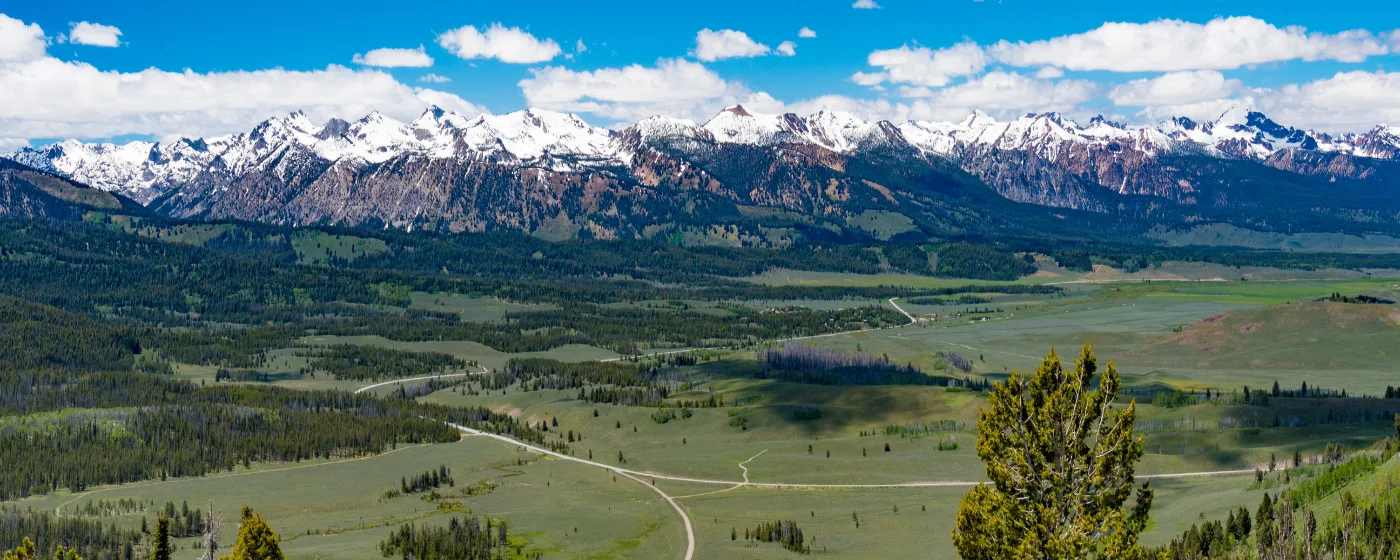
People who move to Salmon from larger Idaho cities — Boise, Twin Falls, even Idaho Falls — often say the same thing around month three: they forgot to lock their car. Not because they're careless, but because they stopped feeling like they needed to. That instinct is backed by real numbers. Salmon's violent crime rate sits at 1.52 per 1,000 residents, less than half the national rate of 3.59 per 1,000 (FBI data, 2023–2024). For a city of roughly 3,300 people set deep in the Salmon River corridor along U.S. Highway 93, that's a meaningful distinction — not a marketing slogan.
The honest context: Salmon is a small, economically modest mountain town. The median household income is $42,844, and the economy runs on public-sector anchors — a regional medical center and the U.S. Forest Service — plus the outfitter and guide industry that brings seasonal visitors to the Salmon River and the Lewis and Clark Back Country Byway. Tourism keeps the downtown corridor alive through summer. That economic mix shapes who lives here, how people interact, and the low-stakes, community-facing quality of most public spaces.
Salmon is not a zero-crime town, and no honest safety guide would claim otherwise. Property crime, at 3.64 per 1,000 residents, is the more common category — think opportunistic theft rather than organized activity. But even that figure sits well below national norms. The Sacajawea Interpretive Cultural and Educational Center draws families to the 71-acre park on the north end of Main Street all summer; the downtown Bear Statue is a gathering point, not a place people avoid. The texture of daily life here is genuinely low-tension.
Whether you're deciding on a specific neighborhood or just trying to understand what living in Salmon actually feels like day to day, the sections below break down the city's crime data, put it in state and national context, walk through the safety character of individual areas, and give you the practical picture — including what local residents say surprises them most after they arrive.

Salmon's Crime Numbers in Plain English
Salmon's violent crime rate — 1.52 per 1,000 residents — is the primary figure worth anchoring to. It comes from FBI Uniform Crime Report data for the 2023 calendar year, released September 2024, and it covers the full range of violent offenses: assault, robbery, and related incidents. For a town this size, a single unusual year can move the needle, which is why the five-year picture matters too.
Over 2019–2024, the Salmon Police Department recorded 114 violent crimes citywide — an average violent crime rate of approximately 30.6 per 100,000 residents. That sustained pattern, not just a single good year, is what gives the 1.52 figure its credibility.
| Geography | Violent Crime (per 1,000) | Property Crime (per 1,000) | vs. National Average |
|---|---|---|---|
| Salmon, ID (2023 FBI UCR) | 1.52 | 3.64 | ~57% below overall |
| Idaho Statewide (2023 FBI UCR) | 2.34 | — | ~35% below national violent |
| United States (2024 FBI) | 3.59 | — | Baseline |
Salmon's violent crime rate is roughly 35% below the Idaho statewide average — and Idaho itself ranks in the 67th percentile for safety nationally, meaning the state is already safer than roughly two-thirds of U.S. states. Salmon is safer still.
Property crime at 3.64 per 1,000 is the more relevant day-to-day concern for most residents. Over the same five-year span, the city recorded only 87 property crimes total — fewer incidents than the violent crime count, which itself is low. The category includes vehicle break-ins, theft from unlocked sheds, and the occasional porch package left too long. It does not look like what most people picture when they hear "property crime."
What the Numbers Don't Show
Salmon has no dedicated crime-mapping tool at the block level, and the Salmon Police Department's reported figures cover a small enough population that year-to-year swings can look dramatic even when the absolute numbers are modest. A year with five additional incidents registers as a meaningful percentage jump. Keep that in mind when reading headlines or aggregator sites that flag a single-year change.
How Salmon Compares to Similar Idaho Towns
Context is everything with a city this small. Comparing Salmon to Boise or Twin Falls is like comparing a rural county facility to a regional center — the scale difference makes the comparison nearly meaningless. The useful comparisons are to towns that share Salmon's population range and economic profile.
Idaho's overall crime rate fell 8.7% between 2023 and 2024, outpacing the national average decrease of 8.4% over the same period. Salmon's performance has tracked — and in most years outpaced — that statewide trend. The city's combination of geographic isolation, a tight-knit community of 3,300, and a public-employment-heavy economy produces a social environment that doesn't generate the transient-population crime patterns seen in more transit-heavy or tourism-destination towns.
| Factor | Salmon | Typical Small Idaho Town | U.S. National Average |
|---|---|---|---|
| Violent crime per 1,000 | 1.52 | ~2.0–2.5 (varies) | 3.59 |
| Property crime per 1,000 | 3.64 | ~10–15 (varies) | ~19–22 |
| Population size | 3,327 | Comparable range | — |
| Economic anchor | Public sector + tourism | Agriculture or manufacturing | — |
| Geographic isolation | High (U.S. 93, no interstate) | Varies | — |
| Overall crime vs. national | ~57% below | Varies widely | Baseline |
The 57% below national average figure comes from AreaVibes pulling 2023 FBI UCR data, and it reflects the combined violent and property picture. That's not a rounding error — Salmon genuinely performs at the lower end of the national crime distribution.
The Tourism Variable
Summer brings a noticeable influx of rafters, hunters, and Lewis and Clark history enthusiasts to Salmon. Seasonal visitors do not appear to drive measurable crime spikes in the FBI data — the outfitter economy attracts a demographic that isn't generating incident reports. The Sacajawea Center's summer programming draws families rather than crowds that create disorder. The summer energy on Main Street near Bertram's Salmon Valley Brewery is lively, not tense.

Neighborhood Safety: What the Areas Actually Feel Like
Salmon doesn't have the hard geographic divides of larger cities, but the areas are distinct enough that where you land matters for the texture of daily life. The city's full neighborhood breakdown goes deeper on character and housing stock — here, the focus is specifically on safety feel and practical considerations for each area.
Downtown Salmon
The commercial core along Main Street has the highest foot traffic in the city, which both increases visibility and brings the minor opportunistic incidents that come with any busy corridor. The presence of the Salmon Police Department and regular foot patrols keeps the area well-covered. Property incidents here — a vehicle window, an unlocked bike — are the type of risk, not assault or robbery. Best for: Walkable Commuters
Riverfront District
The stretch along the Salmon River sees significant seasonal use. It's a public-access area, which means some late-night activity during peak summer, but nothing that reads as threatening in the crime data. Residents describe it as the kind of place you walk to at dusk without a second thought. Best for: Nature Quiet
Williams Creek
Situated away from the main commercial strip, Williams Creek runs quiet year-round. The residential character means low transient traffic and neighbor-knows-neighbor density. This is where residents with long Salmon histories tend to stay put. Best for: Families Quiet
Gold Valley Estates
On the higher ground east of the city center, Gold Valley Estates has the insular quality of most low-density residential areas in mountain towns — which in practice means extremely low incident rates. The trade-off is distance from the police station, though response times in a city this small are not a meaningful concern. Best for: Privacy Views
Carmen and North Fork
These are technically separate communities north of Salmon proper along U.S. 93, not city neighborhoods in the municipal sense. The Salmon Police Department's jurisdiction doesn't extend here — Lemhi County Sheriff handles calls. For residents in these areas, that distinction is worth knowing. Crime is rare, but emergency response times are longer than anything within city limits. Best for: Nature Privacy
Elk Bend and South Salmon
Elk Bend, south of the city, shares a similar dynamic to Carmen — county jurisdiction, not city. South Salmon sits within or at the edge of city limits and carries the same low-incident profile as the broader residential areas. Neither shows up as a concern in the city's crime data. Best for: Value Quiet
Looking to buy in Salmon? Estimate your payment.
Enter your numbers to see an estimated monthly mortgage payment.
Estimate only. Excludes HOA fees and mortgage insurance. The interest rate above is a starting point, not a quoted rate — replace it with your own to see real numbers. Insurance is a flat placeholder, not a Salmon quote.
What Residents Notice About Safety (That Numbers Don't Capture)
Six months in, the thing that surprises almost everyone who moves to Salmon from a larger city isn't the scenery — it's the behavioral baseline. People wave from front porches. Kids on bikes know adults by name. At the Salmon Hockey Rink in winter and around the Lemhi County Historical Museum during summer events, there's an easy public familiarity that feels almost disorienting if you're used to city anonymity.
That's not nostalgia — it's the functional product of a 3,300-person community where anonymity is structurally difficult. The social accountability built into a small town does more for day-to-day safety than any formal security measure.
What People Move Away For — Honestly
Safety is rarely the reason people leave Salmon. The reasons that come up consistently are economic (limited career mobility, the median income reflects real constraints) and geographic isolation (the nearest regional center is a long drive on a mountain highway, and winters on U.S. 93 are not trivial). People who leave because Salmon "didn't feel safe" are rare enough that it barely registers as a departure reason.
What does occasionally create discomfort: the very small-town quality that makes the place safe can also feel claustrophobic. Everyone knows your business. Disputes between neighbors don't dissolve into the anonymity of a larger metro — they persist. That social closeness is a safety asset and a privacy cost simultaneously.
Practical Safety Research Before You Decide on a Neighborhood
The Salmon Police Department is a small department serving a small city. Officers tend to know which blocks generate repeat calls, and a direct conversation with the department — or with neighbors on a specific street — will give you more granular information than any national aggregator. Attending a Lemhi County commission meeting is a reasonable way to take the temperature of how local government and community interact. These are the research moves that map-based tools can't replicate.
Seasonality is also real. Summer tourism on Main Street means more strangers in a town where strangers are normally notable. The population effectively doubles during peak rafting season. That doesn't move crime metrics meaningfully, but it does change the social texture of downtown for a few months.
The Bottom Line on Salmon's Safety Profile
The data is consistent, and it points in one direction. Salmon's violent crime rate of 1.52 per 1,000 residents is below the Idaho state average, well below the national average, and has held at a stable low level across the five-year FBI NIBRS window. For a city of this size, that consistency is more meaningful than any single year's headline figure.
Property crime at 3.64 per 1,000 is real but modest. In a town where many people do leave cars unlocked and shed doors unlatched out of habit, the incidents that do occur are mostly opportunistic and low-stakes. That doesn't mean complacency is wise, but it does mean the worry-level is calibrated correctly when it's low.
| Safety Metric | Salmon Figure | Takeaway |
|---|---|---|
| Violent crime rate | 1.52 per 1,000 (2023 FBI UCR) | Less than half the national rate |
| Property crime rate | 3.64 per 1,000 (2023 FBI UCR) | Noticeably below national norms |
| 5-year violent crime total | 114 incidents (2019–2024) | Consistent low-volume pattern |
| 5-year property crime total | 87 incidents (2019–2024) | Fewer than violent incidents |
| vs. Idaho statewide violent rate | ~35% below (2023 FBI UCR) | Safer than the state average |
| vs. national overall crime rate | ~57% below (2023 FBI UCR) | Strong statewide + national margin |
| Idaho crime trend 2023–2024 | State down 8.7% | Salmon tracks the improving trend |
The honest caveat is that Salmon's small population means statistical volatility is real — a cluster of incidents in a single month can move annual percentages dramatically. One unusual year should not reset your assessment; the five-year trend is the more reliable signal.
If safety is your primary concern in deciding whether to move here, the data gives you a clear answer. If safety is one factor among several — cost of living, geographic isolation, economic opportunity — then it belongs on the positive side of the ledger without dominating the analysis. Salmon earns its reputation as one of the safer small cities in Idaho, and the numbers hold up to scrutiny.

Local Expert Takeaway: Salmon's crime statistics are genuinely good, not statistically massaged. A violent crime rate of 1.52 per 1,000 — sustained across five years of FBI data — puts this city well below both the Idaho state average and the national figure. The practical experience matches the numbers: residents around the Sacajawea Center, at the Hockey Rink on winter evenings, and along Main Street near Bertram's Salmon Valley Brewery move through their days with a low-tension awareness that's hard to manufacture and takes about three months to fully believe if you're arriving from anywhere larger. The one thing to research before settling on a specific area: whether you're within Salmon city limits or in the county-served corridor north toward North Fork and Carmen, because jurisdiction and response distance differ.
Quick Takeaways & FAQs
✅ Salmon's violent crime rate of 1.52 per 1,000 residents is less than half the U.S. national rate and roughly 35% below Idaho's statewide average — a margin that has held consistently across five years of FBI data.
⚠️ Property crime at 3.64 per 1,000 is real and worth being aware of, particularly for unlocked vehicles and outbuildings during peak tourist season on Main Street.
📍 Communities north of city limits — Carmen and North Fork — fall under Lemhi County Sheriff jurisdiction rather than the Salmon Police Department, which means longer response distances; worth knowing before you decide on a neighborhood in that corridor.
What is Salmon, Idaho's crime rate?
How does Salmon's crime rate compare to the rest of Idaho?
Is Salmon, Idaho safe to walk around at night?
Are there neighborhoods in Salmon that are safer than others?
Does tourism affect safety in Salmon during summer?
Moving to Idaho?
Tell us what you need help with and we'll connect you with local resources.
