
Maybe you've been priced out of Eugene and someone pointed you toward the coast. Maybe you've visited Florence a dozen times and finally decided to stay. Either way, you're walking into a market that doesn't behave like most first-timers expect. Florence is a city of 9,480 people tucked between the Oregon Dunes National Recreation Area and the Siuslaw River — small enough that every neighborhood has a personality, coastal enough that the rules of buying here are genuinely different from an inland purchase. The typical home price sits at $452,369 (Zillow Home Value Index, July 2026), which sounds manageable compared to Portland or the Bay Area. The catch is that the median household income here — $53,333 — falls well short of what's needed to comfortably carry that price. That gap is the central financial reality every first-timer in Florence has to plan around.
The market pressure compounds the income gap. Florence draws retirees cashing out California or Portland equity, vacation-home buyers who can absorb a second mortgage, and remote workers with tech salaries living on a coastal budget. First-timers without existing equity are competing directly with all of them. Near-zero rental vacancy and essentially no new construction coming online means the supply side isn't going to bail you out. For a full picture of who moves here and why, the living in Florence page covers the employer and lifestyle context; the cost of living page breaks down what your dollar actually covers day to day.
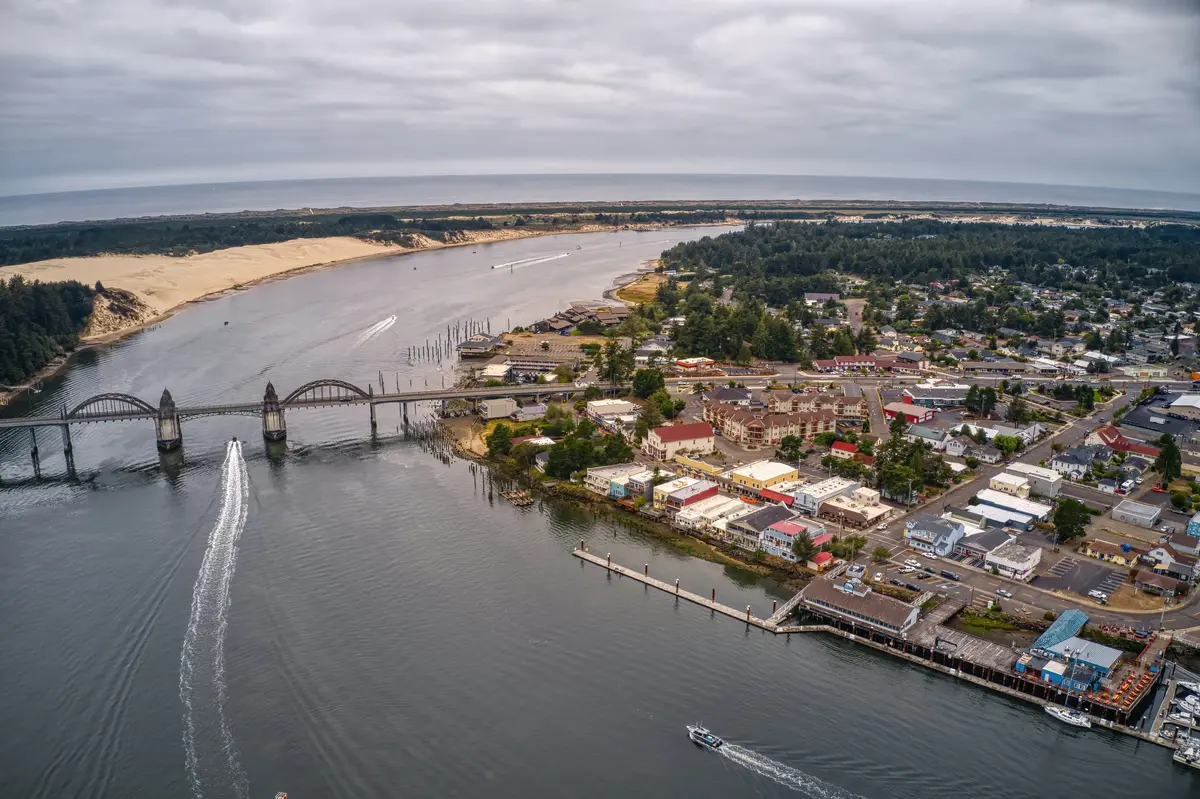
None of this means Florence is out of reach for a first-timer. It means preparation matters more here than it would in a larger, more liquid market. Entry points do exist, particularly in South Florence and other neighborhoods away from Old Town and the waterfront. And the lifestyle payoff — 160 sunny days a year, the dunes, the historic Siuslaw River Bridge, morning coffee along the boardwalk — is real enough that people make the financial stretch work. This guide covers the four things that matter most: what your budget realistically buys, how the buying process actually works here, what cash you need at the table, and where first-timers most often go wrong.
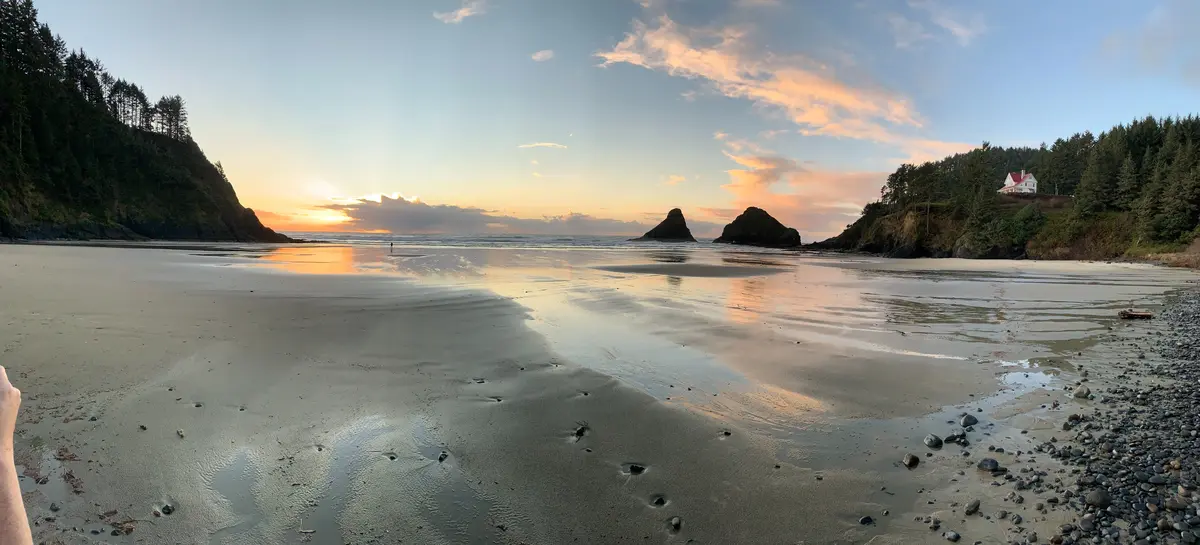
The Florence First-Time Buyer Reality
At $452,369 (Zillow Home Value Index, July 2026), Florence's typical home price reflects a coastal market with structural supply constraints — not a booming tech suburb, but not a bargain coast either. For a first-timer bringing a 3–3.5% down payment, you're looking at roughly $13,500–$16,000 down before closing costs. That math works on paper. What it buys in practice depends heavily on where in Florence you're shopping and what condition you'll accept.
The entry point into the market — older construction, smaller square footage, properties that need work — runs noticeably below the typical home price. South Florence, situated away from waterfront premium and Old Town character pricing, is where many first-timers find their footing. Neighborhoods with direct dune or river views carry premiums that push well above the city-wide figure. Understanding this range is more useful than anchoring to a single number.
The competitive reality is honest: you are not the only buyer in any price bracket. Retirees, vacation buyers, and remote workers with equity from larger markets are all active here, and many can move faster or with fewer contingencies than a first-timer using financing. That doesn't mean you lose — it means you win by being prepared. Pre-approval, coastal-specific inspection knowledge, and a clear understanding of flood zone exposure are what separate buyers who close from buyers who get frustrated and leave. For a deeper look at neighborhood character and which areas fit different buyer types, see the Florence neighborhoods guide.
The Homebuying Process in Florence, Step by Step
Step 1: Get Pre-Approved Before You Do Anything Else
This is the step Florence first-timers most consistently skip or delay. Pre-approval in a coastal market with motivated competing buyers is not a formality — it is your entry ticket. A seller receiving multiple offers in Florence will not wait for you to start the paperwork. Gather recent pay stubs, two years of W-2s and tax returns, bank and asset statements, and a government-issued ID before you approach a lender. Know your debt-to-income ratio before your lender tells you.
Step 2: Find an Agent Who Knows Coastal Properties
This matters more in Florence than it would in, say, a subdivision in Springfield. Coastal homes present specific due-diligence requirements — flood zone mapping, moisture history, septic systems in outlying areas — that a generalist agent may not flag proactively. Ask explicitly whether the agent has closed coastal purchases in Lane County.
Step 3: Shop with Flood Zone Awareness
Florence has properties in federally designated flood hazard areas, covering both riverine flooding risk and coastal high-hazard zones where wave action is a factor. If your target property sits in a designated flood zone, federally backed loans — FHA, VA, USDA — require mandatory flood insurance. That insurance cost affects your monthly payment and your qualifying ratios. Check the flood zone designation early, not after you're under contract.
Step 4: Make an Offer Grounded in Local Comparables
Florence is not a single monolithic market. Pricing varies significantly by neighborhood, condition, and how close a property sits to water or the dunes. An offer built on Eugene or Portland comparable sales will miss the mark. Your agent should be pulling Lane County coastal comparables, not regional averages.
Step 5: Take the Inspection Seriously — Especially Here
Oregon requires home inspectors to be licensed through the Oregon Construction Contractors Board (CCB). On the coast, that baseline matters less than what the inspector actually prioritizes. Coastal properties face moisture intrusion from the marine climate, salt-air corrosion on metal components and electrical fixtures, wind damage to roofing and siding, and foundation concerns from shifting soils. An inspector who primarily works inland may underweight all of these. If you're using FHA or VA financing, expect your lender to also require a separate pest and dry-rot inspection from a licensed pest control operator — wood-destroying organisms are a genuine concern in this climate, not a box-checking exercise.
Step 6: Close in 30–45 Days
Most purchase transactions on the Oregon Coast close within 30–45 days once inspections and financing are finalized. Budget your timeline accordingly — lining up homeowners insurance, flood insurance if required, and a final walk-through in that window. Don't let the scenic setting slow down your paperwork.
How Much Home Can You Afford in Florence
The table below gives a practical snapshot of what different down payment scenarios look like in Florence at several price points. Closing costs are estimated at 2–3% of the purchase price, which is the typical range in Oregon for a buyer-side transaction. These are approximations — your actual figures depend on lender fees, title and escrow charges, prepaid items, and whether any costs are negotiated into the contract.
The interactive mortgage calculator below the table lets you model your specific scenario with current rates. Property taxes in Florence run at an effective rate of approximately 0.86%, which is worth factoring into your monthly estimate — the calculator handles that, but it is also worth running separately against your pre-approval limit to make sure the monthly total fits your budget.
| Scenario | Purchase Price | Down Payment | Est. Closing Costs (2–3%) | Cash Needed at Table |
|---|---|---|---|---|
| FHA (3.5%) — entry-level | $325,000 | ~$11,375 | ~$6,500–$9,750 | ~$17,875–$21,125 |
| Conventional (3%) — entry-level | $325,000 | ~$9,750 | ~$6,500–$9,750 | ~$16,250–$19,500 |
| FHA (3.5%) — near city median | $400,000 | ~$14,000 | ~$8,000–$12,000 | ~$22,000–$26,000 |
| Conventional (3%) — near city median | $400,000 | ~$12,000 | ~$8,000–$12,000 | ~$20,000–$24,000 |
| FHA (3.5%) — at city median | $452,369 | ~$15,833 | ~$9,047–$13,571 | ~$24,880–$29,404 |
| Conventional (5%) — above median | $500,000 | ~$25,000 | ~$10,000–$15,000 | ~$35,000–$40,000 |
One cost first-timers in Florence frequently underestimate: flood insurance. If your property sits in a designated flood hazard area, you will need to budget for that premium separately — it is not included in standard homeowners insurance and must be in place at closing for any federally backed loan.
Looking to buy in Florence? Estimate your payment.
Enter your numbers to see an estimated monthly mortgage payment.
Estimate only. Excludes HOA fees and mortgage insurance. The interest rate above is a starting point, not a quoted rate — replace it with your own to see real numbers. Insurance is a flat placeholder, not a Florence quote.
Common First-Time Buyer Mistakes in Florence
Mistake 1: Shopping Before Pre-Approval
In a market where retirees and remote workers with out-of-state equity are active buyers, arriving without a pre-approval letter is not just inconvenient — it is disqualifying. Sellers in Florence regularly choose between multiple offers, and an unverified buyer is not a buyer. Get the letter before you tour a single property.
Mistake 2: Ignoring Flood Zone Status Until It's Too Late
Many buyers discover their target property is in a designated flood hazard area after they're already emotionally committed to it. Mandatory flood insurance on a federally backed loan can materially change the monthly cost of ownership. Run a flood zone check before you fall in love with a property, not after you've waived your financing contingency deadline.
Mistake 3: Using an Inspector Unfamiliar with Coastal Conditions
A general Oregon CCB-licensed inspector is legally qualified to inspect any home in the state. That doesn't mean every inspector is equally equipped for a coastal property. Salt-air corrosion, moisture intrusion behind siding, and wood-destroying organisms in the crawl space require specific attention that an inspector whose practice is primarily inland may not provide. Ask your inspector directly how many coastal Lane County properties they've inspected in the past year.
Mistake 4: Underbudgeting the Total Cash Needed
First-timers frequently calculate their down payment and assume that's the number to save toward. In Florence, closing costs of 2–3% of the purchase price mean you need meaningfully more than the down payment alone. At the city's typical home price, the gap between "down payment saved" and "ready to close" can be $10,000–$15,000 or more. Add flood insurance premiums, any required pest inspection, and initial reserve funds, and the total cash needed at the table is almost always higher than first-timers expect. Build that full number before you start touring — not after you're in contract.
Mistake 5: Treating Florence as One Market
Pricing, demand, and what a given dollar buys vary significantly across Florence's neighborhoods. Old Town character properties and anything with dune or river frontage price differently than South Florence or Three Mile Prairie. A buyer who makes every offer based on one reference price, rather than neighborhood-specific comparables, will either overbid on modest properties or underbid on desirable ones. Your agent should be pulling comparables at the neighborhood level, not the city level.

Local Expert Takeaway: Florence rewards prepared buyers and punishes the ones who arrive casually. The typical home price of $452,369 (July 2026) is real, the competition from equity-rich buyers is real, and the coastal inspection and flood zone requirements add layers that a standard Oregon purchase doesn't carry. Get your pre-approval done, ask your inspector directly about coastal experience, and check the flood zone designation before you schedule a showing. South Florence offers the most realistic entry points for buyers working with a smaller down payment. The buyers who close here are the ones who showed up ready.
Quick Takeaways & FAQs
✅ Florence's coastal lifestyle — Oregon Dunes, the Siuslaw River waterfront, and 160 sunny days a year — is a genuine draw that makes the financial stretch worth it for many first-time buyers.
⚠️ The median household income falls well short of what's needed to carry the typical home price here, so honest budgeting and a full cash-at-table calculation are non-negotiable before you start shopping.
📍 Coastal properties in Florence may fall in federally designated flood hazard zones, triggering mandatory flood insurance on FHA and other federally backed loans — check the flood zone status before you tour, not after you're under contract.
What credit score do I need to buy a home in Florence, Oregon?
Is Florence, Oregon a good place to buy a first home?
Do I need flood insurance to buy a home in Florence?
What are typical closing costs for a home purchase in Florence, Oregon?
How long does it take to close on a home in Florence, Oregon?
Moving to Oregon?
Tell us what you need help with and we'll connect you with local resources.
