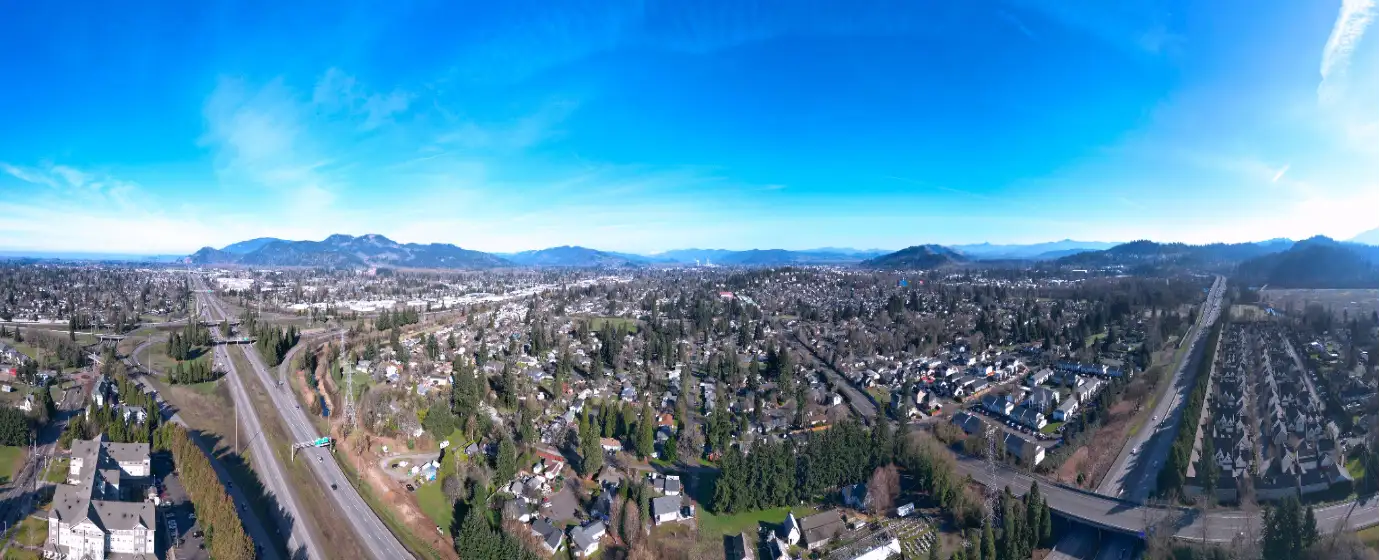
What Is Living in Springfield, Oregon Like?
Most people discovering Springfield for the first time arrive through Eugene — and that comparison does more harm than good. Springfield is not Eugene's discount neighborhood. It is a city of 61,182 people with its own downtown, its own park district, its own industrial base, and its own stubborn identity. The two cities share a metro and sit separated mainly by I-5, but longtime residents will correct you fast if you call Springfield a suburb. What actually shapes daily life here is the intersection of blue-collar manufacturing history, a growing healthcare and tech economy, and the kind of affordability that has become genuinely rare anywhere near the Willamette Valley.
The economic backbone of Springfield runs through PeaceHealth Sacred Heart Medical Center, Springfield Public Schools, Lane County government, the City of Springfield itself, and International Paper — a manufacturing anchor that traces the city's roots back to its founding in 1885 as a logging and timber town. The broader Eugene-Springfield metro has added a technology layer over the past decade, with a regional cluster of technology companies sometimes called the Silicon Shire. Springfield Public Schools is a mid-size district that holds a C rating, according to Niche — a starting point worth reading more about on the schools page before drawing conclusions. Families moving here from larger metros often find the tradeoffs on schools manageable against the city's other advantages.
The typical home price in Springfield was $421,652 as of July 2026 (Zillow Home Value Index) — noticeably below Eugene and well below what buyers are leaving behind in the Bay Area or Seattle. The Willamalane Park and Recreation District, a voter-formed special district operating since 1944, maintains 46 parks and natural areas covering more than 1,500 acres, along with roughly 29 miles of trails. Eugene Airport (EUG) sits about 14 miles away. Springfield gets 158 sunny days a year, which is accurate and worth knowing before you fall in love with the idea of Oregon outdoor life — you will spend real time in the rain. For a full picture of costs, see the cost of living page.
Whether you're weighing a move from the Bay Area, getting priced out of Portland, or just researching the Eugene-Springfield metro seriously for the first time, the sections below break down Springfield's neighborhoods, housing market, commuting patterns, daily life, and the local spots that make the city worth understanding on its own terms.
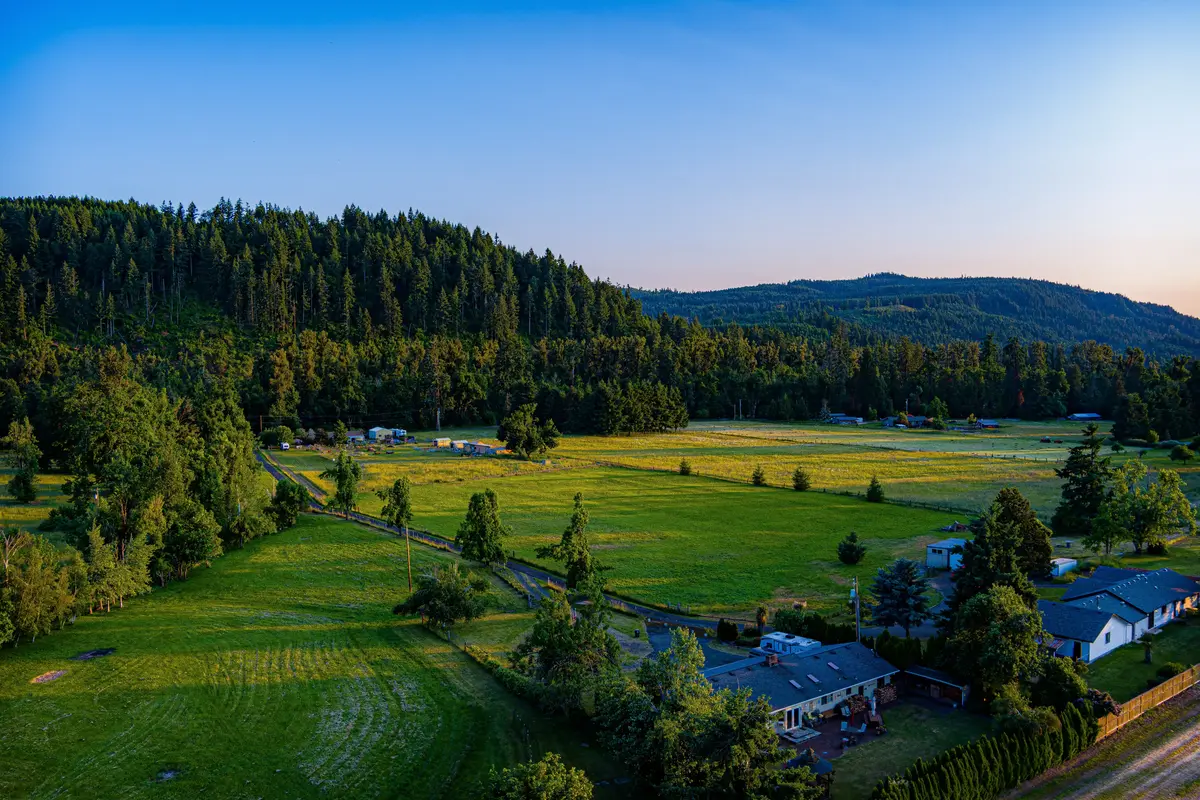
Springfield at a Glance
Looking to buy in Springfield? Estimate your payment.
Enter your numbers to see an estimated monthly mortgage payment.
Estimate only. Excludes HOA fees and mortgage insurance. The interest rate above is a starting point, not a quoted rate — replace it with your own to see real numbers. Insurance is a flat placeholder, not a Springfield quote.
Why Are People Moving to Springfield?
The honest case for Springfield starts with what it costs relative to where most newcomers are coming from. Buyers leaving the Bay Area, Portland's westside, or Seattle consistently say the same thing within a few months of closing: they did not expect to actually like the city itself. They came for the price and stayed for the life.
The Affordability Angle — and Its Honest Limits
Springfield's typical home price sits noticeably below Eugene's and is roughly competitive with Creswell to the south. That gap matters to buyers who want a house with a yard and a commute into the broader metro. One important caution: the median household income here is below what's needed to comfortably buy at today's typical price — by a meaningful margin — so affordability is real by West Coast standards, but it is not the same as easy.
The effective property tax rate sits at approximately 0.77%, which is low relative to most of the Pacific Northwest. Oregon has no sales tax, which compounds the savings on everyday spending. For buyers comparing costs across the full picture, the cost of living page has the complete breakdown.
Who Actually Moves Here
The profile is not one kind of buyer. Remote workers from California and the Pacific Northwest tech corridor come for the price and the access to outdoor recreation. Healthcare workers relocate for PeaceHealth. Teachers and public employees follow the school district and county government jobs. Parents with school-age children often land in Thurston or Hayden Bridge for the neighborhood feel and the proximity to east Eugene schools and activities.
Springfield also attracts buyers who specifically do not want Eugene's political and cultural intensity — people who want a quieter, more working-class city where the pace is different. That preference is real and not a knock on either place. The two cities are genuinely different in character, and many buyers choose between them based on feel as much as price.
The Economic Pull
Springfield was founded in 1885 on logging and manufacturing, and that identity has not fully dissolved — International Paper remains a significant employer and the industrial corridor along the city's northern edge is active. But the city's economy has layered healthcare, education, and technology over those roots. The Springfield Economic Development Agency maintains two active urban renewal districts in Glenwood and Downtown Springfield, and the city is investing in infrastructure in ways that show up on the ground. Springfield is not coasting.
What Daily Life Feels Like in Springfield
Springfield surprises people who arrive expecting a tired mill town. The city has real civic infrastructure — a dedicated park district, an art center, a community theater, a history museum, and a farmers market — and a downtown that is actively being rebuilt rather than hollowed out.
The Geographic Reality
I-5 is the psychological and practical divide between Springfield and Eugene. East of the freeway, Springfield's neighborhoods feel more spread out, more car-dependent, and more working-class in texture. The Glenwood district, tucked between the two cities along the Willamette River, sits in a transformation zone — the city's urban renewal agency has long-term redevelopment plans for the riverfront, and the bones of what it could become are starting to show. West Springfield bleeds into the commercial corridor along the McKenzie Highway, where most of the big-box retail and chain services concentrate.
What Locals Know
The Willamalane Park and Recreation District operates independently of the city itself — it is a voter-created special district with its own funding and its own facilities. That distinction matters because the park system here is genuinely good relative to the city's size: 46 parks and natural areas, 10 waterfront areas, and a recreational infrastructure that serves the community year-round. Willamalane Park itself includes a splash pad that becomes a genuine social hub for families with younger children through the warmer months.
Dorris Ranch Living History Farm is the city's most historically significant landmark — a 268-acre park on the National Register of Historic Places, recognized as the first commercial filbert orchard in the United States, established in 1892. More than half of all commercial filbert trees growing in the country today trace back to nursery stock from this site. The park grounds and orchard remain open; it also serves as the western starting point of the Middle Fork Path, a paved four-mile trail running east to Clearwater Park. Island Park, along the Willamette, is where the city shows up on a warm Saturday.
What Surprises People After Six Months
Newcomers consistently underestimate how much of Springfield's social life organizes itself around the outdoors and the park system rather than restaurants and nightlife. The dining scene is real but modest — you will not find the density of Eugene's Whiteaker neighborhood here. What you will find is a city where the trails, the river, and the parks do the heavy lifting on community life, and where that turns out to be enough for most people who chose this place deliberately.
The rain is the other adjustment. Cloudy, gray stretches from November through March are long and relentless. Buyers arriving from California in the summer routinely underweight this. The city gets 158 sunny days a year — not a typo, and not a worst-case figure. Plan your winter accordingly.
The Springfield Housing Market Right Now
The typical home price in Springfield was $421,652 as of July 2026 (Zillow Home Value Index). That figure places Springfield meaningfully below Eugene and roughly on par with Creswell — making it one of the more attainable entry points in the Willamette Valley without leaving the metro entirely.
What That Number Buys
At that price point, buyers in Springfield are generally looking at single-family homes built between the 1950s and 1990s, with newer construction concentrated in the Thurston and Jasper Meadows areas on the eastern edge of the city. The housing stock in the Washburne Historic District skews older — mid-century bungalows and craftsman-era homes — and tends to attract buyers who want character and a walkable neighborhood over square footage. Neighborhoods like Gateway and North Springfield offer more utilitarian housing at accessible price points. For a full breakdown of what each area looks and feels like, the neighborhoods page has the detail.
Rental Market
The typical two-bedroom rent in Springfield runs between $1,540 and $1,880 per month, with a city-wide typical rent of $1,678 per month (Zillow ZORI, July 2026). That range positions Springfield as noticeably more affordable than Eugene on the rental side as well — relevant for buyers who need time in the market before purchasing, or who are relocating and want to rent for a year to understand the neighborhoods before committing.
The Market in Practice
Well-priced homes in desirable Springfield neighborhoods do not sit. Buyers who come in without clarity on which areas they actually want — and there is real variation across the city — tend to move slowly and miss good opportunities. Understanding the geographic differences across Springfield's neighborhoods before you make an offer is one of the most useful things you can do. Springfield is not a uniform market, and treating it as one is a common early mistake.
Springfield Neighborhoods
Springfield has several distinct areas — each with its own character and appeal. Here’s a breakdown to help you narrow down where to focus your home search.
🏡 Thurston
Springfield's largest eastern neighborhood draws families with kids and remote workers who want newer housing stock, quieter streets, and easy freeway access without the density of the city's commercial core. The area feels more suburban in character than anywhere else in Springfield.
🏠 Gateway
The most transit-connected part of Springfield, anchored by the EmX Bus Rapid Transit station that links to Downtown Eugene and the University of Oregon. Gateway is more commercial and less residential in texture, but it suits buyers who prioritize commute options over neighborhood quiet.
🌳 Washburne Historic District
Springfield's most walkable and architecturally distinct neighborhood, with craftsman bungalows and mid-century homes along tree-lined streets — this is where the city's independent coffee shops and local character concentrate most visibly, and it attracts buyers who want a sense of place over square footage.
🏘 North Springfield
A more utilitarian, working-class part of the city with older housing stock and some of the most accessible price points within Springfield's city limits — practical for buyers prioritizing value over aesthetics, and close to the industrial and commercial corridors.
🏔 Glenwood
Tucked between Springfield and Eugene along the Willamette River, Glenwood is an urban renewal district in active transition — the Springfield Economic Development Agency has long-term redevelopment plans for the riverfront, making it a neighborhood with real upside and real uncertainty for buyers willing to be early.
🌆 Hayden Bridge
A quieter residential area on Springfield's northern edge that attracts families and buyers who want proximity to the McKenzie River corridor without being far from city services — the housing stock is a mix of eras, and the pace of life here is noticeably slower than the commercial corridors to the west.
Pros & Cons of Living in Springfield
The Pros
- Significantly more affordable housing than neighboring Eugene
- Easy access to the McKenzie and Willamette Rivers for outdoor recreation
- Extensive Willamalane park and bike-path system
- Short commute to Eugene's jobs, University of Oregon, and downtown amenities
The Cons
- Property crime rates run above state and national averages in some areas
- School district ratings trail nearby Eugene districts
- Frequent gray, rainy winters typical of the Willamette Valley
Getting Around & Commuting in Springfield
Springfield's position in the Eugene-Springfield metro is a genuine asset for commuters. The city sits at a hub of regional highways, with I-5, I-105, and the McKenzie Highway all running through or along the city's edges. That network gives residents fast access to Eugene, to I-5 north toward Corvallis and Salem, and to the McKenzie River corridor heading east.
The Drive to Eugene
The commute to Eugene runs about 12 minutes under normal conditions — one of the shorter cross-city drives in the Oregon metro context. That said, the connections along the McKenzie Highway through the commercial corridor can slow considerably during the morning and afternoon peak, particularly where it feeds into downtown Eugene. Most residents learn the timing quickly and adjust.
Bus Rapid Transit Worth Actually Using
Lane Transit District (LTD) operates the Emerald Express, known as the EmX — a Bus Rapid Transit line connecting Springfield's Gateway district, the RiverBend medical campus, Downtown Springfield, Downtown Eugene, and the University of Oregon. Service runs frequently enough on weekdays that many residents near a station do not bother consulting a schedule. For residents living near an EmX station, this is a genuinely useful alternative to driving into Eugene — particularly for workers at the medical center or the university. LTD also runs RideSource, an ADA-accessible paratransit service for seniors and riders with disabilities across the metro. All LTD buses carry bike racks.
Car Dependence Is Still the Default
Most of Springfield requires a car for daily errands. The commercial corridors handle grocery runs, hardware stores, and most routine shopping, but they are not walkable in any meaningful sense — they are designed for cars and function accordingly. The downtown core and the Washburne Historic District are the exceptions, where on-foot access to coffee, food, and some services is genuinely possible. Buyers who want to walk to anything regularly should be deliberate about which part of Springfield they choose.
Employers and the Reverse Commute
A notable share of Springfield residents commute into Eugene for work — particularly toward the University of Oregon, Lane Community College, and the concentration of tech and professional services firms in Eugene's core. The reverse is also true: workers at PeaceHealth Sacred Heart Medical Center at RiverBend, which sits within Springfield's city limits, draw from across the metro. International Paper's Springfield operations pull from the surrounding region. Remote workers have settled here in growing numbers, particularly in the Thurston and Hayden Bridge areas, where newer housing and quieter streets make working from home easier to manage day to day.
Schools in Springfield
Families relocating to Springfield have public, private, and higher-education options nearby. Here’s a quick overview.
🎓 School District
Springfield Public Schools serves K–12 students across Springfield and the surrounding area. Rated C (source: Niche.com).
🏆 Graduation Rate
The 4-year high-school graduation rate here is approximately 76.9%.
📚 Higher Education
Oregon’s public universities — the University of Oregon, Oregon State University, and Portland State University — offer four-year degrees statewide, with a network of 17 community colleges providing two-year and workforce programs.
🌐 Online Learning
Oregon State University Ecampus and Portland State University Online offer fully accredited online degrees for remote learners across the state.
Safety in Springfield
A quick look at how Springfield compares on the numbers that matter most when weighing a neighborhood or a move.
🛡 Violent Crime
Approximately 3.3 per 1,000 residents.
🔒 Property Crime
Approximately 28 per 1,000 residents.
Compared to the most recent national figures from the Bureau of Justice Statistics (2024), Springfield’s violent crime is below the national average (about 3.7 per 1,000), and property crime is above the national average (about 18.4 per 1,000).
Against Oregon as a whole, Springfield’s violent crime is about the same as the state average, and property crime is somewhat above the state average (Bureau of Justice Statistics, Crime Known to Law Enforcement, 2024 (tables 2 and 3)).
Crime rates can vary a lot within a single city, so the citywide numbers above are only a starting point. Some neighborhoods in Springfield run well below these averages, while others run higher — the kind of block-by-block detail that matters most when you’re actually choosing where to live. The full guide below breaks it down neighborhood by neighborhood.
Working in Springfield
Springfield’s largest employers span several industries — here are some of the anchors of the local job market.
🏥 PeaceHealth Sacred Heart Medical Center
Healthcare
🎓 Springfield Public Schools
Education
🏛 Lane County
Municipal government
🏛 City of Springfield
Municipal government
🏭 International Paper
Manufacturing
Parks & Recreation in Springfield
Some of the outdoor spaces that shape everyday life in Springfield.
🌱 Willamalane Park
🌱 Clearwater Park
🌱 Island Park
Springfield residents don’t have to go far for green space — spots like Willamalane Park and Clearwater Park are part of everyday life here, whether that’s a morning walk, a weekend hike, or just somewhere to unwind outside. The full guide below covers more of what Springfield has to offer for parks and outdoor recreation.
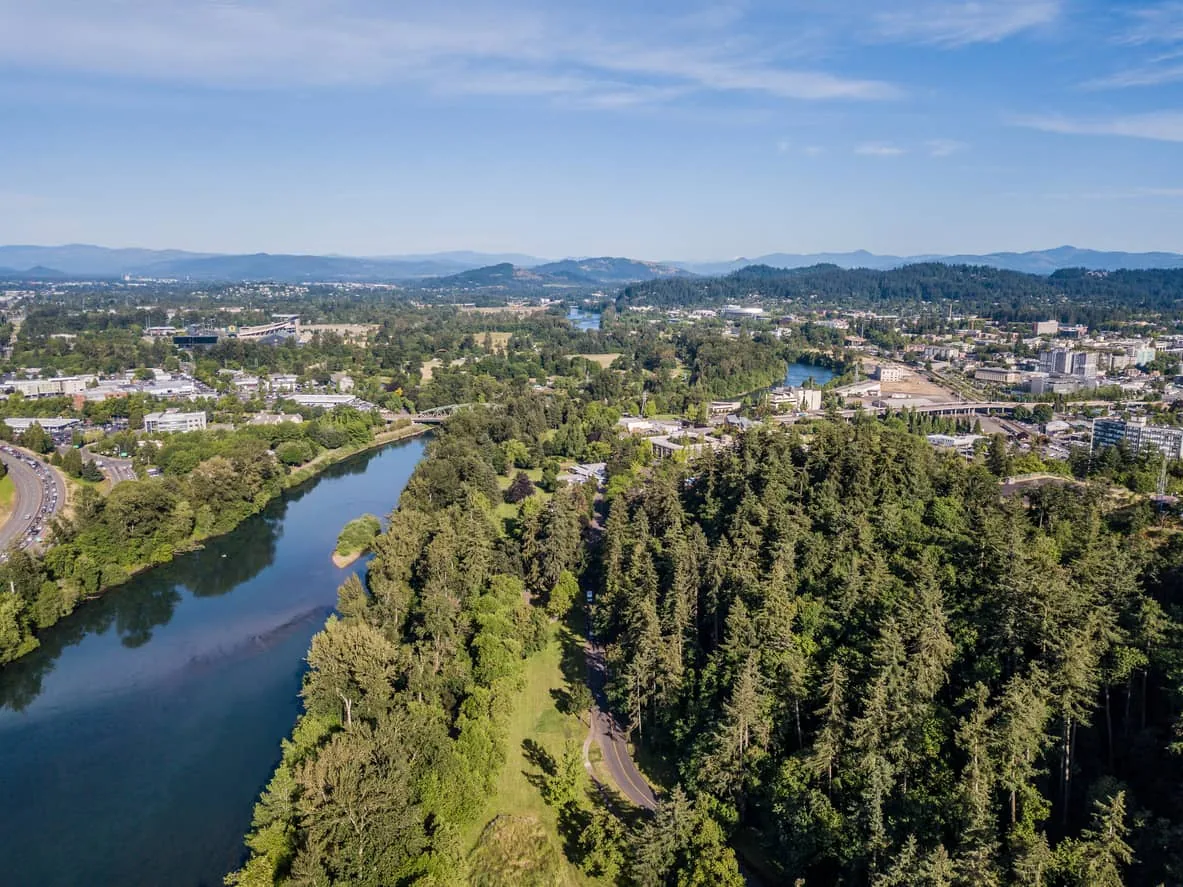
Retiring in Springfield
Springfield draws retirees for its balance of amenities, outdoor access, and cost. Here’s what to weigh.
🌤 Climate
Springfield sits in the southern Willamette Valley with mild, wet winters and warm, dry summers. The city gets 158 sunny days a year — well below what many retirees relocating from the Southwest expect. Summers are genuinely beautiful, with low humidity and comfortable temperatures; winters are gray and damp from November through March, which suits some retirees and wears on others.
🍴 Lifestyle
The Willamalane Park and Recreation District gives retirees access to 46 parks, roughly 29 miles of trails, waterfront areas along the Willamette, and recreation facilities. A community theater, the Emerald Art Center, and the Springfield History Museum provide cultural anchors. Eugene is about 12 minutes away for the University of Oregon's lecture series, performing arts, and the broader restaurant and arts scene.
🏚 55+ Communities
No 55+ communities were found in Springfield. Retirees considering the area typically look at single-family homes in established neighborhoods like Washburne or Thurston, or explore options in nearby Eugene. The retiring in Springfield guide has more on what the healthcare and lifestyle picture looks like for older residents.
✈ Getting Around
Most daily errands in Springfield require a car; the EmX Bus Rapid Transit line provides useful transit for the Eugene-Springfield corridor. Lane Transit District's RideSource paratransit service offers ADA-accessible, origin-to-destination rides for eligible seniors and riders with disabilities across the metro. Eugene Airport (EUG) is approximately 14 miles from Springfield.
🏛 Oregon Taxes for Retirees — What to Know
- Social Security is not taxed — Oregon does not tax Social Security or Railroad Retirement benefits. Any amount included in your federal adjusted gross income is subtracted back out on the Oregon return.
- But other retirement income IS taxed — This is the trade-off that surprises people moving from Washington or Texas. Pension distributions and 401(k)/IRA withdrawals are taxed as ordinary income at Oregon’s regular rates — there is no blanket retirement-income exclusion.
- Graduated income tax — Oregon has four brackets — 4.75%, 6.75%, 8.75% and 9.9%. The 4.75% rate covers the first $10,000 of taxable income for a single filer ($20,000 filing jointly); the 8.75% rate starts at $125,000 ($250,000 jointly); and the top 9.9% rate applies above $250,000 ($500,000 jointly).
- No sales tax — Oregon levies no general sales tax.
- Property taxes, with senior deferral — Oregon’s Senior and Disabled Property Tax Deferral lets qualifying homeowners have the state pay their county property taxes, with a lien recorded against the home. The 2026 household income limit is $70,000, and deferred balances accrue 6% simple interest — it defers the bill rather than forgiving it.
- Estate tax — the one to plan for — Oregon has its own estate tax with a $1 million filing threshold — far below the federal exemption, and NOT indexed for inflation, so it reaches more estates every year in real terms. Retirement accounts and a long-held home count toward the taxable estate, so estates that feel modest can cross the line without the owner expecting it.
- No inheritance tax — Oregon has no separate inheritance tax and no gift tax.
Tax laws change frequently and individual situations vary. This is general information, not tax advice — always consult a qualified Oregon tax professional or CPA for personalized retirement tax planning.
Weekends & Local Favorites in Springfield
Springfield's weekend rhythm runs through its parks and trails more than its restaurant row — but the food and coffee scene has real character for a city of its size, concentrated enough that regulars have their spots and stick to them.
Where People Actually Gather
Island Park along the Willamette is the city's warm-weather center of gravity — the kind of place where you run into your neighbors without planning to. Clearwater Park sits at the eastern end of the Middle Fork Path, the paved four-mile multi-use trail that connects it to Dorris Ranch Living History Farm on the west. That trail, which runs through Willamalane's network, is the commuter and recreation corridor that locals use year-round. Willamalane Park and Splash Pad draws families with younger kids reliably through the summer season.
The Lane County Farmers Market in Springfield and Herrick Farm Store round out the local food-sourcing picture for residents who want to shop close to home. Neither requires a trip to Eugene.
Food, Coffee, and the Local Anchors
Plank Town Brewing Company is Springfield's most prominent local brewery — a gathering spot that functions as a community anchor in a way a chain restaurant never could. Hole in the Wall BBQ Springfield has a loyal following for exactly the kind of no-frills, serious barbecue the name promises. Hawaiian Island Grill brings a flavor profile you would not expect to find anchored in a mid-valley Oregon city, and it works. PublicHouse and Prime Time Sports Bar & Grill fill out the casual end of the scene for residents who want a local spot without crossing into Eugene.
On the coffee side: Lovely All Day Café, The Washburne Café, Native Coffee Company, Crema and Bloom, and Fast Lane Coffee Co give the city a genuine independent coffee culture. The Washburne Café, in particular, sits at the heart of the historic district that shares its name — the kind of neighborhood coffee shop that becomes part of a morning routine quickly.
Arts and Culture
The community theater in Springfield is a genuine regional venue — it presents live performances and hosts community productions that draw from across the metro. The Emerald Art Center and the Springfield History Museum give the city a cultural footprint that is easy to overlook if you're only looking at the commercial corridors. These are not afterthoughts; they are the places that make Springfield feel like a city with an actual civic life rather than a strip mall with a zip code.
Local favorites in Springfield
Restaurants
- Hawaiian Island Grill
- Plank Town Brewing Company
- Prime Time Sports Bar & Grill
- PublicHouse
- Hole in the Wall BBQ Springfield
Outdoors
- Dorris Ranch Living History Farm
- Clearwater Park
- Island Park
- Willamalane Park and Splash Pad
- Middle Fork Path
Coffee
- Lovely All Day Café
- The Washburne Café
- Native Coffee Company
- Crema and Bloom
- Fast Lane Coffee Co
Farmers Markets
- Herrick Farm Store
- Lane County Farmers Market (Springfield)
Top Things Locals Say About Springfield
The best intel about a city comes from the people who actually live there. Here’s what Springfield residents say when newcomers ask the questions everyone’s thinking.
“I knew the commute to Eugene was short, but I didn't expect how quickly I'd stop making that drive. Once I found the EmX stop near Gateway and realized I could get to my office without fighting the highway traffic, the car became a weekend thing. What nobody told me was how much I'd end up spending time in the parks instead of driving somewhere more interesting.”
— Recent Springfield home buyer
“What's the most surprising thing about living in Springfield?”
Most people are surprised by how much the Willamalane park system does for quality of life. Forty-six parks sounds like a number until you're on the Middle Fork Path on a clear February afternoon and realize you haven't left the city. Island Park along the Willamette becomes your default weekend destination without you planning it that way. The park district operates independently from city government and it shows — the facilities are well-maintained in a way that catches newcomers off guard.
“What do locals love most about Springfield?”
The honest answer is the price-to-life ratio. You're in the Willamette Valley, you're about 12 minutes to Eugene when you want it, you have the McKenzie River corridor heading east for serious outdoor recreation, and your housing costs are noticeably lower than on the other side of the freeway. The city has enough of its own identity — Plank Town, the community theater, the Washburne neighborhood, Dorris Ranch — that it doesn't feel like a fallback choice. People who picked Springfield deliberately tend to stay.
“What should newcomers to Springfield know?”
Two things: first, the difference between the east side and west side of I-5 matters more than it looks on a map. Thurston and Hayden Bridge are genuinely different in feel from the Gateway corridor, and from Glenwood, which is still figuring out what it's going to be. Spend time in each area before you commit to a neighborhood. Second, the rain is long. From November into March, gray and wet is the baseline. Buyers who plan their winter around the trail network and the park facilities do better than those waiting for sunny days.
“How much do you need a car in Springfield?”
For most of the city, a car is essential for daily life — groceries, hardware, routine errands all require driving. The EmX rapid transit corridor is the real exception: if you live and work near a station between Gateway and Downtown Springfield, the bus is frequent enough that plenty of people use it as their primary Eugene commute. In the Washburne Historic District and parts of downtown, on-foot access to coffee and some daily needs is genuinely workable. Outside those zones, plan to drive.
Cities Near Springfield
Other communities near Springfield worth a look — each with its own character and price point.
| City | Distance | Best For | Vibe | Median Rent | Median Buy |
|---|---|---|---|---|---|
| Eugene | 3 mi | University access, arts, dining scene | College-town energy, walkable core | $1,808 | $482,062 |
| Coburg | 9 mi | Rural quiet, small-town character | Tiny, slow-paced, historic | $1,500 | $480,000 |
| Creswell | 13 mi | Budget buyers, valley commuters | Small, affordable, growing | $1,400 | $420,000 |
More Helpful Guides for Springfield
Going deeper on Springfield? Our blog series covers everything from first-time buying to retiring here — explore the guides below.
Local Expert Takeaway: Springfield is the kind of city that rewards buyers who do their homework before committing to a neighborhood. The EmX rapid transit line makes the Gateway-to-Eugene commute genuinely car-optional for workers near a station; Thurston and Hayden Bridge offer newer housing and quieter streets for families; and the Washburne Historic District gives you walkable coffee, character housing, and the city's best sense of place. The typical home price of $421,652 (July 2026) is real value by Willamette Valley standards — but the city's income-to-price gap means buyers should go in clear-eyed about what they can carry at current rates. Get on the Middle Fork Path on a dry October morning and you will understand why people who move here stop looking.
Quick Takeaways & FAQs
✅ Springfield's typical home price of $421,652 (July 2026) is noticeably below Eugene's — real Willamette Valley affordability without leaving the metro.
⚠️ Springfield Public Schools holds a C rating, according to Niche, and on 2024-25 state assessments proficiency rates were below state averages — families should research individual schools carefully before choosing a neighborhood.
📍 The EmX Bus Rapid Transit line connects Springfield's Gateway district to Downtown Eugene and the University of Oregon with frequent weekday service — the most functional transit corridor in the metro.
Is Springfield, Oregon a good place to live?
What is the difference between Springfield and Eugene, Oregon?
How are the schools in Springfield, Oregon?
What are the best neighborhoods in Springfield, Oregon?
How do you get around Springfield without a car?
Helpful Links for Moving to Springfield
Moving to Oregon?
Tell us what you need help with and we'll connect you with local resources.
