Maybe you've been comparison-shopping between Springfield and Eugene and wondering whether the school district is the dealbreaker. Maybe your company is relocating you to the southern Willamette Valley and you've got kids in tow. Either way, the first honest thing to say about Springfield Public Schools is this: the district holds a C rating, according to Niche, and the state assessment numbers are below Oregon averages. That's the full picture on paper. What the numbers don't capture is a district that has posted its highest-ever graduation rate, has real program depth if you know where to look, and is backed by one of the strongest municipal recreation systems in the region through the Willamalane Park and Recreation District.
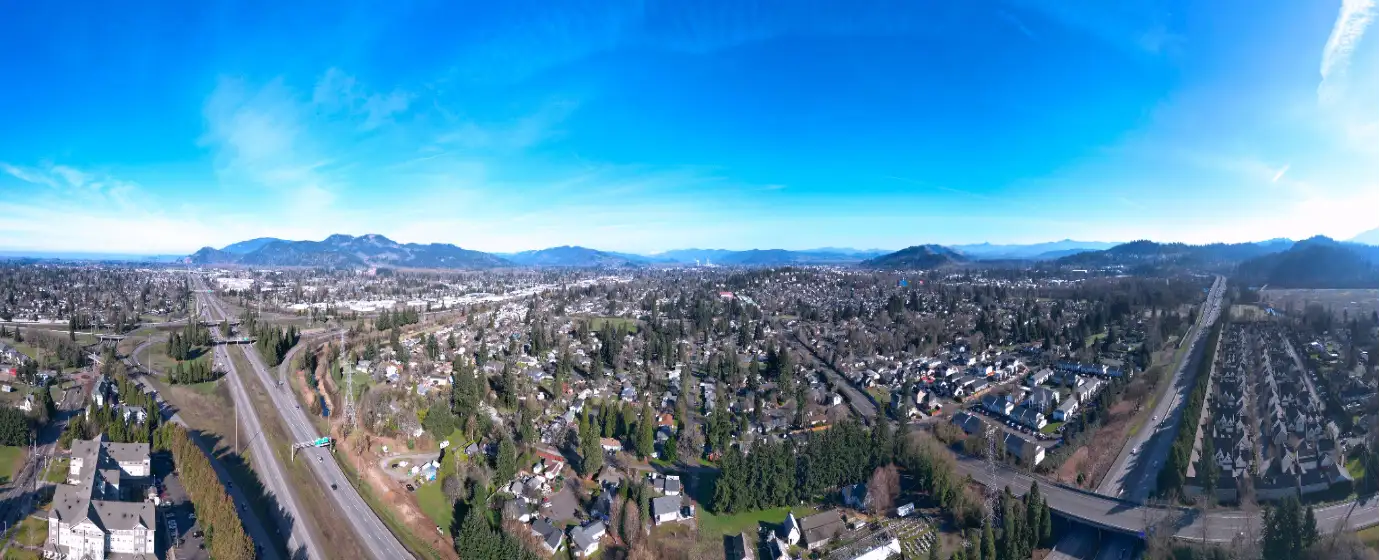
Springfield is a city of 61,182 on the eastern edge of the Eugene metro, separated from its larger neighbor by a few miles and a meaningful gap in home prices. Springfield Public Schools — formally District 19 — is the city's dominant employer after a regional health system and serves the entire city from its roughly 20 PreK–12 campuses. The district's enrollment of 8,929 students enrolled in 2025-26 reflects a community that skews working-class and increasingly diverse, and the schools mirror that honestly: strong on inclusion and dual-language programming, still working on closing stubborn academic proficiency gaps. The 2025 Oregon Teacher of the Year, a special education teacher named Sally Golden, came out of this district — which tells you something about where its strongest educators are putting their energy.
For families weighing the move, the schools question rarely has a clean answer here. On 2024-25 state assessments, 25.2% of students reached math proficiency and 37% reached reading proficiency — figures that place the district below the state average and will concern parents who prioritize test performance. At the same time, the district's graduation rate hit 76.9% for the Class of 2025, a record high and part of a 15-year upward trend. The gap between those two data points is the real story: a district that keeps more students on the path to a diploma even as academic proficiency on standardized tests remains a challenge. Whether that trade-off works for your family depends entirely on what you're optimizing for. For a full look at how Springfield's typical home price of $421,652 (July 2026) shapes affordability alongside school decisions, see the cost of living page.
Whether you're deciding between Springfield and a neighboring district or just trying to understand what daily school life looks like here, the sections below cover the district's structure and ratings, its three most distinctive schools, the youth sports and after-school ecosystem, and an honest take on who this district may not suit.
Springfield Public Schools: The District at a Glance
Springfield Public Schools is a PreK–12 district running roughly 20 schools across the city, with 8,929 students enrolled in 2025-26. It holds a C rating, according to Niche — a composite that factors in academics, teachers, diversity, and college readiness. That grade is not a surprise given the underlying numbers, but it is also not the whole picture.
On 2024-25 state assessments, 25.2% of students reached math proficiency and 37% reached reading proficiency. Those figures come from Oregon's Smarter Balanced assessment system, covering grades 3 through 8 and grade 11, and they sit below Oregon averages. The district's own leadership has been direct about the gap rather than defensive about it — the fall 2024 academic year brought new supplemental phonics materials for early readers, updated English language arts curriculum, new instructional materials for middle school science and high school math, and the expansion of librarian positions to full-time. Whether those investments move the needle will show in the next round of state data.
The graduation metric is the counterweight worth understanding. The Class of 2025 graduated at a 76.9% four-year on-time rate — the district's highest ever, and part of a 15-year upward trend. That number includes students who arrive in Springfield with significant barriers: English language learners, students experiencing housing instability, and kids who transfer in mid-stream. A graduation rate that keeps rising in that context says something real about counselor and staff investment, even when test scores don't follow.
The district operates four high schools — two large comprehensive campuses and two smaller schools of choice — which gives families more genuine options at the secondary level than a district of this size typically offers. At the elementary level, program diversity is more uneven, but the dual-language offering at Two Rivers–Dos Ríos is the kind of thing that draws families specifically to Springfield rather than away from it.
| Metric | Springfield Public Schools |
|---|---|
| District rating (Niche.com) | C |
| Enrollment (2025-26) | 8,929 students |
| Math proficiency (2024-25) | 25.2% |
| Reading proficiency (2024-25) | 37% |
| Graduation rate (Class of 2025) | 76.9% |
| Number of schools | ~20 PreK–12 |
| High schools | 4 (2 comprehensive, 2 schools of choice) |
Three Schools Worth Knowing About
Springfield High School — The Millers
Springfield High is the district's original comprehensive high school, the one whose Friday night football games fill the bleachers and whose mascot — the Millers — has been around long enough to be a genuine source of local identity. It serves grades 9 through 12 with active OSAA athletics programs across a range of sports, plus a full slate of performing arts and extracurriculars. For families moving to Springfield who want the full traditional high school experience, this is it.
The campus draws students from across the city, meaning the social environment is genuinely diverse in terms of background and interest. Parents who went through comprehensive public high schools in other Oregon cities will recognize the shape of it, even if the academic stats look different from what they're used to.
Best for: Families who want a full-featured, community-rooted comprehensive high school with active athletics and school spirit.
Academy of Arts & Academics (A3)
A3 is a smaller public high school of choice — meaning any Springfield student can apply — built around project-based learning rather than a conventional lecture-and-test model. Alumni describe it consistently as a place where students who didn't fit the traditional mold finally found their footing, and where staff actively work to build a culture of support and acceptance. It draws students who are creative, self-directed, or who struggled in larger, more conventional settings.
The scale matters: a smaller campus with a more intentional culture is a fundamentally different daily experience than the comprehensive high schools. For some students that's exactly the point; for others it can feel limited in the extracurricular range. The thing that doesn't change is the community texture — families who choose A3 tend to be deliberate about it, which creates a specific kind of parent engagement.
Best for: Students who thrive in project-based environments, self-directed learners, and families looking for an alternative to the comprehensive high school model within the public system.
Two Rivers–Dos Ríos Elementary
Two Rivers–Dos Ríos is the district's Spanish-English dual-language immersion program, running kindergarten through fifth grade. Spanish-English immersion at the public elementary level is genuinely uncommon in the southern Willamette Valley, and families who want their kids bilingual before middle school specifically seek this school out. The program also includes gifted and talented support and English Language Development services, meaning it serves a range of students rather than just the academically advanced.
The practical reality of an immersion program: you are committing to the full arc. Parents who enroll a kindergartner and then pull them in third grade because the Spanish instruction feels like too much are frequent enough that the school addresses it during orientation. The program rewards families who stay in it, but it requires a level of intentionality that not every family is prepared for.
Best for: Families committed to bilingual education from the start, including native Spanish-speaking families and English-speaking families specifically seeking language immersion.

Youth Sports and After-School Activities
The youth sports infrastructure in Springfield runs deeper than the school district alone — which is actually the strength of it. Willamalane Park and Recreation District operates in close partnership with Springfield Public Schools, running after-school sports programs on school campuses themselves. That partnership eliminates the transportation problem that kills after-school participation in a lot of cities: the programs happen where the kids already are.
The Willamalane After-School Programs
Willamalane's after-school sports lineup covers basketball and track and field for elementary schoolers, and adds cross country, soccer, volleyball, and flag football at the middle school level. Programs are designed to be open to all skill levels — the philosophy here is participation over selection — and financial scholarships are available, which matters in a community where the median household income sits at $68,761. No parent should feel priced out of a recreation league, and Willamalane has structured the programs to make that a real commitment rather than a stated one.
Willamalane Sports Park
For competitive and club-level youth sports, Willamalane Sports Park is the primary venue in the city. Four artificial turf fields with lighting make it usable year-round and into the evening — important in a region that gets meaningful rainfall from October through May. The fields host soccer, football, lacrosse, baseball, and softball, serving both recreational leagues and club programs. The lighting is the detail that separates this from a standard municipal park: kids can actually finish a full season in the Pacific Northwest without losing half the schedule to weather or darkness.
Soccer: Recreational and Club Options
Soccer has the deepest organized infrastructure of any youth sport in Springfield. A recreational soccer league serves families looking for a local, low-pressure entry point. For families who want more competitive play, Lane Youth Soccer Association (LYSA) is the club option, accepting players ages 4 through 19 with no tryouts and no cuts — running fall and spring outdoor seasons plus a summer camp in August. The no-cut policy is worth noting for families of younger or developing players who are not ready for the selective club environment they might encounter in a larger metro.
The Two50 Youth Center
The Two50 Youth Center, inside the Bob Keefer Center, is one of the more practical pieces of the after-school ecosystem: free drop-in activities for middle schoolers, available after school through the late afternoon. For parents working standard hours, the gap between school dismissal and the end of the workday is a real logistical problem. Two50 addresses it directly, at no cost. It's the kind of program that doesn't show up in school rankings but makes a significant daily difference for working families.
School Athletics
At the high school level, the district's OSAA athletics programs give student-athletes a full competitive calendar. Springfield High's Millers and Thurston High's Colts both field teams across the major sports, and school athletics are a genuine part of the community fabric in Springfield in a way that shows up on fall Friday nights and spring weekends at the ballfields. The district's smaller schools of choice offer activities as well, though the range is naturally narrower.
Looking to buy in Springfield? Estimate your payment.
Enter your numbers to see an estimated monthly mortgage payment.
Estimate only. Excludes HOA fees and mortgage insurance. The interest rate above is a starting point, not a quoted rate — replace it with your own to see real numbers. Insurance is a flat placeholder, not a Springfield quote.
What the District Does Well
The graduation trend is the clearest evidence of something working. A 76.9% four-year on-time rate for the Class of 2025, the highest in the district's history and part of a 15-year climb, does not happen by accident in a district serving this demographic mix. It reflects sustained investment in the students most at risk of not finishing — through counseling, credit recovery, and the kind of adult-student relationship that makes a marginal student feel like someone is paying attention.
Program diversity is the second genuine strength. Most districts this size offer one path through high school. Springfield offers four, including a full-featured dual-language elementary program that starts in kindergarten. The Academy of Arts & Academics exists as a real alternative for students who are bright and creative and entirely wrong for the conventional classroom. These aren't the same schools rebranded — they operate with genuinely different cultures and pedagogical approaches.
The Willamalane partnership is the third piece. Most school districts treat recreation as someone else's job. Springfield has a direct partnership between the district and Willamalane that puts after-school sports on school campuses, with scholarship access built in. That is an infrastructure advantage that a lot of families moving from larger cities won't expect to find in a city of 61,182.
Finally: Sally Golden, a Springfield Public Schools special education teacher, was named the 2025 Oregon Teacher of the Year by the Oregon Department of Education. Individual recognition doesn't tell you everything about a district, but it does tell you that exceptional educators are choosing to build their careers here — and in special education specifically, which is often the most under-resourced corner of any district.
Who This District Is Not the Right Fit For
Be direct with yourself about what you're looking for, because there are families for whom Springfield Public Schools is the wrong choice — and knowing that before you buy is better than figuring it out six months later.
Families Prioritizing Academic Test Performance
If state assessment scores are the primary lens through which you evaluate a school district, Springfield will be a difficult fit. On 2024-25 state assessments, 25.2% of students reached math proficiency and 37% reached reading proficiency. Those are the numbers. The district is working on them, and the fall 2024 curriculum updates were aimed directly at the reading gap, but there is no evidence yet that the assessments have moved significantly. Families who moved from higher-performing districts and are expecting a similar academic environment on paper will find Springfield's numbers are not comparable.
Families Seeking Private or Charter Alternatives
Springfield's school-of-choice options are within the public district. If you're looking for a private school ecosystem or a robust charter school network, Springfield does not have one. Eugene, about 12 minutes away, has more private school options, but those come with tuition and a daily commute that adds friction to the school-day routine.
Families Who Need Program Certainty
Ask the district directly which programs are running each year before making housing decisions around a specific school or offering. Elective programs, counseling staff levels, and extracurricular rosters can shift between school years. Families who have navigated program changes in other districts know to confirm rather than assume. The district's budget committee sessions are public and a practical way to stay informed about what is and isn't funded going forward.
Families Who Need Predictability Above Everything
Springfield is a district in motion — graduation rates climbing, curriculum updates rolling out, program offerings evolving year to year. For families who value institutional stability above all else, that combination of genuine improvement and ongoing change can feel unsettling. The trajectory is mostly positive, but it is not the settled, well-resourced suburban district experience that some families are looking for. Eugene's schools serve a different demographic and carry different ratings; if that comparison matters to you, see the neighborhoods page for more on how the two cities' geographic and community divides play out on the ground.
What Families Actually Experience After Moving Here
The thing that surprises families most in the first school year is how community-oriented the activity calendar is. Willamalane runs events year-round, school sports draw genuine crowds, and the sheer number of after-school pathways — recreational soccer leagues on weekends, Willamalane programs on campuses after dismissal, the Two50 drop-in center — means kids who want to be engaged almost always have somewhere to be. Parents coming from cities where after-school activity requires extensive driving and significant expense find the Springfield setup unexpectedly accessible.
The harder adjustment is academic expectations. Parents who relocated from districts in California, Washington, or higher-performing Oregon districts report that the academic pacing in Springfield's comprehensive schools can feel slower than what their kids experienced. This is especially true in math, which tracks with the state assessment data. Families who come in expecting to supplement at home — or who are prepared to advocate for advanced coursework — tend to navigate this better than those who expected the district to carry it.
The dual-language program at Two Rivers–Dos Ríos draws families from well outside the immediate neighborhood, and that self-selected community tends to be among the more engaged parent groups in the district. If you're moving to Springfield with a kindergartner and bilingual education is a priority, the program's reputation within the city is strong enough that it functions almost like a school-of-choice magnet — families plan their housing around it.
Friday night football at Springfield High is a genuine community event, not a formality. The stands fill up, the student section is loud, and for families who grew up with that kind of high school atmosphere, it lands exactly the way it should. It's one of the clearest signals that school life in Springfield is embedded in community life in a way that doesn't show up on a Niche rating. For a broader look at how Springfield's neighborhoods and parks fit into daily family life, the parks and recreation page covers Willamalane's full facility network.
Local Expert Takeaway: Springfield Public Schools holds a C rating according to Niche, and the 2024-25 assessment numbers are honest about where proficiency gaps remain. But the district's graduation rate hit a 15-year high with the Class of 2025, and the combination of dual-language immersion at Two Rivers–Dos Ríos, a genuine alternative in the Academy of Arts & Academics, and Willamalane's deep after-school sports network gives families more real options than a C rating implies. Come in with clear priorities — if test scores are the measure, Eugene may suit you better; if you want an accessible, community-rooted school and activity ecosystem at a lower entry cost, Springfield's infrastructure is stronger than its ratings suggest.
Quick Takeaways & FAQs
✅ Springfield Public Schools posted a record 76.9% four-year graduation rate for the Class of 2025, part of a 15-year upward trend — a meaningful signal of sustained student support despite below-average test scores.
⚠️ On 2024-25 state assessments, only 25.2% of students reached math proficiency and 37% reached reading proficiency — families prioritizing academic test performance should weigh this carefully before committing.
📍 Willamalane Park and Recreation District runs after-school sports directly on school campuses with scholarships available, and the Two50 Youth Center inside the Bob Keefer Center offers free drop-in programming for middle schoolers — a safety net for working families that few cities of Springfield's size provide.
What rating does Springfield Public Schools have?
Does Springfield have any magnet or choice schools?
What youth sports are available in Springfield outside of school?
How does Springfield's school district compare to Eugene's?
How stable are programs in Springfield Public Schools?
Moving to Oregon?
Tell us what you need help with and we'll connect you with local resources.
