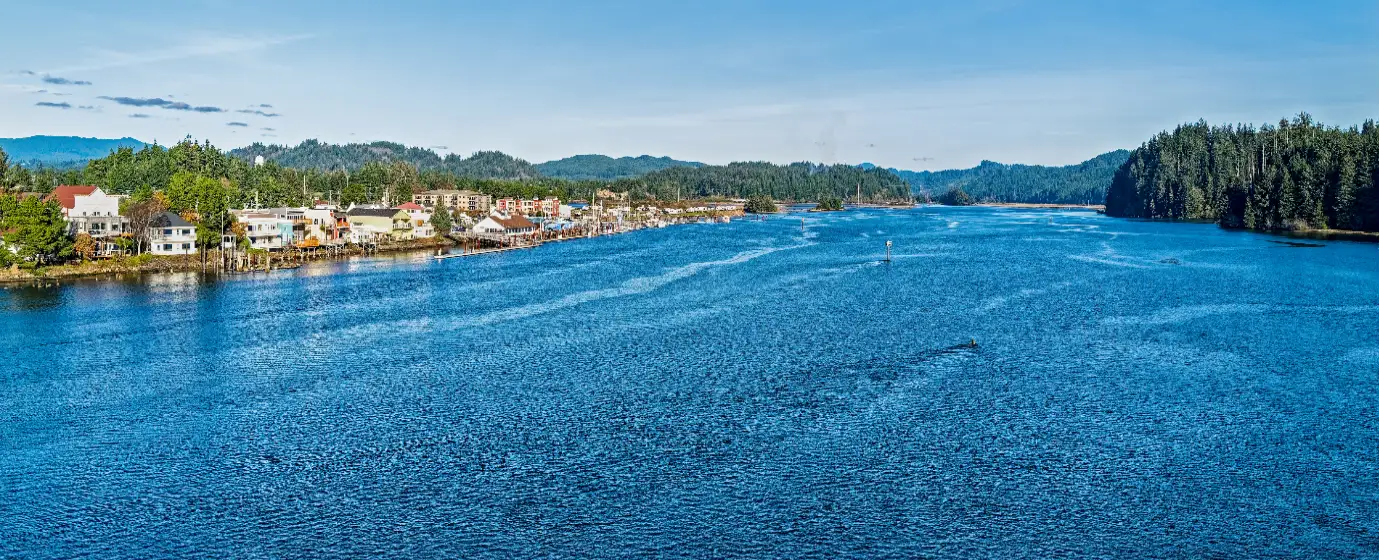
Most people who retire to Florence arrive expecting a quiet coastal town and leave surprised by how much of a real community it turns out to be. Florence sits where OR-126 meets US-101 on the central Oregon Coast — a genuinely small city of 9,480 people anchored by the Siuslaw River, framed by dunes on one side and dense coastal forest on the other. It is not a bedroom community for somewhere else. It is a destination in itself, and for retirees, that distinction matters more than almost anywhere else on the coast.
The economic backbone here is healthcare, education, hospitality, and local government — PeaceHealth Peace Harbor Medical Center alone is one of the largest employers in the city. That matters for retirees not just as a source of local stability but as a direct quality-of-life factor: a functioning hospital inside city limits is not a given at this latitude on the Oregon Coast. The median household income of $53,333 is modest, and the city skews noticeably older than Oregon's statewide average, which shapes everything from the pace of daily life to what the local social calendar looks like.
The typical home price in Florence stood at $452,369 as of July 2026 — well below what coastal California or even Portland-metro markets would ask for comparable square footage, though still above what a median household income here can comfortably carry without a substantial down payment or paid-off equity from elsewhere. Oregon's property tax rate runs at approximately 0.86% effective here, and the state's no-sales-tax posture keeps daily out-of-pocket costs lower than most western states. For retirees moving from high-tax states, those two facts alone change the math meaningfully.
Whether you're seriously weighing a move or still at the research stage, the sections below cover what retirement in Florence actually looks like: healthcare depth and honest distance-to-care realities, the retiree tax picture, daily costs, walkability and community, downsizing options, and how Florence stacks up against nearby alternatives on the coast and inland.
Why Retirees Are Choosing Florence
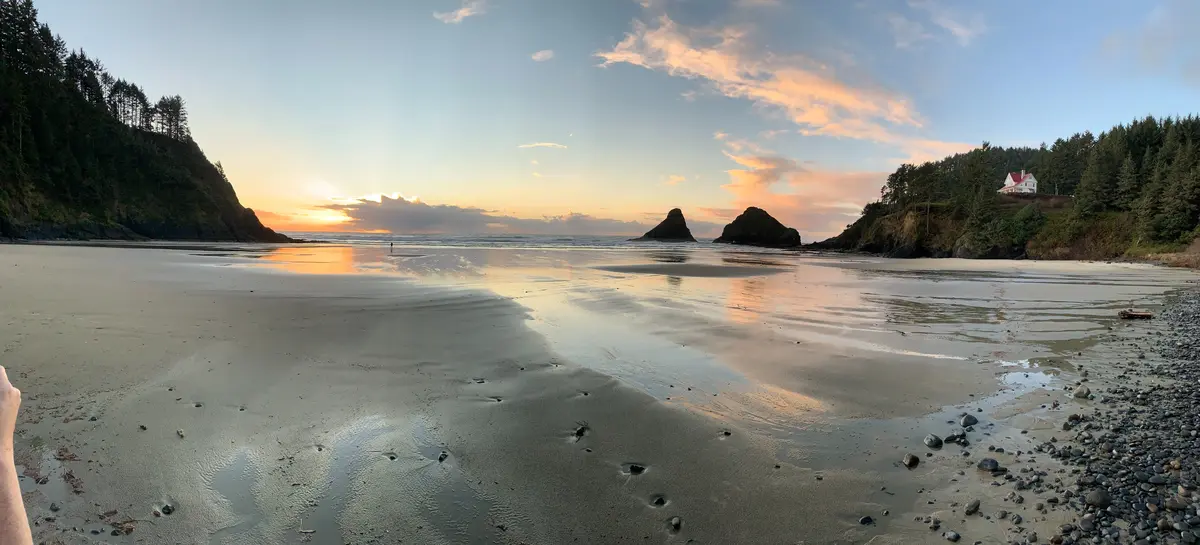
Florence is a genuine fit for retirees who want a small-town pace, a real sense of community, and outdoor access that doesn't require a car or a trail map to navigate. The Siuslaw River waterfront, the Oregon Dunes National Recreation Area, and Cleawox Lake at Jessie M. Honeyman Memorial State Park are all close enough to become part of a weekly routine — not a special occasion.
The city's older demographic skew is an asset here, not a limitation. Services, social programs, and the general rhythm of public life have calibrated toward older residents in a way that younger, faster-growing cities haven't yet managed. The Florence Senior and Activity Center, an active arts community through the Florence Regional Arts Alliance, and the Florence Events Center give retirees real social infrastructure — not just scenery.
The honest counterpoint: Florence has 160 sunny days a year. That is less than half of what many western states offer, and the winter months are genuinely grey and wet. Retirees who find overcast skies depressing over a sustained season should test this climate before committing. The typical home price of $452,369 (July 2026) also means that buyers without substantial equity coming in from another market will face a real affordability gap — the cost of living page covers the full picture. Florence rewards retirees who want depth over convenience and community over amenities density.
Healthcare & Medical Access in Florence
What's Here, On the Ground
PeaceHealth Peace Harbor Medical Center operates inside city limits as a Level III Trauma Center — staffed with board-certified emergency physicians and surgeons and equipped with MRI, CT, and digital radiography directly adjacent to the emergency department. For a city of 9,480 people on the central Oregon Coast, that is meaningfully better than many comparable coastal communities manage.
The on-campus Rehabilitation and Wellness Center handles physical, occupational, and speech pathology for both inpatients and outpatients, which matters in practice: post-surgery rehab or a stroke recovery program doesn't require a round trip over the Coast Range. In late 2024, PeaceHealth also added ENT clinic and surgical services locally, eliminating a commute to Eugene or Springfield for nearly 200 coastal patients who had been making that drive for ear, nose, and throat care.
The Honest Distance-to-Advanced-Care Reality
For most of what retirees need on a day-to-day basis — urgent care, primary care, routine diagnostics, rehab — Peace Harbor delivers. The gap shows up with complex cardiology, oncology, neurology, and higher-level surgical specialties. Those services still require the drive about 60 minutes to Eugene, where the regional academic medical system operates.
That drive over OR-126 is not a hardship on a clear summer day. In January, in coastal fog or rain with an anxious passenger, it is a different experience. Retirees who have active cardiovascular or oncology care needs should factor in how many times a year that drive would realistically happen, and whether they want that as a regular part of their medical life.
The trajectory at Peace Harbor has been toward expanding local specialty access — the ENT addition in 2024 is one example — which is a meaningful trend for a coast community. But it has not yet closed the gap with a full regional medical center, and prospective retirees with complex chronic conditions should enter that conversation clearly.
The Retiree Budget in Florence
Oregon's Tax Posture for Retirees
Oregon does not tax Social Security retirement benefits at the state level, and that exemption applies regardless of income. For retirees whose primary monthly income is Social Security, this is a genuine advantage — the full benefit lands in the checking account without a state haircut.
The picture is different for retirees drawing primarily from pensions, IRAs, or 401(k) accounts. Those distributions are taxed at Oregon's graduated income tax rates, which reach as high as 9.9% at the upper end. Retirees with substantial pre-tax retirement account balances should run the numbers with a tax professional before assuming Oregon's social-security exemption makes the state tax-friendly across the board — it depends heavily on the income mix.
Oregon has no state sales tax, which reduces the daily friction of fixed-income spending in a way that compounds meaningfully across grocery runs, hardware store visits, and restaurant tabs. Oregon homeowners 62 and older with household income below $60,000 who have owned and occupied their home for at least five years may also qualify for Oregon's senior property-tax deferral program — the state pays the county property taxes, and repayment with interest is deferred until the home is sold. That program can be a meaningful buffer for retirees who are asset-rich but income-constrained.
Property Tax and Daily Costs
Florence's effective property tax rate runs at approximately 0.86%, which is modest by Oregon Coast standards and well below most west coast metros. Daily living costs — groceries, gas, utilities — track with a small Oregon coastal city: not cheap, but not punishing. A serious shopping trip for anything beyond basics means driving, and that carries its own cost in time and fuel.
The interactive calculator below can help you model what a home purchase here actually costs at current rates, given your down payment and income mix.
Looking to buy in Florence? Estimate your payment.
Enter your numbers to see an estimated monthly mortgage payment.
Estimate only. Excludes HOA fees and mortgage insurance. The interest rate above is a starting point, not a quoted rate — replace it with your own to see real numbers. Insurance is a flat placeholder, not a Florence quote.
Walkability, Community & Staying Active in Florence
The Walkability Reality
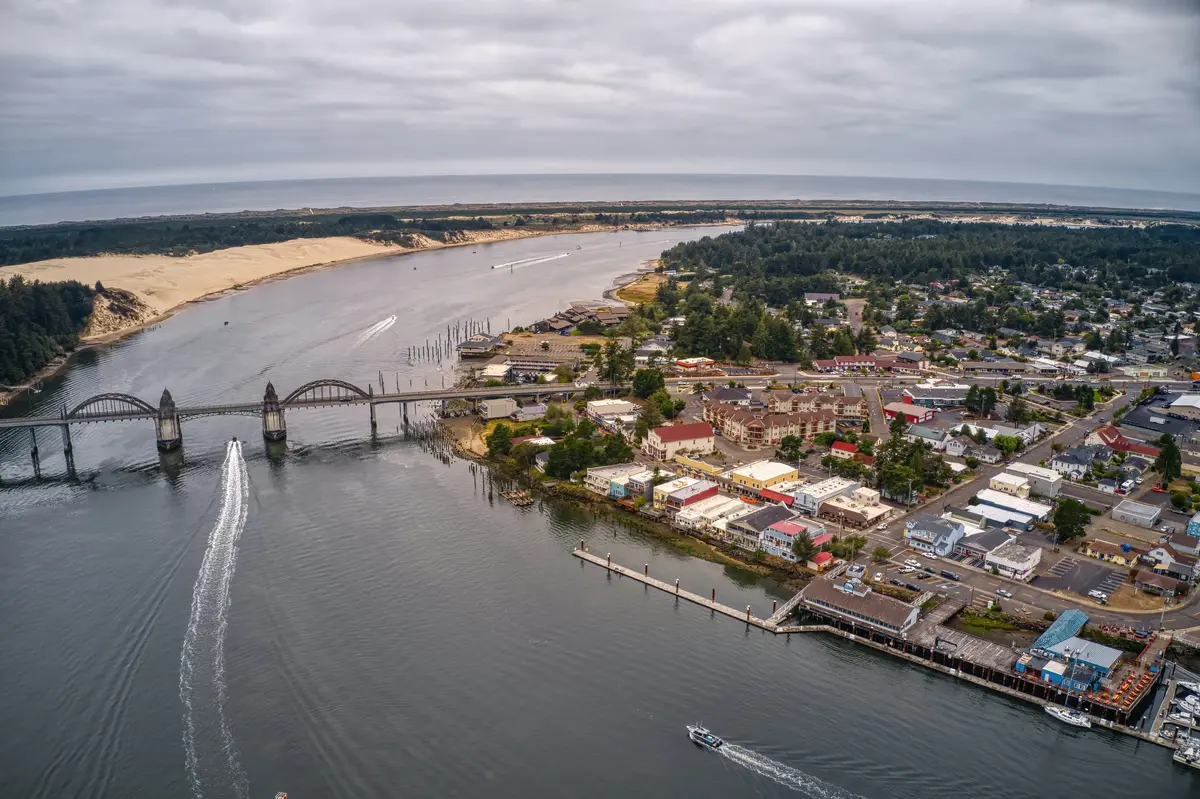
Florence is not a city where you park the car for good. Most errands — the grocery run, the hardware store, a medical appointment — require driving. The exception is Historic Old Town, where the compact riverfront district is genuinely navigable on foot: the Siuslaw River waterfront boardwalk is flat, scenic, and long enough to serve as a daily exercise route. Boutiques, galleries, and coastal dining line the historic buildings along the water, and the Florence Farmers Market draws the community in during the growing season.
For seniors who want regular walking as part of their routine, the topography cooperates. The waterfront is level, the dunes trails at Oregon Dunes National Recreation Area offer gentle options, and Cleawox Lake at Jessie M. Honeyman Memorial State Park provides accessible paths with genuine natural reward — birdwatching, lake views, old-growth forest edge. These are not destinations you drive to once a summer; they are places that weekly walkers return to because the coast changes enough to stay interesting.
Senior Programs and Social Infrastructure
The Florence Senior and Activity Center anchors the community's formal programming — nutrition, health and wellness, recreation, and social services all run through it, and regular café meals give it a recurring social rhythm that keeps regulars genuinely connected to each other.
The Florence Regional Arts Alliance runs ongoing classes and events year-round, giving retirees a creative outlet that isn't weather-dependent. The Florence Winter Music Festival, held each January at the Florence Events Center, is one of the larger live music events on the Oregon Coast — bluegrass, Americana, folk, and roots artists drawing audiences from well beyond the city. For retirees who find winter the hardest stretch of coastal living, that January anchor matters more than it sounds.
What retirees often say after six months here is that the social life is real but self-selecting. You find it by showing up — the arts alliance, the senior center, the farmers market, the volunteer boards. Florence has enough institutional structure to support that, but it doesn't hand it to newcomers automatically. The retirees who thrive here tend to be the ones who come in with some plan for staying engaged.
Right-Sizing: Downsizing in Florence
The Single-Level Question
Single-level living is available in Florence but not abundant. The city's housing stock includes a mix of older ranch-style homes, coastal cottages, and newer construction — some of it well-suited for aging in place, some of it not. Retirees who need zero-threshold entries, wider doorways, or accessible bathrooms as non-negotiables should expect to pay a premium or compromise on location.
The broader inventory skews toward single-family homes, with limited condo and townhome supply. That means the right-sizing conversation in Florence often looks different than it does in a larger city with a developed condo corridor — you may be choosing between a smaller single-family home and a purpose-built 55+ community rather than between a house and a maintenance-free high-rise. For guidance on what specific neighborhoods offer in terms of housing character, the neighborhoods page goes deeper.
55+ Communities
Florence has two gated 55+ communities: Florentine Estates and Greentrees Village.
Florentine Estates is the larger of the two — a 180-acre active-adult community with 450 home sites. The clubhouse includes an indoor pool, Jacuzzi, Finnish sauna, exercise room, and library. For retirees who want built-in amenities and a ready-made peer community, this is the most developed option Florence offers. The gated setting and the scale of the amenity package make it the most recognizable 55+ address in the city.
Greentrees Village is a second gated 55+ community in Florence, situated along the river road corridor. It serves a different segment of the market — smaller in scale, with a quieter, more private character than Florentine Estates.
Neither community should be confused with standard assisted living or senior apartments — both are active-adult communities designed for independent residents who want a peer environment and on-site amenities, not a care setting.
Florence vs Nearby Retirement Destinations
| City | Cost vs Florence | Primary Hospital | Walkability | Senior Living Depth | Overall Retirement Fit |
|---|---|---|---|---|---|
| Florence, OR | — | PeaceHealth Peace Harbor (Level III Trauma, in city) | Old Town walkable; most errands need a car | Two gated 55+ communities; active senior center | Strong for outdoorsy, community-oriented retirees |
| Reedsport, OR | Noticeably lower | No in-town hospital; nearest care requires a drive | Very limited; car-dependent for nearly all needs | Minimal dedicated senior community infrastructure | Suits budget-conscious retirees willing to trade services for price |
| Waldport, OR | Somewhat lower | No in-town hospital; care requires travel | Small, quiet; walkable core is limited in scope | Limited; fewer formal senior programs than Florence | Better for deeply private, low-needs retirees |
| Mapleton, OR | Noticeably lower | No in-town hospital; all care requires travel | Rural; effectively car-dependent | Minimal; very small community with few formal services | Best for rural self-sufficiency seekers, not service-dependent retirees |
| Eugene, OR | Pricier | Full regional academic medical system; deep specialty access | Strong; transit, bike infrastructure, walkable neighborhoods | Extensive; wide range of senior living options and care levels | Best for retirees who prioritize healthcare depth and urban amenities |
| Small lakeside communities near Florence | About the same | No in-town hospital; relies on Florence's Peace Harbor | Very limited; rural residential character | Minimal; few formal senior services | Appeals to retirees who want lakeside seclusion near Florence's services |
The clearest pattern in this comparison: Florence punches above its size on healthcare and community infrastructure, and that advantage shrinks or disappears in Reedsport, Waldport, and Mapleton. If healthcare access is the priority and cost is secondary, Eugene is the honest answer — deeper specialty care, stronger walkability, and a more developed senior living market. But Eugene also means trading the coast for the valley, and for many retirees that trade is simply not on the table.
Reedsport and Waldport offer lower entry costs and similarly coastal settings, but neither has in-town hospital access — a gap that matters more with each passing year in retirement. Mapleton suits a very specific retiree profile: rural, self-sufficient, and genuinely uninterested in proximity to services. Small lakeside communities just outside Florence give close proximity to Peace Harbor while sitting outside the city — an option for retirees who want the services without the town.
For most retirees weighing the central Oregon Coast, Florence is the most complete package: real hospital access, an active senior center, two gated 55+ communities, a genuinely walkable Old Town, and a community that has clearly organized itself around its older residents rather than treating them as an afterthought.

Local Expert Takeaway: Florence is one of the few small Oregon Coast cities where a retiree can age in place without immediately outrunning the local healthcare infrastructure. PeaceHealth Peace Harbor operates a Level III Trauma Center inside city limits, the Florence Senior and Activity Center provides real social programming, and the Siuslaw River waterfront boardwalk gives daily walkers a flat, scenic route that doesn't require a car. The trade-offs are real — 160 sunny days a year is not a selling point, the drive to advanced specialty care is about 60 minutes to Eugene, and the housing stock doesn't offer a large condo or townhome supply for right-sizers. But for retirees who have done those trade-offs consciously, Florence tends to hold up better at year two and year five than it looks on paper at year zero.
Quick Takeaways & FAQs
✅ PeaceHealth Peace Harbor Medical Center operates as a Level III Trauma Center inside city limits — one of the strongest healthcare anchors of any small Oregon Coast city.
⚠️ Oregon's top income tax rate reaches 9.9% on pension and IRA withdrawals, so retirees drawing heavily from pre-tax accounts should model their state tax burden carefully before moving here.
📍 The Florence Senior and Activity Center and the Florence Regional Arts Alliance give retirees genuine year-round social infrastructure — but the community rewards those who show up, not those who wait for it to come to them.
Is Florence, Oregon a good place to retire?
Does Oregon tax Social Security income for retirees?
What hospital serves Florence, Oregon retirees?
What 55+ communities are available in Florence, Oregon?
How does Florence compare to Reedsport or Waldport for retirement?
Moving to Oregon?
Tell us what you need help with and we'll connect you with local resources.
