
About 35.5% of Bandon's 3,311 residents are aged 65 or older — a senior share that stands well above what you'd find in most Oregon coastal towns of comparable size. That number isn't an accident. Bandon sits where the Coquille River meets the Pacific, far enough from any metro to feel genuinely remote, close enough to Coos Bay (about 25 minutes to Coos Bay) to handle most practical needs. The median age here is approximately 52. This is a city that already runs on a retirement-friendly rhythm, which shapes everything from the pace of the coffee shops to the programming at the community center.
The economic backbone of Bandon is small and honest: the school district, Southern Coos Hospital & Health Center, the city government, and Bandon Dunes Golf Resort together make up most of the local employment base. For retirees, this matters less as a job market and more as infrastructure — the hospital is inside city limits, the resort keeps the local hospitality scene functioning year-round, and the municipal government is small enough to be genuinely responsive. Most people who retire here aren't chasing a job; they're chasing a specific quality of daily life that Bandon delivers in ways that larger Oregon Coast towns have largely traded away.
The cost of living runs above the national average, driven primarily by housing. The typical home price sits at $488,995 (Zillow Home Value Index, July 2026) — real money on a fixed income, and the median household income here falls well short of what's needed to carry that price comfortably. Oregon's tax posture toward retirees is genuinely favorable in some ways (no sales tax, Social Security fully exempt from state income tax) and less so in others (pension and IRA withdrawals taxed at full state rates). The full breakdown is in the sections below. What Bandon offers in return for those costs is 189 sunny days a year, an Old Town you can actually walk, sea stacks visible from the grocery store parking lot, and a community where showing up to the senior center doesn't feel like an afterthought.
Whether you're comparing Bandon to Coos Bay, wondering about healthcare access for the long haul, or trying to figure out whether your retirement budget can actually work here, this guide covers the healthcare picture, the tax reality, walkability, downsizing options, and how Bandon stacks up against nearby alternatives.

Why Retirees Are Choosing Bandon
Bandon rewards a specific kind of retiree: someone who genuinely wants small-town coastal life rather than a coastal-adjacent suburb, and who won't feel isolated without urban amenities a short drive away. The city's senior-heavy demographics mean the social infrastructure has shaped itself around older residents — the community center, the volunteer culture, the pace of local retail. If you want the Oregon Coast without the tourist-resort pressure of the northern coast, and you're comfortable in a city of 3,311, Bandon fits.
The case against Bandon is worth reading before you make any decisions. The typical home price stands at $488,995 (July 2026), and the local income base is thin — the median household income here sits well below what's needed to carry that price, which tells you something about who can realistically buy here on local wages alone. Most buyers arriving from California or from larger Oregon metros are bringing equity or retirement savings. If you're arriving without a significant nest egg, the math gets tight fast. The full cost picture is on the cost-of-living page.
Retirees who tend to thrive here are outdoors-oriented, comfortable with limited specialty retail, and either don't need or have already researched where to access advanced medical care. Those who end up leaving cite the remoteness — a major airport is about 28 miles away at Southwest Oregon Regional Airport, specialist appointments often mean a drive to Coos Bay or beyond, and gray, wet winters that deliver far more overcast days than the 189 sunny days a year would suggest on a calendar. If your retirement picture includes walkable urban amenities, a broad dining scene, or easy access to a major medical center, a larger coastal city deserves a serious look alongside Bandon.
Healthcare & Medical Access in Bandon
What's Inside City Limits
Southern Coos Hospital & Health Center is the closest hospital to Bandon — a nonprofit, 21-bed critical access facility operating inside city limits. For a city of Bandon's size, that's a meaningful asset: a 24/7 emergency department, a surgical suite, full-service medical imaging, a clinical laboratory, physical therapy, respiratory therapy, and an on-site pharmacy all under one roof. The attached health clinic adds two full-time primary care providers, a podiatrist, a general surgeon, and infusion, wound, ostomy, and continence services.
One program worth knowing about specifically: Southern Coos operates Senior Life Solutions, an on-site outpatient mental-health program designed for older adults managing depression, anxiety, or other challenges associated with aging. That kind of specialty programming is uncommon at a hospital this size and is genuinely useful for retirees evaluating long-term livability.
The Honest Distance Reality
Critical access hospitals are built for stabilization and primary care — not for complex cardiology, oncology, neurology, or orthopedic surgery. For anything beyond the hospital's scope, Bay Area Hospital in Coos Bay is the regional referral destination, offering a considerably broader range of specialty services. The drive is about 25 minutes to Coos Bay under normal conditions, which is manageable for a routine specialist appointment but worth factoring seriously into any retirement plan that anticipates significant ongoing care needs.
Retirees with chronic conditions requiring frequent specialist visits should map out exactly which services they'll need and confirm what's available locally versus what requires that regional drive. Bandon's healthcare situation is genuinely good for a community of its size — but it is still a small coastal hospital, and the distance to comprehensive specialty care is a real planning variable, not a minor footnote.

The Retiree Budget in Bandon
Oregon's Tax Posture for Retirees
Oregon fully exempts Social Security retirement benefits from state income tax at every income level — no means-testing, no partial exemption. That's a meaningful advantage if Social Security makes up a large share of your retirement income. The picture changes for other retirement income: withdrawals from 401(k) accounts, traditional IRAs, and most pension income are taxed at Oregon's regular graduated rates, which start at 4.75% and climb from there.
One specific tax provision that retirees have relied on is changing: Oregon's Retirement Income Credit expired after tax year 2025 under ORS 316.157. Only certain federal and military retirees with pre-1991 service retain a partial income subtraction going forward. If you've been using that credit in your retirement tax projections, or if a financial planner cited it as a Bandon advantage, verify the current status with a tax professional before finalizing any move timeline.
On the property side, Bandon's effective property tax rate is approximately 0.71% — meaningfully below the national average and among the lower rates on the Oregon Coast. Oregon also offers a Property Tax Deferral program for seniors and disabled homeowners who have lived in their home for at least five years and whose net worth is under $500,000; the state records a lien repaid on sale or death. It won't eliminate the obligation, but it can ease cash-flow pressure on a fixed income. Oregon has no sales tax, which helps retirees buying everyday goods and services stretch a fixed income further than equivalent spending in California or Washington would allow.
Day-to-Day Costs on a Fixed Income
Bandon's overall cost of living runs above the national average, with housing as the primary driver. Groceries are one bright spot — food costs here run below the U.S. average, which matters when you're tracking a monthly budget carefully. What you won't find locally is the kind of competitive retail pricing that comes from density: there's no warehouse club in town, and a serious shopping run means driving out of town. Factor that travel cost into any monthly budget estimate.
The interactive calculator below can model what carrying the typical Bandon home looks like at current rates — adjust the down payment and loan parameters to fit your specific situation.
Looking to buy in Bandon? Estimate your payment.
Enter your numbers to see an estimated monthly mortgage payment.
Estimate only. Excludes HOA fees and mortgage insurance. The interest rate above is a starting point, not a quoted rate — replace it with your own to see real numbers. Insurance is a flat placeholder, not a Bandon quote.
Walkability, Community & Staying Active in Bandon
The Walkability Reality
Old Town Bandon is genuinely walkable in a way that most Oregon coastal small towns are not. The historic commercial district, the Coquille River waterfront, and the trail connecting to Face Rock State Scenic Viewpoint are all accessible on foot from the Old Town core. For a retiree living within that pocket of the city, daily walks with real destinations — waterfront views, independent shops, a coffee stop — are a practical reality, not aspirational marketing language.
Outside Old Town, the picture flips. Bandon Heights, the South Jetty area, Ocean Trails, and the other residential areas that make up most of the city require a car for virtually every errand. The terrain is relatively gentle along the coast and in the flatter parts of town, which matters for older adults. But if walkable daily errands are a non-negotiable for your retirement lifestyle, your housing choice within Bandon will determine whether you have that — and many of the more affordable neighborhoods don't.
Senior Community & Social Life
The Bandon Senior Activity Center, housed within the community center, runs a genuine calendar of organized programs: Bridge and Cribbage groups, yoga, crafts, a spinner's group, and TOPS weight-management meetings, alongside open drop-in card play and social hours. For a city of 3,311, that programming depth is notable — it exists because the senior population here is large enough to sustain it.
Beyond the senior center, Bandon has a strong volunteer culture woven into civic life. The city's small scale means that showing up consistently — at the center, at community events around the Old Town waterfront, at the Friends of the Library — leads quickly to recognizable faces and genuine social roots. Retirees who've described the transition well tend to say the same thing: Bandon is small enough that you can matter to the community faster than you'd expect.
Active-adult life here skews outdoors. Bullards Beach State Park, Coquille Point, and the Bandon State Natural Area give walkers and birders consistent daily destinations. The beach access is exceptional by any measure, and the coastal scenery between Face Rock and the Coquille River Lighthouse genuinely doesn't get old for people who chose this place because of it.
Right-Sizing: Downsizing in Bandon
What the Inventory Actually Looks Like
Bandon has no 55+ communities. That's not a gap in the research — it's the accurate picture. No dedicated age-restricted communities, no active-adult developments, and no independent or assisted living facilities that qualify as 55+ communities were found within city limits. The nearest options in those categories are in Coos Bay and North Bend, where the regional senior-housing market has more depth. If a structured senior-living environment is part of your five- or ten-year plan, that reality belongs in your planning now rather than later.
What Bandon does have is a modest inventory of single-level homes and smaller-footprint properties scattered across its residential neighborhoods. The housing stock skews older, which means single-level ranch-style homes exist but often need updating. Newer construction is limited. Patio homes and condominiums are rare rather than a genuine market segment — buyers looking for low-maintenance, lock-and-leave coastal living will find slim pickings compared to what's available in Coos Bay or on the northern Oregon Coast.
The Practical Downsizing Path
The most realistic downsizing path in Bandon is a smaller single-level home in one of the established residential areas — Seabird Village, Sea Pines, or the quieter blocks within Bandon Heights. The trade-off is that right-sizing here often means accepting an older home with deferred maintenance rather than a turnkey property. Buyers arriving with equity from a larger home in a pricier market tend to navigate that trade-off more easily than first-time buyers would.
For retirees who want the Bandon lifestyle but need or anticipate needing a supported-living environment, the pragmatic plan is to buy in Bandon now and keep the Coos Bay senior-living options as a known future step rather than an immediate requirement. That sequencing reflects what a lot of long-term Bandon residents already do — the city works exceptionally well for active, independent retirement, and the regional infrastructure handles the next chapter.
Bandon vs Nearby Retirement Destinations
| City | Cost vs Bandon | Primary Hospital | Walkability | Senior Living Depth | Overall Retirement Fit |
|---|---|---|---|---|---|
| Bandon | Anchor | Southern Coos Hospital & Health Center (in city) | Old Town walkable; car needed elsewhere | Senior center; no 55+ communities | Strong for active, independent retirees |
| Coos Bay | Noticeably lower | Bay Area Hospital (full regional services) | More commercial corridors; car-dependent overall | Multiple senior living and memory care options | Strong; better infrastructure for later-stage retirement |
| North Bend | Noticeably lower | Bay Area Hospital (shared with Coos Bay) | Car-dependent; flat terrain | Several assisted living options nearby | Good value; shares Coos Bay's regional services |
| Coquille | Noticeably lower | Regional referral to Coos Bay | Small downtown walkable; car needed otherwise | Limited; smaller senior programming base | Best for true small-town quiet on a tighter budget |
| Port Orford | Comparable or slightly lower | Regional referral; very limited local care | Minimal; rugged, hilly terrain | Very limited | Remote and scenic; suits self-sufficient retirees only |
| Langlois | Lower | Regional referral; no local facility | Rural; car essential for everything | Essentially none | Very rural; fits off-grid retirement lifestyles |
Coos Bay is the most direct comparison for most retirees weighing Bandon. It offers noticeably lower home prices, a regional hospital with considerably deeper specialty services, and multiple senior-living facilities for those planning ahead — at the cost of Bandon's distinctive small-town character and direct beach access. If advanced healthcare proximity or a structured senior-living path within the next decade matters to your planning, Coos Bay makes a stronger practical case.
North Bend effectively shares Coos Bay's regional infrastructure — Bay Area Hospital, Southwest Oregon Regional Airport, the Pony Village mall — at a similar price advantage over Bandon, but without a strong independent identity of its own. Coquille suits retirees who want the most affordable option in the county and genuinely don't need coastal scenery or proximity to services. Port Orford is for a specific kind of retiree: someone who has fully committed to remote, self-sufficient coastal living and won't be surprised by the isolation. Bandon sits in the middle of that spectrum — more affordable than the northern Oregon Coast, more livable day-to-day than the options south of it, and more characterful than either Coos Bay or North Bend, at a price premium that reflects all of that.
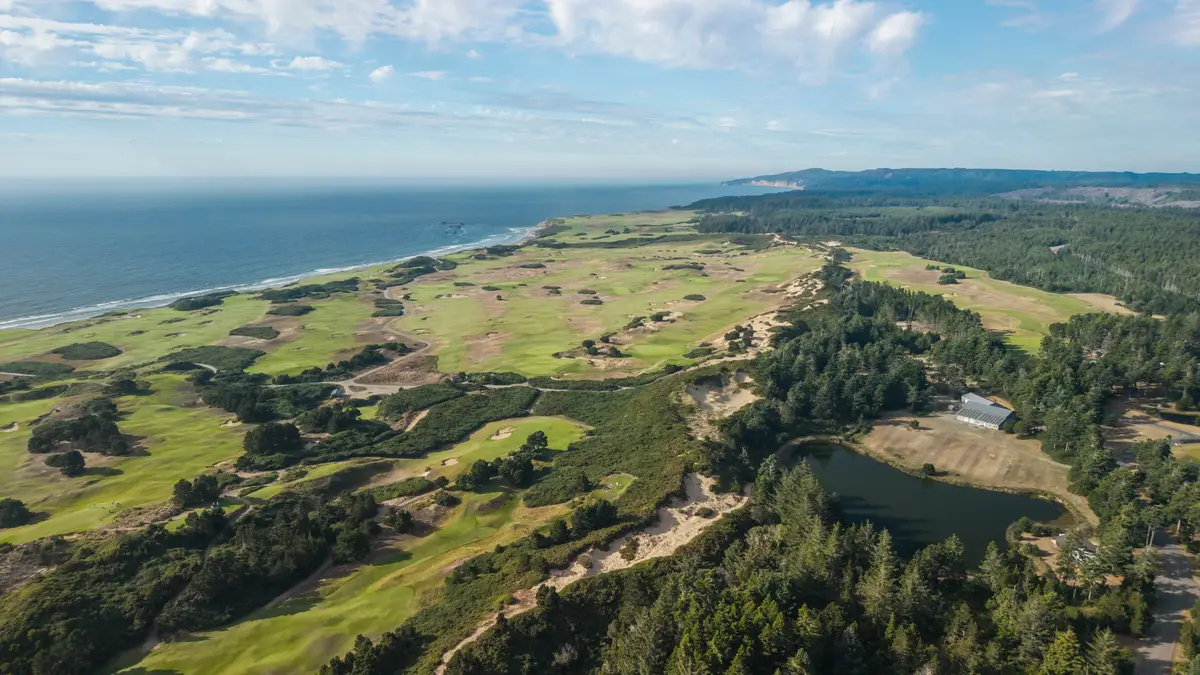
Local Expert Takeaway: Bandon works best for retirees who arrive knowing exactly what they're choosing: a small, genuinely coastal city where 35.5% of residents are already 65 or older, where Southern Coos Hospital & Health Center handles primary and emergency care inside city limits, and where daily life in Old Town — a walk to the waterfront, a stop at Bandon Coffee Cafe, an afternoon on the beach trail toward Face Rock — is the actual point. The senior center runs real programming, the community is small enough to feel genuinely known within a year, and the property tax rate of approximately 0.71% is among the lower ones on the Oregon Coast. The honest caveats: no 55+ communities exist in the city, specialist care means a drive to Coos Bay, and retirees who need the next chapter of senior living nearby will need to plan for that transition explicitly. If those trade-offs fit your retirement picture, Bandon is one of the more honest places on the Oregon Coast to actually live it.
Quick Takeaways & FAQs
✅ Southern Coos Hospital & Health Center operates inside city limits with a 24/7 ER, a surgical suite, and an on-site Senior Life Solutions mental-health program specifically for older adults — unusually robust care for a city of 3,311.
⚠️ Oregon taxes pension and IRA withdrawals at full state income-tax rates, and the Retirement Income Credit expired after tax year 2025 — retirees drawing heavily from accounts rather than Social Security should model the Oregon tax picture carefully before committing.
📍 No 55+ or active-adult communities exist within Bandon city limits; the nearest independent living, assisted living, and memory care options are in Coos Bay and North Bend, roughly 25 minutes away.
Is Bandon, Oregon a good place to retire?
What hospital serves Bandon retirees?
Does Oregon tax Social Security or retirement income?
Are there 55+ or active-adult communities in Bandon?
How does Bandon compare to Coos Bay for retirement?
Moving to Oregon?
Tell us what you need help with and we'll connect you with local resources.
