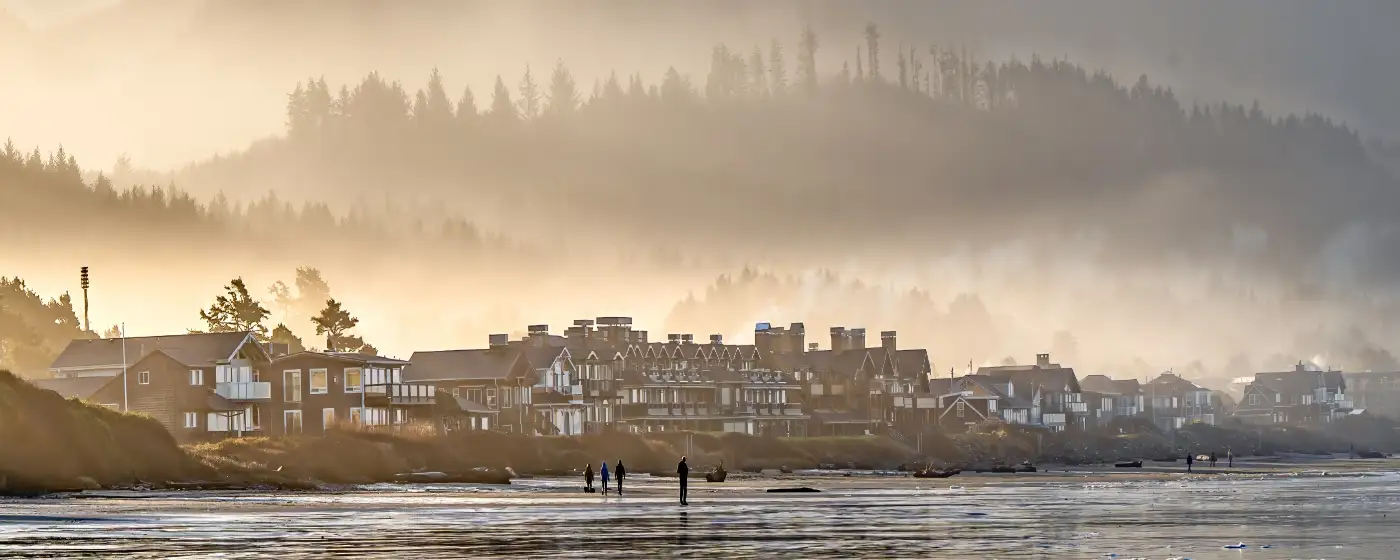
What Is Living in Seaside, Oregon Like?
Most people who visit Seaside on a July weekend think they understand it — the Prom packed with tourists, Broadway Street buzzing with arcade noise, the smell of fried food mixing with salt air. Then they consider actually moving here, and the picture shifts. The resort town you saw in summer is one version of Seaside. The other version is a working community of 7,192 people who live here through January's storms and April's shoulder-season quiet, when US-101 clears out and the town belongs to them again. Those two realities coexist in ways that genuinely shape the decision to buy or rent here, and understanding both is the first thing a serious relocator needs to do.
The economic backbone of Seaside runs on hospitality and services, with the Seaside School District, a major regional health system, and the City of Seaside among the steadiest local employers. Retail trade and accommodation and food services together account for the largest share of local jobs. The Seaside Aquarium, one of the oldest aquariums on the Pacific Coast, is both a landmark and an employer. For many households, the honest answer is that they either work remotely and chose Seaside for the lifestyle, or they commute out — about 90 minutes to Portland along US-101 and connecting routes is the reality for anyone with a metro-area job. Families with school-age children enroll in Seaside School District 10, which holds a C+ rating, according to Niche, with 1,425 students enrolled in 2025-26.
On cost of living, Seaside sits at a meaningful discount relative to the Portland metro and well below coastal California, but it is not a cheap small town by rural Oregon standards. The Zillow Home Value Index placed the typical home price at $473,271 in July 2026, and Oregon's lack of a state sales tax means every grocery run and hardware store trip costs exactly what the tag says. Oregon's Measure 50 property tax cap — which limits annual assessed-value increases to 3% — rewards buyers who stay put, gradually widening the gap between what they're taxed on and what the market says their home is worth. Outdoors, the 1.5-mile Seaside Promenade is as good a year-round walking amenity as any city on the coast, and the Tillamook Head Trail and Necanicum River are minutes away for anyone who wants something more demanding than a paved boardwalk. The full cost-of-living picture, including rent figures, taxes, and grocery costs, is on the cost of living page.
Whether you are considering a primary residence, a remote-work base, or a retirement landing spot, the sections below break down Seaside's neighborhoods, housing market, daily commute realities, local employers, and what weekends and weekday life actually look like once you live here rather than vacation here.
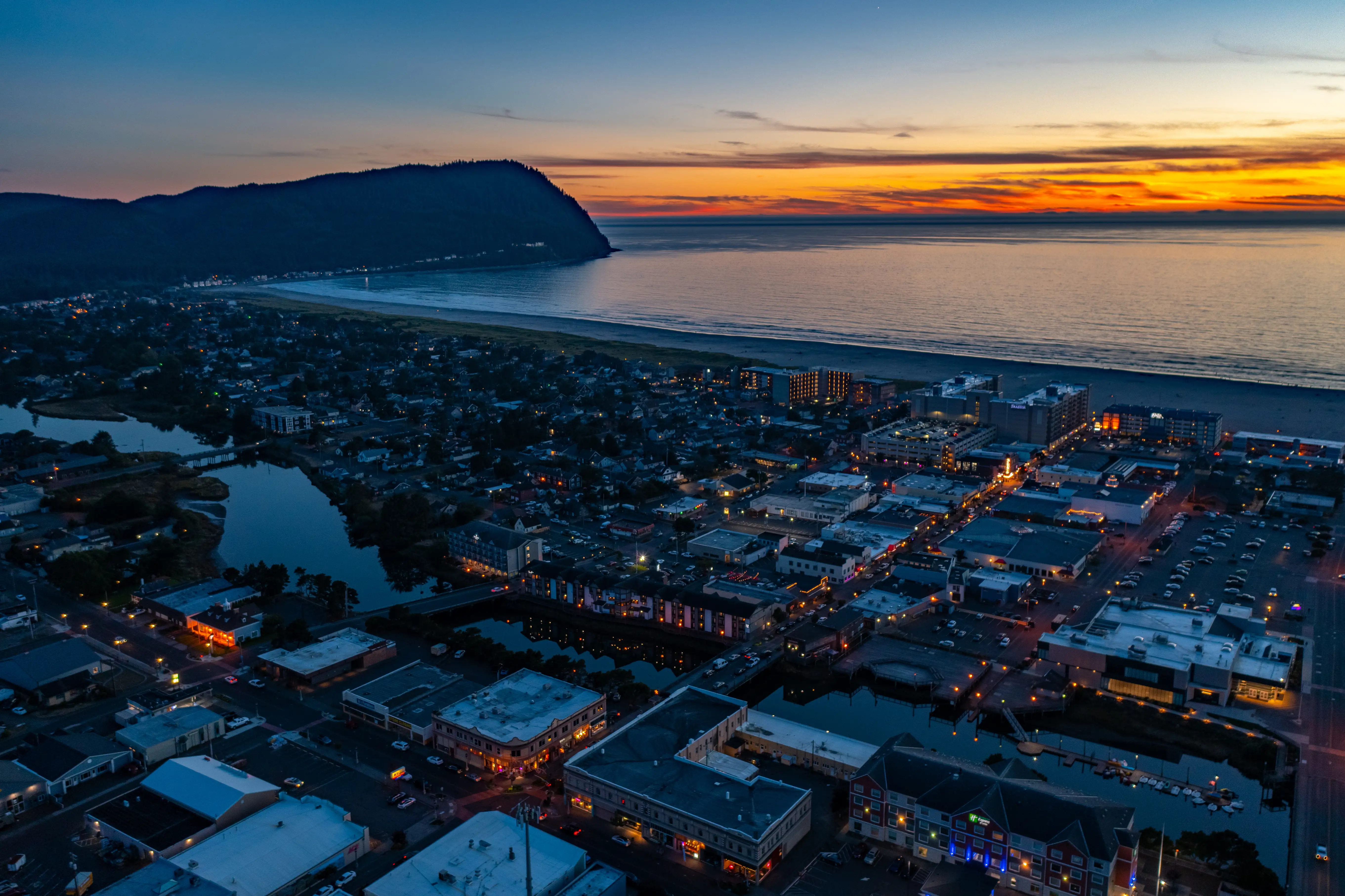
Seaside at a Glance
Looking to buy in Seaside? Estimate your payment.
Enter your numbers to see an estimated monthly mortgage payment.
Estimate only. Excludes HOA fees and mortgage insurance. The interest rate above is a starting point, not a quoted rate — replace it with your own to see real numbers. Insurance is a flat placeholder, not a Seaside quote.
Why Are People Moving to Seaside?
The people moving to Seaside right now fall into a few distinct groups, and they are not who you might expect. Remote workers from the Portland metro and the Bay Area are the most visible wave — they ran the math, realized they could live a block from the Pacific for less than a two-bedroom in Northwest Portland, and made the call. Retirees from California and Washington follow a similar logic, drawn by Oregon's lack of a state sales tax, the 0.63% effective property tax rate, and the sense that a small coastal town is simply easier to live in than wherever they came from.
Then there is the category of buyer nobody markets to but who shows up anyway: people who grew up in Clatsop County, left for work, and are coming back now that remote work makes it possible. For them, Seaside is not a lifestyle experiment — it is home, and the housing market finally makes it attainable again.
The Honest Trade-Off
What Seaside offers is hard to replicate: a genuine oceanfront town with a walkable resort core, serious outdoor access via the Tillamook Head Trail and the Necanicum River, and a community small enough that you recognize faces at the Seaside Farmer's Market within a few months of moving. What it asks in return is real. A serious shopping trip means driving — Astoria is about 30 minutes north for big-box retail needs. Portland International Airport (PDX) is roughly 88 miles away, which is manageable but not close. And the summer tourist economy that funds the city's services also means Broadway Street in July is not the quiet coastal life some buyers are picturing.
The Tsunami Hazard — Read This Before You Buy
One fact that belongs in any honest overview of Seaside: the city's low-lying coastal geography places portions of it in Cascadia Subduction Zone inundation zones. FEMA, USGS, and NOAA selected Seaside as a pilot site for probabilistic tsunami hazard assessment precisely because it represents the risk profile of Pacific Coast communities most exposed to this threat. If you are looking at properties near the Promenade or the beachfront, reviewing current FEMA flood and inundation maps is not optional — it is part of the buying process here in a way it simply is not in most inland cities.
That disclosure aside, the buyers who thrive here are the ones who moved knowing what they were getting: a small, self-sufficient coastal community with a genuine identity, not just a vacation town someone decided to live in full-time.
| Buyer Type | What Seaside Offers | Best Fit? |
|---|---|---|
| Remote workers | Ocean access, lower cost than Portland/Bay Area, genuine community feel | Tech / Remote |
| Retirees | No state sales tax, 0.63% property tax rate, walkable Prom, small-town pace | Quiet Views |
| Families with kids | Beach access year-round, tight-knit community, OSAA athletics | Families |
| Second-home buyers | Rental income potential in peak season, stable coastal market | Value |
| Returning locals | Community roots, familiar geography, more attainable than metro markets | First-Time |
| Outdoor-focused buyers | Tillamook Head Trail, Necanicum River, Saddle Mountain State Natural Area nearby | Nature |
What Daily Life Feels Like in Seaside
Six months in, the thing that surprises most newcomers is not the weather — they knew it would be gray — it is how quickly the town shrinks. In a community of 7,192, you see the same people at the Seaside Farmer's Market, at the coffee counter, at school pickup. That can feel like warmth or claustrophobia depending on who you are. Most people who stay long-term call it warmth.
The Seasonal Rhythm Nobody Warns You About
Summer in Seaside is genuinely different from the rest of the year. Memorial Day through Labor Day, US-101 through town carries tourist traffic that can add real time to a routine errand. The Broadway Street corridor fills with visitors, parking gets tight near The Turnaround, and the pace of the town changes completely. Longtime residents develop work-arounds — earlier morning routines, side streets, errands timed to beat the afternoon surge.
Then September arrives and the town exhales. The shoulder-season quiet is one of the things locals love most and visitors rarely see. The Promenade at dawn in October, with no one else on it, is a different amenity entirely from the packed July version.
Getting Around Day-to-Day
Within the downtown and Promenade area, Seaside is genuinely walkable — compact enough that the Seaside Aquarium, the Civic and Convention Center, Broadway Street, and the beach itself are all reachable on foot from a central address. Beyond that core, a car is necessary. The average household here owns two vehicles, and the local average commute runs around 18 to 19 minutes — well below the national average — because most working residents are either employed locally or work from home. A serious shopping run means leaving town.
The Employment Picture
Retail trade is the largest employment sector locally, followed by accommodation and food services and health care and social assistance. The highest-paying local industries are finance and insurance, public administration, and transportation and warehousing. For buyers whose income does not depend on a local employer, that context matters: Seaside's job market is structured around serving the town and its visitors, not around exporting labor to a regional economy. Many residents who moved here from larger cities are either self-employed, fully remote, or working for employers they never see in person. That is not a criticism — it is the honest picture of what makes the move financially viable for most people who make it.
The school district is a meaningful employer and a community anchor. For a summary of the district's rating and what parents with school-age children should know, the schools page has the full breakdown.
The Seaside Housing Market Right Now
The Zillow Home Value Index placed the typical home price at $473,271 in July 2026. Homes are sitting longer than they were a few years ago, and sellers are negotiating in ways that give prepared buyers genuine room to work with.
What the Market Actually Looks Like
Inventory remains tight by national standards, but buyers have genuine room to work with. Most homes in this market are closing noticeably below list price, and that gap represents real leverage for a prepared buyer. The mix of property types skews toward older coastal construction — bungalows, mid-century ranches, and smaller beach cottages — with newer development concentrated in the hillside neighborhoods east of the resort core.
The beachfront and Promenade-adjacent properties carry a premium that the city-wide median does not fully reflect. Some hillside addresses are attainable well below the median; properties with direct ocean views or steps-to-the-Prom locations sit meaningfully above it. The neighborhoods page breaks down the character and geography of each area in detail.
One Tax Advantage Worth Understanding
Oregon's Measure 50 caps annual increases in assessed value at 3% unless significant improvements are made. In a coastal market where values have appreciated over the long term, long-term homeowners in Seaside often end up taxed on an assessed value well below what the market says their home is worth. For buyers planning to stay, that gap compounds over time into a genuine financial advantage — and it is part of why the 0.63% effective property tax rate here can look even better in practice than it does on paper.
For the full picture on taxes, rent levels, and cost comparisons to nearby markets, see the cost of living page.
Seaside Neighborhoods
Seaside has several distinct areas — each with its own character and appeal. Here’s a breakdown to help you narrow down where to focus your home search.
🏡 Downtown Seaside
The commercial and civic core of the city, where Broadway Street, the Civic and Convention Center, and the resort strip converge — best suited to buyers who want walkable access to everything the city offers and don't mind living adjacent to the summer tourist energy.
🏠 The Promenade (Prom)
Oceanfront addresses along the 1.5-mile paved walkway represent the city's most coveted real estate, drawing buyers who want the beach as a literal backyard and are willing to pay above the city-wide typical home price for that proximity.
🌳 The Cove / South Seaside
A quieter residential pocket south of the main resort corridor, favored by locals who want beach access without Broadway Street foot traffic — the area around The Cove has a distinctly less touristy feel and draws surfing and outdoor-focused households.
🏘 North Seaside
Residential neighborhoods north of the Aquarium and the Turnaround, generally offering more modest housing stock and a neighborhood-street feel that sits apart from the tourist core.
🏔 East Hills / Seaside Heights
Hillside addresses east of US-101 trade ocean views for more land, newer construction in some pockets, and a remove from the summer crowds — suited to buyers who want space and quiet over walkability to the Prom.
🌆 Stanley Acres
A residential area on the eastern edge of the city with a suburban feel relative to the resort core, drawing families and buyers looking for more conventional neighborhood streets and larger lots than the beachside areas typically offer.
Pros & Cons of Living in Seaside
The Pros
- Direct access to a wide, flat, family-friendly beach and the historic Promenade
- Small-town coastal charm with year-round tourism amenities like arcades, aquarium, and dining
- Relatively low effective property tax rate for the state
- No state sales tax on everyday purchases
The Cons
- Home prices and rents run well above what the local median income can comfortably support
- Property crime rates are notably higher than state and national averages
- Persistent rain and gray skies for much of the year with relatively few sunny days
- School district test scores lag Oregon state averages
Getting Around & Commuting in Seaside
US-101, the Oregon Coast Highway, is the spine of daily life in Seaside — the road that connects you to Gearhart and Cannon Beach to the south, to Astoria and Warrenton to the north, and through those connections to everything beyond the coast range. There is no second route in or out that bypasses it. Understanding that single-corridor reality is the most important thing a commuter relocating to Seaside can do before making an offer.
The Portland Commute Reality
The drive to Portland runs about 90 minutes under normal conditions — a long day if you are making it five days a week, but entirely workable for hybrid schedules that put you in the office two or three times a week. The corridor can stretch with tourist traffic in summer and with weather-related slowdowns in winter. Buyers who are counting on a clean 90-minute run every day should drive it in both directions in a wet November before they commit.
Astoria, about 30 minutes north, functions as Seaside's practical hub for services and retail that the town itself does not carry. Many residents make that run weekly rather than going all the way to Portland.
Within Town
The downtown and Promenade area is compact enough for on-foot access — the Lewis and Clark Monument at The Turnaround, the Seaside Aquarium on the North Promenade, and Broadway Street's commercial corridor are all reachable without a car from central addresses. Beyond that walkable core, a vehicle is necessary for most errands. The average local commute time of around 18 to 19 minutes reflects how many residents either work within the city or work entirely from home.
Portland International Airport (PDX) is roughly 88 miles from Seaside — close enough to be practical for regular travel, far enough that an early-morning flight means leaving the house before dawn. Most residents who fly regularly factor that into their routines rather than treating it as a dealbreaker.
Who Thrives Here as a Commuter
The buyers who make the commute work are hybrid-schedule remote workers, self-employed residents, and people whose job is in Astoria or Warrenton rather than Portland. Full five-day commuters to the Portland metro do exist, but they are a minority, and the ones who stayed long-term mostly describe it as a lifestyle choice they made with clear eyes — not something they stumbled into.
Schools in Seaside
Families relocating to Seaside have public, private, and higher-education options nearby. Here’s a quick overview.
🎓 School District
Seaside School District 10 serves K–12 students across Seaside and the surrounding area. Rated C+ (source: Niche.com).
🏆 Graduation Rate
The 4-year high-school graduation rate here is approximately 79.7%.
📚 Higher Education
Oregon’s public universities — the University of Oregon, Oregon State University, and Portland State University — offer four-year degrees statewide, with a network of 17 community colleges providing two-year and workforce programs.
🌐 Online Learning
Oregon State University Ecampus and Portland State University Online offer fully accredited online degrees for remote learners across the state.
Safety in Seaside
A quick look at how Seaside compares on the numbers that matter most when weighing a neighborhood or a move.
🛡 Violent Crime
Approximately 2.23 per 1,000 residents.
🔒 Property Crime
Approximately 37.84 per 1,000 residents.
Compared to the most recent national figures from the Bureau of Justice Statistics (2024), Seaside’s violent crime is below the national average (about 3.7 per 1,000), and property crime is above the national average (about 18.4 per 1,000).
Against Oregon as a whole, Seaside’s violent crime is roughly two-thirds of the state average, and property crime is about one and a half times the state average (Bureau of Justice Statistics, Crime Known to Law Enforcement, 2024 (tables 2 and 3)).
Crime rates can vary a lot within a single city, so the citywide numbers above are only a starting point. Some neighborhoods in Seaside run well below these averages, while others run higher — the kind of block-by-block detail that matters most when you’re actually choosing where to live. The full guide below breaks it down neighborhood by neighborhood.
Working in Seaside
Seaside’s largest employers span several industries — here are some of the anchors of the local job market.
🎓 Seaside School District
Education
🏥 Providence Seaside Hospital
Healthcare
🏛 City of Seaside
Municipal government
🏥 Best Western Plus
Hospitality
💼 Seaside Aquarium
Tourism
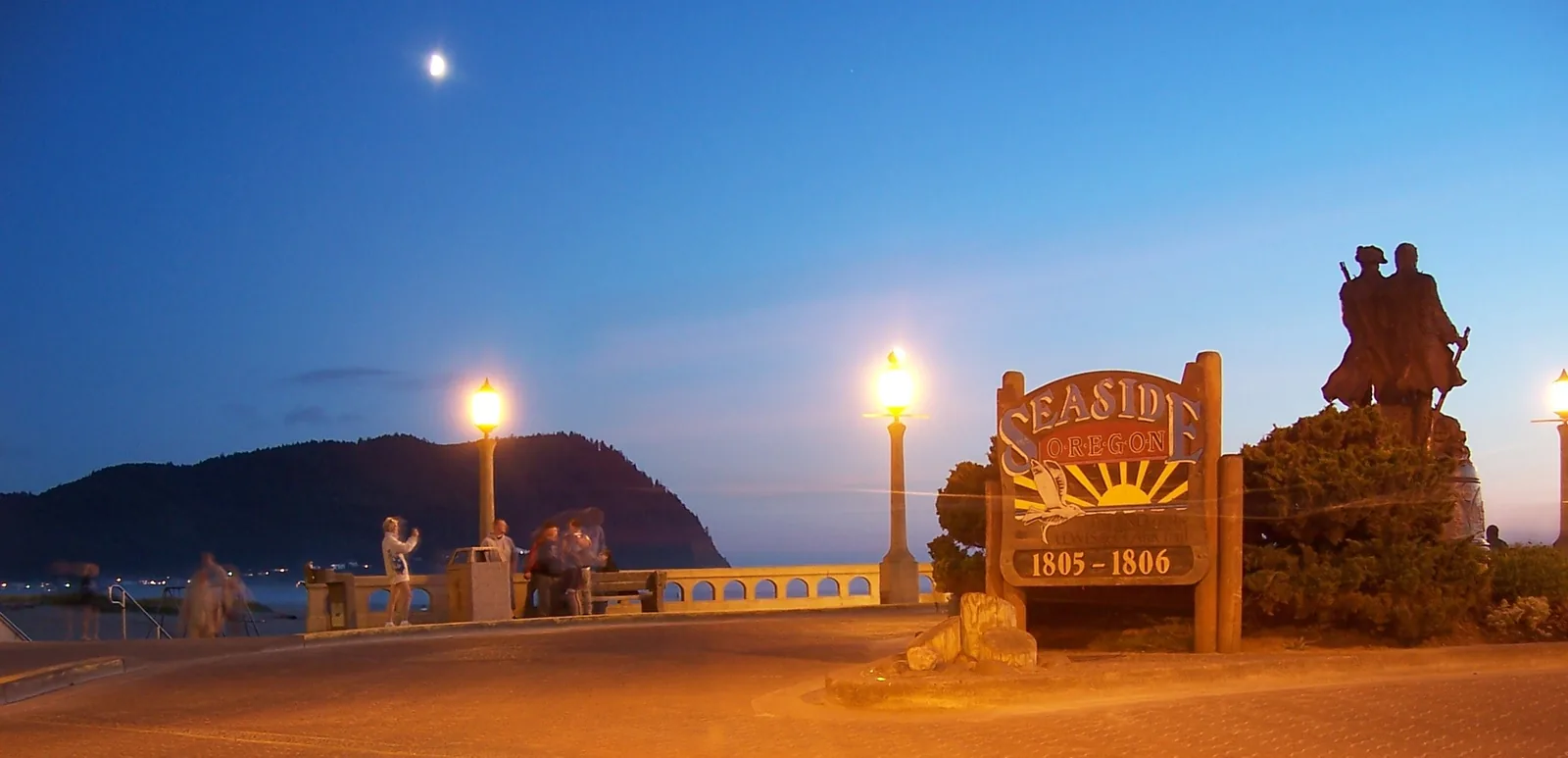
Retiring in Seaside
Seaside draws retirees for its balance of amenities, outdoor access, and cost. Here’s what to weigh.
🌤 Climate
Seaside averages 128 sunny days a year — below what coastal Oregon is often marketed on, and worth knowing before you move. Winters are mild by mountain standards but genuinely wet and gray from November through March. The upside is that summer temperatures are rarely oppressive, and the ocean breeze keeps the Promenade comfortable even in warm spells.
🍴 Lifestyle
The Promenade is a flat, paved, year-round walking amenity that retirees cite consistently as one of the city's best features. The downtown area carries independent coffee options and seafood-focused dining. The Seaside Civic and Convention Center hosts community events that anchor the off-season social calendar.
🏚 55+ Communities
Active-adult housing options in Seaside run toward smaller-scale communities rather than large amenity-heavy developments. Buyers seeking a broader range of 55+ options may want to explore nearby Astoria and Warrenton as well.
✈ Getting Around
Most of Seaside's daily destinations are reachable by car within 10 minutes. Portland International Airport (PDX) is roughly 88 miles away — practical for occasional travel but not close. Astoria, about 30 minutes north, handles most major retail and medical needs for Seaside residents.
🏛 Oregon Taxes for Retirees — What to Know
- Social Security is not taxed — Oregon does not tax Social Security or Railroad Retirement benefits. Any amount included in your federal adjusted gross income is subtracted back out on the Oregon return.
- But other retirement income IS taxed — This is the trade-off that surprises people moving from Washington or Texas. Pension distributions and 401(k)/IRA withdrawals are taxed as ordinary income at Oregon’s regular rates — there is no blanket retirement-income exclusion.
- Graduated income tax — Oregon has four brackets — 4.75%, 6.75%, 8.75% and 9.9%. The 4.75% rate covers the first $10,000 of taxable income for a single filer ($20,000 filing jointly); the 8.75% rate starts at $125,000 ($250,000 jointly); and the top 9.9% rate applies above $250,000 ($500,000 jointly).
- No sales tax — Oregon levies no general sales tax.
- Property taxes, with senior deferral — Oregon’s Senior and Disabled Property Tax Deferral lets qualifying homeowners have the state pay their county property taxes, with a lien recorded against the home. The 2026 household income limit is $70,000, and deferred balances accrue 6% simple interest — it defers the bill rather than forgiving it.
- Estate tax — the one to plan for — Oregon has its own estate tax with a $1 million filing threshold — far below the federal exemption, and NOT indexed for inflation, so it reaches more estates every year in real terms. Retirement accounts and a long-held home count toward the taxable estate, so estates that feel modest can cross the line without the owner expecting it.
- No inheritance tax — Oregon has no separate inheritance tax and no gift tax.
Tax laws change frequently and individual situations vary. This is general information, not tax advice — always consult a qualified Oregon tax professional or CPA for personalized retirement tax planning.
Weekends & Local Favorites in Seaside
Once you live here rather than visit, the weekend geography rearranges itself. The tourist anchors — The Prom, The Turnaround, the Broadway Street arcades — are background rather than destination. What replaces them is a set of places and rhythms that belong to the year-round community.
On the Water and on the Trails
The Seaside Promenade remains the defining outdoor amenity even for longtime residents — 1.5 miles of paved oceanfront, built in 1920, and as good at 7 a.m. on a Tuesday in February as it is in July. The Necanicum River runs through town and draws kayakers and anglers. The Tillamook Head Trail, a 7.5-mile route that follows the same path Clark and the Corps of Discovery walked in 1806 to trade for whale blubber with local Indigenous people, is the serious hike closest to the city. Saddle Mountain State Natural Area is a short drive inland and gives the coast range its own summit experience.
The Cove, south of the main beach, is where locals who surf or ride beach bikes tend to congregate — less foot traffic, a different feel from the resort core entirely.
Coffee, Food, and the Farmer's Market
The coffee scene in Seaside punches above the city's size. Osprey Café, Seaside Coffee Roasters, CHALKBOARD Cafe, Brew 22 Coffee, and Controversial Coffee give residents genuine options for the morning routine without driving to Astoria. Each has its own character — some leaning into the coastal-roaster identity, others more neighborhood-café in feel.
For seafood — which is the correct call on the Oregon Coast — Dooger's Seafood & Grill and Norma's Seafood & Steak are both local institutions. Finn's Fish House and Mo's Seafood & Chowder round out the options for anyone who wants clam chowder eaten within earshot of the waves. Camp 18, a landmark roadhouse built with old-growth timber, is a short drive from the city and a destination in its own right — the kind of place that surprises people who expect a coastal town to only offer tourist-strip dining.
The Seaside Farmer's Market runs through the warmer months and is where the permanent community shows up to see each other — a social event as much as a produce run. The Seaside Aquarium, founded in 1937 and one of the oldest on the Pacific Coast, is where parents with young children spend a rainy Saturday afternoon. The Civic and Convention Center hosts community events that punctuate the off-season calendar.
What People Drive Out For
Cannon Beach, about 10 miles south, draws Seaside residents for its gallery scene and its own dining options. Astoria to the north carries the weight of big-box retail, a growing food and arts culture, and the Columbia River waterfront. Knowing when to go to each — and when to stay put — is the practical geography of living here.
Local favorites in Seaside
Restaurants
- Camp 18
- Dooger's Seafood & Grill
- Finn's Fish House
- Norma's Seafood & Steak
- Mo's Seafood & Chowder - Seaside
Outdoors
- Seaside Beach
- Tillamook Head Trail
- Necanicum River
- The Cove
- Saddle Mountain State Natural Area (nearby)
Coffee
- Osprey Café
- Seaside Coffee Roasters
- CHALKBOARD Cafe
- Brew 22 Coffee
- Controversial Coffee
Farmers Markets
- Seaside Farmer's Market
Top Things Locals Say About Seaside
The best intel about a city comes from the people who actually live there. Here’s what Seaside residents say when newcomers ask the questions everyone’s thinking.
“I knew the summers would be busy, but I didn't expect to love October the way I do now. Once the tourists clear out, the Prom is ours again — and that's honestly when I feel most certain we made the right call moving here.”
— Recent Seaside home buyer
“What's the most surprising thing about living in Seaside?”
How different the town feels in the off-season. You come to visit in August and think you understand the place, but the Seaside that exists from October through May is quieter, more neighborhood-oriented, and honestly more livable. The Promenade at dawn in November is one of the better things about living here, and most visitors never see it.
“What do locals love most about Seaside?”
The combination of genuine outdoor access and a real town underneath the tourist layer. The Tillamook Head Trail is serious hiking, the Necanicum River is right there for anyone who kayaks or fishes, and the Farmer's Market is where you actually run into your neighbors. It does not feel like a theme park that people happen to live in — it feels like a community that also hosts a theme park for three months a year.
“What should newcomers to Seaside know?”
Time your errands around the tourist season, not around the clock. In summer, Broadway Street and the US-101 corridor through town can back up in ways that make a simple grocery run take twice as long as it should. Locals learn which side streets move and what time of day to avoid the main drag. And do the drive to Portland before you commit to living here — about 90 minutes on a clear day is one thing; that same drive in a January rainstorm is a different experience entirely.
“How much do you need a car in Seaside?”
Within the downtown and Promenade core, you can cover a lot of ground on foot — the Aquarium, Broadway Street, the beach, the Civic Center are all walkable from a central address. But for grocery shopping, big-box retail, or anything the local shops don't carry, you are driving. Most households here own two vehicles, and Astoria to the north is the destination for most major shopping runs. A car is not optional for full daily life here.
Cities Near Seaside
Other communities near Seaside worth a look — each with its own character and price point.
| City | Distance | Best For | Vibe | Median Rent | Median Buy |
|---|---|---|---|---|---|
| Gearhart | 4 mi | buyers wanting quiet residential feel | low-key, golf-course town, less touristy | $1,900 | $619,942 |
| Cannon Beach | 9 mi | arts-oriented buyers, second-home seekers | gallery-town polish, dramatic sea-stack views | $2,100 | $926,140 |
| Astoria | 16 mi | commuters, history lovers, practical buyers | working port city, Victorian character, more urban services | $1,644 | $486,426 |
More Helpful Guides for Seaside
Going deeper on Seaside? Our blog series covers everything from first-time buying to retiring here — explore the guides below.
Local Expert Takeaway: Seaside is not a city that works for everyone, and the people who thrive here know exactly why they chose it. The Promenade, the Tillamook Head Trail, the Necanicum River, and a legitimate coffee scene at places like Seaside Coffee Roasters and Controversial Coffee give everyday life a texture that most towns this size can't match. The catch is real: about 90 minutes to Portland means hybrid work is the practical model, a serious shopping trip means driving, and the summer tourist surge on US-101 is not a quirk — it's a structural feature of the town. Buyers who visit in July and fall in love should also visit in January. The ones who love it in January are the ones who belong here.
Quick Takeaways & FAQs
✅ The 1.5-mile Seaside Promenade is a genuine year-round amenity — walkable, oceanfront, and within reach of a central address without a car.
⚠️ The drive to Portland runs about 90 minutes, making Seaside practical for hybrid workers but genuinely demanding for anyone commuting daily to the metro.
📍 Seaside's coastal location in a Cascadia Subduction Zone inundation area means tsunami hazard maps are a required part of the due-diligence process, especially for Promenade-adjacent and beachfront properties.
What is the typical home price in Seaside, Oregon?
How far is Seaside from Portland, and is the commute realistic?
Is Seaside a good place to retire?
How are the schools in Seaside, Oregon?
What should I know about flood and tsunami risk before buying in Seaside?
Helpful Links for Moving to Seaside
Moving to Oregon?
Tell us what you need help with and we'll connect you with local resources.
