
Maybe someone told you Seaside was more affordable than Cannon Beach or Gearhart — and that's true, in the way that a slightly smaller wave is still a wave. The Zillow Home Value Index puts the typical home at $473,271 as of July 2026, which is a real number for a city where the median household income sits at $47,361. That gap between what people earn here and what homes cost is the central fact of the Seaside first-time buyer experience. It's not insurmountable, but it deserves to be the first thing you read, not a footnote.
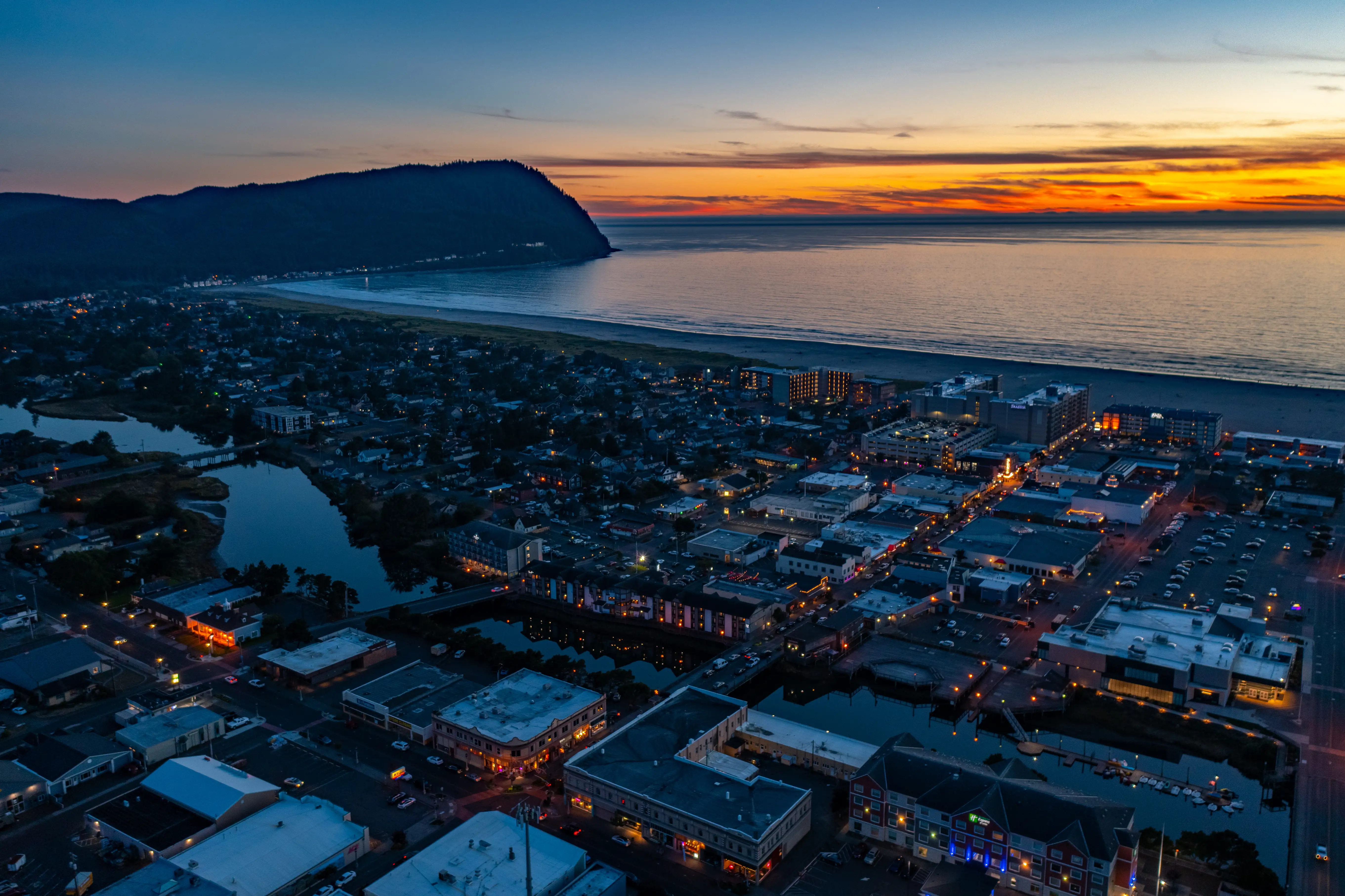
What grounds this market for a first-time buyer is the context around that price. This is a working Oregon Coast city of 7,192 people, not a second-home enclave. The Seaside School District, the City of Seaside, and a tourism industry that runs twelve months a year anchor the local economy. Remote workers have discovered it too — the commute reference matters here: it's about 90 minutes to Portland, which rules out daily commuting but works well for hybrid schedules. That remote-work migration, combined with essentially no new housing supply, is why prices have stayed firm even as some Oregon markets softened.
Clatsop County's 0.63% effective property tax rate is a genuine financial advantage — meaningfully below the national median, and well below what buyers in comparable California or Washington coastal markets pay. Oregon's Measure 50 caps annual assessed-value increases at 3%, which means the longer you stay, the wider the gap grows between your assessed value and market value. First-time buyers who close here and hold the property are locking in a long-term tax advantage, not just a purchase price.
Whether you're comparing Seaside against Astoria or trying to figure out what your down payment actually needs to cover, this guide walks through the local buyer reality, the step-by-step process, a budget snapshot table, and the mistakes that cost first-timers the most — specific to this market, not generic Oregon advice.

The Seaside First-Time Buyer Reality
The Zillow Home Value Index for Seaside stood at $473,271 as of July 2026. That figure sits above what the median household income here can comfortably carry — and that's not a knock on the market, it's just the math a first-timer needs to do before falling in love with a listing. See the full income and affordability picture on the cost of living page.
Entry-level inventory does exist, but it comes with trade-offs. Older homes in East Hills and North Seaside occasionally appear at prices that attract first-timer interest, and they carry coastal wear: moisture behind walls, aging roofs exposed to wind and salt air, drainage quirks that a standard inspector from inland might miss entirely. The price looks right on paper; the inspection is where first-timers learn what they're actually buying.
At the other end of the market, neighborhoods like Blue Heron Pointe and Thompson Falls Estates attract buyers looking for newer construction and more finished finishes. The Promenade corridor and Downtown Seaside homes priced for their proximity to the beach attract competition — even in a calmer market, the most desirable listings can draw multiple offers. First-timers who shop in those pockets without a pre-approval letter in hand tend to lose. The buyers who close successfully are the ones who arrived prepared, not just enthusiastic.
What the Tourism Economy Means for Buyers
Seaside's vacation rental market is real, and some buyers factor projected rental income into their offer math. That's a calculation worth making carefully: Clatsop County has its own permitting rules governing short-term rentals, and those rules can change. Verify current permitting requirements before letting projected income push your offer price higher than your own income supports.
The Homebuying Process in Seaside, Step by Step
Step 1: Get Pre-Approved — Before You Tour Anything
Pre-approval is not a formality in this market. Sellers on the Oregon Coast will not seriously consider an offer without a pre-approval letter attached. A pre-qualification — where a lender estimates what you might borrow based on self-reported figures — is not the same thing and will not carry the same weight.
To get pre-approved, you'll need recent pay stubs and W-2s, two years of tax returns, bank and asset statements, and a government-issued ID. The lender pulls your credit, verifies your income and debts, and issues a letter stating your approved loan amount. That letter is typically valid for 30 to 90 days — time it so it doesn't expire mid-search.
Step 2: Shop with a Coastal Market Lens
Working with an agent who knows the Oregon Coast specifically matters more here than in a standard suburban market. Oregon law requires sellers to complete a Seller's Property Disclosure Statement, but coastal properties carry a category of issues — moisture intrusion, roof wind exposure, foundation ventilation, sewer and drainage — that a generic disclosure form doesn't always surface clearly. An agent who has closed deals in Seaside knows which questions to ask and which properties to look at twice.
Step 3: Make an Offer, Understand the Contingencies
In a calmer market, you have room to include an inspection contingency, a financing contingency, and an appraisal contingency. Do not waive the inspection contingency on a coastal property. The damp climate here is unforgiving: moisture problems that are invisible at a showing can be significant and expensive. The inspection is your best — and sometimes only — chance to discover them before you own them.
Step 4: Inspections, Appraisal, and Coastal-Specific Due Diligence
Hire an inspector with documented Oregon Coast experience. Ask specifically about moisture intrusion, roof condition, and drainage. Beyond the standard inspection, Oregon buyers commonly add a radon test and a sewer-scope inspection. Radon testing isn't legally required, but the Oregon Health Authority recommends it; if levels reach 4.0 pCi/L or higher, the EPA recommends mitigation, which can often be negotiated for the seller to handle before closing.
The appraisal is ordered by your lender and is separate from the inspection. If the appraised value comes in below your offer price, your lender will only finance up to the appraised amount — meaning you'd need to cover the gap in cash, renegotiate the price, or walk away. This is why first-timers who stretch their offer far above asking on coastal properties sometimes get stuck.
Step 5: Closing
In Oregon, a neutral escrow company manages the closing funds and paperwork. Plan for the full process — pre-approval through closing — to run approximately 30 to 60 days. Budget time accordingly before you start active touring, because finding the right home and then scrambling for financing documentation is one of the most avoidable ways to lose a deal.

How Much Home Can You Afford in Seaside
Closing costs for Oregon buyers typically run 2% to 5% of the purchase price, covering loan origination fees, the home inspection and related specialty tests, appraisal, and title insurance. The table below uses the midpoint of that range to give you a realistic picture of the cash you need at the table — separate from your down payment. Use it as a planning baseline, not a lender quote.
| Scenario | Purchase Price | Down Payment | Est. Closing Costs (3.5%) | Est. Cash Needed at Table |
|---|---|---|---|---|
| FHA (3.5% down) — entry range | ~$380,000 | ~$13,300 | ~$13,300 | ~$26,600 |
| FHA (3.5% down) — city typical | ~$473,000 | ~$16,555 | ~$16,555 | ~$33,110 |
| Conventional (3% down) — entry range | ~$380,000 | ~$11,400 | ~$13,300 | ~$24,700 |
| Conventional (3% down) — city typical | ~$473,000 | ~$14,190 | ~$16,555 | ~$30,745 |
| Conventional (10% down) — city typical | ~$473,000 | ~$47,300 | ~$16,555 | ~$63,855 |
| Conventional (20% down) — above median | ~$550,000 | ~$110,000 | ~$19,250 | ~$129,250 |
All figures are estimates for planning purposes only. Actual closing costs vary by lender, loan type, and transaction. The interactive calculator below will give you a payment estimate based on your specific inputs.
The Property Tax Advantage Worth Understanding
Clatsop County's effective property tax rate of 0.63% is substantially below the national median. For a first-time buyer already stretching to meet a coastal price point, that lower ongoing cost genuinely changes the monthly math. Pair it with Oregon's Measure 50 assessed-value cap — annual increases are limited to 3% unless you make significant improvements — and staying in the home compounds the advantage over time. The full tax picture is on the cost of living page.
Looking to buy in Seaside? Estimate your payment.
Enter your numbers to see an estimated monthly mortgage payment.
Estimate only. Excludes HOA fees and mortgage insurance. The interest rate above is a starting point, not a quoted rate — replace it with your own to see real numbers. Insurance is a flat placeholder, not a Seaside quote.
Common First-Time Buyer Mistakes in Seaside
Waiving the Inspection Contingency on a Coastal Property
The coastal climate in Seaside is not the same as Portland, Eugene, or anywhere inland. Moisture intrusion behind walls and ceilings, wind-damaged roofing, and drainage problems are genuinely common in older housing stock — and they are expensive to fix after you close. Some buyers waive inspection contingencies to strengthen an offer. On an Oregon Coast property, that is a meaningful risk, not a minor one. Even in a competitive situation, push hard to keep the inspection contingency in place.
Shopping Before Pre-Approval
Falling in love with a listing near the Promenade and then spending two weeks assembling tax returns is a reliable way to lose that property to a buyer who was already prepared. In Seaside, the most desirable homes can still attract multiple offers, and a seller will not wait for you to get your paperwork together. Pre-approval comes first — full stop. A pre-qualification letter won't carry the same credibility with a motivated seller.
Ignoring the School District Reality Before Choosing a Neighborhood
Seaside School District 10 holds a C+ rating, according to Niche. Buyers relocating from markets with stronger-rated districts sometimes assume the rating is a formality or will improve. Families with school-age children should tour the schools and talk to parents locally before deciding which neighborhood to target — and should check boundary maps carefully, because the district's attendance zones don't always align intuitively with neighborhood names. The full school picture is on the schools page.
Underbudgeting the Cash Needed at the Table
First-timers often focus on saving the down payment and treat closing costs as an afterthought. In Seaside, at the typical home price, you're looking at roughly $13,000 to $24,000 in closing costs on top of your down payment — and that's before any pre-closing repairs flagged by the inspector or a radon mitigation system the seller won't cover. Building a closing-cost reserve of at least 3% to 4% of the purchase price, separate from the down payment, is the difference between closing smoothly and scrambling for a wire transfer you didn't see coming.
Treating Vacation Rental Income as Guaranteed Mortgage Support
Seaside's tourism economy makes rental income feel like a safe assumption — the Turnaround is one of the most photographed spots on the Oregon Coast, and the town fills up for spring break, summer, and shoulder-season weekends. But Clatsop County's short-term rental permitting rules govern what you can actually do with a property, and those rules can and do change. Buyers who price themselves into a home on the assumption that rental income will cover the gap between what they earn and what the home costs have built a fragile financial plan. Verify the current permitting situation and model your budget on your own income first.
Local Expert Takeaway: Seaside rewards the buyer who does the work before they start touring. Get a full pre-approval — not a pre-qualification — before you walk through a single property. Budget for coastal-specific inspections beyond the standard general inspection: moisture intrusion and drainage issues are common in older Seaside homes and expensive to discover after closing. The 0.63% property tax rate in Clatsop County genuinely helps the monthly math, but the gap between local incomes and local home prices is real, and closing cost reserves of at least 3% to 4% on top of the down payment are non-negotiable. Pre-approved, realistic, and patient beats enthusiastic and underprepared every time on this coast.
Quick Takeaways & FAQs
✅ Clatsop County's 0.63% effective property tax rate is well below the national median, meaningfully improving the long-term cost of ownership compared with other coastal markets.
⚠️ The typical Seaside home price of $473,271 (July 2026) sits well above what the local median household income can comfortably carry — cash reserves and realistic budgeting are essential, not optional.
📍 Oregon's coastal climate makes moisture intrusion, roof condition, and drainage the top inspection priorities — hire an inspector with documented Oregon Coast experience, not a generalist from inland.
What credit score do I need to buy a home in Seaside, Oregon?
How long does it take to buy a home in Seaside from start to finish?
What are typical closing costs for a first-time buyer in Seaside?
Is it better to buy in Seaside versus Astoria for a first-time buyer?
Do I need a coastal-specific home inspector when buying in Seaside?
Moving to Oregon?
Tell us what you need help with and we'll connect you with local resources.
