What Is Living in Astoria, Oregon Like?
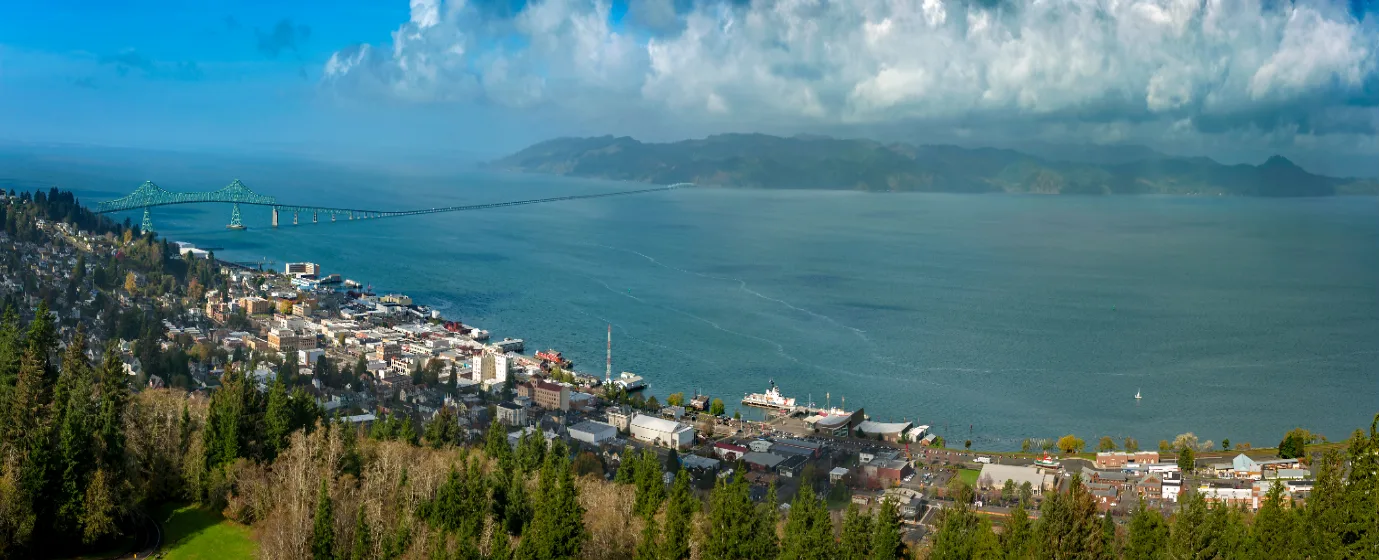
You've probably seen the photos — Victorian houses stacked on fog-wrapped hills, the Columbia River stretching wide enough to feel like the sea, the Astoria-Megler Bridge disappearing into Washington in the distance. What the photos don't prepare you for is how complete a city this is. With a population of 10,109, Astoria is small enough to run into the same faces at the Astoria Sunday Market, but large enough to have a working waterfront, a genuine arts scene, a four-year college, and a hospital. It sits at the confluence of the Columbia River and the Pacific Ocean in Oregon's northwestern corner, where US-101 and US-30 converge — two highways that explain both its historic importance and its present-day isolation. Portland is about 105 minutes away under normal conditions. That distance is the central fact around which every relocation decision here pivots.
The economy is not built on commuters driving to Portland. Columbia Memorial Hospital anchors local employment on the healthcare side; the Astoria School District and Clatsop Community College anchor the education side; and the City of Astoria rounds out the roster of major institutional employers. Beyond those anchors, the economy draws on tourism, fishing, light manufacturing, and a retail corridor serving both residents and coast visitors. A meaningful share of the workforce — well above county norms — works remotely, which is part of why Astoria has attracted so many Portland transplants and first-time buyers in recent years. The Astoria School District 1C holds a B- rating, according to Niche, with 1,731 students enrolled in 2025-26.
Housing is priced noticeably below Portland and well below California's coastal markets, which is the pull for many buyers. The typical home here is a pre-war Victorian or Craftsman on a hillside lot — not a tract house with a two-car garage — and the homeownership rate sits around 53.6%, lower than the Oregon average, which reflects both housing age and the rental demand from a younger, arts-adjacent population. Oregon's lack of a sales tax provides some daily relief, though the state's progressive income tax partially offsets it. Outdoor life is genuinely accessible: the Astoria Riverwalk, the trails on the hill above the city, Fort Stevens State Park, and Youngs Bay are all within easy reach. The honest caveat is the weather — 127 sunny days a year, and a November-through-March stretch of rain and grey that surprises nearly everyone who moves here from sunnier places.
Whether you're weighing a move from Portland, arriving from California, or considering Astoria as a remote-work base on the coast, the sections below break down the housing market, neighborhoods, commute realities, schools, local employers, and what daily life here actually looks and feels like.
Astoria at a Glance
Looking to buy in Astoria? Estimate your payment.
Enter your numbers to see an estimated monthly mortgage payment.
Estimate only. Excludes HOA fees and mortgage insurance. The interest rate above is a starting point, not a quoted rate — replace it with your own to see real numbers. Insurance is a flat placeholder, not a Astoria quote.
Why Are People Moving to Astoria?
Astoria is Oregon's oldest city — founded in 1811 by John Jacob Astor's Pacific Fur Company, making it the oldest American settlement west of the Rocky Mountains. That history isn't just a tourist talking point; it's baked into the built environment. The Victorian and Queen Anne homes crowding the hillsides have earned the city the informal nickname "Little San Francisco," and much of the housing stock predates World War II. When people say Astoria has character, they mean the bones of the place are irreplaceable.
The people moving here now fall into a few recognizable groups. Remote workers — drawn by Pacific Northwest scenery at a price point the Portland metro stopped offering years ago — have become a significant and visible part of the community. Portland transplants who want out of the city but aren't ready for true rural isolation. First-time buyers who've been outpriced elsewhere and are willing to trade commute convenience for the chance to own a Victorian with a river view. And a steady stream of artists, writers, and musicians who've figured out that coastal life doesn't require coastal-city wages if you pick the right town.
The arts pull is real. The Columbia River Maritime Museum, the Flavel House Museum, the Liberty Theatre, and the Oregon Film Museum give Astoria a cultural density unusual for a city its size. The Goonies was filmed here in 1985, and the city celebrated its 40th anniversary in 2025 with genuine local enthusiasm — the film's connection to the community runs deeper than a gift-shop novelty. Painters, ceramicists, and independent musicians show up in the coffee shops and at the Astoria Sunday Market in a way that makes the cultural scene feel earned rather than performed.
The safety picture is part of the draw for families leaving larger cities. Astoria has a violent crime rate of 3.64 per 1,000 residents and a property crime rate of 16.67 per 1,000 residents — the violent crime figure is close to the national rate of 3.7 per 1,000, while the property crime rate sits meaningfully below Oregon's statewide figure of 24.5 per 1,000. For a fuller breakdown, see the Astoria safety page.
Who Astoria Suits Best
| Buyer Type | Why Astoria Works | The Honest Catch |
|---|---|---|
| Remote Workers | Pacific Northwest character, well below Portland prices, strong broadband investment | Portland is about 105 minutes away — you're not popping in for meetings |
| First-Time Buyers | Historic homes at a price point unavailable in most Oregon metros | Older housing stock means inspection scope and maintenance costs matter |
| Families | Self-contained community, accessible parks and waterfront, school district with room to grow | District test scores are below state averages; see the schools page for detail |
| Outdoor-Focused Buyers | Direct access to the Columbia, coast beaches, and old-growth trail systems | 127 sunny days a year — grey weather is the rule, not the exception |
| Lifestyle Retirees | Walkable waterfront, arts and culture, small-city feel with real amenities | 55+ housing options are small-scale; no large amenity-heavy development exists yet |
| Portland Commuters | Coast access on weekends, lower housing costs | A daily drive to Portland at about 105 minutes is genuinely unsustainable for most people |
Astoria rewards buyers who want a place to live, not a launching pad for somewhere else.
What Daily Life Feels Like in Astoria
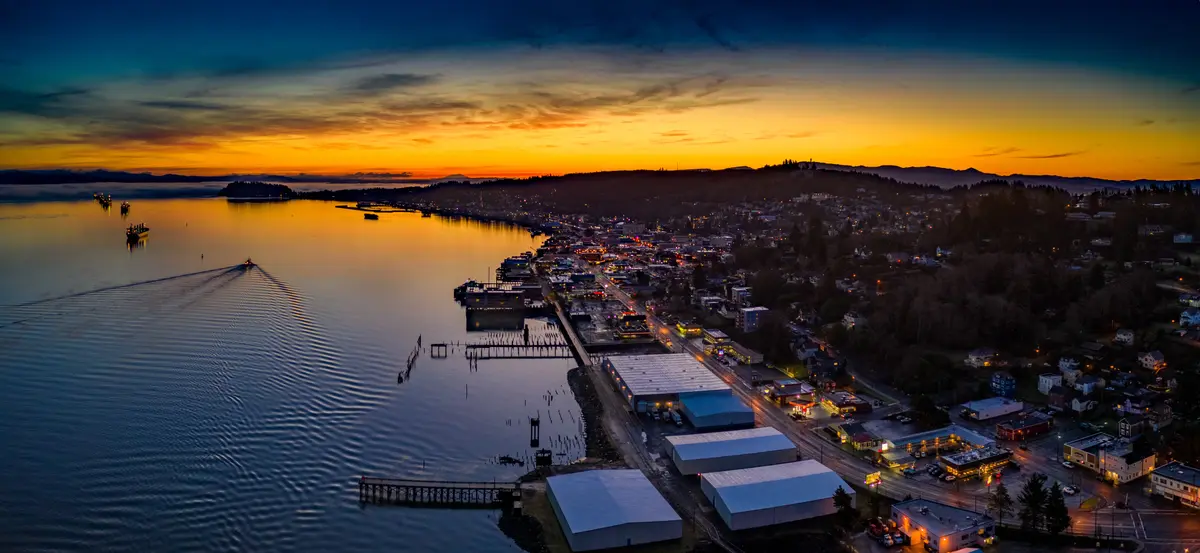
The first thing you notice living here, rather than visiting, is the waterfront. Container ships and fishing boats move past constantly on the Columbia — it's the kind of backdrop that becomes normal surprisingly fast, and then you can't imagine living without it. The Astoria Riverwalk follows the riverbank past old cannery buildings converted into brewpubs and gallery spaces. On a clear afternoon this is one of the genuinely beautiful commutes in the Pacific Northwest, even if you're just walking to the coffee shop.
The city is small enough that daily errands happen in a tight radius. Most grocery runs, coffee stops, hardware needs, and restaurant dinners are a short drive or a walkable trip depending on where you live on the hill. That said, a serious shopping trip — anything requiring a big-box retailer — means driving out of town. Residents learn early to plan ahead and order online for anything the local shops don't carry.
The First Winter Is the Real Test
People who move here from California or the Willamette Valley almost universally describe the first November-through-March stretch the same way: they weren't ready. With 127 sunny days a year and substantial rainfall from late fall through early spring, the grey is not a weather pattern — it's a season. December delivers very limited daylight. The people who thrive here lean into it: they find the fog atmospheric rather than oppressive, they discover the trails are emptier in the rain, and they learn that the best day to visit the Columbia River Maritime Museum is a Tuesday in February when the tourists are gone.
Summer and early fall are the payoff. The Astoria Sunday Market runs through the warm months and functions as the community's living room — farmers, bakers, craftspeople, and musicians filling the waterfront area with a genuine neighborhood energy. The Lewis and Clark National Historical Park at Fort Clatsop is a short drive and draws visitors year-round, but summer is when the city's film-tourism traffic picks up and the waterfront feels fully alive.
The Community Texture
Longtime residents are territorial about authenticity in a way that reads as welcoming once you've been here a while. There's a real arts community — painters and writers who chose Astoria deliberately, not as a fallback — and a working-class waterfront culture that predates the creative influx by generations. Those two populations coexist with less friction here than in most gentrifying coastal towns, partly because the city is genuinely big enough to hold both.
Parents with school-age children tend to gather at the school events, the waterfront, and the parks rather than at any single commercial hub. The Clatsop Community College campus adds a young-adult energy to the city that keeps it from feeling like a retirement enclave, even as the retiree population grows. For more on parks and outdoor gathering spots, the parks and recreation page has the full picture.
The Astoria Housing Market Right Now
The typical home price in Astoria is $486,426 (Zillow Home Value Index, July 2026). That figure is meaningfully below the Portland metro and well below California's coastal markets — but it buys you something very different from a suburban ranch. The dominant housing type is a pre-World War II Victorian, Craftsman, or Foursquare on a hillside lot with river views, steep driveways, and deferred maintenance that ranges from cosmetic to structural depending on the home and its stewardship history.
Entry-level inventory typically means older construction with known project lists — a knob-and-tube electrical system, original single-pane windows, a basement that has seen water. Buyers who've done their homework and budgeted for renovation can find genuine value here. Buyers who expect Portland-suburb condition at Astoria prices tend to be disappointed by their first round of inspections.
What Shapes the Market
Astoria's housing stock is geographically layered: the hillside neighborhoods — Hilltop, South Slope, Uppertown — carry the Victorian streetscapes and the river views that define the city's image. Flatter areas closer to the waterfront include Uniontown, with its Scandinavian and Finnish heritage and its converted industrial buildings. Some areas command more than the city median; others sit below it. The neighborhoods page breaks this down in detail.
The rental market runs alongside a relatively modest ownership market. The typical 2-bedroom rent falls in the $1,510–$1,840 range, reflecting demand from the sizable renter population that keeps the homeownership rate around 53.6%. For the full cost picture — including property taxes at an effective rate of approximately 0.71%, Oregon's income tax structure, and utility costs — see the cost-of-living page.
Well-priced homes in good condition move. Astoria is not a market where a buyer can take weeks to decide on a correctly priced listing in a desirable hillside neighborhood. The flip side: homes that need significant work, or that are overpriced for their condition, do sit — sometimes for a long time. Knowing which category you're looking at requires a thorough inspection and honest conversations with your agent about what the market will and won't support.
Astoria Neighborhoods
Astoria has several distinct areas — each with its own character and appeal. Here’s a breakdown to help you narrow down where to focus your home search.
🏡 Shively-McClure Historic District (Central Residential)
The heart of Astoria's Victorian streetscape, where Queen Anne and Craftsman homes line steep blocks within walking distance of the downtown core. A strong choice for buyers who want the classic Astoria image and don't mind stairs.
🏠 Uniontown
Astoria's historically Scandinavian and Finnish waterfront district, anchored by converted cannery buildings and proximity to the Riverwalk. The neighborhood has an industrial-heritage character that draws buyers who prefer texture over manicured streetscapes.
🌳 South Slope
A quieter residential area climbing the hill south of downtown, with a mix of housing ages and a more suburban feel than the historic core. Families with kids and buyers seeking a calmer pace tend to land here.
🏘 Uppertown (Adair-Uppertown)
One of Astoria's more elevated and historically working-class areas, with a mix of bungalows and older single-family homes and a local identity distinct from the tourist-facing downtown. Proximity to the Cathedral Tree Trail makes it popular with outdoor-focused buyers.
🏔 Alderbrook
A residential neighborhood on the south and southeastern edges of the city with a quieter, more removed character than the hillside districts closer to downtown. Suited to buyers who want Astoria's address without the steep terrain.
🌆 Hilltop
Astoria's upper reaches, where the views of the Columbia River and the Washington shore are most dramatic and the fog arrives most reliably. Housing here skews older and Victorian; buyers get scenery in exchange for elevation and maintenance.
Pros & Cons of Living in Astoria
The Pros
- Dramatic riverfront and Victorian architecture with a walkable historic downtown
- Strong arts, brewery, and museum scene for a small city
- Below-average summer temperatures perfect for outdoor lovers who dislike heat
- Relatively affordable compared to nearby coastal resort towns like Cannon Beach or Gearhart
The Cons
- Very high annual rainfall and gray winters with limited sunshine
- Property and overall crime rates that run higher than many similarly sized Oregon communities
- Limited local job market outside healthcare, tourism, and government, meaning many residents commute or work remotely
Getting Around & Commuting in Astoria
Astoria is not a commuter city, and understanding that before you buy is essential. Portland is about 105 minutes away — a figure that looks manageable on a map and feels very different on a Tuesday morning in November with rain on US-30. Most residents who work in Portland have remote or hybrid arrangements; the people commuting daily are the exception, not the rule.
The Road Reality
US-101, the Oregon Coast Highway, is the spine of the city's north-south connections along the coast — Warrenton is minutes south, Seaside is about 20 miles down, and Cannon Beach follows. US-30, the Columbia River Highway, runs east toward Portland and is the main overland route out of Astoria. OR-202, the Nehalem Highway, offers a southern alternative toward the Nehalem Valley. Within the city itself, the average one-way commute runs about 21.8 minutes — short enough that most daily errands and work trips are genuinely low-stress.
Most households own two cars, and most residents drive alone. That's not a cultural choice so much as a practical one: the terrain and the spread of the city across steep hillsides makes car dependency natural for anything beyond the immediate downtown core.
Public Transit
The Sunset Empire Transportation District (SETD) runs bus routes connecting Astoria to Warrenton, Gearhart, Seaside, and Cannon Beach along the US-101 and US-30 corridors. NW Connector service extends the regional network toward Portland. Transit is genuinely useful for coast-corridor trips and for residents who live within easy walking distance of stops — but it doesn't replace a car for most Astoria households, and it won't get you to Portland quickly.
Working Locally vs. Working Remotely
| Work Situation | How It Works in Astoria | The Realistic Assessment |
|---|---|---|
| Fully remote | Ideal setup for this market — live the coast life, skip the commute | Broadband access varies by neighborhood; verify before you close |
| Hybrid (2–3 days/week to Portland) | Workable but demanding — about 105 minutes each way | Most people who try it long-term eventually move closer in or go fully remote |
| Daily Portland commute | Not a sustainable lifestyle for most buyers | Astoria works as a destination, not a bedroom community |
| Local employer (hospital, school district, college, city) | Short city commutes, walking or a brief drive | Local professional job market is limited; healthcare and education dominate |
| Coastal corridor (Warrenton, Seaside) | US-101 connections are direct and quick | Warrenton is minutes away; Seaside is roughly 20 miles south |
| Self-employed / trades | Active local market for skilled trades and services | Tourism seasonality affects some service industries meaningfully |
The employers that anchor local hiring — the school district, Clatsop Community College, the City of Astoria, and a major regional health system — represent stable, if limited, local career options. Remote work is not a backup plan here; for many buyers, it's the whole reason the math works.
Schools in Astoria
Families relocating to Astoria have public, private, and higher-education options nearby. Here’s a quick overview.
🎓 School District
Astoria School District 1C serves K–12 students across Astoria and the surrounding area. Rated B- (source: Niche.com).
🏆 Graduation Rate
The 4-year high-school graduation rate here is approximately 94.6%.
📚 Higher Education
Oregon’s public universities — the University of Oregon, Oregon State University, and Portland State University — offer four-year degrees statewide, with a network of 17 community colleges providing two-year and workforce programs.
🌐 Online Learning
Oregon State University Ecampus and Portland State University Online offer fully accredited online degrees for remote learners across the state.
Safety in Astoria
A quick look at how Astoria compares on the numbers that matter most when weighing a neighborhood or a move.
🛡 Violent Crime
Approximately 3.64 per 1,000 residents.
🔒 Property Crime
Approximately 16.67 per 1,000 residents.
Compared to the most recent national figures from the Bureau of Justice Statistics (2024), Astoria’s violent crime is about the same as the national average (about 3.7 per 1,000), and property crime is below the national average (about 18.4 per 1,000).
Against Oregon as a whole, Astoria’s violent crime is about the same as the state average, and property crime is roughly two-thirds of the state average (Bureau of Justice Statistics, Crime Known to Law Enforcement, 2024 (tables 2 and 3)).
Crime rates can vary a lot within a single city, so the citywide numbers above are only a starting point. Some neighborhoods in Astoria run well below these averages, while others run higher — the kind of block-by-block detail that matters most when you’re actually choosing where to live. The full guide below breaks it down neighborhood by neighborhood.
Working in Astoria
Astoria’s largest employers span several industries — here are some of the anchors of the local job market.
🏥 Columbia Memorial Hospital
Healthcare
🎓 Astoria School District
Education
🏥 Providence Seaside Hospital
Healthcare
🎓 Clatsop Community College
Education
🏛 City of Astoria
Municipal government
Parks & Recreation in Astoria
Some of the outdoor spaces that shape everyday life in Astoria.
🌱 Fort Clatsop/Lewis and Clark National Historical Park
Astoria residents don’t have to go far for green space — spots like Fort Clatsop/Lewis and Clark National Historical Park are part of everyday life here, whether that’s a morning walk, a weekend hike, or just somewhere to unwind outside. The full guide below covers more of what Astoria has to offer for parks and outdoor recreation.
Retiring in Astoria
Astoria draws retirees for its balance of amenities, outdoor access, and cost. Here’s what to weigh.
🌤 Climate
Astoria's climate is mild but grey. Summers are cool and genuinely beautiful — temperatures rarely climb above the mid-70s, and the light on the Columbia in August is the reason people stay. Winters are wet and dark, with 127 sunny days a year and sustained rainfall from November through March. Retirees who prefer outdoor year-round activity need to make peace with the rain, or plan winters strategically.
🍴 Lifestyle
The Columbia River Maritime Museum, the Flavel House Museum, the Liberty Theatre, and a waterfront lined with craft breweries and independent restaurants give Astoria a cultural calendar that rewards staying curious. The Astoria Sunday Market is a warm-months anchor. The city is small enough to know your neighbors and large enough to avoid isolation — a rare balance on the Oregon Coast.
🏚 55+ Communities
Active-adult housing in Astoria is available at Midway Village LLC. The 55+ options here are small-scale — there is no large amenity-heavy development with resort-style facilities. Retirees who want independent living with walkable waterfront access and a real arts community often find Astoria a better fit than a purpose-built retirement campus. For the full picture on healthcare and retirement living, see the Astoria retiring page.
✈ Getting Around
Most daily errands in Astoria require a car, though the downtown and Riverwalk areas are genuinely walkable once you're in them. The Sunset Empire Transportation District provides regional bus connections along the coast. Portland International Airport (PDX) is approximately 95 miles from Astoria — roughly the 105-minute drive — and serves as the primary air travel option for residents.
🏛 Oregon Taxes for Retirees — What to Know
- Social Security is not taxed — Oregon does not tax Social Security or Railroad Retirement benefits. Any amount included in your federal adjusted gross income is subtracted back out on the Oregon return.
- But other retirement income IS taxed — This is the trade-off that surprises people moving from Washington or Texas. Pension distributions and 401(k)/IRA withdrawals are taxed as ordinary income at Oregon’s regular rates — there is no blanket retirement-income exclusion.
- Graduated income tax — Oregon has four brackets — 4.75%, 6.75%, 8.75% and 9.9%. The 4.75% rate covers the first $10,000 of taxable income for a single filer ($20,000 filing jointly); the 8.75% rate starts at $125,000 ($250,000 jointly); and the top 9.9% rate applies above $250,000 ($500,000 jointly).
- No sales tax — Oregon levies no general sales tax.
- Property taxes, with senior deferral — Oregon’s Senior and Disabled Property Tax Deferral lets qualifying homeowners have the state pay their county property taxes, with a lien recorded against the home. The 2026 household income limit is $70,000, and deferred balances accrue 6% simple interest — it defers the bill rather than forgiving it.
- Estate tax — the one to plan for — Oregon has its own estate tax with a $1 million filing threshold — far below the federal exemption, and NOT indexed for inflation, so it reaches more estates every year in real terms. Retirement accounts and a long-held home count toward the taxable estate, so estates that feel modest can cross the line without the owner expecting it.
- No inheritance tax — Oregon has no separate inheritance tax and no gift tax.
Tax laws change frequently and individual situations vary. This is general information, not tax advice — always consult a qualified Oregon tax professional or CPA for personalized retirement tax planning.
Weekends & Local Favorites in Astoria
Weekends in Astoria tend to organize themselves around the water, the hills, and the handful of genuinely good places to eat and drink that the city has accumulated over the past two decades. This is not a city that's trying to be somewhere else — the local favorites are rooted in the place, and most of them are worth your time.
Food & Drink
Fort George Brewery is the social anchor of the waterfront dining scene — a large, multi-room brewpub in a converted historic building that draws locals and visitors alike without feeling overrun by either. Astoria Brewing Company is the older of the two local breweries and has its own loyal following. For seafood, Mo's Seafood & Chowder serves the kind of chowder the Oregon Coast is actually known for, and South Bay Wild Fish House takes a more polished approach to locally caught fish. Bridgewater Bistro is the waterfront choice for a slower, more considered dinner with river views.
Coffee culture is strong here in a way that surprised most transplants. Blue Scorcher Bakery & Cafe is a worker-owned cooperative that's become a genuine community institution — the kind of place where the line moves slowly because people keep running into neighbors. Coffee Girl operates out of a converted cannery near the Riverwalk, with a setting that earns the trip on its own. Kick Ass Koffee, Sleeper Coffee, and Journey's End Espresso round out the independent options, giving Astoria a coffee scene that punches well above its population.
Outdoors & Landmarks
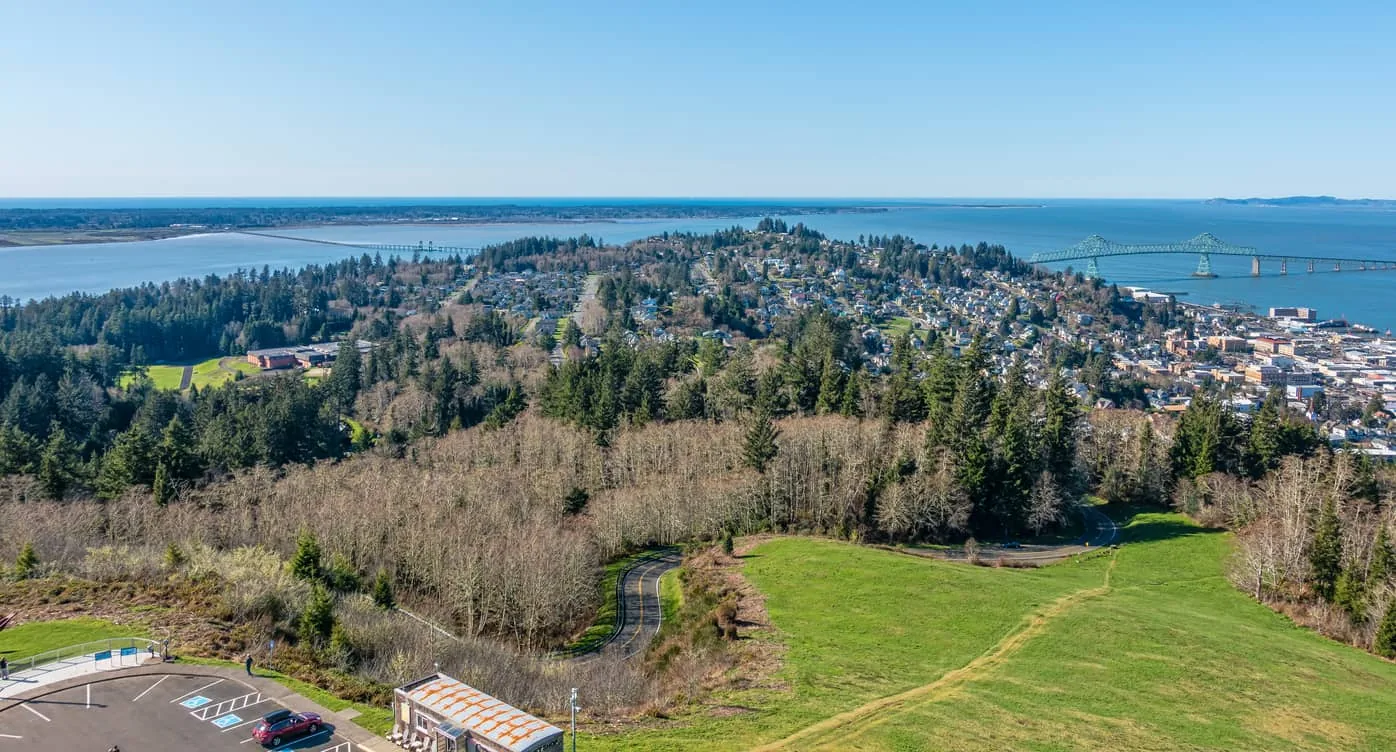
The Astoria Column sits atop the hill above the city — climb to the top on a clear day and you'll see the Columbia, the Pacific, and the Washington shore simultaneously. The trails around the column are genuinely hikeable and rarely crowded outside summer. The Cathedral Tree Trail, reached on foot from the Uppertown area, leads to an old-growth Sitka spruce that stops people cold when they first see it.
The Astoria Riverwalk is the daily-life version of the waterfront — a 6-mile path that follows the river past the marina, old cannery buildings, and working docks. Fort Stevens State Park, west of the city, offers beaches, a historic military installation, and year-round camping. Youngs Bay, south of the main Astoria waterfront, is a quieter water access point popular with kayakers and birdwatchers.
Fort Clatsop at the Lewis and Clark National Historical Park sits a short drive from the city center and is worth a visit in any season — but the interpretive programs during the shoulder seasons, when the crowds thin, are when the site actually breathes.
Community Anchors
The Astoria Sunday Market is where the community's weekly rhythm is most visible — farmers from operations like Flaigg Family Farm & Fresh Eggs, local bakers, artists, and food vendors filling the waterfront with a market that locals treat as a standing appointment rather than an occasional destination. The Columbia River Maritime Museum, overlooking the river, is an all-weather option serious enough to visit multiple times. The Flavel House Museum and the Liberty Theatre anchor the historic and performing-arts side of the cultural calendar. The Oregon Film Museum, housed in the building used in The Goonies' opening scene, is a smaller stop but earns genuine affection from the community — the anniversary events in 2025 filled the streets in a way that made clear the city's relationship to the film goes beyond marketing.
Local favorites in Astoria
Restaurants
- Mo's Seafood & Chowder - Astoria
- Astoria Brewing Company
- Bridgewater Bistro
- Fort George Brewery
- South Bay Wild Fish House
Outdoors
- Astoria Riverwalk
- Astoria Column/Coxcomb Hill trails
- Fort Stevens State Park
- Youngs Bay
- Cathedral Tree Trail
Coffee
- Coffee Girl
- Blue Scorcher Bakery & Cafe
- Kick Ass Koffee
- Sleeper Coffee
- Journey's End Espresso
Farmers Markets
- Astoria Sunday Market
- Flaigg Family Farm & Fresh Eggs
Top Things Locals Say About Astoria
The best intel about a city comes from the people who actually live there. Here’s what Astoria residents say when newcomers ask the questions everyone’s thinking.
“I kept telling myself I'd adjust to the winters, and I did — but it took longer than I expected. What I didn't expect was how quickly the Riverwalk and the Sunday Market became the actual structure of my weekends. By month four I stopped missing Portland.”
— Recent Astoria home buyer
“What's the most surprising thing about living in Astoria?”
The grey gets you the first winter. You think you know what Pacific Northwest weather means, and then December arrives and the sun is essentially gone for weeks at a stretch. The flip side no one tells you: summer and early fall here are legitimately spectacular, and you appreciate them in a way you never would if you'd had them all year. The other surprise is how complete the city feels at this size — most things you need are here, and you stop noticing what isn't after a few months.
“What do locals love most about Astoria?”
The waterfront is hard to overstate. Watching container ships move past the Astoria-Megler Bridge on a clear evening never gets routine. The food and coffee scene — Fort George, Blue Scorcher, the Sunday Market — feels like something a city three times this size should have. And the hills. People who grew up somewhere flat and moved here are still slightly amazed by the views from the upper hillside neighborhoods looking out over the Columbia.
“What should newcomers to Astoria know?”
Don't buy before you've driven the US-30 route to Portland in bad weather. The 105-minute figure is real, but it's also the best-case version — rain, fog, and the occasional coast-range closure make it longer. Within the city, Uppertown and Hilltop get foggier and wetter than the waterfront neighborhoods, which matters for both mood and property maintenance. The Astoria Sunday Market doesn't run year-round; find your off-season rhythm before summer ends or you'll feel the absence.
“How much do you need a car in Astoria?”
For anything beyond the downtown core and immediate Riverwalk area, yes — you need a car. The city is spread across steep hills and the terrain doesn't encourage walking between neighborhoods the way a flat grid would. The Sunset Empire Transportation District runs bus service connecting Astoria to coastal towns along US-101 and US-30, and the NW Connector extends toward Portland, so you have options for regional travel without a car. But most residents drive for daily errands, and the average household runs two vehicles.
Cities Near Astoria
Other communities near Astoria worth a look — each with its own character and price point.
| City | Distance | Best For | Vibe | Median Rent | Median Buy |
|---|---|---|---|---|---|
| Warrenton | 5 mi | Families, new construction, lower entry price | Flat, practical, fast-growing | $1,665 | $505,967 |
| Seaside | 17 mi | Tourism-adjacent lifestyle, retirees, renters | Beachy, commercial, vacation-town energy | $1,395 | $473,271 |
| Gearhart | 13 mi | Quiet coastal living, second homes | Low-key, residential, golf-course town | $3,495 | $619,942 |
More Helpful Guides for Astoria
Going deeper on Astoria? Our blog series covers everything from first-time buying to retiring here — explore the guides below.
Local Expert Takeaway: Astoria rewards buyers who are moving toward something rather than away from something. The people who land well here have made peace with the commute math — about 105 minutes to Portland means this city works as a destination, not a base camp — and they've come because of the Riverwalk, the Victorian streetscape, the Fort George pint on a rainy Tuesday, and a housing market that still lets you own a pre-war house with a river view for under half a million. The people who struggle are those who underestimated the grey winters or assumed the city would keep growing toward them. It hasn't, and it probably won't. That's also exactly why it's still worth moving to.
Quick Takeaways & FAQs
✅ Astoria is Oregon's oldest city and one of the Pacific Northwest's most architecturally intact — Victorian and Craftsman homes with Columbia River views are still available for under the city's $486,426 typical price (July 2026).
⚠️ Portland is about 105 minutes away under normal conditions, which makes daily commuting genuinely unsustainable — this city works for remote workers and locals, not bedroom-community buyers.
📍 The Astoria Sunday Market, Fort George Brewery, and the Cathedral Tree Trail are the three things longtime residents most consistently tell newcomers they didn't expect to love as much as they do.
Is Astoria, Oregon a good place to live?
What is the typical home price in Astoria, Oregon?
How far is Astoria, Oregon from Portland?
How are the schools in Astoria, Oregon?
What are the best neighborhoods in Astoria, Oregon?
Helpful Links for Moving to Astoria
Moving to Oregon?
Tell us what you need help with and we'll connect you with local resources.
