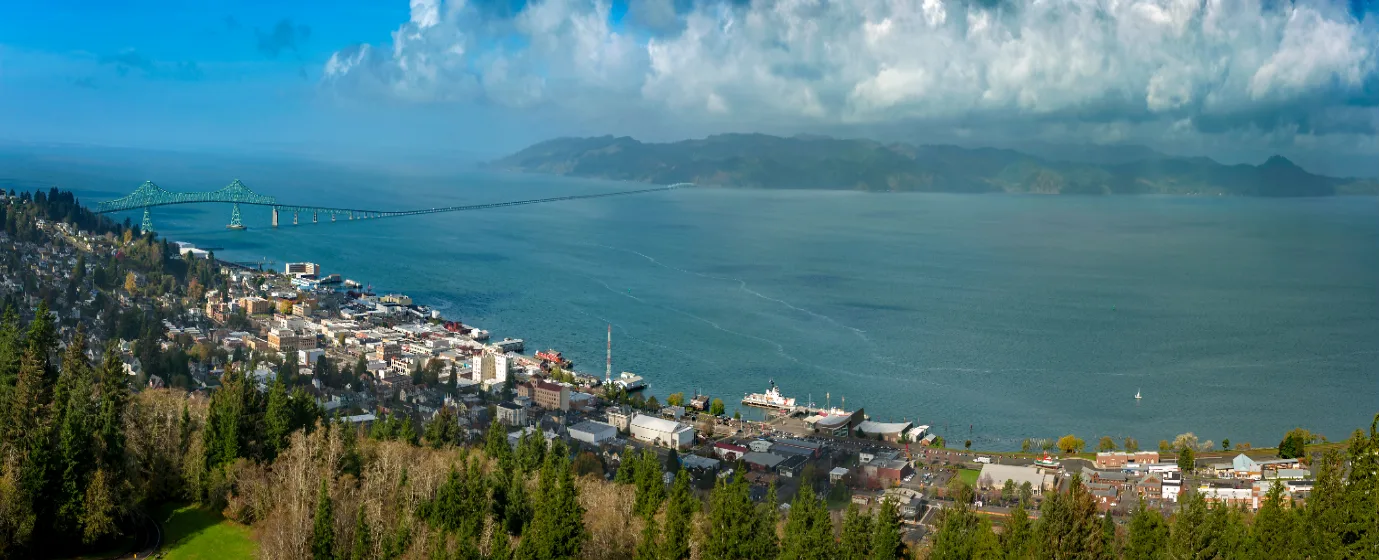
Most Californians who land in Astoria say the same thing in the first week: they didn't expect the scale of it. Not the Columbia River — though that's enormous, nearly four miles across where it meets the Pacific — but the scale of the quiet. A city of 10,109 people, perched on a hillside above the oldest settlement west of the Rockies, with Victorian houses stepping down toward the water and fog rolling in off the bar most mornings. If you've been living in any California coastal market, this is a fundamentally different kind of place, and knowing what that difference actually costs — and saves — is what this guide is for.
Astoria's economy runs on a handful of anchors: a regional healthcare sector, the Astoria School District, Clatsop Community College, tourism, commercial fishing and crab processing, and a Port that still moves real cargo. For Californians arriving with remote work or a retirement portfolio, the local job market is thin on white-collar opportunities — most professional residents either work in those sectors, commute out, or work from home. The Astoria School District serves 1,731 students enrolled in 2025-26 and holds a B- rating, according to Niche, which is the honest picture for families comparing it to high-performing California unified districts.
The headline number that drives most California inquiries is the typical home price: $486,426 as of July 2026 — substantially below California's statewide typical home value of $773,735 (Zillow ZHVI). Groceries, utilities, and everyday costs run modestly below the national average. Oregon collects no statewide sales tax, which alone represents a meaningful annual saving for households used to California's rates. The full cost-of-living comparison, including utilities, groceries, and transportation costs, breaks down the complete picture.
Whether you're being drawn by coastal scenery, priced out of your current market, or simply done with California's pace, the sections below break down Astoria's home prices versus California, the tax differences that actually matter, what the climate demands, what daily life looks like, and the honest reasons some Californians who move here eventually leave.
The Home Price Gap: What Your California Equity Buys Here
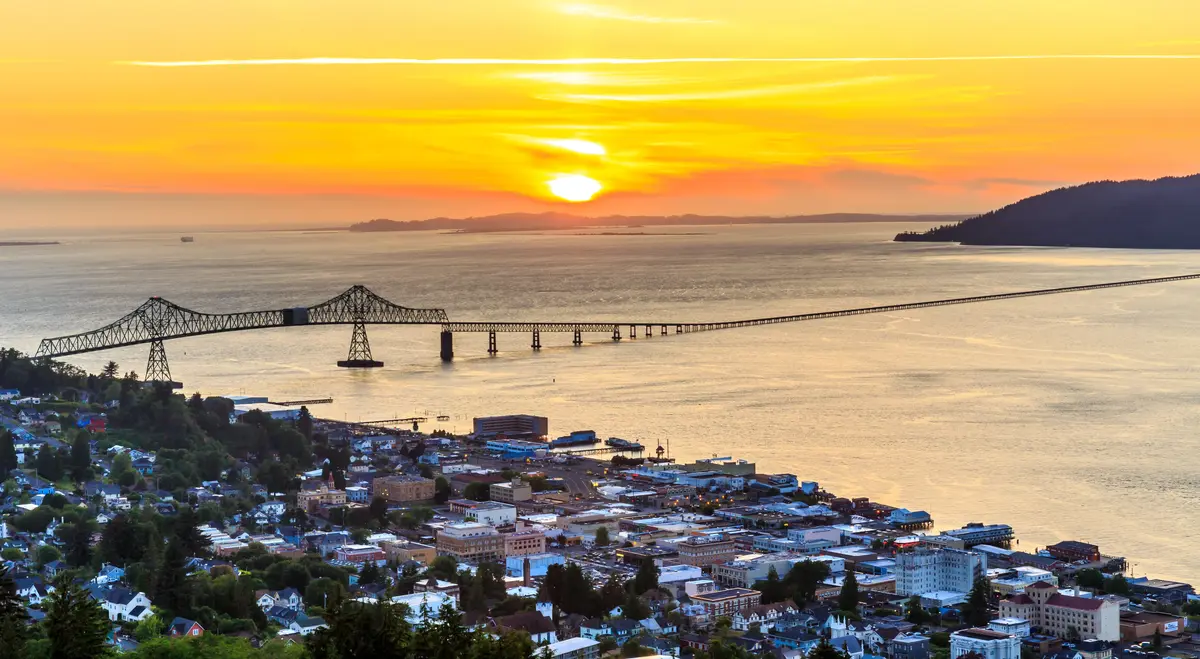
The gap between California's market and Astoria's is real, but it requires some context to use well. California's statewide typical home value of $773,735 (Zillow ZHVI) sits noticeably above Astoria's typical home price of $486,426 as of July 2026. For a buyer arriving with California equity — particularly someone who owned for a decade or more in any coastal California market — that difference can be transformative: a paid-off or low-balance purchase, or a much smaller monthly obligation than you left behind.
What that buys physically is also different. Astoria's housing stock leans heavily Victorian and Craftsman — many homes date to the late 1800s and early 1900s, with wraparound porches, steep staircases, and basement-level garages carved into the hillside. Updated kitchens and modern systems exist, but buyers expecting the open-plan California new-build aesthetic will find the inventory doesn't offer much of it at this price point. The trade-off is character, river views from the upper neighborhoods, and price points that are genuinely entry-level by coastal Oregon standards.
For context on where Astoria sits among its neighbors: Warrenton and Seaside price at about the same level, while Gearhart runs noticeably higher. Astoria is not the cheapest place on the Oregon Coast, but it is the one with the most intact historic neighborhood fabric and the most walkable downtown core.
One honest caution: the median household income here is $68,007, which sits below the income level needed to comfortably carry the typical home price. For Californians arriving with equity, that gap doesn't matter. For anyone planning to buy on local wages alone, the math is tighter than the sticker price suggests. The buying process and financing mechanics page covers the practical steps for buyers working in this market.
What the Neighborhoods Offer
Astoria's geographic layout — a narrow ridge running east-west above the river — means neighborhood character is largely determined by elevation and era. The Shively-McClure Historic District holds some of the densest concentration of Victorian-era homes. Uniontown sits at the western waterfront end, closer to the bridge. South Slope and Alderbrook are mid-hill residential areas with a mix of historic and mid-century stock. Emerald Heights and Hilltop sit higher, with the most dramatic river views. Smith's Point is lower and closer to the water. For a deeper look at how these areas compare, see the neighborhoods guide.
The Tax Picture: Oregon vs. California, Honestly
Oregon's tax structure looks like a clean win from a California perspective — until you read the fine print. The headline that's genuinely true: Oregon has no statewide sales tax, making it one of only five states in the country with a zero rate. California's statewide base sales tax rate of 7.25% — the highest in the nation — climbs to 8–10% or more in many California cities once local add-ons are included. That difference is real money on every large purchase, every car, every appliance.
The income tax story is more complicated. Oregon's top marginal rate of 9.9% kicks in at $125,000 of taxable income — meaning a solidly middle-class professional hits the top bracket on a significant share of their earnings. California's top state income tax rate of 13.3% applies only to the highest earners — income above $1 million — and California's brackets are more gradual, so most people earning under $200,000 actually face a lower effective state income tax bill in California than they will in Oregon. The net advantage on income tax alone only runs toward Oregon for very high earners.
Where Oregon Actually Wins on Income Tax
Two provisions soften Oregon's income tax burden in ways the top-line rate doesn't show. Oregon allows taxpayers to deduct a portion of federal taxes paid on their Oregon return — a rare provision nationally — which can meaningfully reduce the effective rate for homeowners who itemize. Remote workers for California employers also shift entirely to Oregon's system once they establish residency, which matters most for high earners previously paying California rates on six-figure incomes.
Property Tax: A Near-Wash, With One Key Difference
Astoria's effective property tax rate of 0.71% is essentially comparable to California's effective rate. The dollar amounts differ dramatically because of the price gap, but the rate itself isn't the shock many Californians expect. The real difference is structural: Oregon has no equivalent to Proposition 13's assessment cap. Assessed values can adjust more freely as the market moves, which means Astoria homeowners don't carry the same long-term protection California owners built up over decades of ownership.
| Tax Category | Oregon / Astoria | California |
|---|---|---|
| Sales Tax | None (0%) | California's statewide base sales tax rate of 7.25% (plus local) |
| Top State Income Tax Rate | 9.9% (above $125K) | California's top state income tax rate of 13.3% (above $1M) |
| Effective Property Tax Rate | 0.71% | California's effective property tax rate of 0.71% |
| Federal Tax Deduction on State Return | Partial deduction allowed | Not allowed |
| Assessment Cap | None | Prop 13 limits increases to 2%/year |
| Capital Gains Treatment | Taxed as ordinary income | Taxed as ordinary income |
The full tax and cost breakdown lives on the cost of living page. If you're a middle-income earner, run the effective rate comparison before assuming Oregon saves you money on income tax — the zero sales tax is the stronger argument for most households.
Climate: The Thing Most Californians Underestimate
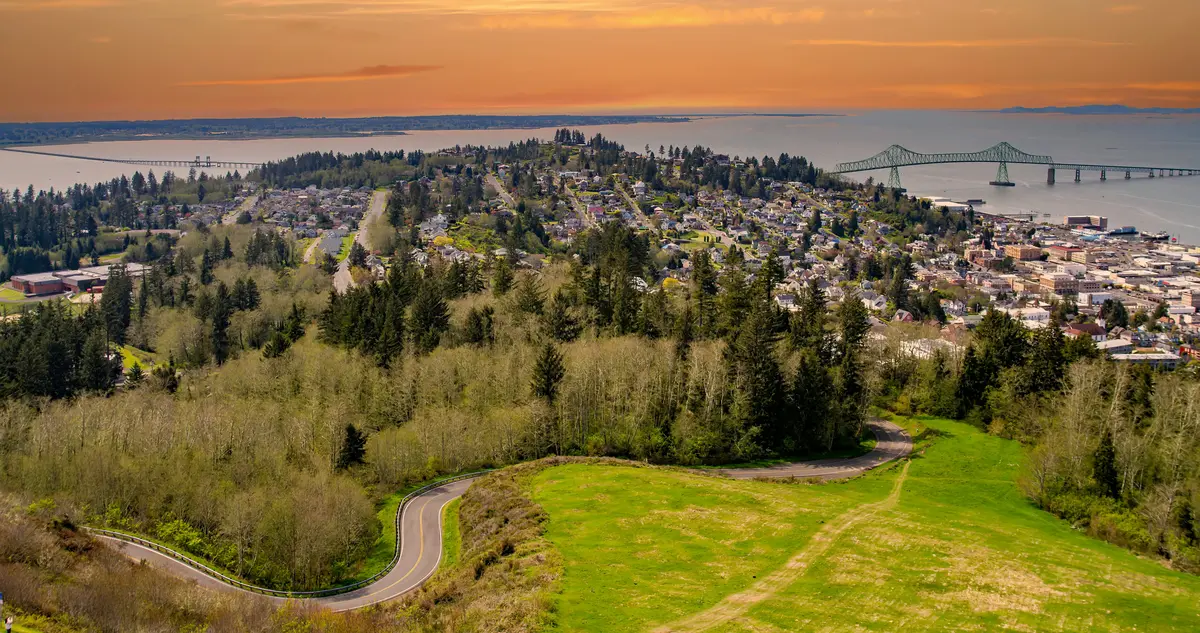
No section of this guide matters more for quality-of-life than this one, and no section gets minimized more in the early stages of a California-to-Astoria decision. Astoria averages approximately 86 inches of rain a year. For comparison, San Francisco gets roughly 23 inches, and Los Angeles gets about 15. The rain here is not a dramatic California winter storm — it is a steady, grey, relentless presence from October through April, with fog sitting on the river most mornings and humidity running in the low-to-mid 80s year-round.
Astoria gets 127 sunny days a year. That number is the honest one, and it is significantly below what most coastal California cities average. People who move here from Southern California in particular find that the psychological adjustment takes longer than the logistical one. By month three, the grey is no longer novel.
What the Summers Actually Are
Summer in Astoria is genuinely beautiful — cool, green, and clear. August highs peak around 68°F. That is the trade the climate offers: you earn the summers by enduring the winters. Many Californians who make it through the first full rain season say it becomes manageable with the right gear and the right mindset. Several who leave cite the winter darkness as the primary reason — not the cost, not the job market, but the weather.
What Seasonal Tourism Does to the Town
Astoria has operated as a cruise ship port of call since 1982, and the summer season brings a visible influx of visitors to the Riverwalk, the Columbia River Maritime Museum, and the Flavel House Museum. For residents, this means the town has more economic energy and more restaurant foot traffic in summer — but also more parking pressure downtown and more competition for weekend tables. It is a minor friction that catches new residents off guard, because the city feels so quiet in January that the summer version can seem like a different place entirely.
Looking to buy in Astoria? Estimate your payment.
Enter your numbers to see an estimated monthly mortgage payment.
Estimate only. Excludes HOA fees and mortgage insurance. The interest rate above is a starting point, not a quoted rate — replace it with your own to see real numbers. Insurance is a flat placeholder, not a Astoria quote.
Daily Life in Astoria: What California Doesn't Prepare You For
Astoria is a real city with a real downtown — the Liberty Theatre, the Astoria Column atop the hill on the east side of the city, the Riverwalk running along the waterfront — but it is a city of 10,109 people, and the service infrastructure reflects that scale. A serious shopping run means driving out of town. Portland International Airport is about 105 minutes away. Anything requiring a specialist, a major retailer, or a significant medical appointment means planning around that distance.
What Astoria does have, concentrated for its size, is a genuine food and arts culture. Fort George Brewery is one of the most respected craft operations on the Oregon Coast. The Astoria Brewing Company anchors the downtown dining scene alongside Bridgewater Bistro and South Bay Wild Fish House, which leans on the commercial fishing heritage the Port still sustains. For coffee, Coffee Girl, Blue Scorcher Bakery & Cafe, and Sleeper Coffee have built loyal followings among residents. The Astoria Sunday Market runs through the warm months with a strict producer-only policy — everything sold is made in Oregon or Washington — which gives it a texture that feels genuine rather than curated.
Health coverage costs run noticeably below what most Californians paid in-state, though you will drive farther for specialist and advanced care than you would from most California cities.
Where Families Actually Gather
The Riverwalk is the consistent answer — it connects neighborhoods, handles the morning dog-walk crowd, and fills up on any dry afternoon. Fort Stevens State Park, a short drive west, handles the bigger outdoor days. The Cathedral Tree Trail and the trails near the Astoria Column get used year-round by residents who treat them as daily infrastructure rather than weekend destinations.
The school district serves 1,731 students enrolled in 2025-26. The Astoria School District holds a B- rating, according to Niche, with active OSAA athletics programs — the Friday night football crowd at Fishermen home games is a legitimate community gathering. On 2024-25 state assessments, 29% of students reached math proficiency and 41.1% reached reading proficiency. Families coming from high-performing California districts should set realistic expectations and look at the full picture on the schools page.
The Commute Reality
For remote workers, the commute question is moot and Astoria is genuinely well-suited — the cost of living, the scenery, and the small-city pace are exactly what remote-work migration patterns are chasing. For anyone who needs to be in Portland regularly, about 105 minutes to Portland on US-30 along the Columbia River is the non-negotiable reality. That drive is beautiful, and it is long. See the full commute breakdown at Living in Astoria.
Weekends and Local Favorites in Astoria
The rhythm of a weekend in Astoria is dictated by weather in a way that Californians find unfamiliar at first and natural within a year. A clear Saturday morning in summer means the Astoria Column — the 360-degree view from the top, looking across the Columbia to Washington and out toward the Pacific, is the image that anchors most people's decision to stay. A rainy Saturday in November means the Columbia River Maritime Museum, the Liberty Theatre for a film or performance, and a long lunch at Bridgewater Bistro or South Bay Wild Fish House.
Fort George Brewery is where most conversations about Astoria's character eventually land. It occupies a historic building near the waterfront and has become the social center for a wide cross-section of the city — locals, transplants, and the seasonal tourism crowd all end up there. Mo's Seafood & Chowder brings the classic Oregon Coast seafood-shack tradition, and for coffee, Kick Ass Koffee and Journey's End Espresso cover the independent end of the spectrum alongside the already-mentioned Coffee Girl and Sleeper Coffee.
The Astoria Sunday Market is the warm-season weekly anchor. Its producer-only rule means the goods are genuinely local, and Flaigg Family Farm & Fresh Eggs is a representative example of the vendors who show up — small-scale, Oregon-based, selling what they actually grow or make. The market runs through the warm months and draws a consistent crowd that includes both residents and visitors, which gives it an energy that is easy to underestimate until you've been a few times.
What Newcomers Don't Expect
The Astoria-Megler Bridge surprises everyone. It is nearly four and a half miles long, rises to 200 feet above the river at its center, and connects Oregon to Washington at one of the widest points of the Columbia. Driving it the first time as a resident — rather than a tourist — recalibrates your sense of where you live in a way that is hard to articulate but immediate. It is the kind of place that makes the distance from California feel correct.
What Californians don't always expect is how quickly Youngs Bay, the tidal estuary on Astoria's south and west edges, becomes part of the daily visual landscape — visible from the hillside neighborhoods, part of the light in the evenings, and the reason the birdlife here is as varied as it is. It is not dramatic scenery in the way the Pacific is dramatic. It is quieter than that, and for people who choose Astoria specifically because they are done with drama, it is exactly right.

Local Expert Takeaway: Astoria rewards Californians who have genuinely decided they want a small, historic coastal city — not a California suburb that happens to be in Oregon. The home price gap relative to California's statewide typical home value is real and can be life-changing for equity holders, the zero sales tax is a consistent annual benefit, and the summers are legitimately beautiful. The catches are equally real: Oregon's income tax hits middle-income earners harder than California's does, the rain is not a seasonal inconvenience but a defining feature of eight months of the year, and Portland is about 105 minutes away when you need what a city provides. People who thrive here know both lists going in.
Quick Takeaways & FAQs
✅ Oregon's zero sales tax saves Astoria households thousands annually compared with California's statewide base rate — one of the most immediate and tangible financial changes after the move.
⚠️ Oregon's income tax brackets are steeper than most Californians expect: the 9.9% top rate hits at $125,000, meaning middle-income earners often pay more in state income tax than they did in California.
📍 Astoria averages 127 sunny days a year and roughly 86 inches of rain — the climate is the single biggest adjustment for California transplants, and the one most people underestimate before they move.
Is Astoria, Oregon cheaper than California for housing?
Does Oregon really have no sales tax?
Will I pay less income tax in Oregon than I did in California?
What's the biggest lifestyle adjustment for Californians moving to Astoria?
How far is Astoria from Portland, and does the distance matter?
Moving to Oregon?
Tell us what you need help with and we'll connect you with local resources.
