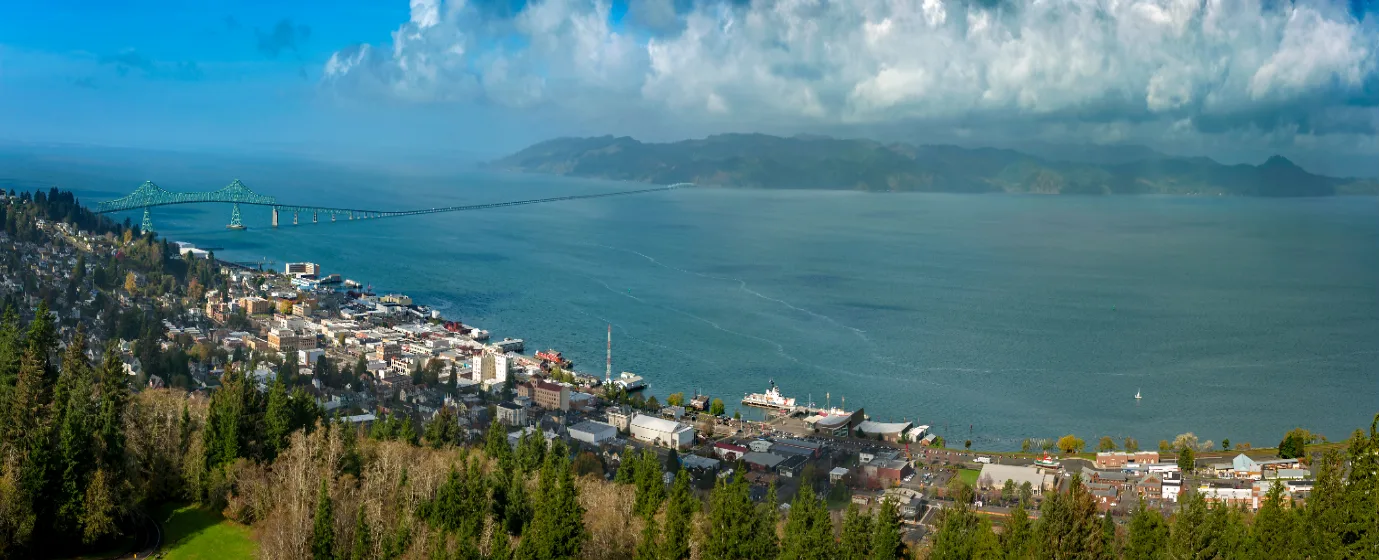
Maybe you've been priced out of Portland and someone mentioned Astoria. Maybe you drove US-101 through town, saw the Victorian houses stacked up the hillside above the Columbia River, and started doing the math. The math is more complicated than it looks at first. Astoria sits noticeably above the national cost-of-living average — not cheap by any measure, and more expensive than the Oregon interior — but it also costs a fraction of what Portland's close-in neighborhoods now demand, and it offers something no suburb can: an actual working waterfront, a genuinely walkable historic core, and a sky that stays dramatic even when it's gray, which is often.
The city's economy runs on a handful of anchors: Columbia Memorial Hospital, the Astoria School District, Clatsop Community College, and the City of Astoria itself. That employer mix keeps a stable base of professional and public-sector households in town, which helps explain why the median household income sits at $68,007 — real purchasing power for the market, though the income-to-home-price ratio still demands a hard look. Astoria School District 1C holds a B- rating, according to Niche, which draws families who want a small-city school environment without the anonymity of a large district. For a deeper look at what the schools offer, see the Astoria schools guide.
What drives daily spending here is the coastal location itself. Groceries cost slightly more than the national average because everything arrives by road — US-30 along the Columbia or US-101 down the coast — and that logistics reality shows up on price tags. Utilities run close to Oregon norms, helped by moderate coastal temperatures that keep extreme heating and cooling loads rare. On-foot access within the core is genuine; the Astoria Riverwalk and the compact downtown grid mean many residents walk or bike for errands, at least in the milder months. The commute picture is a different story: Portland International Airport (PDX) is about 95 miles away, and driving to Portland takes about 105 minutes, which is why most Astorians treat Portland as an occasional destination rather than a daily commute.
Whether you're buying your first home on the Oregon Coast or deciding between renting and owning while you feel out the market, the sections below break down Astoria's housing costs, everyday expenses, how the city stacks up against Seaside and Warrenton, and what Oregon's tax structure means for your bottom line.

What It Really Costs to Live in Astoria
Housing is the dominant driver of Astoria's cost premium over the national average. Everything else — groceries, utilities, transportation — runs modestly above national norms but not dramatically so, and the coastal climate works in your favor by keeping extreme heating and cooling costs rare.
The typical home price in Astoria was $486,426 as of July 2026 (Zillow Home Value Index). That figure puts Astoria well below the Portland metro median, and noticeably below the broader Oregon coast vacation-home markets further south, but it sits above what many buyers moving from the Midwest or the intermountain West expect to find in a city of 10,109 people. The premium reflects the scenery, the historic housing stock, the limited buildable land on Astoria's hillside geography, and consistent outside interest from remote workers and retirees.
Compared to Seaside, which benefits from heavier tourist infrastructure, Astoria prices are competitive. Compared to Warrenton and Knappa, which lack Astoria's urban amenities and walkable core, they carry a clear premium. That gap is worth understanding before you start touring homes, because the cost difference between living in Astoria proper and living on the edge of the metro area can be substantial — and so can the lifestyle difference.
Housing: Rent vs Buy in Astoria
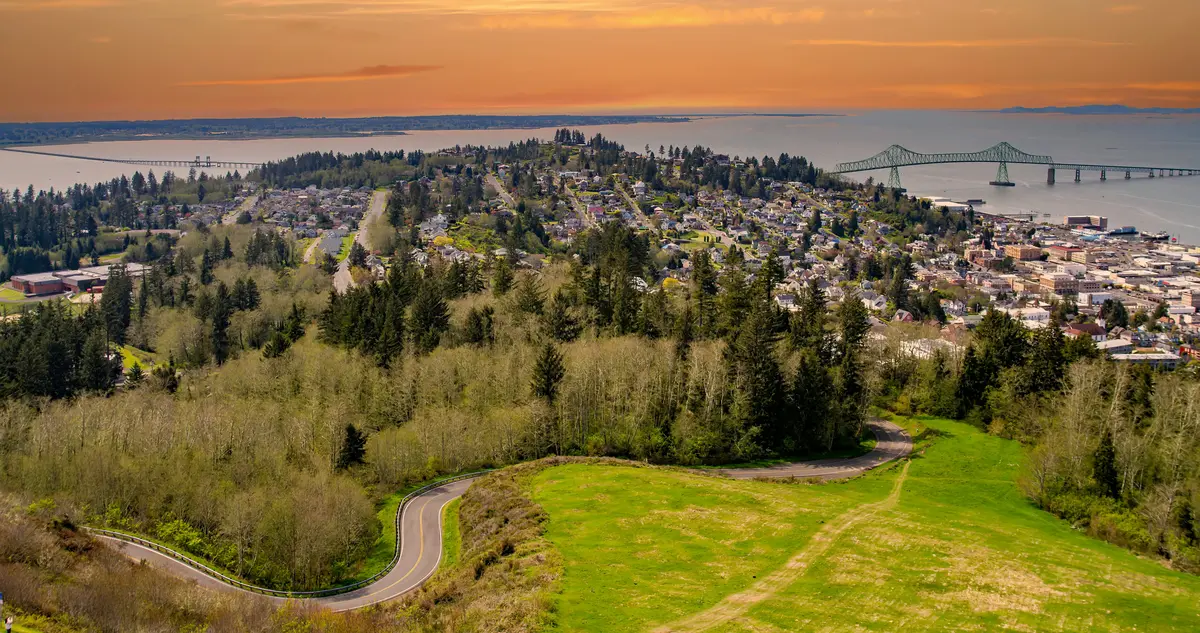
Buying in Astoria means working with a tight inventory of older homes — much of the stock is pre-1950, with Victorian-era construction throughout the hillside neighborhoods. Entry-level homes, typically smaller older bungalows requiring some updating, start in the low-to-mid $300,000s. The city-wide typical home price of $486,426 (July 2026) reflects the broader mid-market, where a well-maintained three-bedroom on a hill with Columbia River views commands a meaningful premium. For a breakdown of how prices and character vary by neighborhood, the Astoria neighborhoods guide covers each area in detail.
The effective property tax rate in Astoria is approximately 0.71% — one of the lower rates on the Oregon Coast, and well below the national average. Clatsop County administers taxes across 66 separate taxing districts covering schools, city services, fire, and roads, so your exact rate depends on which districts overlay your parcel. The engine's mortgage calculator below can help you model the full ownership cost at current rates once you have a purchase price in mind.
Renting makes sense here if you're new to the area and want time to understand the neighborhoods before committing, or if your income puts the ownership math out of reach at current prices. A median household income of $68,007 is enough to qualify for a mortgage on an entry-level home, but it leaves limited cushion for the renovation costs that older Astoria homes often carry. The typical two-bedroom rent range of $1,510–$1,840 per month is meaningful, but the rental inventory is thin — this is a small city and units turn slowly, so renters who find something they like tend to stay put.
The Ownership Reality
One detail that surprises many buyers: the age of the housing stock means inspections frequently surface deferred maintenance — roofs, foundations, drainage, and the effects of a coastal climate on wood construction. Budget for that discovery before you're in contract, not after. The inspection is not the place to learn the house's full story for the first time.
Everyday Costs Beyond Housing in Astoria
| Category | Typical Monthly Cost | Notes |
|---|---|---|
| Housing (typical rent) | $1,644/mo | City-wide typical rent. Buying? Use the calculator above for a mortgage estimate. |
| Utilities | $190–$280/mo | Electricity, gas, water, sewer, trash |
| Groceries | $580–$780/mo | Food at home, household of 2–3 |
| Transportation & Gas | $200–$340/mo | Fuel, and transit where it is a real option |
| Phone & Internet | $110–$180/mo | Mobile plan plus home broadband |
| Misc / Discretionary | $220–$450/mo | Dining out, entertainment, subscriptions |
Non-housing figures are estimates for a household of two to three, not a sourced index; housing is the city-wide typical rent (Zillow ZORI, July 2026). Refreshed with the rest of the city data.
The coastal climate is genuinely mild — Astoria averages 127 sunny days a year, but rarely bakes and rarely freezes. That translates to moderate utility bills. Electricity here benefits from the Pacific Northwest's hydropower grid, keeping residential rates meaningfully below what households pay in most of the country. The mild temperatures mean you're unlikely to run heating or cooling hard in the same month, which keeps combined monthly utility costs — electricity, water, sewer, and trash — close to Oregon statewide norms.
Groceries cost a bit more than you'd pay inland, because everything that isn't locally caught or grown travels here by road. A smaller city also means less retail competition — a serious shopping trip often means a drive to larger stores in the region. The NW Connector bus system, operated by the Sunset Empire Transportation District, runs local fixed routes connecting Astoria to Warrenton, Seaside, Gearhart, and Cannon Beach at an affordable fare — a useful option for car-free errands along the coast. Oregon POINT's NorthWest intercity route also links Astoria to Portland by bus, making the occasional trip manageable without a car. For in-town errands, the compact downtown core and the Astoria Riverwalk make walking or biking genuinely practical during the milder months. For longer trips, a personal vehicle remains essential — PDX is about 95 miles away and the drive takes about 105 minutes.
Looking to buy in Astoria? Estimate your payment.
Enter your numbers to see an estimated monthly mortgage payment.
Estimate only. Excludes HOA fees and mortgage insurance. The interest rate above is a starting point, not a quoted rate — replace it with your own to see real numbers. Insurance is a flat placeholder, not a Astoria quote.
Astoria vs Nearby Cities: Cost Comparison
| City | Typical Home Price | Typical Rent | Cost vs Astoria |
|---|---|---|---|
| Astoria (this city) | $486,426 | $1,644/mo | — |
| Warrenton | $505,967 | $1,665/mo | 4% higher |
| Seaside | $473,271 | $1,395/mo | 3% lower |
| Gearhart | $619,942 | $3,495/mo | 27% higher |
Source — home prices: Zillow ZHVI, July 2026; rent: Zillow ZORI, July 2026. Nearby-city figures are the same series, refreshed together.
Astoria sits at the higher end of the North Coast price spectrum for a city its size, though the gap between it and resort-heavy neighbors like Seaside narrows considerably once lifestyle amenities are factored in — the table below shows how the full picture compares.
Taxes & the Bottom Line for Astoria
Oregon's Income Tax
Oregon's state income tax is graduated, running from 4.75% at the low end to 9.90% at the top bracket. There is no local city or county income tax in Astoria — what you owe the state is what you owe, full stop. For higher earners relocating from a no-income-tax state, this is the largest tax adjustment to budget for.
No Sales Tax
Oregon levies no general sales tax, at the state or local level. The price on the tag is the price at the register, for groceries, clothing, furniture, and everything else. For buyers coming from California or Washington, this is a real and immediate savings that partially offsets the income tax difference.
Property Tax
The effective property tax rate of approximately 0.71% is low by national standards and keeps ongoing ownership costs more manageable than the home price alone might suggest. On a home at the typical price point described earlier, annual property taxes land meaningfully below what buyers in most of the country would pay on a comparable purchase — though the calculator is the right tool for your specific scenario, since the exact levy depends on your parcel's district overlaps across Clatsop County's 66 taxing entities.
Who Astoria's Budget Fits
Astoria works best for buyers who can bring a meaningful down payment, carry stable professional or remote income at or above the city's median, and aren't counting on a Portland commute to close the income gap. It also works for retirees whose fixed income is supplemented by home equity from a prior market. For more on the retirement picture, see the Astoria retiring guide.
Buyers who tend to find it a stretch are those stretching to the median price without substantial savings reserves, given the older housing stock's tendency to surface repair needs after purchase. The market rewards patience and preparation — and punishes buyers who underestimate what a Victorian-era coastal home will ask of them in the first few years of ownership.

Local Expert Takeaway: Astoria costs more than most people expect from a city of 10,109, and less than most people fear after looking at Portland. The real budget discipline isn't the sticker price — it's the repair reserve on older housing stock, the grocery premium of a coastal location, and, for anyone with Portland ties, the reality that about 105 minutes separates you from the metro. Oregon's zero sales tax takes a real bite out of the cost gap, and a 0.71% property tax rate keeps ongoing ownership costs from compounding. Come with a solid down payment, a realistic inspection budget, and income that doesn't depend on daily Portland proximity — and the math works better than it first appears.
Quick Takeaways & FAQs
✅ Oregon's zero sales tax provides immediate savings at the register on every purchase, partly offsetting the state's graduated income tax for most households.
⚠️ The typical home price of $486,426 (July 2026) sounds moderate against Portland, but older coastal homes routinely surface repair needs after purchase — budget a reserve before you close.
📍 The NW Connector bus connects Astoria to Seaside, Warrenton, and Cannon Beach for coastal errands, and Oregon POINT runs intercity service to Portland — but most residents still need a car for daily life.
Is Astoria, Oregon expensive to live in?
What is the typical rent in Astoria, OR?
Does Oregon have a sales tax that affects my cost of living in Astoria?
What are property taxes like in Astoria?
Can you commute from Astoria to Portland?
Moving to Oregon?
Tell us what you need help with and we'll connect you with local resources.
