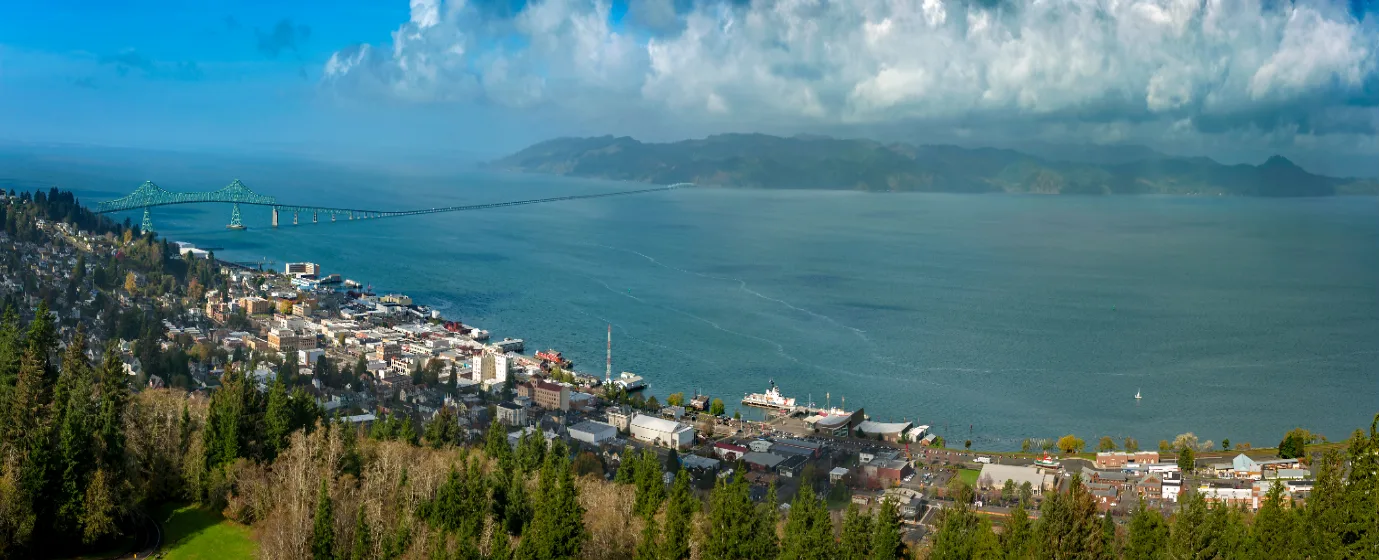
Maybe you've been priced out of Portland's school districts and someone mentioned Astoria. Maybe your job is pulling you to the Oregon Coast and you're wondering what the public schools look like for your kids. What you'll find here is a small, historic district — one that was founded in 1854 and sits in a city of 10,109 people perched where the Columbia River meets the Pacific. The district is compact by design: four schools and a community where the high school football stands fill up on Friday nights because there's a shared sense of ownership over what happens on that field.
Astoria School District 1C holds a B- rating, according to Niche, which puts it squarely in the middle tier for Oregon coastal districts. On 2024-25 state assessments, 29% of students reached math proficiency and 41.1% reached reading proficiency — figures that sit below state averages and are worth taking seriously before you make a decision. At the same time, Astoria High School has built a dual-enrollment pipeline with Clatsop Community College that lets motivated students graduate with college credit already on the books. The story here is one of real investment alongside real gaps, and understanding both before you move is worth your time.
Beyond the classroom, Astoria's size works in families' favor in specific ways. Youth sports are community-organized and genuinely community-supported, with the Astoria Aquatic Center anchoring recreational programming and a local nonprofit — Astoria Youth Athletics Inc. — filling the financial gaps that keep kids participating. The parks and recreation infrastructure includes maintained athletic fields and a Parks & Recreation department that runs seasonal clinics and camps. For the cost of living context, the cost of living page covers home prices and rent in full.
Whether you're weighing a move or just doing early research, the sections below break down Astoria School District 1C's structure and ratings, the schools worth knowing by name, test scores and the honest tradeoffs, youth sports and kids activities, who this district is and isn't the right fit for, and what daily school life here actually looks like on the ground.

Astoria School District 1C: The District at a Glance
Astoria School District 1C is one of Oregon's oldest public school districts — established in 1854, when the city was already the most significant port on the Northwest coast. That history isn't just trivia; it explains why the district has deep community roots and why families here tend to stay engaged rather than opt out.
The district operates four schools serving preschool through 12th grade. Classes run small relative to many Oregon coastal districts, and the administrative overhead is low enough that per-pupil investment stays above what many comparable communities manage.
Niche gives the district an overall B- rating. That rating reflects genuine strengths — staff accessibility and a growing college-credit program — alongside real weaknesses in standardized test performance. On 2024-25 state assessments, 29% of students reached math proficiency and 41.1% reached reading proficiency. Those numbers track with demographic realities: the district serves a meaningful share of economically disadvantaged students, and the student body is roughly 73% white and 19% Hispanic/Latino. Neither figure is an excuse, but both are context a relocating family should have.
What the Rating Actually Means
A B- from Niche aggregates academics, teachers, diversity, and activities — so a district that scores lower on test results but higher on community and activities can land exactly here. That's largely Astoria's story. The academics piece pulls the grade down; the community engagement and program investment pull it back up. Families who treat the rating as the whole picture tend to either over-worry or under-prepare — both are avoidable if you read it as a starting point rather than a verdict.
The district's investment in per-pupil spending says something real about priorities. That level of commitment signals that Astoria is not cutting programs or deferring maintenance to balance a budget. Whether it translates to classroom outcomes the way a family needs it to is the question each parent has to answer for their own kids.
Three Schools Worth Knowing by Name
Astor Elementary School (Grades K–2)
Astor Elementary serves the youngest students in the district and stands out for its small classroom settings — classes here run noticeably smaller than the district average and smaller than most comparable Oregon schools. Niche rates Astor above average, and in a district where the early grades set the foundation, that matters. A kindergartner in a room with fewer kids and more teacher time has a real structural advantage coming into reading and math.
The school feeds into a small-enough district that the transition to middle school doesn't feel like a leap into an unfamiliar institution — many of the same families are there, and the district's size keeps those community threads intact.
Best for: Families with kids in the youngest grades who value small classroom settings and teacher accessibility.
Astoria Middle School (Grades 6–8)
Astoria Middle School is the district's sole middle school, serving the full range of sixth through eighth graders in the city. The school offers a Gifted & Talented program — the only such program in the district — which is worth knowing if you have a student who's been in enrichment or acceleration elsewhere.
A single middle school serving the whole district means every sixth grader in Astoria passes through the same building. That consolidation creates a consistent experience, but it also means there's no alternative option if the fit isn't right without leaving the district entirely.
Best for: Parents with academically motivated kids who want a structured Gifted & Talented program in a school small enough to stay personal.
Astoria High School (Grades 9–12)
Astoria High School — home of the Fighting Fishermen — sits on the south side of town near Youngs Bay and is the district's sole comprehensive public high school. Its most distinctive offering is a dual-enrollment pipeline with Clatsop Community College and Tillamook Bay Community College that gives students access to a range of opportunities to earn college credit. Motivated students can graduate with a full Associate of Arts Oregon Transfer degree — at no cost — through dual credit and simultaneous enrollment. That's a genuinely unusual offering for a school this size.
The high school's college-prep catalog is narrower than what families moving from larger suburban districts are used to, and that's a real constraint worth naming. But the community college partnership essentially turns those gaps into college courses rather than leaving them empty — a motivated student here can graduate better-prepared for a four-year transfer than a bare course-count would suggest.
School athletics programs cover football, cross country, and volleyball in the fall; boys and girls basketball in the winter; and baseball, softball, and track and field in the spring. Friday night football at this school is a genuine community event, not just a school one.
Best for: Students who want college credit on the table early, and families who value active athletics and a school where students aren't anonymous.
Test Scores and Academic Tradeoffs: Reading Them Honestly
The proficiency figures from the 2024-25 state assessments — 29% in math, 41.1% in reading — are the numbers that tend to stop relocating families in their tracks. They should be taken seriously. But they also need the right frame to be useful.
Oregon's statewide proficiency benchmarks are demanding, and coastal districts serving economically mixed communities consistently score in this range. Astoria is not an outlier in its peer group — but that doesn't mean the numbers are fine or that a family should set them aside. It means the gap between Astoria and a higher-performing suburban district is real, and any family making the comparison should know that going in.
Where the Investment Fits In
The district invests meaningfully in per-pupil spending relative to many coastal peers — a signal that the district isn't under-resourced in a raw financial sense. The gap between spending and outcomes is where the academic challenge lives, and it's the kind of gap that tends to reflect demographic factors more than administrative failure. Families who've moved here from higher-income suburban districts sometimes expect a direct spending-to-performance correlation and are surprised when they don't find it. That surprise is avoidable if you read the numbers together rather than separately.
What This Means for Individual Students
District averages say something about the middle of the distribution and almost nothing about where your specific child will land. A student who arrives reading above grade level, has engaged parents, and takes advantage of the dual-enrollment track at the high school can move through Astoria's schools in very good shape. A student who needs intensive academic intervention or specialized learning support will find fewer resources here than in a larger district — the small size that makes Astoria's schools feel personal also limits what the district can staff and sustain. That's the tradeoff that matters most at the individual level, and it's the one to assess before you sign a lease.
Looking to buy in Astoria? Estimate your payment.
Enter your numbers to see an estimated monthly mortgage payment.
Estimate only. Excludes HOA fees and mortgage insurance. The interest rate above is a starting point, not a quoted rate — replace it with your own to see real numbers. Insurance is a flat placeholder, not a Astoria quote.
Youth Sports and Kids Activities in Astoria
For a city of 10,109, Astoria has a youth sports infrastructure that punches above its weight — partly because the community is tight enough that volunteer energy gets concentrated, and partly because the city has invested in the physical facilities to make it work.
The Astoria Aquatic Center
The Aquatic Center is a multi-pool municipal facility and the hub of youth swimming in the city. Astoria Parks & Recreation runs structured swim lessons starting at age 3, with a multi-level progression that takes kids from water comfort through competitive readiness. Scholarship funding through the Astoria Community Foundation is available for qualifying residents — a meaningful detail in a district where a substantial share of students come from lower-income households. The city committed funding for a major expansion of the facility, with private donations and grants backing the project — a scale of investment that signals the Aquatic Center's importance to how the community thinks about kids' programming.
Parks & Recreation Seasonal Programs
Astoria Parks & Recreation runs seasonal youth sports programs through the year: athletic clinics, camps, and baseball and softball programs using maintained athletic fields. The programming is organized rather than informal — these are structured seasonal offerings, not just field reservations. The Astoria Community Foundation extends its scholarship reach here too, covering Parks & Rec sports participation fees for families who qualify. That financial backstop is one of the things that keeps youth sports accessible across income levels in a community where the median household income reflects the coastal economy.
Astoria Youth Athletics Inc.
The nonprofit Astoria Youth Athletics Inc. operates as a financial and volunteer backbone for youth sports across the Astoria and Warrenton area. It contributes to uniforms, equipment, and transportation costs — the categories that quietly price kids out of participation in communities without them — and supports both school and recreational programs. The existence of this kind of organization in a town this size reflects how seriously the community takes keeping kids on the field regardless of what their family can afford.
High School Athletics Programs
At the high school level, the Fighting Fishermen carry active school athletics programs across three seasons. Fall brings football, cross country, and volleyball. Winter centers on boys and girls basketball. Spring rounds out with baseball, softball, and track and field. The school's athletics calendar gives student-athletes a full range of options, and the community shows up — Friday night football draws a crowd that treats the stadium as a community gathering point rather than just a sports venue. That community texture around school sports is one of the things families who've moved here from larger cities consistently mention as a surprise in the best sense.
The Surrounding Environment as a Curriculum
Youth activities in Astoria aren't confined to organized leagues. The parks and trails surrounding the city — the Astoria Riverwalk, the hills above town, access to Youngs Bay — give kids a physical environment that a lot of larger cities charge premium prices to get near. Families with kids who are as interested in kayaking or hiking as in organized athletics find that the geography itself becomes part of their children's after-school life in a way that's harder to replicate inland.
Who This District Is NOT the Right Fit For
Astoria School District 1C is not a bad district. But it's a specific district, and the families who struggle here are usually the ones who came in without understanding what specific means in this context.
Families Requiring a Deep Advanced-Course Catalog
The high school's college-prep course offerings are narrower than what a typical suburban district provides. If your student has been moving through a full slate of advanced courses each year and plans to apply to selective universities with that track record, the curriculum ceiling here is a real constraint. The dual-enrollment community college partnership is a genuine substitute for some of that — actual college courses, and free — but it's a different path, and it doesn't produce the same transcript a highly selective admissions office is screening for. Know this before you move.
Families Prioritizing Consistent Attendance Culture
Attendance is a real challenge district-wide, and that reality shapes classroom pacing, peer culture, and teacher expectations in ways that go beyond what a letter grade captures. Families who've built routines around strong attendance norms and expect the school environment to reinforce those norms may find the culture here a harder fit than the rating alone would suggest.
Students Who Need Intensive Specialized Support
A four-school district has limits on what it can staff. Families with students who need intensive learning support, specialized therapies, or a structured special education environment beyond the basics should have a direct conversation with the district before moving — not after. The small size that makes Astoria's schools feel personal is the same size that limits what the district can sustain in specialized programming.
Families Expecting Big-District Extracurricular Depth
A larger suburban district might offer fifteen elective course tracks, a dozen clubs, and multiple performing arts ensembles. Astoria High School offers active athletics and a range of activities, but the depth of non-athletic extracurriculars is narrower than what families moving from metro-area districts are used to. If a student's identity is built around a specific activity that lives outside the main athletics calendar — certain performing arts programs, robotics, debate — confirm it exists here before making that part of the plan.
What Daily School Life in Astoria Actually Looks Like
The things that show up in ratings and proficiency tables don't capture the texture of what it's like to send a kid to school in a city this size and this setting. A few things families who've moved here tend to notice within the first year:
The District Is Small Enough to Be Personal
Four schools, one high school, one middle school. Your child's teacher will know their name before the first parent-teacher conference. The principal at a school of this size is not a distant administrative figure — they are someone your kid will interact with directly, regularly. That can be a genuine advantage for students who benefit from adults-who-know-them, and it means accountability runs in both directions: the school knows your family, and your family knows the school.
The College-Credit Opportunity Is Real and Underused
The dual-enrollment partnership between Astoria High School and Clatsop Community College — which allows students to earn a full Associate of Arts Oregon Transfer degree before graduating, at no cost — is one of the best-kept practical secrets in the district. Families coming from metro areas where college-prep is an expensive, supplemental industry tend to be surprised that this option exists and is free. The students who take full advantage of it are the ones whose parents knew to look for it. Now you do.
The Weather Shapes the Schedule
Astoria averages 127 sunny days a year. That's the coast, and it's honest. Outdoor recess, athletic practices, and after-school activities happen in rain gear more often than in sunshine. Kids who grow up here treat it as normal; kids who transfer from sunnier climates sometimes find the adjustment harder than expected. It's not a reason not to move — but it's the kind of seasonal reality that affects daily life in ways that don't show up in a school rating.
Community Turns Out for School Events
In a city of 10,109, school events are town events. The Fighting Fishermen's home football games draw a crowd that treats the stadium as a community gathering point rather than just a sports venue. That community presence is a feature for families who want their kids embedded in something larger than a school — and it's something to be aware of if your family prefers more separation between school life and social life. In a small city, those things are largely the same thing, and Astoria's schools sit at the center of that overlap.
For neighborhood context on where families tend to settle relative to the schools, the best neighborhoods page covers the geographic picture in full.

Local Expert Takeaway: Astoria School District 1C is a small, historic, and genuinely invested district — but it asks families to do some of their own lifting. The dual-enrollment pipeline at Astoria High School, where students can earn a full associate degree before graduation at no cost through Clatsop Community College, is exceptional for a school this size and is the district's strongest practical selling point for motivated students. The Aquatic Center, Astoria Youth Athletics Inc., and Parks & Recreation's seasonal programs make youth sports accessible across income levels in a way that a lot of small coastal towns can't manage. Where the district struggles — standardized test scores, limited advanced-course depth, attendance challenges — those are real gaps, not rating artifacts. Families who arrive with clear eyes about both sides, engage early, and take advantage of what Astoria specifically offers tend to land well here. Families who arrive expecting a suburban academic environment in a coastal package tend not to.
Quick Takeaways & FAQs
✅ Astoria High School's dual-enrollment partnership with Clatsop Community College lets motivated students graduate with a free Associate of Arts degree — a genuine differentiator for a school of its size.
⚠️ On 2024-25 state assessments, 29% of students reached math proficiency and 41.1% reached reading proficiency — below state averages, and figures families should weigh honestly before moving.
📍 Astoria Youth Athletics Inc. covers uniforms, equipment, and transportation costs so economic barriers don't keep kids out of youth sports — a community safety net that makes participation broadly accessible.
What rating does Astoria School District have?
How many schools are in Astoria School District, and what grades do they serve?
Does Astoria High School offer advanced or college-credit courses?
What youth sports and kids activities are available in Astoria?
What are the biggest downsides to sending kids to school in Astoria?
Moving to Oregon?
Tell us what you need help with and we'll connect you with local resources.
