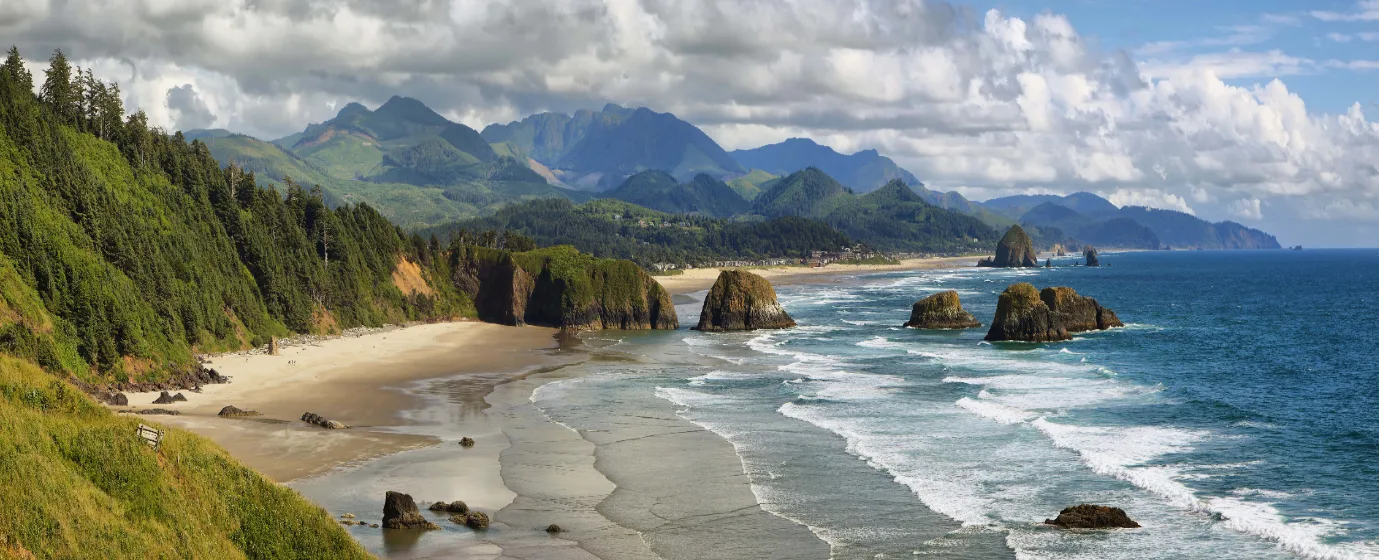
What Is Living in Cannon Beach, Oregon Like?
You've probably visited on a summer weekend, walked out to Haystack Rock at low tide, and thought: what would it actually be like to live here? The honest answer is that Cannon Beach operates as two cities simultaneously — one for the 1,500 people who call it home year-round, and one for the millions of visitors who flood US-101 each summer. Understanding which city you'd be living in, and whether you can afford the entry price, is the central question every prospective buyer has to answer before making an offer. Cannon Beach sits on the northern Oregon Coast in Clatsop County, connected to the rest of the state by US-101 running the length of the coast and by Highway 26 cutting east through the Coast Range toward Portland.
The economic backbone here is tourism, full stop. Hotels, vacation rentals, galleries, and specialty retail employ the majority of working residents. The City of Cannon Beach itself is a major employer, as is the Haystack Rock Awareness Program, Surfsand Resort, and the Coaster Theatre Playhouse — a working arts venue that anchors the town's reputation as one of America's recognized art towns. The Seaside School District 10, which serves Cannon Beach students, holds a C+ rating, according to Niche, with 1,425 students enrolled in 2025-26; on 2024-25 state assessments, 27.6% of students reached math proficiency and 44% reached reading proficiency. Families with school-age children weighing this move should dig into the district specifics at the schools page.
Cost of living here sits noticeably above Oregon Coast averages and well above most inland Oregon markets. The typical home price reached $926,140 as of July 2026 (Zillow Home Value Index), making Cannon Beach the most expensive town on the Oregon Coast. The median household income of $69,375 creates a significant gap between what most local wages support and what most local homes cost — which is why many full-time residents are either remote workers, retirees drawing outside income, or people who bought years ago. The effective property tax rate of approximately 0.69% is relatively low by national standards, which offers modest relief on high valuations. Day-to-day life leans heavily outdoor — 124 sunny days a year means the coast is genuinely temperate even if rarely warm, and the forests, tidepools, and headland trails are accessible on a Tuesday morning as easily as a Saturday. For a full cost-of-living breakdown, see the cost of living page.
Whether you're drawn by Haystack Rock, the art gallery corridor, or simply the idea of living somewhere most people only visit on vacation, the sections below break down Cannon Beach's neighborhoods, housing market, commute realities, local employers, and what daily life here is genuinely like — including the parts the Instagram photos leave out.
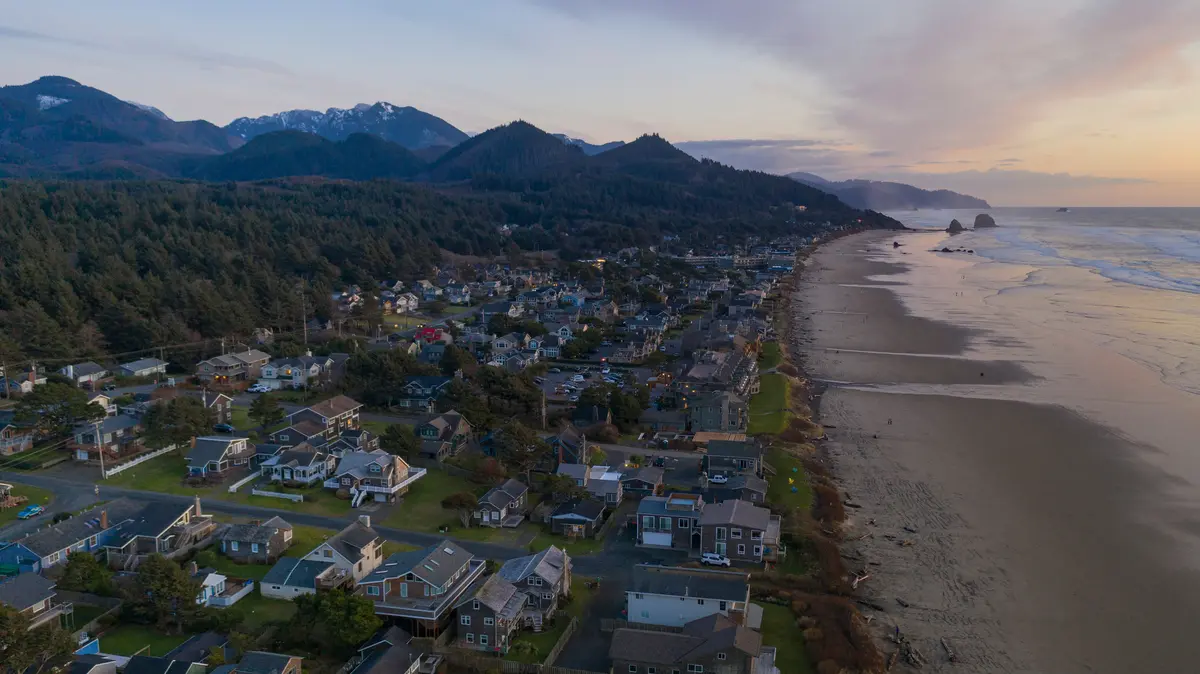
Cannon Beach at a Glance
Looking to buy in Cannon Beach? Estimate your payment.
Enter your numbers to see an estimated monthly mortgage payment.
Estimate only. Excludes HOA fees and mortgage insurance. The interest rate above is a starting point, not a quoted rate — replace it with your own to see real numbers. Insurance is a flat placeholder, not a Cannon Beach quote.
Why Are People Moving to Cannon Beach?
Most people who move to Cannon Beach have already visited a dozen times. They know the summer crowd and they move anyway — because what they're buying isn't the summer version of this town, it's October through May, when the streets clear out and the coast belongs almost entirely to the people who live here.
The Tourism-Driven Economy
Cannon Beach's economy runs almost entirely on the visitor industry. The city has actively discouraged chain retail for decades, which gives the downtown its gallery-and-boutique character but also means a serious grocery run requires either the Cannon Beach Marketplace for basics or a drive north to Seaside. That's a deliberate trade-off the community has made, and it shapes every aspect of local employment.
The largest employers are the institutions that make the town run: the City of Cannon Beach handles municipal government; the Haystack Rock Awareness Program employs environmental educators who staff the tidepools through the warmer months; Surfsand Resort anchors the hospitality sector; and the Coaster Theatre Playhouse sustains a year-round arts calendar that culminates in the Stormy Weather Arts Festival each November. Many working residents patch together seasonal and service-industry income, while others work remotely and treat the commute to Portland as occasional rather than daily.
Who Actually Moves Here
The buyer profile in Cannon Beach skews toward remote workers who can detach income from location, retirees with pension or investment income, and second-home buyers who eventually convert to primary residency. Very few people move here for a local job that pays enough to service a mortgage at this price point.
Artists, writers, and people who have spent careers somewhere else and want a genuinely different final chapter arrive regularly. What surprises most of them after six months isn't the rain — they expected that — it's how small the permanent social world is. Running into the same familiar faces at the weekly Cannon Beach Farmers' Market, at the coffee shop, at the Coaster Theatre, is either comforting or claustrophobic depending on your disposition. Knowing which one it will be for you is worth figuring out before you sign anything.
The Arts Draw
Cannon Beach is recognized as one of America's 100 Best Art Towns, with galleries concentrated in a walkable stretch downtown and through Midtown. The annual events calendar — the Spring Unveiling Arts Festival, the Sandcastle Contest (the oldest in the Pacific Northwest, running since 1964), the Stormy Weather Arts Festival, and Haystack Holidays — gives the town a cultural rhythm that persists even in the off-season. For people who find the gallery-and-festival culture energizing rather than touristy, that rhythm is a genuine quality-of-life asset.
What Daily Life Feels Like in Cannon Beach
The version of Cannon Beach that exists in June and July — US-101 backed up through town, parking near the beach requiring strategic patience, crowds dense enough that Haystack Rock disappears behind a wall of people — is not what year-round life looks like. By October, the same streets are quiet enough that a walk to Haystack Rock at dawn means sharing the beach with a handful of people and a lot of birds.
The Seasonal Swing Is Real
Summer is the city's economic engine and its biggest quality-of-life burden simultaneously. Locals learn to run errands early, avoid US-101 on Friday afternoons, and treat summer as the period when they earn patience credits to spend the rest of the year. The flip side is that the off-season is genuinely quiet in a way that's hard to find anywhere on the West Coast at this price point.
The Stormy Weather Arts Festival in November is the community's answer to the post-summer lull — three days of gallery openings, live music, and a featured concert at Coaster Theatre Playhouse that pulls a crowd back into town without the summer-scale chaos. Longtime residents describe it as one of their favorite weekends of the year precisely because the town is full but not overwhelmed.
Outdoor Life Is the Default
With 124 sunny days a year, the coast here is genuinely mild rather than warm — temperatures rarely spike above the mid-60s even in August, and the marine layer keeps summers comfortable in a way Portland rarely is. That climate makes outdoor life practical year-round rather than aspirational. Ecola State Park's trails through old-growth Sitka spruce and hemlock run along headlands with views that Captain William Clark noted in his Lewis and Clark journals; the park sits at the north end of town and is as much a part of daily life as any neighborhood park in a larger city.
Haystack Rock is the town's defining landmark — a 235-foot basalt sea stack accessible by foot at low tide. Tufted puffins nest on the rock each spring, with the Haystack Rock Awareness Program providing free interpretive programs. That program isn't just a tourist amenity; it employs local educators and represents the kind of institution that gives a small town its civic identity.
Getting Groceries and Services
The chain-free character of downtown Cannon Beach is genuine and intentional, but it has practical consequences. Routine shopping beyond the Cannon Beach Marketplace means driving — a serious shopping trip means leaving town entirely. Medical appointments, the DMV, and most professional services mean driving to Seaside or Astoria. People who move here from cities where everything is ten minutes away routinely underestimate how much of life will involve getting in the car, and they adjust over time or they leave.
Schools, youth activities, and many sports programs are tied to the Seaside School District rather than Cannon Beach itself — the schools page covers that boundary reality in detail.
The Cannon Beach Housing Market Right Now
Cannon Beach carries the most expensive residential market on the Oregon Coast, and the numbers reflect a fundamental mismatch between supply and demand that isn't going away. The typical home price reached $926,140 as of July 2026 (Zillow Home Value Index), a figure that tells only part of the story — closed-transaction medians have frequently run above that figure when there's enough volume to measure.
A Market Built on Scarcity
Inventory here is structurally limited. The city is geographically constrained by the ocean, Ecola Creek, the state park, and US-101, which means new construction is rare and existing homes turn over slowly. Much of the city's housing stock is effectively occupied as vacation rentals during peak season, which further compresses what's available for full-time residents. When a home does come to market, it can sit for an extended period — the price point filters the buyer pool significantly — but well-priced properties in desirable areas do move.
There are no active-adult or 55+ housing developments in Cannon Beach. Retirees who move here buy into the general residential market, typically prioritizing single-level homes for long-term livability. The retiring page covers that process and the lifestyle considerations in more depth.
What the Price Buys
At this price point, buyers are typically getting older construction — much of the residential stock dates from the 1960s through 1980s — on relatively modest lots, often with deferred coastal maintenance from salt air and weather exposure. The trade-off is the setting: a home in Cannon Beach comes with Haystack Rock visible from the right vantage points, Ecola State Park essentially as a backyard, and a town that most people only get to visit. Whether that's worth $926,140 is a values question as much as a financial one.
The effective property tax rate of approximately 0.69% is notably below the Oregon average, which provides some cushion on the carrying cost — though on a home at this value, even a low rate produces a meaningful annual bill. For the full tax picture, see the cost of living page.
Some areas of Cannon Beach run noticeably above the city-wide figure; others come in closer to it. Tolovana Park, at the city's southern end, tends to sit at the city median — making it the relative entry point into the market. Neighborhood character and geographic trade-offs are covered in depth on the best neighborhoods page.
Cannon Beach Neighborhoods
Cannon Beach has several distinct areas — each with its own character and appeal. Here’s a breakdown to help you narrow down where to focus your home search.
🏡 Downtown Cannon Beach
The walkable commercial and cultural core of the city, where the gallery corridor, restaurants, and easy beach access converge — best suited to buyers who want to be in the middle of everything, with the trade-off of more visitor foot traffic in summer.
🏠 Tolovana Park
The southern end of Cannon Beach, with a slightly quieter residential character and access to Tolovana Beach State Recreation Site — a good fit for buyers who want to be near but not in the busiest tourist zone.
🌳 Midtown
A middle band of the city that blends residential streets with some of the gallery density, giving buyers proximity to the arts scene with a bit more distance from the high-summer peak at the main beach.
🏘 The Presidential Streets
A residential grid of streets named for U.S. presidents, offering a neighborhood feel distinct from the tourist core — popular with full-time residents who want a more settled, less transient street environment.
🏔 North End (Ecola Creek area)
The northern residential fringe of Cannon Beach, where Ecola Creek meets the edge of town and proximity to Ecola State Park is the defining feature — quieter than downtown and well-suited to buyers prioritizing trail access and natural surroundings.
🌆 Ecola Point
A small area near the north end of town with some of the most dramatic coastal positioning in Cannon Beach, close to the Ecola State Park entrance and offering views that reflect the area's rugged headland geography.
Pros & Cons of Living in Cannon Beach
The Pros
- World-famous beach scenery with Haystack Rock and dramatic sea stacks
- Thriving arts community with galleries, theater, and festivals
- Low violent crime and a tight-knit small-town feel
- Easy access to state parks, tidepooling, and coastal hiking
The Cons
- Among the most expensive housing markets on the Oregon Coast, driven by second-home demand
- Local economy leans heavily on tourism, limiting year-round job options
- Summer weekends bring heavy visitor traffic and parking congestion
Getting Around & Commuting in Cannon Beach
US-101 is the only highway serving Cannon Beach, which makes the city's connectivity straightforward to describe and occasionally frustrating to live with. Everything goes north-south on the Coast Highway, and anything requiring east-west movement — toward Portland, toward the Willamette Valley — means heading inland via Highway 26 through the Coast Range.
The Portland Commute Reality
Portland is roughly 90 minutes away on a clear weekday via Highway 26, sometimes called the Mount Hood Corridor. Summer Friday afternoons routinely stretch that to two-plus hours as visitor traffic compounds with commuter volume at the coast range junctions. Winter weather on the pass adds genuine unpredictability — snow and ice events are infrequent but not rare, and when they happen, the coast feels more isolated than usual.
Very few full-time Cannon Beach residents commute to Portland daily. The people who make it work are either fully remote, traveling to Portland occasionally for meetings rather than routinely, or have restructured their professional lives around the coast. If your job requires you to be in a Portland office three days a week, Cannon Beach is going to test you within the first winter.
Seaside, Astoria, and Local Trips
The more practical commute is north on US-101. The drive to Seaside is about 15 minutes, making it the realistic anchor for daily services — healthcare appointments, the broader retail that Cannon Beach doesn't carry, and the wider Clatsop County employment base. Astoria is roughly 45 minutes north and serves as the county seat and regional hub for government services, medical facilities, and a larger job market.
Most routine trips within Cannon Beach itself are genuinely walkable once you're settled in town. The downtown gallery and restaurant corridor, Haystack Rock, and many of the residential streets are all accessible on foot for people living centrally. The walkability drops off quickly for residents on the eastern side of US-101 or in the Heights area — those locations require a car for virtually everything.
Public Transit Options
Cannon Beach is served by the Sunset Empire Transportation District (SETD). The NW Connector operates a local shuttle with nine stops around town and connects to Seaside and Astoria. The POINT intercity bus provides twice-daily service between Cannon Beach and Portland's Amtrak and Greyhound stations, with bike racks on all buses. For a town of 1,500, that's a meaningful transit option — though it won't replace a car for anyone with a typical working schedule or family logistics.
Portland International Airport (PDX) is approximately 85 miles from Cannon Beach, making it the practical gateway for air travel — plan on the drive as part of any trip, including buffer time if you're traveling in summer or during winter weather windows.
Schools in Cannon Beach
Families relocating to Cannon Beach have public, private, and higher-education options nearby. Here’s a quick overview.
🎓 School District
Seaside School District 10 serves K–12 students across Cannon Beach and the surrounding area. Rated C+ (source: Niche.com).
🏆 Graduation Rate
The 4-year high-school graduation rate here is approximately 79.7%.
📚 Higher Education
Oregon’s public universities — the University of Oregon, Oregon State University, and Portland State University — offer four-year degrees statewide, with a network of 17 community colleges providing two-year and workforce programs.
🌐 Online Learning
Oregon State University Ecampus and Portland State University Online offer fully accredited online degrees for remote learners across the state.
Safety in Cannon Beach
A quick look at how Cannon Beach compares on the numbers that matter most when weighing a neighborhood or a move.
🛡 Violent Crime
Approximately 8.1 per 1,000 residents.
🔒 Property Crime
Approximately 68.6 per 1,000 residents.
Compared to the most recent national figures from the Bureau of Justice Statistics (2024), Cannon Beach’s violent crime is above the national average (about 3.7 per 1,000), and property crime is above the national average (about 18.4 per 1,000).
Against Oregon as a whole, Cannon Beach’s violent crime is about three times the state average, and property crime is about three times the state average (Bureau of Justice Statistics, Crime Known to Law Enforcement, 2024 (tables 2 and 3)).
Crime rates can vary a lot within a single city, so the citywide numbers above are only a starting point. Some neighborhoods in Cannon Beach run well below these averages, while others run higher — the kind of block-by-block detail that matters most when you’re actually choosing where to live. The full guide below breaks it down neighborhood by neighborhood.
Working in Cannon Beach
Cannon Beach’s largest employers span several industries — here are some of the anchors of the local job market.
🏛 City of Cannon Beach
Municipal government
💼 Haystack Rock Awareness Program
Environmental
🏥 Surfsand Resort
Hospitality
💼 Coaster Theatre Playhouse
Arts and entertainment
Parks & Recreation in Cannon Beach
Some of the outdoor spaces that shape everyday life in Cannon Beach.
🌱 Ecola State Park
🌱 Tolovana Beach State Recreation Site
🌱 Arcadia Beach State Recreation Site
🌱 Les Shirley Park
Cannon Beach residents don’t have to go far for green space — spots like Ecola State Park and Tolovana Beach State Recreation Site are part of everyday life here, whether that’s a morning walk, a weekend hike, or just somewhere to unwind outside. The full guide below covers more of what Cannon Beach has to offer for parks and outdoor recreation.
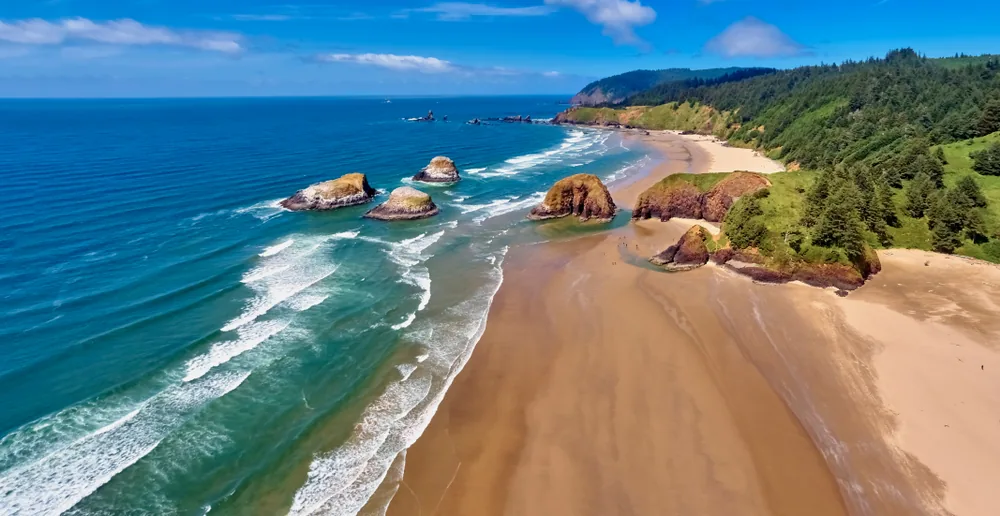
Retiring in Cannon Beach
Cannon Beach draws retirees for its balance of amenities, outdoor access, and cost. Here’s what to weigh.
🌤 Climate
Cannon Beach averages 124 sunny days a year, with mild temperatures year-round moderated by the Pacific. Summers rarely get hot — mid-60s is typical — and winters are wet and foggy but rarely freezing. The marine environment means homes require more maintenance than inland Oregon, but the temperate climate suits retirees who want outdoor access twelve months a year.
🍴 Lifestyle
Retirement in Cannon Beach means built-in access to Ecola State Park trails, Haystack Rock, and a genuine arts scene anchored by the Coaster Theatre Playhouse and a walkable concentration of galleries. The annual arts festival calendar gives the year structure even in the slower months. Dining options are strong relative to the city's size, and the overall pace is unhurried — which is exactly what most people are looking for.
🏚 55+ Communities
There are no active-adult or 55+ housing developments in Cannon Beach. Retirees buy into the general residential market, and many specifically seek out single-level homes for long-term livability. Inventory is limited and prices are high, so this works best for buyers with flexibility on timing and a clear sense of what neighborhood character they're after.
✈ Getting Around
Within the walkable central neighborhoods, daily life doesn't require a car. For anything beyond — medical appointments, serious shopping, airport travel — driving is the practical reality. Portland International Airport (PDX) is approximately 85 miles away. The NW Connector shuttle and the POINT intercity bus provide public transit options for those who want an occasional alternative to driving.
🏛 Oregon Taxes for Retirees — What to Know
- Social Security is not taxed — Oregon does not tax Social Security or Railroad Retirement benefits. Any amount included in your federal adjusted gross income is subtracted back out on the Oregon return.
- But other retirement income IS taxed — This is the trade-off that surprises people moving from Washington or Texas. Pension distributions and 401(k)/IRA withdrawals are taxed as ordinary income at Oregon’s regular rates — there is no blanket retirement-income exclusion.
- Graduated income tax — Oregon has four brackets — 4.75%, 6.75%, 8.75% and 9.9%. The 4.75% rate covers the first $10,000 of taxable income for a single filer ($20,000 filing jointly); the 8.75% rate starts at $125,000 ($250,000 jointly); and the top 9.9% rate applies above $250,000 ($500,000 jointly).
- No sales tax — Oregon levies no general sales tax.
- Property taxes, with senior deferral — Oregon’s Senior and Disabled Property Tax Deferral lets qualifying homeowners have the state pay their county property taxes, with a lien recorded against the home. The 2026 household income limit is $70,000, and deferred balances accrue 6% simple interest — it defers the bill rather than forgiving it.
- Estate tax — the one to plan for — Oregon has its own estate tax with a $1 million filing threshold — far below the federal exemption, and NOT indexed for inflation, so it reaches more estates every year in real terms. Retirement accounts and a long-held home count toward the taxable estate, so estates that feel modest can cross the line without the owner expecting it.
- No inheritance tax — Oregon has no separate inheritance tax and no gift tax.
Tax laws change frequently and individual situations vary. This is general information, not tax advice — always consult a qualified Oregon tax professional or CPA for personalized retirement tax planning.
Weekends & Local Favorites in Cannon Beach
The weekend rhythm in Cannon Beach is unhurried in a way that's specific to small coastal towns — and that rhythm is one of the main things people are actually buying when they move here. The question is whether you find it restorative or limiting, and that usually becomes clear within the first year.
The Outdoors, Which Is Everywhere
Ecola State Park's trails through old-growth Sitka spruce are the town's most spectacular outdoor asset — forested headland walks with views of the coast that stop people in their tracks even after years of living here. Tolovana Beach State Recreation Site and Arcadia Beach State Recreation Site extend the accessible coastline south of downtown. Les Shirley Park, tucked along Ecola Creek, offers a different character — riparian and quiet, suited to a morning walk with a dog rather than a dramatic headland view.
The Haystack Rock tidepools are the kind of attraction that locals genuinely use on a regular basis rather than treating as tourist infrastructure. Low tide at the rock during puffin season, with the Haystack Rock Awareness Program's interpreters and spotting scopes set up on the sand, is specific to this place in a way that doesn't replicate anywhere else on the coast.
Where People Eat and Gather
The dining scene punches above the city's population in range and quality, anchored by a handful of well-regarded local institutions. Pelican Brewing – Cannon Beach draws both residents and visitors for its coastal brewery experience. The Wayfarer Restaurant & Lounge and Driftwood Restaurant & Lounge both offer sit-down dining with the kind of menu and setting that locals return to on a regular basis rather than reserving for special occasions. Bill's Tavern & Brewhouse is the more casual end of the spectrum — the neighborhood bar energy that any small town needs. For fresh local catch, a well-regarded local seafood market and restaurant near the beach handles what residents want whether they're cooking at home or eating out.
For coffee and morning stops, Lazy Susan Cafe has a long local following. Insomnia Coffee Co - Cannon Beach draws a consistent crowd of both residents and visitors. Sea Level Bakery + Coffee, Cannon Beach Bakery, and Suzy's Scoops round out the options — between them, you have a legitimate morning routine without repeating yourself all week.
Arts and Community Events
Galleries are concentrated in a walkable stretch through downtown and Midtown, giving the town a density of visual arts that would be notable in a city ten times its size. The annual arts calendar structures the social year for many full-time residents: the Spring Unveiling Arts Festival in May, the Sandcastle Contest in June (the oldest sandcastle competition in the Pacific Northwest, running since 1964, and the kind of event that draws crowds from across the region), the Stormy Weather Arts Festival in November, and Haystack Holidays in winter. The Coaster Theatre Playhouse anchors the performing arts year-round with productions that maintain a genuine standard. The Cannon Beach Farmers' Market gives the town a recurring weekly gathering point through the growing season — one of those small-town institutions where you reliably run into neighbors.
For a full guide to parks, trails, and outdoor recreation, see the parks and recreation page.
Local favorites in Cannon Beach
Restaurants
- Pelican Brewing – Cannon Beach
- Driftwood Restaurant & Lounge
- The Wayfarer Restaurant & Lounge
- Ecola Seafood Restaurant & Market/Cannon Beach Seafood
- Bill's Tavern & Brewhouse
Outdoors
- Haystack Rock tidepools
- Ecola State Park trails
- Tolovana Beach State Recreation Site
- Arcadia Beach State Recreation Site
- Les Shirley Park
Coffee
- Lazy Susan Cafe
- Insomnia Coffee Co - Cannon Beach
- Sea Level Bakery + Coffee
- Cannon Beach Bakery
- Suzy's Scoops
Farmers Markets
- Cannon Beach Farmers' Market
Top Things Locals Say About Cannon Beach
The best intel about a city comes from the people who actually live there. Here’s what Cannon Beach residents say when newcomers ask the questions everyone’s thinking.
“I knew it would be quiet in winter — that's why I moved here. What I didn't expect was how quickly I'd adjust to planning every big errand around a trip to Seaside, and how much I'd actually stop minding it once I had a routine.”
— Recent Cannon Beach home buyer
“What's the most surprising thing about living in Cannon Beach?”
How completely the town transforms between July and October. In peak summer, US-101 through town can feel gridlocked and the beach near Haystack Rock is shoulder-to-shoulder. By mid-fall, you're walking out there alone at sunrise. Year-round residents essentially get two different towns, and you have to genuinely want both versions of it.
“What do locals love most about Cannon Beach?”
The access to Ecola State Park and the tidepools is the thing people mention most — being able to walk to one of the most dramatic coastlines in the Pacific Northwest on any given Tuesday morning. The arts community is also real, not just a marketing phrase. The Coaster Theatre Playhouse puts on productions that people genuinely look forward to, and the gallery scene gives the town a creative density that's unusual for a place this small.
“What should newcomers to Cannon Beach know?”
Get your summer expectations calibrated early. The crowds on US-101 are serious — parking near the beach on a July weekend takes real strategy, and errands you'd normally run without thinking require timing. Learn when the locals shop and build those habits before summer hits. Also: the marine layer means even sunny days can start cold and foggy before clearing by noon, so dress in layers until you have a feel for it.
“How much do you need a car in Cannon Beach?”
For everyday life within the walkable downtown core, a car isn't always necessary — the gallery corridor, the farmers market, several coffee spots, and the beach itself are reachable on foot from central neighborhoods. But for groceries beyond what the local marketplace carries, medical appointments, school runs, and most services, you'll be driving — usually to Seaside, about 15 minutes north. Residents in the Heights area, east of US-101, drive for nearly everything.
Cities Near Cannon Beach
Other communities near Cannon Beach worth a look — each with its own character and price point.
| City | Distance | Best For | Vibe | Median Rent | Median Buy |
|---|---|---|---|---|---|
| Seaside | 8 mi | Services, retail & everyday errands | Busier, more urban, practical | $1,500 | $473,271 |
| Gearhart | 10 mi | Quiet coastal living, golf | Low-key, residential, unhurried | $1,650 | $619,942 |
| Astoria | 25 mi | History buffs & county services | Victorian character, working waterfront | $1,644 | $486,426 |
More Helpful Guides for Cannon Beach
Going deeper on Cannon Beach? Our blog series covers everything from first-time buying to retiring here — explore the guides below.
Local Expert Takeaway: Cannon Beach is one of the few places in Oregon where the lifestyle itself is the primary draw — and the price reflects that. The people who thrive here long-term are the ones who do their homework on the summer-to-winter swing, get honest with themselves about the Portland commute, and arrive already knowing that a grocery run might mean driving to Seaside. Come for a week in November when the Stormy Weather Arts Festival fills the Coaster Theatre and the beach is mostly empty, and you'll understand exactly who this town is for.
Quick Takeaways & FAQs
✅ Cannon Beach offers year-round access to Ecola State Park, Haystack Rock tidepools, and a genuine arts scene — one of the most distinctive daily environments on the entire Oregon Coast.
⚠️ The typical home price of $926,140 (July 2026) sits well above what local wages support, and summer crowds on US-101 can make ordinary errands a logistical exercise.
📍 The city operates a no-chain-retail policy by design, so a serious shopping trip always means leaving town — Seaside is about 15 minutes north and handles most of what Cannon Beach doesn't carry locally.
What is the typical home price in Cannon Beach, Oregon?
Is Cannon Beach a good place to live year-round, or is it mainly a vacation town?
How far is Cannon Beach from Portland?
What are the schools like in Cannon Beach?
Is there public transit in Cannon Beach?
Helpful Links for Moving to Cannon Beach
Moving to Oregon?
Tell us what you need help with and we'll connect you with local resources.
