
Cannon Beach has a statistical problem that has nothing to do with actual danger. The city's permanent population is 1,500 — small enough that a handful of car break-ins near a busy beach parking lot can send a per-resident crime rate into alarming territory. Every summer, several hundred thousand visitors descend on a city whose police database records incidents against a denominator of 1,500. The math produces numbers that look frightening until you understand what is driving them.
The honest picture is more nuanced than either the raw statistics or the tourist brochures suggest. Violent crime is genuinely rare — assault, robbery, and similar offenses register near zero in most reporting periods. Property crime is the real pattern, and it is concentrated in predictable places: beach parking areas, the downtown commercial core, and vacation rentals sitting empty between bookings. That concentration matters a great deal if you are choosing a neighborhood to live in, because not all of Cannon Beach is equally exposed to that pattern.
The city runs a Police Department with 24/7 patrol and one of the more visible officer presences on the Oregon Coast relative to its permanent population size. The Haystack Rock Awareness Program deploys trained volunteers at the beach during every low tide from mid-February through October — an organized, daily presence on the stretch of shoreline most associated with reported incidents. These are not cosmetic safety gestures; they reflect a small city that takes its public environment seriously, partly because its economy depends on it.
Whether you are considering a move here or already under contract on a place in Tolovana Park, the sections below break down Cannon Beach's crime figures in context, map the patterns by neighborhood, explain the tourist-town denominator problem, and give you a practical picture of what day-to-day safety actually feels like for the roughly 1,500 people who live here year-round.

The Numbers in Context: What the Crime Rates Actually Mean
| Measure | Cannon Beach | Oregon | National | vs. national |
|---|---|---|---|---|
| Violent crime (per 1,000) | 8.1 | 3.3 | 3.7 | 119% higher |
| Property crime (per 1,000) | 68.6 | 24.5 | 18.4 | 273% higher |
State and national figures — Bureau of Justice Statistics, Crime Known to Law Enforcement, 2024 (tables 2 and 3). City figures — CrimeGrade.org. City rates come from a different reporting series than the state and national benchmarks, so read the comparison as a direction, not a precise multiple.
Cannon Beach carries a violent crime rate of 8.1 per 1,000 residents and a property crime rate of 68.6 per 1,000 residents. Compared against the Oregon state averages — 3.3 violent and 24.5 property per 1,000 — and the national averages of 3.7 violent and 18.4 property per 1,000, those figures look elevated. They require a closer read before you act on them.
The denominator is the issue. Every crime reported in Cannon Beach is divided by a permanent population of 1,500 — but the city receives visitors numbering in the hundreds of thousands each year. A single vehicle break-in in a crowded summer parking area, divided by 1,500 residents, moves the per-capita rate by a measurable amount. Services that attempt to adjust for visitor traffic produce meaningfully different results than raw per-resident calculations. Neither approach is wrong; they are measuring different things.
The nine designated recreational areas within city limits compound the effect. Crime-rate research confirms that incidents cluster where people gather, even when very few of those people are residents. A beach access parking lot that sees two thousand visitors on a July Saturday generates more incident reports than a quiet residential street does in a full year — and both incidents go into the same numerator.
What the raw rate does tell you is where the risk sits. The property crime figure is real and relevant for residents, but its geography is specific. The violent crime figure, when examined at the incident level, registers near zero — assault, robbery, rape, and murder all at or near zero incidents in recent reporting periods. That distinction between a property-crime pattern and a genuine safety risk to people is the most important thing to carry out of this section.
Where Property Crime Actually Happens — and Where It Doesn't
Property crime in Cannon Beach is not evenly distributed. It concentrates in the downtown tourist corridor and around the primary beach parking areas — the same geography that sees the heaviest foot traffic from Memorial Day through Labor Day. Vehicle break-ins at beach access points account for a disproportionate share of reported incidents. Vacation rentals sitting unoccupied between summer bookings see occasional burglaries, with incidents peaking in summer and dropping sharply from November through March.
That seasonal rhythm matters for residents. The winter quiet is genuine. From late fall through early spring, streets that were crowded with strangers in July become the province of locals again, and the community's tight-knit character — neighbors who know each other and watch out for each other — is most visible then.
Neighborhood Safety Patterns
Tolovana Park, south of the main downtown, sits away from the commercial concentration that generates most property-crime reports. It sees reduced commercial foot traffic relative to the downtown core, and that reduced exposure is reflected in its quieter day-to-day feel. For context on how Tolovana Park's character compares with the rest of the city, see the neighborhoods guide.
The Heights, the area east of US-101, similarly sits outside the tourist flow. It trades beach proximity for a quieter residential character and less of the parking-lot exposure that drives the downtown property-crime pattern. Midtown and the Presidential Streets sit between the tourist core and the residential fringe — closer to commercial activity than Tolovana Park but generally residential in character.
The North End near Ecola Creek and the Ecola Point area benefit from their position at the northern edge of the city, away from the densest visitor concentration. Downtown Cannon Beach itself is where you will feel the tourist economy most directly — in the galleries, the restaurants, and the parking areas — and where the property-crime pattern is most concentrated. Living downtown means accepting that context.
Best for residents who prioritize lower property-crime exposure: Tolovana Park, The Heights east of US-101, and the North End near Ecola Creek offer the quietest residential character.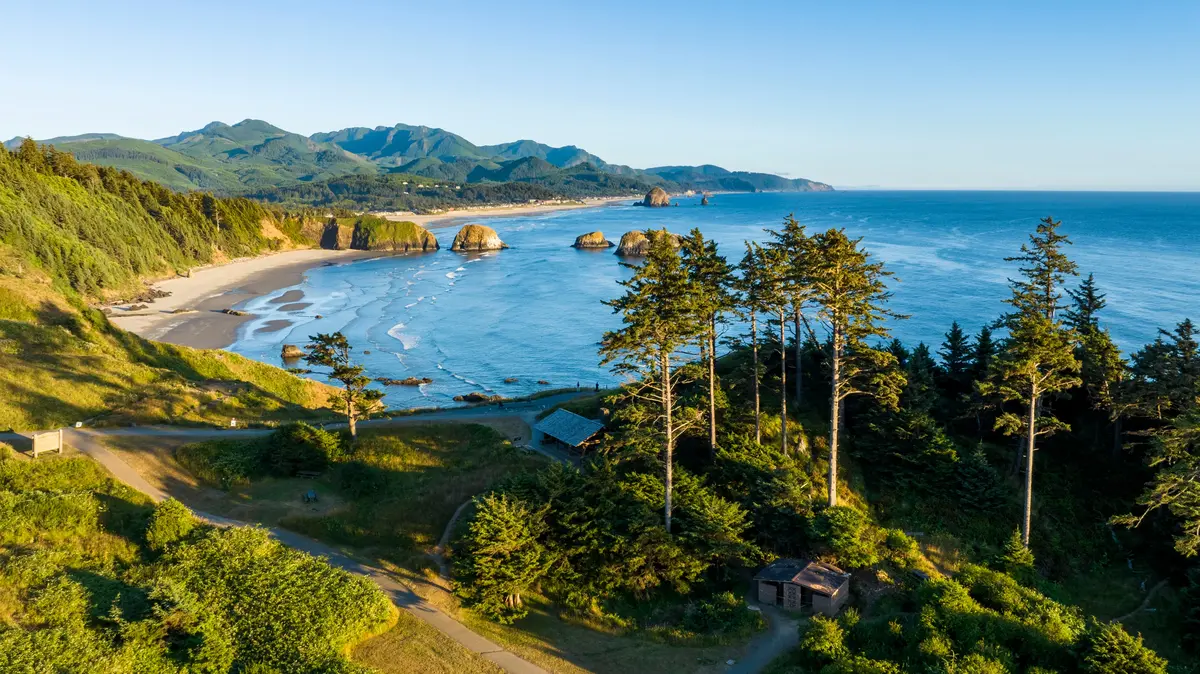
The Police Presence and What It Covers
The Cannon Beach Police Department runs 24/7 patrol and investigative services for a city of 1,500 permanent residents. It is a small department that knows the city well — officers who recognize faces, patrol the same streets daily, and understand the specific pressure points the tourist season creates. Patrol presence is visible downtown, particularly during summer months when the commercial corridor and beach parking areas need the most active attention.
Part of what drives the department's staffing commitment is the tourism reality. A force sized only for 1,500 year-round residents would be overwhelmed on a busy summer weekend. The department also enforces federal and state regulations around Haystack Rock — prohibitions on removing wildlife, on climbing above the barnacle line within the Oregon Islands National Wildlife Refuge — which adds a layer of environmental enforcement to the standard patrol function.
The Haystack Rock Awareness Program
The Haystack Rock Awareness Program (HRAP) is a City of Cannon Beach program that deploys between 60 and 200 trained volunteers at the beach during every low tide from mid-February through October. The program exists to protect the marine garden and national wildlife refuge, but its practical effect is a consistent, organized human presence on the most-visited stretch of shoreline. That presence deters casual opportunism — the kind of low-level property crime that thrives in unmonitored parking areas and beach access points.
For residents, the combination of active police patrol and HRAP's seasonal beach presence means the areas most associated with property crime are also the most actively monitored. It does not eliminate risk, but it is not a passive response to a known pattern either.
Looking to buy in Cannon Beach? Estimate your payment.
Enter your numbers to see an estimated monthly mortgage payment.
Estimate only. Excludes HOA fees and mortgage insurance. The interest rate above is a starting point, not a quoted rate — replace it with your own to see real numbers. Insurance is a flat placeholder, not a Cannon Beach quote.
What Longtime Residents Notice — and What Surprises Newcomers
People who move to Cannon Beach from larger Oregon cities often expect the crime picture to resemble what they left behind — diffuse, neighborhood-dependent, tied to socioeconomic geography. The reality is different. Here, the dominant safety question is almost entirely about property crime tied to tourist footfall, not about the residential neighborhood fabric.
The surprise, at month six, is usually how quiet the off-season is. A newcomer who researched crime rates in July and found alarming per-capita figures may move in during September and find a town where people leave kayaks on their porches and nobody locks their garden gate. The seasonal swing is that pronounced. Streets that generated parking-lot incidents in the height of summer genuinely empty out, and the community that re-emerges is small enough that unfamiliar faces are noticed.
The One Thing Locals Do Without Thinking About It
Long-term residents here do not leave valuables in their vehicles. It is not a security lecture they give themselves — it is simply the habit the environment produces, the same way someone who parks on a San Francisco hill automatically turns their wheels to the curb. The downtown parking areas near the beach generate the bulk of vehicle break-ins, and the fix is the same boring one it always is: nothing visible on the seat, nothing in the back window.
Vacation-rental owners face a slightly different pattern. Burglaries in short-term rental properties cluster during summer, when properties cycle between bookings and occasionally sit unoccupied for a few days. Verifying that a rental has adequate security — functioning locks, exterior lighting — is the main practical due-diligence step for that subset of property owners.
The thing that does not surprise longtime residents is the violent-crime picture. It registers near zero, and they will tell you they have never thought much about it. This is a small town where the bars close early, the streets go quiet by evening even in summer, and the social texture is defined by people who chose to live on the Oregon Coast deliberately. That self-selection has a real effect on the community character.
How to Research Safety Before Deciding on a Neighborhood
The most useful thing you can do before settling on a specific part of Cannon Beach is to separate the tourist-corridor exposure from the residential-neighborhood reality. The downtown core and the beach parking areas generate a disproportionate share of property-crime reports. If the neighborhood you are considering sits away from that corridor — Tolovana Park, The Heights, the North End — the practical daily safety picture looks quite different from what the city-wide rate suggests.
Visiting in two seasons is worth the effort if you can manage it. A July visit shows you the city at peak tourist pressure — crowds, parking competition, and the conditions that generate most property-crime incidents. A November or February visit shows you the actual residential character: how neighbors interact, how quiet the streets get, what the community feels like when it belongs to the 1,500 people who live here year-round rather than to its visitors.
Questions Worth Asking About Any Specific Property
For a vacation rental or second home, ask specifically about security features and whether the property has experienced any incidents. The burglary pattern in short-term rentals is seasonal and predictable enough that owners usually know the answer.
For a primary residence, the neighborhood's position relative to the downtown tourist corridor is the most important safety variable. The neighborhoods guide maps those distinctions in detail. Distance from the primary beach parking areas correlates more closely with property-crime exposure than any other single factor in Cannon Beach — a dynamic that is almost unique to tourist-economy towns of this size.
The city's violent-crime picture does not require the same scrutiny. It is, by any honest accounting, a genuinely safe place on that measure. The property-crime question is real and geography-dependent, and understanding that geography is what separates an informed neighborhood decision from one made on raw statistics alone. For a broader look at what daily life here costs and how the city compares with neighboring communities like Seaside and Astoria, the cost-of-living page has the full picture.
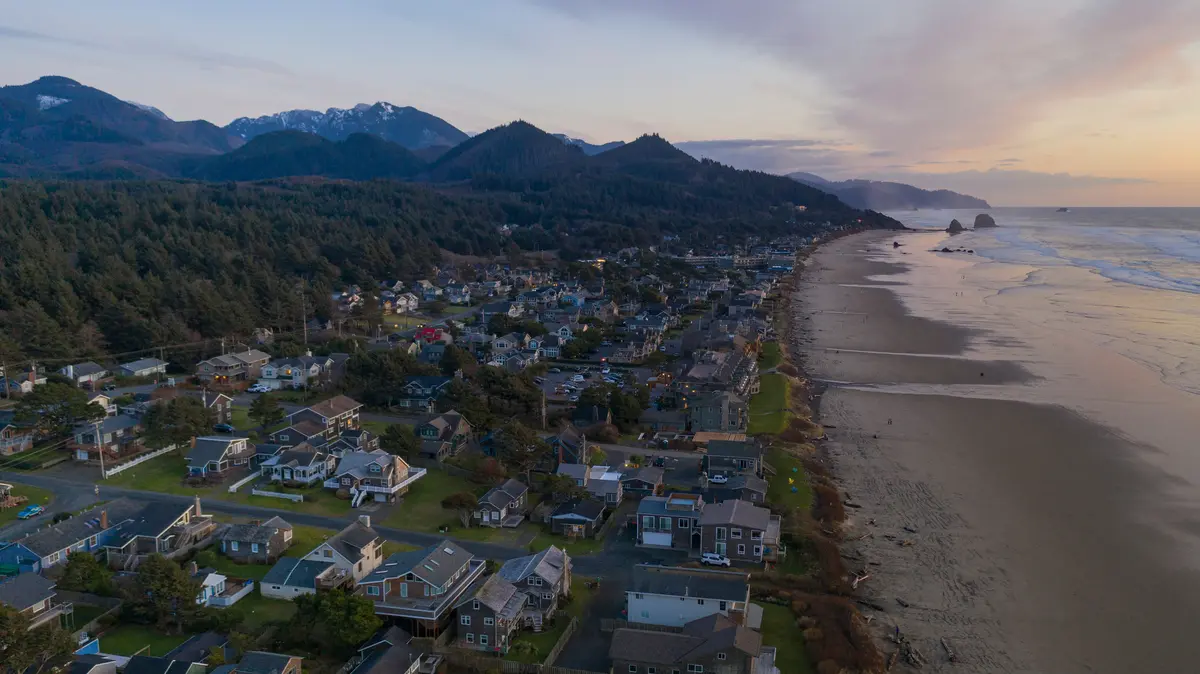
Local Expert Takeaway: Cannon Beach's crime statistics are almost entirely a story about property crime concentrated in tourist-traffic areas — beach parking lots, the downtown commercial strip, and vacation rentals between bookings. Violent crime registers near zero. The city's small, community-familiar police department maintains 24/7 patrol, and the Haystack Rock Awareness Program's daily volunteer presence on the beach provides active monitoring of the places most exposed to opportunistic theft. If you are choosing a neighborhood, Tolovana Park and The Heights east of US-101 sit well outside the tourist corridor where most incidents occur. The practical precautions are the boring ones: nothing visible in a parked car, functioning locks on any rental property you own. The off-season quiet here is real — residents who know each other by name, streets that empty out by evening, and a community character that has little to do with the summer crime statistics.
Quick Takeaways & FAQs
✅ Violent crime in Cannon Beach registers near zero — assault, robbery, and similar offenses are genuinely rare for permanent residents.
⚠️ A property crime rate of 68.6 per 1,000 residents looks alarming in isolation but reflects incidents divided by 1,500 residents while the city absorbs hundreds of thousands of annual visitors.
📍 Property crime clusters tightly around downtown beach parking and vacation rentals; neighborhoods like Tolovana Park and The Heights east of US-101 sit well outside that pattern.
Is Cannon Beach safe to live in year-round?
Why does Cannon Beach's crime rate look so high compared to the state average?
Where in Cannon Beach does most crime occur?
How does the Cannon Beach Police Department handle the tourist-season surge?
What practical steps do Cannon Beach residents take to reduce property-crime risk?
Moving to Oregon?
Tell us what you need help with and we'll connect you with local resources.
