
If you've been priced out of Portland and someone pointed you toward the Oregon Coast, Cannon Beach is probably the city that stopped you cold — in the best and most complicated way. At a Zillow Home Value Index (ZHVI) typical home price of $926,140 (July 2026), this is not an entry-level market by any definition. The median household income here is $69,375, which is noticeably below the income needed to carry a home at that price. That gap is the central fact of first-time buying in Cannon Beach, and every decision in this guide flows from it.
What makes the market even tighter is that new development is almost nonexistent. The city's population of 1,500 has held roughly steady for two decades, and its coastal geography and land-use rules leave almost no room for new inventory. That constrained supply means prices don't soften the way they might in a growing suburb — even modest upticks in buyer interest push values measurably. US-101, the Oregon Coast Highway, is the only major artery through town, and what sits east of it versus west of it matters to long-term value in ways first-timers don't always anticipate.
The realistic first-time buyer here falls into one of two camps: someone with substantial savings and a flexible remote income who is buying a permanent coastal home, or someone targeting a property at the lower end of the range — older construction away from the beachfront corridor — and accepting the trade-offs that come with that. Compared with Seaside, Gearhart, and Astoria, all noticeably lower in price, Cannon Beach commands a premium that is tied directly to its walkability, its shoreline, and Haystack Rock's place in the national imagination. For a full picture of ongoing ownership costs, see the cost of living breakdown.
Whether you're seriously ready to write an offer or still running the numbers, the sections below walk through what a first-timer's budget actually buys here, the step-by-step buying process in this market, an honest budget snapshot table, and the specific mistakes that cost coastal first-timers the most.

The Cannon Beach First-Time Buyer Reality
The typical home price in Cannon Beach is $926,140 (Zillow Home Value Index, July 2026). For a first-time buyer, that number has a few implications worth sitting with before you start touring properties.
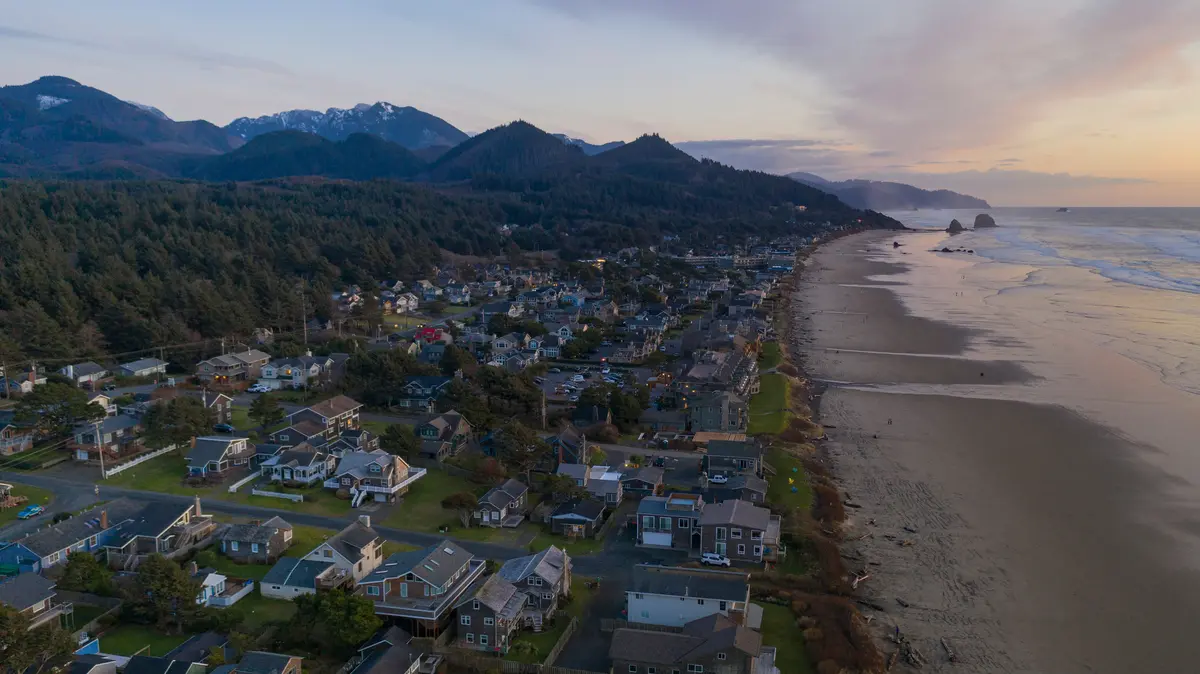
Entry-level inventory — older construction on the eastern side of US-101, away from the immediate beach corridor — can appear in the $600,000s, but it moves quickly and rarely stays available long enough for a buyer who hasn't done their financial groundwork. The lower end of the market is where most first-timers concentrate their attention, and that compression means competition is real even for homes that aren't the most desirable in town. Properties in Downtown Cannon Beach and Tolovana Park, where on-foot access to the beach and the main commercial stretch is genuine, routinely draw multiple offers when priced correctly.
New development here is tightly restricted by coastal land-use rules, and the city hasn't grown meaningfully in roughly 20 years. That structural supply constraint is why the price floor is so high relative to local incomes. A first-time buyer succeeds in this market by coming in prepared — with a verified pre-approval, a clear sense of their actual cash position, and realistic expectations about what their budget buys on each side of the highway. For context on how neighborhood character shapes value, see the neighborhood guide.
One factor that is specific to Cannon Beach and not obvious from a Zillow listing: if you're planning to offset ownership costs through short-term rentals, the city has been actively moving to cap the total number of STR permits at 165. As of late 2025, approximately 195 permits were already in circulation, and city councilors voiced majority support for the cap ordinance. Verify current permit availability directly with the City of Cannon Beach's planning department before making any purchase decision that assumes rental income — the regulations are still evolving and the window may be effectively closed by the time you close escrow.
The Homebuying Process in Cannon Beach, Step by Step
Step 1: Get Pre-Approved — Not Pre-Qualified
Pre-approval is effectively non-negotiable in this market. Sellers in Cannon Beach will not seriously consider an offer without a letter confirming that a lender has verified your income, assets, W-2s, tax returns, and bank statements. Pre-qualification — which is based on self-reported information — carries almost no weight. Start here before you contact an agent or walk through a single property.
Step 2: Find a Coastal-Experienced Agent
Cannon Beach has specific complexities that a general Portland or Willamette Valley agent may not anticipate: coastal zoning rules, STR permit status, weather-related maintenance patterns unique to a marine climate, and insurance requirements that differ from inland markets. An agent who regularly works the northern Oregon Coast will flag these before you're under contract, not after. This step is more consequential here than it is in a conventional suburb.
Step 3: Search with Your Budget, Not Your Wishlist
Know your pre-approved amount, but don't treat it as your target. Many first-timers borrow up to their ceiling and then discover that the carrying costs in a tourist-economy town — coastal insurance premiums, higher grocery and dining prices, property levies that stack on top of the base tax rate — make the monthly picture much tighter than the mortgage alone suggested. The Cannon Beach Rural Fire Protection District carries a Local Option Levy for Emergency Services Operations at $1.50 per $1,000 of assessed value, which stacks on top of base property tax rates and should be in your annual budget. The interactive calculator below this section can help you model those figures before you start making offers.
Step 4: Make an Offer — and Understand Oregon's Contract Terms
Oregon real estate contracts include a standard inspection contingency period after mutual acceptance. Do not waive it. In a coastal climate with 124 sunny days a year and the rest spent in marine fog and rain, deferred maintenance on roofs, siding, windows, and foundations accumulates in ways that are invisible on a showing. The inspection is not a formality here — it's a negotiating tool and a due-diligence necessity.
Step 5: Inspection, Appraisal, and Closing
The inspection period is your most important leverage point in the transaction. A professional inspector should evaluate the roof, structure, plumbing, and any weatherproofing systems — coastal exposure accelerates wear in ways that aren't always priced into the listing. Appraisal follows, ordered by the lender, and verifies that the purchase price aligns with the home's market value. Closing typically happens 30 to 45 days after mutual acceptance. Oregon's assessed value is often lower than real market value under the state's property tax framework, which can affect how your tax bill lands relative to the purchase price — factor that into your projections, not the other way around.

How Much Home Can You Afford in Cannon Beach
The table below shows approximate cash requirements at several entry points in this market. Closing costs are estimated at 2–3% of the purchase price, which is a standard Oregon range and covers lender fees, title, escrow, prepaid interest, and initial insurance and tax reserves. These are estimates — your actual figures depend on lender, loan type, and negotiated terms. Use the mortgage calculator below for a payment estimate at current rates.
| Scenario | Purchase Price | Down Payment | Est. Closing Costs | Cash Needed at Table |
|---|---|---|---|---|
| FHA (3.5% down) — lower end | $600,000 | ~$21,000 | ~$12,000–$18,000 | ~$33,000–$39,000 |
| Conventional (3% down) — lower end | $600,000 | ~$18,000 | ~$12,000–$18,000 | ~$30,000–$36,000 |
| FHA (3.5% down) — mid-range | $750,000 | ~$26,250 | ~$15,000–$22,500 | ~$41,250–$48,750 |
| Conventional (3% down) — mid-range | $750,000 | ~$22,500 | ~$15,000–$22,500 | ~$37,500–$45,000 |
| Conventional (10% down) — near median | $926,140 | ~$92,614 | ~$18,500–$27,800 | ~$111,000–$120,400 |
| Conventional (20% down) — near median | $926,140 | ~$185,228 | ~$18,500–$27,800 | ~$203,700–$213,000 |
The lower end of this market is where FHA and low-down-payment conventional loans are most likely to be workable, though lender requirements vary and coastal insurance costs add to the monthly picture. Remember that the Local Option Levy for emergency services — $1.50 per $1,000 of assessed value — is a real annual line item that many buyers discover after closing.
Oregon's property tax framework means your assessed value at purchase may be lower than the real market value you paid, which moderates your tax bill somewhat in year one. That gap narrows over time as assessed values adjust. For a broader view of ownership costs, see the cost of living page.
Looking to buy in Cannon Beach? Estimate your payment.
Enter your numbers to see an estimated monthly mortgage payment.
Estimate only. Excludes HOA fees and mortgage insurance. The interest rate above is a starting point, not a quoted rate — replace it with your own to see real numbers. Insurance is a flat placeholder, not a Cannon Beach quote.
Common First-Time Buyer Mistakes in Cannon Beach
Waiving the Inspection Contingency
In competitive offer situations, some buyers feel pressure to waive inspection to strengthen their bid. In most markets, this is a calculated risk. In Cannon Beach, it is a significantly larger one. The marine climate — salt air, persistent moisture, roughly 241 days a year without reliable sun — accelerates deterioration of roofs, exterior paint, window seals, and crawl-space insulation at rates that inland buyers don't anticipate. An inspection waiver here means buying a home's weather history sight-unseen.
Shopping Before Pre-Approval
This is the most common mistake and the most expensive in terms of wasted time. Cannon Beach's inventory is thin — often only a handful of active listings at any moment — and well-priced properties in the more walkable areas can attract offers within days of hitting the market. A buyer who falls for a property and then scrambles for pre-approval almost always loses. Get the letter in hand before you contact anyone about a specific listing.
Assuming a Short-Term Rental Will Offset the Mortgage
The math on using vacation rental income to make a Cannon Beach purchase pencil out is more complicated than it appears. The city is actively considering a cap on STR permits at 165, and approximately 195 are currently in circulation — meaning the window for new permits may be effectively closed. Buyers who build their affordability model around rental income and skip this step risk owning a home they cannot carry without it. Verify current permit status with the City of Cannon Beach's planning department before you make this assumption.
Underestimating the True Cash Requirement
First-timers often focus on the down payment and undercount everything else. Closing costs in Oregon run approximately 2–3% of the purchase price, and at Cannon Beach price points that is a meaningful five-figure sum. Add the Local Option Levy for emergency services, coastal insurance premiums that run higher than inland equivalents, and the fact that grocery, coffee, and daily goods carry a tourist-economy premium that full-time residents feel across twelve months — and the real monthly cost of living here is noticeably higher than the mortgage payment alone. Budget for all of it before you sign anything.
Local Expert Takeaway: Cannon Beach is one of the few places on the Oregon Coast where a genuine sense of community coexists with a price point that genuinely tests first-time buyers. The buyers who succeed here come in with their financing fully verified, a clear-eyed view of what's available below the median, and no assumption that a short-term rental permit will be waiting for them at closing. If your budget lands in the lower range of the market, focus your search away from the beachfront corridor and leave room for the carrying costs that a tourist-town economy adds on top of the mortgage. The process is manageable — the preparation is what determines whether you get to close.
Quick Takeaways & FAQs
✅ Cannon Beach has some of the most restricted new development on the Oregon Coast, which keeps prices elevated but also means what you buy tends to hold its value.
⚠️ The short-term rental permit window is effectively constrained — with approximately 195 permits in circulation against a proposed cap of 165, buyers planning on rental income should verify permit availability before making an offer.
📍 The Cannon Beach Rural Fire Protection District's Local Option Levy adds $1.50 per $1,000 of assessed value on top of base property tax rates — a real line item that surprises many buyers after closing.
What is the typical home price in Cannon Beach for first-time buyers?
Can I use an FHA loan to buy a home in Cannon Beach?
Is it worth buying in Cannon Beach if I plan to rent it out part-time?
How does Cannon Beach compare in price to nearby cities on the Oregon Coast?
What surprises first-time buyers about owning a home in Cannon Beach full-time?
Moving to Oregon?
Tell us what you need help with and we'll connect you with local resources.
