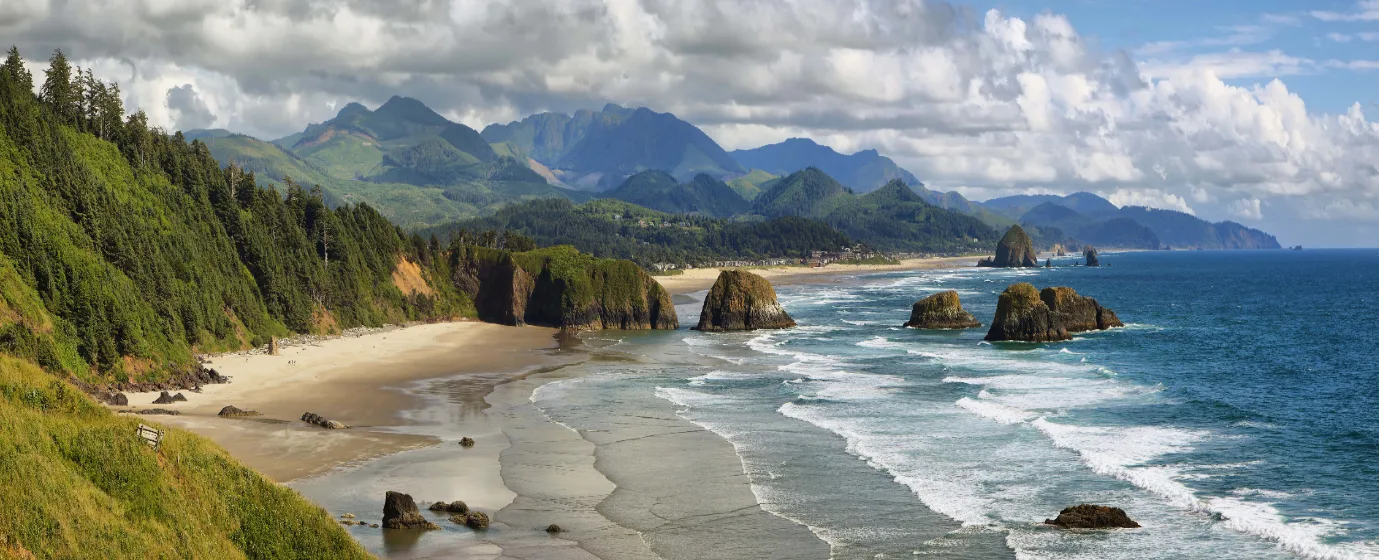
People who move to Cannon Beach — all 1,500 of them — often say the same thing in the first few weeks: the parks here are not an amenity. They are the entire point. Most small towns of this size have a city park and maybe a greenway. Cannon Beach has a 235-foot sea stack that doubles as a wildlife refuge, a 9-mile state park wrapped around an ancient rainforest headland, and a two-mile beach corridor that functions as the town's front yard. US-101 runs through, the drive to Seaside takes about 15 minutes, and Portland International Airport (PDX) is roughly 85 miles east — but the outdoor infrastructure that shapes daily life here has nothing to do with any of those road connections. It is entirely defined by what faces the ocean.
What makes this more than a weekend destination is that the recreation is genuinely accessible year-round. Haystack Rock sits steps from downtown, reachable on foot at low tide. Ecola State Park's trailhead is at the north end of the city. The Cannon Beach Nature Trail connects the east side of town to Ecola Creek wetlands without requiring a car. For a city this small, the breadth of what's on the doorstep — surfable coves, old-growth Sitka spruce forest, whale-watching bluffs, tidepool marine gardens — is genuinely unusual. The catch is the weather: Cannon Beach logs only 124 sunny days a year, and the trails at Ecola can be steep and muddy well into spring. You are not moving to a sunny beach town. You are moving to a temperate rainforest coast with extraordinary wild places in it.
Recreation here also carries a civic dimension. The Haystack Rock Awareness Program — one of the city's named major employers — puts trained volunteers and telescopes on the beach during low tides, making the tidepools and nesting seabirds genuinely interpretable rather than just visible. The city maintains restored wetlands at Les Shirley Park. Elk graze near the creek mouth with enough regularity that locals stop noticing. For anyone weighing the move, the outdoor life here is not a selling point layered on top of the city — it is structurally what the city is built around. The sections below cover every significant park and recreation area, what the trail network looks like, what the beaches offer by zone, and what seasonal conditions actually mean for day-to-day outdoor life in Cannon Beach.
Haystack Rock: The Centerpiece That Earns Its Reputation
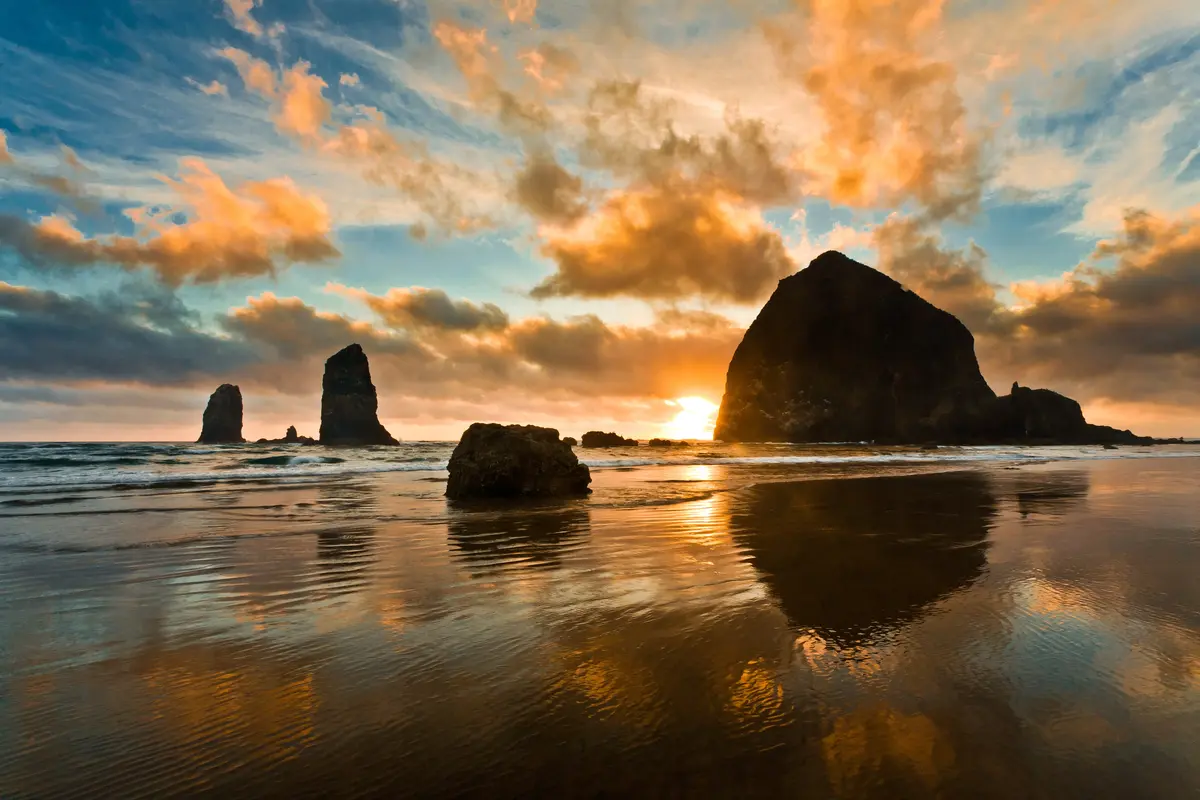
At 235 feet, Haystack Rock is one of the largest basalt sea stacks on America's Pacific coast, and it rises directly from the sand at the south end of downtown — no shuttle, no parking fee, no trailhead kiosk. You walk out at low tide and you are there. That accessibility is what separates it from comparable formations on the Oregon coast.
It is also a functioning wildlife refuge. Haystack Rock is part of the Oregon Islands National Wildlife Refuge and designated one of Oregon's seven protected Marine Gardens, which means the rules are specific: nothing may be removed from within 300 yards, and climbing above the barnacle line is prohibited. The tidepools hold sea stars, giant green anemones, crabs, chitons, limpets, and nudibranchs. At the right tide level, the anemone pools are dense enough to look painted.
Above the waterline, the rock hosts what is described as the most accessible seabird colony in the Northwest. Nesting seabirds including puffins occupy the north side of the rock and are most visible from April through early July. Common Murres and Black Oystercatchers also nest here, and Bald Eagles move through regularly. None of this requires binoculars — the rock is close enough that a smartphone photo sometimes captures the birds.
The Haystack Rock Awareness Program staffs the beach during low tides across much of the year, with telescopes and interpreters available to explain what you're looking at. For families with kids, this is the kind of on-the-ground natural history education that most towns cannot offer at any price. The program is free, and it is one of the reasons the tidepools feel more like a classroom than a curiosity.
What Newcomers Don't Expect
The one thing people consistently underestimate: the crowd dynamic. During summer low tides, the beach around Haystack Rock draws significant visitor traffic from Portland and the surrounding region. Locals learn the tide tables and adjust accordingly — an early-morning low tide in late spring, before the tourist wave arrives, is a fundamentally different experience than a midday visit in July. If you are moving here rather than visiting, that rhythm becomes second nature within a season.
Ecola State Park: Nine Miles of Coastline, Genuine Wilderness
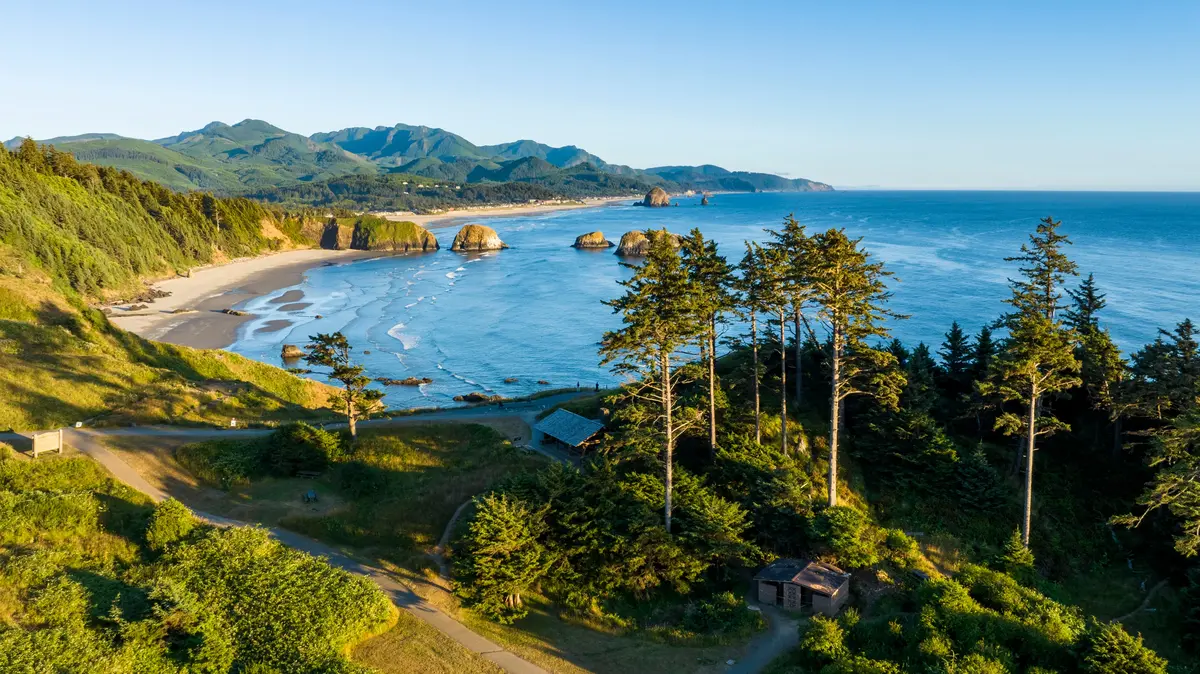
Ecola State Park wraps around Tillamook Head between Cannon Beach and Seaside, covering 9 miles of coastline that includes old-growth Sitka spruce forest, dramatic ocean bluffs, two distinct beach coves, and one of the coast's best whale-watching vantage points. The entrance road winds through the rainforest before opening to panoramic ocean views — a transition that still registers even after years of living here.
The trail network is the most substantive in the immediate area. Key routes include:
- The Oregon Coast Trail segment — an 8-mile stretch that is also part of the Lewis and Clark National Historic Trail, running through the park's full length
- The Clatsop Loop Trail — a 2.5-mile historical interpretive route
- The Ecola Point to Crescent Beach trail — 1.25 miles, steep and frequently muddy, worth the effort for the isolated cove at the bottom
- The Ecola Point to Indian Beach segment — 1.5 miles along the bluff, more moderate
- The Tillamook Head Trail — 6.5 miles one-way, connecting to Seaside; recommended for experienced hikers only and genuinely demanding in wet conditions
Indian Beach, inside the park, is a working surf cove. It is sheltered enough to be manageable for intermediate surfers and draws a local surf community that is distinct from the beach-walk crowd at the main stretch downtown. Whale-watching vantage points along the bluffs are productive during gray whale migration, and views of the historic Tillamook Rock Lighthouse sit offshore in the distance.
The Honest Caveat
Ecola's trails are genuinely wild, which means genuinely wet for most of the year. The descent to Crescent Beach is marked as steep and often muddy for a reason — trail shoes that work in summer conditions are not the same as what you need in February. Newcomers who underestimate this end up turning back, or worse, finishing the descent and realizing the climb out is harder than expected. The park rewards preparation in a way that the beach walk does not.
The Beach Corridor, State Recreation Sites, and Neighborhood Parks
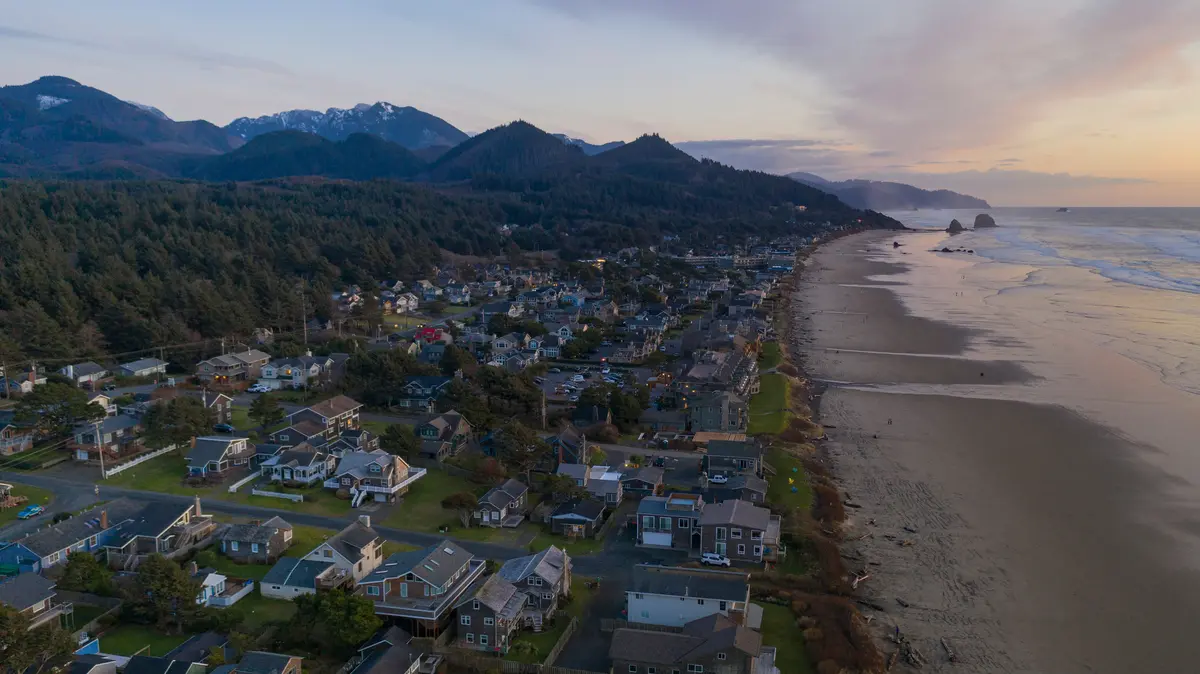
The two-mile central beach stretch between Ecola Creek and Tolovana Park is Cannon Beach's daily recreation corridor — the place where residents walk dogs, fly kites, run the hard sand at low tide, and gather on the rare afternoon when the sun breaks through. North of Ecola Creek, Chapman Point's offshore Bird Rocks host a dense nesting colony of Common Murres from spring through midsummer, with Bald Eagles making regular passes overhead. It is a bird-watching location that requires no effort to reach.
| Park / Site | Location | Character | Best For |
|---|---|---|---|
| Haystack Rock | Central beach, south of downtown | Marine Garden, tidepool wildlife, nesting seabirds | Nature Families |
| Tolovana Beach State Recreation Site | South end of Cannon Beach | Day-use beach access, picnic space, playground, Haystack Rock views | Families Quiet |
| Arcadia Beach State Recreation Site | South of Cannon Beach via US-101 | Shady grove, mile-plus sandy beach, tidepools, Lion Rock, singing sands | Nature Views |
| Les Shirley Park | North End, Ecola Creek area | Restored wetlands, Lewis & Clark interpretive exhibits, elk habitat | Nature Quiet |
| Ecola State Park | North end of Cannon Beach | 9-mile coastline, old-growth forest, surf cove, whale watching | Nature Views |
| Central Beach Corridor | Ecola Creek to Tolovana Park | Two miles of open sand, Bird Rocks bird colony, daily resident use | Families Walkable |
Tolovana Beach State Recreation Site anchors the south end of this corridor — a day-use park with direct beach access, a playground, and clear sightlines to Haystack Rock less than a mile to the north. It draws a quieter crowd than the main beach and is a genuinely useful neighborhood asset for residents of Tolovana Park and the surrounding area, though it is worth understanding the neighborhood context before committing to that end of town.
Arcadia Beach State Recreation Site, a short drive south via US-101, offers something different: a shady grove entry, a sandy beach stretching more than a mile between Humbug Point and Hug Point, tidepool areas, the offshore rock formation known as Lion Rock, and what the Oregon State Parks profile describes as the "singing sands" phenomenon — a squeaking or violin-like sound produced by the sand under certain conditions. It is not guaranteed, but residents who spend time at Arcadia report hearing it, and it is the kind of thing that genuinely surprises people who assumed they already knew what a beach sounds like.
Les Shirley Park, in the North End near Ecola Creek, is a different scale of experience — open lawn, picnic tables, restored wetlands, and interpretive exhibits tied to the Lewis and Clark Corps of Discovery route through this stretch of coast. The elk that graze near the park are resident animals, not occasional visitors; seeing a small herd moving through the wetland edge on a quiet morning is a regular occurrence, not a lucky sighting. For anyone moving here from an inland metro, that alone takes some getting used to.
Looking to buy in Cannon Beach? Estimate your payment.
Enter your numbers to see an estimated monthly mortgage payment.
Estimate only. Excludes HOA fees and mortgage insurance. The interest rate above is a starting point, not a quoted rate — replace it with your own to see real numbers. Insurance is a flat placeholder, not a Cannon Beach quote.
Trails, Creek Walks, and Year-Round Outdoor Life
The hiking infrastructure extends well beyond Ecola State Park. The Cannon Beach Nature Trail runs as a paved path along a bend of Ecola Creek on the east side of the city, passing wetland habitat before connecting to City Park. It is accessible, flat, and genuinely useful as a daily walk rather than a destination hike. For residents who want something quieter than the beach corridor, this is the underused option that locals tend to keep to themselves.
The Ecola Creek Forest Reserve adds another layer. Trails here move through Sitka spruce forest — the same old-growth canopy that defines the park experience at Ecola State Park — with a viewpoint overlooking the Pacific Ocean at the top. The trailhead sits just off US-101 east of town. It is not a long route, but the transition from the commercial strip of US-101 to that kind of forest interior happens within a few minutes of walking, which is a quality most coastal towns in the Northwest cannot offer.
What Seasonal Recreation Actually Looks Like
Summer here means more people, not better weather in any absolute sense — the coast stays cool and the marine layer is common into July. What changes is the low-tide calendar, which drives most of the tidepool and seabird activity. Spring is arguably the best season for dedicated naturalists: nesting seabirds arrive in April, whale migration brings gray whales within viewing distance from Ecola's bluffs, and the beach crowds have not yet built. Fall strips out the summer visitor traffic and leaves the beach and trails largely to residents, with the added advantage that fall storms produce some of the most dramatic surf and sky conditions on the coast — genuinely worth experiencing, not just tolerable.
Winter is honest: 124 sunny days a year means a lot of gray, and the Ecola trails especially are wet and sometimes closed after sustained rain. Residents who stay active through winter tend to build a rotation — the paved Nature Trail when the forest routes are muddy, the beach when the tide and wind cooperate, Ecola on the windows of clear weather that do come. The outdoor life here is not passive. It requires paying attention to conditions in a way that a sunnier climate does not demand.
For anyone weighing the practical side of the move, the cost of living page covers what the housing picture looks like, and the living in Cannon Beach guide addresses who the city actually suits as a permanent home base. The outdoor life described here is genuinely exceptional — and it is also genuinely specific to a certain kind of resident who finds the gray coast as compelling as the sunny version.
Local Expert Takeaway: The outdoor recreation in Cannon Beach is not organized around a park district calendar or a rec center schedule — it runs on tide tables and trail conditions. Residents who thrive here learn to read both. The Haystack Rock Awareness Program puts trained volunteers on the beach during the best low tides, making the tidepools genuinely accessible even for newcomers. Ecola State Park's trails connect directly to the north end of the city, so a weekday morning hike to Crescent Beach before the tourist traffic arrives is a realistic option, not a day trip. The central beach corridor is the daily social infrastructure. Les Shirley Park and the Ecola Creek forest walks are where people go when they want the natural world without the crowd. The honest caveat is the weather — 124 sunny days a year is the number, and winter and spring trail conditions at Ecola are legitimately demanding. The residents who love it here love it because of all of that, not in spite of it.
Quick Takeaways & FAQs
✅ Haystack Rock is one of the largest sea stacks on the Pacific coast, accessible on foot at low tide and home to a rare nesting seabird colony steps from downtown — including species visible through the Haystack Rock Awareness Program's on-beach telescopes.
⚠️ Cannon Beach logs only 124 sunny days a year, and Ecola State Park's trails are frequently steep and muddy; the outdoor life here rewards preparation and seasonal awareness, not fair-weather expectations.
📍 Resident elk graze regularly near Les Shirley Park at the Ecola Creek estuary — a detail that surprises newcomers from inland metros and quickly becomes one of the reasons they stay.
Can you swim at the beaches in Cannon Beach?
Is Ecola State Park worth visiting in winter?
When is the best time to see nesting seabirds at Haystack Rock?
Are there family-friendly parks in Cannon Beach beyond the beach itself?
What is the Arcadia Beach singing sands phenomenon?
Moving to Oregon?
Tell us what you need help with and we'll connect you with local resources.
