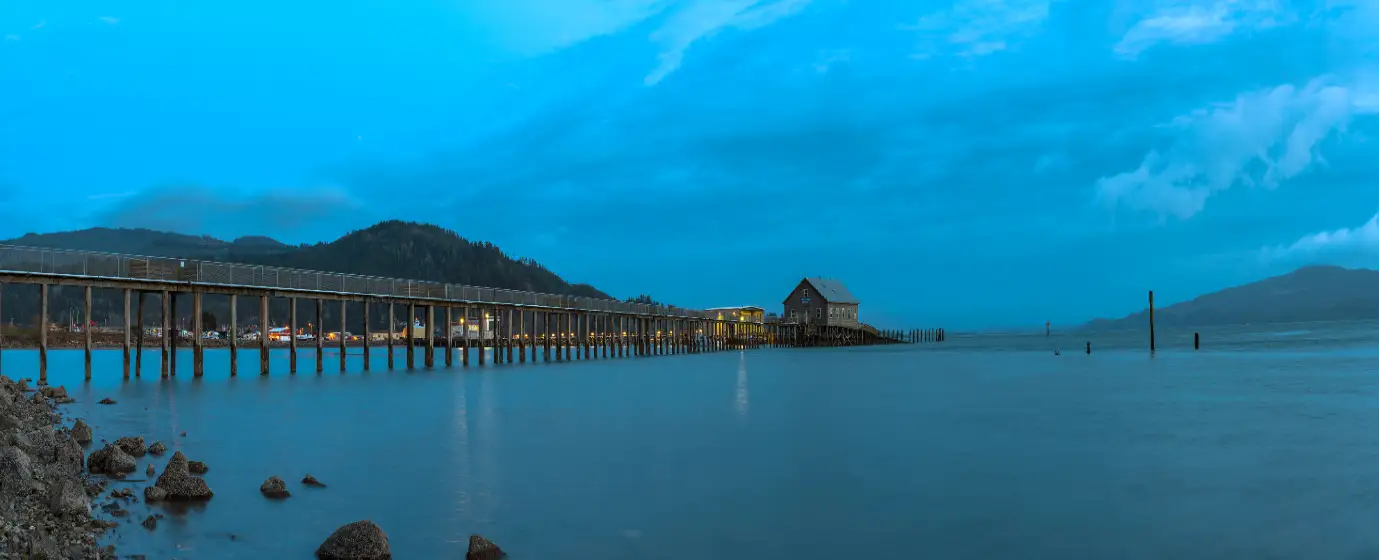
What Is Living in Tillamook, Oregon Like?
Maybe you've been priced out of Portland and someone mentioned Tillamook. Maybe you work remotely and the idea of waking up two miles from the ocean finally feels realistic. What surprises most people who actually look into it is that Tillamook is a working town — the county seat, a dairy cooperative anchor, a genuine community of about 5,200 people — not a tourist village dressed up as one. It sits at the southeast end of Tillamook Bay where the Wilson River meets tidewater, connected to Portland by US-101 and OR-6 (Wilson River Highway) over the Coast Range. The drive to Portland is real: about 90 minutes under good conditions, on a winding mountain road that earns its reputation in winter. That distance is the central fact of life here, and everything else follows from it.
The economic backbone is dairy, government, healthcare, and tourism, in roughly that order. The Tillamook County Creamery Association — a farmer-owned cooperative founded in 1909 — is the county's largest employer, and the Tillamook Creamery two miles north of downtown on US-101 draws close to a million visitors annually, which keeps related hospitality and retail jobs alive year-round. Tillamook County and the City of Tillamook together anchor municipal employment, the school district covers education, and a regional health system rounds out the top employer list. The Tillamook School District serves 2,011 students enrolled in 2025-26 and holds a C+ rating, according to Niche. Tillamook Bay Community College, established in 1981, provides post-secondary access from a campus right in town — no Willamette Valley commute required. The people moving here tend to be one of three types: remote workers buying their way into a coastal lifestyle, families with working adults employed by one of those anchor institutions, and longtime locals who never left.
Housing here is noticeably more accessible than anywhere on the Oregon Coast with a comparable amenity set. The typical home price stands at $468,182 (Zillow Home Value Index, July 2026), which puts Tillamook well below coastal markets to the south and meaningfully below Portland-area suburbs. The effective property tax rate of 0.57% is well below the Oregon state average — a real ownership-cost advantage that matters over a 30-year horizon. The full picture on costs and rents is on the cost of living page. Daily life outside of work revolves around the bay, the surrounding Coast Range, the Tillamook Family YMCA, and a small but genuine downtown along Main Avenue. The tradeoff is isolation: 135 sunny days a year, reliable winter rain and fog, and a supply of restaurants, shops, and services that reflects a town of 5,200, not 52,000.
Whether you are weighing a coastal move for the first time or have been watching Tillamook listings for months, the sections below break down neighborhoods, housing, commutes, employers, local favorites, and what daily life here is actually like for people who have made the jump.
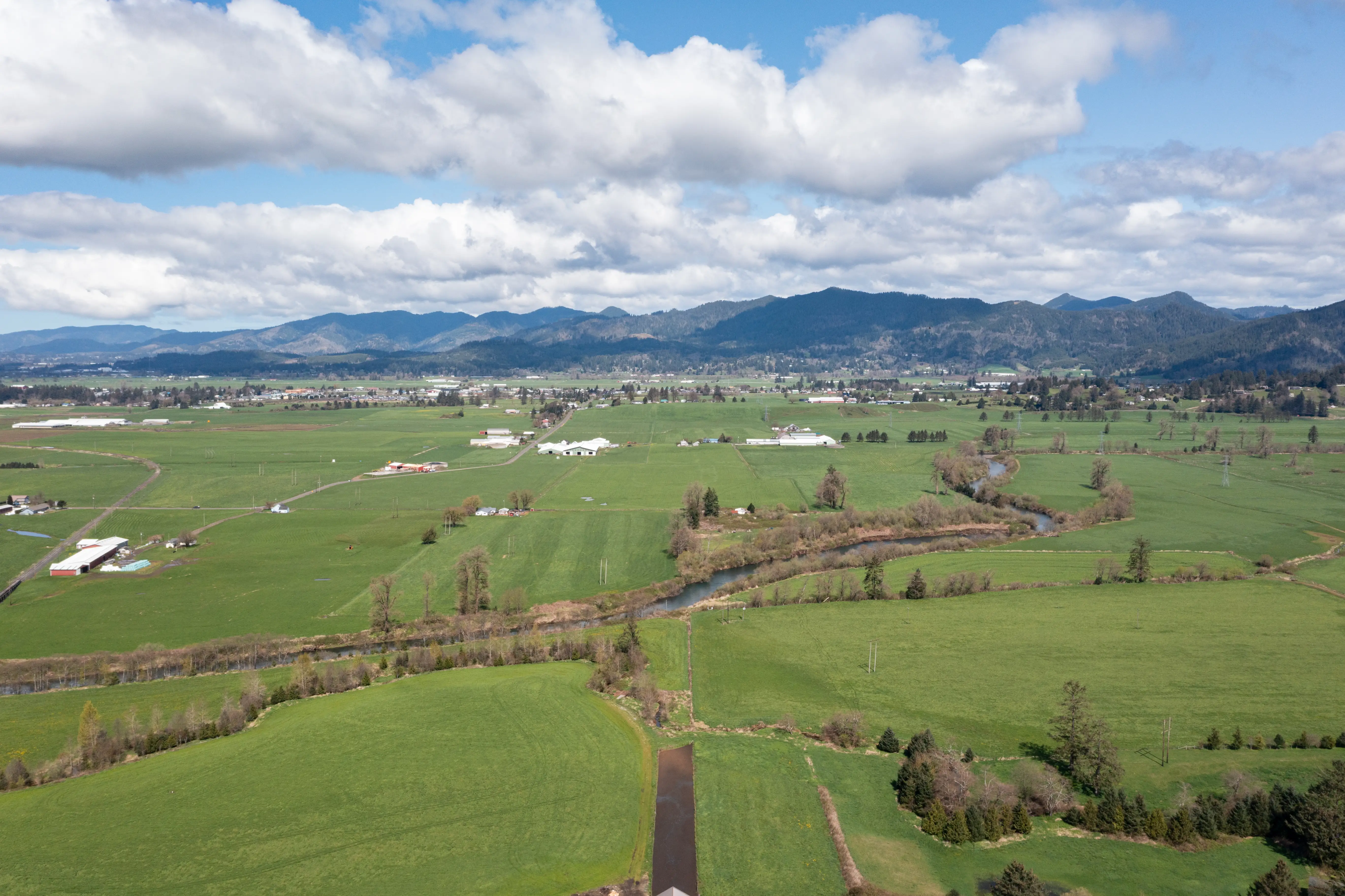
Tillamook at a Glance
Looking to buy in Tillamook? Estimate your payment.
Enter your numbers to see an estimated monthly mortgage payment.
Estimate only. Excludes HOA fees and mortgage insurance. The interest rate above is a starting point, not a quoted rate — replace it with your own to see real numbers. Insurance is a flat placeholder, not a Tillamook quote.
Why Are People Moving to Tillamook?
The Remote Work Factor
The single biggest driver of Tillamook's recent demand is remote work. When your job is a laptop and a reliable internet connection, the math changes entirely: a coastal county seat with a $468,182 typical home price (July 2026) looks compelling against any Pacific Northwest metro. Buyers who spent years being outbid in Portland or Salem are arriving with equity or savings, buying outright, and betting on the lifestyle.
That bet has some real weight behind it. The bay, the Coast Range, Cape Meares, and Munson Creek Falls are not weekend-trip amenities — they are your backyard. Locals who moved here from larger cities consistently say the quality-of-life exchange feels lopsided in Tillamook's favor, at least until they need something the town doesn't stock.
The Institutional Anchor
The Tillamook County Creamery Association has been the county's economic spine for over a century. As a farmer-owned cooperative, it doesn't relocate and doesn't downsize based on quarterly targets — it's structurally tied to the land and the dairy farms surrounding the city. That kind of employer stability is unusual for a town this size, and it's one reason Tillamook's economy weathered the 2025 Oregon job-market slowdown better than Portland's tech and professional-services sectors did.
Tillamook County, the city government, and the school district add a layer of public-sector employment that is similarly recession-resistant. A regional health system rounds out the top employer list. For a household where one partner works remotely and the other works locally, the institutional job market here is real, if not large.
Who Actually Moves Here
With a median age of roughly 37, Tillamook skews younger than most rural Oregon towns. Families with school-age children, working adults in dairy and government, and remote professionals make up the core of the buyer pool. Retirees come too — the climate is mild, the pace is slow, and the scenery is immediate — though the drive to Portland for medical specialists or major shopping is a recurring consideration that the retiring in Tillamook page covers in detail.
People move out, too, and it's worth naming why. The most common reason isn't dissatisfaction with Tillamook itself — it's career ceilings. If your field requires in-person work and it isn't one of the four or five sectors anchored here, the job market is thin. The second most common reason is teenagers: families who love the town during the elementary years sometimes find the high school social and extracurricular options narrower than they expected, and that realization doesn't always arrive before the purchase.
What Daily Life Feels Like in Tillamook
The Morning Rhythm
Downtown Tillamook along Main Avenue has genuine walkability for a small coastal city, but the daily pattern for most residents starts with a car. Groceries, school drop-off, and the hardware store all require driving, even for people who live close to the center. The town is compact — barely two square miles — so the drives are short, but the orientation is distinctly car-first.
The sense of scale takes adjustment. After six months, newcomers reliably mention the same thing: they stopped noticing the fog and started noticing how quickly they know everyone. Tillamook is a town where the cashier at the grocery store knows your kids' names within a season. That density of connection is either what you moved here for or something you eventually find suffocating.
Community Infrastructure
For a city of 5,200, the civic footprint is solid. The Tillamook Family YMCA anchors recreation programming. The main branch of the Tillamook County Library sits in town. The Tillamook County Fairgrounds hosts seasonal events that pull the whole county together. The Tillamook Pioneer Museum gives the place a sense of its own history. These are institutions that punch above the city's weight class, and they shape daily life in ways that matter to families.
Tillamook Bay Community College, running from its campus on Third Street, means younger residents and working adults have post-secondary options without driving to the Willamette Valley. That's not a small thing in a rural coastal county.
The Seasonal Reality
The Oregon Coast's weather reputation is earned. With 135 sunny days a year, Tillamook lives under cloud cover for much of fall and winter. Rain is not occasional — it is structural. The green that makes the Coast Range look like a painting in summer comes from somewhere, and that somewhere is months of consistent precipitation. Newcomers who moved in the summer are often caught off guard by January. The locals who thrive here have genuinely made peace with grey, and most of them will tell you the summer payoff — warm afternoons, uncrowded beaches, fog burning off the bay by noon — is worth it. The people who move back out usually saw the summer and didn't see the winter coming.
For safety context, Tillamook records a violent crime rate of 2.3 per 1,000 residents and a property crime rate of 36.4 per 1,000 residents. The violent crime figure sits below both the Oregon state average of 3.3 per 1,000 and the national average of 3.7 per 1,000. The property crime figure is elevated compared to the state (24.5 per 1,000) and national (18.4 per 1,000) benchmarks — a common pattern in tourist-corridor towns and worth understanding before you move. The full safety breakdown lives on the Tillamook safety page.
The Tillamook Housing Market Right Now
The typical home price in Tillamook is $468,182 (Zillow Home Value Index, July 2026). For an Oregon Coast city with this much surrounding scenery and this close a connection to Portland via US-101, that figure represents genuine relative value — though it is no longer the bargain it was five years ago. Remote-work demand and limited inventory have reset the floor.
The housing stock is a mix of older craftsman bungalows, mid-century ranch homes, and a modest supply of newer construction. Entry-level buyers will find the older inventory, some of it with deferred maintenance that comes standard in a high-rainfall coastal climate. The neighborhood character varies — from walkable blocks near downtown to quieter, more spread-out areas on the city's edges — and the full breakdown is on the best neighborhoods page.
What the Market Feels Like Right Now
Oregon's broader housing market moved toward better balance through 2025 and into 2026, with more inventory available statewide and buyers gaining some negotiating room compared to the 2021-2023 frenzy. Tillamook's inventory is small enough that a well-priced home still draws attention quickly, but the extreme competition of recent years has moderated.
One thing that matters more here than in most markets: condition. Coastal humidity and the rainfall that comes with it are genuinely hard on homes. A house that looks fine in listing photos may need roof work, crawl space attention, or window replacement that wouldn't show up on a dry-climate inspection. Get a thorough inspector who knows coastal properties — this is not a step to skip.
The effective property tax rate of 0.57% is a meaningful ownership-cost advantage. Across a 30-year mortgage, it compounds into real money compared to what buyers pay in most other Oregon counties. First-time buyer programs and financing options are covered on the first-time homebuyer page.
Tillamook Neighborhoods
Tillamook has several distinct areas — each with its own character and appeal. Here’s a breakdown to help you narrow down where to focus your home search.
🏡 Downtown Tillamook
The commercial and civic center of the city, where Main Avenue puts the library, shops, and a handful of restaurants within a short walk — the most connected part of Tillamook for people who want to do some errands on foot, with a mix of older housing stock on the surrounding residential blocks.
🏠 Hoquarton
A historic area near the confluence of the Hoquarton Slough and the bay, with a sense of Tillamook's older industrial and maritime past and a quieter residential feel suited to buyers who want proximity to the water and the town without being in the thick of downtown.
🌳 South Prairie
A more spread-out residential area on the southern edge of the city that sits closer to the flat agricultural land surrounding Tillamook, appealing to buyers who want a quieter, less dense setting while staying within the city limits.
🏘 Valley View Heights
As the name suggests, homes here sit at slightly higher elevation with views back toward the bay and the surrounding hills — a residential area that attracts buyers prioritizing scenery and a bit of separation from the flat valley floor.
🏔 Marolf Place
A residential pocket that offers a neighborhood feel with easy access to the city's core amenities, suited to families and working adults who want a settled, established setting without being in the busiest part of downtown Tillamook.
Pros & Cons of Living in Tillamook
The Pros
- Home to the world-famous Tillamook Creamery and a strong local food economy
- Easy access to Three Capes Scenic Route beaches, tidepools, and Munson Creek Falls
- Genuinely affordable compared to nearby resort towns like Cannon Beach and Manzanita
- Tight-knit small-town community with deep agricultural roots
The Cons
- 90-minute, mountain-pass commute to Portland over Highway 6 limits daily commuting
- Property crime rates run above national averages, partly tied to tourist traffic
- Persistently wet, overcast winters with heavy rainfall
Getting Around & Commuting in Tillamook
The Road Reality
Tillamook sits at the convergence of US-101 running the coast north-south and OR-6 (Wilson River Highway) cutting east through the Coast Range toward Portland. Those two routes shape everything about how residents move through the world. US-101 connects you to coastal communities to the north and to Pacific City and Lincoln City to the south. OR-6 is your Portland link — and it demands respect.
The Wilson River Highway is a genuinely beautiful mountain road and a genuinely demanding one. It winds through the Coast Range with grades, curves, and rock-face exposure that make it vulnerable to slides and winter closures. When it closes — which happens — the alternate routes add significant time to any Portland trip. The drive is about 90 minutes to Portland in good conditions; plan for more in winter, and have a backup plan when the highway alert system sends a notification.
OR-131 (Netarts Highway) runs southwest toward Netarts Bay and Cape Meares, and it's how most residents access that stretch of the coast for daily recreation rather than a special-occasion drive.
Local Transit
The Tillamook County Transportation District, branded as The Wave, runs several routes serving the Tillamook area. The Tillamook Town Loop covers the core of the city and connects residential areas to the downtown and key services. For intercity trips, NW Connector operates daily service between Tillamook and Portland, with a connection to Amtrak at Portland Union Station — a legitimate option for car-free Portland trips, though not a substitute for a car in daily life.
In-county service also links Tillamook to communities along the coast toward Lincoln City. It's a meaningful network for a rural county, and it's worth knowing about if you have household members who don't drive or if you want to avoid the OR-6 run on a regular basis.
The Portland Commute Question
If you are considering Tillamook as a base for regular Portland office commuting, be honest with yourself about what that looks like. About 90 minutes one way, on a mountain highway, multiple times a week is genuinely tiring. Most people who make it work are doing it two or three days a week at most, or they are fully remote and making the drive deliberately rather than routinely. The people who try to treat Tillamook like a Portland suburb and commute five days typically don't stay long.
The nearest major airport is Portland International Airport (PDX), about 75 miles from Tillamook — roughly that same 90-minute drive on a good day. Plan accordingly for early flights.
Getting Around Locally
Within Tillamook itself, a car is practical for almost everything. The city is compact enough that you can walk from one end of downtown to the other in ten minutes, and some errands on Main Avenue are genuinely on-foot accessible. But the grocery store, the schools, the YMCA, and most services are a drive, even if a short one. Cyclists use the roads, but the city is not built around cycling infrastructure. If you are moving from a walkable urban neighborhood, the adjustment is real.
Schools in Tillamook
Families relocating to Tillamook have public, private, and higher-education options nearby. Here’s a quick overview.
🎓 School District
Tillamook School District serves K–12 students across Tillamook and the surrounding area. Rated C+ (source: Niche.com).
🏆 Graduation Rate
The 4-year high-school graduation rate here is approximately 82.3%.
📚 Higher Education
Oregon’s public universities — the University of Oregon, Oregon State University, and Portland State University — offer four-year degrees statewide, with a network of 17 community colleges providing two-year and workforce programs.
🌐 Online Learning
Oregon State University Ecampus and Portland State University Online offer fully accredited online degrees for remote learners across the state.
Safety in Tillamook
A quick look at how Tillamook compares on the numbers that matter most when weighing a neighborhood or a move.
🛡 Violent Crime
Approximately 2.3 per 1,000 residents.
🔒 Property Crime
Approximately 36.4 per 1,000 residents.
Compared to the most recent national figures from the Bureau of Justice Statistics (2024), Tillamook’s violent crime is below the national average (about 3.7 per 1,000), and property crime is above the national average (about 18.4 per 1,000).
Against Oregon as a whole, Tillamook’s violent crime is roughly two-thirds of the state average, and property crime is about one and a half times the state average (Bureau of Justice Statistics, Crime Known to Law Enforcement, 2024 (tables 2 and 3)).
Crime rates can vary a lot within a single city, so the citywide numbers above are only a starting point. Some neighborhoods in Tillamook run well below these averages, while others run higher — the kind of block-by-block detail that matters most when you’re actually choosing where to live. The full guide below breaks it down neighborhood by neighborhood.
Working in Tillamook
Tillamook’s largest employers span several industries — here are some of the anchors of the local job market.
🛒 Tillamook County Creamery Association
Food processing
🏛 Tillamook County
Municipal government
🎓 Tillamook School District
Education
🏥 Adventist Health Tillamook
Healthcare
🏛 City of Tillamook
Municipal government
Parks & Recreation in Tillamook
Some of the outdoor spaces that shape everyday life in Tillamook.
🌱 Munson Creek Falls
Tillamook residents don’t have to go far for green space — spots like Munson Creek Falls are part of everyday life here, whether that’s a morning walk, a weekend hike, or just somewhere to unwind outside. The full guide below covers more of what Tillamook has to offer for parks and outdoor recreation.
Retiring in Tillamook
Tillamook draws retirees for its balance of amenities, outdoor access, and cost. Here’s what to weigh.
🌤 Climate
Tillamook's coastal climate stays mild year-round — hard freezes are rare and summer heat rarely becomes oppressive. The tradeoff is cloud cover and rain for much of fall and winter, with 135 sunny days a year. Retirees who find cold, snow-heavy winters harder on joints and mobility often appreciate the moderated temperatures, while those who need sunshine for mental health should go into the coast's grey season with a plan.
🍴 Lifestyle
Daily life for retirees in Tillamook centers on outdoor access, the Tillamook Family YMCA's recreation programs, the county library, and a small but genuine dining and coffee scene. The Tillamook Pioneer Museum and the County Fairgrounds provide community anchors. It is a quiet, slow-paced town — which is either exactly what you moved here for or something you notice within the first winter.
🏚 55+ Communities
Tillamook has a small selection of mobile home and manufactured housing communities oriented toward older residents, including Bay Air Mobile Home Park, Kennedy Mobile Home Park, and Tillamook River Court. These are modest, established options rather than large amenity-heavy developments. Buyers looking for an independent or assisted-living continuum will want to research the regional options carefully before committing.
✈ Getting Around
Driving is the primary mode of transportation, and most retirees here consider an active driver's license load-bearing for daily life. The Wave's local bus network and NW Connector's Portland service provide alternatives for specific trips. Portland International Airport (PDX) is about 75 miles away — that same roughly 90-minute drive — which matters for retirees who travel regularly or need to connect to specialist medical care in the city.
🏛 Oregon Taxes for Retirees — What to Know
- Social Security is not taxed — Oregon does not tax Social Security or Railroad Retirement benefits. Any amount included in your federal adjusted gross income is subtracted back out on the Oregon return.
- But other retirement income IS taxed — This is the trade-off that surprises people moving from Washington or Texas. Pension distributions and 401(k)/IRA withdrawals are taxed as ordinary income at Oregon’s regular rates — there is no blanket retirement-income exclusion.
- Graduated income tax — Oregon has four brackets — 4.75%, 6.75%, 8.75% and 9.9%. The 4.75% rate covers the first $10,000 of taxable income for a single filer ($20,000 filing jointly); the 8.75% rate starts at $125,000 ($250,000 jointly); and the top 9.9% rate applies above $250,000 ($500,000 jointly).
- No sales tax — Oregon levies no general sales tax.
- Property taxes, with senior deferral — Oregon’s Senior and Disabled Property Tax Deferral lets qualifying homeowners have the state pay their county property taxes, with a lien recorded against the home. The 2026 household income limit is $70,000, and deferred balances accrue 6% simple interest — it defers the bill rather than forgiving it.
- Estate tax — the one to plan for — Oregon has its own estate tax with a $1 million filing threshold — far below the federal exemption, and NOT indexed for inflation, so it reaches more estates every year in real terms. Retirement accounts and a long-held home count toward the taxable estate, so estates that feel modest can cross the line without the owner expecting it.
- No inheritance tax — Oregon has no separate inheritance tax and no gift tax.
Tax laws change frequently and individual situations vary. This is general information, not tax advice — always consult a qualified Oregon tax professional or CPA for personalized retirement tax planning.
Weekends & Local Favorites in Tillamook
The Outdoor Draw
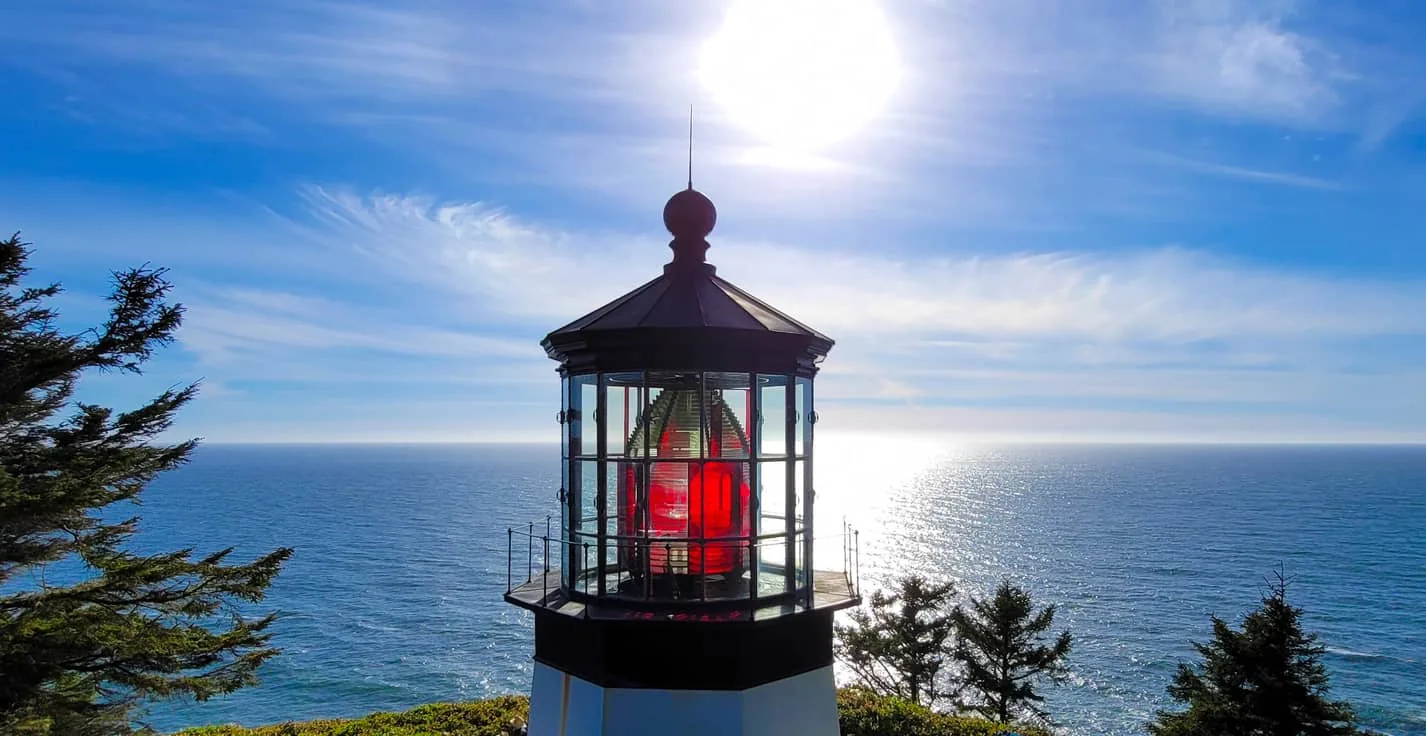
The outdoor options around Tillamook are the reason most people moved here, and they hold up. The Bayocean Peninsula offers a nine-mile round-trip hike along the spit that separates Tillamook Bay from the Pacific — accessible, uncrowded on weekdays, and genuinely stunning in both directions. The Wilson River Trail runs east into the Coast Range and pulls in hikers, mountain bikers, and anglers from well beyond the county. Munson Creek Falls, reached via a short trail southeast of town, is one of the tallest waterfalls in Oregon and earns every trip. Cape Meares State Scenic Viewpoint sits on a headland 200 feet above the ocean, reached via OR-131 — the lighthouse there is a functioning piece of Oregon history, and the whale-watching from the headland is among the best on the northern coast.
Food, Coffee, and Local Anchors
Tillamook's dining scene is small and specific. The Blue Heron French Cheese Company adds another dimension to the county's dairy identity — a destination in its own right. Fern Restaurant & Lounge anchors the more sit-down end of the dining options. Dutch Mill Cafe is the kind of breakfast spot that becomes a weekend habit fast. Old Oregon Smokehouse handles the smoked-meat side of things. Upstairs Bar & Grill is where a good portion of the after-work crowd ends up.
For coffee, Five Rivers Coffee Roasters is the local independent standard-bearer. Cabin Coffee Company and Hygge Kitchen Tillamook handle coffee and breakfast overlap in their own ways. Lindsey's Lattes Drive-thru is exactly what it sounds like and genuinely useful on a school-run morning. Dutch Bros Coffee covers the drive-thru chain end of the spectrum for anyone who needs that option.
Josi Farms rounds out the local food picture with a farmers market presence that connects residents directly to the agricultural land surrounding the city — an appropriate fit for a county whose identity is inseparable from its farms.
The Tillamook Creamery and the Air Museum
Both landmarks are worth understanding as a resident, not just a tourist. The Tillamook Creamery on US-101 is a functional dairy operation that happens to be one of the most-visited attractions in Oregon — the factory tour, the ice cream, and the cheese counter are legitimate, and locals use it for out-of-town guests without embarrassment. The Tillamook Air Museum, housed inside a colossal WWII-era blimp hangar at the Port of Tillamook Bay, is one of the more genuinely unusual structures in the Pacific Northwest. Both are the kind of thing you stop appreciating after six months and rediscover every time someone visits.
Where People Actually Gather
The Tillamook County Fairgrounds pulls the whole community together for seasonal events in a way that few institutions in a city this size manage. The Tillamook Pioneer Museum is a local gathering point more than a tourist destination — the kind of place that tells you who this town is and where it came from. For day-to-day social life, it's the coffee shops, the YMCA, and the informal spots along Main Avenue that form the daily social fabric. Tillamook is small enough that the community finds itself.
Local favorites in Tillamook
Restaurants
- Blue Heron French Cheese Company
- Fern Restaurant & Lounge
- Dutch Mill Cafe
- Old Oregon Smokehouse
- Upstairs Bar & Grill
Outdoors
- Munson Creek Falls
- Cape Meares State Scenic Viewpoint
- Bayocean Peninsula Park
- Wilson River Trail
Coffee
- Dutch Bros Coffee
- Five Rivers Coffee Roasters
- Lindsey's Lattes Drive-thru
- Cabin Coffee Company
- Hygge Kitchen Tillamook Coffee Breakfast & Lunch
Farmers Markets
- Josi Farms
Top Things Locals Say About Tillamook
The best intel about a city comes from the people who actually live there. Here’s what Tillamook residents say when newcomers ask the questions everyone’s thinking.
“I knew about the rain — everyone warns you about the rain. What I didn't expect was OR-6 in December. The first time I hit a closure and had to reroute, I realized I'd been planning my life around a road that has its own agenda.”
— Recent Tillamook home buyer
“What's the most surprising thing about living in Tillamook?”
How fast it becomes genuinely yours. Downtown along Main Avenue looks pretty modest from the outside, and it is — but within a few months you know the faces, you know the rhythms, and the bay and the Coast Range stop being a backdrop and start being your actual backyard. The scale that feels limiting at first starts feeling like the point.
“What do locals love most about Tillamook?”
The immediate access to real outdoor space — Bayocean Peninsula, the Wilson River Trail, Cape Meares — without driving two hours to find it. And the Tillamook Creamery is genuinely something you never get tired of taking visitors to, which sounds like a tourist thing to say but ends up being true. The community institutions, the YMCA, the fairgrounds, the library, make the town feel larger than 5,200.
“What should newcomers to Tillamook know?”
Sign up for OR-6 road alerts before you move in. That highway is your lifeline to Portland and it closes a few times a year, sometimes without much warning, and knowing early saves you a very long detour. Also: the summer is spectacular and brief — plan your outdoor calendar around July and August, because by October the coast is doing what the coast does, and a lot of the hiking and beach access that felt effortless in summer requires more intentionality in the rain.
“How much do you need a car in Tillamook?”
A car is essentially required. The Wave bus system covers the town loop and connects to some county services, and NW Connector will get you to Portland without driving, which is useful for an occasional city trip. But grocery runs, school drop-off, and most daily errands mean driving — the distances are short, since the city is barely two square miles, but they are not walkable for most households. If you are moving from a city where you haven't owned a car in years, factor that back in.
Cities Near Tillamook
Other communities near Tillamook worth a look — each with its own character and price point.
| City | Distance | Best For | Vibe | Median Rent | Median Buy |
|---|---|---|---|---|---|
| Bay City | 5 mi | Quiet coastal living, small lots | Tiny, bay-front, unhurried | $1,500 | $430,000 |
| Garibaldi | 9 mi | Fishing community, maritime character | Working port, rugged, affordable | $1,450 | $498,950 |
| Netarts | 6 mi | Privacy seekers, bay-view buyers | Secluded, scenic, very small | $1,500 | $472,000 |
More Helpful Guides for Tillamook
Going deeper on Tillamook? Our blog series covers everything from first-time buying to retiring here — explore the guides below.
Local Expert Takeaway: Tillamook is the right move if you are genuinely choosing the Oregon Coast as a lifestyle, not just as a backdrop. The Tillamook Creamery, the Wilson River Trail, Bayocean Peninsula, and the town's small but real civic infrastructure make it a functioning community, not a vacation rental district. The honest catch is OR-6: that mountain highway to Portland is beautiful, demanding, and occasionally closed, and anyone treating Tillamook as a Portland commuter town will burn out on it within a year. Remote workers, dairy and government employees, and families who want outdoor access in every direction will find a lot that works. The property tax rate of 0.57% is a quiet financial advantage that compounds over time.
Quick Takeaways & FAQs
✅ Tillamook's typical home price of $468,182 (July 2026) sits well below comparable Oregon Coast markets, with a property tax rate of 0.57% that adds meaningful long-term savings.
⚠️ The drive to Portland — about 90 minutes on a winding mountain highway that can close in winter — is the defining daily-life tradeoff that most residents either accept or eventually can't.
📍 The Tillamook County Creamery Association, founded in 1909 as a farmer-owned cooperative, is the county's economic anchor and one of the most stable large employers on the Oregon Coast.
Is Tillamook a good place to live year-round, not just as a vacation spot?
What is the drive from Tillamook to Portland like?
What are the major employers in Tillamook?
How are the schools in Tillamook?
Can you get around Tillamook without a car?
Helpful Links for Moving to Tillamook
Moving to Oregon?
Tell us what you need help with and we'll connect you with local resources.
