
What Is Living in Lincoln City, Oregon Like?
Maybe you drove through on US-101 and thought: people actually live here? Or maybe you've been priced out of the Portland metro and someone mentioned the coast. Either way, the first thing Lincoln City will disabuse you of is any notion that it's just a summer tourist trap you sleep in. It is a real city of 10,034 year-round residents — assembled in 1965 from five separate communities strung along what is now the main street — and the tension at the center of every decision to move here is the same one the city has always carried: you are trading urban access for seven miles of Pacific coastline, 157 sunny days a year, and a pace of life that is genuinely hard to replicate inland.
The economic backbone is what you'd expect from a coastal town this size: North Lincoln Hospital anchors the healthcare sector, the Lincoln County School District is the second-largest employer, and Chinook Winds Casino Resort keeps the hospitality sector moving year-round. The city isn't a tech hub or a corporate enclave — the workforce skews heavily toward service and tourism, which shapes both the job market and the median household income of $56,635. Families with school-age children enroll in Lincoln County School District, which holds a C+ rating, according to Niche, and has 4,660 students enrolled in 2025-26. Who moves here? Retirees, remote workers, second-home buyers, and people who've decided the commute math finally pencils out.
The typical home price sits at $503,488 (Zillow Home Value Index, July 2026), which puts Lincoln City meaningfully below what the same ocean view would cost in coastal California — and the effective property tax rate of approximately 0.80% keeps annual carrying costs manageable. Day-to-day life runs along US-101, so you learn early which stretches to avoid in summer. Devils Lake sits in the middle of the city for kayaking and fishing; Cascade Head rises to the north for hiking; Siletz Bay anchors the south end with bird habitat and the kind of estuary views that stop newcomers mid-sentence. Outdoor life is not an amenity here — it is the infrastructure.
Whether you're considering a move or just researching the area, the sections below break down Lincoln City's neighborhoods, housing market, employers, commuting realities, local favorites, and what daily life on the Oregon Coast is really like.
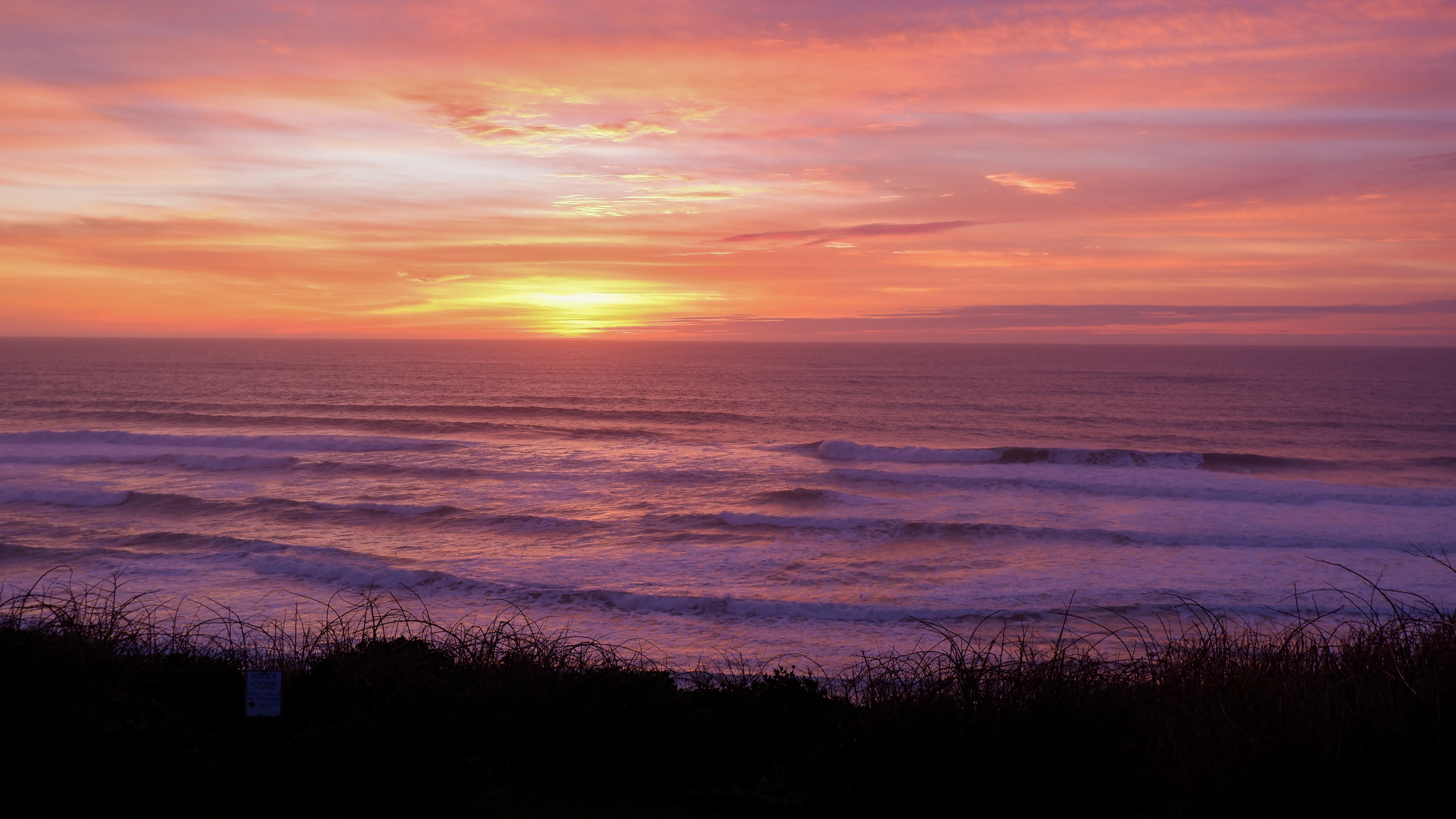
Lincoln City at a Glance
Looking to buy in Lincoln City? Estimate your payment.
Enter your numbers to see an estimated monthly mortgage payment.
Estimate only. Excludes HOA fees and mortgage insurance. The interest rate above is a starting point, not a quoted rate — replace it with your own to see real numbers. Insurance is a flat placeholder, not a Lincoln City quote.
Why Are People Moving to Lincoln City?
The honest answer is that most people moving to Lincoln City are either retiring here, working remotely and choosing lifestyle over proximity, or following a long-held plan to land on the coast before the coast gets more expensive. The city is not drawing corporate relocations or tech campuses. What it is drawing is people who've done the math and decided that the trade-off — coastal living at a price point that would buy you a suburban tract home in the metro — makes sense.
The Economic Reality
The job market is service-oriented by design. North Lincoln Hospital is the largest private employer and the institution most people in healthcare will orbit. The Lincoln County School District provides stable public-sector employment for educators and support staff. Chinook Winds Casino Resort runs a large year-round operation that employs people across hospitality, food service, and gaming — one of the few Lincoln City employers that keeps full staffing in winter. Safeway and Lincoln City Premium Outlets round out the retail side.
If your income doesn't come from one of those sectors, you're likely working remotely. That's not a gap in the economy — it's an honest description of how a meaningful share of Lincoln City's working-age residents have structured their lives. The city's internet infrastructure has improved enough to support it, though it is worth verifying service quality before you close.
Who Moves Here — And Who Leaves
The median age of 49.2 years tells you something true: Lincoln City skews older than most Oregon cities, and retirees make up a significant part of the population. That demographic shapes everything from what restaurants stay open in January to what gets prioritized at city hall. A notable portion of the housing stock operates as vacation or part-time residences, which means your neighbors in some areas may be weekend visitors more often than not.
People move out for reasons that are equally honest: winter isolation surprises a lot of newcomers. The fog and rain from November through March can wear on people who moved here for the summer version of the coast. Young professionals who need career ladders, nightlife, or urban cultural density often find the city too small within two years. And US-101 through the commercial core — especially in summer — becomes a source of genuine frustration for anyone who needs to move around the city quickly.
The Case for Moving Here
For the right person, Lincoln City is one of the few places left on the West Coast where you can own a home on or near the water without a seven-figure price tag, walk to the beach year-round, and build a genuine community with longtime residents who chose this place deliberately. The fact that children in local schools named the city itself is a piece of local history that still resonates — this is a town that has been assembling its own identity since 1965, and it has an unusually clear sense of what it is.
What Daily Life Feels Like in Lincoln City
The most important thing to understand about daily life here is that US-101 is not just a highway — it is the city's main street, its spine, and its primary source of summer congestion all at once. Nearly every errand, every commute, and every trip to the beach intersects with it. Locals develop an intuitive sense of when to run errands and when to stay put. Newcomers spend their first summer figuring that out the hard way.
The Seasonal Swing
Winter and summer are genuinely different cities. In July, the population swells with tourists, the outlet mall fills up, and the seven miles of coastline between Roads End and Siletz Bay hums with activity. In January, many of those same blocks feel quiet enough that you notice the herons. Some residents love the winter for exactly that reason — it's when the coast belongs to the people who actually live here. Others find it harder than they expected.
The Finders Keepers glass float program keeps things interesting year-round: more than 3,000 handblown floats are hidden along the coastline annually, and the drops happen in all seasons. It's the kind of civic tradition that sounds like a tourism gimmick until you actually find one — and then you understand why it's been running since 1999. The annual Kite Festivals draw crowds in summer and fall, and the Siletz Bay Music Festival brings jazz and chamber performances each summer.
Where Families Actually Gather
Devils Lake is the community's freshwater anchor — 685 acres in the middle of the city, reachable without getting on the highway, where people kayak, fish for rainbow trout and largemouth bass, and let kids swim. It's where Lincoln City residents go when they want recreation that doesn't require navigating tourist traffic. The lake's state recreation area accommodates campers, but the day-use shoreline is the real local gathering spot.
The school district's Lincoln City Cardinals inspire genuine community loyalty — Friday night games draw the kind of crowd you'd expect from a small coastal city where the high school is one of the main social institutions. The Lincoln City Premium Outlets provide the closest thing to a big-box retail experience within city limits, though a serious specialty shopping run still means driving out of town.
What Newcomers Don't Expect
After six months here, most newcomers say the same thing: they underestimated the fog. Not the romantic coastal mist — actual weeks of low overcast in winter that mutes everything. With 157 sunny days a year, the shoulder seasons require a certain disposition. The other surprise is how tight the community actually is: this is a city of 10,034 people where you will recognize faces at the grocery store within a month. For some buyers, that's the whole point. For others, it's a different kind of adjustment than they anticipated.
The Lincoln City Housing Market Right Now
The typical home price in Lincoln City is $503,488 (Zillow Home Value Index, July 2026). That figure puts the market firmly in the accessible range for coastal Oregon — well below what comparable proximity to the water commands in the Willamette Valley's premium pockets, and dramatically below California coastal markets. For the full cost-of-living breakdown, including rent benchmarks and tax comparisons, that page covers it in depth.
What the Housing Stock Actually Looks Like
About 70% of Lincoln City's homes are single-family detached — a higher owner-occupancy mix than many coastal resort towns. Mobile homes and trailers account for roughly 7% of the stock, which gives the market an accessible entry point that purely single-family markets don't have. Large apartment complexes make up about 14% of units, concentrated around the commercial corridor.
A meaningful share of the housing stock functions as vacation or part-time residences. That matters for buyers in two ways: in some neighborhoods you may have more weekend-neighbor turnover than a typical residential purchase would suggest, and it also means the rental market has a vacation-rental component that can affect long-term rental availability.
Market Conditions
The county's real estate market shifted toward more buyer-friendly conditions through 2025, with price reductions becoming a routine part of the process rather than a distress signal. Homes are taking longer to move than in prior years, which gives buyers more room to negotiate and more time to conduct due diligence — a meaningful shift from the compressed timelines of recent years.
The effective property tax rate of approximately 0.80% is among the lower rates in Oregon, which keeps monthly carrying costs more manageable than the purchase price alone might suggest. Some areas cost more than others — oceanfront and lake-adjacent properties sit above the city-wide figure, while the inland residential pockets offer entry points below it — but the neighborhood-level detail lives on the Best Neighborhoods page. For buyers evaluating how Lincoln City compares to nearby coastal towns, that page also covers the geographic divides that shape which areas suit which buyers.
Lincoln City Neighborhoods
Lincoln City has several distinct areas — each with its own character and appeal. Here’s a breakdown to help you narrow down where to focus your home search.
🏡 Oceanlake
Oceanlake occupies the northern third of Lincoln City and contains much of the city's retail and commercial activity along US-101, making it the most service-accessible part of town for daily errands. It suits residents who want proximity to shops and services without sacrificing coastal access, and the housing stock mixes older single-family homes with some newer construction.
🏠 Taft (Historic Taft District)
Taft is Lincoln City's southernmost district, anchored by Siletz Bay and carrying the most concentrated sense of the city's pre-incorporation identity as a separate coastal community. It suits buyers drawn to bay views, a more compact walkable feel along the old commercial strip, and a neighborhood character that feels distinct from the highway-facing commercial core.
🌳 Roads End
Roads End is the quietest corner of Lincoln City — a residential area at the northern tip of the city where the highway ends and a state recreation site gives residents direct beach access with fewer crowds than the central coastline. It suits buyers prioritizing residential calm and beach proximity over walkable services.
🏘 Nelscott
Nelscott sits in the middle of the city with a residential character that's shaped partly by its proximity to Nelscott Reef — the Oregon Coast's only big-wave surf break — and a modest commercial presence that keeps it from feeling purely suburban. It suits buyers who want a central location without being directly on the busiest stretch of US-101.
🏔 Delake
Delake is one of the original five communities that merged to form Lincoln City, and it sits adjacent to Devils Lake — giving residents the unusual combination of freshwater lake access and proximity to the ocean within a short drive. It suits buyers who want the outdoor lifestyle of the lake as their backyard rather than the beach.
🌆 Lincoln Palisades
Lincoln Palisades occupies elevated terrain above the city with views that separate it from the flat coastal neighborhoods, attracting buyers who prioritize outlook and a degree of separation from the US-101 corridor. The hillside setting means a slightly more removed feel from commercial activity, with residential streets that trade walkability for privacy and scenery.
Pros & Cons of Living in Lincoln City
The Pros
- Direct beachfront living with seven miles of walkable sand
- Strong tourism-driven job base and no state sales tax
- Small-town coastal character split across historic districts like Taft and Nelscott
- Easy day access to Devils Lake and Cascade Head trails
The Cons
- Home prices inflated by vacation-rental and second-home demand
- Crime rates (especially property crime tied to tourist areas) run above state and national averages
- Below-average school test scores and long, damp winters with heavy rainfall
Getting Around & Commuting in Lincoln City
There is one highway in and out of Lincoln City: US-101. That is not a complaint — it is a foundational fact about what living here means. Everything from your morning coffee run to a trip to the airport moves along the same corridor, and in summer that corridor moves at the pace of tourist traffic. Understanding this before you move is more useful than any other piece of commute advice this guide could offer.
The Daily Reality
For residents who work locally — at North Lincoln Hospital, the school district, or the casino — the commute is short by any standard. The city is compact, and even driving from Roads End to Taft doesn't take long outside of peak tourist season. The problem is that peak tourist season lasts most of the summer, and US-101 through the commercial core becomes genuinely slow. Locals learn which side streets offer parallel movement and which times of day to avoid the outlet mall stretch entirely.
Remote workers have largely bypassed this issue, and a meaningful share of Lincoln City's working-age population has structured their careers to avoid the commute question altogether. For those who haven't, the drive to Salem is about 90 minutes — and that is not a daily commute most people sustain. This is a city where your employment situation needs to be figured out before your housing situation, not after.
Getting to the Airport
Portland International Airport (PDX) sits approximately 95 miles away; Eugene Airport (EUG) is approximately 90 miles away. Neither is a quick trip — plan on roughly two hours of driving in normal conditions, and factor in US-101 to a connecting inland route. Flying regularly from Lincoln City means planning around the drive, not just the departure time.
What You Actually Need a Car For
A car is not optional here — it is the operating assumption of daily life. The city's layout along US-101 means that even relatively short distances between neighborhoods require driving. Within a neighborhood, some errands can be done on foot or by bike, particularly around the Oceanlake and Taft areas where services cluster. But grocery runs, medical appointments, anything at the outlets — all of it assumes a vehicle. The geography is the geography, and no amount of optimism changes what the map shows.
Schools in Lincoln City
Families relocating to Lincoln City have public, private, and higher-education options nearby. Here’s a quick overview.
🎓 School District
Lincoln County School District serves K–12 students across Lincoln City and the surrounding area. Rated C+ (source: Niche.com).
🏆 Graduation Rate
The 4-year high-school graduation rate here is approximately 88.1%.
📚 Higher Education
Oregon’s public universities — the University of Oregon, Oregon State University, and Portland State University — offer four-year degrees statewide, with a network of 17 community colleges providing two-year and workforce programs.
🌐 Online Learning
Oregon State University Ecampus and Portland State University Online offer fully accredited online degrees for remote learners across the state.
Safety in Lincoln City
A quick look at how Lincoln City compares on the numbers that matter most when weighing a neighborhood or a move.
🛡 Violent Crime
Approximately 5.1 per 1,000 residents.
🔒 Property Crime
Approximately 20 per 1,000 residents.
Compared to the most recent national figures from the Bureau of Justice Statistics (2024), Lincoln City’s violent crime is above the national average (about 3.7 per 1,000), and property crime is above the national average (about 18.4 per 1,000).
Against Oregon as a whole, Lincoln City’s violent crime is about one and a half times the state average, and property crime is somewhat below the state average (Bureau of Justice Statistics, Crime Known to Law Enforcement, 2024 (tables 2 and 3)).
Crime rates can vary a lot within a single city, so the citywide numbers above are only a starting point. Some neighborhoods in Lincoln City run well below these averages, while others run higher — the kind of block-by-block detail that matters most when you’re actually choosing where to live. The full guide below breaks it down neighborhood by neighborhood.
Working in Lincoln City
Lincoln City’s largest employers span several industries — here are some of the anchors of the local job market.
🏥 North Lincoln Hospital
Healthcare
🎓 Lincoln County School District
Education
🏛 City of Lincoln City
Municipal government
🏥 Chinook Winds Casino Resort
Hospitality
🛒 Safeway
Retail
Parks & Recreation in Lincoln City
Some of the outdoor spaces that shape everyday life in Lincoln City.
🌱 Devils Lake
🌱 Connie Hansen Garden
Lincoln City residents don’t have to go far for green space — spots like Devils Lake and Connie Hansen Garden are part of everyday life here, whether that’s a morning walk, a weekend hike, or just somewhere to unwind outside. The full guide below covers more of what Lincoln City has to offer for parks and outdoor recreation.
Retiring in Lincoln City
Lincoln City draws retirees for its balance of amenities, outdoor access, and cost. Here’s what to weigh.
🌤 Climate
Lincoln City averages 157 sunny days a year, with mild temperatures year-round that rarely push into extremes — summers stay comfortably cool rather than hot, and winters are wet and foggy rather than frigid. Snow is essentially nonexistent at sea level. The trade-off is a long overcast season from November through March that surprises retirees who moved here for the summer version of the coast.
🍴 Lifestyle
Daily life for retirees here centers on the coast, Devils Lake, and a dining scene anchored by seafood and a handful of long-running local restaurants. The Siletz Bay Music Festival brings live jazz and chamber music each summer, and the Finders Keepers glass float program gives the coastline an ongoing sense of discovery year-round. The city is small enough that community connections form quickly.
🏚 55+ Communities
Active-adult housing options in Lincoln City include Taft Mobile Home Villa and Tree 'N' Sea Trailer Park — both small-scale communities rather than large amenity-heavy developments. Retirees looking for a resort-style active-adult campus will need to look further afield, but the city's overall pace and demographics make it a natural fit for retirement living even outside of dedicated 55+ communities.
✈ Getting Around
A car is the operating assumption for daily life in Lincoln City — US-101 is the spine of the city and most destinations require driving. The nearest major airports are Portland International Airport (PDX) at approximately 95 miles and Eugene Airport (EUG) at approximately 90 miles. Medical care anchors locally at North Lincoln Hospital, with additional specialty services requiring a drive to larger facilities in the Willamette Valley.
🏛 Oregon Taxes for Retirees — What to Know
- Social Security is not taxed — Oregon does not tax Social Security or Railroad Retirement benefits. Any amount included in your federal adjusted gross income is subtracted back out on the Oregon return.
- But other retirement income IS taxed — This is the trade-off that surprises people moving from Washington or Texas. Pension distributions and 401(k)/IRA withdrawals are taxed as ordinary income at Oregon’s regular rates — there is no blanket retirement-income exclusion.
- Graduated income tax — Oregon has four brackets — 4.75%, 6.75%, 8.75% and 9.9%. The 4.75% rate covers the first $10,000 of taxable income for a single filer ($20,000 filing jointly); the 8.75% rate starts at $125,000 ($250,000 jointly); and the top 9.9% rate applies above $250,000 ($500,000 jointly).
- No sales tax — Oregon levies no general sales tax.
- Property taxes, with senior deferral — Oregon’s Senior and Disabled Property Tax Deferral lets qualifying homeowners have the state pay their county property taxes, with a lien recorded against the home. The 2026 household income limit is $70,000, and deferred balances accrue 6% simple interest — it defers the bill rather than forgiving it.
- Estate tax — the one to plan for — Oregon has its own estate tax with a $1 million filing threshold — far below the federal exemption, and NOT indexed for inflation, so it reaches more estates every year in real terms. Retirement accounts and a long-held home count toward the taxable estate, so estates that feel modest can cross the line without the owner expecting it.
- No inheritance tax — Oregon has no separate inheritance tax and no gift tax.
Tax laws change frequently and individual situations vary. This is general information, not tax advice — always consult a qualified Oregon tax professional or CPA for personalized retirement tax planning.
Weekends & Local Favorites in Lincoln City
The outdoor calendar here is built around conditions, not convenience. When the waves at Nelscott Reef are running — and during winter swells they can reach up to 50 feet, making it the only big-wave surf location on the Oregon Coast — the surfing community shows up to watch even if they're not paddling out. The Nelscott Reef Big Wave Classic has been drawing crowds since 2005, and it remains one of those events that reminds you this town has a serious surf identity behind the kite-flying and chowder.
On the Water and On the Trails
Devils Lake is the year-round freshwater option: kayaking, stand-up paddleboarding, boating, and fishing for salmon, steelhead, rainbow trout, and largemouth bass, all within city limits. Roads End State Recreation Site marks the northern edge of the city and gives residents a beach access point that tends to be quieter than the central stretches of US-101 frontage. Cascade Head Trail to the north is one of the more rewarding hikes on the Oregon Coast — a steep climb that opens to headland meadows above the Pacific.
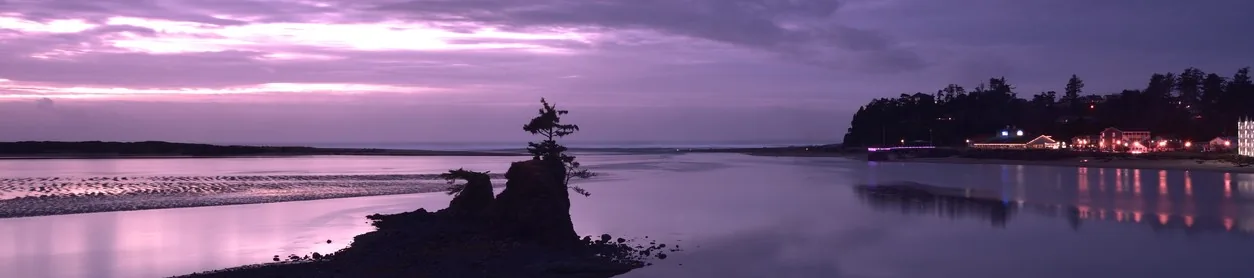
Siletz Bay to the south is where shorebird diversity runs high and where the estuary light in late afternoon is the reason people buy property with a southern view. The bay's tidal flats are productive birding territory year-round.
Food, Coffee, and the Local Scene
The dining scene is anchored by a handful of well-regarded local institutions. Mo's Seafood & Chowder — a name any Oregon Coast regular will recognize — operates here, and Kyllo's Seafood & Grill is a long-standing local choice with bay views. McMenamins Lighthouse Brewpub brings the McMenamins formula to the coast with craft beer and a comfortable pub atmosphere. Pelican Brewing's Siletz Bay location adds another coastal brewing option. The Wild Flower Grill rounds out the sit-down dining options with a different menu direction than the seafood-heavy competition.
On the coffee side, Salt is the independent option with a local following. The Lighthouse Coffee Co., The Human Bean, Pacific Grind Cafe, and Nyla's Cup of Jo give residents enough variety that the morning routine doesn't feel limited. These are the places where you'll start recognizing faces within the first month of living here — the social infrastructure of a small coastal town that has been doing this for a long time.
Events That Feel Like Lincoln City
The Finders Keepers glass float program is the civic tradition that best captures what this city is: accessible, slightly whimsical, and rooted in a genuine piece of Pacific history. The Kite Festivals — held in both summer and fall — have been drawing participants and spectators for decades. And the July 4th drone display over Siletz Bay, which replaced the traditional fireworks show in 2025 with more than 200 choreographed drones, is the kind of civic upgrade that generates local conversation and reveals something about how the city sees itself going forward.
Local favorites in Lincoln City
Restaurants
- Mo's Seafood & Chowder - Lincoln City
- Kyllo’s Seafood & Grill
- McMenamins Lighthouse Brewpub
- Pelican Brewing – Siletz Bay
- The Wild Flower Grill
Outdoors
- Devils Lake
- Roads End State Recreation Site
- Cascade Head Trail
- Siletz Bay
- Nelscott Reef (surfing)
Coffee
- Salt
- The Lighthouse Coffee Co.
- The Human Bean
- Pacific Grind Cafe
- Nyla's Cup of Jo
Top Things Locals Say About Lincoln City
The best intel about a city comes from the people who actually live there. Here’s what Lincoln City residents say when newcomers ask the questions everyone’s thinking.
“I knew the summers would be crowded, but nothing prepared me for how different the city felt in November — the tourist traffic disappears overnight, and suddenly you're waving at the same ten people at the grocery store every week. I wasn't sure I'd like it that much, but it turned out to be the whole reason I stayed.”
— Recent Lincoln City home buyer
“What's the most surprising thing about living in Lincoln City?”
The fog in winter is genuinely something you have to live through to understand. People move here in August when everything is bright and wide open, and then February arrives and it's overcast for weeks at a stretch. The coast is still beautiful — it's a different kind of beautiful — but it requires a different mindset than what you imagined when you made the offer. The flip side is that winter is when the city actually belongs to the people who live here.
“What do locals love most about Lincoln City?”
Having Devils Lake inside the city limits is something you don't fully appreciate until you've lived here a while. Being able to kayak or fish without driving anywhere — just showing up on a Tuesday afternoon — changes how the week feels. And the coast itself never gets old. After three years you still stop the car when the waves are doing something interesting off Nelscott Reef.
“What should newcomers to Lincoln City know?”
Figure out your grocery run timing before July hits. US-101 through the commercial section backs up in summer and what should be a ten-minute errand can take thirty. Most longtime residents do their big shopping runs on weekday mornings or early evenings and avoid the outlet mall stretch on weekend afternoons entirely. Also: the Finders Keepers glass float drops are not announced in advance by exact location, but the local Facebook groups track them closely if you want to improve your odds.
“How much do you need a car in Lincoln City?”
A car is essential — this is not a city you navigate on foot for daily life. The layout along US-101 means that even getting from one part of town to another involves driving. Within certain neighborhoods like Oceanlake and Taft, where services cluster, you can handle some errands on foot, but grocery runs, medical appointments, and anything at the outlets all require a vehicle. Most errands mean a drive, and residents plan their routes around avoiding the tourist corridor during peak hours.
Cities Near Lincoln City
Other communities near Lincoln City worth a look — each with its own character and price point.
| City | Distance | Best For | Vibe | Median Rent | Median Buy |
|---|---|---|---|---|---|
| Newport | 24 mi | Amenity seekers & larger-town services | Established, working waterfront, broader retail | $2,078 | $454,809 |
| Depoe Bay | 9 mi | Quiet living & whale-watching access | Tiny, scenic, slow-paced, dramatic cliffs | $1,500 | $520,000 |
| Otis | 6 mi | Rural privacy near the coast | Small, inland, forested, very quiet | $1,300 | $492,078 |
More Helpful Guides for Lincoln City
Going deeper on Lincoln City? Our blog series covers everything from first-time buying to retiring here — explore the guides below.
Local Expert Takeaway: Lincoln City rewards people who move here for the right reasons and surprises people who move here for the wrong ones. The coast is real, Devils Lake is genuinely in your backyard, and the Finders Keepers glass floats are the kind of thing that feels absurd until you find one at low tide and understand why people stay. But the job market is thin outside healthcare, education, and hospitality; US-101 in July is a parking lot; and the winter fog is not something you can research your way around. Get the employment question answered before the housing question, talk to someone who has lived through a February here, and then decide.
Quick Takeaways & FAQs
✅ Lincoln City's typical home price of $503,488 (July 2026) gives buyers genuine oceanside Oregon living without the seven-figure price tags that coastal California demands.
⚠️ US-101 is the only highway in and out of town — summer tourist traffic can make even short crosstown trips take significantly longer than the distance suggests.
📍 The city name itself was chosen via a schoolchildren's contest in 1965, and that origin story tells you something true about how long this community has been deliberately building its own identity.
Is Lincoln City, Oregon a good place to live year-round, or mainly a vacation spot?
What is the typical home price in Lincoln City, OR?
What are the main employers in Lincoln City?
How are the schools in Lincoln City?
What is the commute like from Lincoln City to Salem or Portland?
Helpful Links for Moving to Lincoln City
Moving to Oregon?
Tell us what you need help with and we'll connect you with local resources.
