
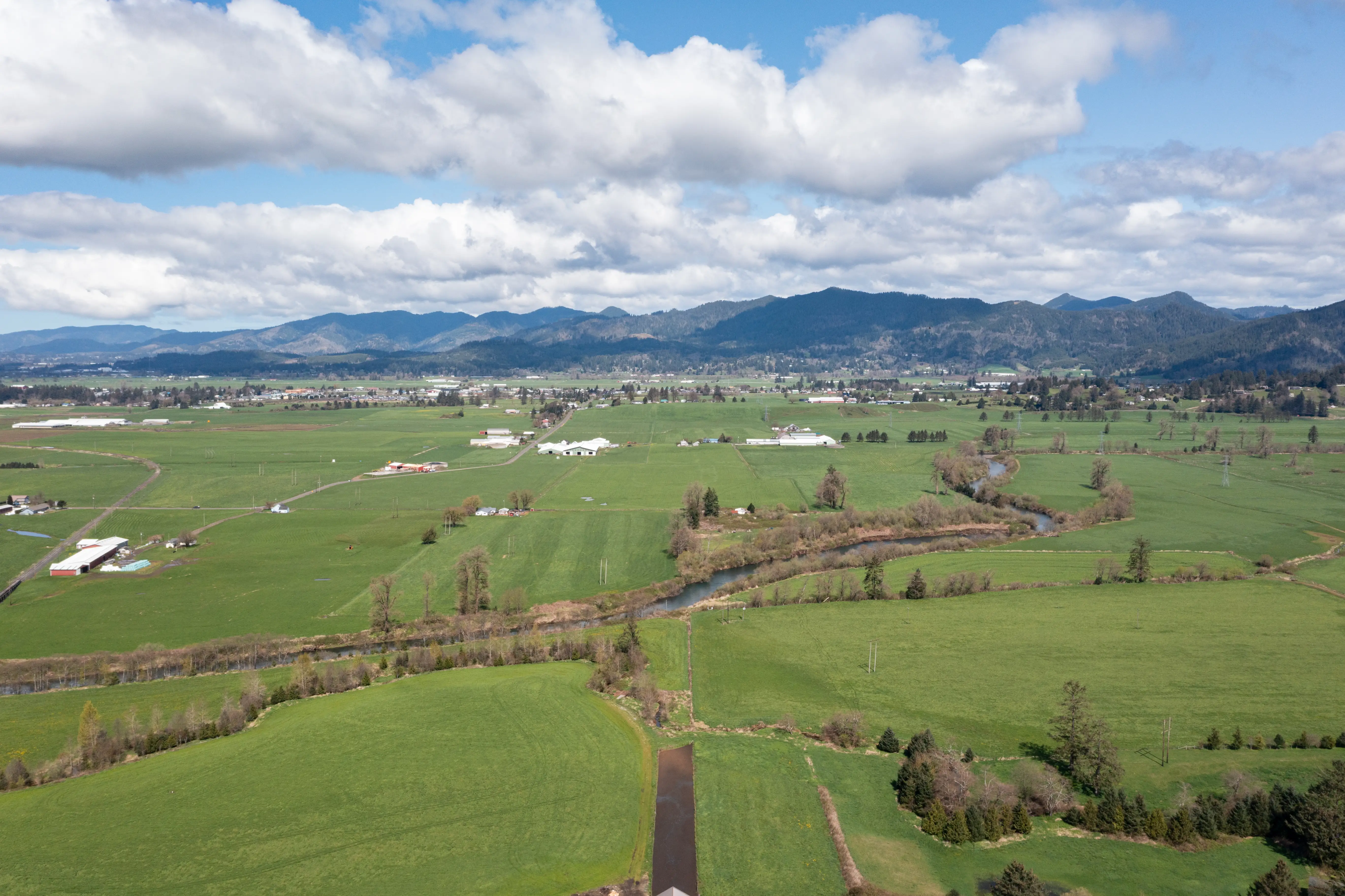
Tillamook is not the kind of place people stumble into. You chose this city — or it chose you — because something about life on the northern Oregon Coast, surrounded by working dairy farms, a bay that opens to the Pacific, and forests that press right up against the city limits, felt worth trading for the conveniences of a larger metro. What surprises most newcomers is how distinct the five main neighborhoods feel for a city of just 5,200 people. The difference between a hillside lot in Valley View Heights and a bungalow near the county courthouse is not just about price — it is about how you will spend your mornings and whether you will need a car to get coffee.
The city's economy runs on a short list of anchors: the Tillamook County Creamery Association's food processing operations, Tillamook County and City of Tillamook government, the Tillamook School District with 2,011 students enrolled in 2025-26, and a regional health system. That employer base creates a relatively stable, blue-collar-and-public-sector community where median household income sits at $58,176. The Tillamook School District holds a C+ rating, according to Niche — something families should weigh carefully and explore further on the schools page. People move here from Portland and the Willamette Valley seeking lower costs, slower pace, and direct access to the coast — and they stay because the trade-offs end up feeling manageable once you are actually living inside them.
The typical home price in Tillamook is $468,182 (Zillow Home Value Index, July 2026) — meaningfully below what comparable coastal towns in California command, and below much of the Portland metro, though still above what the median local income can comfortably carry. The full cost picture, including property taxes at an effective rate of 0.57%, is on the cost of living page. Day-to-day life here means US-101 as the main north-south spine, OR-6 as your connection inland, and Portland International Airport about 90 minutes away for anything requiring a flight. Outdoor access — Munson Creek Falls, Bayocean Peninsula Park, Cape Meares State Scenic Viewpoint, the Wilson River Trail — is not a weekend bonus here; it is part of the weekly rhythm.
Whether you are comparing neighborhoods for the first time or narrowing down a shortlist before a visit, the sections below break down Tillamook's five neighborhoods by character, buyer type, and honest trade-offs, along with the common mistakes buyers make and the best areas for renters.

The Tillamook Reality
The single most important thing to understand about buying in Tillamook is the relationship between US-101 and the city's layout. US-101 — the Oregon Coast Highway — runs directly through the heart of town, and its noise signature, truck traffic, and commercial energy shape every neighborhood's daily texture differently. Living within a block of it means hearing that highway. Living a half-mile up into the hills means you forget it exists.
The second thing to understand is elevation. Tillamook sits in a low coastal valley, and the neighborhoods that climb the hillsides — primarily Valley View Heights — offer not just views but a literal separation from the fog, traffic, and commercial activity below. That separation has real value, and it comes with real costs: every errand requires a drive, and the trade-off of quiet versus on-foot access is genuine rather than theoretical.
School boundaries in the Tillamook School District do not create the sharp neighborhood-tier divides you see in larger cities, but they are worth checking before you buy, especially if South Prairie Elementary's grades 2–3 configuration affects your family's school-year planning. The district serves the whole city, so no single neighborhood buys you dramatically better schools than another — what you are really choosing between in Tillamook is walkability versus space, bay views versus valley views, and older character homes versus newer construction on larger lots.
Neighborhoods at a Glance
| Neighborhood | Best For | Vibe |
|---|---|---|
| Downtown Tillamook | Walkable First-Time | Civic core — historic homes, county courthouse, library, and Tillamook's most walkable retail within a few blocks |
| Hoquarton | Walkable Nature | Slough-side character — older street grid with trail access, kayak launch, and a genuine sense of place rooted in the city's earliest history |
| South Prairie | Families Privacy | Rural-residential edge — larger lots, dairy-farm views, and a quieter approach corridor where the Tillamook Valley aesthetic is most intact |
| Valley View Heights | Views Quiet | Hilltop subdivision — panoramic valley, bay, and ocean views on south-facing slopes with underground utilities and an active HOA |
| Marolf Place | Quiet Value | Calm residential pocket off OR-6 — car-dependent but low-key, with Goodspeed Park and Peace Park nearby |
Tillamook typical home price: $468,182 (Zillow ZHVI, July 2026). Neighborhood tiers on this page are relative to these figures.

Best Neighborhood by Buyer Type
| Buyer Type | Best Neighborhood | Why |
|---|---|---|
| First-Time Buyer | Downtown Tillamook | Older Craftsman and Victorian-era stock gives entry-level buyers the most walkable, lowest-friction foothold in the city without needing a car for daily basics. |
| Luxury / Move-Up | Valley View Heights | Larger lots running up to one to two acres, panoramic valley and bay views, underground utilities, and an active HOA make this the most polished address in the city. |
| Walkability Seeker | Hoquarton | Close enough to the downtown core for genuine on-foot errands while offering the calmer street character and slough-trail access that the immediate commercial center lacks. |
| Families with Kids | South Prairie | Larger lots, quieter roads away from US-101 traffic, and South Prairie Elementary School in the immediate area suit parents who want breathing room alongside a neighborhood school. |
| Commuters | Marolf Place | Quick access to OR-6 for the inland route makes Marolf Place the most practical starting point for anyone making regular drives toward the valley or Portland. |
| Large-Lot Buyers | Valley View Heights | One- to two-acre parcels on south-facing hillside slopes are the closest thing to true elbow room within Tillamook's city boundaries. |
| Renters | Downtown Tillamook | The city's highest concentration of older rental stock, proximity to employers, and walkable amenities make downtown the most practical base for renters in a tight coastal market. |
Looking to buy in Tillamook? Estimate your payment.
Enter your numbers to see an estimated monthly mortgage payment.
Estimate only. Excludes HOA fees and mortgage insurance. The interest rate above is a starting point, not a quoted rate — replace it with your own to see real numbers. Insurance is a flat placeholder, not a Tillamook quote.
Most Popular Neighborhoods
Downtown Tillamook
The historic county courthouse, the public library, and the bulk of Tillamook's walkable retail all sit within a few blocks of each other here, making this the only neighborhood in the city where you can run a genuine errand on foot. Homes are primarily older Craftsman and Victorian-era stock — many updated, some still in need of work — which means character comes with maintenance reality baked in. The honest trade-off is US-101 traffic noise and the ambient activity of being at the center of a working small city; buyers who want quiet should look uphill.
Best for: First-time buyers, renters, and anyone who wants to walk to the library or pick up coffee without getting in a car.Hoquarton
Hoquarton takes its name from an Indigenous word believed to mean "the landing," and was one of the earliest names for the Tillamook settlement itself — that history shows in the street grid and the home stock, a mix of mid-century and early-century construction at varying condition levels. The neighborhood's real draw is the Hoquarton Slough corridor: a mile-long interpretive trail connects Hoquarton Interpretive Park to Goodspeed Park, and a kayak launch on the slough reaches Tillamook Bay via the confluence of the Trask and Tillamook Rivers. The slough was designated a National Recreational Water Trail in 2012, which gives this quiet residential area a genuinely distinctive outdoor identity — though buyers should know that housing condition varies more here than in the hilltop neighborhoods.
Best for: Outdoor-oriented buyers who want walkability and water-trail access without paying for a view lot.South Prairie
South Prairie is where the Tillamook Valley aesthetic is most intact: US-101 carries you through working dairy country before depositing you into this southern fringe of the city, where larger lots and quieter roads replace the downtown grid. South Prairie Elementary School serves grades 2 and 3 here, which is an unusual configuration worth understanding before you enroll a child — the full district picture is on the schools page. The trade-off is straightforward: you gain space and agricultural serenity, and you give up any meaningful on-foot access to downtown services.
Best for: Families with young children and buyers who want rural-residential character without leaving city limits.Valley View Heights
Valley View Heights sits in the hills above Tillamook on south-facing slopes, and on a clear day the view runs from the valley floor out to Tillamook Bay and on to the Pacific — which is a genuinely rare thing to have within city limits at this price point. Lots run up to roughly one to two acres, roads are paved, utilities are underground, and an active HOA keeps the subdivision in order. What you give up is the ability to walk anywhere useful; every grocery run, school pickup, and coffee stop requires driving down into the city, and the hills that create those views also create that dependency.
Best for: Buyers prioritizing views, space, and a quieter hilltop setting with the polish of a planned subdivision.Marolf Place
Marolf Place is a low-key residential pocket off OR-6 — the Wilson River Highway — on the western side of Tillamook, with Goodspeed Park and Peace Park within reach and a calm neighborhood character that suits buyers who simply want to be left alone. It is genuinely car-dependent for nearly all daily needs, and the neighborhood has limited public profile compared to the others, which means less market competition but also less data for buyers trying to calibrate value. The area suits people who want a quiet base close to the inland highway corridor and are not chasing views or walkability.
Best for: Buyers seeking a quiet, low-traffic residential setting with straightforward access to OR-6.Common Mistakes Buyers Make in Tillamook
Treating the City as Uniform
Tillamook is small enough that buyers sometimes assume all five neighborhoods are interchangeable — same schools, same commute, same daily life. They are not. The difference between a downtown older bungalow and a Valley View Heights lot is the difference between walking to the library and needing a car to buy milk. Map your actual daily routine before you narrow your search.
Underestimating US-101 Noise Near Downtown
US-101 runs directly through Tillamook, and homes within a block or two of the main corridor carry its noise signature year-round — not just during summer tourist traffic, but during the daily truck runs that service the dairy and food-processing operations anchoring the local economy. Buyers drawn to downtown's walkability should visit on a Tuesday morning, not a Saturday afternoon, to get an honest read on ambient noise levels.
Skipping the HOA Research in Valley View Heights
Valley View Heights has an active homeowners association, and buyers sometimes discover the covenants, fees, and restrictions after they are already emotionally committed to the views. Request the association documents early in the process — restrictions on outbuildings, exterior finishes, and landscaping are common in hillside subdivisions, and they matter if you are planning to keep livestock, run a home business from a detached structure, or renovate in ways that fall outside typical residential norms.
Ignoring the Affordability Gap
The median household income in Tillamook is below the income needed to comfortably carry the typical home price here — by a meaningful margin. That gap is most acute for buyers who plan to rely on a single local income rather than remote work or dual incomes. Buyers who move here assuming coastal Oregon is affordable relative to Portland sometimes find the local wage base does not match their mortgage assumptions. The full income and cost picture is on the cost of living page; run those numbers before you tour.
Best Areas to Rent in Tillamook
| Area | Ideal For | Trade-off |
|---|---|---|
| Downtown Tillamook | Walkable First-Time Renters | Most walkable area with the highest concentration of older rental stock, but US-101 noise is real and parking can be tight |
| Hoquarton | Nature Access Quiet | Slough trail access and calmer streets than downtown, but housing condition varies and availability is limited in this older stock |
| South Prairie | Families Space | Larger lots and quieter feel, but every errand requires a car and rental supply here is thin compared to the downtown core |
| Valley View Heights | Views Privacy | Panoramic views and a well-maintained subdivision environment, but fully car-dependent and rentals here rarely come available |
| Marolf Place | Quiet OR-6 Access | Low-traffic residential character with easy access to OR-6, but limited amenities nearby and almost entirely car-dependent for daily life |
Tillamook's rental market is tight relative to its size — a city of 5,200 with a constrained housing stock and a seasonal coastal economy does not generate the apartment turnover of a larger city. Renters who need flexibility should focus on Downtown Tillamook first, where the oldest and most varied housing stock produces the most consistent rental availability, and treat the other areas as secondary options that require patience and early contact with local property managers.
Local Expert Takeaway: Valley View Heights is the neighborhood that surprises most buyers who dismiss Tillamook as too small to have real real estate decisions. Those hilltop lots with south-facing bay views, underground utilities, and an active HOA sit inside city limits and run up to two acres — which would cost dramatically more in any Oregon coastal town with higher name recognition. Downtown and Hoquarton are the right call for anyone who wants to walk to an independent coffee shop or grab a meal without a car. South Prairie suits families who want a neighborhood elementary school and room to breathe. Marolf Place is the quiet, unpretentious option for buyers who just want a base near OR-6 and no noise. The mistake is assuming these five neighborhoods are interchangeable just because the city is small. They are not.
Quick Takeaways & FAQs
✅ Valley View Heights offers panoramic views of Tillamook Bay and the Pacific from south-facing hillside lots up to two acres — an unusually spacious option within city limits.
⚠️ The typical home price in Tillamook exceeds what the median local household income can comfortably carry, so buyers relying solely on local wages should run the numbers carefully before committing.
📍 The Hoquarton Slough — designated a National Recreational Water Trail in 2012 — gives the Hoquarton neighborhood a kayak launch and a mile-long interpretive trail that connects two parks, making it one of the more distinctive residential addresses on the northern Oregon Coast.
What is the most walkable neighborhood in Tillamook?
Which Tillamook neighborhood has the best views?
Is Tillamook affordable compared to the rest of the Oregon Coast?
What should families know about school boundaries in Tillamook neighborhoods?
Is Marolf Place a good area to rent or buy in Tillamook?
Moving to Oregon?
Tell us what you need help with and we'll connect you with local resources.
