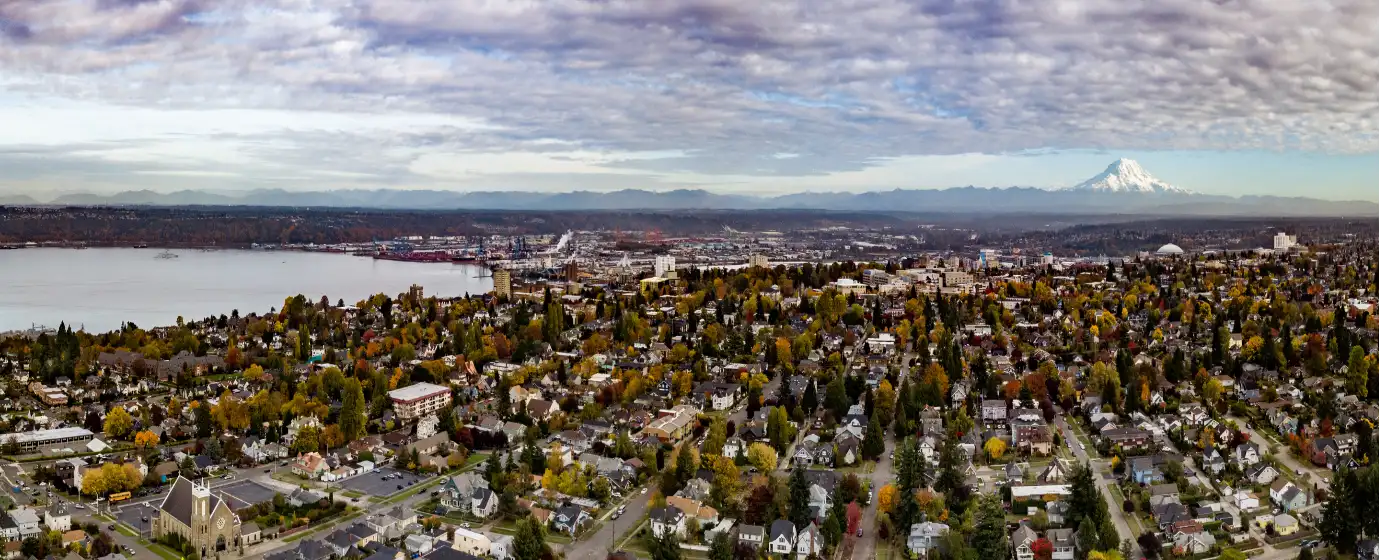
Most people looking at Tacoma are running the same mental math: Seattle prices are brutal, and someone told them Tacoma is the affordable alternative. That's partly true — and partly misleading. Tacoma's typical home value sits at $496,203 (Zillow Home Value Index, July 2026), which is meaningfully below Seattle proper. But Tacoma is not cheap by any national measure. Its overall cost of living runs roughly 28% above the national average, driven almost entirely by housing costs that clock in about 58% above the national norm. If you're relocating from the Midwest or the South, the sticker shock is real.
What softens the blow is the tax structure and the utility situation. Washington has no personal state income tax on wages, which puts real money back in your pocket compared to states like Oregon or California. Tacoma Public Utilities — a city-owned, not-for-profit provider — keeps electricity costs notably below what most Pacific Northwest households pay, and below the national average. Those two advantages don't erase the housing premium, but they reshape the monthly budget in ways that matter when you're doing the math on a move.
Day-to-day life here is anchored by the Sound Transit Sounder commuter rail line into Seattle, Pierce Transit bus routes across Pierce County, and a waterfront along Ruston Way that doesn't cost anything to enjoy. Groceries run about 9–10% above national averages, and transportation costs are elevated — owning a car in a city this spread out adds up. But the tradeoff versus Seattle is real: you get Puget Sound access, a genuine downtown with the Museum of Glass and the Tacoma Dome anchoring it, and neighborhoods where your dollar still buys square footage.
Whether you're deciding between renting and buying, comparing Tacoma to Lakewood or Gig Harbor, or just trying to build an honest monthly budget, the sections below break down Tacoma's housing market, everyday costs, nearby-city comparisons, and the full tax picture.

What It Really Costs to Live in Tacoma
Tacoma occupies a specific lane in the Puget Sound market: noticeably less expensive than Seattle, roughly comparable to Federal Way, and more affordable on a per-square-foot basis than Gig Harbor or Bellevue — but still a high-cost city by the standards of almost any market east of the Cascades. The Zillow Home Value Index pegs the typical home value at $496,203 as of July 2026. That figure does real work: it tells you where the middle of the market sits, not just where the entry door is or where the luxury ceiling is.
Housing is the dominant line item, full stop. The Council for Community and Economic Research Cost of Living Index places Tacoma's housing sub-index around 158, meaning purchase costs run roughly 58% above the national benchmark. Every other category is closer to normal — groceries come in about 9–10% above average, utilities actually run below average, and transportation costs are elevated but not extreme. The practical implication: if you're budgeting for Tacoma, get the housing number right first. Everything else is manageable around it.
The comparison to Seattle is the one most relocating buyers make, and the gap is real but not as dramatic as the headlines suggest. Tacoma is noticeably cheaper — but not dramatically cheaper — than the Seattle core. What it genuinely offers is more space, more mature neighborhoods with established trees and older craftsman stock, and a downtown that functions at a human scale rather than a tech-campus scale. The case for Tacoma is strongest for households whose income is anchored locally — near Joint Base Lewis-McChord, or working for one of the region's large employers — rather than households that need to commute to Seattle daily.
Housing: Rent vs. Buy in Tacoma
The Buying Side
The $496,203 Zillow Home Value Index figure represents the broad middle of the Tacoma market — but the range underneath it is wide. Entry-level homes, typically older construction with deferred maintenance or smaller square footage, cluster in parts of the city at meaningfully lower price points than the citywide median. For a detailed breakdown of which areas offer which price tiers, the Best Neighborhoods guide covers that territory specifically. What's consistent citywide: buyers should expect to compete at almost any price point, and homes in good condition in sought-after pockets move quickly.
The effective property tax rate in Tacoma is approximately 0.94% — one of the more competitive rates in the greater Puget Sound region. Pierce County's assessor applies that rate to assessed value, which is generally close to market value here. For a purchase at the city-wide median, the math on annual property taxes is real money, but the rate itself compares favorably to many comparable metros nationally. Use the mortgage calculator below for a full monthly ownership estimate; this page won't quote a specific payment figure because the right number depends on your down payment, rate, and loan structure.
The Renting Side
For renters, the most current large-sample data comes from RentCafe/Yardi Matrix, which reported a median rent of $1,782 per month across all Tacoma property types as of April 2026. Zillow's rental data shows a slightly lower figure around $1,675. The honest read: a two-bedroom apartment in Tacoma's rental market typically runs in the $1,700–$2,000 range depending on building age, location, and included amenities.
The rent-versus-buy math in Tacoma currently favors renting on a pure cash-flow basis. The ATTOM 2025 Affordability Report found that Tacoma renters spend roughly 32.2% of income on housing, while ownership costs can consume about 50.3% of income at current prices and rates. That doesn't mean buying is wrong — equity, stability, and the specific lease terms you're comparing all shift the calculus — but it means buyers need honest eyes about what monthly ownership actually costs here before making an offer.

Everyday Costs Beyond Housing in Tacoma
Two things stand out when you look past housing. First, utilities are genuinely lower than you'd expect for a Pacific Northwest city. Tacoma Public Utilities runs electricity at approximately 10 cents per kilowatt-hour for addresses served by Tacoma Power — roughly half the national average rate and well below what households in Seattle-served Puget Sound Energy territory pay (closer to 14.63 cents per kWh). Your address determines your provider, so check before you assume. TPU approved rate increases of 6.5% for power and 6.3% for water for both 2025 and 2026, so the advantage is narrowing incrementally — but it remains significant.
Groceries are the category that surprises people most after six months here. The Pacific Northwest premium is real: Tacoma grocery costs run about 9–10% above the national average, and a single-person household typically spends around $476 per month. Transportation is the other line item worth watching — Tacoma's layout means most households run at least one car, and transportation costs come in noticeably above the national average. Sound Transit's Sounder commuter rail to Seattle and Pierce Transit buses serve the city reasonably well, but neither fully replaces a car for most daily-life use cases.
| Category | Typical Monthly Cost | Notes |
|---|---|---|
| Housing (2BR rent) | $1,700–$2,000 | Median closer to $1,782 per RentCafe April 2026; owners: use the mortgage calculator above for a purchase estimate |
| Utilities (electric, water, gas) | $120–$180 | Lower if on Tacoma Power (~10¢/kWh); higher if on Puget Sound Energy (~14.63¢/kWh); rates rose ~6.5% in 2025 and again in 2026 |
| Groceries | $400–$550 | Approximately 9–10% above national average; single-person baseline ~$476/mo |
| Transportation & Gas | $250–$450 | Car ownership near-essential for most households; Sounder rail available for Seattle commuters; costs run above national average |
| Phone & Internet | $100–$180 | Competitive broadband market; multiple providers serve city; no Tacoma-specific premium |
| Dining & Entertainment | $200–$400 | Tacoma's growing brewery and restaurant scene — spots like Odd Otter Brewing on Pacific Ave and E9 Brewing Co. on Fawcett Ave keep casual outings accessible; range varies by frequency |
| Miscellaneous / Personal | $150–$300 | Clothing, personal care, subscriptions; no dramatic Tacoma-specific premium in these categories |
These are estimates for planning purposes, not guaranteed figures. Your actual costs will shift based on household size, commute distance, and the specific part of the city you land in.
Looking to buy in Tacoma? Estimate your payment.
Enter your numbers to see an estimated monthly mortgage payment.
Estimate only. Excludes HOA fees and mortgage insurance. The interest rate above is a starting point, not a quoted rate — replace it with your own to see real numbers. Insurance is a flat placeholder, not a Tacoma quote.
Tacoma vs. Nearby Cities: Cost Comparison
| City | Median Home Price | Typical 2BR Rent | Cost vs. Tacoma |
|---|---|---|---|
| Tacoma | $496,203 (ZHVI, July 2026) | $1,700–$2,000/mo | — baseline — |
| Lakewood | Approximately $390,000–$420,000 | $1,500–$1,700/mo | Noticeably cheaper on both fronts |
| University Place | Approximately $530,000–$570,000 | $1,750–$2,000/mo | Slightly higher; waterfront proximity premium |
| Puyallup | Approximately $490,000–$530,000 | $1,650–$1,900/mo | About the same; lower density, more suburban |
| Fife | Approximately $420,000–$460,000 | $1,500–$1,750/mo | Somewhat cheaper; more industrial corridor feel |
| Gig Harbor | Approximately $700,000–$800,000 | $2,000–$2,400/mo | Significantly higher; waterfront and Narrows premium |
| Federal Way | Approximately $490,000–$530,000 | $1,650–$1,900/mo | Roughly comparable; closer to Seattle, less urban amenity |
Lakewood is the clearest lower-cost alternative for buyers whose budget is under pressure, though it trades Tacoma's walkable downtown and waterfront for a more suburban, strip-corridor feel. Gig Harbor sits in a different tier entirely — buyers cross the Tacoma Narrows Bridge for the harbor setting and the smaller-town character, but they pay a meaningful premium for it.
Taxes & the Bottom Line for Tacoma
No Income Tax — But Watch the Sales Tax
Washington is one of nine states with no personal income tax on wages or salary. For households moving from Oregon, California, or most of the East Coast, this is not a minor footnote — it's a real and immediate increase in take-home pay. A household earning Tacoma's median household income of $85,884 keeps every dollar of that at the state level.
The trade-off is a high sales tax. Tacoma's combined rate runs between 10.3% and 10.5% depending on zip code — that's 6.5% state plus local components, and the local piece has moved upward multiple times in 2026. At 10.5%, Tacoma sits among the higher combined sales tax rates in the country. On a $50,000 car purchase, that's over $5,000 in tax. On routine grocery and restaurant spending, it adds up across a year in ways that catch newcomers off guard.
Property Taxes
The effective property tax rate here is approximately 0.94% — reasonable for a Puget Sound city, and below what buyers face in many comparable metros nationally. Pierce County assesses at close to market value, so the rate you plan around is the rate you'll actually pay. It's worth confirming current assessed value when you make an offer, since values are updated annually and can lag or lead recent market movement.
Who This Budget Works For
Tacoma's cost structure rewards households with stable local income and low debt. The no-income-tax environment is most valuable to higher earners; the elevated sales tax hits everyone proportionally. Buyers who can put enough down to keep ownership costs below roughly 35–40% of gross income will find Tacoma workable — and genuinely rewarding in terms of what the city offers at that price point. Households stretching to buy at the city-wide median with minimal down payment will find the monthly math tight, particularly given where rates have been. Renters with a household income above $75,000 who haven't yet saved a meaningful down payment are in a reasonable position to rent here while building equity; below that income level, the 32% rent-to-income ratio leaves little margin. Brewers Row on N 26th Street, Odd Otter on Pacific Ave, the Ruston Way waterfront — these aren't luxury amenities, but they're the daily life you're buying access to, and for many households, Tacoma delivers them at a price that still makes sense.
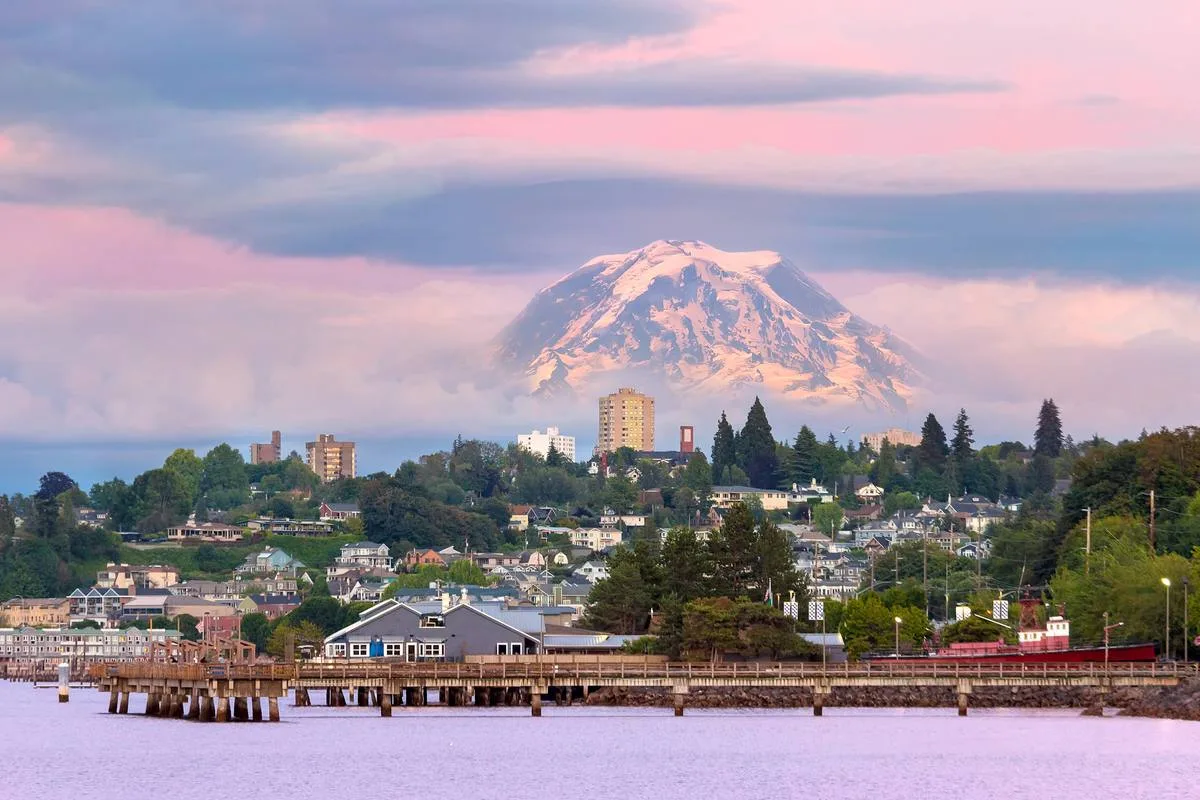
Local Expert Takeaway: Tacoma's financial case is strongest for households who work locally — near Joint Base Lewis-McChord, downtown, or anywhere that doesn't require a daily I-5 slog to Seattle — and who are willing to rent for a year or two before buying. The utility bill being lower than Seattle's, the income tax being zero, and the ability to walk to E9 Brewing on Fawcett Ave or catch a sunset on Ruston Way without spending anything — that combination is genuinely hard to replicate at this price point in the Puget Sound region. But if your income is Seattle-based and your heart is set on buying immediately, run the full ownership math carefully before you sign anything.
Quick Takeaways & FAQs
✅ Tacoma's city-owned Tacoma Public Utilities keeps electricity costs at roughly 10 cents per kilowatt-hour — about half the national average rate — giving most households a real monthly advantage on utility bills.
⚠️ Sales tax in Tacoma runs up to 10.5% combined, one of the higher rates in the country, and it offsets a meaningful portion of the no-income-tax savings on everyday spending.
📍 The rent-versus-buy math currently favors renting: ownership costs can consume over 50% of median household income at today's prices and rates, while renting runs closer to 32%.
Is Tacoma cheaper than Seattle to live in?
What is the average rent for a two-bedroom apartment in Tacoma?
Does Washington State have an income tax?
What is the property tax rate in Tacoma?
Why are utilities lower in Tacoma than in other parts of the Puget Sound region?
Moving to Washington?
Tell us what you need help with and we'll connect you with local resources.
