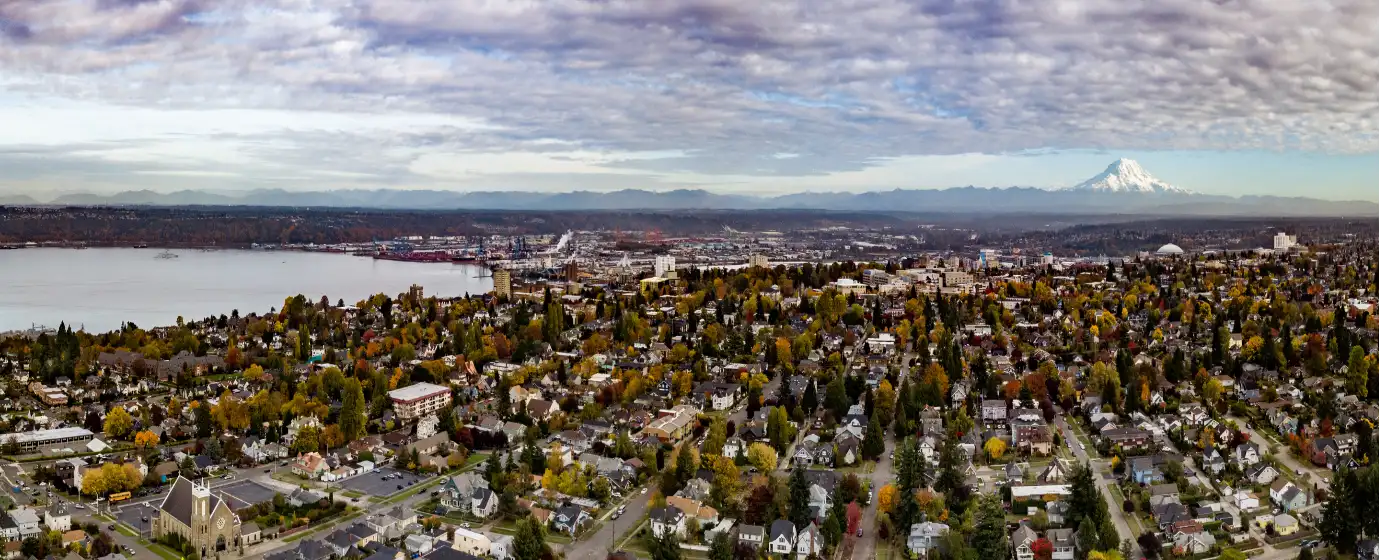
Most people moving to the Pacific Northwest think of Seattle's parks first. But Tacoma has something Seattle doesn't: 760 acres of old-growth forest and saltwater shoreline, surrounded on two sides by Puget Sound, sitting squarely inside city limits. Point Defiance Park alone draws more than 3.1 million visitors a year — and that's before you factor in the 3.6-mile Ruston Way waterfront path, Wright Park's 700-tree arboretum, or the Scott Pierson Trail's dedicated cycling lane across the Tacoma Narrows Bridge. Outdoor access here isn't something you have to drive an hour to find.
What surprises many newcomers is how the park system is woven into daily life rather than reserved for weekend excursions. Metro Parks Tacoma manages an extensive network of green spaces across the city, and the Ruston Way corridor in particular becomes a genuine gathering place — walkers, joggers, cyclists, and families all sharing the same paved path with unobstructed views of Commencement Bay and Mount Rainier on clear days. The waterfront tavern and seafood spots along this stretch, including Katie Downs Waterfront Tavern and the Lobster Shop at 4015 Ruston Way, mean post-hike plans are easy to make.
The honest caveat: Tacoma's winters are genuinely grey and wet, and the Puget Sound region's persistent overcast from November through March catches transplants from sunnier climates off guard. The trails don't close, but the motivation to use them can dip. Locals manage this by building the Ruston Way walk into the routine rather than treating it as a fair-weather event — but if outdoor recreation is your primary reason for choosing where to live, you'll want to visit in January, not just July, before committing.
Whether you're evaluating Tacoma as your next home or just getting oriented, the sections below break down the city's signature parks, its waterfront and water recreation, its trails and multi-use paths, and what seasonal recreation actually looks like across the year.

Point Defiance Park: What 760 Acres Inside City Limits Actually Means
The scale doesn't register until you're standing under a Douglas fir that was already a century old when the city was founded. Nearly 400 of the park's 760 acres are old-growth forest, with trees estimated at up to 450 years old — the kind of canopy that normally requires a long drive and a trailhead permit in this part of Washington.
Point Defiance is surrounded on two sides by saltwater Puget Sound, which creates a sensory combination that's hard to describe to someone who hasn't experienced it: salt air, giant conifers, and no urban noise. The park contains Fort Nisqually Living History Museum, rose and Japanese gardens, picnic shelters, and Owen Beach — where harbor seals are regularly spotted from the shoreline at low tide.
Five Mile Drive
The one-way perimeter road is a defining Tacoma experience. Cyclists, walkers, and drivers share the loop, and Metro Parks Tacoma periodically closes it to vehicles on select Saturdays — the Open Road program — turning the full loop over to people on foot and bikes. If you're house-hunting in neighborhoods with close access to the park and asking about Point Defiance, this is the road locals are thinking of.
Dune Peninsula: The Park's Best-Kept Fact
Most people touring Point Defiance for the first time miss the Dune Peninsula entirely. This 11-acre park-within-a-park sits atop a former ASARCO Superfund site that has been remediated and transformed into one of the city's most striking viewpoints. The "sail mound" earthworks give you 360-degree sight lines over the Sound, a small pavilion, and access via the 605-foot Wilson Way foot bridge. It's a legitimate destination on its own.
Point Defiance Zoo & Aquarium — the only combined zoo and aquarium in the Pacific Northwest, owned and operated by Metro Parks Tacoma — sits at 5400 N. Pearl St. within the park. For families with school-age children evaluating the city, it becomes a frequent and genuinely local destination rather than a once-a-year trip.
| Feature | Detail |
|---|---|
| Total acreage | 760 acres (Metro Parks Tacoma) |
| Old-growth forest | ~400 acres; Douglas firs up to 450 years old |
| Annual visitors | 3.1 million+ |
| Five Mile Drive | One-way perimeter loop; periodic pedestrian/bike-only Saturdays |
| Dune Peninsula | 11 acres; 605-ft foot bridge; sail mound viewpoints |
| Owen Beach | Picnicking, kayaking, low-tide exploration; harbor seals common |
| Zoo & Aquarium | Only combined facility in the Pacific Northwest |
Ruston Way Waterfront: Tacoma's Most-Used Outdoor Corridor
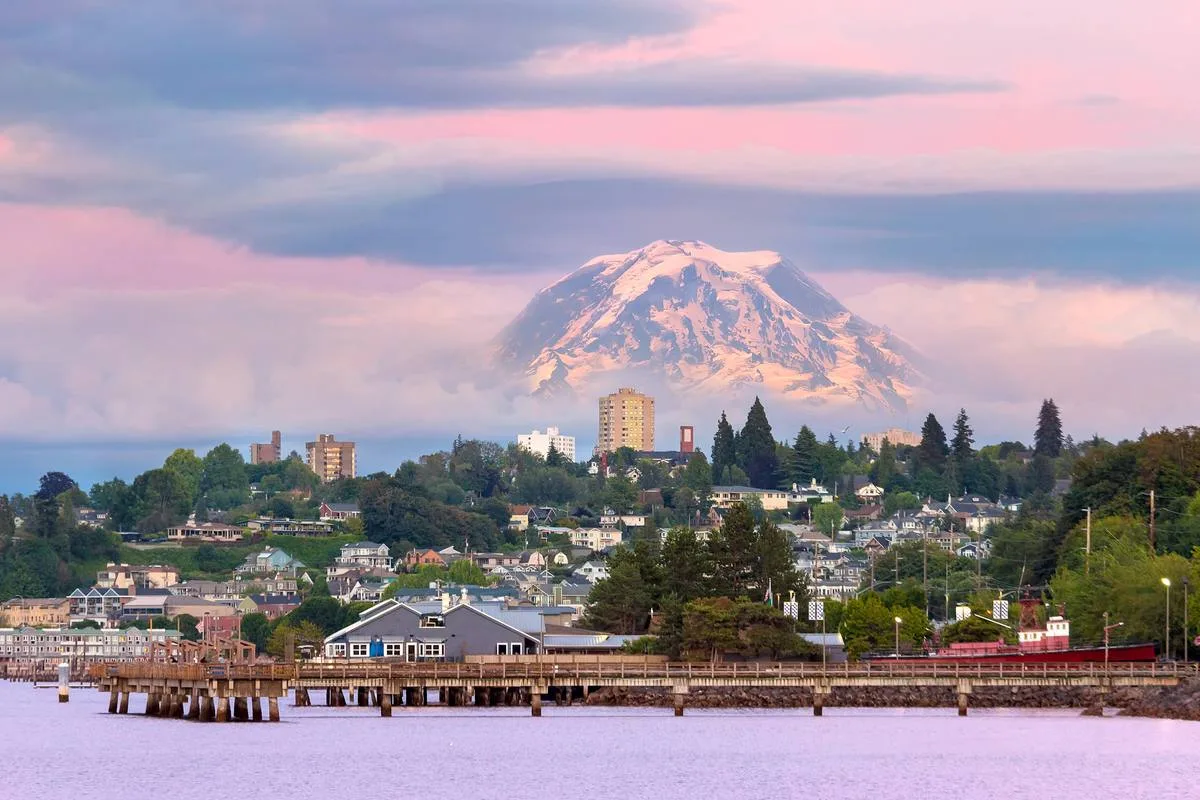
The 3.6-mile paved path from Jack Hyde Park in Old Town north to Dune Peninsula at Point Defiance is the closest thing Tacoma has to a shared living room. On a weekend morning with Mount Rainier visible across Commencement Bay — which happens more often in the spring and fall than in summer — you'll see the full cross-section of the city on this path: retirees, joggers with dogs, cyclists commuting to work, families with strollers.
The path is flat, paved, and consistently maintained, which matters more than it sounds. Many waterfront paths in smaller Puget Sound cities require navigating gaps, elevation changes, or road crossings. The Ruston Way stretch is genuinely continuous and genuinely waterfront — the Bay is visible the entire length.
Launch Points and Paddling Access
Both Jack Hyde Park and Les Davis Pier serve as kayak and paddleboard launch points into Commencement Bay. This is not a minor detail for people considering Tacoma specifically for water recreation: you can paddle out into the Bay from a park you can walk or bike to from nearby waterfront neighborhoods. No boat ramp fees, no trailer required.
Parks Along the Corridor
The path is punctuated by distinct parks rather than running as an unbroken strip of grass. Jack Hyde Park and Les Davis Pier anchor the southern end. Judge Jack Tanner Park and Cummings Park provide mid-corridor stopping points. Chinese Reconciliation Park — 4 acres featuring the Fuzhou Ting, a 30-by-40-foot ornate pavilion hand-assembled by artisans from Tacoma's sister city of Fuzhou, China — marks a historically significant pause in the walk and tends to stop newcomers cold when they learn what it commemorates: the 1885 forced expulsion of Tacoma's Chinese residents.
After a walk or a paddle, Katie Downs Waterfront Tavern on Ruston Way is a long-standing local spot for casual food on the water, and the Lobster Shop at 4015 Ruston Way does proper seafood with the Bay visible from the dining room. Both are easy walking distance from the path itself.
| Park / Feature | Location on Corridor | Primary Use |
|---|---|---|
| Jack Hyde Park | Southern anchor (Old Town) | Kayak/paddleboard launch, picnicking |
| Les Davis Pier | South section | Kayak/paddleboard launch, fishing |
| Chinese Reconciliation Park | Mid-corridor | Fuzhou Ting pavilion, historical memorial |
| Judge Jack Tanner Park | Mid-corridor | Walking, picnicking |
| Cummings Park | North section | Waterfront access, open lawn |
| Dune Peninsula | Northern terminus | Trails, viewpoints, connection to Point Defiance |
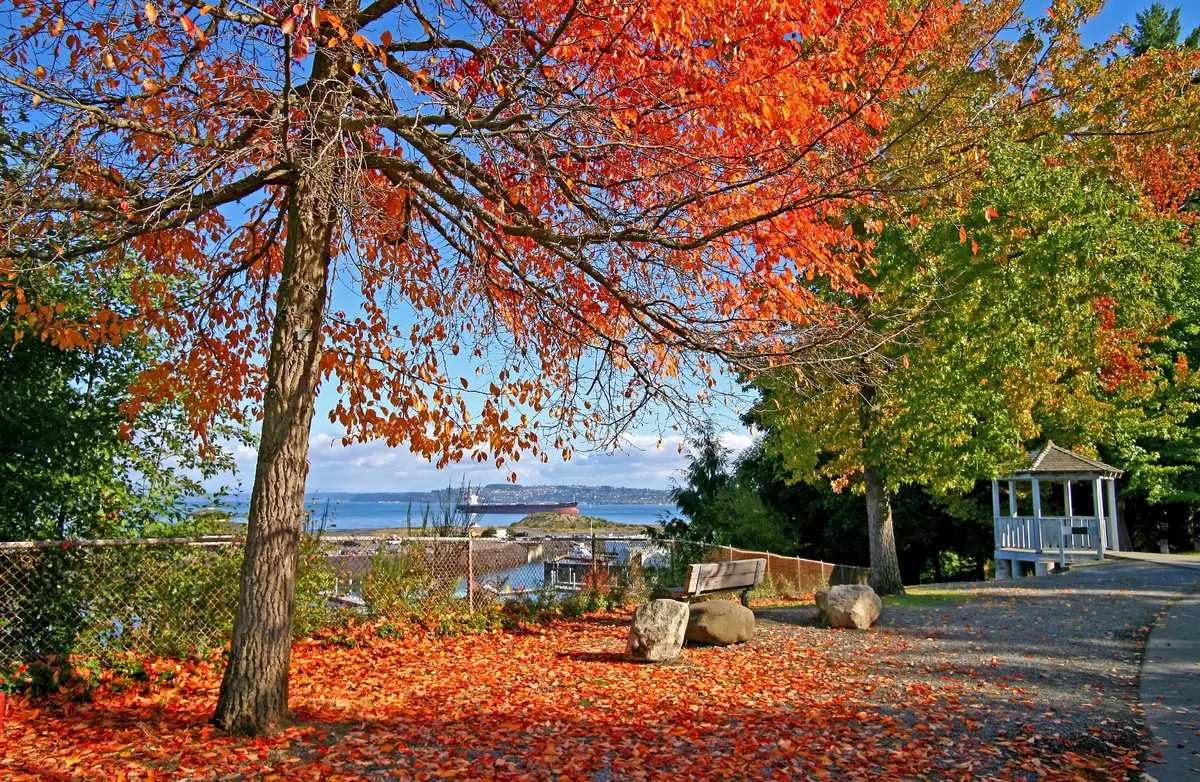
Trails and Multi-Use Paths Beyond the Waterfront
The waterfront gets most of the attention, but Tacoma's trail network extends well inland and into neighborhoods that don't make the tourist maps. Two paths in particular matter most for people evaluating the city as a place to live rather than visit.
Scott Pierson Trail and Tacoma Narrows Bridge
The Scott Pierson Trail in western Tacoma is the rare urban route that delivers an engineering spectacle mid-run. The path includes a dedicated pedestrian and cycling lane along the Tacoma Narrows Bridge itself — the view of the Sound from bridge height is a legitimate reason to ride or walk this trail even if you've done it a dozen times. The trail connects westward to Titlow Beach at Titlow Park, where a small saltwater beach and wildlife-rich tideflats extend the route into something that can fill half a day.
For cyclists commuting across the Narrows, the Scott Pierson Trail is the only viable non-motorized crossing. It's not just recreational infrastructure — it's a genuine transportation link.
Wright Park: The City's Quietest Green Space
Twenty-seven acres in the middle of the city, managed as a formal arboretum, with over 700 mature trees from approximately 100 native and exotic species. Wright Park doesn't have the drama of the waterfront or the scale of Point Defiance, but it has something both of those lack: genuine quiet on a Tuesday afternoon.
The W.W. Seymour Botanical Conservatory sits at the park's center — a Victorian-style glass structure from 1908, listed on the National Register of Historic Places, housing more than 550 plant species under its twelve-sided central dome. It's free to enter most days and genuinely worth it in January when everything outside is grey and wet. Many Tacoma residents don't discover it until they've lived here for a year, which is a small local shame.
| Trail / Path | Distance / Scale | Best For | Key Feature |
|---|---|---|---|
| Ruston Way Path | 3.6 miles one-way | Walkable Commuter | Bay views, kayak launches, flat grade |
| Five Mile Drive (loop) | ~5 miles | Nature Families | Old-growth forest, Open Road Saturdays |
| Scott Pierson Trail | Multi-mile, western Tacoma | Commuter Views | Bridge lane, Titlow Beach connection |
| Dune Peninsula Trails | Within 11-acre peninsula | Views Nature | Sail mounds, Sound panoramas |
| Wright Park Arboretum | 27 acres | Quiet Walkable | 700+ trees, botanical conservatory |
| Owen Beach / Point Defiance | Beach shoreline | Families Nature | Tidepool access, harbor seals |
Looking to buy in Tacoma? Estimate your payment.
Enter your numbers to see an estimated monthly mortgage payment.
Estimate only. Excludes HOA fees and mortgage insurance. The interest rate above is a starting point, not a quoted rate — replace it with your own to see real numbers. Insurance is a flat placeholder, not a Tacoma quote.
Seasonal Recreation: What Each Season Actually Looks Like in Tacoma
Nobody warns you about the light in February. The Pacific Northwest's reputation for rain is accurate, but the deeper issue is the overcast — a flat, grey ceiling that can sit over Tacoma for six to eight weeks at a stretch without a full day of sun. If your plan is to run the Ruston Way path and kayak on Commencement Bay year-round, that's absolutely doable. If your plan requires sunshine for motivation, you'll need a backup strategy.
Spring and Summer: When the System Earns Its Reputation
From late April through September, Tacoma's outdoor infrastructure genuinely delivers. The Ruston Way path fills up by 7 a.m. on summer weekends. Owen Beach at Point Defiance sees kayakers launching into Puget Sound before the zoo gates open. Mount Rainier, roughly 60 miles to the southeast, becomes a daily visual anchor on clear mornings. The Dune Peninsula's open sail mounds catch the evening light in a way that stops people mid-walk.
Summer also means the Open Road Saturdays at Five Mile Drive — periodic vehicle closures that turn the loop over to cyclists and pedestrians. Check the Metro Parks Tacoma schedule before planning around it; the dates aren't uniform across the summer.
Fall: The Underrated Season
September and October are genuinely the best months to experience Tacoma's parks. The visitors from Point Defiance Zoo's peak season have thinned out. Wright Park's arboretum hits full color. The Ruston Way path is uncrowded before 9 a.m. Rain hasn't resumed in force yet. Many long-term residents consider this the season they'd show to someone evaluating a move.
Winter: The Honest Assessment
The trails stay open. The botanical conservatory at Wright Park — free entry, 550 plant species, warm inside — becomes genuinely useful rather than a novelty. Owen Beach at low tide in winter is its own quiet experience, though you'll want waterproof layers. The Ruston Way path in the rain is fine; the Ruston Way path in a January windstorm off the Bay is a different situation entirely.
Metro Parks Tacoma's Outdoor Adventure Camps run year-round for youth, covering hiking, rock climbing, swimming, kayaking, canoeing, and mountain biking — which tells you something about how seriously the system takes outdoor access regardless of season. Parents with school-age children evaluating Tacoma's schools and youth activities will find the parks system functions as a genuine year-round extension of that infrastructure.
Local Expert Takeaway: Point Defiance Park is the reason Tacoma's outdoor credentials hold up against cities with far larger recreation budgets — 760 acres of old-growth forest and saltwater shoreline inside city limits is rare anywhere in the country, let alone inside a working-class urban core. But the Ruston Way corridor is what you'll actually use most often. The 3.6-mile flat path from Jack Hyde Park to Dune Peninsula, with kayak launches at both ends, becomes part of the weekly routine within weeks of moving here. Finish the walk at Katie Downs Waterfront Tavern or the Lobster Shop at 4015 Ruston Way for the full version of what a Tuesday evening in Tacoma can look like.
Quick Takeaways & FAQs
✅ Point Defiance Park's 760 acres of old-growth forest and Puget Sound shoreline make it the largest urban park in Pierce County — a genuine daily amenity for residents, not just a tourist draw.
⚠️ Tacoma's winters bring persistent grey overcast that can last six to eight weeks without a full sun break; the trail system stays open year-round, but motivation requires a plan for the dark months.
📍 The Wilson Way foot bridge at Dune Peninsula — a 605-foot span connecting a former Superfund site to the rest of Point Defiance — is one of the most striking local details most newcomers don't discover until a neighbor mentions it.
Is Point Defiance Park free to enter?
Can you kayak or paddleboard directly from Ruston Way?
What is Five Mile Drive and when is it closed to cars?
How accessible is Wright Park and its botanical conservatory?
What trails connect cyclists across the Tacoma Narrows?
Moving to Washington?
Tell us what you need help with and we'll connect you with local resources.
