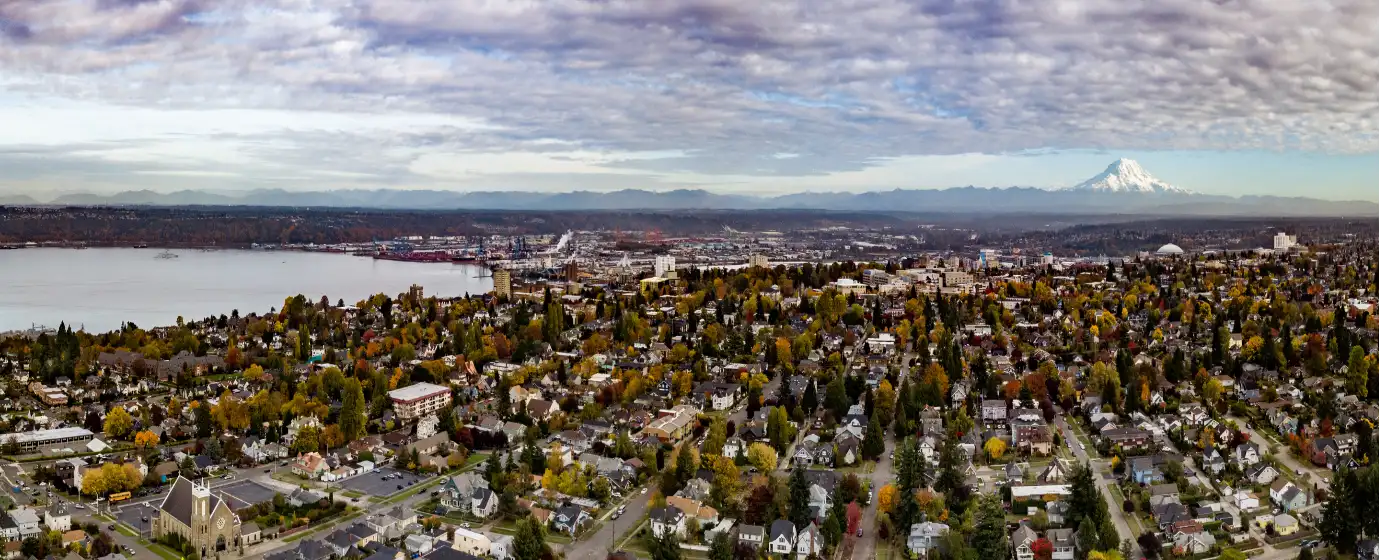
Maybe someone told you Tacoma was just a cheaper Seattle with a smell. That reputation stuck around for decades — and it kept prices down long enough for a generation of buyers to quietly build serious equity while Seattle buyers stretched into debt. The smell is gone. The equity is not. Tacoma sits at the southern end of Puget Sound, about 45 minutes from Seattle via I-5 or Sounder train, and it's connected to the Kitsap Peninsula by the Tacoma Narrows Bridge — a geographic position that makes it genuinely useful, not just affordable. What shapes daily life here is which part of that map you land in, because Tacoma's neighborhoods are more distinct from one another than in almost any comparably sized city in the Pacific Northwest.
The city's economic backbone runs on Joint Base Lewis-McChord to the south, a major regional health system presence, and Tacoma Public Schools as a significant employer. The Port of Tacoma keeps industrial activity humming along the tideflats. The result is a workforce that skews toward military families, healthcare workers, and government employees — and a housing market that reflects their priorities: square footage, school proximity, and commute practicality more than the walkable-urban lifestyle that drives Seattle pricing. The University of Puget Sound anchors the North End's academic identity, and the Museum of Glass, LeMay — America's Car Museum, and the Tacoma Dome give the city cultural anchors that newcomers routinely underestimate.
Tacoma's typical home value sits at $496,203 (Zillow Home Value Index, July 2026) — well below Seattle's $848,869 — though what you get for that depends enormously on the neighborhood. A 1920s Craftsman in the North End runs a very different price than a 1970s ranch in South Tacoma. The city-wide median is a starting point; the cost-of-living breakdown has the full picture. Day-to-day life here orbits Point Defiance Park — one of the largest urban parks in the country — Ruston Way's waterfront path, and a 6th Avenue corridor that has absorbed waves of independent restaurants and cafés without losing its neighborhood feel.
Whether you're relocating for Joint Base Lewis-McChord, priced out of Seattle, or just doing the math on what your budget actually buys here, the sections below break down Tacoma's neighborhoods, the buyer types each one suits, common mistakes that cost people money, and where renters tend to land first.

The Tacoma Reality
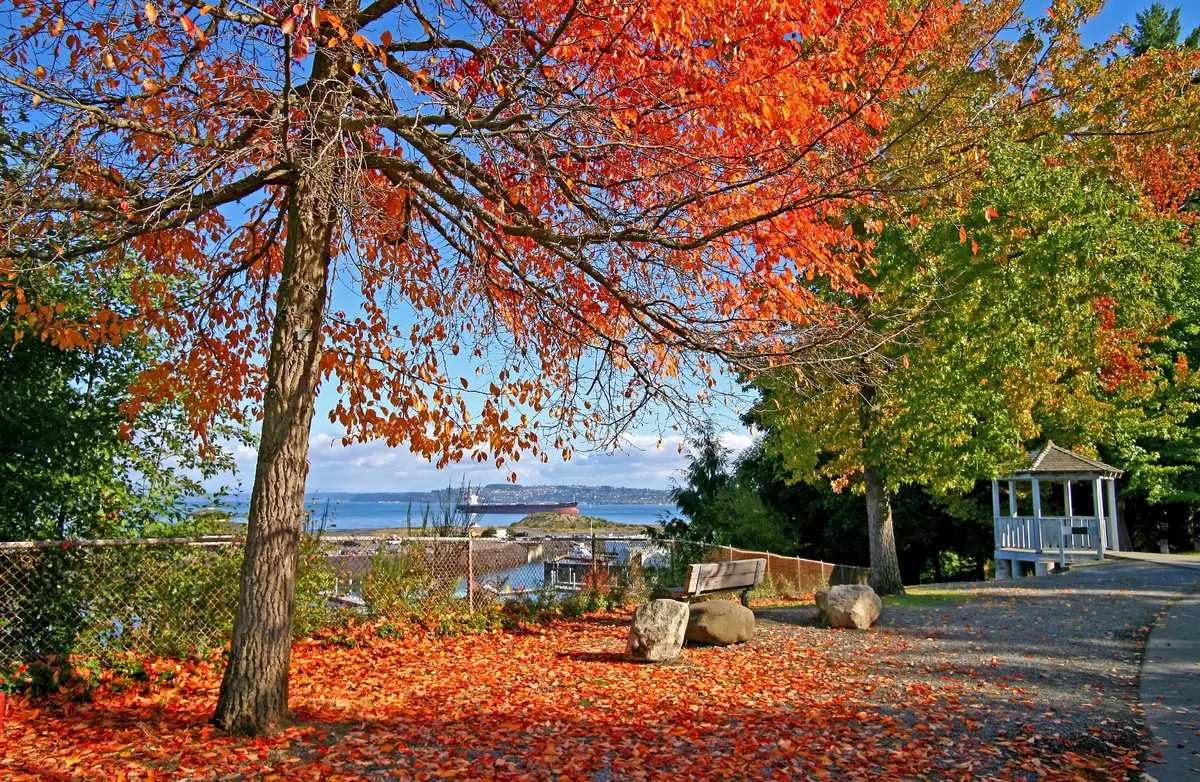
The single divide that decides where to buy in Tacoma is not the one most newcomers expect. It's not downtown vs. suburbs — it's the elevation and street grid that separates the waterfront-adjacent west side from the flatland corridors east of I-5. The neighborhoods that command the highest prices and the most stable appreciation all share one trait: they sit on the hillside bluffs with water or park views, sheltered from the industrial corridor by geography itself. North End, Stadium District, Old Town, and West End occupy that band. Everything else competes on a different value proposition entirely.
The second reality is school boundaries. Tacoma Public Schools serves the whole city, but individual school assignments vary by address — and in a city where elementary-school quality can differ meaningfully block by block, buyers who assume the district is uniform pay for that assumption later. Check the specific boundary, not just the neighborhood name, before you make an offer. The schools guide maps this in detail.
I-5 is not just a commute artery — it's a physical and psychological seam running north-south through the city. Hilltop sits just west of it, Central Tacoma just east. South Tacoma straddles it. Buyers who treat the freeway as irrelevant to their purchase decision often discover, six months in, that it shapes where they shop, which parks they use, and how the neighborhood feels after dark in ways that no listing description captures.
Neighborhoods at a Glance
| Neighborhood | Best For | Price Range | Vibe |
|---|---|---|---|
| North End / Proctor | Families Luxury Walkable | $600K–$900K+ | Tree-lined streets, Craftsman architecture, walkable village core at Proctor |
| Stadium District | Luxury Views | $700K–$1.1M+ | Historic hillside grandeur, bay views, one-of-a-kind architecture |
| Old Town | Walkable Views Renter | $550K–$800K | Waterfront access, eclectic storefronts, Ruston Way steps away |
| Hilltop | First-Time Transit | $350K–$520,000 | Light rail corridor, rapidly changing, entry-level opportunity with upside |
| West End | Nature Families Quiet | $500K–$750K | Point Defiance on the doorstep, low density, suburban calm with park access |
| South Tacoma | Value Commuter | $350K–$500K | Working-class roots, revitalization underway, JBLM commute-friendly |
| Northeast Tacoma | Families Quiet Views | $550K–$750K | Browns Point peninsula, newer builds, waterfront park access, quiet streets |
| Central Tacoma | First-Time Value | $320K–$480,000 | Dense, central location, mixed stock, very short commute anywhere in the city |
Best Neighborhood by Buyer Type
| Buyer Type | Best Neighborhood | Why |
|---|---|---|
| First-Time Buyer | Hilltop | Entry-level prices from the low $350Ks and a new light rail line make it Tacoma's most accessible path to ownership with real upside baked in. |
| Luxury Buyer | Stadium District | Irreplaceable Victorian, Tudor, and historic-style homes on dramatic hillside lots with direct Commencement Bay views — nothing else in the city competes architecturally. |
| Walkability Seeker | North End / Proctor | The Proctor District commercial core puts coffee, groceries, and restaurants within a genuine walk, and the city adopted a full neighborhood plan in 2024 to reinforce that. |
| Families with Kids | Northeast Tacoma | Newer construction, quieter peninsula streets, the Center at Norpoint for activities, and Dash Point State Park in the backyard make it the city's most family-oriented enclave. |
| Commuters | South Tacoma | Direct freeway access to Joint Base Lewis-McChord and reasonable distance to Sounder stations makes this the most practical landing pad for military and government workers. |
| Large-Lot Buyers | West End | West End carries some of Tacoma's largest residential parcels at below-Stadium-District prices, with Point Defiance Park essentially serving as an extended backyard. |
| Renters | Central Tacoma | The densest rental supply in the city and the shortest drive to every major corridor means renters land here first — and often stay longer than they planned. |
Looking to buy in Tacoma? Estimate your payment.
Enter your numbers to see an estimated monthly mortgage payment.
Estimate only. Excludes HOA fees and mortgage insurance. The interest rate above is a starting point, not a quoted rate — replace it with your own to see real numbers. Insurance is a flat placeholder, not a Tacoma quote.
Most Popular Neighborhoods
North End / Proctor
The North End is where Tacoma buyers go when they want to feel like they made the right call. Tree-lined streets of century-old maples and intact Craftsman bungalows deliver the kind of neighborhood character that takes decades to build — and prices from $600K to $900K+ reflect it. The University of Puget Sound anchors the southern end of the neighborhood, and a cluster of breweries and gathering spots along the main residential corridors add local texture that newer neighborhoods can't manufacture. The catch is inventory: when a genuinely good house comes up here, it moves fast and rarely discounts.
Best for: Families who want walkable streets and a neighborhood that already arrived, not one still getting there.
Stadium District
Stadium District is Tacoma's architectural crown — Victorian, Tudor, and historic-style homes stacked on a hillside above Commencement Bay, with Stadium High School (originally designed as a French château-style hotel) as the neighborhood's defining landmark. Prices run $700K to $1.1M+ for the homes that justify the neighborhood's reputation; entry-level options here are rare and usually need significant work. The drama of the setting is real, but so is the reality of maintaining 100-year-old homes on steep lots.
Best for: Buyers who want irreplaceable architecture and bay views and have the budget and patience to maintain what they buy.
Old Town
Old Town sits at the base of the bluff where Tacoma's original commercial waterfront used to operate, and it still feels distinct from the rest of the city — a mix of converted buildings, independent storefronts, and smaller-scale residential just steps from Ruston Way's waterfront path. Homes run $550K to $800K depending on condition and view, and the neighborhood draws buyers who want walkable water access without the Stadium District price premium. The downside is limited parking and a street grid that wasn't designed for modern traffic volume.
Best for: Buyers who prioritize waterfront access and independent-business energy over square footage.
Hilltop
Hilltop sits one mile west of downtown, directly on the Tacoma Link light rail extension, and it's the neighborhood most real estate observers are watching most closely in 2025–2026. Prices from $350K to $520,000 give first-time buyers a genuine foothold in a city where the rest of the west side has already repriced, and the new Hilltop Business Improvement Area — with its 2026–2032 community investment phase — signals organized momentum rather than speculative hope. The honest trade-off: parts of Hilltop still feel early-stage, and buyers need to walk the specific blocks they're considering, not just the neighborhood name.
Best for: First-time buyers and investors comfortable with a neighborhood mid-transition who want light rail access baked in from day one.
West End
West End is where Tacoma families go when they want the city's best outdoor access without the price of Stadium District or the density of the North End. Point Defiance Park — one of the country's largest urban parks — effectively extends your backyard, and Titlow Beach, Vassault Park, and Kandle Park's wave pool fill out the recreational inventory. Homes run $500K to $750K on parcels that are often meaningfully larger than elsewhere in the city. The trade-off is that West End is not walkable in the urban sense — you'll drive to most errands — and the Tacoma Narrows Bridge can create delays when Gig Harbor commuters pile on.
Best for: Families who want outdoor access over on-foot access and don't mind a car-dependent daily rhythm.
South Tacoma
South Tacoma gets overlooked, which is part of why it's worth a second look. The South Tacoma Business District has received recognition for neighborhood revitalization efforts, and a barbecue institution at 911 S. 11th St. — recognized as an Outstanding Heritage/Legacy Business — is the kind of anchor that signals a neighborhood with a real identity, not just a price point. Homes here run $350K to $500K, and the I-5 access to Joint Base Lewis-McChord makes it the practical first stop for military buyers. The honest friction is that parts of South Tacoma are still in earlier stages of that revitalization, and block-by-block conditions vary more here than in most of the city.
Best for: JBLM commuters, value-focused buyers, and anyone who wants to be on the right side of a neighborhood's arc before the prices catch up.
Northeast Tacoma
Northeast Tacoma — often called Browns Point — is the city's quiet outperformer. Sitting on a peninsula across Commencement Bay from downtown, it's physically separated from the rest of Tacoma in a way that creates a distinctly different pace: Browns Point Lighthouse Park, Dash Point State Park, and the Center at Norpoint (pool, splash pad, and summer camps) make it feel more like a small waterfront town than a city neighborhood. Prices from $550K to $750K reflect stronger appreciation than most of the city, and newer construction means fewer maintenance surprises. The practical compromise: the commute to downtown Tacoma is short in miles but can feel longer when the one-road bottleneck to the peninsula backs up.
Best for: Families and remote workers who want a quieter, more insular neighborhood with genuine waterfront park access.
Central Tacoma
Central Tacoma is the city's workhorse neighborhood — densely built, centrally positioned, and honest about what it is. Prices from $320K to $480,000 make it the most accessible entry point in Tacoma outside of Hilltop, and the central location means nothing in the city is far. A well-regarded coffee roaster with its roastery and headquarters along the South Tacoma Way corridor grounds a neighborhood that otherwise struggles with inconsistent block quality. Buyers who expect a cohesive aesthetic or a curated feel will be disappointed; buyers who want a functional base at a price that leaves budget for other things often find it suits them well.
Best for: Budget-conscious buyers who need central access and aren't purchasing the neighborhood for its own sake.
Common Mistakes Buyers Make in Tacoma
Treating the Neighborhood Name as a Guarantee
Hilltop covers a large area with real variation from block to block. A home on the light rail side of the neighborhood is buying into a different near-term trajectory than one on the eastern edge closer to I-5. Walking the specific block at different times of day is not optional — it's the most important research you'll do.
Underestimating What Old Homes Actually Cost
Stadium District and North End Craftsmans photograph beautifully. They also have knob-and-tube wiring, original cast-iron plumbing, and deferred maintenance that doesn't show up in listing photos. Buyers who stretch to hit the purchase price and then discover a $60,000 electrical update waiting for them on move-in week are not rare here — they're common. Budget for a specialist inspection before removing the inspection contingency on any pre-1950 home.
Buying in Northeast Tacoma Without Testing the Commute
The Browns Point peninsula is genuinely lovely, and the neighborhood association is unusually active. But there is effectively one way in and one way out via Dash Point Road and Northeast 49th Street, and on mornings when an accident or weather slows that corridor, a 15-minute commute becomes 40. If your job requires an in-person presence every weekday morning, drive the route at 7:45 a.m. on a Tuesday before you close.
Chasing Price Without Checking School Boundaries
Two homes on the same block in Central Tacoma can feed to different elementary schools depending on exactly where the attendance boundary runs. For families with school-age children, assuming the neighborhood's general reputation maps to a specific address is one of the most common — and most fixable — mistakes buyers make here. The Tacoma schools guide has the boundary context you need before you finalize a search area.
Best Areas to Rent in Tacoma
| Area | Ideal For | Typical Rent Range | Trade-off |
|---|---|---|---|
| Central Tacoma | Renters Commuters | $1,400–$2,000/mo (1–2BR) | Widest selection, but block quality is inconsistent and turnover is high |
| Hilltop | Transit First-Time | $1,350–$1,900/mo (1–2BR) | Improving fast, but some blocks still feel early in the transition |
| 6th Avenue Corridor | Walkable Renters | $1,600–$2,300/mo (1–2BR) | Best on-foot access in the city — inventory is tighter than renters expect |
| North End / Proctor | Families School | $1,900–$2,700/mo (2–3BR) | Limited rental supply; houses rent quickly and discounts are rare |
| South Tacoma | Commuters Value | $1,300–$1,800/mo (1–2BR) | Most affordable rents in the city; neighborhood consistency varies by street |
Tacoma's rental market rewards renters who move fast — well-priced units on the 6th Avenue corridor and in the North End routinely go under application within 48 to 72 hours of listing. If you're relocating and need time to research before buying, Central Tacoma gives you the most options without forcing you to commit to a specific submarket before you know the city.
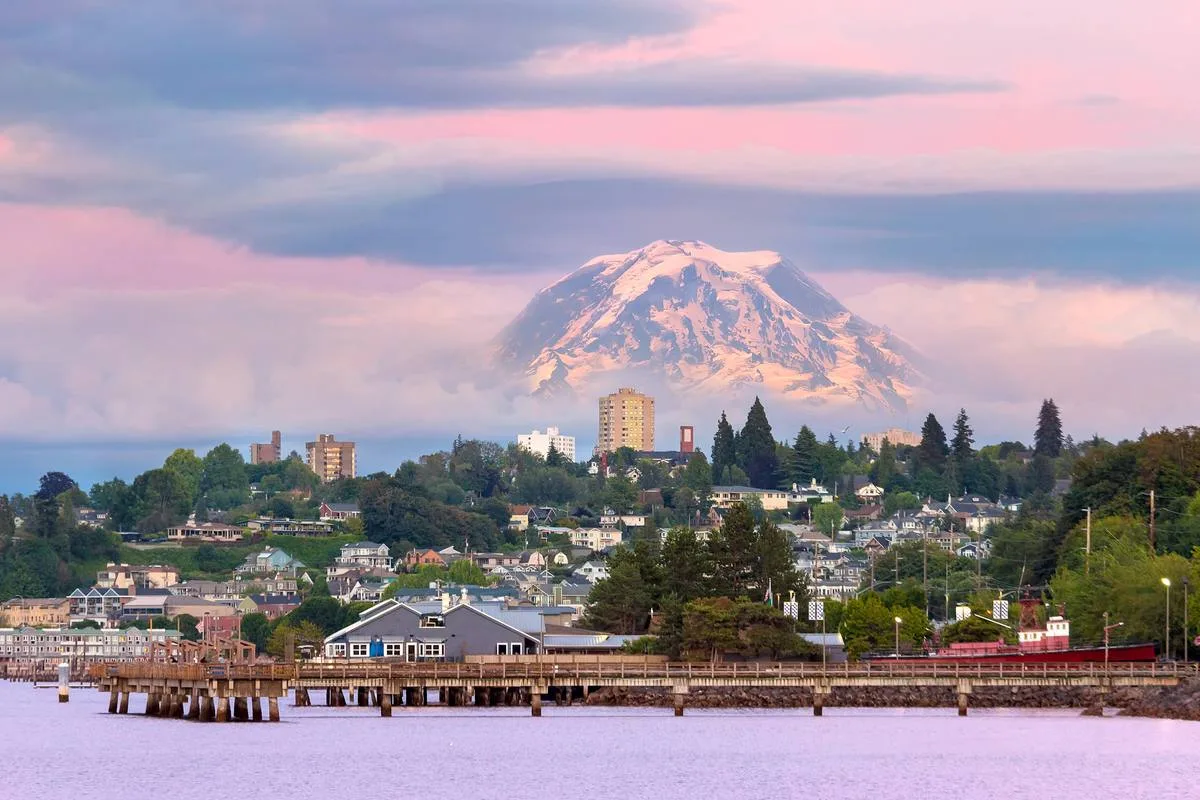
Local Expert Takeaway: The buyers who do best in Tacoma are the ones who treat it as eight different markets, not one. A $496,203 citywide median tells you almost nothing useful on its own — what matters is whether you're in the Stadium District's architectural tier, Hilltop's light rail corridor, or Northeast Tacoma's peninsula. Spend a Saturday walking Proctor Street, then drive out to Browns Point Lighthouse Park, then cut back through the Hilltop corridor. Those three hours will tell you more about where you belong in this city than any amount of remote research.
Quick Takeaways & FAQs
✅ Northeast Tacoma (Browns Point) has outperformed most of Tacoma on appreciation in 2025–2026 while still offering newer construction and genuine waterfront park access at the $550K–$750K range.
⚠️ Hilltop's block-by-block variation is the most common source of buyer regret in Tacoma — the neighborhood name alone is not enough; you need to walk the specific street before committing.
📍 The 6th Avenue corridor and the Proctor District in the North End are where locals actually gather on weekends — knowing these spots tells you which neighborhoods have organic social infrastructure, and which ones are still building it.
What is the most affordable neighborhood to buy in Tacoma?
Which Tacoma neighborhood is best for families with kids?
Is the Stadium District actually worth the premium?
How does Hilltop compare to Central Tacoma for a first-time buyer?
What should I know about commuting from Northeast Tacoma?
Moving to Washington?
Tell us what you need help with and we'll connect you with local resources.
