If you're choosing where to plant your home office in the Portland Metro, the decision is rarely as simple as finding a fast connection and a good café. The region stretches from the Columbia River banks near St. Helens and Scappoose in the north, through the dense urban core, out to the Silicon Forest corridor of Hillsboro and Beaverton in the west, and south through Tualatin, Wilsonville, and Canby. What ties all of these places together is Portland International Airport as a shared hub, light rail as a connector for those who want city access without city prices, and a genuine independent coffee culture that shows up even in the smaller towns — often when you least expect it.
The real spread across this region comes down to a few honest trade-offs. The larger, more connected cities — Portland itself, Gresham, Hillsboro, Beaverton — offer the infrastructure and professional density that remote workers tend to rely on when they need a change of scenery or a client meeting. The smaller and more rural towns on the edges of the metro trade some of that connectivity and shared-workspace access for quieter streets and, in some cases, meaningfully lower home prices. What you give up in coworking options or provider choice at the edges, you may gain back in space, pace, and budget. The sections below walk through each city's strengths and trade-offs so you can match the right place to the way you actually work.
📍 Realtor Perspective: Portland Metro
When I'm working with remote-worker buyers across Portland Metro, the conversation always starts the same way: they want to know which city gives them the best daily setup, not just the best commute. That means we talk honestly about what their specific work requires — daily café access, occasional shared workspace, frequent flights — before we ever look at a neighborhood.
What I tell buyers is that the infrastructure picture in this region is genuinely uneven. The larger westside cities give remote workers more to work with in terms of provider choice and professional environment, while the smaller towns on the edges can be a great fit for fully home-based workers who've already done their connectivity homework. The mistake I see most often is buyers falling in love with a town's character and assuming the connectivity will sort itself out — always verify the specific address before you write an offer.
How This Ranking Was Built
Each city is scored 1-10 on every dimension below against a fixed statewide scale — never against the other cities in this region — then combined into one weighted Composite score out of 10.
Internet Speed — 25%Weighted contribution to the composite score, graded 1-10 against a fixed statewide scale.
Coworking Access — 20%Weighted contribution to the composite score, graded 1-10 against a fixed statewide scale.
Coffee Culture — 20%Weighted contribution to the composite score, graded 1-10 against a fixed statewide scale.
Airport Access — 20%Weighted contribution to the composite score, graded 1-10 against a fixed statewide scale.
Affordability — 15%Weighted contribution to the composite score, graded 1-10 against a fixed statewide scale.
Top 23 Cities: Best for Remote Workers Snapshot
Ranked by overall composite score. Click any city to jump to the full breakdown.
| # | City | Composite | Internet | Coworking | Median Price |
|---|
| 1 | Portland
Multnomah County | 9.2/10 | 10 | 10 | $534,270 |
| 2 | Gresham
Multnomah County | 8.7/10 | 8.3 | 8.3 | $470,730 |
| 3 | Hillsboro
Washington County | 8.0/10 | 8.3 | 8.3 | $518,047 |
| 4 | Beaverton
Washington County | 8.0/10 | 7.9 | 7.9 | $527,947 |
| 5 | Tigard
Washington County | 7.2/10 | 6.7 | 6.7 | $607,011 |
| 6 | Oregon City
Clackamas County | 7.0/10 | 6.1 | 6.1 | $605,330 |
| 7 | Milwaukie
Clackamas County | 6.8/10 | 4.8 | 4.8 | $522,702 |
| 8 | Lake Oswego
Clackamas County | 6.7/10 | 6.2 | 6.2 | $889,944 |
| 9 | Happy Valley
Clackamas County | 6.6/10 | 5.3 | 5.3 | $686,520 |
| 10 | Forest Grove
Washington County | 6.5/10 | 5.2 | 5.2 | $526,407 |
| 11 | St. Helens
Columbia County | 6.5/10 | 4.1 | 4.1 | $429,356 |
| 12 | Aloha
Washington County | 6.1/10 | 6.5 | 6.5 | $493,280 |
| 13 | Wilsonville
Clackamas County | 6.0/10 | 5.3 | 5.3 | $630,814 |
| 14 | Scappoose
Columbia County | 5.7/10 | 2.9 | 2.9 | $490,109 |
| 15 | Tualatin
Washington County | 5.7/10 | 5.4 | 5.4 | $635,314 |
| 16 | Canby
Clackamas County | 5.6/10 | 4.4 | 4.4 | $598,201 |
| 17 | Fairview
Multnomah County | 5.4/10 | 3.4 | 3.4 | $478,412 |
| 18 | Gladstone
Clackamas County | 5.4/10 | 3.7 | 3.7 | $518,084 |
| 19 | Clackamas
Clackamas County | 5.3/10 | 4.9 | 4.9 | $588,708 |
| 20 | West Linn
Clackamas County | 5.2/10 | 5.3 | 5.3 | $779,602 |
| 21 | Sherwood
Washington County | 5.0/10 | 4.7 | 4.7 | $629,598 |
| 22 | Cornelius
Washington County | 4.9/10 | 4.2 | 4.2 | $485,070 |
| 23 | Bethany
Washington County | 4.8/10 | 5.9 | 5.9 | $766,000 |

Coffee Culture
10/10
out of 10
Airport Access
10/10
out of 10
Affordability
4.5/10
out of 10
Median Price
$534,270
2026 market price
As the largest incorporated city in Oregon, Portland brings the full stack for remote workers: the deepest pool of provider options the metro offers, a coffee culture that is genuinely nationally recognized, and Portland International Airport close enough that early flights don't require an overnight hotel. The typical home price of $534,270 is the real friction point — you're paying a city premium in a market where detached homes in desirable close-in neighborhoods command more than that figure suggests.
Portland suits remote workers who genuinely use the city — who want to walk to a café, take a meeting at a shared workspace, and catch a flight on short notice. Buyers who find themselves in a hybrid situation, with occasional in-person commitments pulling them toward a corporate campus or downtown client, will find Portland's central location more useful than any suburb's commute math.

Coffee Culture
10/10
out of 10
Airport Access
9.6/10
out of 10
Affordability
6.6/10
out of 10
Median Price
$470,730
2026 market price
Gresham is the fourth-largest incorporated city in Oregon, and it carries the infrastructure that comes with that size — solid broadband options and a coffee scene that genuinely outperforms what most buyers expect when they look east of Portland. The typical home price of $470,730 is meaningfully below what you'd pay for comparable space in Beaverton or Hillsboro, and light rail ties the city directly to Portland's core for days when the home office isn't enough.
This city suits remote workers who want real city infrastructure without real city prices, and who don't mind that the neighborhood character is more working-class suburban than boutique. Buyers comparing Gresham to other eastside options should know the rail connection is the single most important piece of the picture — it's what makes the distance from the core feel manageable.
Coffee Culture
10/10
out of 10
Airport Access
7.7/10
out of 10
Affordability
5.1/10
out of 10
Median Price
$518,047
2026 market price
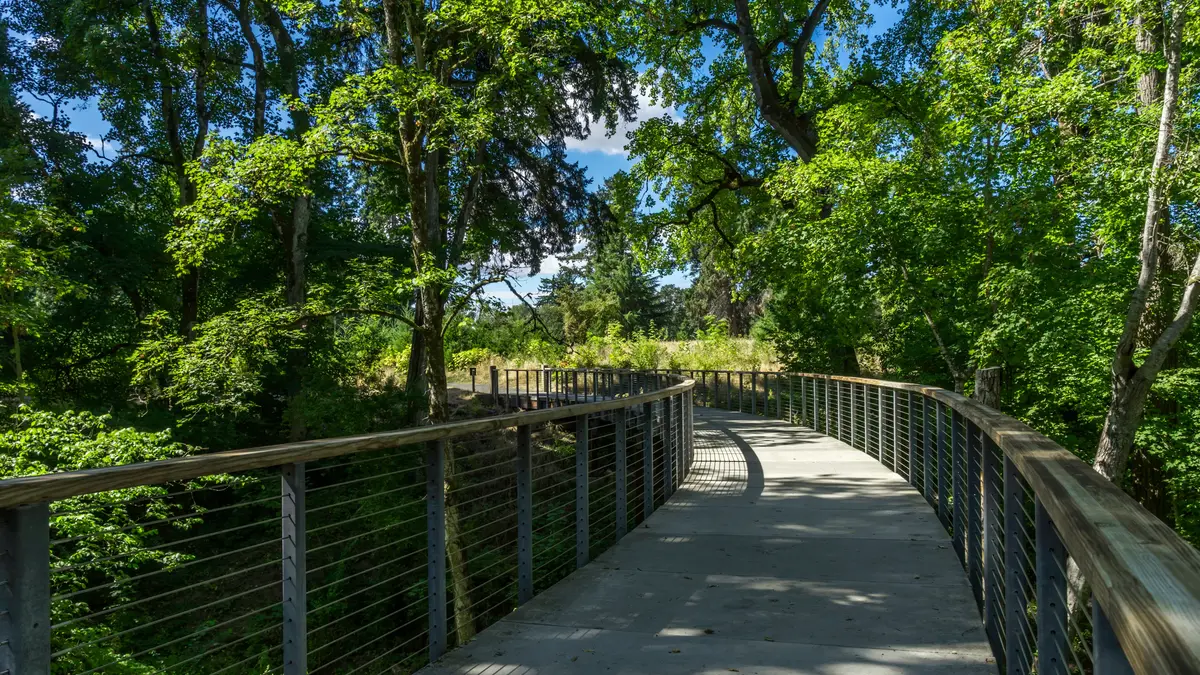
Hillsboro is the fifth-largest incorporated city in Oregon and the western anchor of the Silicon Forest, which means the professional density and infrastructure that come with a major tech corridor are built into the fabric of the city. The typical home price of $518,047 reflects strong demand from tech-sector workers, and while that's not an entry-level figure, it's supported by a job market and a connectivity environment that remote workers find genuinely useful. The airport run is longer than from the eastside cities, but still well within a manageable range for regular travelers.
Hillsboro fits remote workers who want to be embedded in a tech-adjacent environment — whether for networking, professional events, or simply the energy of being near Intel's campus — without committing to Portland prices or Portland density. Buyers choosing between Hillsboro and Beaverton often find the deciding factor is whether proximity to the westside tech corridor or proximity to Portland's urban core matters more to their particular work life.
Coffee Culture
10/10
out of 10
Airport Access
8.7/10
out of 10
Affordability
4.7/10
out of 10
Median Price
$527,947
2026 market price
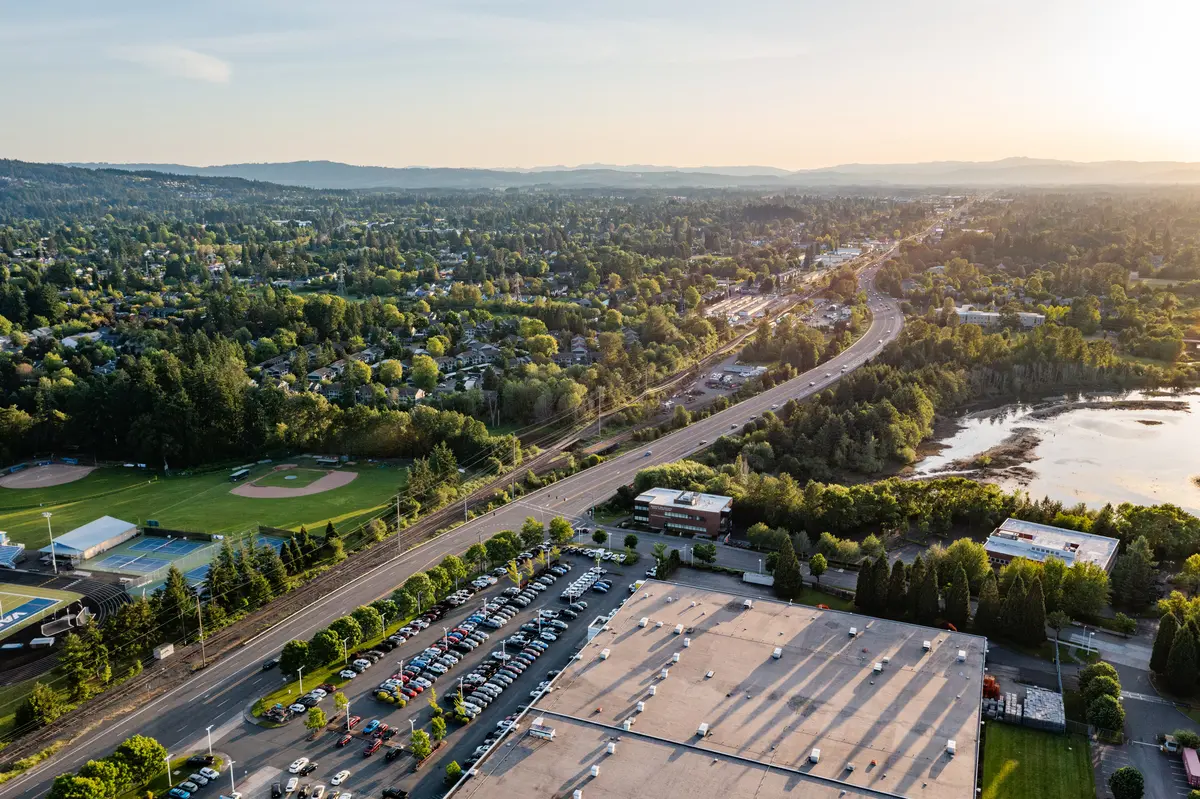
Beaverton is the seventh-largest incorporated city in Oregon, sitting squarely in the Silicon Forest corridor with the professional density and café culture to match. The typical home price of $527,947 puts it in similar territory to Hillsboro and Portland, but the city's size and light rail access give remote workers a range of options — from working at home to dropping into shared spaces or heading into Portland — that smaller suburbs simply can't match. The independent coffee scene here is one of the strongest in the westside metro.
This city suits remote workers who want the westside tech-corridor feel with strong transit access back to Portland for client meetings or social variety. Compared to Hillsboro, Beaverton sits slightly closer to Portland's core and benefits from a denser mix of residential neighborhoods, which matters if walkable-streets access to daily errands is part of your working-from-home routine.
Coffee Culture
10/10
out of 10
Airport Access
8.7/10
out of 10
Affordability
3.2/10
out of 10
Median Price
$607,011
2026 market price
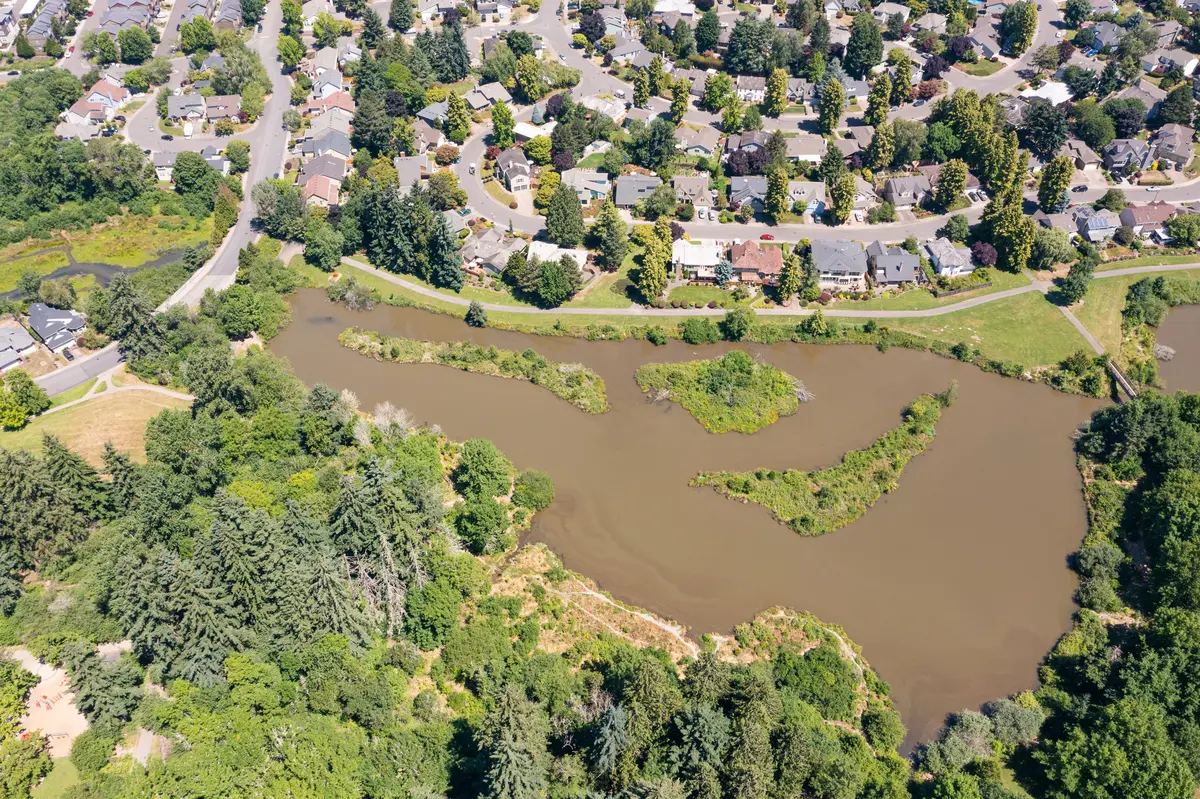
Tigard is the eleventh-largest incorporated city in Oregon, positioned along I-5 and OR-217 in a way that makes it genuinely convenient for remote workers who travel — the airport run is easy, and the highway access connects quickly to both Portland and the southside corridor. The typical home price of $607,011 is the most significant drawback: you're paying for location and quality of life in a market where affordability has become a real stretch for many buyers. The independent café culture, notably strong for the city's size, softens that blow if daily coffee ritual matters to your work routine.
Tigard tends to suit established remote workers — people past the first-home phase — who want a quieter suburban base without sacrificing airport convenience or café access. Buyers comparing Tigard to Wilsonville often find Tigard's slight edge in café density and transit access to Portland tips the decision, while those comparing it to Beaverton are usually weighing price against proximity to the tech corridor.

Coffee Culture
10/10
out of 10
Airport Access
8.7/10
out of 10
Affordability
3.3/10
out of 10
Median Price
$605,330
2026 market price
Oregon City is the seventeenth-largest incorporated city in Oregon and carries a character that's different from most of the westside suburbs: it's a historic river town with an independent café scene that punches well above what you'd expect for its size. The typical home price of $605,330 is high relative to the city's size and service level — you're paying partly for the Clackamas County lifestyle and partly for what has become strong demand from buyers priced out of closer-in options. The airport run via I-205 is straightforward for regular travelers.
Oregon City suits remote workers who want a distinct sense of place — a downtown with history, a river backdrop, a café scene that feels local — and who don't need to be embedded in a tech corridor or walking distance from a coworking space. Buyers choosing between Oregon City and Milwaukie often find Oregon City's stronger downtown character and slightly larger footprint tips the decision, at a comparable price point.
Coffee Culture
10/10
out of 10
Airport Access
9.5/10
out of 10
Affordability
4.9/10
out of 10
Median Price
$522,702
2026 market price
Milwaukie is the twenty-seventh-largest incorporated city in Oregon, a compact Clackamas County city where light rail gives remote workers a direct connection to Portland's core — which matters here more than in most suburbs, because the local shared-workspace scene is limited at this scale. The typical home price of $522,702 reflects strong demand from people who want close-in access without Portland property taxes, and runs above what buyers often expect for a city this size. The airport proximity is one of the best in the metro.
This city suits remote workers who want a quiet, neighborhood-scaled base with genuine transit access to the city on days they need it. Buyers who are weighing Milwaukie against Oregon City are usually trading Milwaukie's stronger transit connection and smaller-town feel against Oregon City's more developed downtown and historic character.
Coffee Culture
10/10
out of 10
Airport Access
8.7/10
out of 10
Affordability
1/10
out of 10
Median Price
$889,944
2026 market price
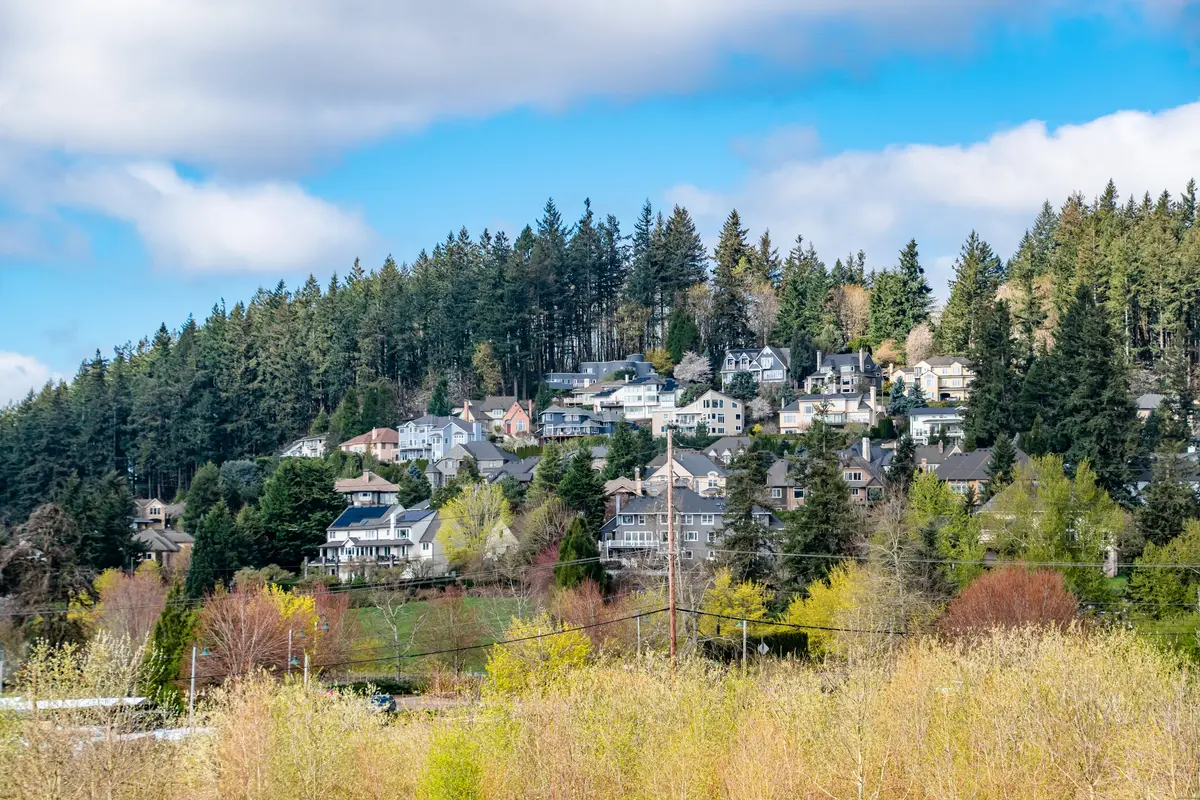
Lake Oswego is the thirteenth-largest incorporated city in Oregon, and it brings a walkable downtown, a real independent café scene, and strong infrastructure for a city of its size — along with a typical home price of $889,944 that reflects both the quality of the housing stock and the persistent demand from buyers who want Lake Oswego's combination of polished suburban amenities and easy airport access. Remote workers here tend to have an established income floor that makes the price workable.
Lake Oswego suits remote workers for whom budget is secondary to quality of life — people who want a walkable downtown, a genuine café culture, and a residential environment that feels finished and calm. The 55+ community of Condolea makes it worth noting for remote workers who are also planning ahead for retirement, though most buyers here are drawn simply by the lifestyle the city offers at any stage.
Coffee Culture
10/10
out of 10
Airport Access
9.5/10
out of 10
Affordability
2.2/10
out of 10
Median Price
$686,520
2026 market price
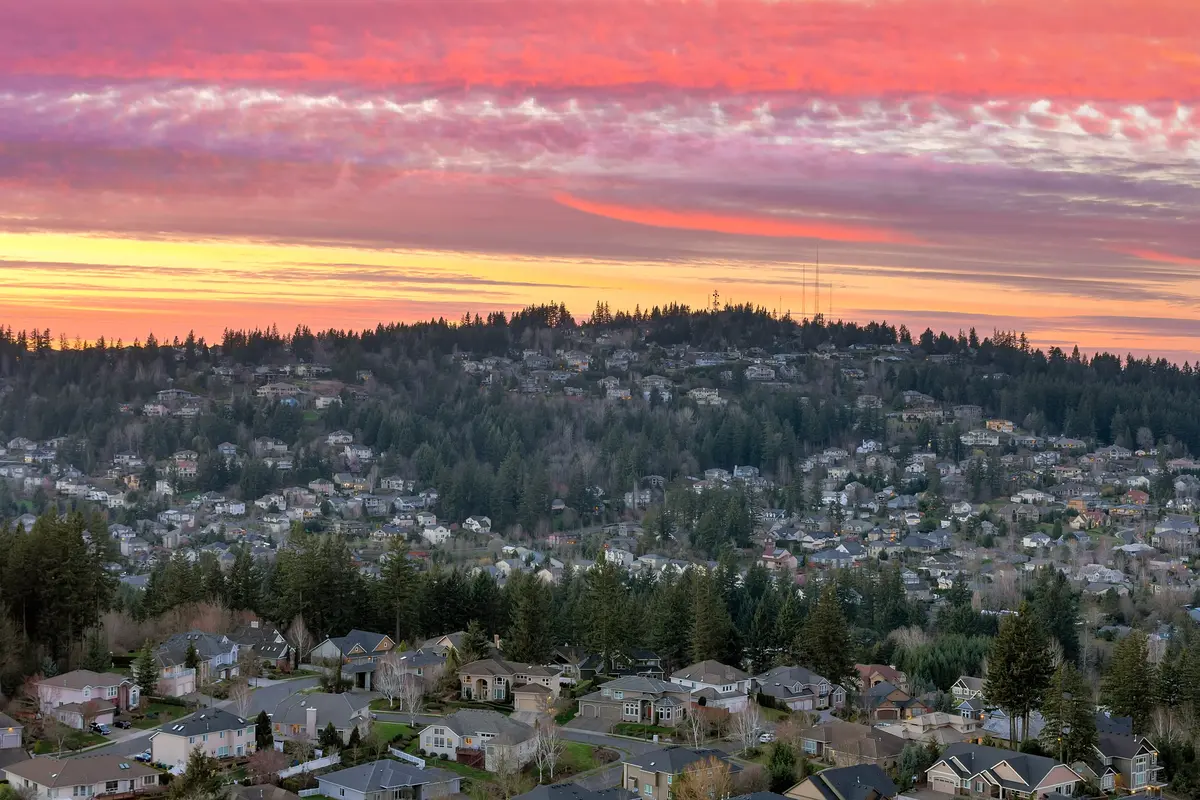
Happy Valley is the twentieth-largest incorporated city in Oregon, a planned hillside community in Clackamas County that has grown rapidly into one of the metro's more polished suburban environments. The typical home price of $686,520 reflects that growth and the strong demand for newer construction in a well-regarded area — remote workers here are largely working from home, as the local coworking scene is limited and the city's character is more residential than commercial. The airport run is one of the shorter ones in the metro.
Happy Valley suits remote workers who want a newer-construction home in a quiet, family-oriented suburb and who don't need daily café access or shared workspace — those things require a drive. Buyers comparing Happy Valley to Oregon City or Milwaukie are usually choosing between Happy Valley's newer stock and planned feel versus the older cities' more established commercial and café infrastructure.
Coffee Culture
10/10
out of 10
Airport Access
7/10
out of 10
Affordability
4.8/10
out of 10
Median Price
$526,407
2026 market price
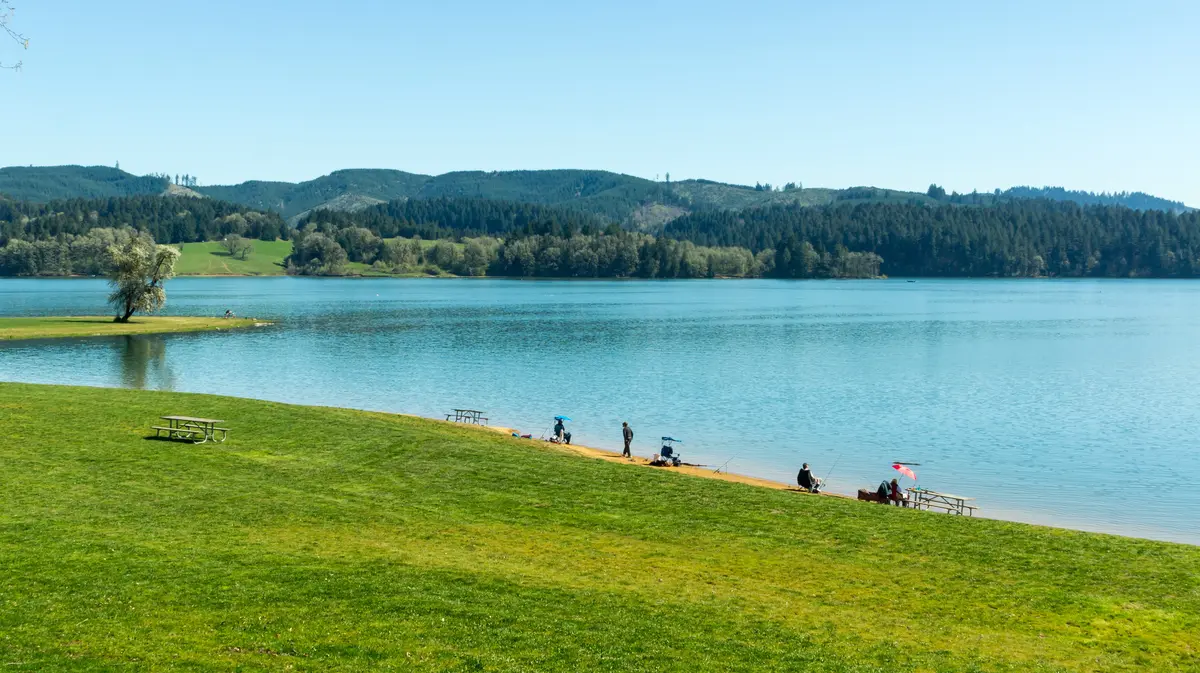
Forest Grove is the twenty-third-largest incorporated city in Oregon, a Washington County college town at the western edge of the metro with an independent café culture that consistently surprises buyers who assume small-town Oregon means limited options. The typical home price of $526,407 is reasonable for a westside Washington County city, though it still reflects the persistent metro-wide demand pressure that has pushed prices throughout the region. The airport run is longer than from the closer-in suburbs — something frequent flyers should factor honestly into their calculus.
Forest Grove suits remote workers who want a quieter, smaller-town pace with genuine café culture and university-town character, and who don't travel heavily enough to make the longer airport run a daily friction point. Buyers who need regular access to shared workspaces or the Silicon Forest professional network will likely find the distance from Hillsboro and Portland more limiting over time than it appears on a map.

Coffee Culture
10/10
out of 10
Airport Access
7.2/10
out of 10
Affordability
8.0/10
out of 10
Median Price
$429,356
2026 market price
St. Helens is the forty-first-largest incorporated city in Oregon, a Columbia County river town north of the metro that offers a compelling affordability case — the typical home price of $429,356 is substantially below what most Portland Metro suburbs are asking, and the independent coffee scene is genuinely strong for a city this size. The trade-off is honest: at this scale and this distance from the metro core, internet infrastructure is more limited, coworking options are essentially nonexistent locally, and the airport run is longer than from any of the Clackamas or Washington County cities.
St. Helens suits fully remote workers whose jobs require nothing more than a reliable home connection — and who want to stretch their housing dollar as far as it goes in this region. Buyers who need occasional in-person access to Portland clients or coworking spaces should road-test the US-30 commute in both directions before committing, because the drive can be longer than the mileage suggests depending on conditions.
Coffee Culture
3.3/10
out of 10
Airport Access
8/10
out of 10
Affordability
5.9/10
out of 10
Median Price
$493,280
2026 market price
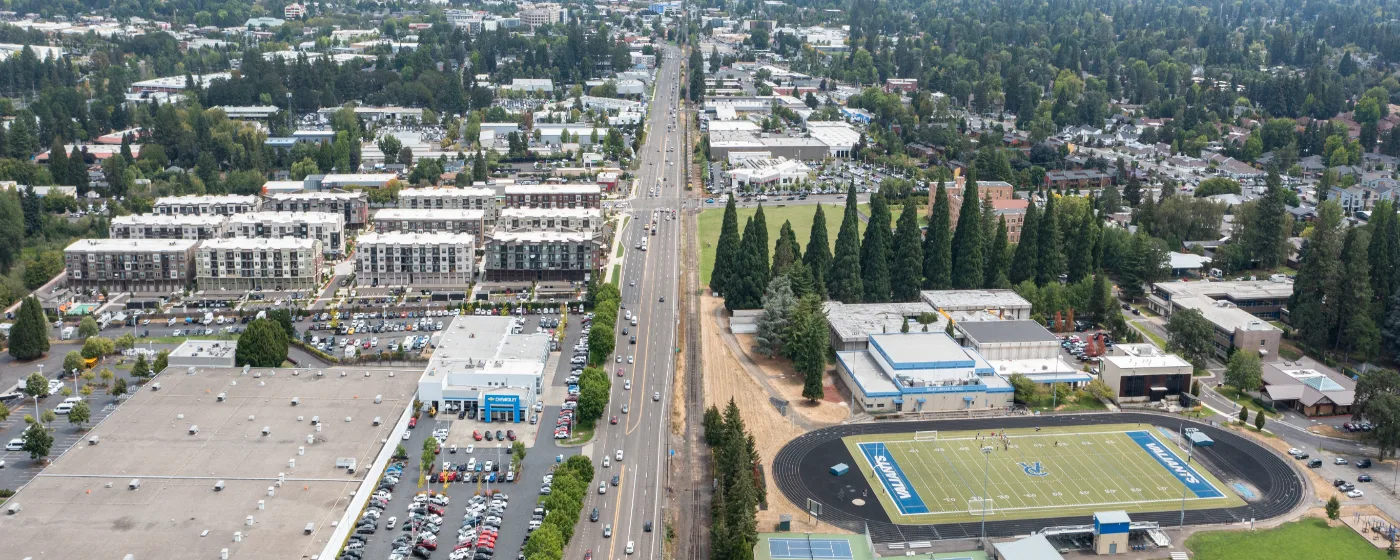
Aloha is an unincorporated Washington County community with a suburban population that supports decent broadband infrastructure — the kind of coverage that works well for remote workers who set up a proper home office. The typical home price of $493,280 is a relative value on the westside, where neighboring cities run notably higher. The one honest limitation for remote workers who want café variety is that the local independent coffee scene is thin; for a richer daily café rotation, driving to adjacent communities is the practical solution.
Aloha suits remote workers who want westside access and Washington County's tax structure at a price point that undercuts much of the surrounding corridor, and who are comfortable with a home-office-first lifestyle rather than a café-hopping one. Buyers comparing Aloha to Forest Grove are usually weighing Aloha's better access to the Silicon Forest corridor against Forest Grove's more developed independent coffee and downtown character.

Coffee Culture
8/10
out of 10
Airport Access
7.9/10
out of 10
Affordability
2.9/10
out of 10
Median Price
$630,814
2026 market price
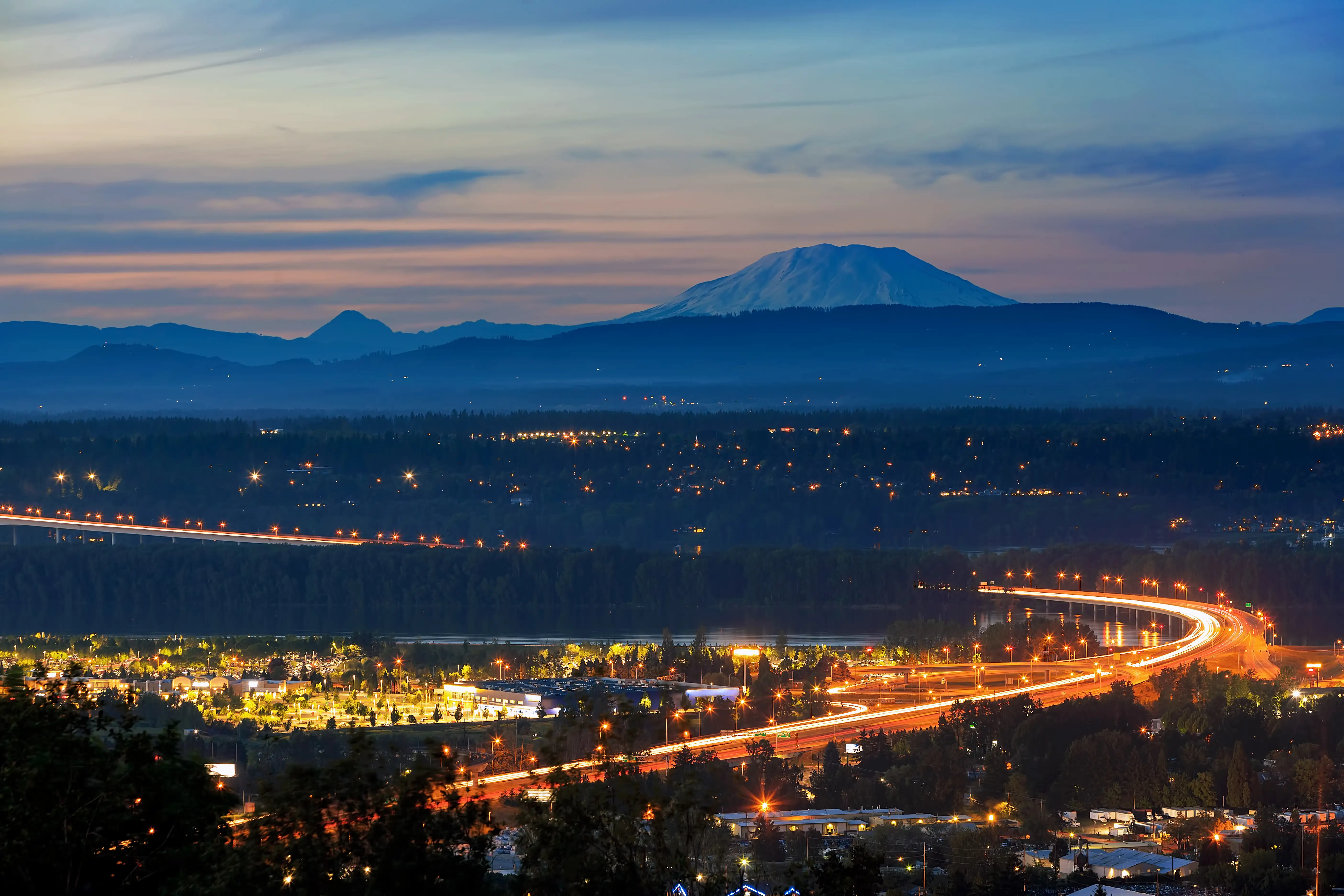
Wilsonville is the twenty-second-largest incorporated city in Oregon, a planned suburb at the southern edge of the metro where the residential quality is high and the independent café scene is more developed than buyers typically expect. The typical home price of $630,814 reflects that quality and the city's appeal to people who want a polished suburban base with I-5 access — the airport run is straightforward, and a commuter rail connection to Beaverton gives transit-oriented remote workers an option that few southside suburbs can match. Coworking locally is limited, though.
Wilsonville suits remote workers who want a quieter, more planned suburban environment at the southern end of the metro and who don't need daily café or coworking density — those needs are better served by driving north. Buyers comparing Wilsonville to Tualatin are usually weighing Wilsonville's slightly more polished planned feel and rail connection against Tualatin's position between two major interstates.
Coffee Culture
10/10
out of 10
Airport Access
7.7/10
out of 10
Affordability
6/10
out of 10
Median Price
$490,109
2026 market price
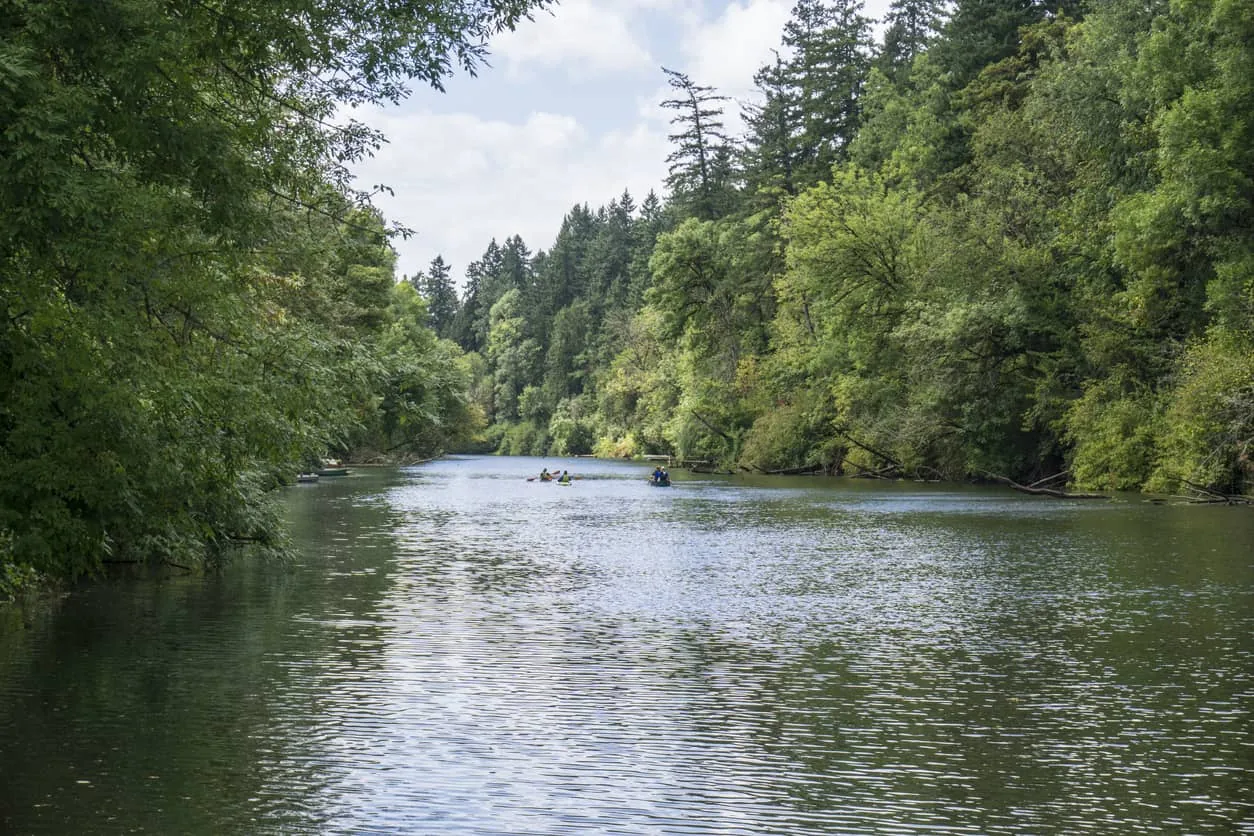
Scappoose is the sixty-fourth-largest incorporated city in Oregon, a small Columbia County town on US-30 that sits north of the metro in a genuinely rural-adjacent setting. The typical home price of $490,109 is accessible relative to most of the region, and the local coffee scene — impressive for a town this size — means your morning ritual is covered. What isn't covered locally is the infrastructure picture: at this scale, remote workers should verify provider options at their specific address before buying, because coverage and speed vary more than in larger cities.
Scappoose suits remote workers who want genuine small-town quiet, a real sense of distance from the metro, and a lower price point — and who have already confirmed their home's connectivity. Buyers weighing Scappoose against St. Helens are often choosing between two very similar value propositions; the decision typically comes down to which Columbia River town's specific character and community feel resonates more.
Coffee Culture
6/10
out of 10
Airport Access
8.4/10
out of 10
Affordability
2.9/10
out of 10
Median Price
$635,314
2026 market price
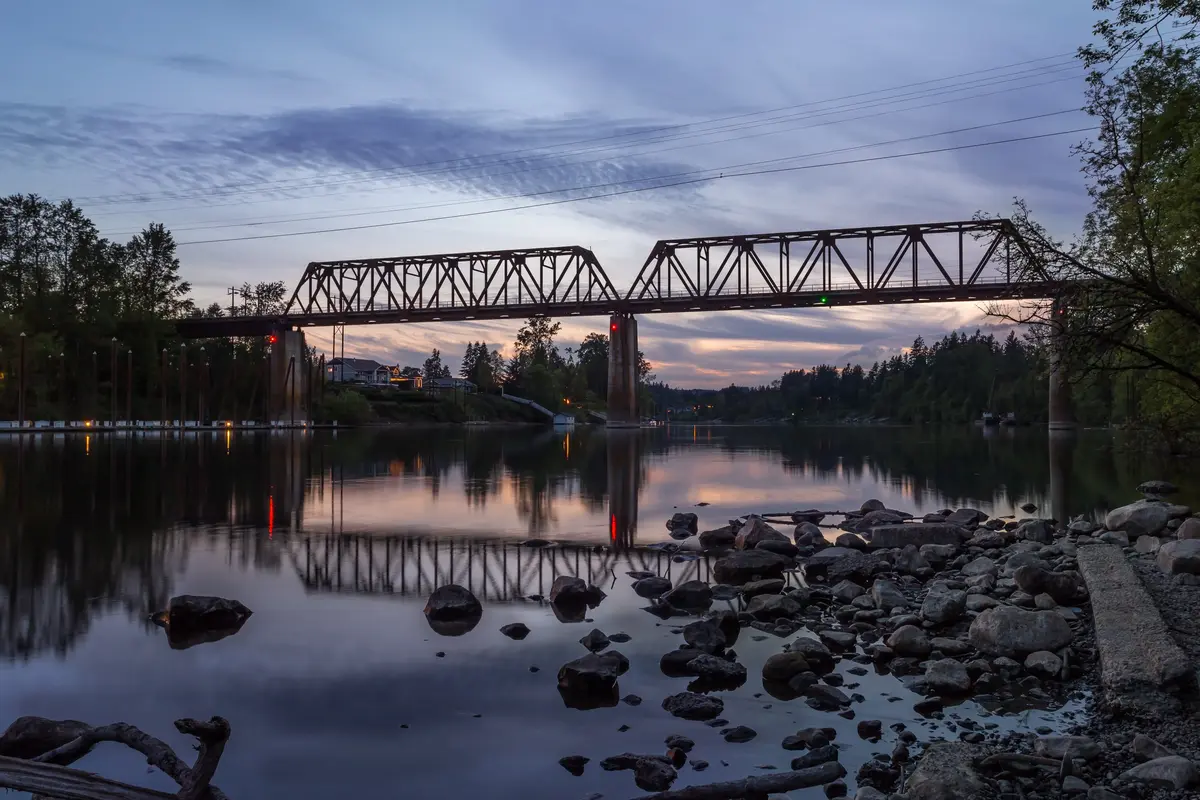
Tualatin is the twenty-first-largest incorporated city in Oregon, a Washington County suburb with solid I-5 and I-205 access that makes it one of the more convenient hubs in the southside metro for remote workers who travel or meet clients across the region. The typical home price of $635,314 is the main friction point — you're paying a premium that the city's relatively modest local café and coworking scene doesn't fully justify on its own; the value proposition is really about location and residential quality rather than remote-work infrastructure. The independent café culture is real but modest by Portland Metro standards.
Tualatin suits remote workers who value location — quick access to multiple freeways, a manageable airport run, and a quiet residential base — over café density or coworking access. Buyers comparing Tualatin to Wilsonville will find the two cities closely matched in character; Tualatin's slight edge in freeway access often tips the decision for those whose remote work includes regular regional travel.
Coffee Culture
8/10
out of 10
Airport Access
7.5/10
out of 10
Affordability
3.4/10
out of 10
Median Price
$598,201
2026 market price
Canby is the thirty-fourth-largest incorporated city in Oregon, a Clackamas County agricultural town with a genuinely independent café scene that outperforms what you'd expect from a city this size. The typical home price of $598,201 is harder to justify at this distance from the metro core — you're paying close to Oregon City and Tigard prices while accepting more limited infrastructure and a longer airport run. Remote workers here are almost exclusively working from home; the local coworking picture is limited, and the drive to Portland for a shared workspace is real.
Canby suits remote workers who want an agricultural-town character and genuine small-city pace, and whose work is entirely home-based with travel needs that are occasional rather than frequent. Buyers comparing Canby to Oregon City are typically weighing Canby's quieter, more rural feel against Oregon City's stronger downtown infrastructure and slightly better transit access to Portland.
How you weight your priorities shapes which Portland Metro city makes sense as a remote-work base: the larger westside cities give you the most infrastructure and café options, while towns like St. Helens and Scappoose offer serious affordability at the cost of fewer local amenities. Whatever city you're considering, verify which providers serve your specific address before you make an offer — provider availability varies block by block across the entire metro.
Want to see what's for sale in these neighborhoods?
Sign up for listing alerts — get notified when homes hit the market.
Get Listing Alerts →
Frequently Asked Questions
Which Portland Metro city is the best all-around base for a remote worker?
Portland itself covers the most ground — the deepest infrastructure options, the strongest café culture in the metro, and the closest airport access. The trade-off is price: the typical home in Portland is not cheap, and buyers who need more space than a close-in Portland neighborhood provides often find Gresham or Beaverton gives them most of the same remote-work advantages at a more manageable price point.
Which cities in this region have home prices that work for remote workers on a tighter budget?
St. Helens and Scappoose carry home prices well below what you'll find in Washington County or close-in Clackamas County, driven by their distance from the metro core and smaller local service bases. Gresham offers a notably lower price point among cities with strong metro infrastructure and transit access. The honest trade-off at all three is that local coworking options are essentially nonexistent, so a reliable home connection is not optional — it's the entire plan.
Do I need to worry about internet connectivity if I move to one of the smaller towns in this region?
Yes, and this is the most important pre-purchase step for any remote worker. In smaller cities like Scappoose, St. Helens, and Canby, provider options are more limited than in the larger westside cities, and coverage can vary significantly from one street to the next. Before you make an offer anywhere in this region, confirm which providers serve the specific address — not just the city — and what speeds they can actually deliver at that location.
Which cities are best for remote workers who also travel frequently for work?
Milwaukie, Happy Valley, and Gresham all offer some of the shorter airport runs in the metro, making them practical choices for remote workers who catch early flights regularly. Tigard, Beaverton, and Lake Oswego also offer easy airport access with a manageable drive. St. Helens and Forest Grove sit at the longer end of the airport-run spectrum — not impossible, but something frequent flyers should factor honestly into the decision.
Is the coffee culture in smaller Portland Metro cities actually good enough for café-based work?
Surprisingly, yes — in many cases. Towns like Scappoose, St. Helens, Forest Grove, Oregon City, and Canby all have independent café scenes that hold up well for their size, offering genuine daily variety rather than just a drive-through. The exception in this group is Aloha, where the local independent coffee scene is limited and most remote workers who want café variety tend to drive to adjacent communities. In all cases, the café scene complements a home office rather than replacing it — no city in this region offers coworking density on par with a major urban core.
Moving to Oregon?
Tell us what you need help with and we'll connect you with local resources.

Todd Davidson
About the Author
Todd Davidson is the founder of The Move Genie, a premier digital resource offering in-depth city guides, neighborhood profiles, and localized market insights for communities nationwide. Drawing on an extensive background in home financing and real estate, he established the platform to streamline the relocation process, helping families make confident, data-driven decisions when comparing new areas.