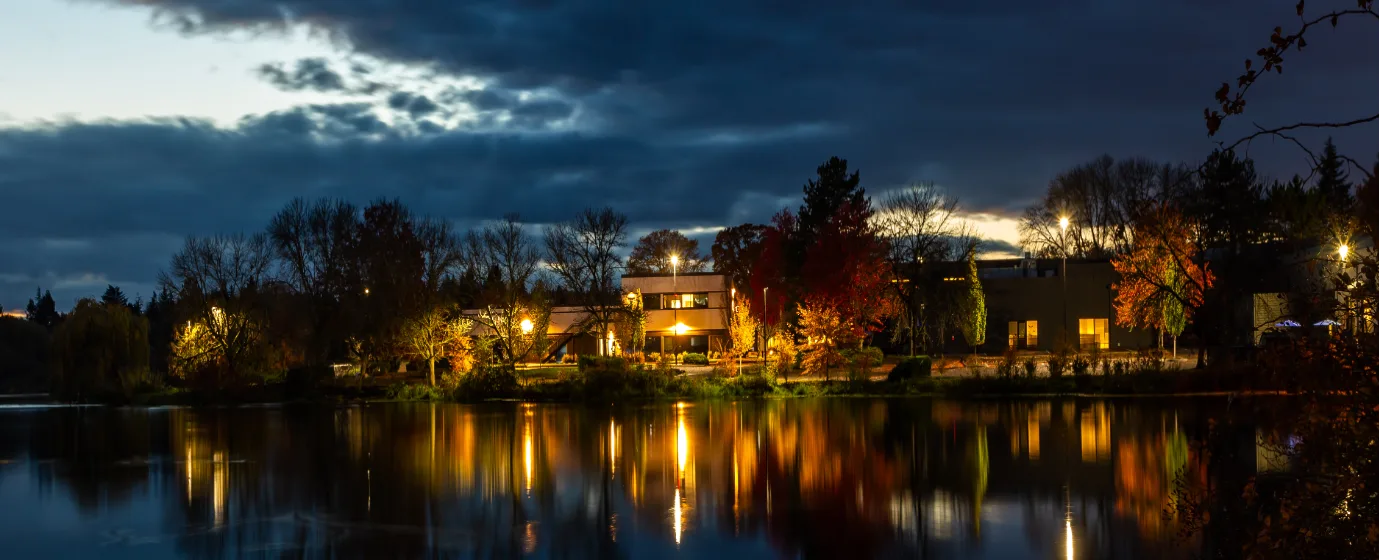
What Is Living in Beaverton, Oregon Like?
You've probably heard Beaverton dismissed as just a suburb — the place you pass through on the way to Nike's campus or downtown Portland. Spend a few months here, and that framing falls apart. Beaverton is the 7th-largest incorporated city in Oregon, home to 97,812 people, and it functions more like a self-contained city than a bedroom community. It sits at the crossroads of US-26 (Sunset Highway) and OR-217, with OR-8 (Tualatin Valley Highway) cutting through its commercial core — a location that puts it about 22 minutes to Portland by car while keeping it genuinely connected to everything south of Washington County. The central tension, if there is one, is that Beaverton looks like a suburb from the freeway and feels like a city once you're inside it.
Nike anchors the economic identity of the city in a way few companies anchor any town. The global footwear and apparel company's campus sits nearby and employs a large share of the professional class that calls Beaverton home. But the economy runs deeper than one employer: Tektronix, a precision measurement technology company, has long-standing roots here; Columbia Sportswear brings another layer of outdoor-industry presence; and the Beaverton School District, which serves Beaverton, Aloha, and parts of unincorporated Portland, is one of the larger education employers in Washington County. The district holds an A- rating, according to Niche — strong enough that it draws families with school-age children who might otherwise look at Portland proper. The professional demographic this creates — well-educated, internationally diverse, tech-and-design adjacent — shapes everything from the restaurant scene to the weekend farmers market.
The cost of living sits meaningfully below what you'd find in Portland's inner eastside or the close-in westside neighborhoods, while the quality of daily life doesn't feel like a significant step down. The typical home price of $527,947 (July 2026) is comparable to what you'd find in Portland overall, though it comes with newer infrastructure, lower crime, and access to some of the best parks in the metro — including the 222-acre Tualatin Hills Nature Park, with five miles of trail through wetlands and old-growth forest. The Beaverton Farmers Market has drawn the community together since 1988. And with 141 sunny days a year, the Pacific Northwest reputation for gray skies is earned — but the green that comes with it is part of why people stay.
Whether you're being relocated here for work, pricing yourself out of Portland, or simply researching what western Washington County actually looks like to live in, the sections below break down Beaverton's neighborhoods, housing market, commute patterns, school district, local favorites, and what day-to-day life here really feels like.
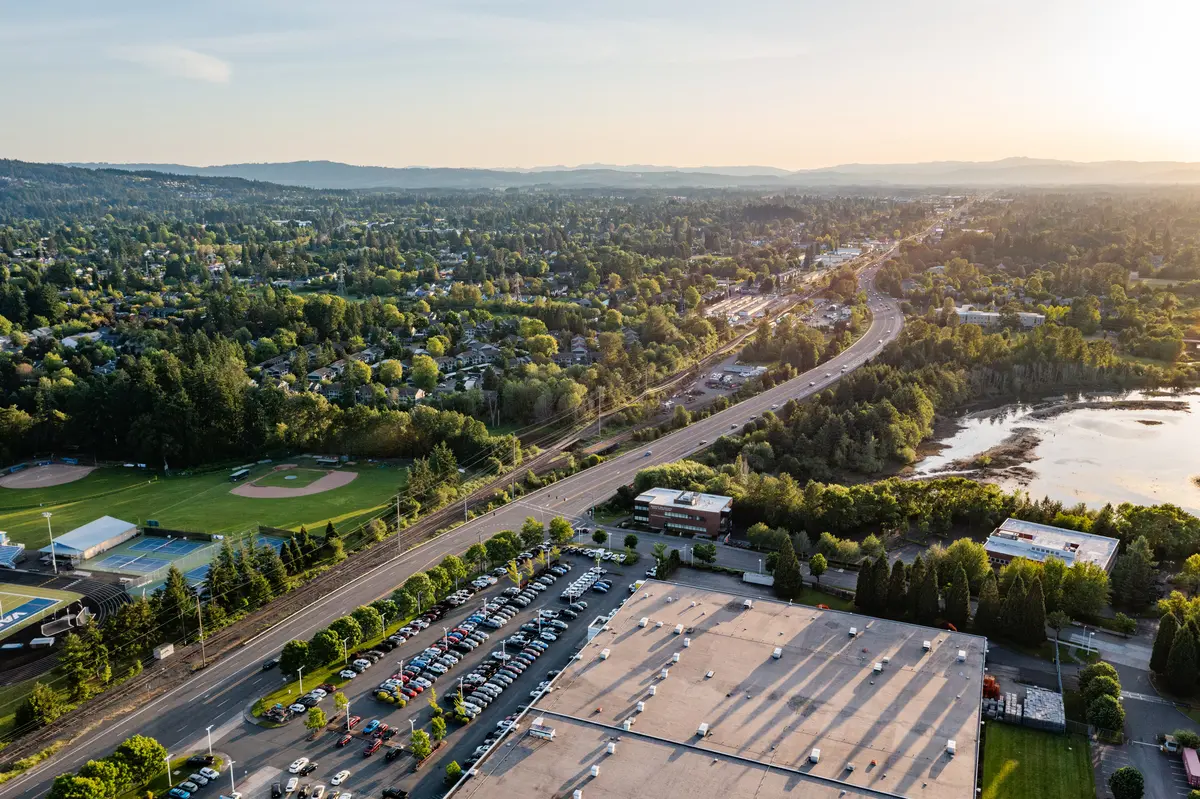
Beaverton at a Glance
Looking to buy in Beaverton? Estimate your payment.
Enter your numbers to see an estimated monthly mortgage payment.
Estimate only. Excludes HOA fees and mortgage insurance. The interest rate above is a starting point, not a quoted rate — replace it with your own to see real numbers. Insurance is a flat placeholder, not a Beaverton quote.
Why Are People Moving to Beaverton?
The case for Beaverton usually starts with one employer and ends with a longer list of reasons to stay. Nike's campus is the most visible draw, and a meaningful share of the city's residents either work there or in adjacent industries — outdoor apparel, tech, and design firms that cluster in Washington County because the talent is already here. Tektronix, which has been part of Beaverton's economy for decades, keeps a different kind of professional class anchored in the city: engineers and scientists who value proximity to a real transit network without paying Portland rents.
What surprises many people after six months is how international Beaverton actually is. The city has large Korean, Indian, Vietnamese, and Latino communities, and that shows up concretely — in the range of grocery options, the density of independent restaurants, and the diversity inside the Beaverton School District's classrooms. Parents with school-age children who moved here from California or other tech-hub cities often say it felt more cosmopolitan than they expected from a western Oregon suburb.
The school district is a genuine pull. The Beaverton School District 48J holds an A- rating, according to Niche, and serves one of the larger student populations in Oregon across Beaverton, Aloha, and parts of unincorporated Portland. A new Beaverton High School opened for students in fall 2026, replacing a building with portions dating to 1916 — a $253 million investment that signals the city's commitment to its public school infrastructure. For more on the district's individual schools and what the numbers look like at the elementary level, see the Beaverton schools guide.
Remote workers and people who commute to Portland find the math compelling: about 22 minutes to Portland by car, with the added option of the MAX Blue Line from Beaverton Transit Center — TriMet's third-busiest transit hub as of spring 2025. The WES Commuter Rail also connects south toward Tigard, Tualatin, and Wilsonville for those with jobs along that corridor. You get genuine transit access without living in Portland, which is an unusual combination in this region.
People move out, too — honestly. The most common reason is the same one that affects every suburb at a certain price point: buyers who wanted walkable density eventually feel like Beaverton requires a car for too much of daily life. The city is improving on that front, particularly around The Round at Beaverton Central and downtown, but significant portions of the city are still built around arterials and parking lots. If you're coming from a dense urban neighborhood and expecting to replicate that life here, the transition is real.
| Buyer Type | Why Beaverton Works | Best Fit |
|---|---|---|
| Nike / tech professionals | Short commute to campus; strong professional network; international dining scene | Commuter Tech |
| Families with school-age children | A- rated school district (Niche); new high school opened fall 2026; strong district enrollment | Families School |
| Portland commuters who want more space | about 22 minutes to Portland; MAX Blue Line access; lower property costs | Commuter Value |
| First-time buyers priced out of Portland | Typical home price comparable to Portland with newer stock in some neighborhoods | First-Time |
| Outdoor lifestyle buyers | Tualatin Hills Nature Park, Cooper Mountain Nature Park, Fanno Creek Greenway Trail nearby | Nature |
| Renters testing the market | Typical 2BR rent of $1,730–$2,110 with strong transit access; no car required for some commutes | Renter Transit |
What Daily Life Feels Like in Beaverton
Daily life in Beaverton runs on a few familiar rhythms, and the one that ties most of them together is the Beaverton Farmers Market. Running since 1988 and started by the Central Beaverton Neighborhood Association, it draws some of the largest weekend crowds in Washington County at peak. It's not a boutique market; it's where a significant portion of the city actually does a week's worth of produce shopping, and where neighborhoods that feel separate during the week converge.
The Patricia Reser Center for the Arts changed what downtown Beaverton could offer culturally. The 550-seat performing arts venue opened in March 2022 and sits next to The Round at Beaverton Central, the mixed-use district built around the MAX station. Before the Reser opened, residents drove into Portland for anything beyond a community theater production. Now there's a legitimate reason to stay in Beaverton on a Friday night.
The green infrastructure here is genuinely excellent. Tualatin Hills Nature Park — 222 acres with five miles of trail through wetlands, creeks, and old-growth patches — is the kind of park that makes people wonder why they ever thought they needed to live near Forest Park. Cooper Mountain Nature Park, just south of the city, adds another 230 acres of conifer and oak woodland with views across the Tualatin Valley. Pets are prohibited at Cooper Mountain to protect the wildlife, which surprises visitors used to off-leash trail access elsewhere in the metro.
One seasonal detail that newcomers don't anticipate: the Beaverton Farmers Market's energy shifts dramatically between summer and winter. Peak warm-weather market days near the Beaverton City Library feel like a community festival, with live music and roughly 130 vendors. By February, the market is still running but the vibe is quieter, more utilitarian. Long-time residents love it either way; newcomers sometimes assume the winter version doesn't exist at all and are pleasantly wrong.
Oregon has no sales tax, which changes small daily calculations in ways that feel significant over time — especially compared to what California or Washington transplants are used to. For a detailed look at property taxes, income taxes, and how the overall cost of living stacks up, see the Beaverton cost-of-living guide. The effective property tax rate of 0.84% is one of the lower rates in the metro, which matters when you're buying at the city's typical price point.
The Beaverton Housing Market Right Now
The typical home price in Beaverton sits at $527,947 (July 2026, Zillow Home Value Index) — a figure that puts the city roughly in line with Portland overall. What that price buys varies considerably depending on which part of the city you're looking in: some areas run well above that figure, others come in below it. For a breakdown of how neighborhoods compare on price and character, see the Beaverton neighborhoods guide.
The honest affordability picture is worth stating plainly: the median household income in Beaverton is $98,622, and that figure falls short of what's needed to buy the typical home here by roughly $41,000. That gap is not unique to Beaverton — it tracks with the broader Portland metro — but it does mean many buyers are stretching, using dual incomes, or entering with a substantial down payment. For buyers navigating that stretch for the first time, the first-time homebuyer guide covers loan programs and down payment options in detail.
The rental market offers some flexibility before committing to ownership. Typical 2BR rents run $1,730–$2,110 a month, with the city-wide typical rent at $1,880 per month (Zillow ZORI, July 2026). That range is competitive with Portland proper and noticeably below what you'd find in the inner eastside or close-in Pearl District neighborhoods.
New development is adding meaningful supply. In spring 2026, Trammell Crow Company's multifamily arm broke ground on a 369-unit mixed-use apartment community at the former Cedar Hills Shopping Center site — one of the larger multifamily groundbreakings in the Portland region in recent years. That kind of investment signals continued developer confidence in the Beaverton market, even as the broader Portland metro has pulled back on some projects. Well-priced homes in established neighborhoods move with purpose here, particularly at and around the city's typical price point.
Beaverton Neighborhoods
Beaverton has several distinct areas — each with its own character and appeal. Here’s a breakdown to help you narrow down where to focus your home search.
🏡 Cedar Hills
Cedar Hills is one of Beaverton's most established residential areas, with mature tree cover and mid-century ranch homes that appeal to buyers who want a settled neighborhood feel close to MAX access. A major redevelopment broke ground in spring 2026 at the former Cedar Hills Shopping Center site, bringing 369 new units and ground-floor retail that will change the neighborhood's walkable options over the next few years.
🏠 Murrayhill
Murrayhill sits in the southwestern part of the city with planned community features including parks and neighborhood trails, drawing families who prioritize a quieter suburban feel over proximity to downtown. The housing stock here runs newer and the surroundings feel less urban than Cedar Hills or Central Beaverton — a trade-off that works well for buyers who work from home or commute by car.
🌳 Central Beaverton / Downtown Beaverton
Central Beaverton is the most transit-connected and walkable part of the city, anchored by Beaverton Transit Center, The Round at Beaverton Central, and the Beaverton Farmers Market near the city library. It's where the Patricia Reser Center for the Arts sits and where the city's pedestrian-first ambitions are most visible — a genuine fit for buyers who want urban convenience without Portland prices.
🏘 Sexton Mountain
Sexton Mountain occupies the southern foothills of Beaverton with newer construction on larger lots, running above the city-wide typical home price and drawing buyers who want views and a quieter pace at the cost of more driving. Cooper Mountain Nature Park is a short distance away, which makes the car-dependency feel more worthwhile for outdoor-oriented households.
🏔 Progress Ridge
Progress Ridge is Beaverton's most suburban-feeling pocket, built around a lifestyle retail center with a planned neighborhood layout that puts most destinations within a short drive rather than a walk. It appeals to buyers coming from traditionally suburban markets who want newer construction and community amenities without the density of Central Beaverton.
🌆 Five Oaks
Five Oaks sits in the northern part of Beaverton near Aloha, with a more affordable entry point relative to the city-wide typical home price and a mix of older ranch-style homes and modest newer construction. It's a practical choice for buyers stretching to get into the market who value access to Beaverton's school district and transit network without paying for the premium southern neighborhoods.
Pros & Cons of Living in Beaverton
The Pros
- Anchored by Nike and a deep bench of Silicon Forest tech employers
- Highly rated, diverse school district with strong option schools
- Extensive natural areas like Tualatin Hills Nature Park within city limits
- Easy MAX light rail and WES commuter rail access into downtown Portland
The Cons
- Home values and rents run above the Oregon state average
- Property crime rates are elevated compared to national averages, especially near commercial corridors
- Traffic congestion on Highway 217 and Tualatin Valley Highway during peak commute hours
Getting Around & Commuting in Beaverton
Beaverton's transit infrastructure is the best argument for living here without a car — or at least without using one every day. The Beaverton Transit Center is TriMet's third-busiest hub, connecting the MAX Blue Line with multiple bus routes and serving as the northern terminus of the WES Commuter Rail. That's an unusual concentration of transit options for a city of this size, and it's the reason a meaningful share of residents commute to Portland entirely without driving.
The WES Commuter Rail runs south from Beaverton through Tigard and Tualatin down to Wilsonville, giving people with jobs along that corridor a genuine rail alternative. It connects directly back into the MAX network, so a combined WES-to-MAX commute is more practical here than it sounds on paper.
The Drive to Portland
By car, it's about 22 minutes to Portland under normal conditions. The operative phrase is "normal conditions." US-26 eastbound in the morning and westbound in the late afternoon is where Beaverton commuters earn their gray hairs. The Sunset Highway is one of the region's most reliably congested stretches during rush hour, and the OR-217 interchange can compound the problem heading north or south. Buyers who plan to drive into Portland every day should make that test drive during peak hours before committing to a neighborhood — the difference between leaving at 7 a.m. and 8 a.m. can be significant.
Within the City
Within Beaverton itself, most errands require a car for residents outside the immediate downtown core. The areas around The Round at Beaverton Central and the Beaverton Transit Center are genuinely walkable for daily needs. Neighborhoods like Sexton Mountain or Progress Ridge require driving for nearly everything. OR-8 (Tualatin Valley Highway) handles most of the east-west arterial traffic through the city, and OR-217 provides the north-south connection between US-26 and OR-10 (Beaverton-Hillsdale Highway).
| Destination | Typical Drive | Transit Option |
|---|---|---|
| Downtown Portland | About 22 minutes (off-peak) | MAX Blue Line from Beaverton TC |
| Hillsboro | 15–20 minutes via OR-8 | MAX Blue Line westbound |
| Tigard | 10–15 minutes via OR-217 | WES Commuter Rail southbound |
| Tualatin | 15–20 minutes via OR-217 | WES Commuter Rail to Tualatin station |
| Wilsonville | 25–30 minutes via OR-217 / I-5 | WES Commuter Rail terminus |
| Portland International Airport (PDX) | ~20 mi; 30–40 minutes depending on traffic | MAX Blue Line with transfer at Gateway TC |
Portland International Airport (PDX) sits about 20 miles from Beaverton — reachable by MAX with a transfer, or by car in 30 to 40 minutes depending on the time of day. For residents who travel frequently for work, that distance is manageable for commercial flights serving the region.
Biking
The Fanno Creek Greenway Trail gives cyclists a car-free route connecting through Beaverton toward Tigard and beyond. It's a legitimate commute option for people living close to the trail alignment, and an excellent weekend ride regardless. Beaverton's flat-to-gentle terrain in the central areas makes cycling more practical here than in hillier parts of the metro.
Schools in Beaverton
Families relocating to Beaverton have public, private, and higher-education options nearby. Here’s a quick overview.
🎓 School District
Beaverton School District 48J serves K–12 students across Beaverton and the surrounding area. Rated A- (source: Niche.com).
🏆 Graduation Rate
The 4-year high-school graduation rate here is approximately 88.9%.
📚 Higher Education
Oregon’s public universities — the University of Oregon, Oregon State University, and Portland State University — offer four-year degrees statewide, with a network of 17 community colleges providing two-year and workforce programs.
🌐 Online Learning
Oregon State University Ecampus and Portland State University Online offer fully accredited online degrees for remote learners across the state.
Safety in Beaverton
A quick look at how Beaverton compares on the numbers that matter most when weighing a neighborhood or a move.
🛡 Violent Crime
Approximately 4 per 1,000 residents.
🔒 Property Crime
Approximately 26 per 1,000 residents.
Compared to the most recent national figures from the Bureau of Justice Statistics (2024), Beaverton’s violent crime is above the national average (about 3.7 per 1,000), and property crime is above the national average (about 18.4 per 1,000).
Against Oregon as a whole, Beaverton’s violent crime is somewhat above the state average, and property crime is about the same as the state average (Bureau of Justice Statistics, Crime Known to Law Enforcement, 2024 (tables 2 and 3)).
Crime rates can vary a lot within a single city, so the citywide numbers above are only a starting point. Some neighborhoods in Beaverton run well below these averages, while others run higher — the kind of block-by-block detail that matters most when you’re actually choosing where to live. The full guide below breaks it down neighborhood by neighborhood.
Working in Beaverton
Beaverton’s largest employers span several industries — here are some of the anchors of the local job market.
💼 Nike
Footwear and apparel
🎓 Beaverton School District
Education
🏛 City of Beaverton
Municipal government
💻 Tektronix
Technology
💼 Columbia Sportswear
Apparel
Parks & Recreation in Beaverton
Some of the outdoor spaces that shape everyday life in Beaverton.
🌱 Tualatin Hills Nature Park
🌱 Cooper Mountain Nature Park
Beaverton residents don’t have to go far for green space — spots like Tualatin Hills Nature Park and Cooper Mountain Nature Park are part of everyday life here, whether that’s a morning walk, a weekend hike, or just somewhere to unwind outside. The full guide below covers more of what Beaverton has to offer for parks and outdoor recreation.
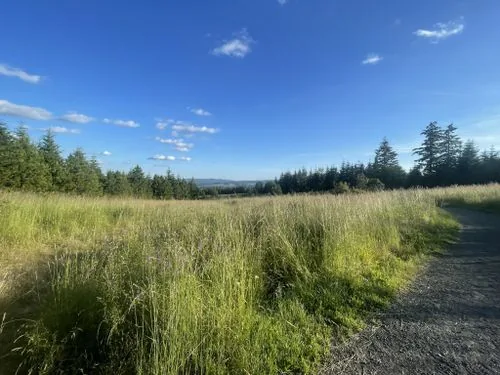
Retiring in Beaverton
Beaverton draws retirees for its balance of amenities, outdoor access, and cost. Here’s what to weigh.
🌤 Climate
Beaverton gets 141 sunny days a year — expect mild, wet winters with temperatures rarely dropping below freezing and warm, dry summers that run June through September. The gray months from November through March are real and long, but the flip side is that the summers here are genuinely excellent: low humidity, comfortable highs, and long evenings. Retirees from California often find the transition more manageable than expected once they invest in a good rain jacket.
🍴 Lifestyle
The Patricia Reser Center for the Arts brings professional-caliber performing arts to downtown Beaverton without requiring a drive into Portland. The Beaverton Farmers Market runs year-round and anchors the community calendar in a way that's genuinely social. Tualatin Hills Nature Park's paved trail system makes it accessible for a range of fitness levels, and the Fanno Creek Greenway Trail extends that further. For a fuller picture of dining and recreation options, see the parks and recreation guide.
🏚 55+ Communities
No 55+ communities were found in Beaverton. Retirees looking to downsize here typically purchase single-family homes or condominiums in established neighborhoods, with Central Beaverton offering some of the more walkable options for those who want to reduce driving. The retiring guide has more detail on what the broader lifestyle and healthcare picture looks like.
✈ Getting Around
Beaverton's transit infrastructure is strong for a city its size — the MAX Blue Line at Beaverton Transit Center connects to Portland without driving, and the WES Commuter Rail links south through Tigard and Tualatin. Most of the city still requires a car for errands, but the downtown core is an exception. Portland International Airport (PDX) is about 20 miles away, making it accessible for longer trips without an overnight stay near the terminal.
🏛 Oregon Taxes for Retirees — What to Know
- Social Security is not taxed — Oregon does not tax Social Security or Railroad Retirement benefits. Any amount included in your federal adjusted gross income is subtracted back out on the Oregon return.
- But other retirement income IS taxed — This is the trade-off that surprises people moving from Washington or Texas. Pension distributions and 401(k)/IRA withdrawals are taxed as ordinary income at Oregon’s regular rates — there is no blanket retirement-income exclusion.
- Graduated income tax — Oregon has four brackets — 4.75%, 6.75%, 8.75% and 9.9%. The 4.75% rate covers the first $10,000 of taxable income for a single filer ($20,000 filing jointly); the 8.75% rate starts at $125,000 ($250,000 jointly); and the top 9.9% rate applies above $250,000 ($500,000 jointly).
- No sales tax — Oregon levies no general sales tax.
- Property taxes, with senior deferral — Oregon’s Senior and Disabled Property Tax Deferral lets qualifying homeowners have the state pay their county property taxes, with a lien recorded against the home. The 2026 household income limit is $70,000, and deferred balances accrue 6% simple interest — it defers the bill rather than forgiving it.
- Estate tax — the one to plan for — Oregon has its own estate tax with a $1 million filing threshold — far below the federal exemption, and NOT indexed for inflation, so it reaches more estates every year in real terms. Retirement accounts and a long-held home count toward the taxable estate, so estates that feel modest can cross the line without the owner expecting it.
- No inheritance tax — Oregon has no separate inheritance tax and no gift tax.
Tax laws change frequently and individual situations vary. This is general information, not tax advice — always consult a qualified Oregon tax professional or CPA for personalized retirement tax planning.
Weekends & Local Favorites in Beaverton
Weekends in Beaverton have a rhythm that most newcomers underestimate. The Beaverton Farmers Market, running near the Beaverton City Library since 1988, is the clearest expression of what the city is on a warm weekend morning — genuinely large, genuinely local, with up to 130 vendors at peak and live music from local bands through the warm months. It's not a lifestyle accessory; it's where people shop.
For outdoor time, Tualatin Hills Nature Park is the city's most accessible escape — 222 acres of wetlands, creek corridors, and meadow habitat with five miles of trail, 1.5 miles of it paved. Cooper Mountain Nature Park, just south of the city, is worth the extra drive for its 230 acres of oak woodland and conifer forest and panoramic views across the Tualatin Valley. Keep in mind that pets are not permitted at Cooper Mountain. The Fanno Creek Greenway Trail and Hyland Woods offer additional green space threaded through the city's residential fabric, and Greenway Park is a reliable neighborhood anchor for families.
The Patricia Reser Center for the Arts anchors the cultural calendar. The 550-seat venue hosts national touring productions and local performances year-round, and its location next to The Round at Beaverton Central makes it easy to combine a show with dinner without driving across town.
Where to Eat and Drink
The dining scene reflects how international Beaverton actually is. Thai Bloom! is a longtime local standby for Thai food that consistently draws residents from across Washington County. Golden Valley Brewery and Restaurant – Beaverton is the go-to for a casual brewery meal with rotating taps and a reliable menu. The Westgate Bourbon Bar & Taphouse covers the craft spirits crowd, and Oswego Grill Beaverton fills the upscale-casual dinner niche for date nights or visiting family. The Fireside Grill rounds out the options for something comfortable and consistent on a weeknight.
Coffee Worth Knowing
Ki Coffee & Brunch has built a following for its Korean-influenced coffee drinks and weekend brunch plates — one of those spots that feels genuinely of this city rather than imported from Portland. Brickhaus Coffee has a strong local reputation for craft espresso in a more neighborhood-café setting. Symphony Coffeehouse leans into its arts-adjacent location and draws a relaxed, creative crowd. Thornton Family Coffee Roasters is the choice for people who care about the roasting program as much as the cup. And La Floridita PDX brings a Latin-inflected coffee and food menu that stands apart from the usual Pacific Northwest coffee-shop template.
Washington Square Mall, just inside the Beaverton–Tigard boundary, handles most of the big-box and anchor retail needs for the southwest metro. Anything the local shops don't carry, residents typically order online — a serious specialized shopping trip often means driving out of the immediate area.
Local favorites in Beaverton
Restaurants
- Thai Bloom!
- The Westgate Bourbon Bar & Taphouse
- Oswego Grill Beaverton
- The Fireside Grill
- Golden Valley Brewery and Restaurant -Beaverton
Outdoors
- Tualatin Hills Nature Park
- Cooper Mountain Nature Park
- Fanno Creek Greenway Trail
- Hyland Woods
- Greenway Park
Coffee
- Ki Coffee & Brunch
- Brickhaus Coffee
- Symphony Coffeehouse
- Thornton Family Coffee Roasters
- La Floridita PDX
Farmers Markets
- Beaverton Farmers Market
Top Things Locals Say About Beaverton
The best intel about a city comes from the people who actually live there. Here’s what Beaverton residents say when newcomers ask the questions everyone’s thinking.
“I thought I understood what I was moving into — I'd visited a few times and done the research. What I didn't expect was how much the Beaverton Farmers Market would become the center of my week, or how different the commute felt heading west on US-26 in the afternoon versus the drive in. The transit access is real, but the parking-lot sprawl on OR-8 is also real, and you'll need to decide which version of the city you want to be near.”
— Recent Beaverton home buyer
“What's the most surprising thing about living in Beaverton?”
How international it actually is. People hear 'Oregon suburb' and picture something homogeneous, but the diversity here shows up in ways that matter day to day — the range of restaurants, the mix inside the school district, the languages you hear at the farmers market on a weekend morning. It's not what most people expect from western Washington County.
“What do locals love most about Beaverton?”
Tualatin Hills Nature Park, without question. Having 222 acres of actual wetland and old-growth corridor inside a city this size feels like something the rest of the metro doesn't have. The Beaverton Farmers Market is a close second — not because it's a novelty, but because it actually functions as a weekly grocery run for a lot of households, and the community that shows up there in the peak of summer is the friendliest version of this city.
“What should newcomers to Beaverton know?”
Drive US-26 eastbound at 8 a.m. before you buy. The 22-minute trip to Portland is real — it's just not the 22 minutes you get at 10 a.m. on a Tuesday. Also: Cooper Mountain Nature Park doesn't allow pets, which surprises almost every dog owner who moves here. And the area around The Round at Beaverton Central feels very different from the OR-8 commercial strip — if on-foot access to coffee and restaurants matters to you, proximity to downtown is worth prioritizing.
“How much do you need a car in Beaverton?”
Depends almost entirely on where you land. If you're close to Beaverton Transit Center and working somewhere near a MAX stop, a car becomes genuinely optional for the commute. For most of the city — Sexton Mountain, Progress Ridge, Five Oaks — you'll drive for most errands. The downtown core around the Beaverton Farmers Market and the library is walkable for daily needs in a way the rest of the city isn't, and the Fanno Creek Greenway Trail gives cyclists a real car-free option for getting south toward Tigard.
Cities Near Beaverton
Other communities near Beaverton worth a look — each with its own character and price point.
| City | Distance | Best For | Vibe | Median Rent | Median Buy |
|---|---|---|---|---|---|
| Hillsboro | 7 mi | Tech workers & newer construction | Suburban, spread out, growing fast | $1,946 | $518,047 |
| Tigard | 6 mi | Families wanting more space | Quieter, more residential, car-dependent | $1,850 | $607,011 |
| Portland | 8 mi | Urban lifestyles & walkability seekers | Dense, walkable, higher cost | $1,723 | $534,270 |
More Helpful Guides for Beaverton
Going deeper on Beaverton? Our blog series covers everything from first-time buying to retiring here — explore the guides below.
Local Expert Takeaway: Beaverton rewards buyers who do their homework on which part of the city they're buying into. The neighborhoods near The Round at Beaverton Central and the Beaverton Farmers Market have a different daily texture than Sexton Mountain or Progress Ridge — both are legitimate choices, but they're not the same city. The transit infrastructure at Beaverton Transit Center is one of the best arguments for living here without owning two cars, but it only works if you're close enough to the MAX Blue Line to use it without a drive to the station. And the Tualatin Hills Nature Park is genuinely exceptional — 222 acres in the middle of a suburb is something most metro areas can't match.
Quick Takeaways & FAQs
✅ Beaverton Transit Center is TriMet's third-busiest hub, giving residents real MAX and WES Commuter Rail access without living in Portland.
⚠️ The typical home price of $527,947 (July 2026) looks affordable relative to the metro, but the median household income falls short of qualifying by roughly $41,000 — most buyers here are stretching or bringing a significant down payment.
📍 Cooper Mountain Nature Park's no-pets rule surprises nearly every dog owner who moves here — plan your trail days accordingly.
What is the typical home price in Beaverton, Oregon?
How are the schools in Beaverton, Oregon?
How far is Beaverton from Portland?
Is Beaverton safe to live in?
Does Beaverton have good public transit?
Helpful Links for Moving to Beaverton
Moving to Oregon?
Tell us what you need help with and we'll connect you with local resources.
