About Elizabeth
Beaverton's Neighborhoods: Where I'd Tell You to Start
The first thing I tell buyers is that Beaverton is not one place. It's a city of 97,812 people spread across neighborhoods that feel genuinely distinct from each other — in housing stock, in commute logic, in daily rhythm.
Cedar Hills
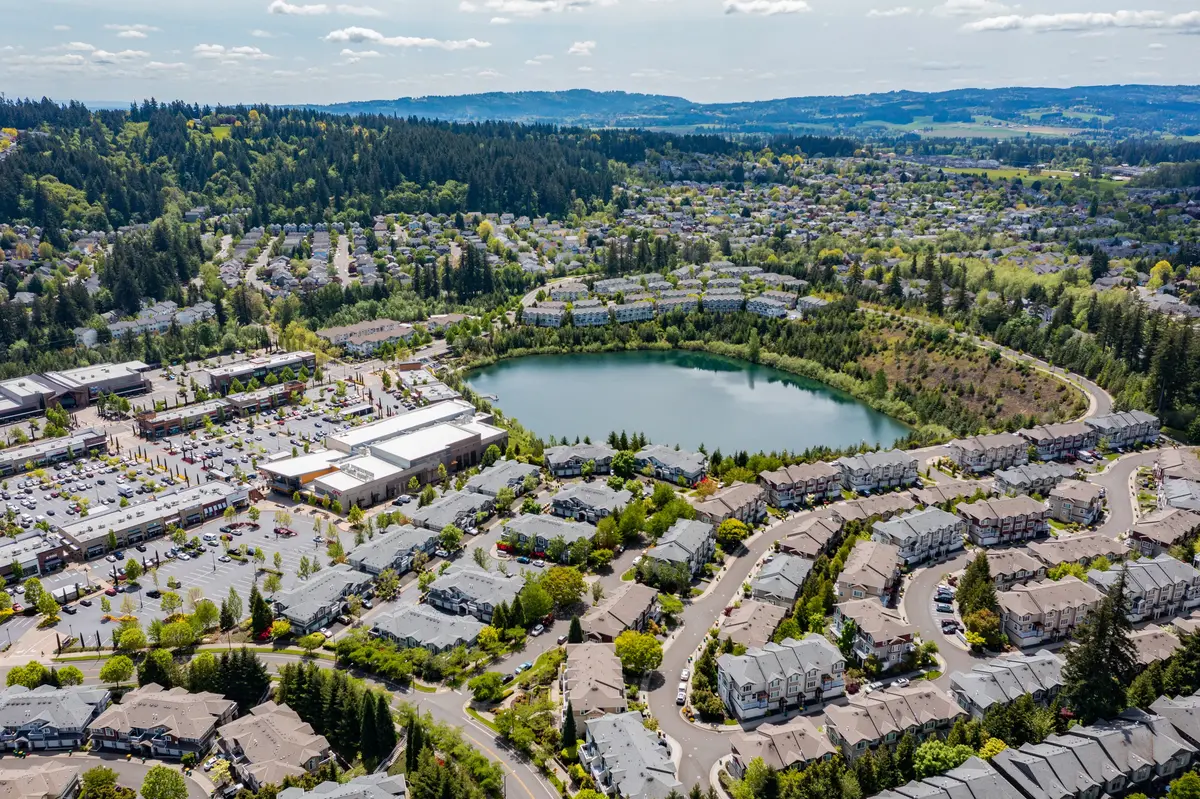
Cedar Hills is where I send buyers who want MAX access, a real neighborhood feel, and a home with a history. These are mid-century ranches on sidewalk-lined streets, with mature trees that took fifty years to grow. Buyers who move here from Portland often tell me six months in that they feel like they got more house, more quiet, and still got to keep the train.
Central Beaverton and Downtown Beaverton
Central Beaverton is where the city is investing. The Patricia Reser Center for the Arts opened here in 2022 — the first major cultural venue in the Portland metro in over thirty years — and The Round at Beaverton Central has added density and energy around the transit hub. Prices sit below the city median, which surprises buyers who expect downtown to be a premium. It's a good fit for someone who wants a walkable daily life without paying for it.
Five Oaks
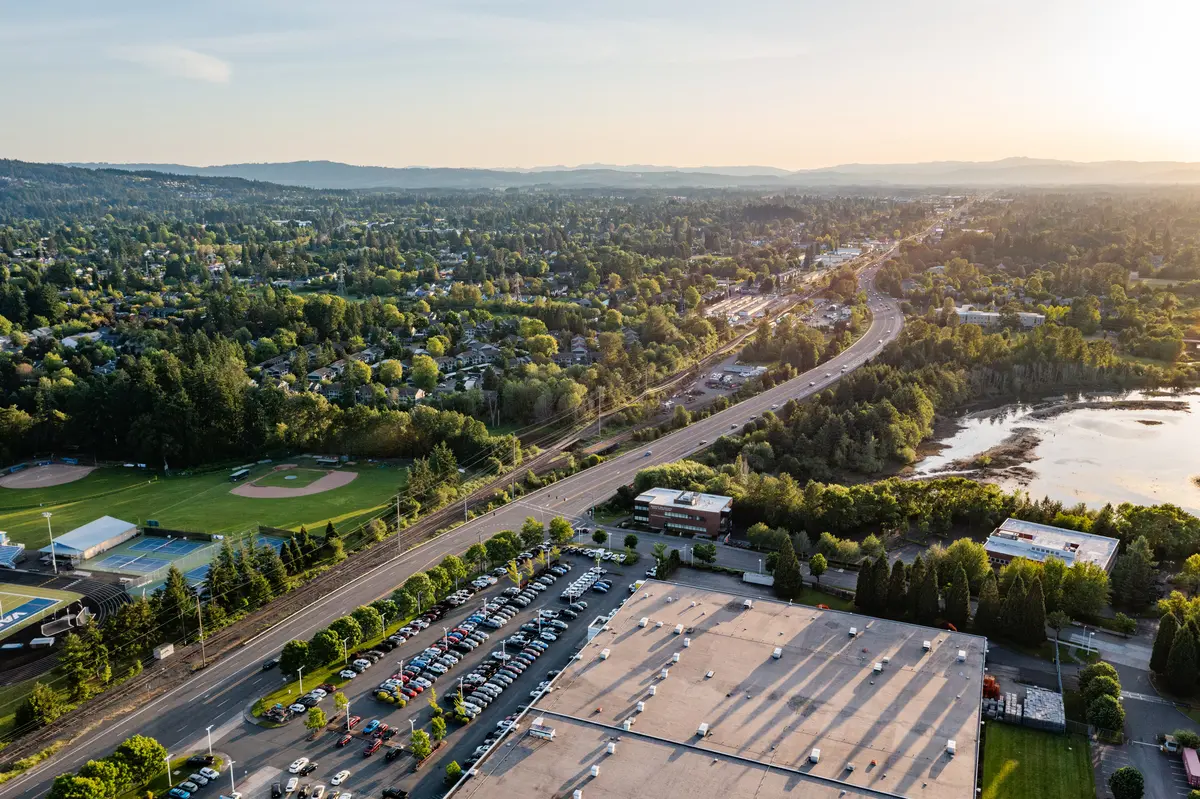
Five Oaks is my practical recommendation for buyers who are commuting to the US-26 corridor employers and want to stay below the city median. It's not the most glamorous neighborhood on the list, but it delivers: proximity to major employment centers, straightforward highway and MAX access, and real value relative to the rest of the city.
Sexton Mountain and Murrayhill
Sexton Mountain runs above the city median and draws buyers who want newer construction, bigger lots, and the quiet that comes with hillside streets south of Canyon Road. Murrayhill is master-planned and polished — the streets are clean, the yards are sized for a family — and has its own distinct character worth evaluating on its own terms. The honest trade-off with both: you're on surface roads for most of your daily driving, and the highway ramp is not right there.
Progress Ridge and West Beaverton
Progress Ridge is for the buyer who wants a suburban lifestyle with daily conveniences built into the neighborhood. The town square includes retail, dining, and a movie theater — it has the feel of a place designed to keep you close to home. West Beaverton runs above the city median and sits closer to the established suburban core, with a mix of housing types and strong access to the south Beaverton amenity corridor.
The short version: where you land in Beaverton determines what your daily life looks like almost as much as the home itself. I spend a lot of our first conversation figuring out which part of the city actually fits a buyer's commute and routine before we ever open a door.
The Beaverton School Picture
Beaverton School District 48J is one of the reasons this city stays on so many families' shortlists. It is one of the largest districts in Oregon, which means resources, program variety, and active OSAA athletics programs across the high schools.
On 2024-25 state assessments, 43% of students reached math proficiency and 53.1% reached reading proficiency, according to figures the Oregon Department of Education publishes. Those numbers are worth sitting with — they reflect a large, diverse urban district, and they vary meaningfully school by school. The statewide averages provide context, and the Oregon Department of Education publishes school-level breakdowns that let you compare the schools assigned to any specific address you're considering.
Here is what I tell every family I work with in Beaverton: do your own due diligence. Confirm exactly which elementary, middle, and high school are assigned to any specific address you're serious about — you do that by contacting the district directly — and then review the data the Oregon Department of Education publishes for those schools themselves. Boundary lines in this district can shift, and two homes a few blocks apart can be in different school zones.
The district offers a range of magnet and focus option programs at the elementary level that some families pursue deliberately. That's worth a conversation with the district as well if specialized programming matters to your family.
My honest take: the district is a real asset for this city, and I've seen it be the deciding factor for buyers choosing Beaverton over Tigard or Hillsboro. But "Beaverton schools" is not one answer — it's a neighborhood-by-neighborhood question, and I'd rather help you dig into the specifics than let you make a $500,000 decision on a generalization.
Beaverton vs Nearby Cities
| City | Typical Home Price | Typical Rent | Cost vs Beaverton |
|---|---|---|---|
| Beaverton (this city) | $527,947 | $1,880/mo | — |
| Hillsboro | $518,047 | $1,946/mo | About the same |
| Tigard | $607,011 | $1,850/mo | 15% higher |
| Portland | $534,270 | $1,723/mo | About the same |
Source — home prices: Zillow ZHVI, July 2026; rent: Zillow ZORI, July 2026. Nearby-city figures are the same series, refreshed together.
This is the comparison I have more often than any other. Most of my buyers have Beaverton on a list alongside at least one of its neighbors, and the right choice usually comes down to a specific trade-off rather than which city is objectively better.
Beaverton vs. Portland: The buyers who choose Beaverton over Portland are almost always doing it for three reasons — price, schools, and space. What Portland has that Beaverton doesn't is the density of a real urban core — the restaurant rows, the neighborhood bar scene, the energy of being inside the city. Buyers who genuinely want that usually end up staying in Portland. Buyers who thought they wanted it but actually want a good Saturday morning farmers market and a trail out their back gate tend to land very happily in Beaverton.
Beaverton vs. Hillsboro: These two are closer in character than many buyers expect, and the typical home price lands at about the same level in both. Hillsboro has Intel's massive campus as its employment anchor, which matters if that's where you're working. Beaverton has Nike, Tektronix, Columbia Sportswear, and transit infrastructure that's more developed — the MAX lines and WES Commuter Rail give Beaverton a transit advantage that Hillsboro doesn't fully match. I generally steer buyers toward Hillsboro if they need to be near the Intel corridor and toward Beaverton if MAX access or downtown amenities matter.
Beaverton vs. Tigard: Tigard comes in somewhat higher on typical home prices, and for that you get a city that's a bit more established in some of its suburban corridors. Buyers choosing between the two often tell me the decision comes down to which direction their commute runs — Tigard pulls more toward Tualatin and the south metro, while Beaverton pulls toward Portland and the tech campuses to the west. The school districts are a real differentiator too, and worth examining school-by-school for whatever address you're considering in each city.
Beaverton vs. Aloha and Tualatin: Aloha is an unincorporated community that borders Beaverton, and buyers sometimes look there for value — it falls within the Beaverton School District, so for families that's a meaningful overlap. Tualatin sits further south and has its own distinct character; it comes up more for buyers whose commute pulls them in that direction. For most of the buyers I work with who have Beaverton in mind, Aloha and Tualatin are worth a look if budget is the primary driver, but Beaverton's transit access and cultural amenities are real advantages that don't always translate across city lines.
Looking to buy in Beaverton? Estimate your payment.
Enter your numbers to see an estimated monthly mortgage payment.
Estimate only. Excludes HOA fees and mortgage insurance. The interest rate above is a starting point, not a quoted rate — replace it with your own to see real numbers. Insurance is a flat placeholder, not a Beaverton quote.
Daily Life in Beaverton: What Actually Shapes Your Routine
The thing I hear from clients six months after moving to Beaverton is almost always a version of: "I didn't realize how much was here." The Beaverton Farmers Market is the first thing that surprises people — on peak summer mornings the scale of it genuinely catches newcomers off guard. It is the largest all-agricultural market in Oregon, and buyers who visit it once during their house search often mention it specifically when they tell me why they signed their offer.
The Patricia Reser Center for the Arts has changed the conversation about Beaverton's cultural life. Before it opened in 2022, the west side didn't have a serious performing arts venue. Now it does — a $55 million facility with a 550-seat Mainstage Theater and a program that brings in the Oregon Symphony and national touring acts alongside local productions. That matters to buyers who care about whether a city has a cultural center they'll actually use.
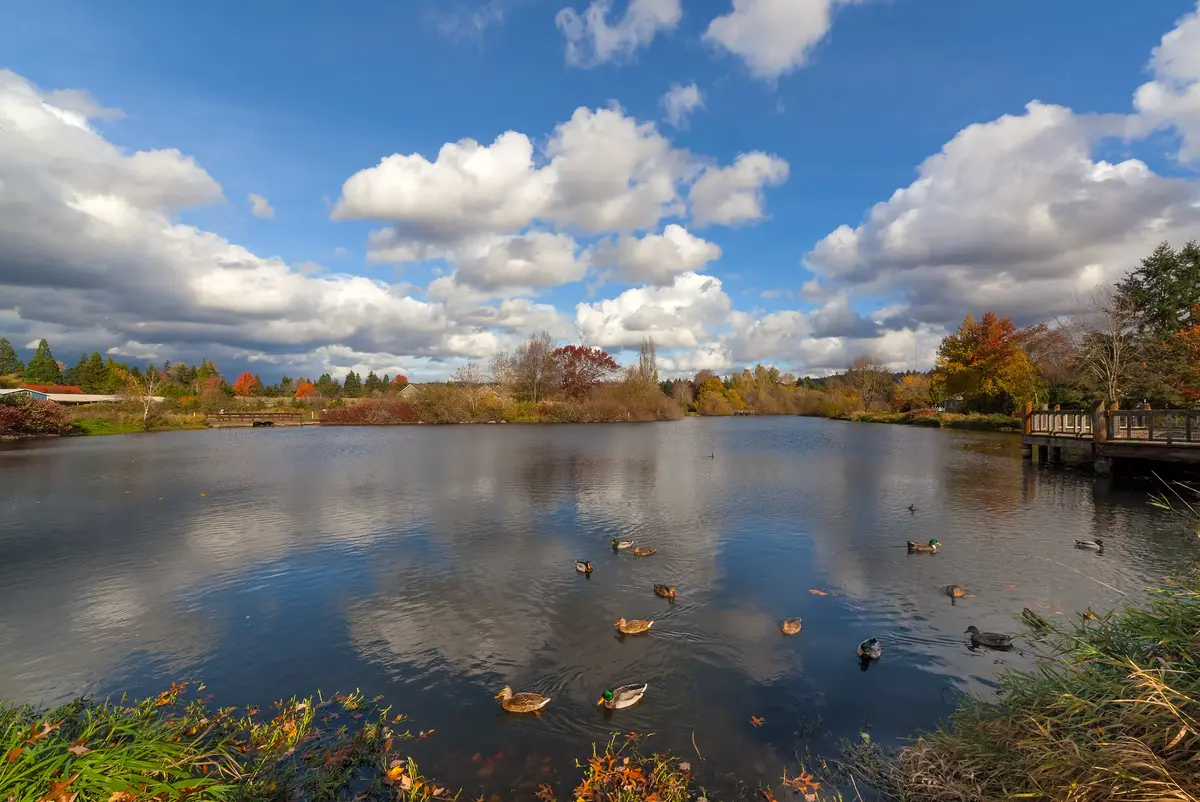
Outdoors, the city punches above its weight. Tualatin Hills Nature Park is genuinely remarkable for an urban nature park — old-growth sections, wildlife, real trails. Cooper Mountain Nature Park adds an entirely different landscape on the southwest side. The Fanno Creek Greenway Trail connects Beaverton to neighboring communities, and Hyland Woods and Greenway Park fill in the middle. Buyers who run, bike, or walk for exercise rarely feel like they've run out of options here.
The retail picture is practical in the best way. Most daily needs stay in the city — Cedar Hills Crossing covers the north side, Progress Ridge Town Square covers the south, and downtown Beaverton is building out its own walkable commercial layer. A serious shopping trip is still manageable, though buyers coming from dense urban settings will notice the shift to a more spread-out retail geography.
Oregon's 141 sunny days a year is the real number I share with people moving from sunnier climates. The gray winters are part of what makes summer here feel like a genuine gift — but they are real, they last, and buyers who haven't spent a Pacific Northwest winter yet should factor that into their calculus honestly.
The Honest Numbers: What Your Money Buys Here
The typical home price in Beaverton sits at $527,947 as of July 2026, with an effective property tax rate of approximately 0.84%. For Oregon, that's a reasonable tax burden — it won't blindside buyers coming from higher-tax states.
I want to be straightforward about what that price means. The median household income in Beaverton is $98,622, which is a healthy number — but it falls short of what's needed to carry the typical home here by a meaningful gap. That tells you something about who is buying: dual-income households, buyers bringing equity from a previous sale, and employees at the higher end of the tech and apparel salary bands that Nike, Tektronix, and Columbia Sportswear represent. First-time buyers with a single income face real headwinds here, and I'd rather say that plainly than let someone get deep into a search before the math catches up.
Typical two-bedroom rents run $1,730–$2,110, which positions Beaverton as a market where ownership carries a real premium over renting — a calculation worth making explicitly before deciding whether now is the right time to buy.
What the median buys in practice: in neighborhoods that sit below the city median — Central Beaverton and Five Oaks — you're looking at older housing stock, smaller square footage, and more competitive entry points. In Sexton Mountain, which runs above the median, you're getting newer construction, larger lots, and more of what buyers from suburban California or the Pacific Northwest's pricier coastal markets think of as "the package." Neither tier is wrong. They serve different buyers at different life stages.
On crime: Beaverton carries a violent crime rate of 4 per 1,000 residents and a property crime rate of 26 per 1,000 residents. For comparison, the state figures are a violent crime rate of 3.3 per 1,000 and a property crime rate of 24.5 per 1,000; nationally, those figures sit at 3.7 per 1,000 for violent crime and 18.4 per 1,000 for property crime. Beaverton runs close to Oregon's averages and above the national property crime figure — a pattern consistent with most Oregon cities its size.
Weekends and Local Favorites
When I'm showing Beaverton to buyers who want to get a feel for how the city actually lives on a weekend, these are the places I tell them to spend time.
For coffee, the independent scene here is real. Ki Coffee & Brunch has built a following for good reason. Brickhaus Coffee, Symphony Coffeehouse, and Thornton Family Coffee Roasters each have their own personality — Beaverton isn't a Starbucks-or-nothing city. La Floridita PDX adds something completely different to the mix. On any given weekend morning, these places fill up with the kind of neighborhood regulars who actually live here, not just people passing through.
For dinner, the options are more varied than the suburb reputation suggests. Thai Bloom! is a perennial favorite among clients who've moved here from cities with strong Thai food scenes. The Westgate Bourbon Bar & Taphouse draws a consistent crowd that values the bar program as much as the food. Oswego Grill Beaverton brings a more polished steakhouse feel. The Fireside Grill has loyal regulars. Golden Valley Brewery and Restaurant — the Beaverton location — is the kind of brewpub that earns its place as a neighborhood anchor.
The Beaverton Farmers Market is not background color — it's an institution. On a peak summer morning the crowds reflect the full demographic breadth of the city, with well over a hundred vendors and live music running through the lot. Buyers who move here in winter sometimes don't experience it until their first spring, and then it becomes a fixture of their weekly routine.
For outdoor time, Tualatin Hills Nature Park is where I'd send anyone who needs convincing that Beaverton has real green space. The trail system there is extensive enough that regular visitors still find new routes. Cooper Mountain Nature Park on the southwest side offers a completely different terrain — open meadows, hillside views, native oak habitat. The Fanno Creek Greenway Trail and Hyland Woods are the connective tissue for the city's trail network. Greenway Park anchors its own corner of the city well.
Final Advice From Elizabeth
Quick Takeaways & FAQs
✅ Beaverton is home to Nike, Tektronix, and Columbia Sportswear — one of the strongest tech and apparel employment clusters on the Portland Metro's west side.
⚠️ The typical home price of $527,947 (July 2026) outpaces what the median household income can comfortably carry, making dual-income or equity-backed buyers the most common buyers in this market.
📍 The WES Commuter Rail starts at the Beaverton Transit Center and connects south through Tigard, Tualatin, and Wilsonville — a transit option many Portland-focused buyers don't know exists until they're already here.
What is the real commute from Beaverton to Portland like?
How are the Beaverton schools, really?
Which Beaverton neighborhood should I focus on?
What does $527,947 actually buy in Beaverton right now?
How fast do homes move in Beaverton? Is it still competitive?
I'm also looking at Hillsboro and Tigard. How do I decide?
What surprises people after they move to Beaverton?
Is Beaverton a good fit for someone who wants to be near nature and outdoor trails?
Moving to Oregon?
Tell us what you need help with and we'll connect you with local resources.
