
Maybe your employer is relocating you to the Portland Metro and Beaverton keeps coming up on the shortlist. Maybe you have already settled on the area and now you are doing the deeper work — figuring out which school your kids would actually attend, what the test scores look like past the headline rating, and whether the youth sports scene is the kind your family would plug into on a Saturday morning. Beaverton School District 48J is the third-largest school district in Oregon, covering a geography that runs well beyond the city limits into Aloha, Hillsboro, and unincorporated corners of Washington County. That scale is both a strength and a complication for incoming families.
The district holds an A- rating, according to Niche, which puts it among the stronger districts in the state — but that single letter covers a wide range of individual school outcomes. With 36,959 students enrolled in 2025-26, spread across 34 elementary schools, nine middle schools, six high schools, and a set of option and charter schools, the district is large enough to offer genuinely differentiated programs: an IB-for-all high school, a STEM-focused option school accessible by lottery, and active Career Technical Education pathways across all six comprehensive high schools. Proficiency outcomes and graduation rates vary meaningfully by school, and the district-level figures are a starting point, not a final answer.
Outside the classroom, the Tualatin Hills Park and Recreation District — headquartered right here in Beaverton and the largest parks district in Oregon — runs a youth sports infrastructure that most cities four times this size cannot match. Baseball, soccer, lacrosse, basketball, cricket, and more run through a system that coordinates over 300 fields with the school district. For a family with active kids, this is one of the most tangible day-to-day advantages of landing in Beaverton rather than a smaller suburb.
Whether you are comparing Beaverton to Hillsboro or Portland, weighing neighborhood attendance zones, or trying to understand where the IB programs live and who gets into them, the sections below break down what the district actually looks like — its standout programs, its honest weaknesses, and how youth life here extends well beyond the school day.
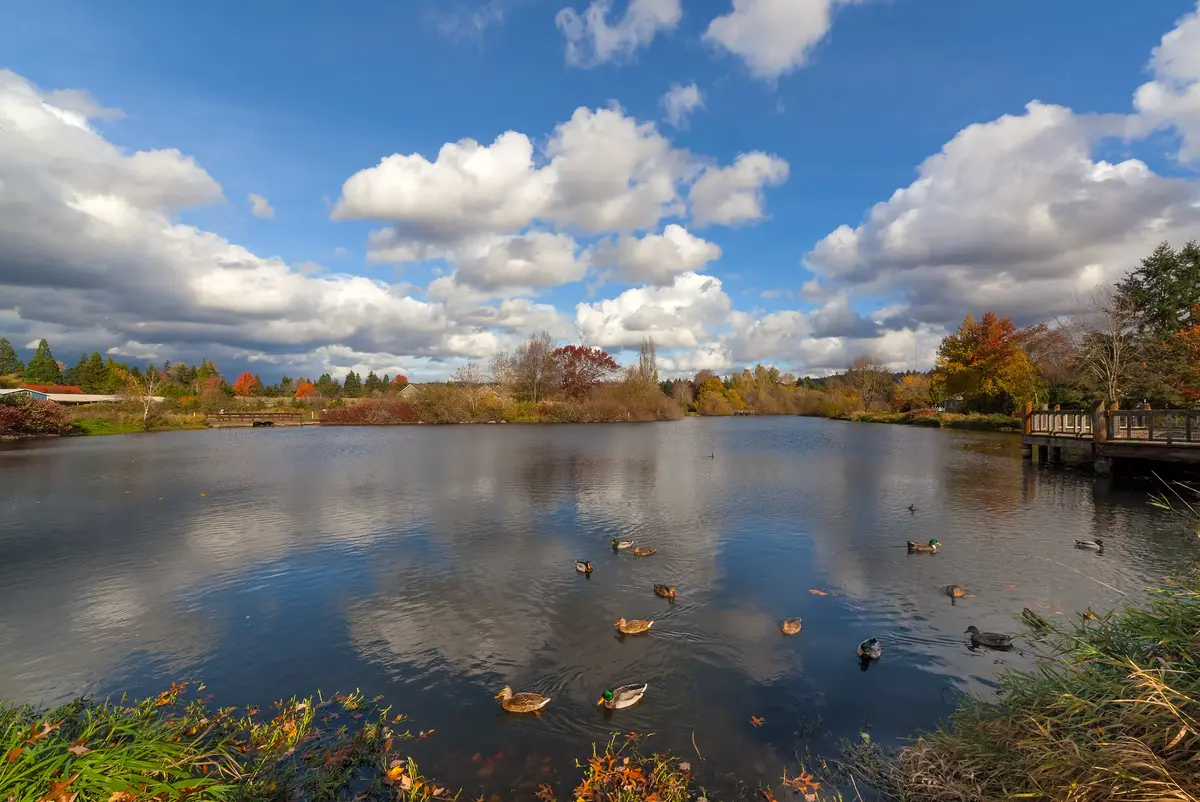
Beaverton School District 48J: The Big Picture
Beaverton School District 48J is not just the district for the city of Beaverton — it is a regional system. It serves students in Aloha, parts of Hillsboro, and unincorporated stretches of Washington County, which means your assigned school depends entirely on your specific address, not just which city you land in. Confirm your attendance zone directly with the district before you make an offer.
The scale of the district is the first thing to understand: 36,959 students enrolled in 2025-26 across a network that includes 34 elementary schools, nine middle schools, six high schools, five option schools, 33 Career Technical Education programs, and two charter schools. That breadth means a genuine range of programming — but it also means wide variation in outcomes from one school to the next.
The student body reflects Beaverton's genuine diversity — 60% minority enrollment, with 27% Hispanic or Latino students, 18.2% Asian or Asian/Pacific Islander, and 41.3% white, among other groups. About 26.1% of students are economically disadvantaged. That diversity is an asset in terms of global perspective and community texture, and it is also a driver of the school-by-school variation in outcomes that families need to research before choosing a neighborhood.
| Category | BSD 48J |
|---|---|
| Overall rating (Niche) | A- |
| Students enrolled (2025-26) | 36,959 |
| Elementary schools | 34 |
| Middle schools | 9 |
| Comprehensive high schools | 6 |
| Option / charter schools | 7 |
| Minority enrollment | 60% |
| Economically disadvantaged students | 26.1% |
| CTE programs | 33 |
The A- from Niche reflects a district that is genuinely performing — but it is a district-level average across schools with very different student populations and resource concentrations. The takeaway: your neighborhood assignment matters enormously, and the district-level rating is the starting point for research, not the ending one.
Three Programs Worth Knowing About
The district's six comprehensive high schools each carry active OSAA athletics programs and standard college-prep curricula. But three programs stand out for families making neighborhood and school decisions, and they are different enough that knowing which one fits your kid can actually shape where you choose to live — or whether you apply by lottery.
Mountainside High School — IB for Everyone
Mountainside opened in 2017 as the district's newest comprehensive high school, and it is built around an unusual premise: International Baccalaureate coursework is not opt-in here. All 11th-grade students take a minimum of three IB courses, making it an "IB for All" school rather than a selective IB track layered onto a traditional curriculum. Seniors complete either a full IB Diploma or a Career Pathway — both rigorous, and both the result of students who have spent years inside the IB framework rather than dipping into it junior year.
This is a meaningful structural difference from how most districts handle IB. If your family is drawn to the IB philosophy but you are worried your kid won't self-select into it, Mountainside removes that variable entirely.
Sunset High School — IB Diploma Programme
Sunset is the second-oldest high school in the district, opened in 1959, and its athletic teams — the Apollos — have been a fixture in Beaverton sports for generations. Sunset also offers the IB Diploma Programme, in the more traditional opt-in format: students who want the full IB track pursue it alongside the school's broader population. Friday night football at Sunset fills the stands in a way that feels distinctly Pacific Northwest suburban — communal, family-forward, and loud.
Beaverton Academy of Science and Engineering (BASE) — The Lottery Option
BASE is a district option school serving grades 6 through 12, admission by lottery. It is physically sited in Hillsboro, but it is a Beaverton School District school, open to any family in the district by application — the geographic note is worth knowing so you are not confused by the address. Students choose one of three Career Technical Education pathways: Biomedical Health Careers, Computer Science and Information Technology, or Engineering. Every course of study runs through that lens.
BASE does not field traditional sports teams — a genuine trade-off for families whose kids live for after-school athletics. What it offers instead is a smaller, tighter academic community of roughly 852 students (2024-25 enrollment) who chose to be there and chose a specific technical direction. For the right student, that focus is the whole point.
Best for: Families drawn to IB or STEM pathways — and willing to be strategic about attendance zones or willing to navigate a lottery — will find options here that most Oregon suburbs cannot match.
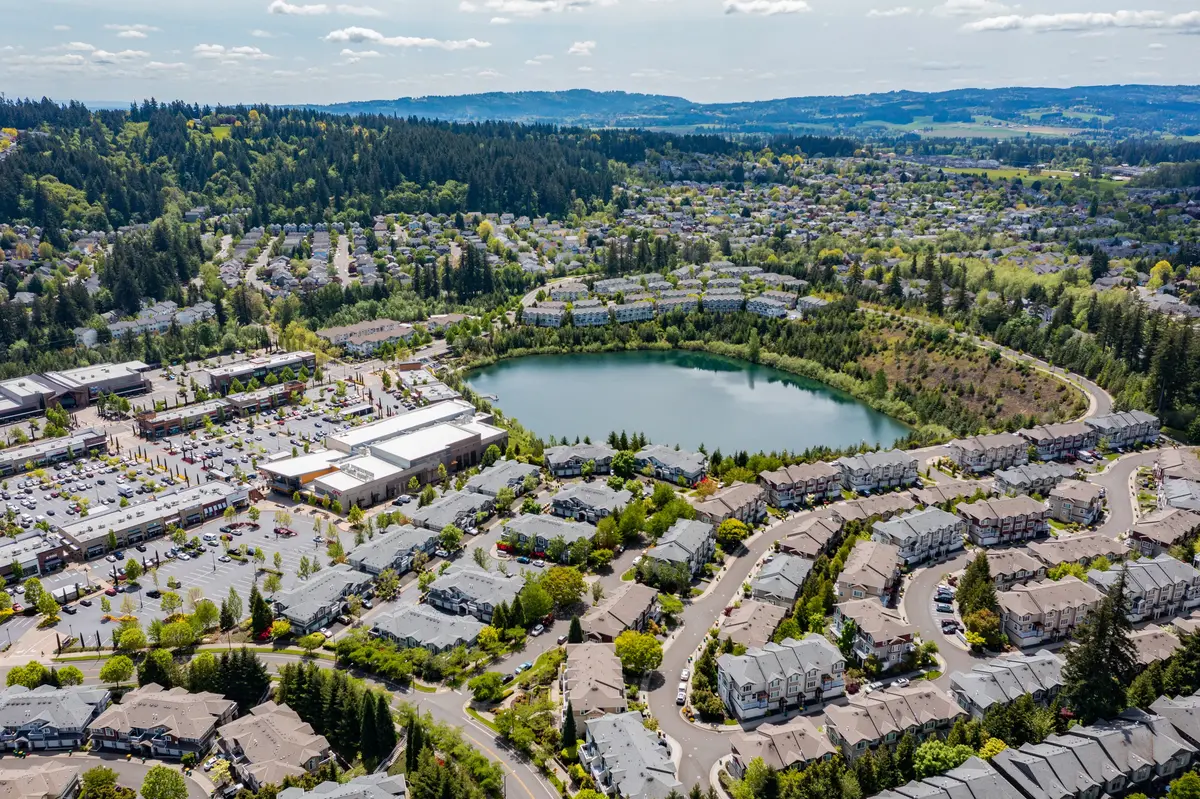
Youth Sports and Kids Activities in Beaverton
The Tualatin Hills Park and Recreation District is the infrastructure story nobody tells you about Beaverton until you are already living here. The largest parks district in Oregon, it is headquartered in Beaverton, covers 50 square miles, serves roughly 270,000 residents, and operates more than 200 facilities across 2,100 acres — including eight swimming centers. For families, the practical meaning of that is simple: youth sports here are organized, well-resourced, and genuinely accessible.
Recreational Leagues — The Entry Point
The Tualatin Hills Athletic Center manages youth and adult leagues and works directly with the Beaverton School District to coordinate more than 300 fields across the district. Basketball runs through THPRD directly. Baseball, softball, football, soccer, lacrosse, and cricket all run through affiliated leagues that handle registration, team formation, and scheduling under the THPRD umbrella. The field allocation partnership with the school district is what makes the logistics work at this scale — it is not a coincidence that a suburb of 97,812 residents has a rec sports infrastructure that rivals cities twice its size.
Soccer — The Dominant Youth Sport
Youth soccer through THPRD is available for boys and girls ages 5 through 18, organized by school attendance area and coordinated by the Tualatin Hills Junior Soccer Recreational League. That school-attendance-area structure matters: teams are built around kids who already know each other, which smooths the social side of joining a new league when you move to town. Competitive and club soccer tryouts are held annually in May for year-round play — so if your family is moving and your kid plays at a club level, the spring tryout window is the one to plan around.
School Athletics — OSAA and Beyond
All six comprehensive high schools in the district carry active OSAA athletics programs. Beaverton High School, the oldest in the district — established in 1902, and believed to be the oldest public high school still operating in its original location in Oregon — brings a weight of tradition to its athletic programs that newer schools are still building. The Beavers' home games draw the kind of crowd that reminds you football is still a community gathering, not just a game.
For middle and elementary school kids, the school-district and THPRD partnership means access to facilities and organized programming well beyond what a single school could support on its own. The parks and recreation picture is worth reading alongside this section — Tualatin Hills Nature Park, Cooper Mountain Nature Park, and the Fanno Creek Greenway Trail all figure into how active families spend their non-practice hours here.
Best for: Families Nature Families with kids who play multiple sports, or who want a clear path from recreational leagues into club play, will find the infrastructure here essentially built for them.
Looking to buy in Beaverton? Estimate your payment.
Enter your numbers to see an estimated monthly mortgage payment.
Estimate only. Excludes HOA fees and mortgage insurance. The interest rate above is a starting point, not a quoted rate — replace it with your own to see real numbers. Insurance is a flat placeholder, not a Beaverton quote.
What the A- Rating Does and Doesn't Tell You
Niche's A- for Beaverton School District 48J is a real signal — and a partial one. It reflects a district that invests in teachers, maintains meaningful graduation rates, and offers programming that most Oregon districts cannot. What it does not reflect is the school-by-school variation that is the lived reality for families in different parts of town.
Schools serving higher concentrations of economically disadvantaged students show lower state-assessment proficiency rates than the district average. Schools in more affluent attendance zones tend to outperform that same average by a notable margin. The district-level proficiency figures are a mean across a genuinely wide distribution — useful for comparing Beaverton to other Oregon districts, less useful for predicting what your child's specific school will look like.
Attendance is a real challenge district-wide — a signal worth acknowledging if your child already struggles with consistent school engagement and you are hoping a new environment resets that pattern. That challenge is not evenly distributed across schools, and individual profiles vary, but it is a reason to look at school-level data rather than stopping at the district summary.
The practical takeaway: the A- means you are not choosing between a strong district and a weak one. You are choosing within a strong district, and the difference between the best attendance zone for your family and a less-considered one can be significant. Research individual schools using the district's own school locator tool, check state assessment profiles by school, and — most importantly — confirm your assigned school for any specific address before you make a housing decision.
For the neighborhood context that shapes which school you land in, the neighborhoods guide breaks down what each part of town actually looks like and who tends to settle there.
Who This District Is Not Right For
BSD 48J is a strong district. It is also genuinely not the right fit for every family, and being honest about that is more useful than a sales pitch.
Families Who Prioritize Top-Quartile Test Scores Above All Else
If your measuring stick is raw state-assessment proficiency and you want to be confident your assigned school clears a high bar without doing further research, Beaverton's district-level numbers will disappoint you. Proficiency rates vary significantly by school within the district, and some schools underperform what the headline A- implies. Families who want certainty rather than research should plan to spend real time on individual school selection before choosing a neighborhood.
Families Whose Kids Are Defined by School Sports — and Considering BASE
The Beaverton Academy of Science and Engineering is a compelling option for the right student. It is not the right school for a kid who plays three sports and whose social world is built around team athletics. BASE does not field traditional sports teams. That is a structural fact, not a knock on the school — but a family that applies to BASE hoping their student can just join the Beaverton High School football team is going to be disappointed.
Families Who Move a Lot and Want Consistency
The district's size means that moving to a different part of town — even within Beaverton — can shift your child's school assignment entirely. The attendance zone boundaries are real and consequential. If your work involves relocation every few years and consistency of school environment is the priority, a smaller district where moving across town does not change schools might suit your family better.
Families Whose Kids Struggle With School Attendance
Attendance is a genuine challenge across the district — not unique to Beaverton, and not evenly spread across every school, but worth acknowledging. If your child already has a complicated relationship with consistent attendance and you are hoping a fresh start resolves it, look carefully at individual school profiles rather than assuming the district-wide picture applies to every campus equally.
Weekends and Local Favorites
A school-guide section about the weekend might seem out of place, but families do not evaluate a city on school days alone. What you find between pickup and bedtime on a Saturday is part of the equation — and Beaverton has a specific answer to that question.
The Beaverton Farmers Market is one of the largest in the Pacific Northwest, running through the warm months and drawing crowds that include a meaningful share of the city's international community. It is the kind of place where kids are underfoot in the best possible way — sampling produce, watching vendors, generally getting in the way of adults trying to shop. It doubles as an informal social hub for families who have recently moved to town and are still building their network.
For food, the local scene runs wide: Thai Bloom! draws a loyal following, The Westgate Bourbon Bar and Taphouse suits the older-kids-in-tow dinner crowd, Oswego Grill Beaverton and The Fireside Grill round out the sit-down options for family meals, and Golden Valley Brewery and Restaurant gives families a casual spot with something for everyone. For coffee before the Saturday league games, Ki Coffee and Brunch, Brickhaus Coffee, Symphony Coffeehouse, Thornton Family Coffee Roasters, and La Floridita PDX cover the range from quick drip to leisurely brunch-adjacent mornings.
Outdoors, the Tualatin Hills Nature Park and Cooper Mountain Nature Park are where families with younger kids tend to spend the most time — trails that are genuinely engaging for a six-year-old without requiring a full-day commitment. The Fanno Creek Greenway Trail and Hyland Woods and Greenway Park round out the options for families who want a longer run or a bike with older kids.
One thing newcomers consistently note after their first fall here: the Patricia Reser Center for the Arts brings a level of programming — performances, exhibits, school field trips — that is unusual for a suburb of this size. It is worth building into the family calendar once you land.
Local Expert Takeaway: Beaverton School District 48J is a district where your address is your destiny more than the headline rating suggests. The A- from Niche is real, but it sits over a wide spread of school-by-school outcomes — and the attendance zone you land in when you buy or rent is the variable that actually determines your family's experience. The youth sports infrastructure through THPRD is a genuine differentiator: the field-sharing partnership with the school district, the soccer league organized by school attendance area, and eight swimming centers across 50 square miles add up to something most suburbs cannot replicate. The families who thrive here are the ones who research individual schools before picking a neighborhood, plug into the THPRD rec leagues early, and treat the Beaverton Farmers Market as a weekend anchor rather than an occasional errand.
Quick Takeaways & FAQs
✅ Beaverton School District 48J holds an A- rating from Niche and offers genuinely differentiated programs — including an IB-for-all high school and a STEM option school accessible by lottery — that most Oregon suburbs cannot match.
⚠️ Proficiency outcomes vary significantly by school within the district, and the district-level rating can mask meaningful differences between attendance zones — research individual schools before choosing a neighborhood.
📍 The Tualatin Hills Park and Recreation District, headquartered in Beaverton, is the largest parks district in Oregon and coordinates youth sports leagues across more than 300 fields in partnership with the school district — making rec-league access here unusually strong for a city of this size.
What is Beaverton School District 48J's overall rating?
What is the IB program at Mountainside High School and how does it differ from other IB schools?
What youth sports are available through the Tualatin Hills Park and Recreation District in Beaverton?
What is the Beaverton Academy of Science and Engineering (BASE) and how do I apply?
How much does Beaverton school performance vary from school to school within the district?
Moving to Oregon?
Tell us what you need help with and we'll connect you with local resources.
