
Maybe you've been renting in Portland or Hillsboro and doing the math: Beaverton keeps coming up as the place where the numbers almost work. Almost. The typical home price here — $527,947 as of July 2026 (Zillow Home Value Index) — sits noticeably above what the city's median household income of $98,622 can comfortably support on its own. That gap is the central challenge for first-time buyers in this market, and it is better to understand it before you fall in love with a house than after you are under contract.
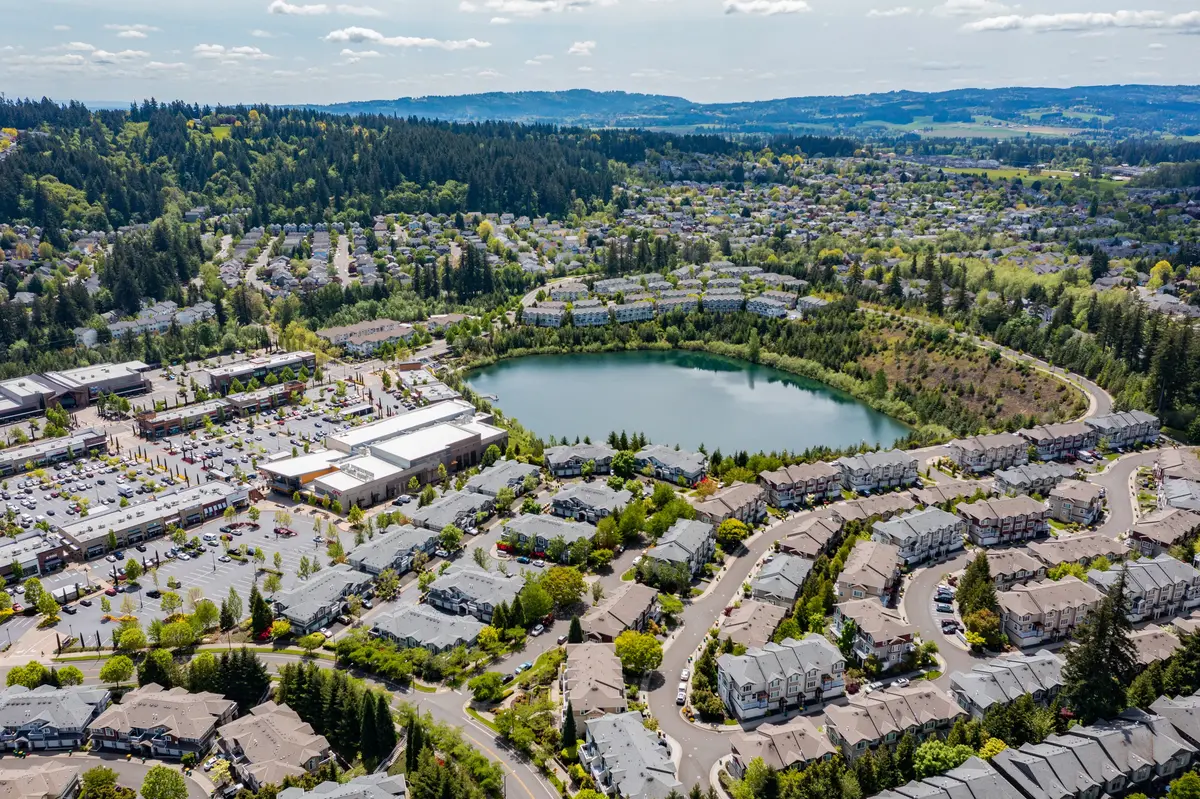
Beaverton is Oregon's 7th-largest incorporated city, with a population of 97,812 spread across neighborhoods that range from older, 1970s ranch homes in Five Oaks and Central Beaverton to newer construction in Murrayhill and Progress Ridge. Major employers like Nike, Tektronix, and Columbia Sportswear anchor a professional workforce, which means buyer competition is real — particularly for well-priced homes in the Beaverton School District 48J, which holds an A- rating, according to Niche. The schools page covers the district in full detail.
Beaverton sits roughly 25% above the national cost-of-living average — a reality that makes disciplined budgeting essential. For first-timers, the most important numbers are not just the purchase price but the total cash needed to close, the ongoing cost of homeownership including the effective property tax rate of 0.84%, and how much room your income actually has after a mortgage payment. The cost-of-living page breaks down the full picture. Oregon does offer a First-Time Home Buyer Savings Account that allows qualifying residents to deduct up to $6,285 per year (up to $12,570 for joint filers) from Oregon taxable income on deposits made toward a home purchase — a useful tool while you are saving.
Whether you are months away from making an offer or just starting to research the market, the sections below walk through what a first-timer's budget actually buys in Beaverton, how the local buying process works step by step, how to model your affordability, and the specific mistakes that cost buyers here the most.

The Beaverton First-Time Buyer Reality
The Beaverton market is not brutal, but it is not forgiving either. The typical home price of $527,947 (July 2026, Zillow Home Value Index) means entry-level inventory — the older ranches and townhomes that first-timers can realistically reach — competes with buyers who have equity from a prior sale. Well-priced homes in good school boundaries rarely sit, and arriving without full preparation means watching listings close around you.
The entry point into Beaverton ownership is concentrated in neighborhoods like Five Oaks and Central Beaverton, both of which run below the city-wide typical price. These areas carry solid transit access and established street grids, but the housing stock is older — many homes date to the 1970s and 1980s — which means inspection surprises are common. A home that looks clean at the surface can carry deferred maintenance that reshapes your budget fast. For the full neighborhood breakdown, the neighborhoods page covers each area in detail.
Oregon defines a first-time homebuyer the same way HUD does: anyone who has not owned a primary residence in the three years before their purchase date. If you sold a home a few years ago, you may still qualify. That matters for loan program eligibility. What it does not change is the market reality: Beaverton rewards buyers who arrive prepared, pre-approved, and clear-eyed about what their budget actually reaches.
The Homebuying Process in Beaverton, Step by Step
Step 1: Get Pre-Approved Before You Tour Anything
In Beaverton, this is not optional. Sellers routinely will not consider an offer without a pre-approval letter from a reputable lender — and in a market where desirable listings move quickly, showing up without one means you cannot act when you need to. Pre-approval requires W-2s, two years of tax returns, recent pay stubs, bank and asset statements, and a government-issued ID. The letter you receive states a maximum loan amount and is typically valid for 30 to 90 days.
Shop at least two or three lenders. If you query multiple lenders within a 45-day window, the credit bureaus treat all the pulls as a single inquiry — so rate shopping does not hurt your score the way buyers fear. Conventional loans generally require a minimum 620 credit score, though 740 or above produces meaningfully better rates. FHA loans allow scores as low as 580 with 3.5% down.
Step 2: Work with a Local Buyer's Agent
A buyer's agent who knows Beaverton's school boundaries, neighborhood dynamics, and how individual listing agents operate is not a luxury here — it is how you avoid buying in the wrong spot for your situation. Interview two or three agents before committing.
Step 3: Search and Make an Offer
When you find the right home, your agent will pull comparable sales, assess list-price positioning, and help you decide how to structure an offer. In Beaverton's current market, arriving close to list price on a well-priced home is normal. The most common first-timer error at this stage is writing an offer without a clear strategy on contingencies — specifically which ones to keep and which to modify. Do not waive your inspection contingency to compete; the cost of that decision on a 1980s Beaverton home can easily run into five figures.
Step 4: Inspection and Appraisal
Many Beaverton homes were built between the 1970s and 1990s. A thorough general inspection is essential, and it should be followed by specialized inspections — sewer scope, radon, roof — whenever the home's age or condition warrants. Pull the city's permit history too: unpermitted additions or remodels are a real issue in older Beaverton neighborhoods and can complicate financing or resale.
The appraisal is ordered by your lender and is separate from the inspection. If the home appraises below the purchase price, you will need to negotiate, make up the gap in cash, or walk away — which is why your appraisal contingency matters.
Step 5: Closing Through Escrow
Oregon closes through an escrow company, not an attorney — the escrow officer manages document preparation, fund collection, and disbursement. Your lender is required to issue a Loan Estimate within three business days of your application, itemizing expected fees. Oregon property taxes are paid in arrears and are prorated at closing based on your closing date. Final closing costs for buyers in Oregon typically run 2% to 5% of the purchase price — budget toward the higher end of that range on your first pass.
How Much Home Can You Afford in Beaverton
The table below models five realistic entry scenarios for a first-time buyer in Beaverton. Closing cost estimates use the Oregon typical range of 2% to 5% of the purchase price; the figures shown use 3% as a midpoint estimate. These are approximations — your actual costs depend on lender fees, title and escrow charges, prepaid items, and negotiated seller concessions. The interactive calculator below the table lets you model your specific payment.
| Scenario | Purchase Price | Loan Type | Down Payment | Est. Closing Costs (3%) | Est. Cash Needed at Table |
|---|---|---|---|---|---|
| FHA minimum down | $400,000 | FHA | 3.5% (~$14,000) | ~$12,000 | ~$26,000 |
| Conventional minimum down | $400,000 | Conventional | 3% (~$12,000) | ~$12,000 | ~$24,000 |
| FHA — near city typical | $527,000 | FHA | 3.5% (~$18,445) | ~$15,810 | ~$34,255 |
| Conventional — near city typical | $527,000 | Conventional | 3% (~$15,810) | ~$15,810 | ~$31,620 |
| Conventional — stronger down payment | $527,000 | Conventional | 10% (~$52,700) | ~$15,810 | ~$68,510 |
| Conventional — upper entry range | $600,000 | Conventional | 5% (~$30,000) | ~$18,000 | ~$48,000 |
A few things worth understanding before you finalize your budget. Private mortgage insurance applies to conventional loans with less than 20% down and adds to your monthly cost — factor that in when modeling affordability. HOA fees exist in many Beaverton condos and townhomes and can meaningfully reduce your purchasing power. Homebuyer education courses covering the full process are available through Oregon-based organizations such as the Portland Housing Center; completing one can expand your access to certain loan products and is worth the time regardless.
Oregon's First-Time Home Buyer Savings Account is worth opening if you are still in the saving phase. Qualifying residents can deduct up to $6,285 per year (up to $12,570 for joint filers) from Oregon taxable income on deposits earmarked for a home purchase. The deduction phases down above $104,000 for single filers and $149,000 for joint filers, and accounts must be opened by December 31, 2026. Funds can be used toward the down payment, closing costs, appraisals, and loan origination fees.
Looking to buy in Beaverton? Estimate your payment.
Enter your numbers to see an estimated monthly mortgage payment.
Estimate only. Excludes HOA fees and mortgage insurance. The interest rate above is a starting point, not a quoted rate — replace it with your own to see real numbers. Insurance is a flat placeholder, not a Beaverton quote.
Common First-Time Buyer Mistakes in Beaverton
Touring Homes Before You Have Pre-Approval
It is genuinely common and genuinely damaging. You find a home, want to move quickly, and then spend a week gathering documents — by which point the listing is under contract. In Beaverton, pre-approval is the starting gun, not a formality you handle later. Get the letter before your first tour.
Waiving the Inspection Contingency to Win a Bidding Situation
This is the mistake with the highest potential cost. A substantial portion of Beaverton's housing stock dates to the 1970s and 1980s — slab foundations, original electrical panels, aging sewer lines, and roofs that look fine on a walk-through and cost serious money to address. An inspection contingency gives you a documented way out or a negotiating path if problems surface. Losing a home to a competing offer is disappointing; waiving an inspection and discovering a failed sewer line after closing is a financial event. Do not skip it.
Underestimating the Cash Needed at Closing
First-timers routinely focus on the down payment and underprepare for closing costs. In Oregon, buyer closing costs typically run 2% to 5% of the purchase price — on a $527,000 home, that is roughly $10,540 to $26,350 on top of your down payment. Prepaid items like homeowner's insurance and property tax escrow add further. Budget toward the high end of the range until your Loan Estimate tells you otherwise.
Ignoring School Boundary and Neighborhood Reality Before Making an Offer
Beaverton School District 48J covers a large, geographically varied city. Which specific school your address feeds into matters — both for families with kids and for resale value. Two homes on the same street can feed different elementary schools depending on which side of a boundary line they sit. Ask your agent to confirm the exact boundary assignment for any home you are seriously considering. Similarly, buyers relocating from Portland sometimes underweight how different Beaverton's western neighborhoods feel from Central Beaverton — the commute patterns, the walkable streets, and the daily-life rhythms are not uniform across the city. The neighborhoods page and the living in Beaverton page give you a clearer map before you commit.

Local Expert Takeaway: Beaverton rewards first-time buyers who do the preparation work before they fall in love with a listing. The typical home price here means you will almost certainly need a household income above the city median to buy comfortably — and the market moves quickly enough that showing up without pre-approval essentially means watching from the sidelines. The most useful thing you can do right now, months before you are ready to make an offer, is get your credit in order, open an Oregon First-Time Home Buyer Savings Account if you qualify, and spend time in Five Oaks and Central Beaverton — the neighborhoods where first-timer budgets actually reach — so you understand what the entry point here really looks and feels like.
Quick Takeaways & FAQs
✅ Oregon's First-Time Home Buyer Savings Account lets qualifying residents deduct up to $6,285 per year from state taxable income on deposits saved toward a purchase — a concrete advantage while building your down payment.
⚠️ The gap between Beaverton's median household income and the income needed to carry the typical home price is real and significant — first-time buyers here almost always need dual incomes, a larger-than-minimum down payment, or both.
📍 Many Beaverton homes were built in the 1970s and 1980s — always get a full inspection including a sewer scope, and pull the city's permit history before waiving any contingency.
What credit score do I need to buy a home in Beaverton?
How much should I budget for closing costs in Beaverton?
Do I qualify as a first-time buyer in Oregon if I owned a home years ago?
What loan types are available to first-time buyers in Beaverton?
Is the Beaverton housing market competitive for first-time buyers?
Moving to Oregon?
Tell us what you need help with and we'll connect you with local resources.
