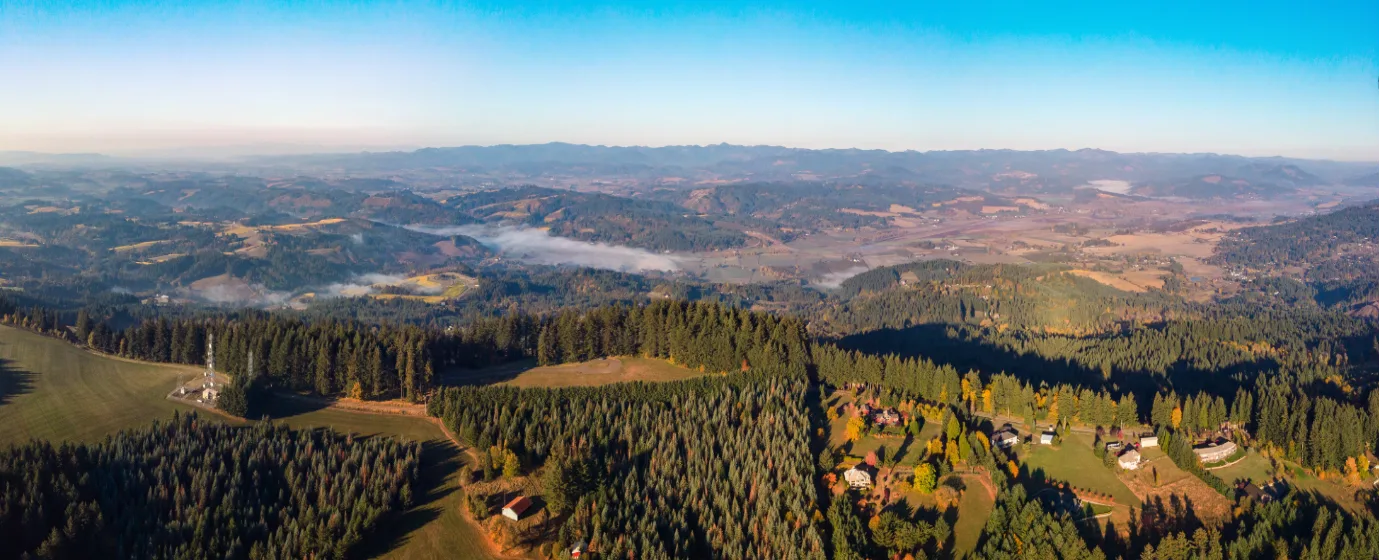
What Is Living in Hillsboro, Oregon Like?
Maybe your employer moved you here for an Intel contract. Maybe you were priced out of Portland proper and someone mentioned Hillsboro as the place where the tech jobs actually are. Either way, the first thing that surprises people is the scale — this is the 5th-largest incorporated city in Oregon, with a population of 111,126, yet it still gets filed away in most people's minds as a Portland suburb. It is that, technically. But Hillsboro has its own economy, its own downtown, its own light rail terminus, and enough going on that plenty of residents go weeks without crossing into Portland at all. The city sits west of Portland, connected by US-26 (Sunset Highway) and by TriMet's MAX Blue Line, which runs its full 33-mile length from Hatfield Government Center here in Hillsboro east to Gresham.
Intel is the spine of this city's economy in a way that is difficult to overstate. The company's Hillsboro operation — four campuses, tens of thousands of tech workers — is Intel's single-largest manufacturing site worldwide and the anchor of what the industry calls the Silicon Forest. Hillsboro accounts for 78% of Oregon's semiconductor workforce. The Hillsboro School District, with 18,521 students enrolled in 2025-26, holds a B rating, according to Niche, and draws families who want a solid district in a city where the median household income of $106,409 reflects the professional workforce Intel and its supplier network have built here. Nike's regional presence and Washington County government round out the major employment base, making the city considerably more economically self-contained than most Portland-area suburbs.
The typical home price in Hillsboro sits at $518,047 (Zillow Home Value Index, July 2026) — noticeably below what you would pay in many comparable tech-employment markets. The typical 2-bedroom rent runs $1,790–$2,180, and the effective property tax rate is approximately 0.84%. Oregon has no sales tax, which compounds the affordability advantage for day-to-day spending. For outdoor life, the city delivers: Jackson Bottom Wetlands Preserve, Rood Bridge Park, and Tualatin Hills Nature Park give residents genuine green space well beyond the typical suburb, and the MAX means a car-free trip to Portland is genuinely practical for people who live near a station. The city also runs HiLight, a municipal broadband service that has expanded to serve more than 11,000 homes and businesses — an unusual amenity that resonates strongly with the remote-working and tech-forward households Hillsboro tends to attract.
Whether you are seriously considering a move or still comparing options, the sections below break down Hillsboro's neighborhoods, housing market, commute realities, local favorites, and what daily life here is really like — the things that do not fit in a spreadsheet but matter most once you are actually living somewhere.
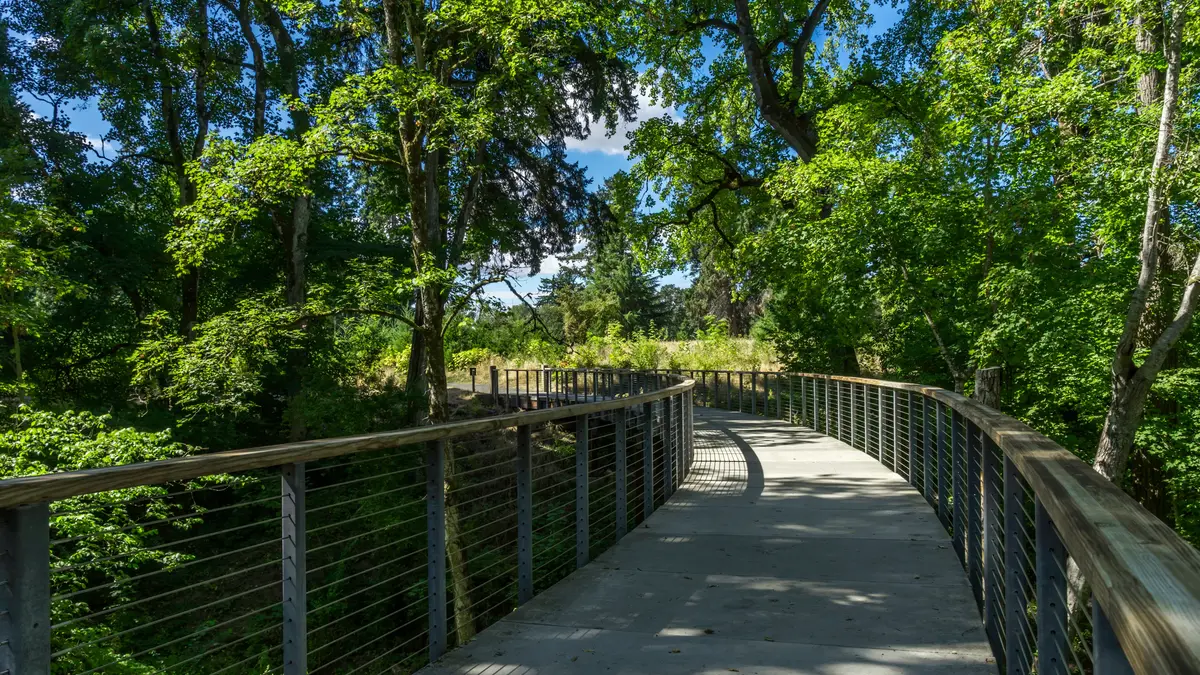
Hillsboro at a Glance
Looking to buy in Hillsboro? Estimate your payment.
Enter your numbers to see an estimated monthly mortgage payment.
Estimate only. Excludes HOA fees and mortgage insurance. The interest rate above is a starting point, not a quoted rate — replace it with your own to see real numbers. Insurance is a flat placeholder, not a Hillsboro quote.
Why Are People Moving to Hillsboro?
The short answer for most people who move here: the job. Intel's four campuses make Hillsboro a genuine destination rather than a pass-through, and the ecosystem around them — semiconductor suppliers, tech contractors, engineering firms — means the employment base runs considerably deeper than one company. Nike, while headquartered in neighboring Beaverton, draws a significant share of Hillsboro residents who work there. Washington County government and a major regional health system anchor the public and healthcare employment that any city of this size needs to function. The result is a city with a professional economy that competes with Portland on salary while offering noticeably lower housing costs.
Families with school-age children show up consistently in the buyer profile here. The Hillsboro School District's B rating on Niche reflects a district that performs respectably, even if the test-score picture is honest about the gap between proficiency rates and the academic expectations of the city's tech-professional households. On 2024-25 state assessments, 29.4% of students reached math proficiency and 39.1% reached reading proficiency — figures that track closely with the state average but that some parents find lower than they expected for a district serving a high-income base. Strong athletics programs and a broad range of extracurriculars mean the experience beyond the classroom is genuinely wide.
Remote workers have become an increasingly visible part of who moves to Hillsboro. The HiLight municipal broadband network — over 11,000 homes and businesses served as of 2025 — signals a city that understood the remote-work shift early and built infrastructure around it rather than waiting. Combine that with housing prices that are meaningfully lower than the Portland inner-ring neighborhoods, and Hillsboro becomes a practical answer for people who no longer need to live near their office but still want proximity to Portland for evenings, events, or the occasional in-person day.
Who Hillsboro Suits Best
| Buyer Type | Why Hillsboro Works | The Honest Tradeoff |
|---|---|---|
| Tech Workers | Intel and the Silicon Forest ecosystem are right here; no reverse commute required | Intel's scale means the city's economic mood tracks the semiconductor cycle |
| Families | Solid school district, large parks, a walkable neighborhood in Orenco Station | Math and reading proficiency rates run below what some tech-household parents expect |
| Portland Commuters | MAX Blue Line runs the full length to Portland; car-free commuting is genuinely practical | The ride is long — plan for 45–60 minutes to central Portland by rail |
| Remote Workers | Municipal broadband, lower rents than Portland, quick drive in when needed | Hillsboro's own dining and culture scene is growing but still thinner than Portland |
| First-Time Buyers | Entry-level options exist here that are gone from Portland's close-in neighborhoods | The median household income falls about $31,000 short of what's needed to carry the typical home at current prices |
| Outdoor Enthusiasts | Jackson Bottom Wetlands, Tualatin Hills Nature Park, and Rood Bridge Park are genuine destinations | Hillsboro is flat Willamette Valley — the mountains and coast require a drive of an hour or more |
Hillsboro consistently draws people who want Portland-metro access without Portland-metro prices — and who are willing to trade some urban density for space, green infrastructure, and a shorter commute to a major employer.
What Daily Life Feels Like in Hillsboro
Hillsboro is not a city that tries to be Portland, and the residents who thrive here have usually made peace with that. The city has its own pace — quieter, more suburban in texture, more oriented around the car for anything beyond Orenco Station or downtown. That said, it is a bigger and more functional city than people outside the metro usually picture. With a population of 111,126, there is real density, a genuine downtown core, and neighborhoods with enough character to feel distinct.
The Orenco Station Reality
Orenco Station is the neighborhood that gets written about in urban planning journals, and for good reason — approximately 1,800 homes on 209 acres, built around a MAX light rail station, designed from the ground up with walkability in mind. The town center has independent cafés, the Hillsboro Farmers' Markets at Orenco Station runs through the warm months, and the Orenco Nature Trail gives residents a genuine green corridor on foot. It is the closest thing Hillsboro has to a walkable urban village, and it attracts buyers who want that quality of life without the price tag of Portland's inner neighborhoods.
Downtown and the West End
Downtown Hillsboro has the bones of a real city center — the Walters Cultural Arts Center anchors the arts side, the Downtown Hillsboro Farmers' Market draws a consistent crowd through summer, and the FLIP Museum, a hands-on children's museum for ages 0–10 featuring art, STEM, and cultural exhibits, opened in the Terrace Plaza Building and gave the downtown a genuine family draw. The Streets of Tanasbourne brings more of a suburban shopping-center energy — useful, convenient, but a different character from the walkable downtown core.
What Six Months In Teaches You
Newcomers consistently say the same thing after their first Oregon winter: 142 sunny days a year is the honest number, and January through March here is genuinely gray in a way the Pacific Northwest reputation only partially prepares you for. The upside is that summer in the Tualatin Valley — warm, dry, and green — is exceptional, and the farmers' market season is long enough to feel like a real part of the rhythm of the city.
The other thing people learn quickly: Hillsboro is not small. You can live in the AmberGlen area and have almost nothing to do with the Reedville neighborhood. The city covers enough ground that neighborhood selection matters in a real, practical way — the neighborhoods guide covers the geographic logic in detail. Parks and trail access vary significantly depending on where you land, and that shapes weekend life more than almost anything else.
The Hillsboro Housing Market Right Now
The typical home price in Hillsboro is $518,047 (Zillow Home Value Index, July 2026). That figure puts Hillsboro roughly in line with both Beaverton and Forest Grove on price, while Cornelius comes in somewhat lower. For a city anchored by a global semiconductor employer and sitting inside the Portland metro, that number is more accessible than many buyers expect — though it still exceeds what the city's median household income can comfortably carry without a substantial down payment or dual income.
The market is not uniform across the city. Orenco Station and newer construction in South Hillsboro tend to run above the city-wide figure; Brookwood sits right at the median. Some of the older ranch-style stock in Reedville and parts of the Jackson School area gives buyers an entry point that newer neighborhoods cannot. For a full neighborhood-by-neighborhood breakdown of what each area offers and who it suits, the Best Neighborhoods page goes deep on character and trade-offs.
The Rent Picture
The typical 2-bedroom rent in Hillsboro runs $1,790–$2,180, with the city-wide typical rent at $1,946 per month (Zillow, July 2026). That range reflects genuine variation across the city — newer apartment buildings near MAX stations and in the Tanasbourne corridor carry higher rents than older stock in parts of Reedville or along OR-8 (Tualatin Valley Highway). For a full look at how housing costs fit into overall expenses here, the cost-of-living page covers rent, utilities, groceries, and taxes.
What the Market Feels Like
Well-priced homes in desirable neighborhoods do not sit. The Orenco Station area and newly built South Hillsboro homes tend to attract motivated buyers quickly — particularly Intel and Nike employees who have done their homework on location and MAX access before they even start scheduling tours. The Brookwood corridor and older single-family stock in Reedville give buyers more breathing room to negotiate. Intel's outsized presence is worth factoring into any long-term view of the market: when the semiconductor cycle is strong, demand in Hillsboro's owner-occupant market tends to firm up noticeably.
Hillsboro Neighborhoods
Hillsboro has several distinct areas — each with its own character and appeal. Here’s a breakdown to help you narrow down where to focus your home search.
🏡 Orenco Station
A nationally recognized transit-oriented community built around the MAX light rail station, with approximately 1,800 homes, a walkable town center, and the Orenco Nature Trail threading through it — best suited to buyers who want genuine on-foot access to daily life and a shorter commute to Portland without giving up homeownership.
🏠 South Hillsboro (Reed's Crossing)
The city's fastest-growing new-construction zone, with modern floor plans and family-oriented amenities built into the master plan — a strong fit for families with kids who want new construction and are willing to be at the leading edge of a neighborhood that is still taking shape.
🌳 Witch Hazel Village
A newer planned community in the South Hillsboro growth area, oriented toward families seeking suburban quiet with access to the Tualatin Valley Highway corridor and the expanding trail network connecting to the broader city.
🏘 AmberGlen / Tanasbourne
A mixed-use corridor anchored by The Streets of Tanasbourne shopping complex, suited to buyers who prioritize retail convenience and freeway access, with a mix of condominiums, townhomes, and single-family homes drawing a working-professional and commuter crowd.
🏔 Jackson School
An established, quieter residential area popular with families who want proximity to Intel campuses without the price premium of Orenco, with a more traditional suburban housing stock of single-family homes on generous lots.
🌆 Reedville
One of Hillsboro's older established neighborhoods, offering some of the city's more accessible entry-level single-family stock and a lower-key suburban feel — a practical landing spot for buyers prioritizing space and value over walkability or transit proximity.
Pros & Cons of Living in Hillsboro
The Pros
- High-paying tech jobs concentrated in the 'Silicon Forest' with major employers like Intel
- MAX light rail connects several neighborhoods directly to Portland and Beaverton
- Walkable, award-winning transit-oriented neighborhoods like Orenco Station
- Strong, above-state-average high school graduation rates
The Cons
- Home values and cost of living run well above the Oregon and national averages
- Property crime rates are higher than the national benchmark even though violent crime is comparatively low
- Long, gray, rainy winters with limited sunshine
Getting Around & Commuting in Hillsboro
Hillsboro is one of the few Portland suburbs where a car-free lifestyle is genuinely possible — if you pick the right neighborhood and the right job location. The MAX Blue Line runs the full 33 miles from Hatfield Government Center here to Gresham, with stops connecting Hillsboro to Beaverton, Portland, and everything in between. The MAX Red Line also serves Hillsboro, connecting it directly to Portland International Airport (PDX), about 28 miles away — a meaningful convenience for the Intel employees and contractors who travel frequently.
The Intel Commute Is Different Here
If you work on one of Intel's campuses, your commute conversation starts from a different place than most. Large portions of the Intel workforce live within a few miles of the campuses, which means the typical commute is measured in minutes rather than the cross-metro drives that define life for many Portland-area workers. That proximity is one of the primary reasons so many Intel households settle in Orenco Station, AmberGlen, or the Jackson School area rather than somewhere cheaper in the metro.
Getting to Portland
The drive to Portland is about 25 minutes to Portland under normal conditions via US-26 (Sunset Highway). The catch is that US-26 is a legitimate bottleneck during morning and evening rush hours, particularly where it narrows through the West Hills. Many Hillsboro residents who commute into Portland by car add 15–20 minutes to that drive on a typical weekday morning. The MAX is the practical answer for anyone who does not need to carry equipment or make multi-stop runs — the ride takes longer than the drive but arrives reliably and frees up the commute time for something more useful than watching brake lights.
Local and Regional Access
OR-8 (Tualatin Valley Highway) is the main surface arterial running east-west through the city and carries most of the local retail and service traffic. OR-219 connects south toward Newberg and the Willamette Valley wine country. OR-127 (Cornelius Pass Highway) provides a northern route toward US-26 and gives residents an alternative to the main highway for some trips. For most daily errands and local destinations, residents drive — the city's bus network supplements the MAX but is not dense enough to replace the car for most routes outside the MAX corridor.
Portland International Airport is the practical choice for air travel, at about 28 miles. The MAX Red Line connection means airport runs from Hillsboro can be done entirely by rail, which is a genuine quality-of-life advantage for frequent travelers. The Hillsboro Airport itself handles general aviation and hosts the Oregon International Air Show, but commercial service runs through PDX.
| Destination | Typical Drive | MAX Option |
|---|---|---|
| Portland (downtown) | about 25 minutes to Portland (highway, no traffic) | Yes — Blue Line, ~50 min |
| Beaverton | 10–15 min | Yes — Blue Line |
| Portland Airport (PDX) | 35–45 min | Yes — Red Line direct |
| Forest Grove | 15–20 min | No |
| Cornelius | 10 min | No |
| Newberg / Wine Country | 30–35 min | No |
Schools in Hillsboro
Families relocating to Hillsboro have public, private, and higher-education options nearby. Here’s a quick overview.
🎓 School District
Hillsboro School District serves K–12 students across Hillsboro and the surrounding area. Rated B (source: Niche.com).
🏆 Graduation Rate
The 4-year high-school graduation rate here is approximately 90.4%.
📚 Higher Education
Oregon’s public universities — the University of Oregon, Oregon State University, and Portland State University — offer four-year degrees statewide, with a network of 17 community colleges providing two-year and workforce programs.
🌐 Online Learning
Oregon State University Ecampus and Portland State University Online offer fully accredited online degrees for remote learners across the state.
Safety in Hillsboro
A quick look at how Hillsboro compares on the numbers that matter most when weighing a neighborhood or a move.
🛡 Violent Crime
Approximately 3.18 per 1,000 residents.
🔒 Property Crime
Approximately 23.8 per 1,000 residents.
Compared to the most recent national figures from the Bureau of Justice Statistics (2024), Hillsboro’s violent crime is below the national average (about 3.7 per 1,000), and property crime is above the national average (about 18.4 per 1,000).
Against Oregon as a whole, Hillsboro’s violent crime is about the same as the state average, and property crime is about the same as the state average (Bureau of Justice Statistics, Crime Known to Law Enforcement, 2024 (tables 2 and 3)).
Crime rates can vary a lot within a single city, so the citywide numbers above are only a starting point. Some neighborhoods in Hillsboro run well below these averages, while others run higher — the kind of block-by-block detail that matters most when you’re actually choosing where to live. The full guide below breaks it down neighborhood by neighborhood.
Working in Hillsboro
Hillsboro’s largest employers span several industries — here are some of the anchors of the local job market.
💻 Intel
Semiconductor manufacturing
🎓 Hillsboro School District
Education
💼 Nike
Footwear and apparel
🏛 Washington County
Municipal government
🏥 Hillsboro Medical Center
Healthcare

Retiring in Hillsboro
Hillsboro draws retirees for its balance of amenities, outdoor access, and cost. Here’s what to weigh.
🌤 Climate
Hillsboro sits in the Tualatin Valley and shares the Portland metro's mild, rain-heavy winters and warm, dry summers. With 142 sunny days a year, the gray stretch from November through March is real and something retirees from sunnier climates tend to need time to adjust to. Summers — reliably warm, low humidity, long evenings — are genuinely exceptional and compensate for the winter gray in ways that keep most people here year after year.
🍴 Lifestyle
Hillsboro offers a quieter pace than Portland with a surprising range of amenities for a city of its size. The Walters Cultural Arts Center hosts performances year-round, the farmers' markets at Orenco and downtown run through the warm months, and Rood Bridge Park and Jackson Bottom Wetlands provide the kind of natural access that retirees who want to stay active outdoors tend to prize. The dining scene skews suburban but is broader and more international than the city's size might suggest.
🏚 55+ Communities
No 55+ communities were found in Hillsboro. Retirees buying here typically look at the city's single-family stock in established neighborhoods like the Jackson School area or Reedville, or at condominium options near Orenco Station. For a fuller picture of what retiring in Hillsboro looks like day to day, the retiring page covers the local healthcare landscape and lifestyle considerations in detail.
✈ Getting Around
Most retirees in Hillsboro keep a car — the city covers enough ground that driving remains practical for most daily needs. The MAX Blue Line provides a car-free link to Portland for those who want it, and the MAX Red Line connects directly to Portland International Airport about 28 miles away, which matters for retirees who travel to see family. Most errands and medical appointments are reachable by car within the city without getting on the highway.
🏛 Oregon Taxes for Retirees — What to Know
- Social Security is not taxed — Oregon does not tax Social Security or Railroad Retirement benefits. Any amount included in your federal adjusted gross income is subtracted back out on the Oregon return.
- But other retirement income IS taxed — This is the trade-off that surprises people moving from Washington or Texas. Pension distributions and 401(k)/IRA withdrawals are taxed as ordinary income at Oregon’s regular rates — there is no blanket retirement-income exclusion.
- Graduated income tax — Oregon has four brackets — 4.75%, 6.75%, 8.75% and 9.9%. The 4.75% rate covers the first $10,000 of taxable income for a single filer ($20,000 filing jointly); the 8.75% rate starts at $125,000 ($250,000 jointly); and the top 9.9% rate applies above $250,000 ($500,000 jointly).
- No sales tax — Oregon levies no general sales tax.
- Property taxes, with senior deferral — Oregon’s Senior and Disabled Property Tax Deferral lets qualifying homeowners have the state pay their county property taxes, with a lien recorded against the home. The 2026 household income limit is $70,000, and deferred balances accrue 6% simple interest — it defers the bill rather than forgiving it.
- Estate tax — the one to plan for — Oregon has its own estate tax with a $1 million filing threshold — far below the federal exemption, and NOT indexed for inflation, so it reaches more estates every year in real terms. Retirement accounts and a long-held home count toward the taxable estate, so estates that feel modest can cross the line without the owner expecting it.
- No inheritance tax — Oregon has no separate inheritance tax and no gift tax.
Tax laws change frequently and individual situations vary. This is general information, not tax advice — always consult a qualified Oregon tax professional or CPA for personalized retirement tax planning.
Weekends & Local Favorites in Hillsboro
Hillsboro's weekend rhythm is shaped by green space, farmers' markets, and a minor league baseball team that the city is genuinely proud of. The Hillsboro Hops — the High-A affiliate of the Arizona Diamondbacks — opened a brand-new ballpark adjacent to the Gordon Faber Recreation Complex for the 2026 season, seating 6,000 for baseball and up to 7,000 for concerts and community events. This is not a pro sports afterthought; it is the kind of place where families end up buying season tickets in their first year because the experience is that easy and that local.
Parks and Nature
Jackson Bottom Wetlands Preserve is one of the genuine surprises for people moving from more urban environments — hundreds of acres of riparian wetlands within the city limits, with year-round bird activity and trail access that makes it feel nothing like a suburb. Rood Bridge Park stretches along the Tualatin River and is the anchor for outdoor gatherings across the warmer months. Tualatin Hills Nature Park offers old-growth forest and wetland habitat that surprises hikers expecting a typical municipal park. Shute Park, near downtown, anchors the west side with ballfields and a community aquatic center. The Orenco Nature Trail connects the Orenco Station neighborhood to the broader greenway system and is where many residents do their daily walks and runs.
Farmers' Markets
Hillsboro runs five weekly farmers' markets through summer. The two largest — the Hillsboro Farmers' Markets at Orenco Station and at Downtown Hillsboro — are where most residents build their Saturday morning routine. Both are genuine markets with local produce, prepared food, and the social texture that makes them worth building a weekend around rather than just a shopping stop.
Dining and Coffee
For sit-down meals, Copper River Restaurant & Bar draws a consistent crowd for its Pacific Northwest menu, while Thirsty Lion and Stanford's Tanasbourne anchor the Tanasbourne corridor for a more casual night out. Syun Izakaya is a local standout for Japanese cuisine, and Hale's Restaurant & Lounge has been a Hillsboro institution for decades. On the coffee side, Longbottom Coffee & Tea is a local roaster with real roots in the area. A Korean-French bakery café in the Orenco area reflects the international character Intel's workforce has brought to the city — TOUS les JOURS Bakery Café and the South Store Cafe and Cabana do Cafe round out a coffee and café scene that is more varied and interesting than a city this size typically offers.
Arts and Culture
The Walters Cultural Arts Center hosts performances, exhibits, and community events throughout the year and gives Hillsboro a real arts anchor that most cities of comparable size in the metro lack. The FLIP Museum downtown — an interactive children's museum for ages 0–10 with STEM and art exhibits — opened in the Terrace Plaza Building and quickly became a consistent destination for families with young kids. The Hillsboro Airport hosts the Oregon International Air Show, which draws crowds from across the metro and is one of those locally beloved events that newcomers stumble onto and end up attending every year after.
Local favorites in Hillsboro
Restaurants
- Copper River Restaurant & Bar
- Thirsty Lion
- Stanford's Tanasbourne
- Syun Izakaya
- Hale's Restaurant & Lounge
Outdoors
- Orenco Nature Trail
- Rood Bridge Park
- Jackson Bottom Wetlands Preserve
- Tualatin Hills Nature Park
- Shute Park
Coffee
- Longbottom Coffee & Tea
- TOUS les JOURS Bakery Café - Hillsboro
- Ava Roasteria - Orenco
- The South Store Cafe
- Cabana do Cafe
Farmers Markets
- Hillsboro Farmers' Markets - Orenco Station
- Hillsboro Farmers' Markets - Downtown Hillsboro
Top Things Locals Say About Hillsboro
The best intel about a city comes from the people who actually live there. Here’s what Hillsboro residents say when newcomers ask the questions everyone’s thinking.
“I expected to miss Portland way more than I do. The part that surprised me is how much Hillsboro has its own thing going — the farmers' market at Orenco, the ballpark, the wetlands preserve. Six months in, I am going into Portland maybe once a week, not five days.”
— Recent Hillsboro home buyer
“What's the most surprising thing about living in Hillsboro?”
How much city there is here that has nothing to do with Portland. Jackson Bottom Wetlands is right inside city limits and feels nothing like a suburb — herons, egrets, the whole thing. And the Orenco Station area genuinely works as a walkable neighborhood, which is not something you expect when you picture a bedroom community for Intel.
“What do locals love most about Hillsboro?”
The combination of a short commute to a real employer and green space that actually delivers. Rood Bridge Park along the Tualatin River is where a lot of families end up on warm weekends, and the Hops games at the new ballpark near Gordon Faber have become a genuine community gathering rather than just a minor league sports night. The farmers' markets at Orenco and downtown run through summer and have the kind of density that makes them worth building a Saturday around.
“What should newcomers to Hillsboro know?”
US-26 toward Portland through the West Hills is genuinely painful during morning rush. A lot of people drive it once at 8am, add 20 minutes to their mental model, and recalibrate everything from there. The other thing — winter here is gray in a way that catches people off guard. You get 142 sunny days a year, and most of them arrive between June and September. Plan your outdoor life around that calendar and it is excellent; fight it and January feels very long.
“How much do you need a car in Hillsboro?”
It depends almost entirely on where you live. In Orenco Station, within a few blocks of the MAX station, you can genuinely run errands on foot and commute to Portland without touching your car on workdays. Everywhere else in Hillsboro, you will be driving for most things — the city covers a lot of ground, and the bus network is not dense enough to replace the car for most routes outside the MAX corridor. Most households here have at least one car, and many have two.
Cities Near Hillsboro
Other communities near Hillsboro worth a look — each with its own character and price point.
| City | Distance | Best For | Vibe | Median Rent | Median Buy |
|---|---|---|---|---|---|
| Beaverton | 7 mi | Commuters & established neighborhoods | Suburban, convenient, well-served | $1,880 | $527,947 |
| Forest Grove | 9 mi | Buyers wanting small-town feel | Quieter, historic, college-town character | $1,753 | $526,407 |
| Cornelius | 6 mi | Value-focused first-time buyers | Compact, affordable, working-class roots | $2,357 | $485,070 |
More Helpful Guides for Hillsboro
Going deeper on Hillsboro? Our blog series covers everything from first-time buying to retiring here — explore the guides below.
Local Expert Takeaway: Hillsboro is a city where your neighborhood choice matters more than in most places of comparable size. If you pick Orenco Station, you get MAX access, a walkable town center, and a morning farmers' market routine. If you land in Reedville or the Jackson School area, you get more house for the money and a quieter suburban feel, but you will be driving for almost everything. The Intel presence is both the city's greatest strength and the thing to think carefully about: the Silicon Forest economy has built Hillsboro into something real, but a city where one company accounts for an outsized share of the professional workforce is worth understanding before you put down roots. Jackson Bottom Wetlands and Rood Bridge Park are the things that convert skeptics — people who expected a generic suburb and discovered a city with genuine outdoor infrastructure and a ballpark worth going back to.
Quick Takeaways & FAQs
✅ Hillsboro is home to Intel's largest manufacturing site in the world, making it the employment anchor of Oregon's Silicon Forest — a meaningful advantage for tech workers who want a short commute to a global employer.
⚠️ US-26 (Sunset Highway) through the West Hills is a real bottleneck during rush hours, and buyers who plan to commute to Portland by car should drive the route on a weekday morning before committing to a neighborhood.
📍 The MAX Red Line runs directly from Hillsboro to Portland International Airport — a practical, car-free airport option that frequent travelers quickly come to rely on.
Is Hillsboro a good place to live if you work at Intel?
How long is the commute from Hillsboro to Portland?
What is the Hillsboro School District like?
Is Hillsboro safe to live in?
What neighborhoods are most popular with buyers moving to Hillsboro?
Helpful Links for Moving to Hillsboro
Moving to Oregon?
Tell us what you need help with and we'll connect you with local resources.
