
Maybe you've been renting in Beaverton or Portland and someone pointed you toward Hillsboro as the place where first-time buyers can still make the numbers work. The honest answer is: it depends on your budget, your timeline, and which version of Hillsboro you're looking at. The city of 111,126 sits at the western edge of the Portland Metro, anchored by Intel's massive semiconductor campus and flanked by new construction communities like South Hillsboro's Reed's Crossing on one side and established MAX-connected neighborhoods like Orenco Station on the other. Those two versions of Hillsboro operate differently, and a buyer who understands the split goes in with a real advantage.
The city's economic backbone — Intel, Washington County government, Hillsboro School District, and a dense cluster of semiconductor-adjacent employers — creates a stable, high-income buyer pool that keeps demand relatively consistent even when the broader Oregon market softens. That's the good news. The catch is that the typical home price of $518,047 (July 2026, Zillow Home Value Index) sits roughly $31,000 above what the median household income can comfortably carry at current rates. That gap matters when you're building a budget for the first time. New construction has accounted for nearly 28% of all Hillsboro closed sales in recent years, which is unusually high for a Portland-area city — so your search will genuinely include builder inventory alongside resale homes in ways that wouldn't apply in most nearby markets.
For first-timers weighing livability alongside purchase price, Hillsboro offers more than 30 parks across over 1,600 acres, MAX Blue Line rail access all the way into Portland, and a dining and amenity base that feels closer to a mid-size city than a suburb. The commute to Portland is about 25 minutes by car, and the MAX covers the same corridor for buyers who want to eliminate a second vehicle. Compared to Beaverton, prices run about the same; compared to Cornelius, Hillsboro is somewhat higher — so buyers who need to stretch their budget further west have that option, though the job access and transit calculus changes.
Whether you're still in the spreadsheet phase or already talking to lenders, the sections below walk through what your money actually buys here, the step-by-step purchase process as it plays out in this market, a concrete budget table, and the specific mistakes that trip up first-timers in Hillsboro more than anywhere else.

The Hillsboro First-Time Buyer Reality
What $518,047 Actually Gets You
The typical home price of $518,047 (July 2026, Zillow Home Value Index) is the starting point for every honest budget conversation here. At that figure, a 3.5% FHA down payment is just over $18,000 — achievable for many first-timers — but closing costs on top of that push the total cash needed to close well past $28,000 before you touch moving expenses or reserves. That math is tighter than most buyers expect when they start shopping.
Entry-level inventory in Hillsboro tends to be condos, townhomes, and smaller single-family homes in established neighborhoods. New construction in South Hillsboro and Witch Hazel Village draws strong builder interest and a diverse buyer pool — understand the full cost picture on any specific build before you compare it to resale. The market is currently balanced, which means well-priced homes attract real competition without the bidding-war chaos of 2021 — but a serious offer still needs to be clean and fully prepared.
The Market Split First-Timers Need to Understand
Hillsboro's market has split between two distinct dynamics. South Hillsboro's Reed's Crossing continues to draw strong demand and builder momentum, with a diverse buyer pool that isn't as dependent on any single employer. Neighborhoods closer to Intel's campus are recalibrating after significant workforce reductions in 2024 and 2025 — which means pricing strategy and offer approach differ depending on which micro-market you're entering.
This split matters for first-timers because it affects both what you pay and what your resale position looks like. A buyer who assumes all of Hillsboro behaves identically is working with an incomplete picture. Talk to an agent who actively works both sides of the city before you decide where to focus your search. See the neighborhoods guide for a deeper breakdown of each area's character.
The Homebuying Process in Hillsboro, Step by Step
Step 1: Get Pre-Approved Before You Tour Anything
This is the step most first-timers skip, and it's the one that costs them the most. In a balanced but competitive market like Hillsboro's, sellers expect pre-approval letters attached to offers — not pre-qualification, not a lender's verbal assurance. Get a full pre-approval with a credit pull and income documentation before you walk through a single open house. Knowing your exact ceiling also changes which neighborhoods you spend time in.
Oregon lenders will typically ask for two years of tax returns, recent pay stubs, bank statements, and documentation of any gift funds. If you're carrying student loan debt — common for buyers in Hillsboro's tech-adjacent buyer pool — your lender needs to account for it in your debt-to-income ratio before the number on the pre-approval letter means anything real.
Step 2: Shop With Purpose, Then Make a Competitive Offer
Once pre-approved, work with your agent to narrow the search by neighborhood and housing type before you start touring. Hillsboro has resale homes, builder inventory, and condos all competing for first-timer attention, and they play by different rules. New construction purchases often go directly through a builder's sales office — you still want your own buyer's agent at that table, even if it feels optional.
When you find the right home, your offer needs a pre-approval letter, earnest money (typically 1% of the purchase price), and a clear timeline. In a balanced market you usually have room for an inspection contingency — more on that in the mistakes section below.
Step 3: Inspection, Appraisal, and the Wait
Oregon purchase agreements typically include a 10-business-day inspection period. Use all of it. A licensed home inspector will cover the structure, roof, electrical, plumbing, and HVAC — budget for the cost without expecting a specific dollar figure, since it varies by home size and inspector. For older Hillsboro homes especially, a sewer scope is worth adding separately; lateral lines in established neighborhoods can surprise first-time buyers with repair bills they didn't see coming.
The appraisal follows a few days after your offer is accepted and is ordered by your lender. If the appraisal comes in below your purchase price, you'll need to renegotiate, make up the difference in cash, or walk away. In today's Hillsboro market, appraisal gaps are less common than they were a few years ago, but they still happen on new construction where builder pricing moves faster than appraiser comps.
Step 4: Clear to Close, and What Closing Looks Like in Oregon
Oregon is a title-company closing state — you won't sit across from the seller in person. Your closing disclosure arrives at least three business days before the closing date, spelling out every fee and final number. Read it line by line and compare it to your loan estimate; discrepancies should be caught before you wire funds, not after.
One Oregon-specific detail worth knowing early: under Measure 50, a home's taxable assessed value is often lower than its current market value because assessed values are capped at 3% annual growth. When you review Washington County Assessor records on a home you're considering, the assessed value you see may be well below the purchase price — that's normal, and it means your actual tax bill will be based on that lower assessed value, not the purchase price. Confirm the current assessed value with the county before you finalize your ongoing cost estimates.
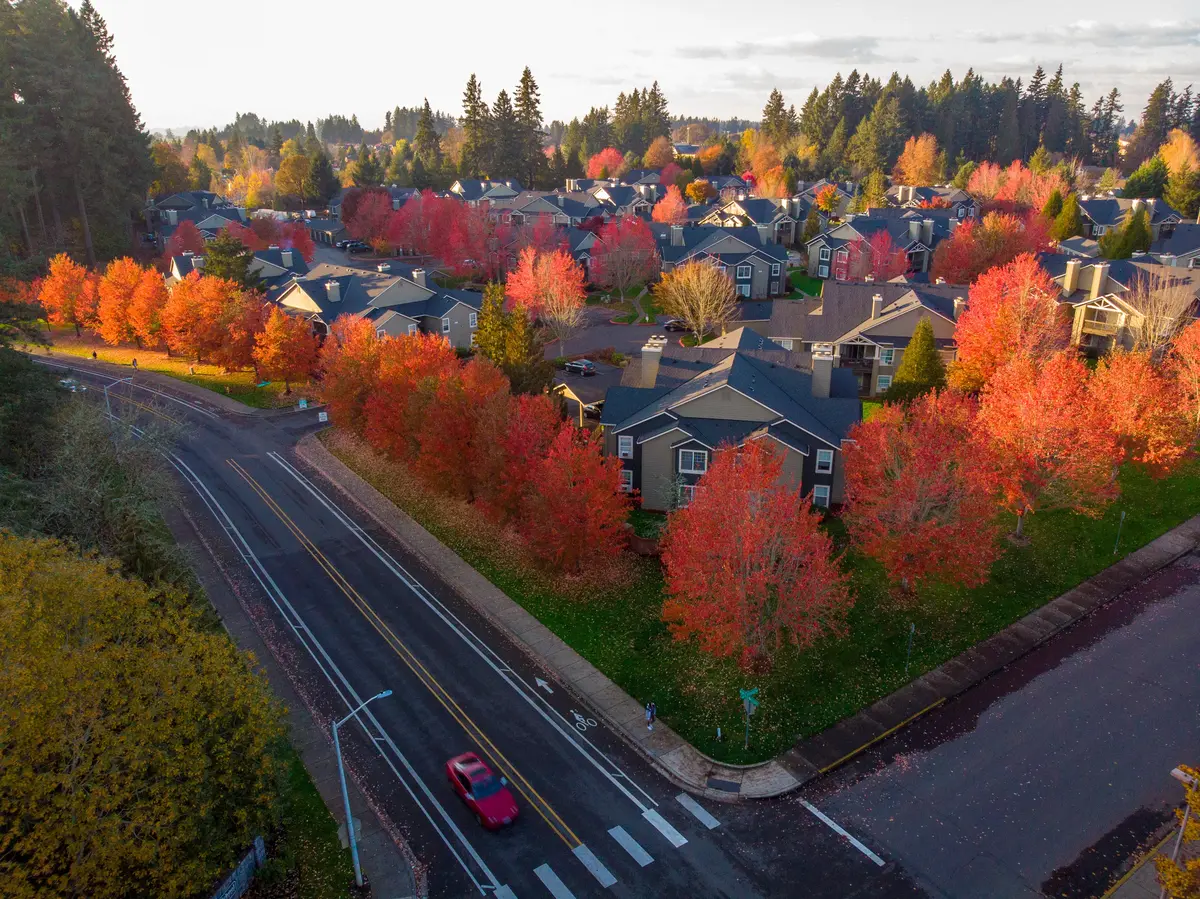
How Much Home Can You Afford in Hillsboro
Oregon buyer closing costs typically run 2% to 5% of the purchase price, covering lender fees, title and escrow charges, appraisal, prepaid homeowners insurance, and property-tax prorations. The table below uses 3% as the midpoint estimate for closing costs — a reasonable working assumption for planning purposes. These are approximate figures to anchor your budget conversation with a lender; the interactive calculator below the table gives you a more detailed monthly payment estimate at current rates.
| Scenario | Purchase Price | Down Payment | Est. Closing Costs (3%) | Total Cash Needed at Table |
|---|---|---|---|---|
| FHA (3.5% down) — entry level | $375,000 | $13,125 | $11,250 | ~$24,375 |
| FHA (3.5% down) — near city median | $518,047 | $18,132 | $15,541 | ~$33,673 |
| Conventional (3% down) — entry level | $375,000 | $11,250 | $11,250 | ~$22,500 |
| Conventional (3% down) — near city median | $518,047 | $15,541 | $15,541 | ~$31,082 |
| Conventional (5% down) — near city median | $518,047 | $25,902 | $15,541 | ~$41,443 |
| Conventional (10% down) — move-up resale | $600,000 | $60,000 | $18,000 | ~$78,000 |
A few things this table doesn't show: private mortgage insurance (PMI), which applies to conventional loans below 20% down and to FHA loans for the life of the loan in most cases; and the ongoing property tax cost, which the calculator handles using Hillsboro's effective rate of 0.84%. The Washington County Assessor sends tax statements each October, so timing your closing to have reserves ready for that bill is worth planning around.
First-time buyers in Oregon can also open a state First-Time Home Buyer Savings Account, which carries potential state tax benefits — ask a lender or tax advisor whether it fits your timeline, since it works best when started well before you're actively shopping.
Looking to buy in Hillsboro? Estimate your payment.
Enter your numbers to see an estimated monthly mortgage payment.
Estimate only. Excludes HOA fees and mortgage insurance. The interest rate above is a starting point, not a quoted rate — replace it with your own to see real numbers. Insurance is a flat placeholder, not a Hillsboro quote.
Common First-Time Buyer Mistakes in Hillsboro
Shopping Before You Have a Pre-Approval Letter
This one happens constantly in Hillsboro, especially among buyers relocating from markets where the pace is slower. They tour Orenco Station townhomes or Reed's Crossing new builds on a weekend visit, fall in love with something specific, and then spend two weeks scrambling for pre-approval while the listing goes under contract. The pre-approval isn't a formality — it's what gives you the ability to move when the right home appears.
Waiving the Inspection Contingency to Win
In the competitive years of 2021 and 2022, waiving inspection contingencies became common in the Portland Metro. The market has since balanced out, and in most Hillsboro transactions today you have room to keep your inspection contingency intact. First-time buyers sometimes still feel pressure to waive it — or accept a brief, cosmetic-only inspection — to look more competitive. Don't. A sewer scope issue or a roof near end-of-life can cost tens of thousands of dollars on a home you just closed on. Keep the contingency and use the full inspection period.
Ignoring the School Boundary Before You Make an Offer
The Hillsboro School District holds a B rating, according to Niche, and individual school quality varies meaningfully by attendance zone. A home in South Hillsboro and a home in Reedville may sit at similar price points but feed into different elementary and middle schools. If the specific school assignment matters to your household, confirm the boundary before making an offer — not after. Boundaries shift, and what a neighbor tells you isn't official.
Underestimating the True Cash Needed at Closing
The down payment number is the one buyers focus on, but it's only part of what you need at the table. Closing costs, prepaid homeowners insurance, and the property-tax proration (Washington County taxes are due in November, so depending on your closing date you may owe several months of prorated taxes at closing) can add $12,000 to $20,000 on top of the down payment on a median-priced Hillsboro home. Buyers who budget only for the down payment and then scramble to find closing funds often delay their purchase by months or make concessions they didn't plan for. Build the full cash picture into your savings target from day one.
Treating New Construction Like a Resale Purchase
With nearly 28% of recent Hillsboro sales involving new construction, a lot of first-time buyers end up at a builder's sales office without fully understanding how different the process is. Builder contracts are written by the builder's attorneys to favor the builder. The sales representative in that office works for the seller, not for you. Having your own buyer's agent — one who negotiates builder contracts regularly — costs you nothing and can matter significantly on allowances, upgrades, and closing-cost contributions. This is the step most first-timers skip because the builder's process feels official and complete on its own.
Local Expert Takeaway: Hillsboro gives first-time buyers something genuinely useful: real inventory, including new construction at Reed's Crossing, established townhomes near the MAX at Orenco Station, and resale options across neighborhoods like Brookwood and Reedville. The typical home price of $518,047 (July 2026) sits above what the median household income can comfortably carry, which means your pre-approval number and your total cash position need to be real before you start touring — not estimated. The market is balanced enough that you can usually keep your inspection contingency, but well-priced homes still move. Know which micro-market you're entering, confirm school boundaries before you offer, and build closing costs into your savings target from the start.
Quick Takeaways & FAQs
✅ New construction accounts for nearly 28% of Hillsboro sales — an unusually high share that gives first-time buyers a genuine choice between resale and builder inventory that doesn't exist in most nearby markets.
⚠️ The typical home price of $518,047 (July 2026) sits roughly $31,000 above what the median household income can comfortably carry at current rates — the gap is real and your budget needs to account for it before you tour anything.
📍 Washington County's assessed values under Oregon's Measure 50 are often well below the purchase price you'll pay — your ongoing tax bill is based on the assessed value, not the sale price, so pull the county record on any home you're seriously considering.
What credit score do I need to buy a home in Hillsboro, Oregon?
How much do I actually need saved before buying in Hillsboro?
Is it worth buying near Intel's campus given the recent layoffs?
Can I use an FHA loan to buy a new construction home in Hillsboro?
Do I need a buyer's agent, and does it cost me anything in Oregon?
Moving to Oregon?
Tell us what you need help with and we'll connect you with local resources.
